
Look at the world’s prominent terrorist organizations in the 1960s and 1970s and something is striking: religion is largely absent.
The PLO and its factions pursued Palestinian nationalism. The IRA fought over Northern Ireland. ETA sought Basque independence. The Red Brigades in Italy, Red Army Faction in Germany and Japanese Red Army embraced revolutionary leftist ideologies.
An analysis by RAND captures what happened next. In 1968, it identified zero religiously motivated international terrorist groups. In 1980, there were two among 64. By 1992 there were 11 among 48. By 1995, 25 of 58—43 percent—were religiously motivated.
Some point to 1979 as the pivotal year, when radical Islam found permanent footholds and inspiration.
In Iran, Ayatollah Ruhollah Khomeini’s revolution overthrew the Shah and established an Islamic Republic. Political Islam had demonstrated that it could overthrow a western-aligned government.
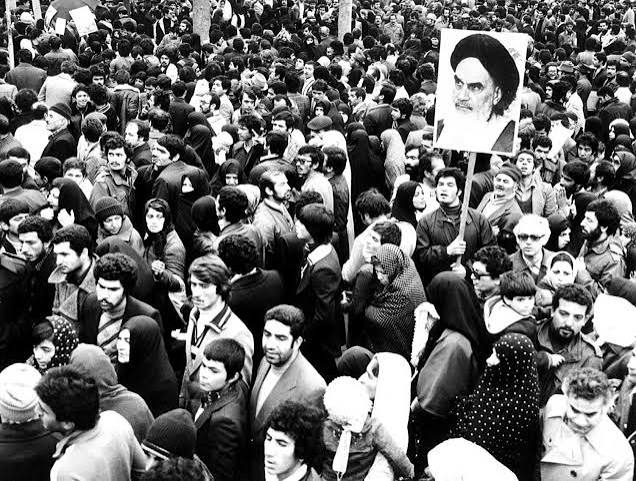
Iran then exported its revolutionary ideology and supported armed Shiite Islamist movements. Hezbollah, established in Lebanon in the early 1980s, became its most consequential manifestation.
Then came Afghanistan.
The Soviet Union invaded in December 1979. Resistance to a non-Muslim foreign army occupying a Muslim country became an international Islamic cause. Saudi and other Gulf money flowed to the “resistance.” Pakistan became its essential staging ground. The United States supplied extensive assistance as part of its Cold War campaign against Moscow.
Afghanistan became a transnational incubator for Sunni jihad. Militants from different countries met, fought together and developed recruiting, financing and logistical networks. Osama bin Laden joined this world, and al-Qaeda eventually emerged from it.
Fondapol calls the Soviet-Afghan war the “matrix of contemporary Islamist terrorism.”
Other events show 1979 to be a pivotal year.
Islamist militants seized the Grand Mosque in Mecca, denouncing the Saudi monarchy as corrupt and insufficiently Islamic. The episode helped push Saudi Arabia toward greater religious conservatism just as it entered an intensifying competition with revolutionary Iran for leadership and influence across the Muslim world.
Meanwhile, Egypt and Israel made peace. Along with it, secular Arab nationalism, which had dominated much of Middle Eastern politics, began to lose prestige. Islamist movements increasingly presented themselves as the alternative. [Think of Hamas’s 2023 attempt to disrupt the expanding Abraham Accords].
The consequences of radical Islamism entering global terrorism developed gradually and then exploded.
Fondapol records 2,194 Islamist terrorist attacks and 6,817 deaths from 1979 through 2000. From 2001 through 2012, it records 8,265 attacks and more than 38,000 deaths. From 2013 through April 2024, the toll surged to more than 56,000 attacks and roughly 205,000 deaths.
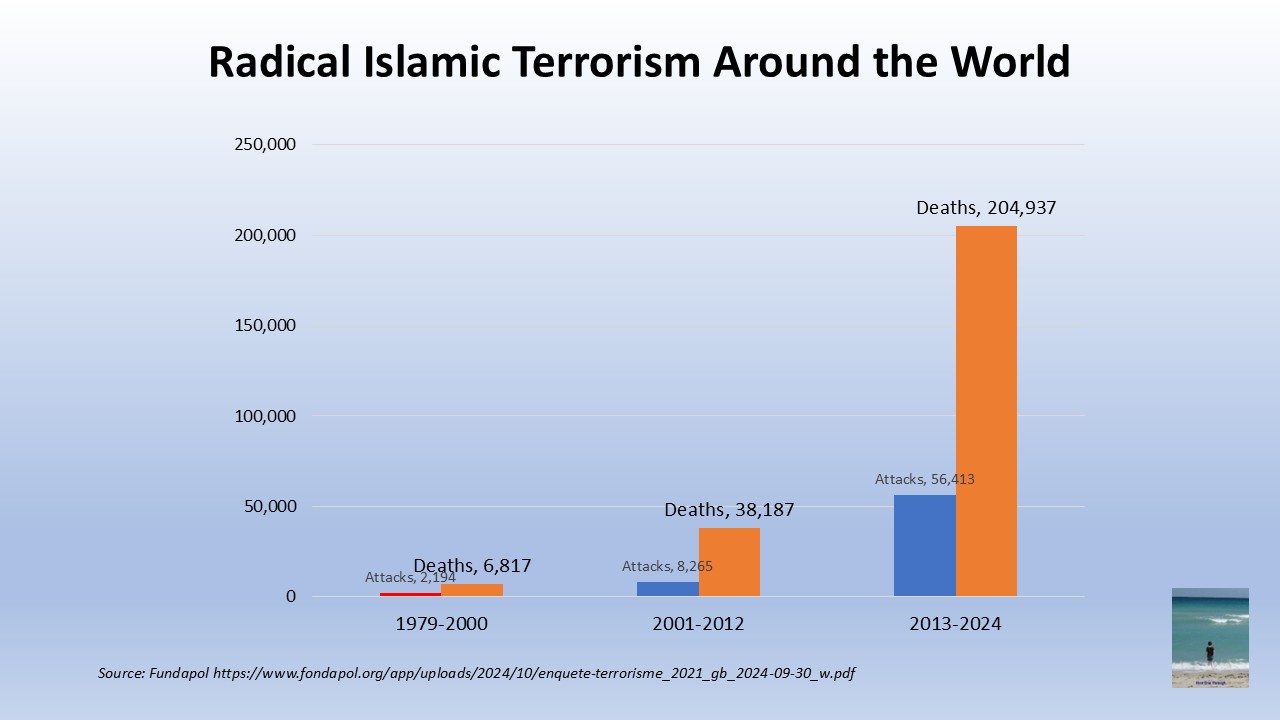
Altogether, its database catalogs 66,872 Islamist terrorist attacks killing nearly 250,000 people between 1979 and April 2024.
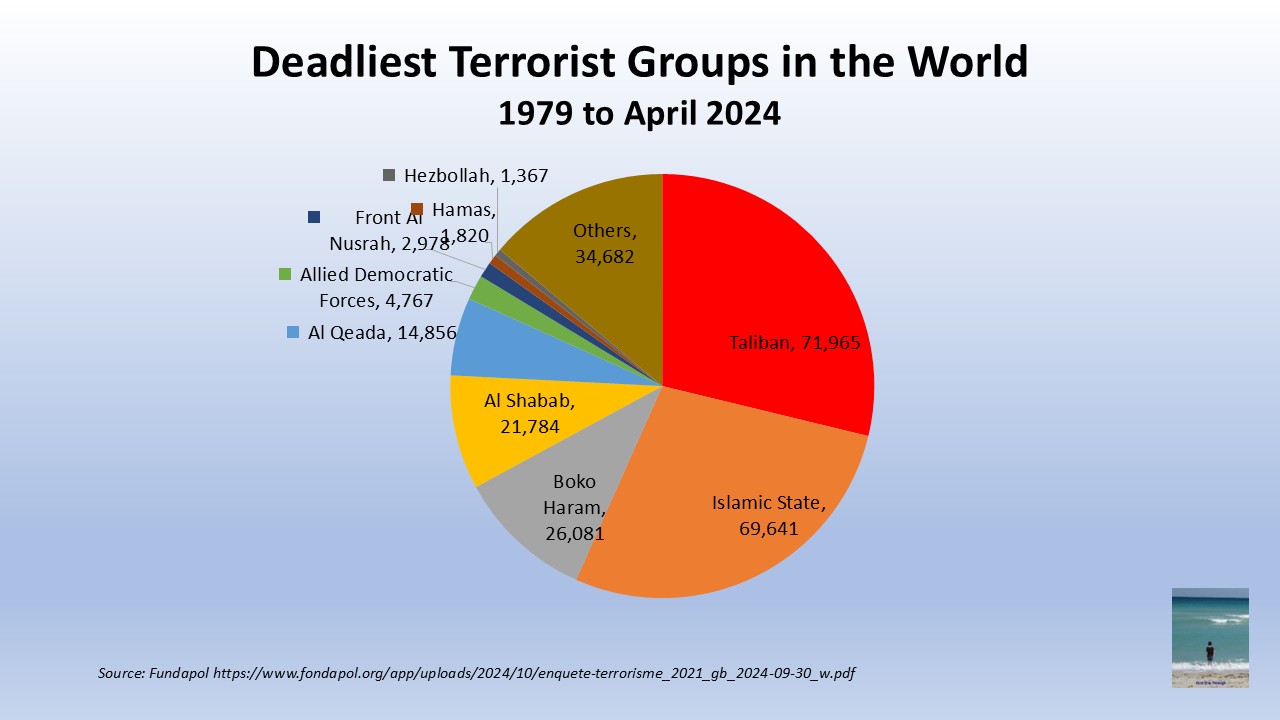
And this is not principally a story of Muslims attacking the West. Nearly 89 percent of those deaths occurred in Muslim-majority countries. The Taliban, Islamic State, Boko Haram, al-Shabaab and al-Qaeda became the five deadliest organizations in the database.
The transformation was both ideological and geographic. Al-Qaeda built affiliates. ISIS built provinces. Boko Haram devastated communities around Lake Chad. Al-Shabaab entrenched itself in Somalia and East Africa. Jihadist organizations spread across the Middle East, South Asia and increasingly Africa.
Iran demonstrated the revolutionary potential of political Islam; Afghanistan created the great transnational Sunni jihadist network; Mecca exposed another radical Islamist current; and the decline of secular Arab nationalism created room for Islamism to expand.
1979 was the year several forces converged and the center of gravity began to shift.
We readily study how nationalism, communism, fascism, white supremacy and other ideologies produced political violence. Jihadism has become the leading driver of terrorism in the world and must have the same intellectual clarity.


Pingback: It’s Time to Study Jihadi Hate | First One Through