
The Gilder Lehrman Institute of American History has a good rule for teaching history: let students read primary sources.
So when it teaches September 11, students can encounter Osama bin Laden in his own words. That should make the origins of 9/11 unusually difficult to sanitize.
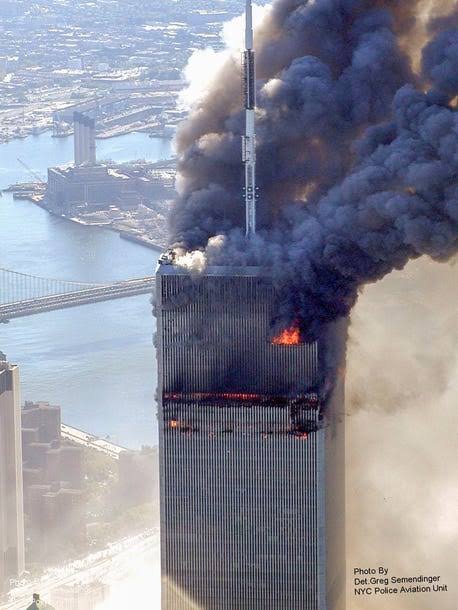
Bin Laden’s 1996 document was a Declaration of Jihad Against the Americans Occupying the Land of the Two Holy Mosques. Its principal immediate grievance was the presence of American forces in Saudi Arabia, home to Mecca and Medina. He condemned the Saudi government for permitting what he called an army of “infidels” into land containing Islam’s holiest places and called on Muslims to drive them out.
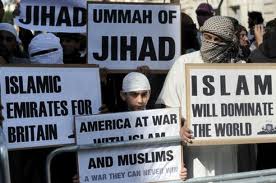
The bipartisan 9/11 Commission described the document plainly. Bin Laden objected to “an army of infidels in a land with the sites most sacred to Islam.” He saw himself as following in the footsteps of the Prophet and organizing a new kind of war against America.
This was not simply a dispute over where the Pentagon stationed troops. Their being non-Muslims was central to the offense.
He became even more clear about his objection in his 1998 fatwa, written with Ayman al-Zawahiri under the banner of the “International Islamic Front for Jihad on the Jews and Crusaders.“
Not Israelis. Not Americans. Not NATO.
Jews and Crusaders.
The declaration said Muslims should kill Americans, including civilians, wherever they could be found.
“The ruling to kill the Americans and their allies — civilians and military — is an individual duty for every Muslim who can do it in any country in which it is possible to do it, in order to liberate the al-Aqsa Mosque and the holy mosque [Mecca] from their grip, and in order for their armies to move out of all the lands of Islam, defeated and unable to threaten any Muslim. This is in accordance with the words of Almighty Allah, “and fight the pagans all together as they fight you all together,” and “fight them until there is no more tumult or oppression, and there prevail justice and faith in Allah.”” – 1998 Fatwa
Then came the jihadi terrorist attacks of September 11.
That is where Gilder Lehrman’s lesson becomes peculiar.
Its current historical background accurately identifies al-Qaeda as an “international terrorist group.” But its explanation of bin Laden’s motivation says he “claimed that he was defending Islam” before quickly translating the dispute into political language: “He blamed the United States for supporting Israel and oppressing Muslims around the world.” It adds his opposition to American support for governments such as the Saudi monarchy.
It never uses the word “jihad” a single time, even when Bin Laden’s own 1996 and 1998 declarations both use “jihad” in the titles. The narrative is recast as a political dispute rather than a religious holy war.
The American presence in Saudi Arabia wasn’t objectionable to bin Laden merely because he disliked an American military deployment. His declaration treated an army of infidels in Islam’s sacred land as an offense demanding jihad.
His organization didn’t subsequently call itself the International Front Against American Middle East Policy. It invoked Jews and Crusaders – both words never used in the GLI lesson plan.
The curriculum directs students toward questions about American foreign policy. Its broader narrative proceeds rapidly from the attacks to American intelligence failures, the Patriot Act, surveillance, Guantánamo Bay, civil-liberties concerns, anti-Muslim discrimination, Afghanistan and Iraq.
Those are all legitimate subjects in a history of the War on Terror, AFTER 9/11.
But before asking about American actions after September 11, students should understand why 19 men believed murdering thousands of civilians was righteous in the first place. It does not require blaming Islam or all Muslims for September 11.
The distinction is straightforward: Islam is not al-Qaeda, and Muslims are not responsible for al-Qaeda. But al-Qaeda is a jihadist movement whose leaders explicitly justify their violence in religious terms.
There is another revealing asymmetry.
Gilder Lehrman makes sure students learn that hate crimes and discrimination against Muslim Americans increased after September 11. That belongs in the history. President George W. Bush’s insistence that America’s enemy was terrorism rather than Islam belongs there too.
But if prejudice against a religious group after the attack deserves explicit attention, surely the religious ideology of the men who carried it out deserves the same scrutiny.
Imagine reading a Declaration of Jihad filled with God, Islam, infidels, sacred territory and martyrdom—and being trained to search everywhere except religion for the explanation.
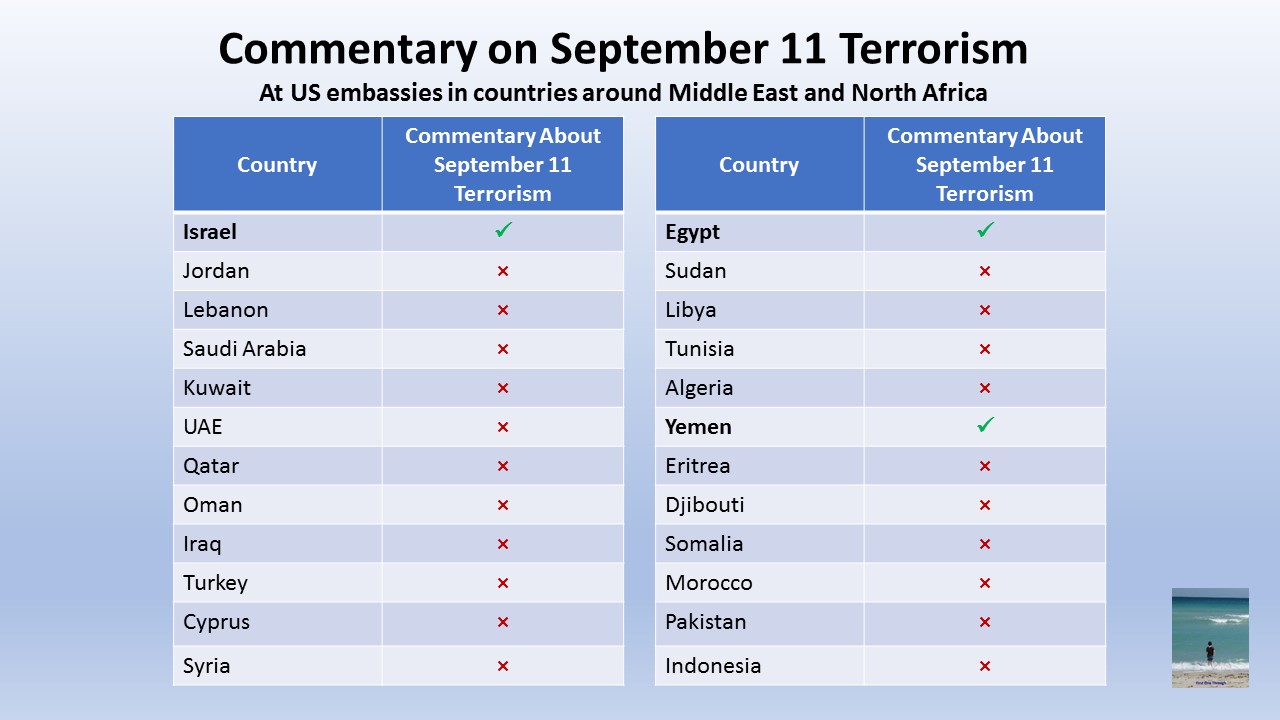
Gilder Lehrman’s great educational principle is that students should encounter history through original documents rather than having someone else tell them what happened. But here, the documents are presented and then the lesson redirects students toward American foreign policy and the subsequent War on Terror. It shifts the center of the 9/11 story from genocidal jihadists murdering thousands of innocent Americans to Muslims suffering from American policies, wars, discrimination and backlash.
That is an extraordinary inversion. And an insult to thousands of Americans who were murdered.


Pingback: CAIR’s 9/11 Curriculum: Erase the Jihadists, Center Muslims as Victims | First One Through
Pingback: The UN’s Jihadi Exception | First One Through