The UN Held A Conference on Jerusalem’s Holy Sites. Where Were the Jews?

In July, 2026 the United Nations and the Organization of Islamic Cooperation convened a conference in Cairo devoted to Jerusalem. The UN described Jerusalem as sacred to the three monotheistic religions and the conference as an “important platform for interreligious dialogue.”

Then it offered a remarkable description of what that dialogue looked like: “Muslim and Christian leaders reflected on Jerusalem’s profound significance to the three monotheistic faiths.”

Three religions. Two of them discussing what Jerusalem means to all three.

This was not a conference where religion was incidental. Its first substantive session was a two-hour panel titled “Saving the Holy City, Safeguarding the historic status quo at the Holy Sites.” The speakers included representatives of the Hashemite Fund for the Restoration of Al-Aqsa Mosque and the Dome of the Rock, Al-Azhar, the Latin Patriarchate, the Jerusalem Awqaf and Al-Aqsa, and the Coptic Orthodox Church.

There was no Jewish religious representative.

That absence was consistent with the conference’s design. The UN announcement said the gathering would highlight the “concerns of Christian and Muslim leaders regarding restrictions on worship and threats to Holy Sites.”

Not Jewish leaders.

That left an empty chair at precisely the discussion where a Jewish voice might have asked some uncomfortable questions.

Start with the name of the place being discussed.

The conference repeatedly spoke of Al-Aqsa Mosque and Al-Haram al-Sharif. But this same 144-dunam platform is the Temple Mount, location of the First and Second Temples and the holiest site in Judaism. Yet throughout the conference, the Islamic name and Islamic religious administration were the starting point for discussing the site. Where was the Temple Mount? A conference devoted to Jerusalem’s “multireligious character” could have acknowledged both names.

Then there is the considerably larger question of worship.

The Cairo conference repeatedly invoked freedom of worship and access to sacred places. Yet the historic status quo it sought to protect has restricted Jewish prayer on the Temple Mount. Muslims worship there. Jews have historically been allowed to visit only during restricted periods but denied the same right to pray.

At Cairo, former Jerusalem Awqaf official Atallah Naser warned about “settler incursions and rituals” and what he considered an emerging “temporal and spatial division” of Al-Aqsa. Another speaker complained about increased “religious rituals” by Jews at the site.

At a conference about religious freedom, that should have produced an obvious question: Why is peaceful Jewish prayer at Judaism’s holiest site itself treated as a threat?

Nobody on the panel was there to ask it.

Nor was anyone there to ask why the practical restrictions on Jewish worship received so little attention:

  • Why should Jewish visits be confined to particular hours?
  • Why are Jews only allowed to enter the Temple Mount via single portal while Muslims can use any?
  • Why should Jewish religious practice require close police management?
  • Why does a conference concerned with restrictions imposed upon Muslim and Christian worshippers not apply the same scrutiny to restrictions affecting Jews?

Then there is the question of who administers the site.

Cairo speakers repeatedly defended the Islamic Waqf and Jordan’s Hashemite custodianship. The Waqf retains the central religious administrative role at a site that is the holiest place in Judaism. Why?

Why should Judaism’s holiest site have an Islamic religious authority but no corresponding Jewish religious authority? Why should Jewish representatives have no formal role in decisions involving Jewish worship there? Why not shared administration? Why not a multifaith governing or consultative structure? Why not Muslim administration of the mosques alongside recognized Jewish religious rights elsewhere on the enormous platform?

Those possibilities were apparently not part of Cairo’s “interreligious dialogue.”

Instead, the conference treated preservation of the “historic status quo” and protection of “freedom of worship” as though they necessarily meant the same thing.

They do not.

If the status quo restricts the religious practice of one faith at its holiest location, preserving that restriction is not the same question as protecting religious freedom.
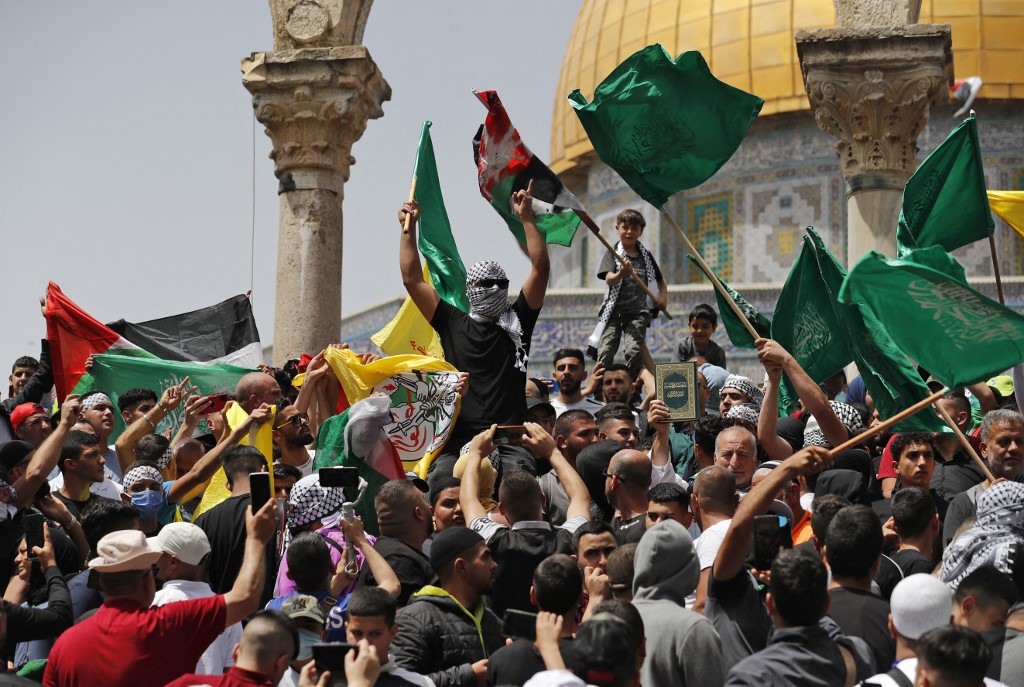
Palestinian protesters wave Palestinian and Islamic flags as they rally at the Dome of the Rock following the last Friday prayers of the Muslim month of Ramadan, on April 29, 2022. (Photo by Ahmad GHARABLI / AFP)

UN Committee Chairman Coly Seck supplied the principle that should have started this discussion. “For Muslims, Christians and Jews,” he said, “Jerusalem carries prayers, history and hope.” He declared that freedom of worship is a right and that “No worshipper should be stopped because of who they are. No community should feel that its faith is being pushed out of its own city. Jerusalem’s religious character must not be used as a tool of control. It must remain a bridge connecting people from the three major faiths. A meeting point. A shared responsibility.”

Those words raise obvious questions about Jewish worship on the Temple Mount.

Cairo simply lacked someone at the table to ask them.

The United Nations called Jerusalem sacred to three religions and convened an interreligious dialogue in Cairo about protecting their holy places. But only Muslim and Christian representatives came. They pretended to discuss the religious interests of three faiths, while using it as an opportunity to blame all religious tension on the Jews not in the room.

Coexistence, Until the Wrong Jews Show Up

A group of religious Jewish youths recently appeared on a Galilean hillside near the Israeli Arab town of Majd al-Krum. Protesters quickly described them as West Bank settlers establishing an illegal outpost as part of Finance Minister Bezalel Smotrich’s campaign to “do in the Galilee what we are doing in Judea and Samaria.”

The facts are considerably different.

Part of the property lies within Majd al-Krum’s municipal boundaries but belongs to the Jewish National Fund. It is surrounded by privately owned Arab agricultural land. In January 2026, JNF granted seasonal grazing rights over approximately 1,050 dunams to Gabi Damari, a livestock farmer from Tal-El, a Jewish community in the Galilee. The purpose was to reduce vegetation and the risk of fires. That authorization came roughly seven months before Smotrich announced his Galilee initiative, and no evidence has emerged that Smotrich sent Damari or the young men.

Damari said he brought youths from Judea and Samaria to guard equipment following thefts while his goats were delayed from arriving on the land by veterinary restrictions. Nothing reported thus far establishes that the young men were moving permanently to the Galilee or creating a residential community. They were living at a grazing site operated by a local farmer under a preexisting JNF authorization. (Ynet)

That did not make everything at the site proper. The camp included large tents, beds, utilities and equipment, some of which reportedly extended onto private land. Those were legitimate grounds for investigation and enforcement. JNF ultimately ordered excess structures removed, restricted the size and location of any shelter and limited how many people could remain. It did not cancel Damari’s grazing rights.

The protest, however, was not confined to property lines or permit conditions. Majd al-Krum’s council warned that the encampment was intended to change the area’s “demographic reality.” Hadash figures called it “land seizure” and “creeping transfer.” Sujood Badran, a local political activist arrested during the demonstrations, later recounted protesters chanting: “Arab land belongs to Arabs. Zionist, get up and leave.” She also described the area as “occupied Palestine.” (Times of Israel, Israel Hayom)

Haviva Ner-David offered the liberal Jewish version of the same exclusion. She praised the Galilee as a shared society “balanced 50-50” between Hebrew and Arabic speakers, including Muslims, Jews, Druze and Christians. Yet she said these particular Jews had come from outside to “ruin that,” pledged to protest “until they are truly gone” and promised that if they tried another Galilean hilltop, “we will go there, too.” (Ner-David’s post)

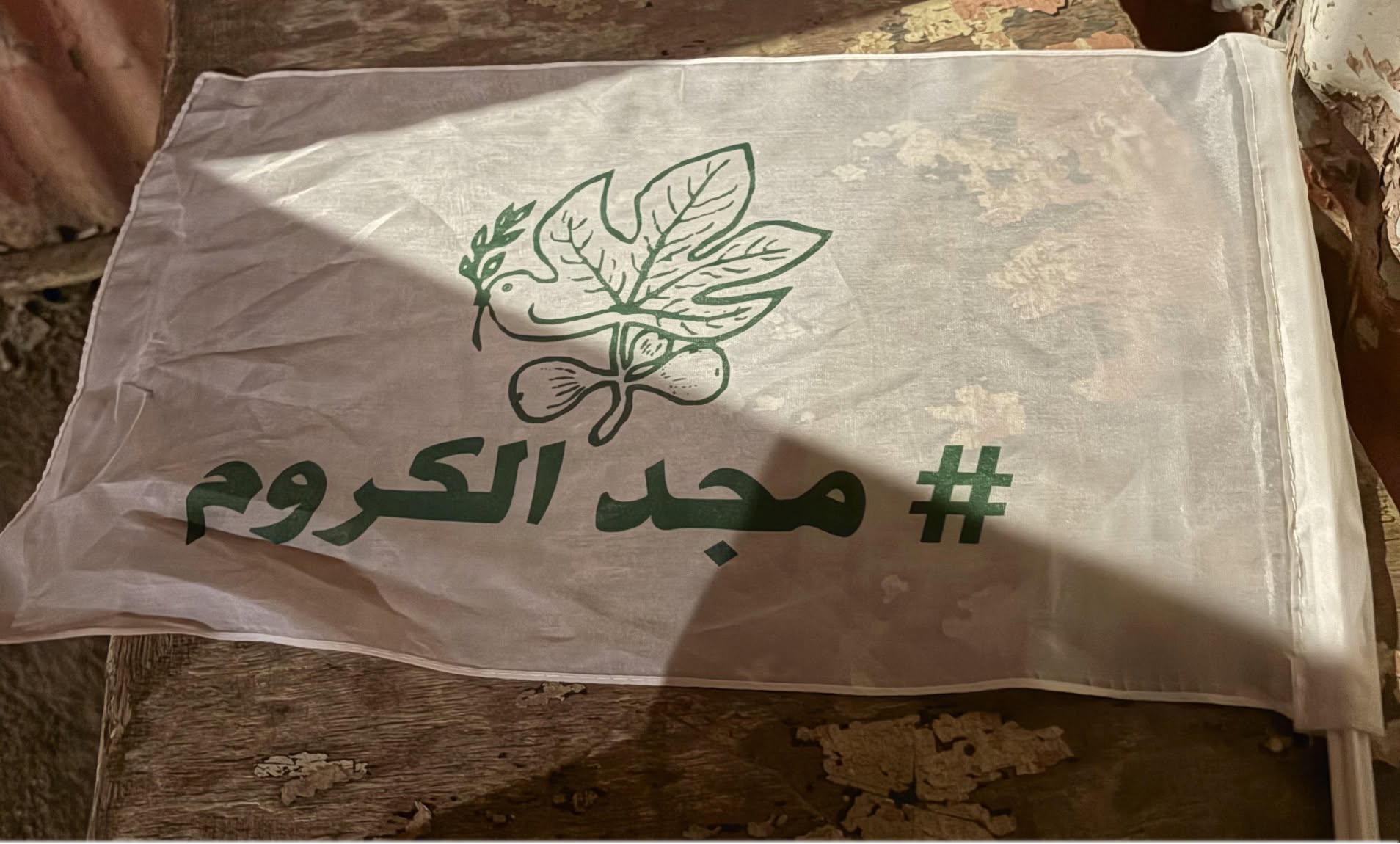
She proudly carried a protest flag bearing a dove and olive branch, presenting it as a symbol of Arab-Jewish partnership. Yet the flag identifies Majd al-Krum only in Arabic. There is no Hebrew and nothing representing the supposedly Jewish half of that partnership.

The protestors seemingly were taking a page from the Arab League that also protests new Jewish homes inside Israel. And the JNF has taken note, ordering the Jews to leave the area.

The legal standard should be straightforward. Private property must be respected. Grazing permits do not authorize unlimited construction. Theft, intimidation and racism should be punished whether committed by Jews, Muslims, Christians or Druze. None of those principles makes a person’s birthplace, religious appearance or previous residence grounds for expulsion.

Jews living in the West Bank are routinely denounced as obstacles to peace and told to move inside Israel. Now, when Jews associated with those communities appear inside Israel, they remain “settlers,” their presence becomes a demographic threat and self-described coexistence activists organize to make them disappear.

Coexistence that ends when the perceived wrong kind of Jews arrive is not coexistence. It is demographic exclusion in dove’s clothing.

ACTION ITEM

Contact the JNF at jewishnationalfund@jnf.org to make sure that they are not expelling Jews from Israel, but simply keeping grazing land for its intended purposes.

Judea, Long, Long Before Muhammad

Long before the Islamic prophet Muhammad was born, long before Arab armies invaded Jerusalem, there was Judea.

It was called Judea in the Books of Maccabees. The Greek geographer Strabo called it Judea. Josephus called it Judea. The Roman historian Tacitus called it Judea. The Christian New Testament called it Judea. Rome governed a province called Judaea.

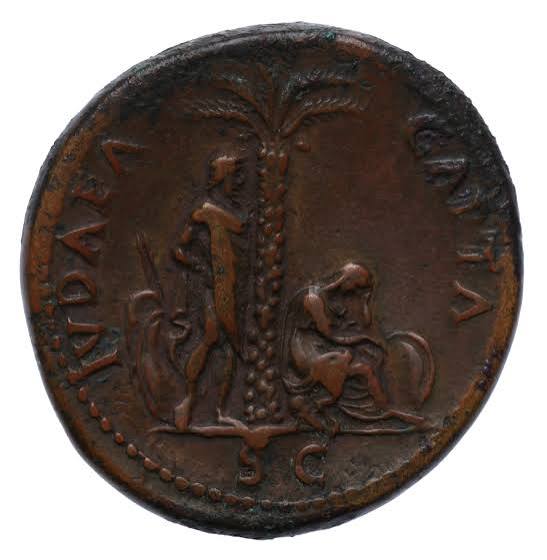
And when the Romans defeated the Jews there, they minted coins celebrating IVDAEA CAPTA — “Judea Captured.”

Roman coin from 71AD with Emperor Vespesian on one side and “Judea Capta” on the other

All of that happened centuries before Muhammad was born in Arabia and Arabs invaded the Jewish holy land.

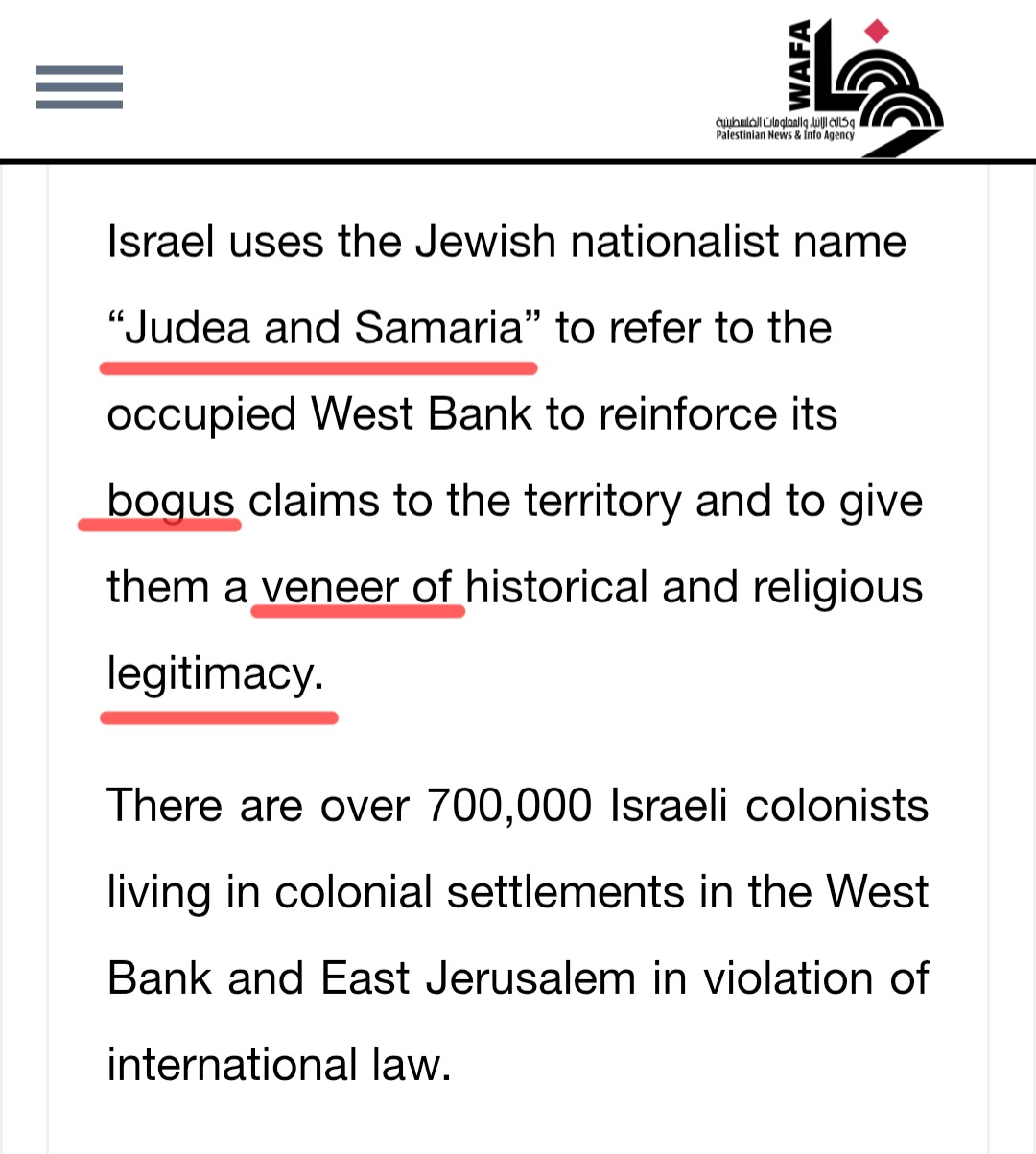
Yet today WAFA, the Palestinian Authority’s official news agency, describes Israel’s use of “Judea and Samaria” as an effort to give its “bogus claims… a veneer of historical and religious legitimacy.”

Bogus?

The Romans weren’t Zionists. Tacitus wasn’t working for the Israeli government. Roman coins celebrating the defeat of a Jewish rebellion certainly weren’t designed to manufacture Jewish history.

They called it Judea because Judea was its name.

And Judea, Judah and Jew share the same historical root. The Jewish people carry the connection to this land in their very name.

So why does the Palestinian Authority choose to call that heritage and homeland claim “bogus”?

Perhaps because acknowledging Judea creates an enormous problem for the narrative the PA and WAFA promote every day, calling Jews living in the land of Israel as “colonists.” But colonizers are outsiders who arrive in someone else’s homeland. It becomes considerably harder to sustain that description while acknowledging that the people being called colonizers take their name from the very land in which they supposedly have no indigenous history.

This is antisemitic historical erasure—and it should be condemned as such.

It should be condemned at the United Nations. It should be condemned by governments that have chosen in recent years to recognize a Palestinian state. Britain, Canada and others should demand something elementary in return: recognition of the history and heritage of the Jewish people.

Because recognition cannot sensibly run in only one direction.

If the Palestinian Authority asks the world to recognize the local Arabs attachment to this land while its own official news agency dismisses the Jewish people’s vastly documented attachment as “bogus,” the problem is larger than terminology.

It goes to coexistence.

Two peoples cannot make peace if one insists that acknowledging the other’s history is itself illegitimate. A Palestinian state cannot be built on the proposition that Jewish history deserves international negation.

ACTION ITEM

Contact governments of Canada, Britain, France, Australia, Mexico and others that they demand that the Palestinian Authority stop calling the long Jewish history in the holy land “bogus.”

Perhaps It Is Time to Ask Israel What Two States Look Like

For decades the international community has insisted it already knew what a two-state solution should look like. The United Nations drew the parameters. Diplomats repeated the formula. Conferences were held. Resolutions were passed.

And tens of thousands of people died.

The problem may not be the idea of two states. The problem may be that the plan was written without the participation of the country expected to live beside that second state, after countless wars waged to eliminate it.

Israel accepted the concept of two states repeatedly. The Arab world rejected it outright in 1947 and chose war instead. For decades the objective was not coexistence but the elimination of the Jewish state “in any part of Palestine.“

Only much later did some Palestinian leaders begin to speak about accepting two states. Even then the proposal contained a remarkable asymmetry: Arabs could potentially live in both Israel and a future Palestinian state while Jews would be barred from living in Palestine. Even under these terms, acceptance amongst the stateless Arabs from Palestine (SAPs) remained partial and fragile. Large segments of Palestinian society continued to reject the legitimacy of Israel itself.

War therefore continued.

The deeper flaw lay in the diplomatic architecture. The UN framework repeatedly demanded territorial concessions from Israel while simultaneously challenging the basic elements of Israeli sovereignty. The proposed Palestinian state would claim rights that no other neighboring state claims over another country, including constraints on Israel’s control over borders and immigration.

The Oslo Accords attempted to move the process forward through gradual autonomy. Palestinians gained control of Gaza, Area A of the West Bank, and some control in Area B. These territories were meant to become the early foundations of Palestinian self-governance and peaceful coexistence.

Instead they became platforms for continued war. Rockets came from Gaza. Terror networks operated openly in areas under Palestinian control. October 7 was simply the most brutal expression of a reality that had been building for years.

After October 7 it is difficult to imagine any Israeli government accepting the same international blueprint that guided diplomacy for the past thirty years.

Which raises a simple question that has never been asked: What would a two state solution designed by Israel actually look like?

For decades the world has demanded that Israel accept a state designed by others. When Israel raised concerns about security, sovereignty, or enforcement, those concerns were treated as obstacles to peace rather than as conditions necessary to achieve it.

Perhaps the time has come to reverse the process.

Instead of repeating a diplomatic formula that has failed repeatedly, the international community could ask Israel to define the conditions under which it could realistically accept a Palestinian state. Security arrangements, borders, governance standards, demilitarization, and phased recognition could all become part of a framework designed around coexistence rather than wishful thinking.

Whether the SAPs are willing to accept such conditions is a separate matter. Neither side ever fully accepted the UN blueprint. But continuing to impose a model that both parties reject has already produced decades of bloodshed.

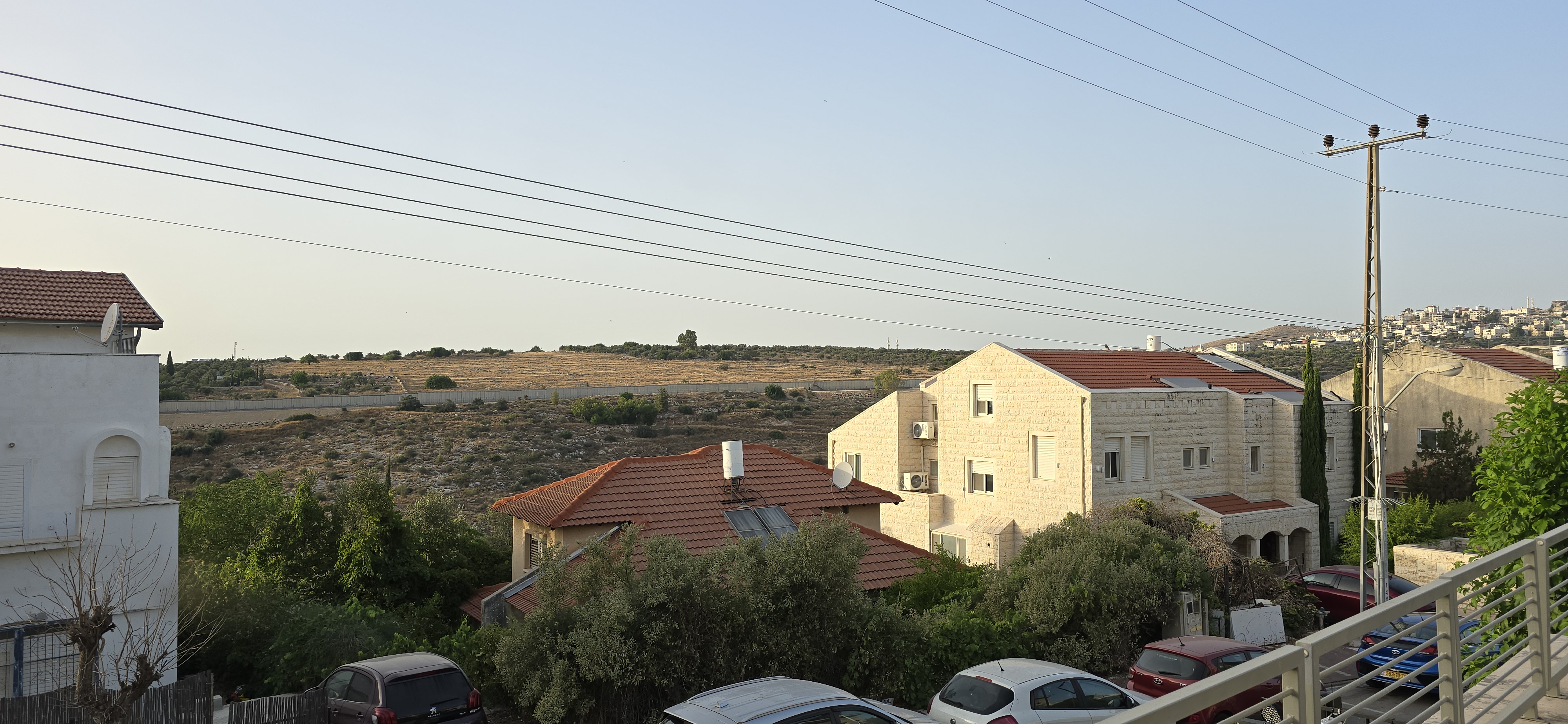
Hashmonaim and separation barrier

The first fruits of Oslo were rotten. Continuing to plant the same tree will not produce a different harvest.

If the world truly wants two states living in peace, it may finally be time to ask the state expected to survive beside that new second state what peace actually requires.

The Gates of the Temple Mount

Jerusalem is a city of gates. Stone thresholds worn smooth by centuries of feet. Arches that promise passage, and others that deny it.

Nowhere is this more literal—and more symbolic—than at the gates to the Temple Mount.

There are many gates along its walls. Some are sealed, some are ceremonial, and some are active. But in practice, Muslims ascend and descend freely through multiple entrances, while non-Muslims are funneled through a single ramp, tightly controlled, time-limited, and revocable at will.

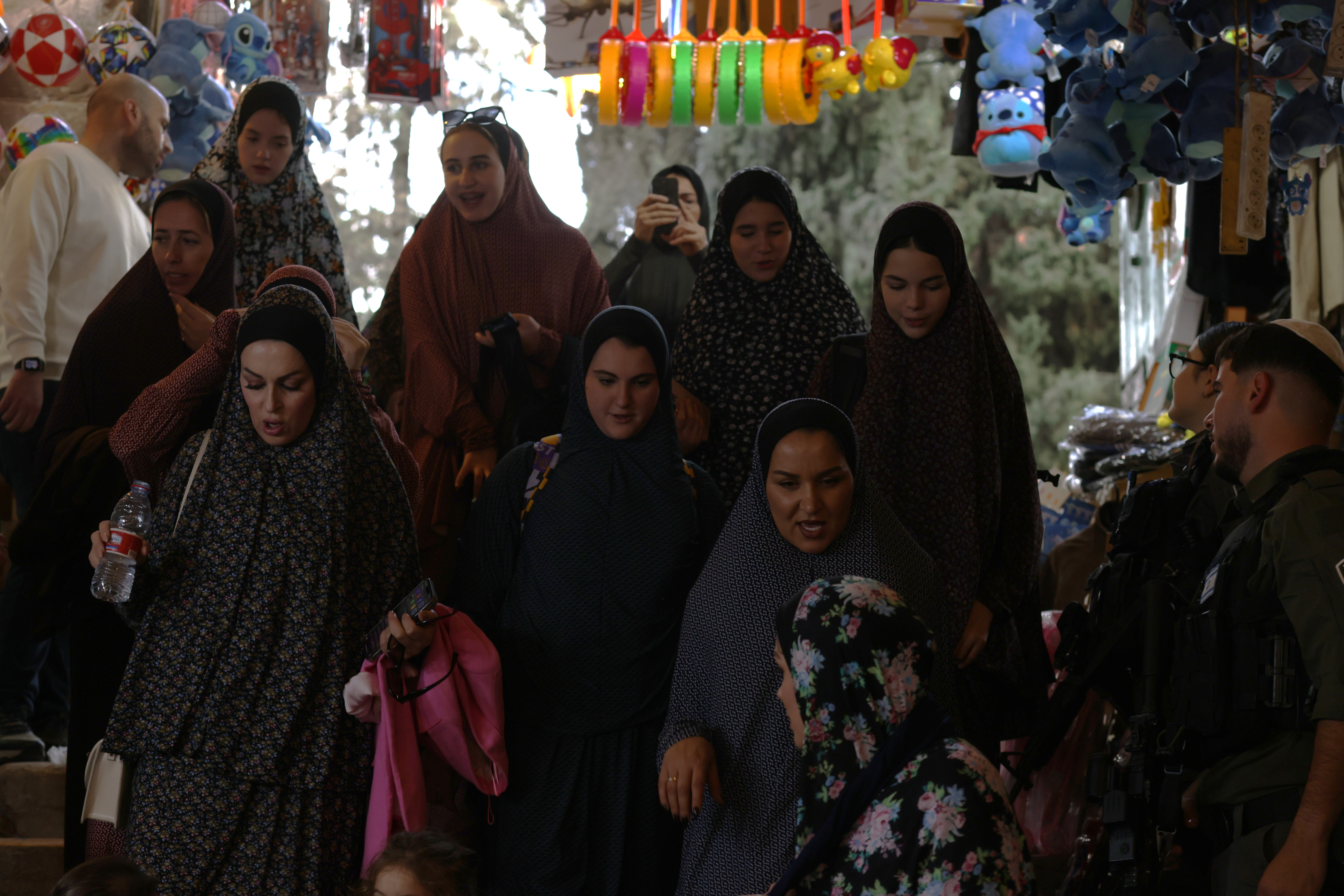
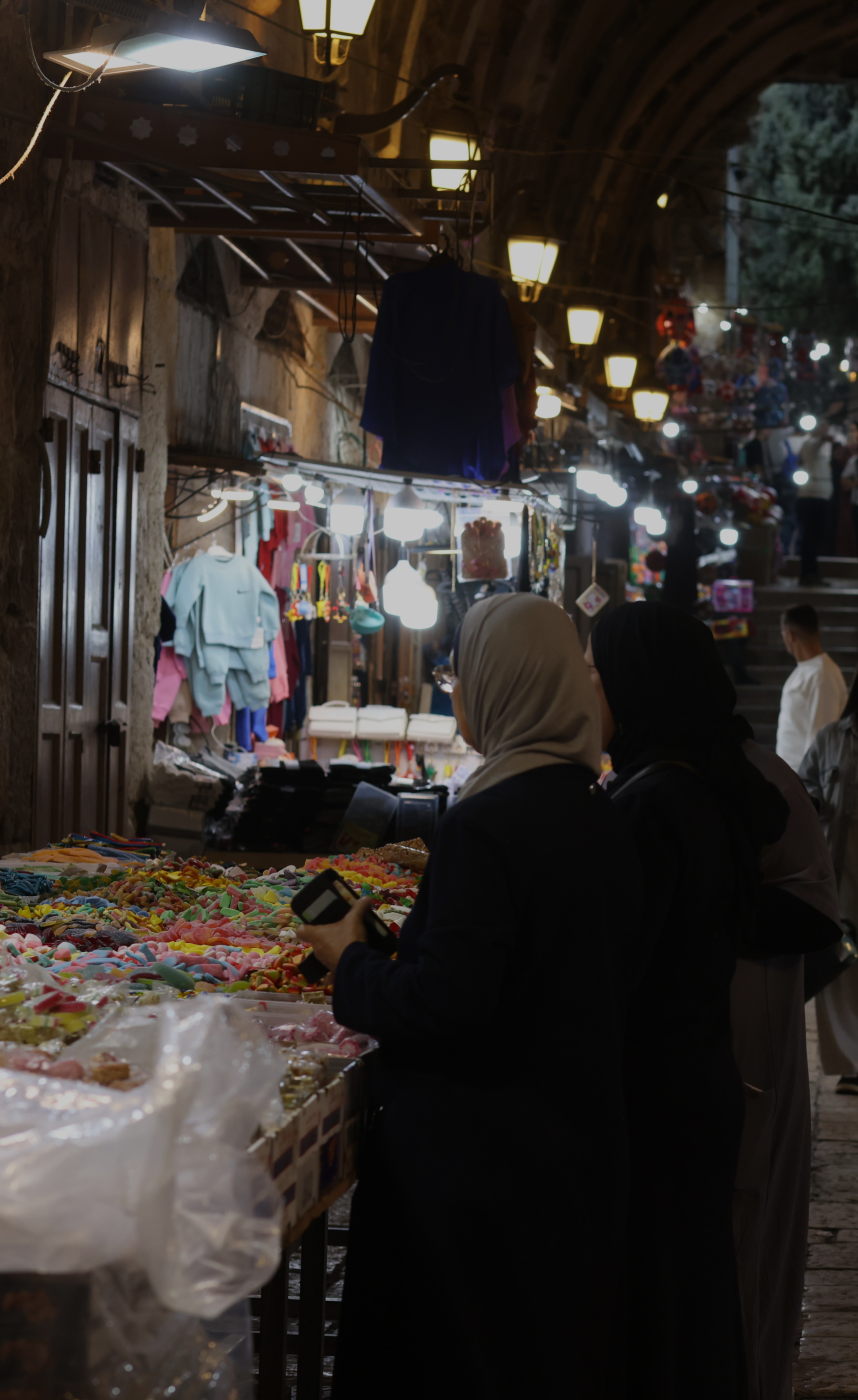
Group of Muslim women come down from the Jewish Temple Mount at the Cotton Merchants’ Gate (photo: First One Through)

This is not accidental. It is policy.

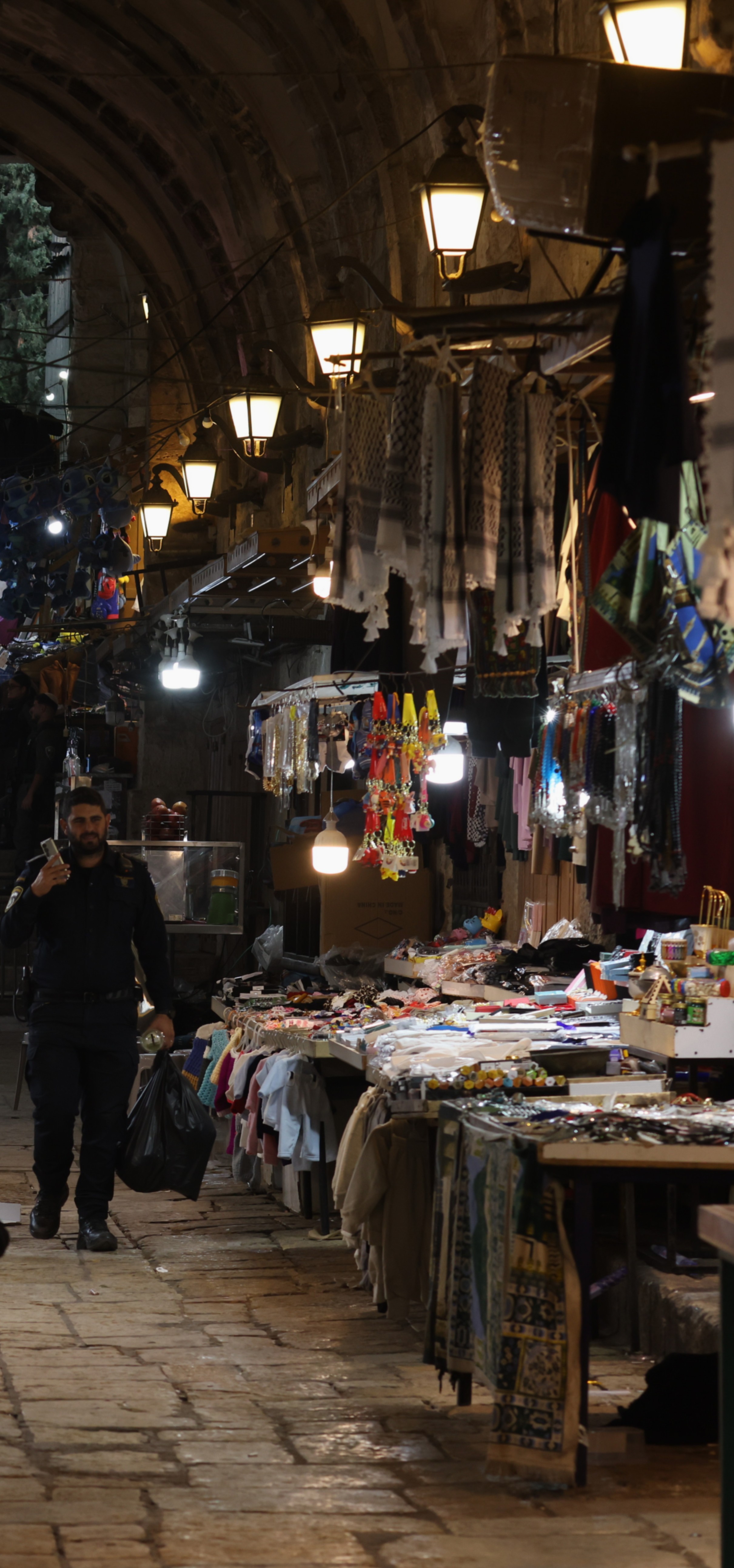
Muslims enter through gates embedded naturally in the Old City’s fabric—the Cotton Merchants’ Gate among them. There, the walls are alive. Candy shops spill color onto the stones. Children’s clothing hangs in soft defiance of gravity. The scent of sweets mixes with dust and history. Life flows in and out, up and down, as it has for generations.

Jews, by contrast, are stopped.

They are turned away from nearly every gate. Not questioned. Not debated. Simply blocked.

Despite the Temple Mount being the holiest site in Judaism, Jews are told—by police, by signs, by precedent—that they may not enter as worshippers.

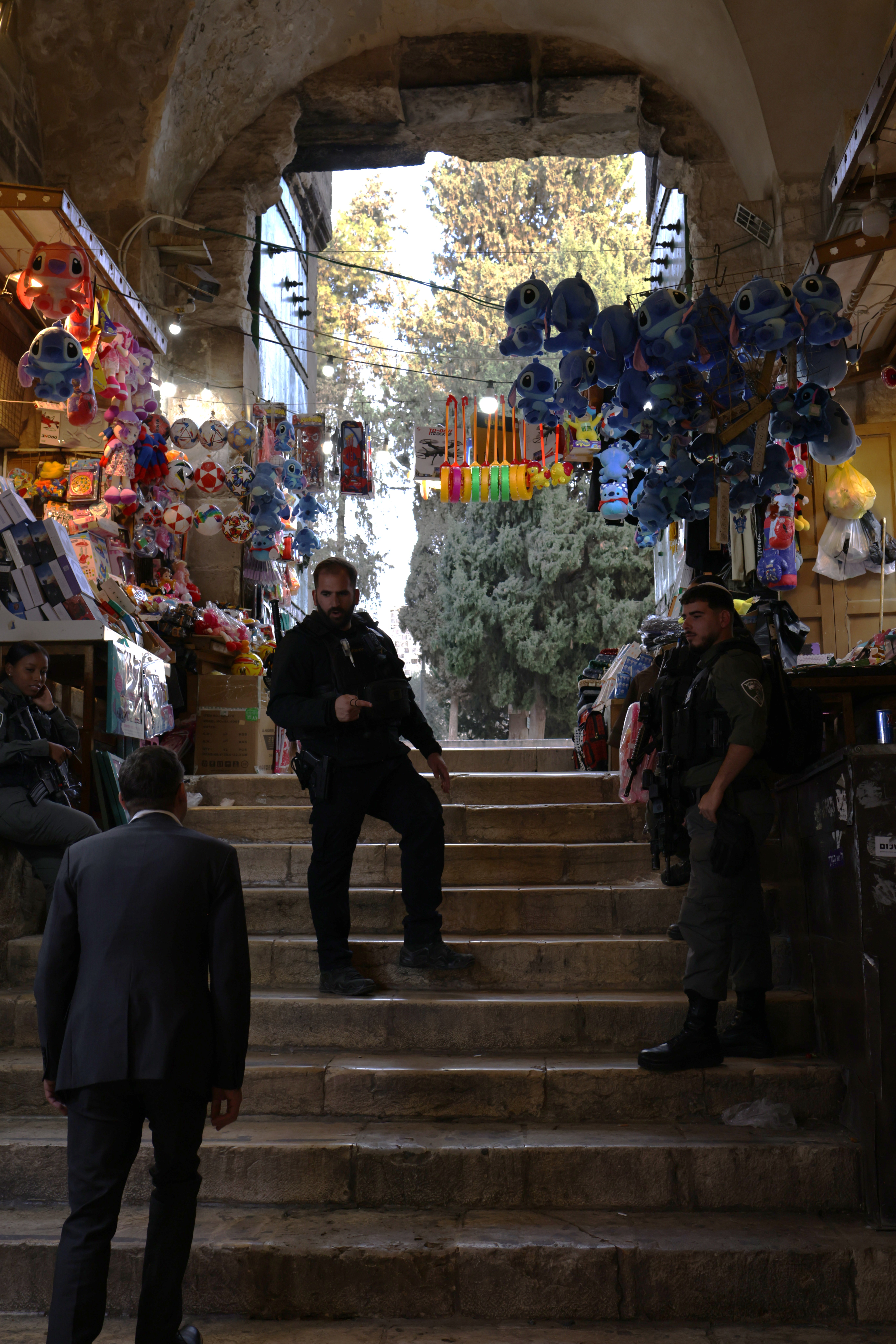
A solitary Jew is blocked from ascending the steps to the Jewish Temple Mount, the holiest location in Judaism, because he is a Jew. (photo: First One Through)

They are redirected instead to a single entrance ramp, detached from the Old City’s living arteries. The ramp rises from the edge of the Western Wall plaza, a vast open expanse that functions less like a neighborhood and more like a giant stone parking lot. From there, Jews may ascend only during narrow windows, under escort, forbidden to pray, forbidden to whisper, forbidden even to move their lips in devotion.

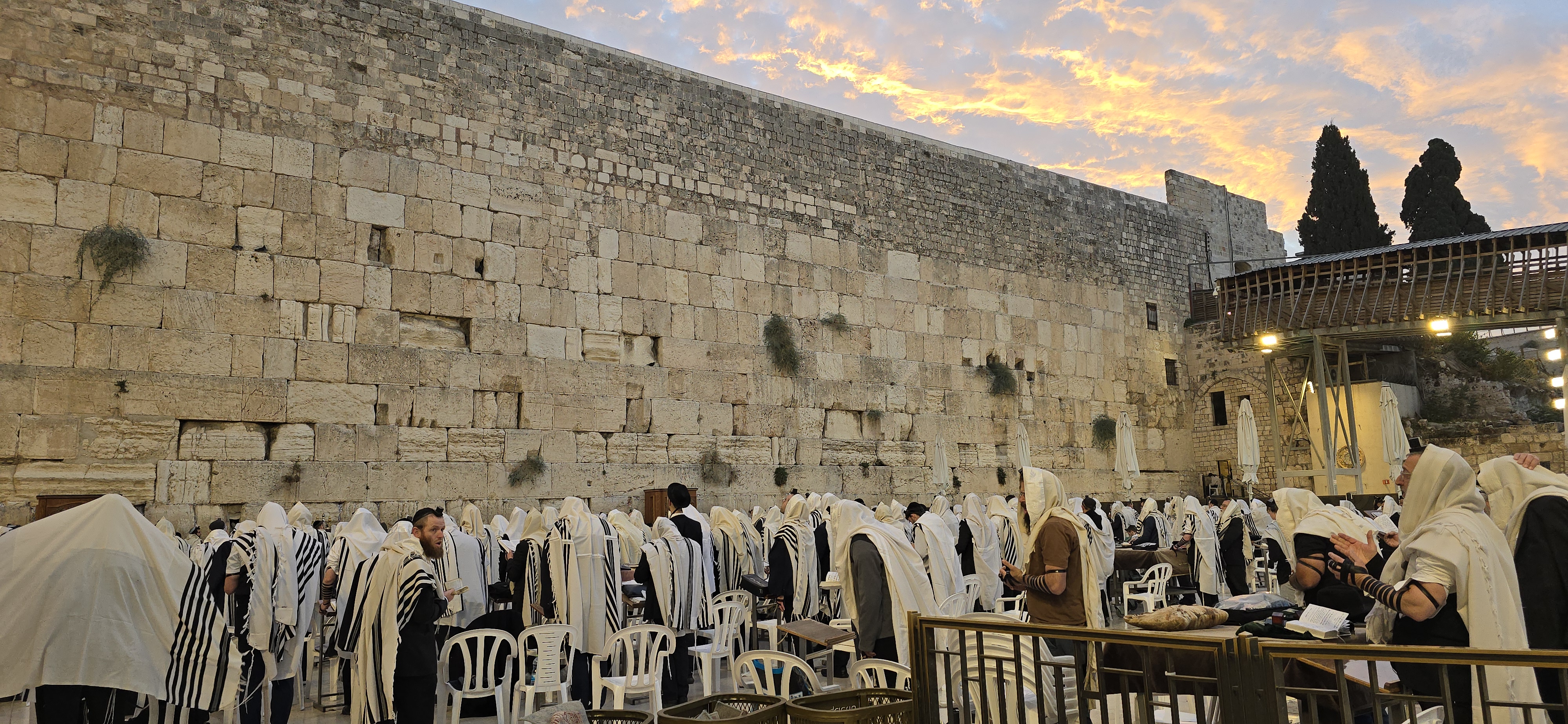
Jews are limited to prayer at the Western Wall, a supporting wall to the Temple Mount. The ramp to the Mughrabi Gate (top right) is the only gate of the ten operating gates where Jews can pass onto the Temple Mount, in limited numbers, at limited times. (photo: First One Through)

Jews are told to make do.

Make do with praying to a retaining wall of the Temple Mount.
Make do with history filtered through permission.
Make do with holiness at a distance.

This arrangement is often called the “status quo,” as if it were ancient, neutral, or inevitable. It is none of those things. It is modern. It is enforced. And it rests on a single premise: Islamic supremacy over the site requires Jewish silence at Judaism’s holiest place.

Muslims may ascend and descend at will. Jews may only look up.

The irony is almost unbearable. Judaism sanctified this mountain long before Islam existed. The Temples stood here before the Qur’an was written, before the Dome of the Rock was imagined, before the word “status quo” could be used to freeze injustice in place.

And yet today, Jewish presence itself is treated as a provocation.

Not violence. Not disruption. Presence.

The gates tell the story more honestly than any diplomatic statement ever could. Gates that welcome. Gates that redirect. Gates that close.

It’s a caste system familiar to Black Americans. “For Whites Only” is now “For Muslims Only” for 90% of the gates to the Temple Mount. “Negro Entrance” read “Non-Muslim Entrance” is plastered atop a ramp in the far corner of the Temple Mount. While racial Jim Crow laws ended in the U.S. decades ago, Jews remain subject to open religious discrimination at their holiest location. At the insistence of the United Nations.

In Jerusalem, everyone speaks of coexistence. But coexistence cannot survive when one faith ascends freely and another is barred from its own summit.

Iranian Axis Also Hates Baha’is

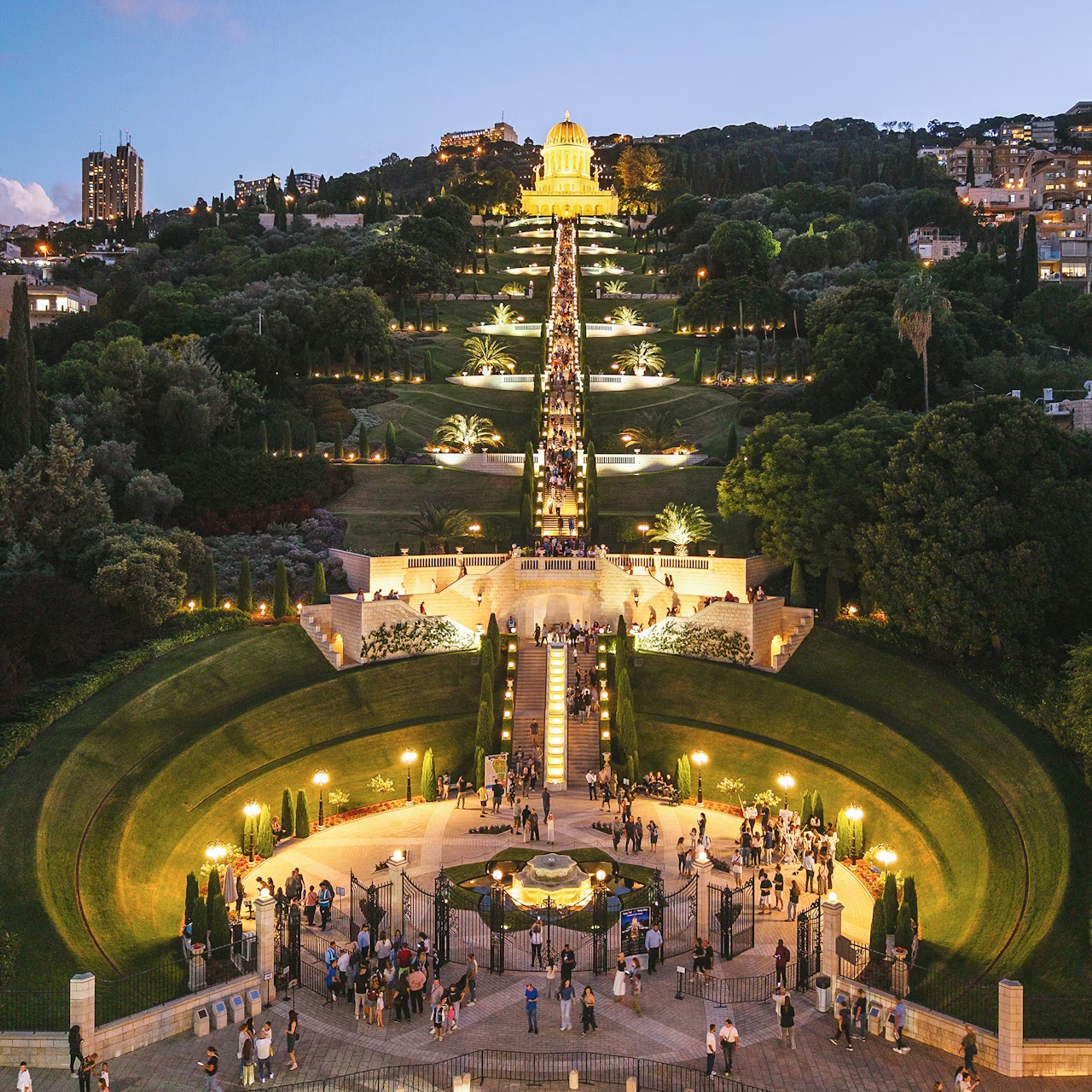
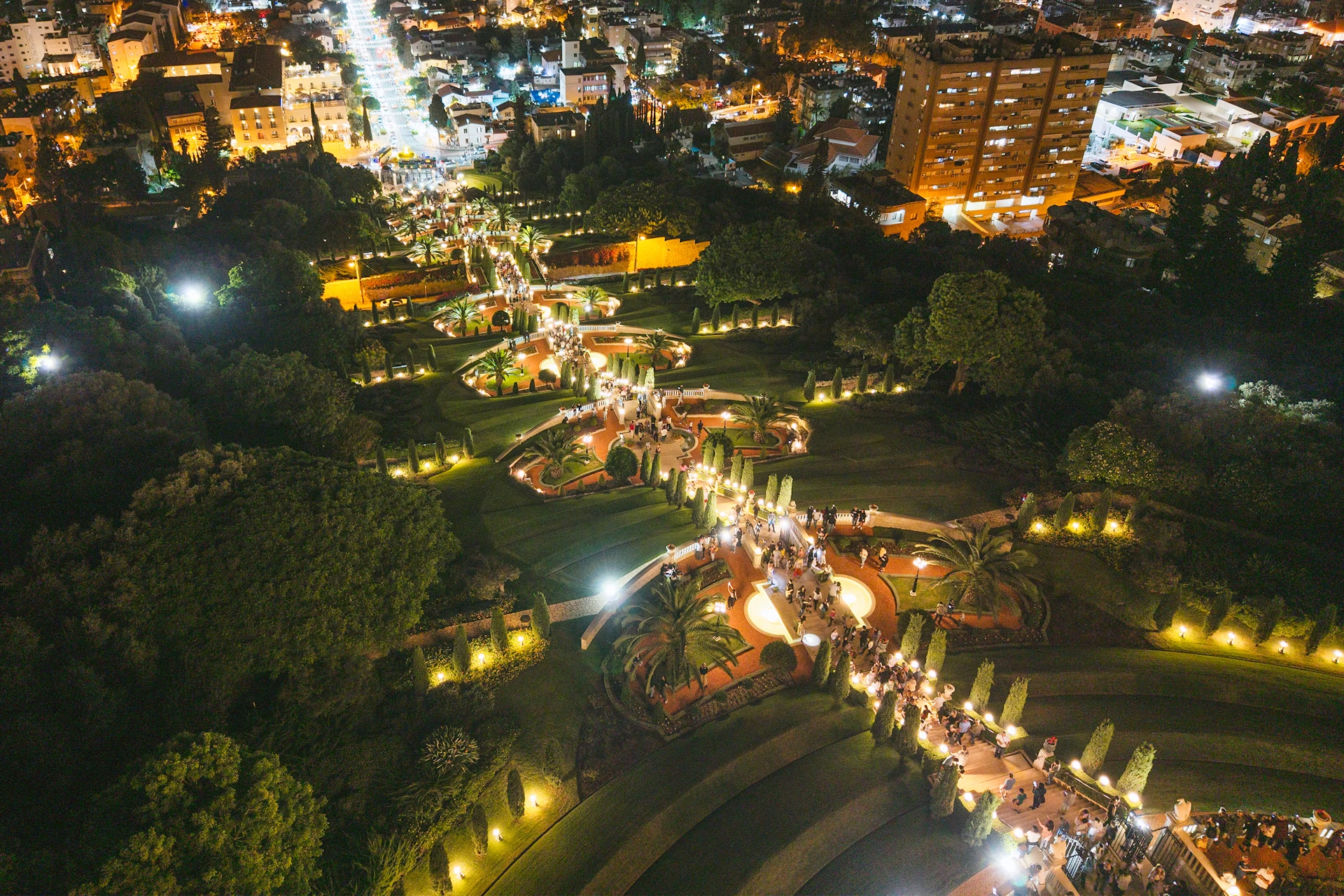
In October 2025, the Baháʼí Gardens in Haifa Israel shimmered under evening lights as thousands strolled the terraces surrounding the golden Shrine of the Báb. The event, “Terraces by Night,” invited everyone — Israelis, tourists, diplomats, Muslims, Christians, Jews — to share in quiet wonder. It was a celebration of beauty and peace, the essence of a faith that teaches the unity of mankind.

“The Bahá’í Gardens and the Shrine located in them are a religious and cultural asset of the highest order for Haifa and the State of Israel, and their spectacular beauty is an extraordinary global phenomenon. The connection between the city of Haifa and the Bahá’í Faith and the gardens is a unique bond of brotherhood and connection, because Haifa is a symbol of shared life.”

– Haifa Mayor Yona Yahav


That same faith is banned or persecuted across much of the Middle East. In Iran, where the Baháʼí Faith began, believers are barred from universities, their cemeteries desecrated, their homes seized. In Yemen, the Houthi regime has deported Baháʼís and outlawed their assemblies. In Qatar, a country that funds global propaganda about human rights, Baháʼís have been detained and denied employment. The list goes on: Christians face church burnings in Iraq and Egypt; Yazidis were enslaved by ISIS; Jews are long gone from the Arab world that once housed thriving communities.

The pattern is unmistakable — a region where religion is invoked constantly, yet religious freedom barely exists. Theocratic and authoritarian regimes claim divine legitimacy while erasing those who believe differently. Hatred of Jews may be the most visible strain, but the intolerance runs deeper: a rejection of pluralism itself.

Against that backdrop, Israel stands as an anomaly. The Baháʼí World Centre — the faith’s spiritual heart — sits on Mount Carmel, Haifa, Israel by choice, not exile. Baháʼís are forbidden by their own laws to proselytize in Israel, yet they flourish there. Muslims pray in mosques, Christians ring church bells, Druze maintain their shrines. It is imperfect coexistence, but coexistence nonetheless — a rare reality in a region where diversity elsewhere draws death sentences. Israel is the only country in the world where the religious majority does not make up the majority of annual tourists (Christians make up more than 50% of tourists to Israel each year).

Various pilgrims file in through the Jaffa Gate in the Old City of Jerusalem in April 2017 (photo: First One Through)

Even the United Nations, which rarely misses a chance to criticize Israel, cannot ignore this hypocrisy. In December 2024, it condemned Iran stating the “dramatic rise in persecution against Baha’i women is an alarming escalation.” Yet it has remained silent on Qatar, whose wealth buys global silence — from universities, media, and even diplomats who recite the language of tolerance while pocketing the proceeds of repression.

The Baháʼí Faith preaches that humanity is one family. In Haifa, that message is literal — thousands of visitors walking through open gates, cared for by volunteers of every background. It’s a vision of what the Middle East could be if faith were not used as a weapon.

The Baháʼís open their gardens in Israel while their co-religionists suffer in silence around the Muslim Middle East. They celebrate while others cower. And they do it in the one nation in the region where the doors of worship remain open for those willing to coexist peacefully.

Over 13,000 people experienced the illuminated terraces leading to the Shrine of the Báb, in October 2025’s “Terraces by Night” in Haifa, Israel

Related:

Christians Love the Jewish State (March 2021)

Jihadi Coexistence

The defenders of Hamas are out. In spite of the horrible massacre of innocent civilians, extremists are blind with hatred and doubling down rather than abandon their comrades. Intersectionality dogma obliges adherents to coalesce when times are dark, and the stickiness of evil can feel empowering.

Many of the backers of the Palestinian terrorists are not Islamic extremists but “progressives” who have convinced themselves that Jews have no history or rights in the holy land and are “colonial settlers” who must be fought. They blame the victim – Israel – for their own deaths. They manufacture new realities on the fly, combining jihadi antisemitic propaganda with twisted progressive values.

Consider the goal of coexistence.

If Hamas truly hated Jews, it would kill every Jew it encountered and not bring so many children, women, men and elderly back to Gaza. Jewish hostages in Gaza are proof that Jihadists favor coexistence, at least a particular kind.

Hamas’ foundational charter Article six specifically mentions the goal of coexistence:

“The Islamic Resistance Movement is a distinguished Palestinian movement, whose allegiance is to Allah, and whose way of life is Islam. It strives to raise the banner of Allah over every inch of Palestine, for under the wing of Islam followers of all religions can coexist in security and safety where their lives, possessions and rights are concerned. In the absence of Islam, strife will be rife, oppression spreads, evil prevails and schisms and wars will break out.”

The goal of Hamas and its supporters is not a two state solution but one state ruled under shariah law where non-Muslims can live as second class citizens as dhimmis, paying a special jizya tax for having the privilege to live “under the wing of Islam.” It’s called Jihadi Coexistence, and is actively being marketed – and showcased – by radical socialists and Islamists.

Related articles:

Biden To Push Coexistence Agenda To Palestinian Arabs Not Interested

US Embassy In Israel Only Invites Muslims To US To Study

The DSA Is Systematically Coming For Zionist Jews

Palestinians Utterly Fail Two Tests: Oslo Accords And Gaza Disengagement

Excerpt of Hamas Charter to Share with Your Elected Officials

The Left-Wing’s Two State Solution: 1.5 States for Arabs, 0.5 for Jews

Majority of Palestinians Believe Israel Will Soon Cease to Exist

Eyal Gilad Naftali Klinghoffer. The new Blood Libel.

Palestinian Inversion Of Facts Based On Refusal To Coexist

The too familiar routine of a Palestinian Arab viciously attacking a Jewish civilian unfolded again. An Arab repeatedly stabbed a Jewish civilian, and then another Jewish civilian witnessed the crime and shot the terrorist.

The sequence is straightforward. The perpetrator and victim are clear.

But only if you see the actions through the lens of coexistence, as most Israelis and the western world perceive.

For Palestinian Arabs and their sympathizers, Jews have no right to even be next to the Arab. The basic presence of Jews was the offense, and therefore the Arab is the actual victim twice over – first having to live with Jews, and then to be shot by those same “settlers.”

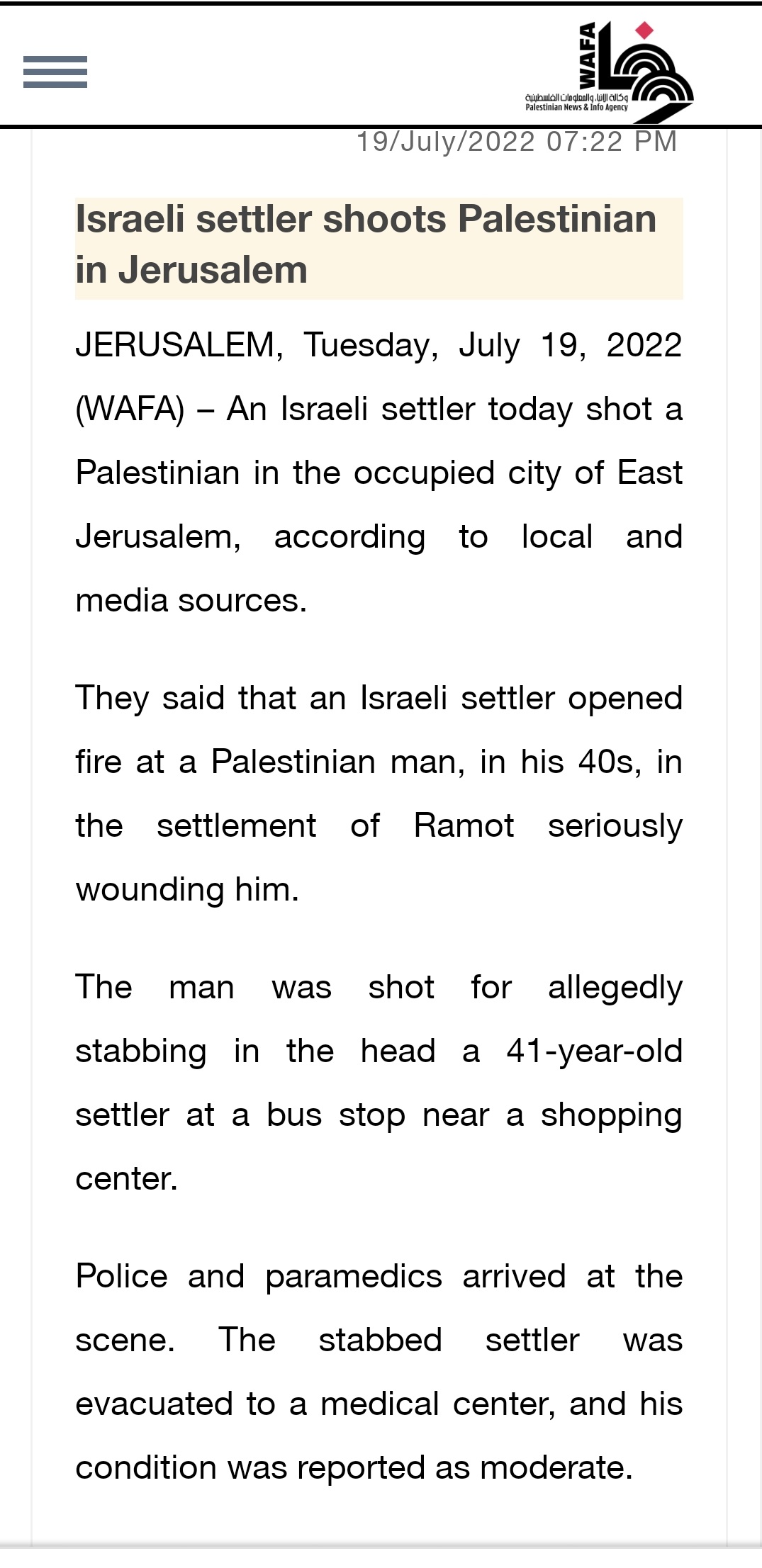
Palestinian media covered the event with the header “Israeli settler shoots Palestinian in Jerusalem,” making the incident appear as an unprovoked Israeli attack on Arabs, absolution via inversion.

The Jerusalem Post headline was the opposite: “Jerusalem stabbing attack: 41-year-old in moderate condition.” The audience readily understood that the terrorist was an Arab who attacked a Jewish civilian.

The Jerusalem Post article continued with “Hamas spokesman Hazem Qassem said the stabbing was ‘a natural response to the occupation’s crimes against our Islamic and Christian sanctities in the city of Jerusalem. This act of resistance confirms once again the failure of all attempts to stop the escalation of the act of resistance in the occupied West Bank and the city of Jerusalem,’ he said.“

While Israelis attempt to live lives of coexistence, Palestinian Arabs believe that Jews have no history or rights to live in the land, especially in Jerusalem. The Arab street, political parties and media openly support violence to “resist” the presence of Jews.

The nature of the conflict is clear: an Israeli vision of coexistence compared to an Arab vision of a Jew-free land.

Related articles:

Abbas Declares All of Israel is a “Painful Settlement”

Palestinians Want Their Young Girls To Become Terrorists

Review of Media Headlines on Palestinian Arab Terror Spree

Hamas’s Willing Executioners

Excerpt of Hamas Charter to Share with Your Elected Officials