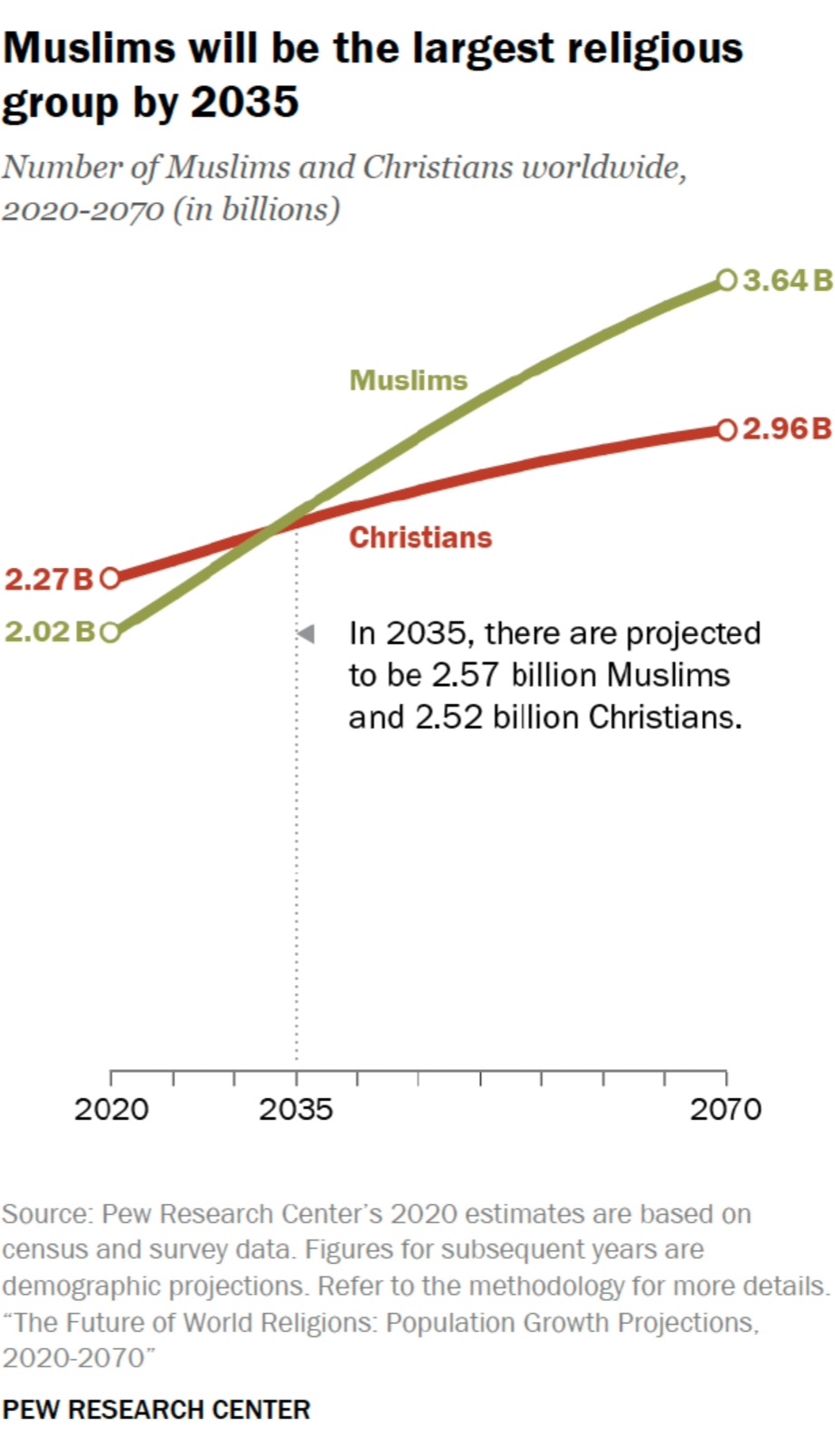
Pew’s new report drew headlines about Muslims surpassing Christians worldwide by 2035. For North America, the larger change is the end of Christianity’s majority. Pew defines the region as the United States and Canada; Mexico is counted with Latin America and the Caribbean.
By 2070, Pew projects, Christians will fall from 63% of North America’s population to 46%. The unaffiliated will rise from 30% to 41%. Canada loses its Christian majority by 2030; the United States by 2065. The main cause is people leaving Christianity. Without religious switching, Pew projects Christians would still make up 57% of the region in 2070. The unaffiliated include atheists and agnostics, but also people who say they have no particular religion.
Age and fertility reinforce the shift. Christians and Jews in North America have a median age of 44; Muslims, 27.9. Muslim women have an estimated 1.9 children, compared with 1.7 for Christians and 1.5 for Jews. All three rates are below replacement. The younger Muslim population and higher fertility contribute to growth, while the older Christian and Jewish populations face more deaths than births.
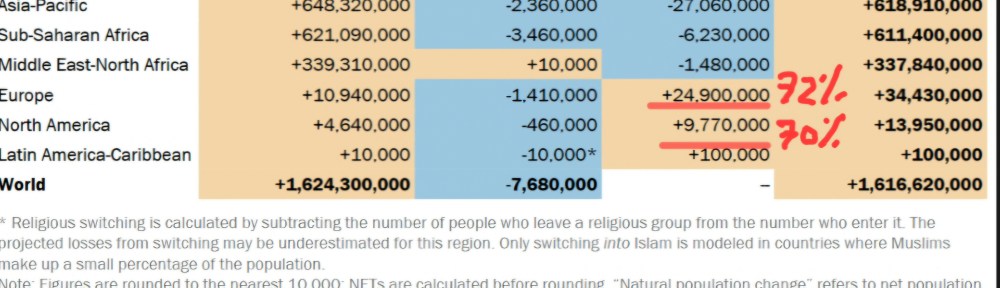
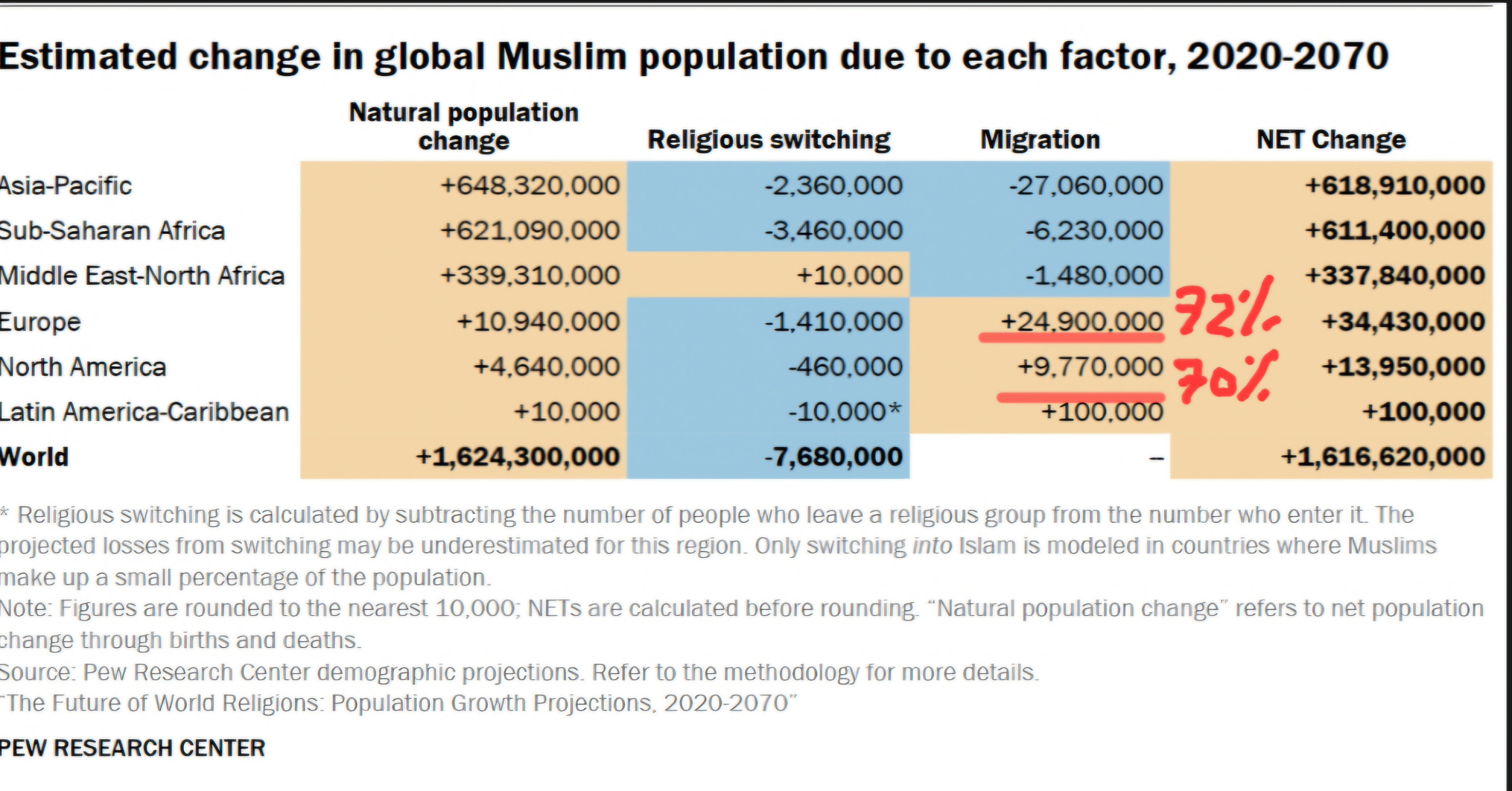
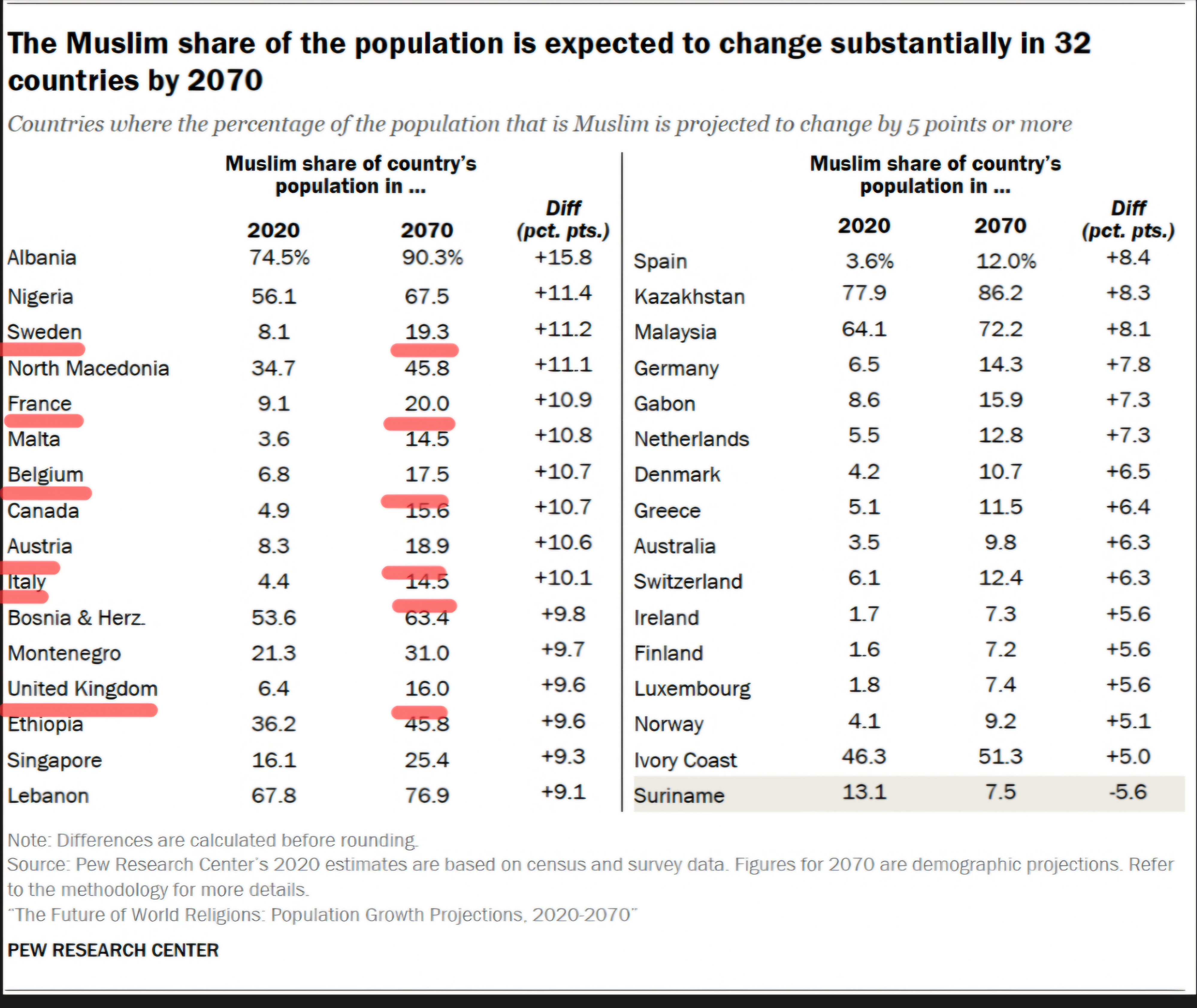
But fertility is not the main reason Pew projects Muslim growth here. Muslim migration accounts for 9.8 million of the roughly 14 million net increase—about 70%. Natural population growth adds 4.6 million; religious switching subtracts about 460,000. Canada’s Muslim share rises from 4.9% to 15.6%. In the United States, it reaches 3.7%.
Migration also helps drive Hindu growth in North America. The Jewish picture runs in the opposite direction demographically: Israel’s share of world Jewry is projected to rise chiefly because Israeli Jews are younger and have higher fertility. Pew projects North America to gain about 70,000 Jews through migration overall, with 110,000 entering the United States and 30,000 leaving Canada.
[Note: Pew’s Canadian Jewish projection deserves correction. It counts a 130,000-person gain from religious switching. Remove that unsupported gain and the projected Canadian Jewish population falls from roughly 500,000 to about 370,000–380,000, close to the 2020 figure.]
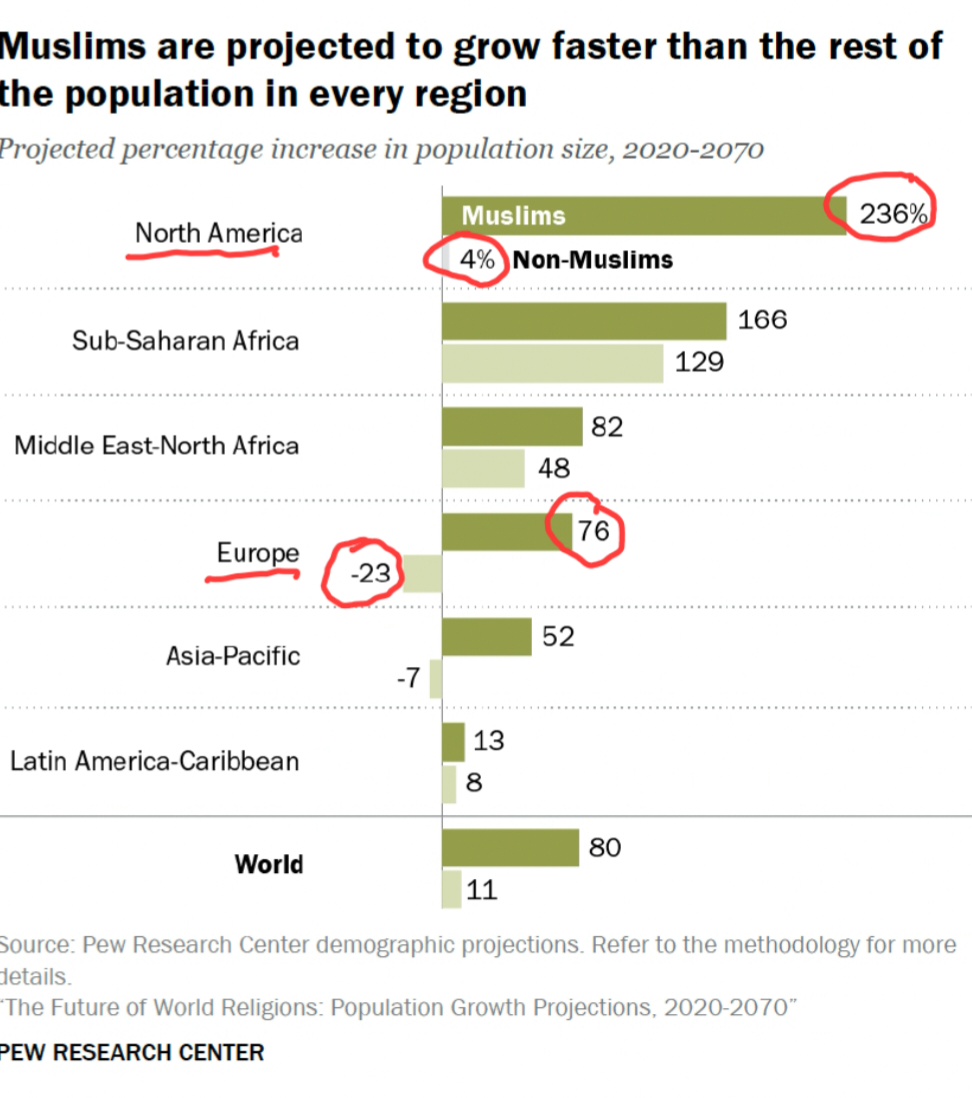
This is happening in Europe as well. While both Muslim and non-Muslim populations in North America are growing – although almost exclusively from Muslims – the non-Muslim population in Europe is actually expected to shrink, while Muslims will grow by 76 percent.
The headlines show what different publications chose to emphasize. The Forward framed the Jewish finding as “America’s Jewish population is shrinking as Israel’s is growing.” JNS quoted Pew’s Alan Cooperman: “There’s still a robust Jewish community in the United States.” Christianity Today headlined its story, “Christians Will Be Minority in North America by 2070, Will Double in Africa.” Religion News Service opened its global report: “The future of religion will belong to faith groups that have the most children.” Each found its own story in Pew’s numbers. General coverage led with the global crossover; I found no standalone New York Times story in the first wave. The North American role of migration received much less attention. I found no public CAIR statement on the report.
By 2070, Christians will remain North America’s largest religious group, but they will no longer be its majority. The unaffiliated will nearly match them; migration will have helped build a Muslim population of about 20 million, becoming a very significant minority in Canada, much like Europe. The calendar, schools and political coalitions will reflect a population that no longer shares one religious center.
A Christian majority shaped public life in North America and Europe for generations. Pew’s projection says that era is ending.


