
For most Americans, armed guards outside synagogues still look unsettling. For Jews, they have become background scenery. And increasingly, so has something else: being mocked for wanting the guards there in the first place.
Security cameras and hardened doors. Police details and lockdown drills. Volunteers scanning crowds during services. This is now ordinary Jewish life in America.
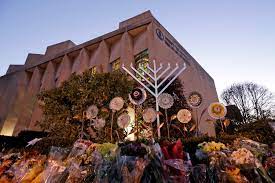
And yet, at the very moment Jews are hardening schools and synagogues because they are under threat, influential voices across media, activist circles, and politics increasingly frame Jewish fear itself as manufactured.
Federal authorities recently uncovered what prosecutors describe as an Iran-linked terror network targeting Jews and synagogues across the United States and Europe. According to the allegations, operatives connected to Kata’ib Hezbollah coordinated surveillance and attack planning against Jewish institutions in New York, California, Arizona, London, Amsterdam, and Toronto.
The response from much of the cultural left was not moral clarity about why Jewish institutions feel endangered. Instead, the familiar machinery of minimization immediately activated.
Last Week Tonight with John Oliver aired a lengthy segment mocking undercover counterterror operations and emphasizing cases where authorities supposedly manufactured extremists through entrapment. The timing could hardly have been more revealing. Jews hear about Iranian proxy terror targeting synagogues while elite comedy television reassures audiences that perhaps the greater danger is excessive concern about terrorism.
At the same time, activist organizations like CAIR and civil-liberties groups fought efforts to create limited buffer zones around synagogues facing aggressive intimidation and harassment. Senators questioning Jewish witnesses during campus antisemitism hearings increasingly sounded less interested in confronting hatred than in interrogating whether Jews were exaggerating it.
The pattern repeats constantly. Jews are under attack and ask for protection. Influential institutions respond by interrogating whether Jews are too afraid and therefore undeserving of any support.
No other minority group is treated this way. If Black churches increased security after racist attacks, nobody would accuse them of hysteria. If mosques hardened entrances after terror threats, commentators would call it prudent. If Asian community centers hired guards after targeted violence, politicians would praise vigilance.
Only Jews are routinely told their fear may itself be socially dangerous.
That is what makes this moment so disturbing. Jews are not simply confronting rising antisemitism. They are confronting a cultural elite increasingly uncomfortable acknowledging why Jewish security measures became necessary in the first place.

So instead of confronting the ideology threatening Jews, many commentators, activists, and politicians redirect attention toward the people trying to protect them. The synagogue barrier becomes controversial. The undercover operation becomes suspicious. The frightened Jewish parent becomes the problem – a Chaya/Karen – to deconstruct. Much as Israel’s security barrier built to stop West Bank terrorists has been labeled by the alt-left an “apartheid wall,” they are broadly inverting Jewish defensive measures into offensive ones.
Let’s be clear: a society that grows more skeptical of synagogue security than synagogue attackers has lost its moral bearings.
Related
When Jews Are Attacked, The New York Times Worries About Jihadists (March 2026)


Pingback: “Citizen Vigilante” Is Not About One Movie. It Is About What Happens When People Stop Trusting the State. | First One Through