
The Associated Press did not cover Jerusalem Day as a story about Jews returning joyfully to the holiest city in Judaism after nineteen years of exclusion under illegal Jordanian occupation. It covered it as a story about Jewish menace.
That framing decision is visible before readers even reach the second sentence.
“Ultranationalist Jews chant racist slogans during annual march into Jerusalem’s Old City.”
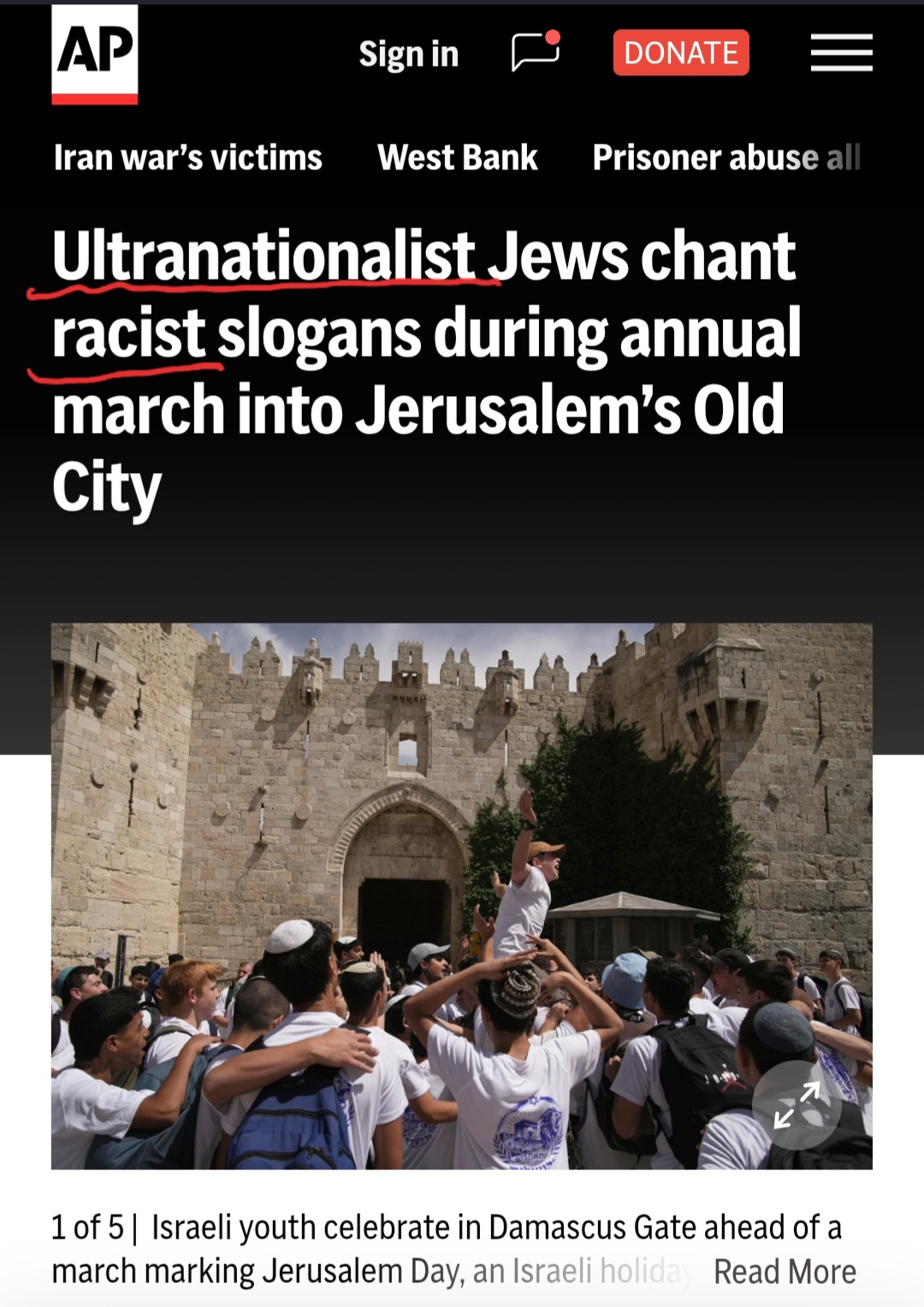
The rare racist chants reported at the march were ugly and deserve condemnation. But AP transformed the fringe into the essence of the event itself. Tens of thousands of Jews marched peacefully, sang, danced and celebrated Jerusalem Day. Yet readers encountering the article for the first time would assume the defining feature of the event was racist hooliganism when in fact it was joyous celebration.
AP’s linguistic stacking is relentless:
“ultranationalist Jews.”
“racist slogans.”
“violent confrontations.”
“hard-line government.”
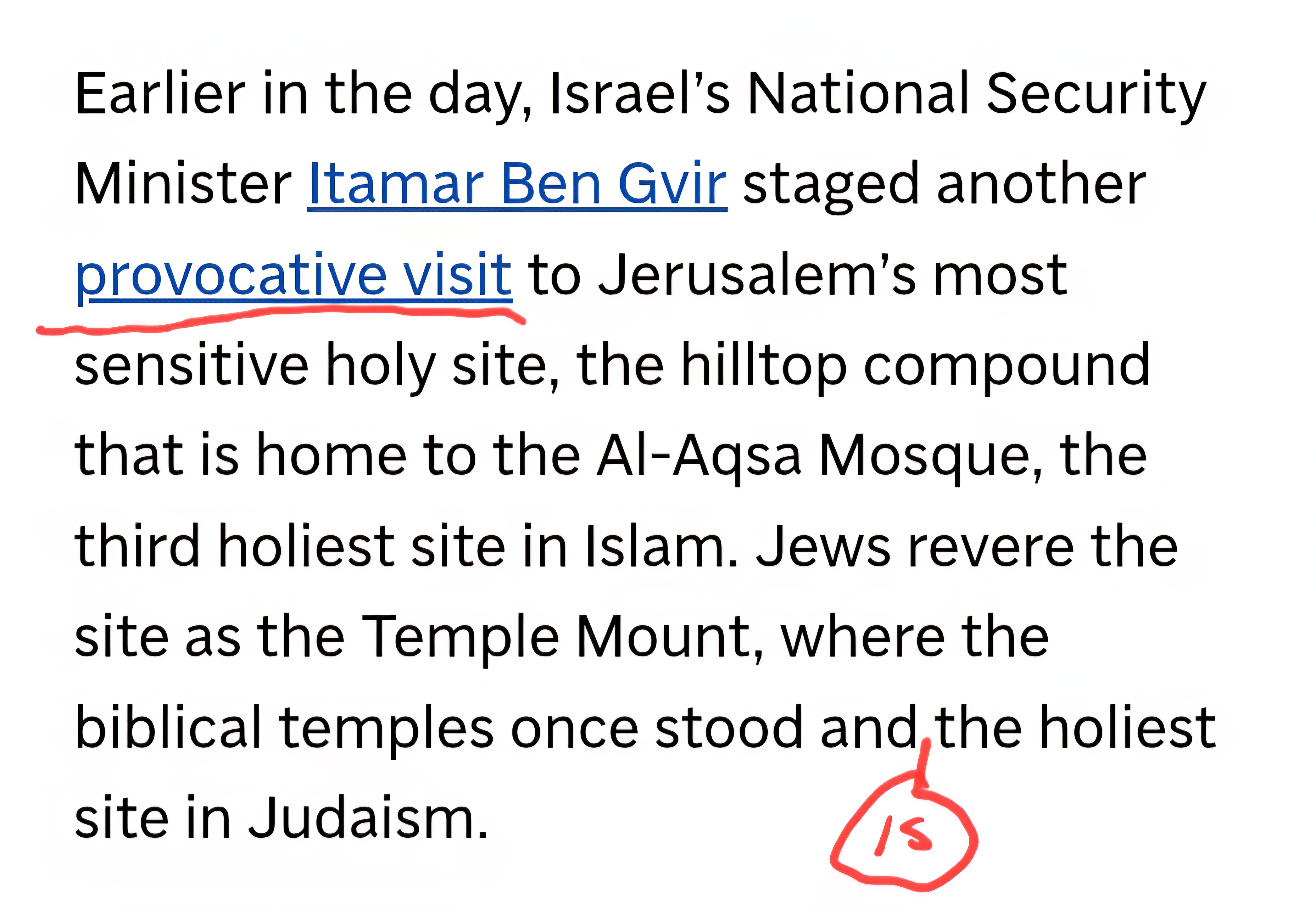
“provocative visit.”
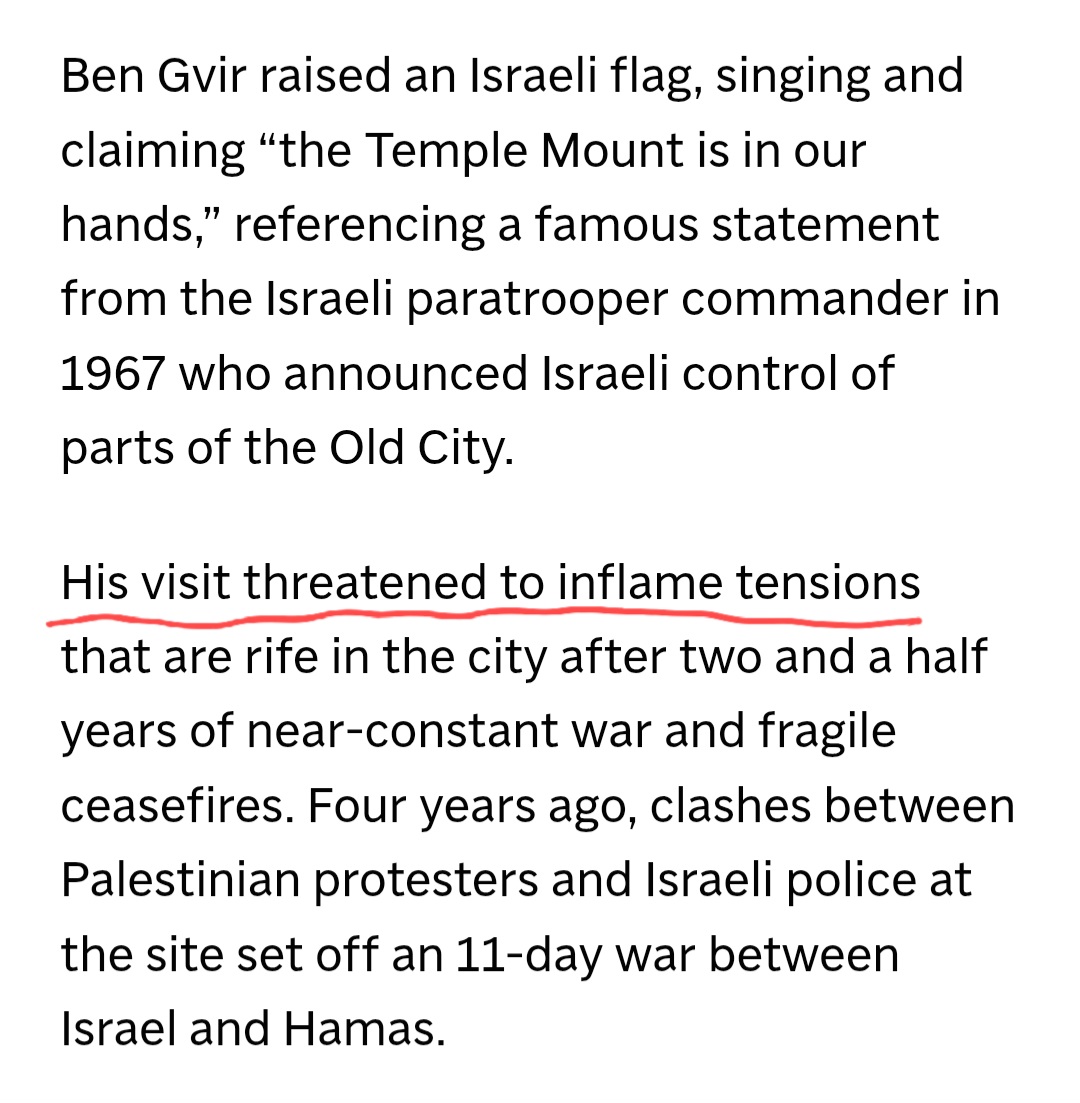
“inflame tensions.”
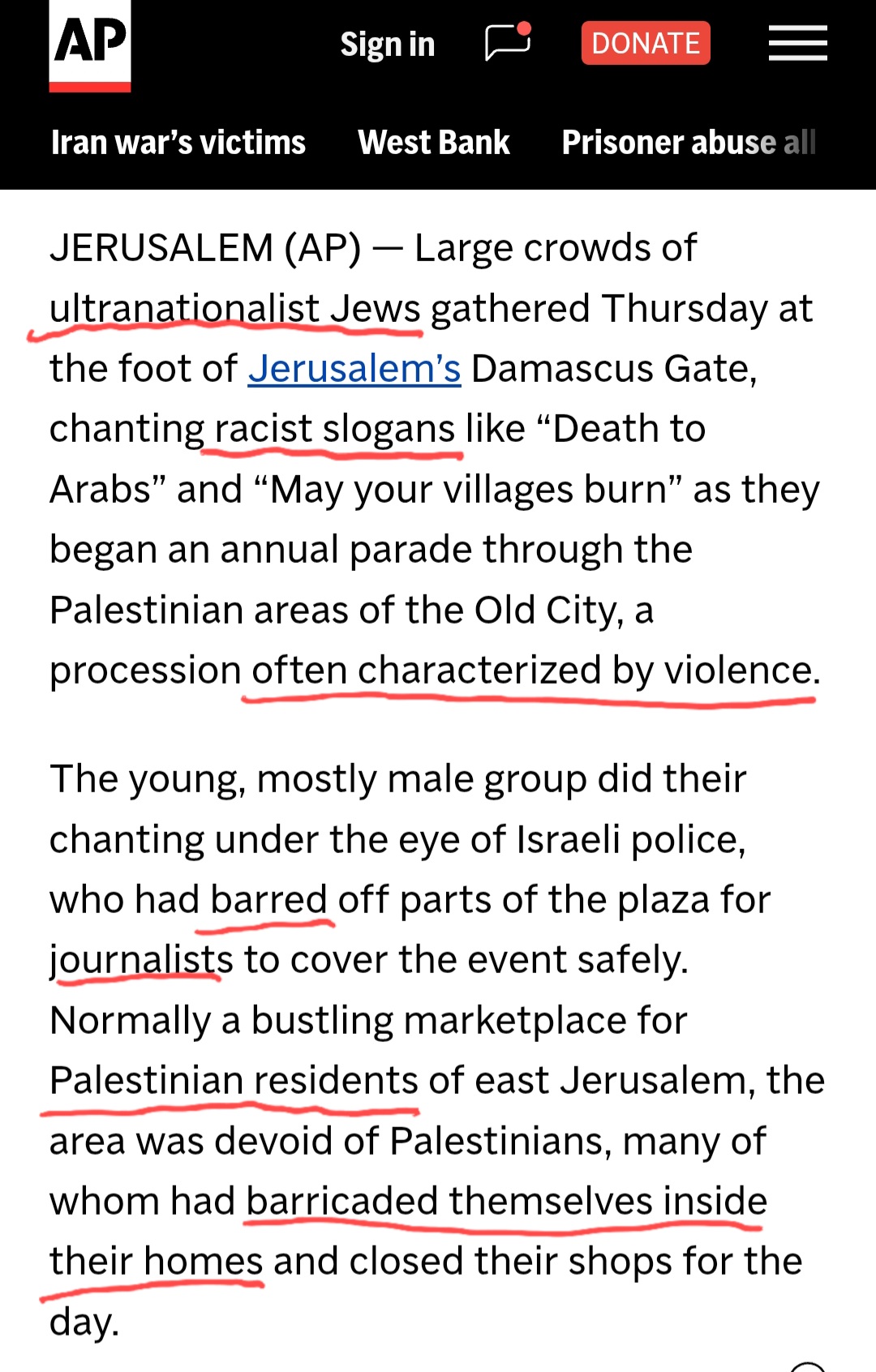
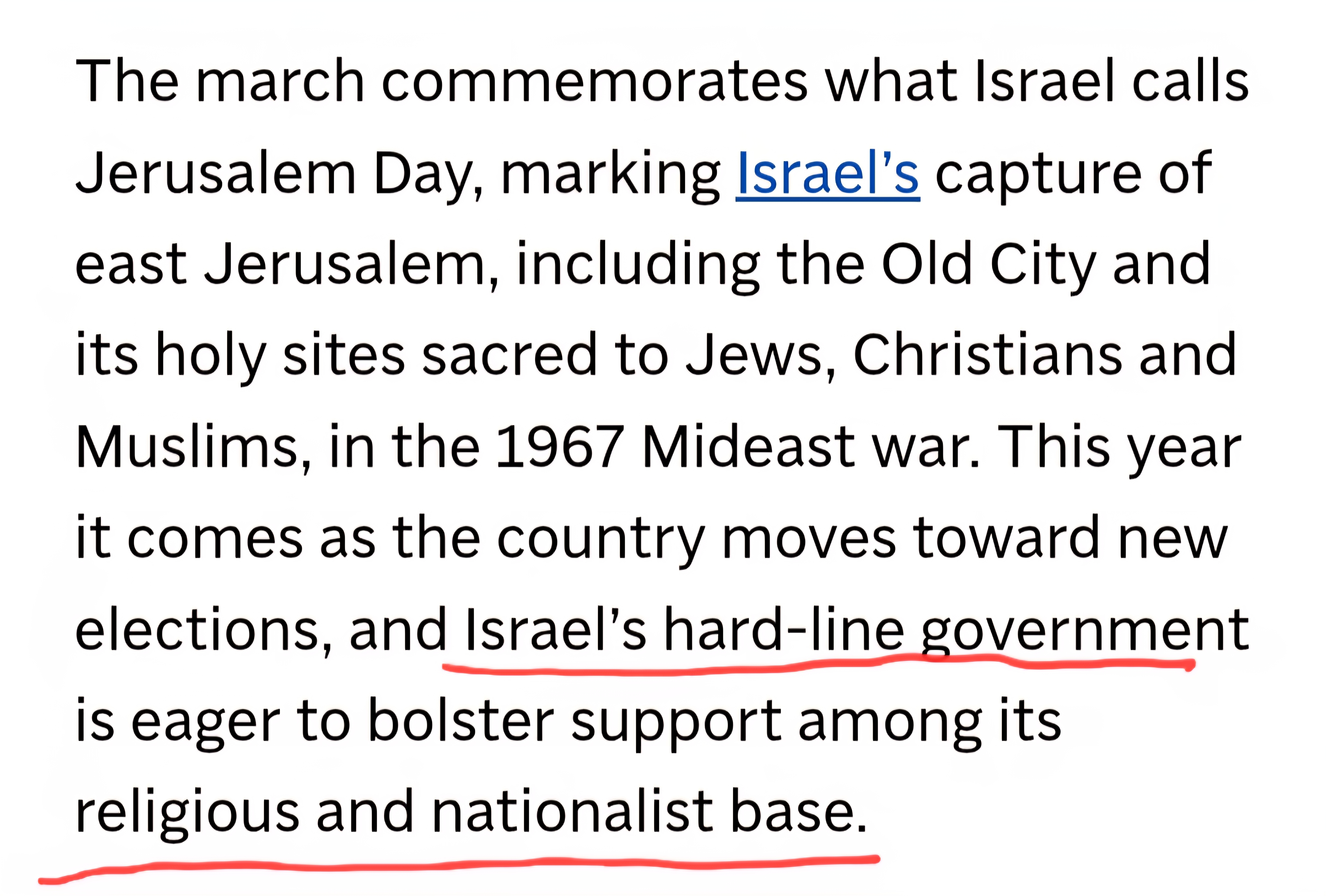
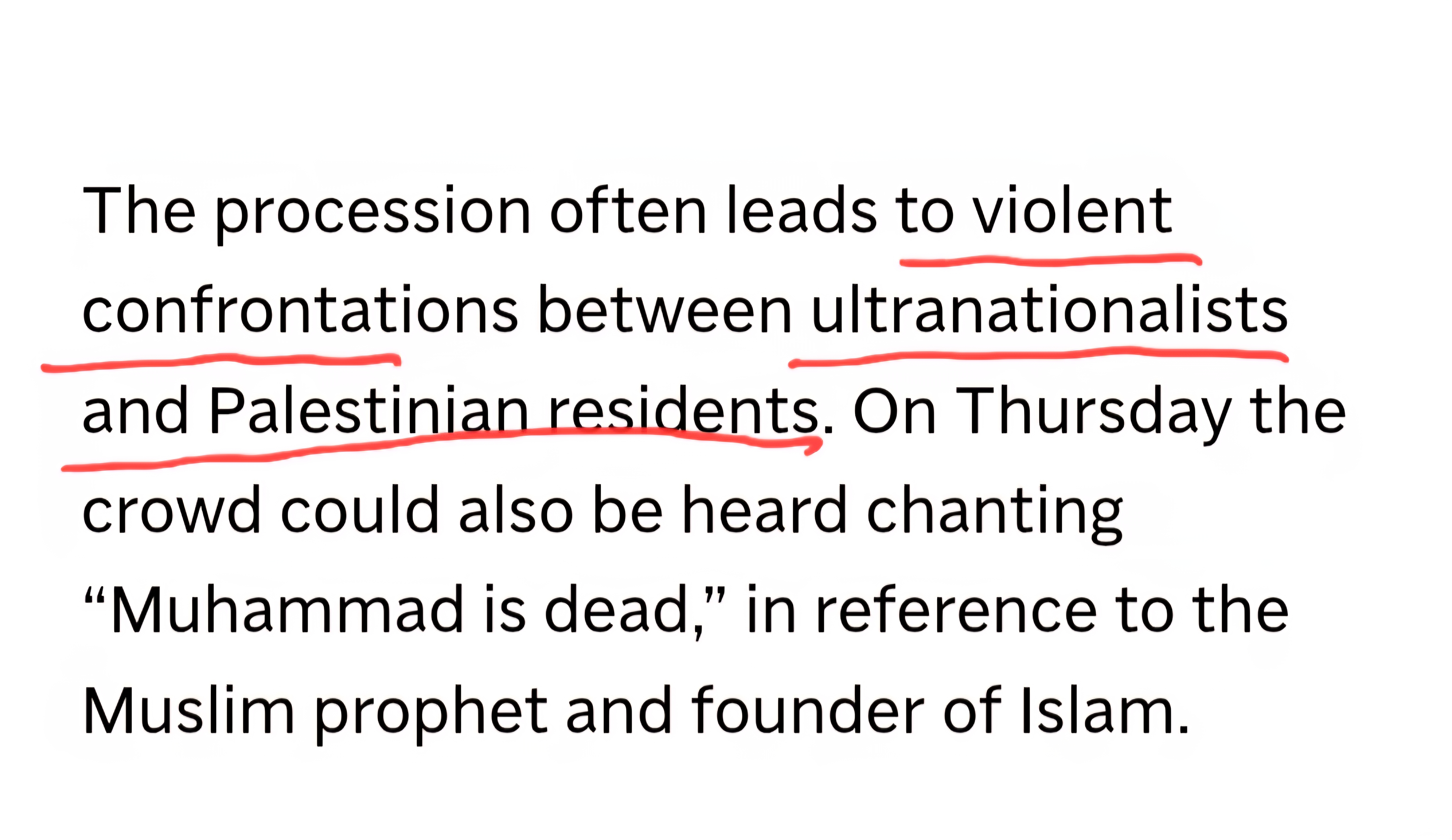
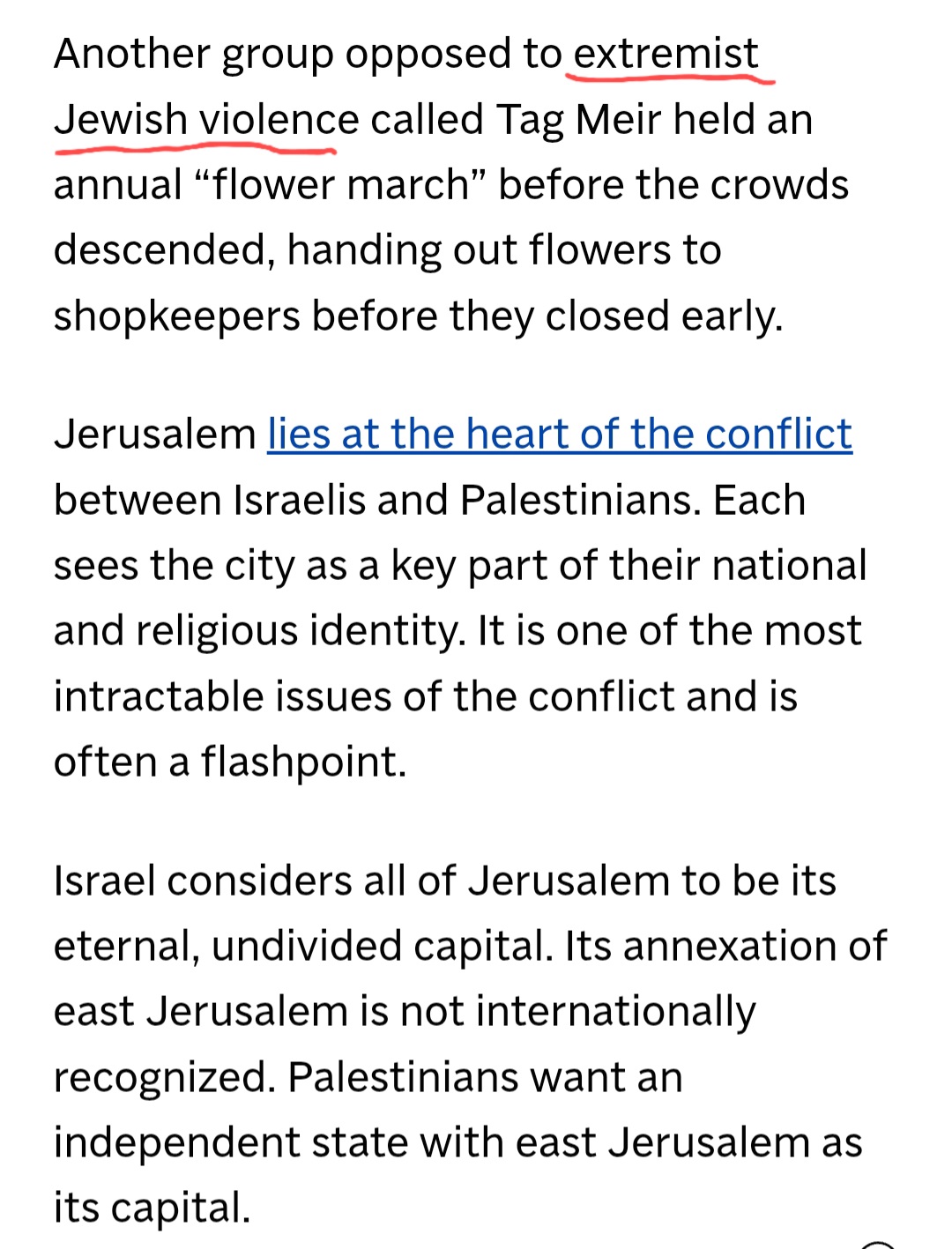
Every descriptor pushes readers toward the same emotional conclusion: Jewish sovereignty in Jerusalem is dangerous, aggressive and destabilizing. Palestinians are the natural residents and Jews are interlopers who threaten violence.
The false narrative erases the actual historical meaning of the day.
Jerusalem Day marks the reunification of Jerusalem in 1967 after Jordan’s nineteen-year occupation of the eastern part of the city. During those years Jews were expelled from the Jewish Quarter, synagogues were destroyed, Jewish cemeteries were desecrated and Jews were barred from praying at the Western Wall despite explicit guarantees of access under the armistice agreements.
Without that context, Jewish celebration is transformed into something alien and sinister. Readers are shown Jews marching through Jerusalem, but never fully told why entering the Old City carries such emotional and historical weight in the first place.
Erased from the narrative is the uncomfortable fact that Jews were once the excluded population in the very places now described almost exclusively through Palestinian identity.
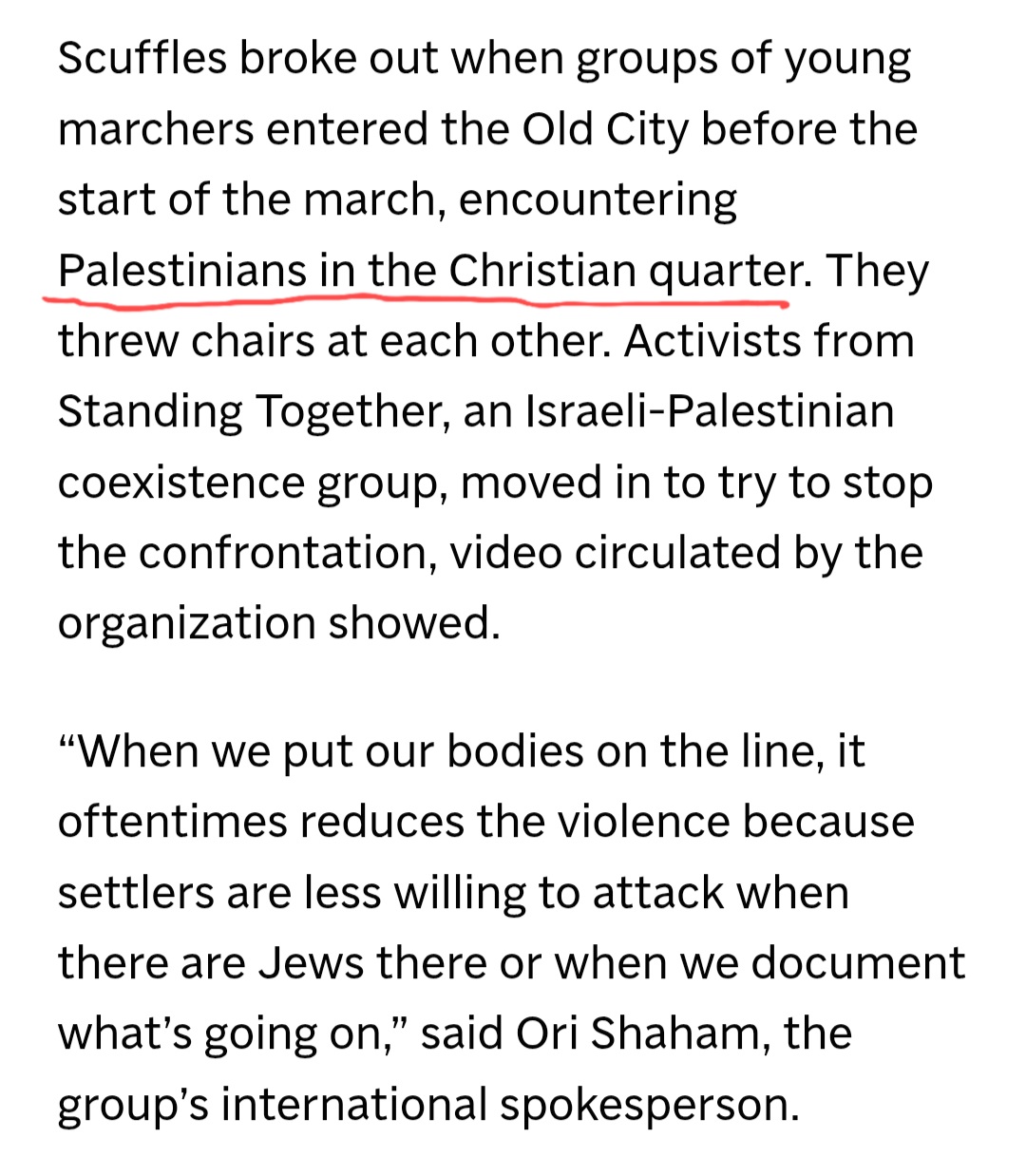
The asymmetry in labeling is impossible to miss. Arabs in Jerusalem are described as “Palestinians” or “Palestinian residents,” language that subtly implies an already-existing Palestinian sovereignty over the city. Jews, meanwhile, are repeatedly subdivided into ideological categories: “ultranationalists,” “hard-line,” “settlers.”
One side receives an organic national identity. The other receives political suspicion.
AP even refers to “Palestinian areas” of Jerusalem while never acknowledging the basic legal and political reality that these residents are primarily Israeli citizens or permanent residents under Israeli administration. There is no Palestinian state governing Jerusalem. Yet the article’s language continuously nudges readers toward imagining Jews as intruding into someone else’s sovereign national space.
Even the treatment of the Temple Mount follows the same pattern. AP describes MK Itamar Ben Gvir’s visit as “provocative” before readers are even reminded that the site is the holiest place in Judaism, where the biblical temples once stood.
Imagine covering Muslims praying in Mecca or Catholics gathering in the Vatican first through the lens of how upsetting their presence might be to others.
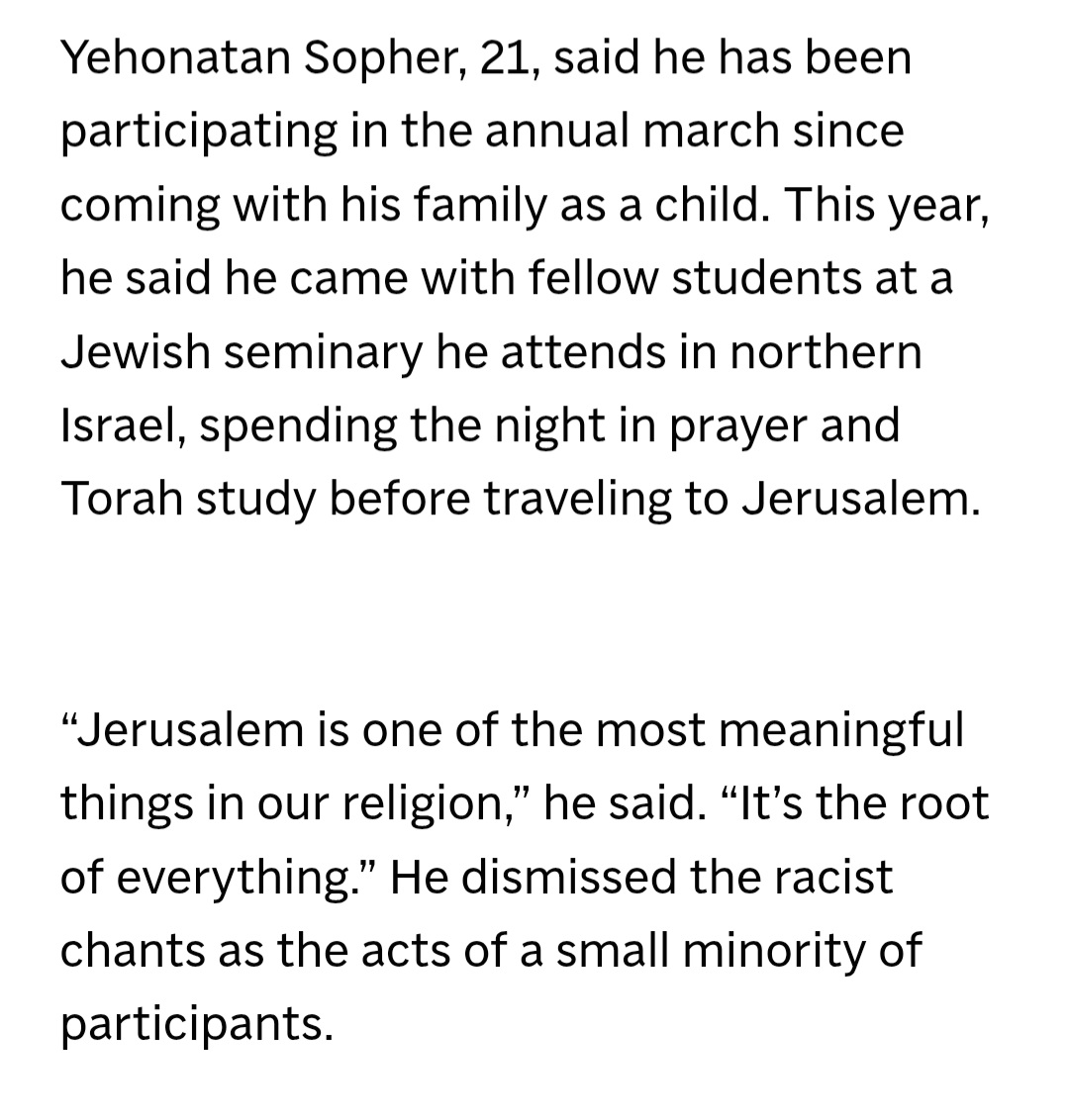
Buried later in the article is a participant explaining that the racist chants came from “a small minority” of marchers. But by then the framing work is complete. The reader has already absorbed the article’s core emotional message: Jewish nationalism itself is the problem.
There is a profound difference between reporting that some participants at a massive public gathering behaved disgracefully and presenting those fringe elements as representative of the gathering’s essential character.
One reports misconduct. The other assigns collective identity.
And the asymmetry becomes impossible to ignore when comparing coverage standards. When participants at a pro-Palestinian rally praised terrorism or chanted genocidal slogans, major international outlets avoid headlines assigning those slogans to Palestinians collectively. Readers would receive sociological context, political nuance and careful distinctions between extremists and the broader movement.
Jewish events rarely receive the same interpretive charity.
The deeper issue exposed by the article is not merely media bias. It is discomfort with Jewish sovereignty itself.
Jewish attachment to Jerusalem is welcomed when it is passive and distant. The moment it expresses sovereignty, history or power, the vocabulary changes. Then Jews become “ultranationalists.”
The article unintentionally reveals a larger truth about modern international discourse surrounding Israel. Jewish history is acceptable. Jewish prayer is acceptable. Jewish suffering is acceptable. What remains difficult for much of the international press is Jewish power: Jews governing Jerusalem, policing Jerusalem, marching through Jerusalem and refusing to behave like temporary guests in their own civilizational center.


Exellent- thank you for this.
Betty Ehrenberg
LikeLike