Will This Be the Last Fast of Tisha B’Av?

For nearly 2,000 years, Jews have fasted on Tisha B’Av to mourn the destruction of the First and Second Temples, the loss of Jewish sovereignty, exile from Jerusalem, and a long chain of national tragedies.

Jewish tradition also teaches that the fast will not last forever. The prophet Zechariah envisioned a day when the fasts commemorating Jerusalem’s destruction would become days of “joy and gladness and cheerful festivals.” Many rabbis have understood that era to arrive with the rebuilding of the Temple.

No one knows when that day will come.

Yet the last century has witnessed changes that generations of Jews scarcely dared imagine.

The Jewish people returned to their ancestral homeland. The State of Israel was reborn (1948). Jerusalem was reunited under Jewish sovereignty (1967). For the first time in nearly two thousand years, Israel is home to the world’s largest Jewish population (2012).

Israel has also become increasingly accepted by its Arab and Muslim neighbors, establishing diplomatic relations with Egypt (1979), Jordan (1994), the United Arab Emirates (2020), Bahrain (2020), Morocco (2020), Sudan (2020, pending implementation), and Kosovo (2021). Meanwhile, the United States (2018), Guatemala (2018), Honduras (2021), Kosovo (2021), Papua New Guinea (2023), Paraguay (2024), and Fiji (2024) have moved their embassies to Jerusalem, while other countries (Slovenia and Nauru) are considering doing the same.

Last year (2025), more than 75,000 Jews ascended the Temple Mount – a modern record that would have been unimaginable only a generation ago.
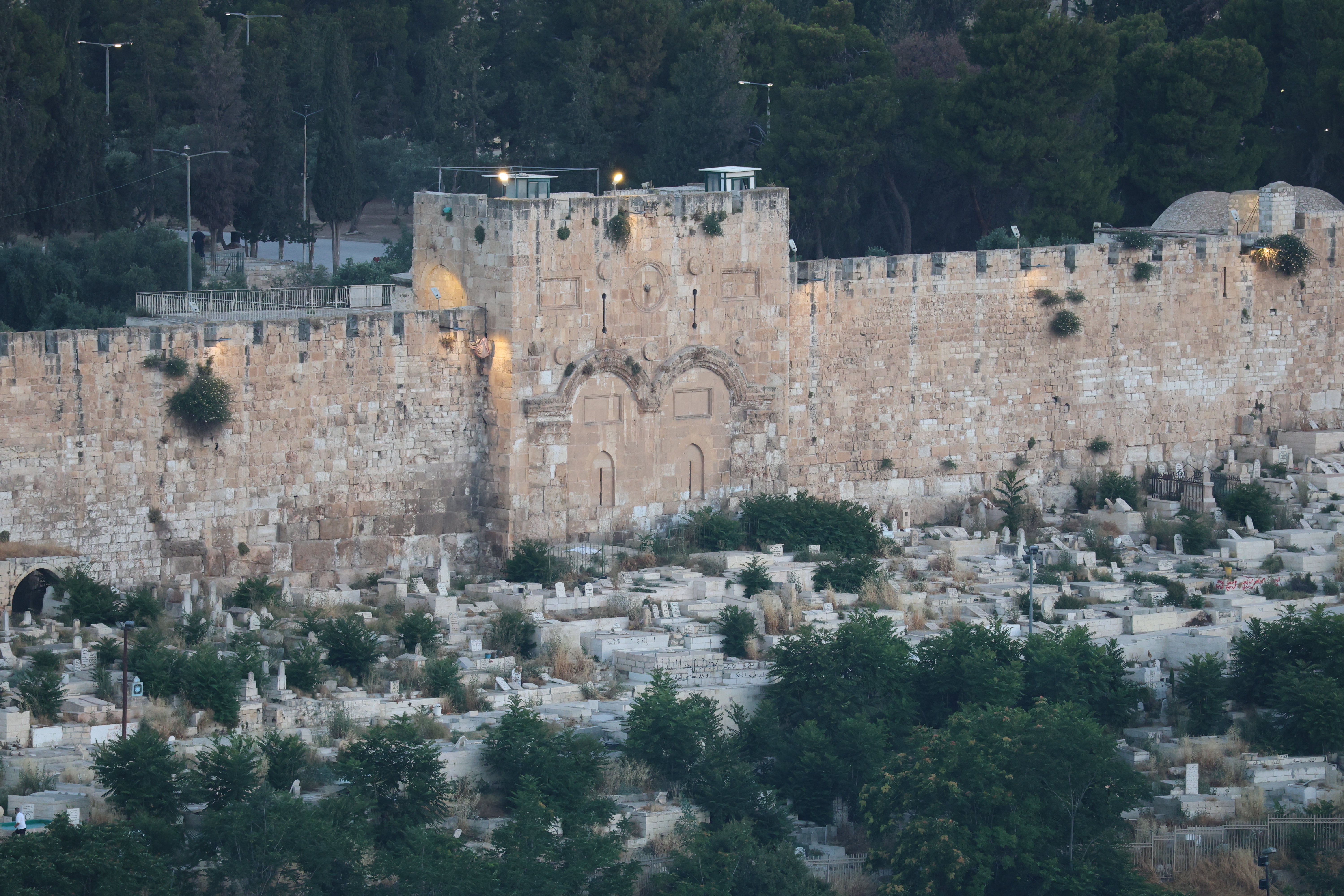
The Golden Gate in Jerusalem’s Old City exterior wall (photo: First One through)

The Temple remains unbuilt and Tisha B’Av remains a day of mourning.

But it does raise a question that previous generations could scarcely have imagined asking: Will this be the last Tisha B’Av fast?

Perhaps Jews a century from now will still be asking the same question. Or perhaps they will look back and realize that ours was among the last generations to mourn the destruction rather than celebrate the restoration.

For almost two thousand years, that possibility seemed unimaginable. Today, it no longer does.

The Vessels We Carry

There is something profoundly human about gathering related things into a single vessel.

We do it with photo albums, where a lifetime of moments is gathered into one book. We do it with museums, where centuries of artifacts are brought together under one roof.

The Jewish calendar does the same with time.

Tisha B’Av is not merely the anniversary of the destruction of the First and Second Temples. Over centuries it became the vessel into which Jewish history poured its sorrows – from the destruction of the Temples to the expulsions from England and Spain, to catastrophes that culminated in the Holocaust. Generations found in Tisha B’Av a place large enough to hold them all.

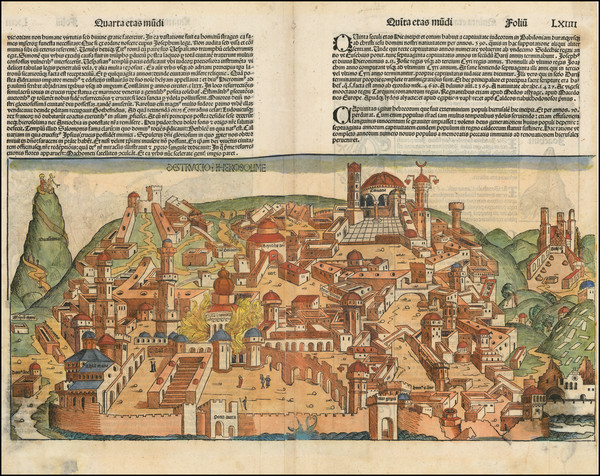
The Nuremberg Chronicle showing the destruction of Jerusalem

The Temple Mount in Jerusalem became another vessel. Of place.

For much of history, Jerusalem was known as the city of the Jewish Temple. But over time it gathered far more meaning. It became the location of the near sacrifice of Isaac, the destination of pilgrimage, the focus of exile, and the direction toward which Jews have prayed for thousands of years.

Other faiths also poured meaning into Jerusalem. Christians revere it as the place of Jesus’ crucifixion and resurrection. Muslims honor it as the destination of Muhammad’s Night Journey. Layer upon layer, century upon century, Jerusalem became more than a city. It became a vessel carrying humanity’s deepest convictions, hopes, and conflicts.

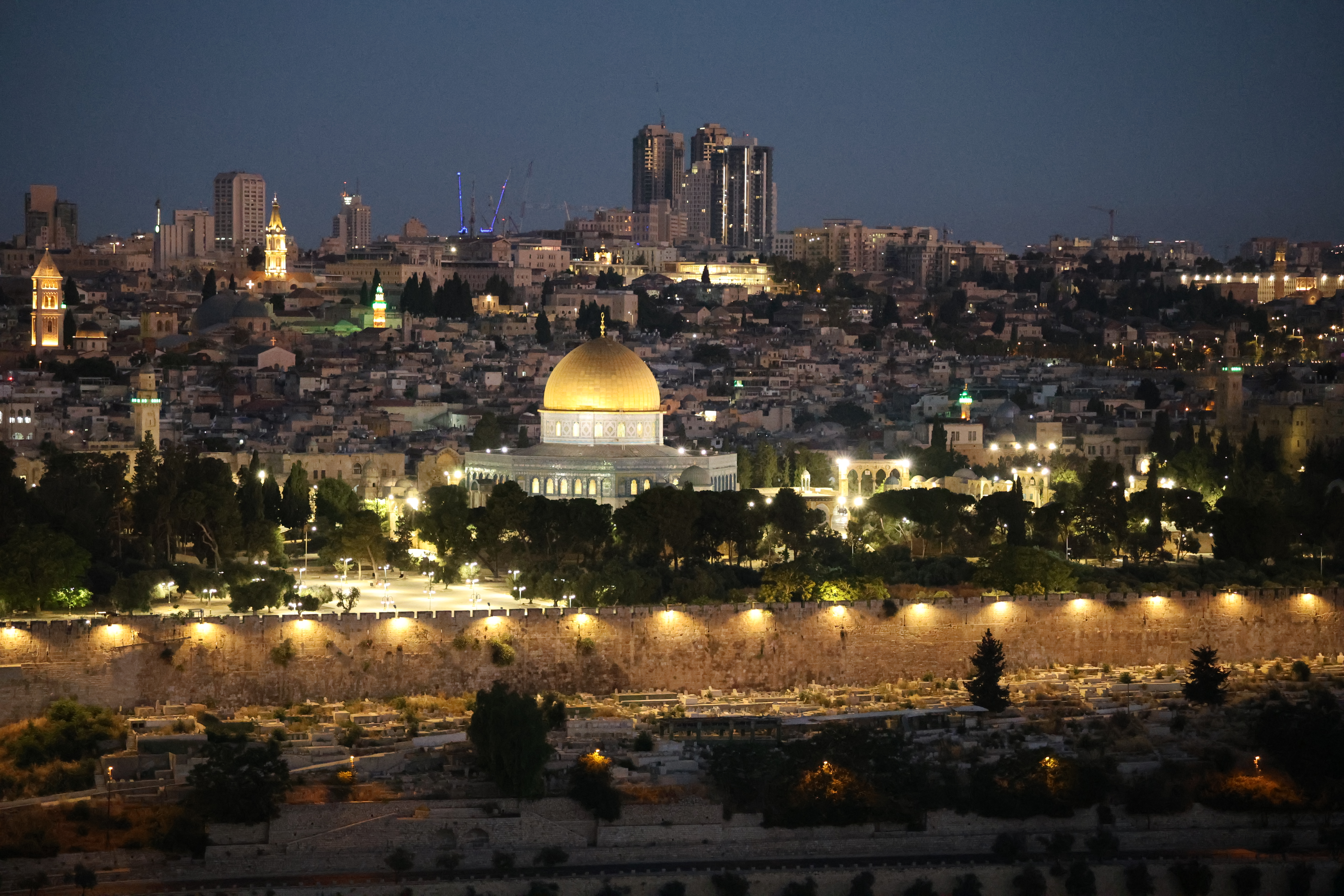
Temple Mount at dawn (photo: First One Through)

And then there is a unique people.

The Jewish people became a vessel unlike any other. Across thousands of years they carried covenant, exile, learning, persecution, survival, and hope. They preserved ancient language, sacred texts, melodies, customs, and memory across continents and generations. They became the vessel through which memory survived when kingdoms fell, empires vanished, and even the Temple itself lay in ruins.

Every vessel carries something. Some carry water. Some carry treasure. Some carry ashes. The greatest vessels carry what cannot be touched: memory, identity, covenant, and hope.

And that is what the Jewish people, Jerusalem, and Tisha B’Av have become. Three vessels in one elaborate story.

Every generation poured something more into those vessels: not only grief, but hope.

Within them rests the hope captured in the Israeli national anthem, Hatikvah: that the Jewish people will live as a free people in their own land, with Jerusalem at its heart.

And on Tisha B’Av in particular, the vessel holds one additional hope above all others: the rebuilding of the Beit HaMikdash. Not because Jews long merely for stones and walls, but because it represents the restoration of wholeness – between God and humanity, a people and their land, memory and redemption.

Every Tisha B’Av, Jews gather into one day the grief of centuries, turn toward one city, and renew one hope. As they do, they recognize that this is more than a story of three fused vessels. It is that together they carry one enduring promise.

Losing the Temples, Knowledge and Caring

In modern times, the “Western Wall” or the Kotel has become the center of Jewish prayers.  As it has done so, it has replaced the Temple and Temple Mount in the minds of many Jews, so much so, that people have forgotten and misrepresent what the Kotel actually is or have stopped caring at all.

IMG_2052
Young and Old pray at the Kotel

Non-Orthodox Jews “Don’t Care”

The Jewish Week, a popular weekly newspaper for Jews in the metropolitan New York City area, published a piece called “Mourning the Temples’ Losses” on July 24, 2015. The article was written about the holiday of Tisha b’Av, the ninth day of the Hebrew month of Av, which is when tradition states that each of the two Jewish Temples were destroyed.  The article claims that the holiday has become only meaningful to Orthodox Jews, and for “secular Jews, ‘Tisha b’Av seems a vestigial organ,’ writes Don Futterman, program director in Israel for the Moriah Fund, wrote in Haaretz [a left-wing Israeli paper].” 

The secular anti-Orthodox newspaper quoted a left-wing charity in Israel which describes itself as “Promoting Civil Rights, Social Justice and Democracy in Israel and “Protecting and advancing human rights” which it feels it can achieve by funding movies questioning Israel such as “Breaking the Silence” and the anti-Israel 972 magazine.  These are indeed the views of many secular and liberal Israelis who feel that Judaism has evolved from Temple service to prayer, and from prayer to “social justice”. Together with such evolution was an abandonment of historic places and forms of worship to a modern emphasis only on people.  Those “vestigial organs” are there as part of history, but serve no function (and can and should be removed if they prove dangerous to the body as a whole).

Orthodox Jews “Don’t Know”

The Jewish Week continued that “for many Orthodox Israelis, the center of their Tisha b’Av observance is the plaza of the Western Wall, the last remnant of the Second Temple.” The statement repeats an often repeated falsehood about the nature of the Western Wall. The Temples were completely destroyed and no walls of the Temples stand today. Aish.com, which claims to be “the leading Jewish content website” posts on its website that “The Western Wall is a surviving remnant of the Temple Mount in Jerusalem,”  .

The Kotel is the western wall of the TEMPLE MOUNT, not of the Temple.  The Temple Mount was built by King Herod between 19BCE and 63CE to extend the size of the platform southward to both enable more people and traffic flow to the Second Temple. As the Temple was built atop a hill, extending the platform at the same height as the Temple required “filling in” the slopes of the hill.  The Kotel is the western wall of that supporting structure.

The Kotel gained significance in Judaism (say compared to the southern Temple Mount wall which is similarly a retaining wall), around the year 1550.  Prior to that year, many Jews visited and prayed on the Temple Mount itself including Rabbi Menachem Meiri (1249-1316) and Rabbi David ben Shlomo Ibn Zimra, (known as the Radbaz, 1479–1573), the Chief Rabbi of Jerusalem.  However, around 1550, while Ottoman leader Suleiman I made various structural improvements to the city of Jerusalem, he set aside the Western Wall area as a designated area for the Jews to pray.

After the 1967 Six Day War, Israel reunited Jerusalem including the Old City, the Temple Mount and the Kotel. After 18 years of being banned from the city by the Jordanians (1949-67), Israelis celebrated their return to the Old City.  To maintain calm after the war with the Muslim world, Israel handed administrative control of the Temple Mount to the Islamic Waqf. Israel then demolished the Mughrabi Quarter which abutted the Kotel to create the Western Wall Plaza that many know today. This plaza enables thousands of Jews to visit the Kotel at one time.

DSC_0087
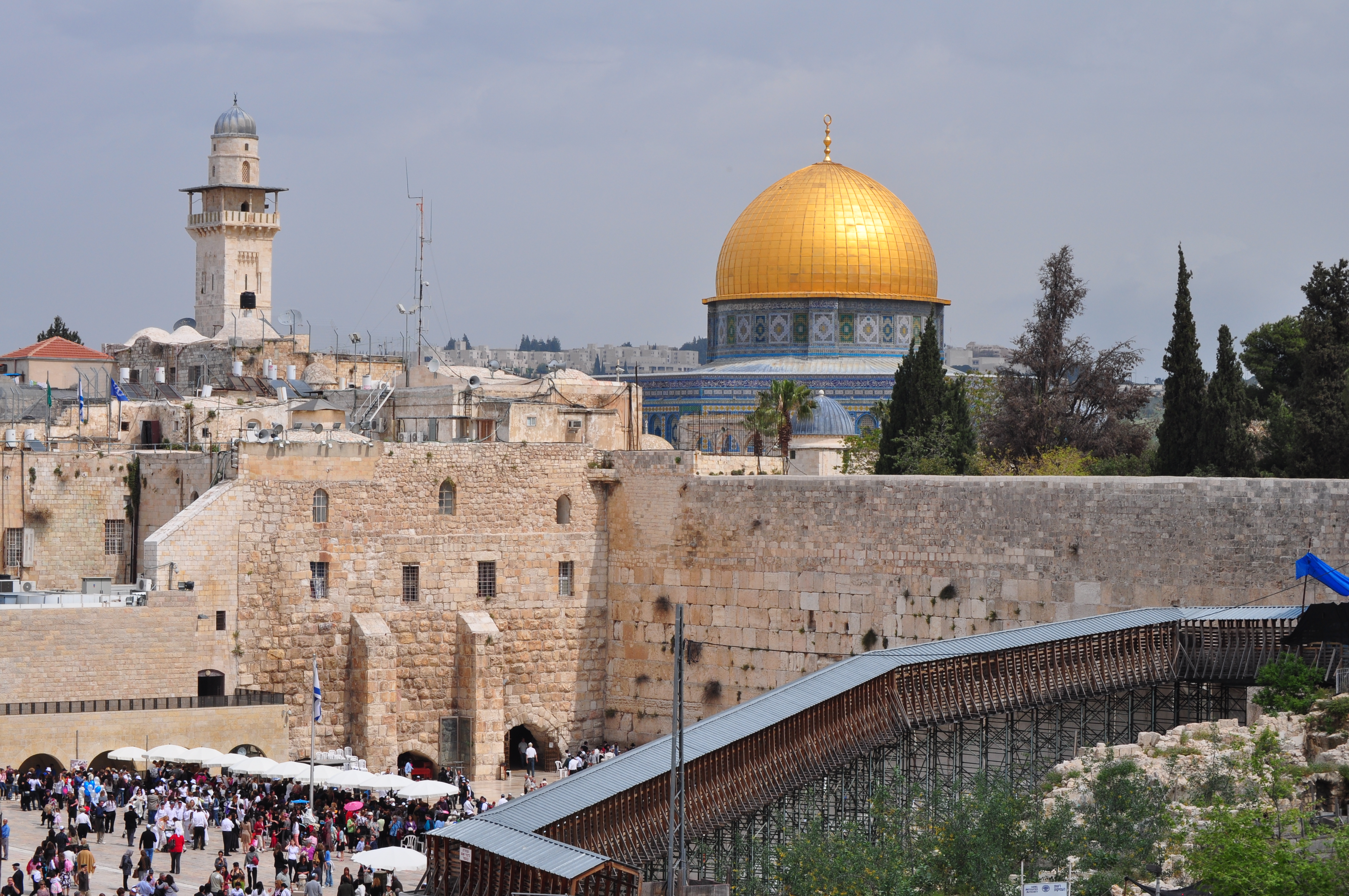
The Kotel with the Dome of the Rock,
location of the Jewish Temples

Tisha b’Av

Every year the Jews mark a day on the calendar to remember the destruction of the Temples. Over time, the Tisha b’Av holiday incorporated other tragic events such as the expulsion of 200,000 Jews from Spain in 1492.  Perhaps today Jews should also mourn a newer tragedy in their history: their apathy and ignorance.


Related First.One.Through articles:

The United Nations and Holy Sites in the Holy Land

Joint Prayer: The Cave of the Patriarchs and the Temple Mount

Tolerance at the Temple Mount

The Waqf and the Temple Mount

Subscribe YouTube channel: FirstOneThrough

Join Facebook group: FirstOne Through  Israel Analysis