The United States has maintained an official list of Foreign Terrorist Organizations since 1997. After September 11, that list increasingly became a catalogue of jihadist groups: al-Qaeda, al-Shabaab, Boko Haram, ISIS-K, ISIS-West Africa, JNIM, Hizbul Mujahideen, the Islamic Jihad Union and the Haqqani Network.
By George W. Bush’s second term, every organization he designated that remains on the list today was Islamist. Roughly 91% of Barack Obama’s first-term additions were Islamist, as were nearly all of his second-term additions. Every surviving FTO designated during Donald Trump’s first term was Islamist.
Then the designations nearly stopped.
Joe Biden added just four organizations that remain designated today, all during 2021: two ISIS affiliates in Africa and two Colombian FARC splinter groups.
Trump returned to office and immediately took the list somewhere else. On his first day back, he initiated a process to designate international cartels and transnational criminal organizations as FTOs. A month later, the Sinaloa Cartel, Jalisco New Generation Cartel, Gulf Cartel, Cartel del Noreste, La Nueva Familia Michoacana, Carteles Unidos, MS-13 and Tren de Aragua were added.
The terrorist list was heading south of the border.
| Administration | Current FTOs originally designated during term | Islamist | Islamist share |
|---|---|---|---|
| Clinton II | 15 | 7 | 47% |
| George W. Bush I | 12 | 8 | 67% |
| George W. Bush II | 3 | 3 | 100% |
| Obama I | 11 | 10 | 91% |
| Obama II | 12 | 11–12 | 92–100% |
| Trump I | 10 | 10 | 100% |
| Biden | 4 | 2 | 50% |
| Trump II* | 25 | 3 | 12% |
*Through September 2026. Counts reflect organizations currently designated as FTOs and assign each to the presidential term of its original designation. Organizations subsequently removed from the list are excluded.
The numbers reveal two abrupt breaks. Biden’s four years produced only four surviving additions, all during his first year. Trump II has already produced 25 – more than Obama over two full terms – while the Islamist share has collapsed from 100% during Trump’s first term to 12% during his second.
The explanation lies partly 2,000 miles south of Washington, DC.
The Biden years brought close to an open border policy for America’s southern border. Behind the millions of encounters stood another problem: criminal organizations controlling routes north, smuggling people and narcotics, collecting payments and using violence to protect their territory and businesses.
Trump returned treating that infrastructure as a national-security threat.
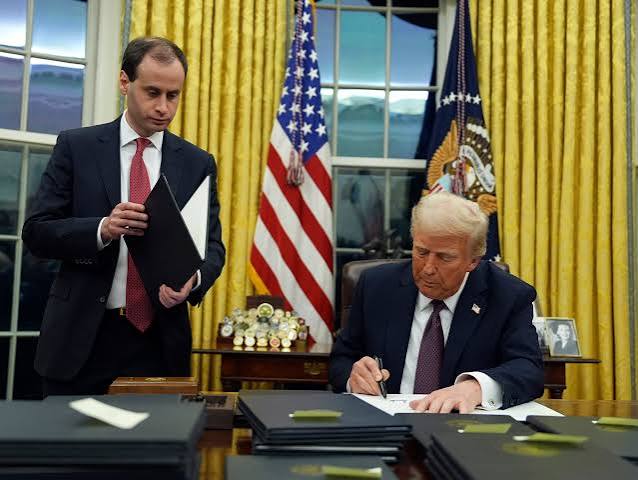
His January 20, 2025 order described cartels as using assassination, terror and brute force to control illegal traffic across the southern border. That same day, he declared a national emergency there and directed the government to target cartels, foreign gangs, smugglers and trafficking networks.
“It is the policy of the United States to ensure the total elimination of these organizations’ presence in the United States and their ability to threaten the territory, safety, and security of the United States through their extraterritorial command-and-control structures, thereby protecting the American people and the territorial integrity of the United States.” – President Trump order on making cartels specially designated terrorist organizations
A month later, eight of them were FTOs.
That sequence helps explain one of the stranger contradictions surrounding Trump. He is frequently portrayed as a president whose terrorism policies are particularly focused on Muslims, yet his second administration has directed the FTO machinery overwhelmingly toward non-Islamist organizations in Latin America and elsewhere.
The geography of American counterterrorism has moved.
After September 11, Washington looked thousands of miles east for foreign organizations threatening Americans. But the border crisis forced attention south, where cartels and gangs profit from the movement of people, drugs and money toward the United States.
For years, the border debate concentrated on the person arriving: who should enter, who qualifies for asylum and who should be removed. Trump’s FTO policy moves the focus farther upstream, toward the organizations controlling the routes that bring them there.
After September 11, America built an enormous counterterrorism apparatus to pursue foreign organizations threatening Americans from the other side of the world.
Trump is increasingly turning that apparatus toward the ones operating on America’s doorstep.


