Names and Narrative: Violence

Even a word as straightforward as “violence” can no longer be exchanged among people who strongly disagree.

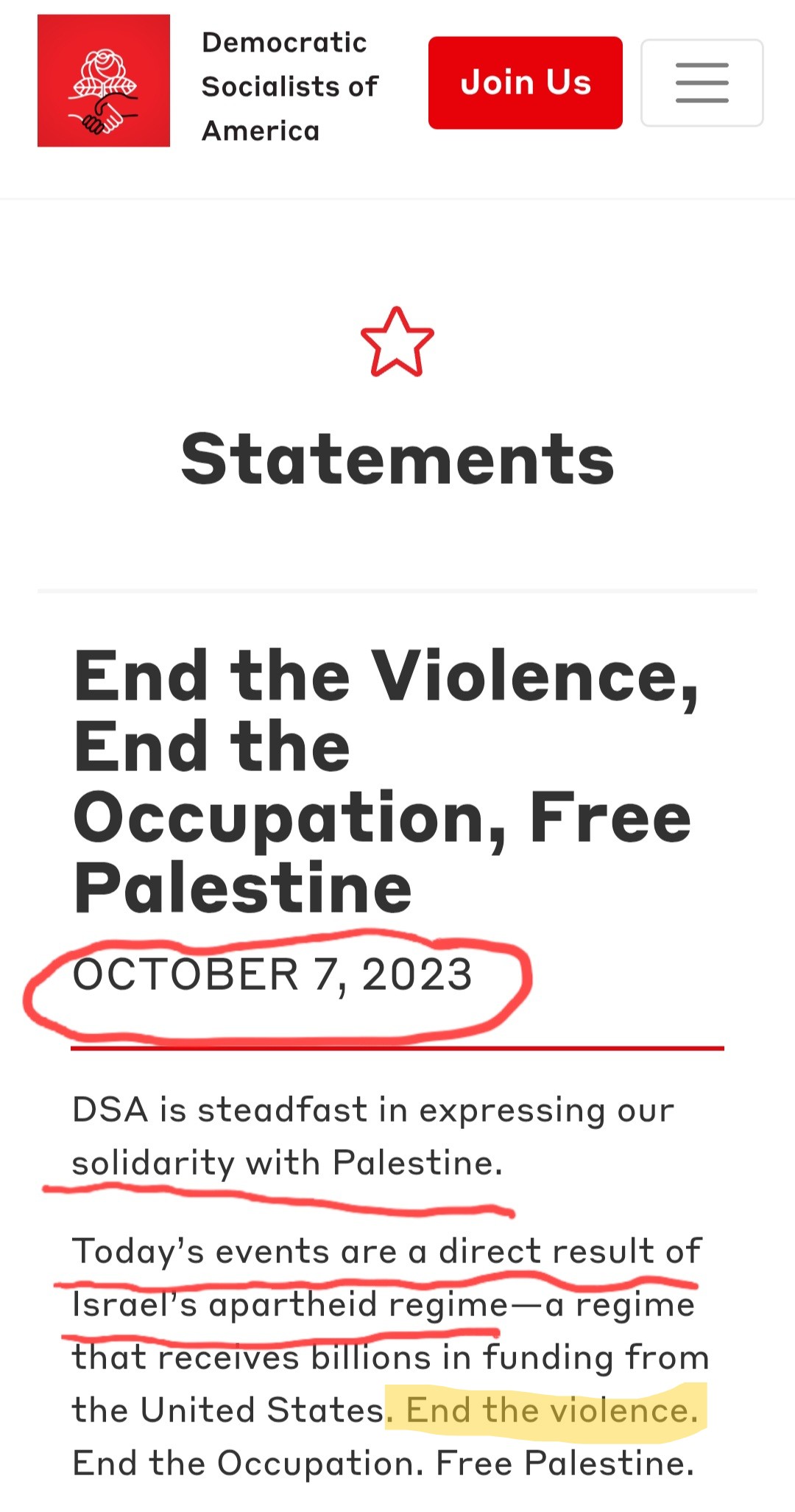
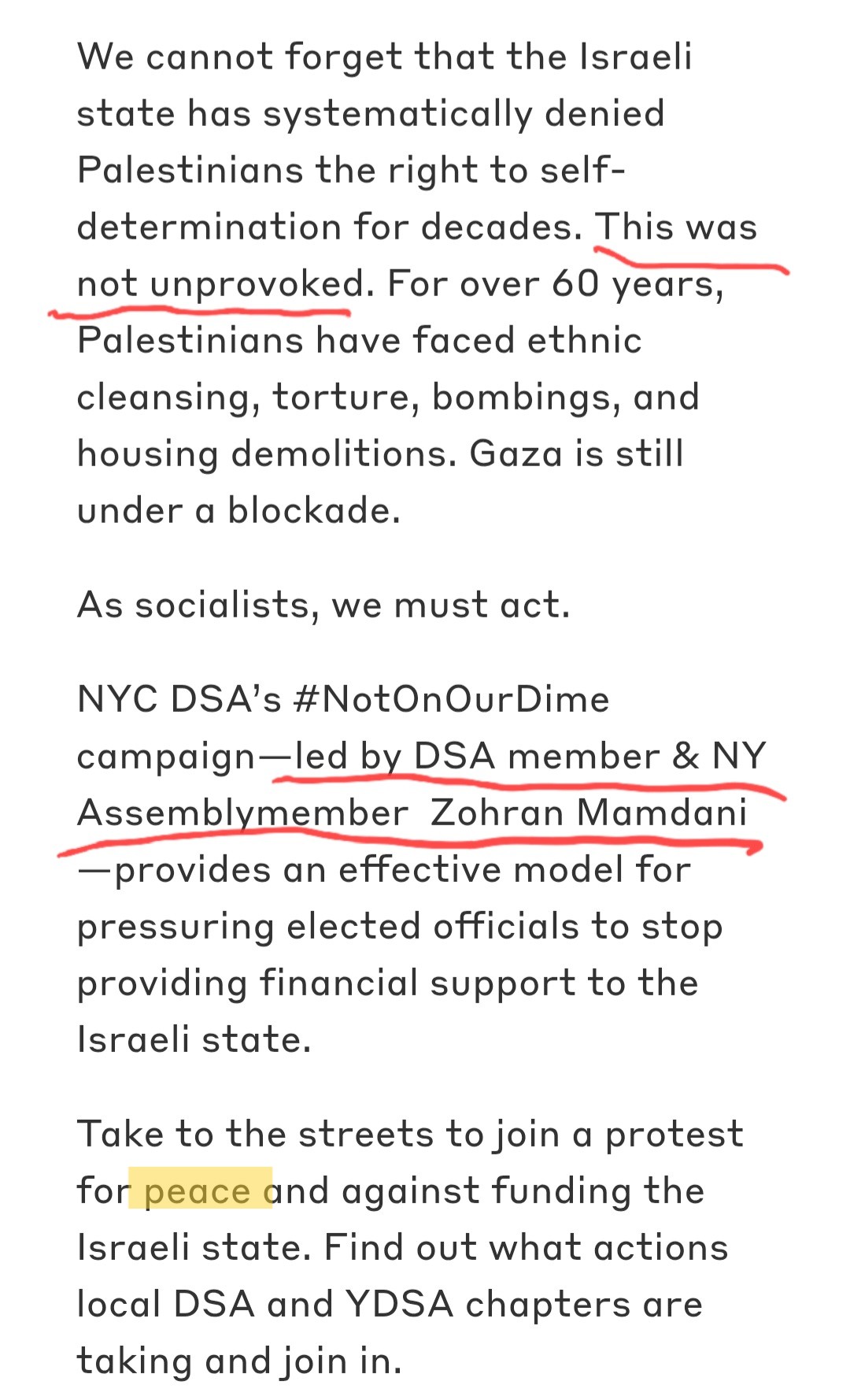
On October 7, while Israeli families were still being burned alive in their homes, while women were being brutalized and dragged into Gaza, while children and grandparents were being taken hostage, the Democratic Socialists of America issued a statement expressing solidarity with Palestinians and calling for an end to violence.

Read that sentence again.

Solidarity with the side carrying out the massacre whicle simultaneously being opposed to violence.

Under any normal understanding of language, those two positions cannot coexist. Even if one sides with Palestinian Arabs doing the slaughter, one cannot deny that killing 1,200 people and taking over 250 people hostage is anything but violence.

Yet for much of today’s activist left, there is no inconsistency because violence has been redefined.

Violence is no longer judged by the act itself. It is judged by the political identity of the actor and the victim. Violence against the oppressed is evil. Violence by the oppressed is resistance.

That single inversion explains nearly everything.

It explains why people can chant “globalize the intifada” and insist it is not a call for violence. Because intifada, in their lexicon, is not violence. It is justice.

But words have histories. And intifada has a very specific one.

The fact is that the Second Intifada was not a symbolic protest. It was suicide bombings on buses, massacres in cafés, shootings in markets, families murdered at holiday tables. The later “stabbing intifada” turned sidewalks and bus stops into hunting grounds. The “car intifada” transformed vehicles into weapons aimed at civilians.

So when Jews hear “globalize the intifada,” they do not hear an abstract call for liberation. They hear a political tradition with a body count. They hear the globalization of a tactic that has repeatedly targeted Jewish civilians.

That is why the argument over this slogan so often goes nowhere.

Congressional committee on the phrase “Globalize the intifada” on June 24, 2025

One side hears history. The other hears ideology. One side sees violence in the act itself. The other sees violence only when the “wrong” people commit it.

The socialist-jihadi moral framework launders murder into resistance and terror into liberation, because the victims are placed on the wrong side of the political hierarchy.

October 7 exposed with horrifying clarity that while the massacre itself was monstrous, the reaction to it revealed something even deeper: a political culture that could look directly at burned families, raped women, butchered children, and kidnapped grandparents and still speak of “ending violence” while standing in solidarity with those who had just committed it.

And when Jews and decent people watch those same people – in the same breadth – call for following the charge of a young aspiring politician named Zohran Mamdani to redefine both violence and “peace” in the cause of annihilating the oppressor class, they have reason to fear.

The sanitation of violence against certain undesirable groups – Zionists for example – was voted into power in New York City. With easy smiles that come from people who have long internalized that eradicating “oppressors” is a noble cause in which bloody hands do not stain the oppressed.

The End of Civilization

The defining moral line of civilization is simple: civilians are off limits.

Once that line breaks, atrocity is no longer an exception. It becomes a method.

Over the last five years, some of the worst deliberate mass killings of civilians have come at the hands of jihadist movements and regimes built on political Islam.

In Sudan, militias tied to the Rapid Support Forces slaughtered an estimated 10,000 to 15,000 civilians, largely from the Masalit community. Whole neighborhoods were emptied through organized murder.

On October 7, thousands of Gazans crossed into Israel and hunted Jewish civilians deliberately—families in their homes, young people at the Nova Music Festival, children, the elderly. Terror itself was the objective.

In Iran, the regime’s 2025–2026 crackdown on protests has left more than 6,000 civilians dead, according to rights monitors, killed for dissent against an Islamic revolutionary order.

Across Nigeria and the Sahel, Boko Haram and Islamic State West Africa Province continue village massacres, church bombings, kidnappings, and executions. Civilians are the intended victims.

These conflicts differ in geography and politics. Sudan is tribal and ethnic. Hamas is nationalist and religious. Iran is a regime. Boko Haram is insurgent.

What unites them is the same moral collapse: the civilian is no longer protected by being uninvolved. Civilian blood becomes a signal of conviction.

And here is where the West has developed its own moral blind spot.

For years, parts of the activist left have embraced an oppressor-oppressed framework so rigid that civilian status itself becomes negotiable. The first question is no longer who was killed, but who held power.

That inversion was laid bare after October 7, when elements within Democratic Socialists of America and allied activist circles framed the massacre in the language of “resistance” and “decolonization,” making slaughter politically understandable so long as it came from the “oppressed.”

The jihadist says civilians may die because ideology sanctifies it. The regime says civilians may die because dissent threatens power. The activist says civilians may die because power determines innocence.

Different justifications. Same result.

Once innocence becomes conditional, civilization becomes conditional too.

Because the moment civilians become fair game, everyone eventually becomes fair game.

Trauma in Present Tense

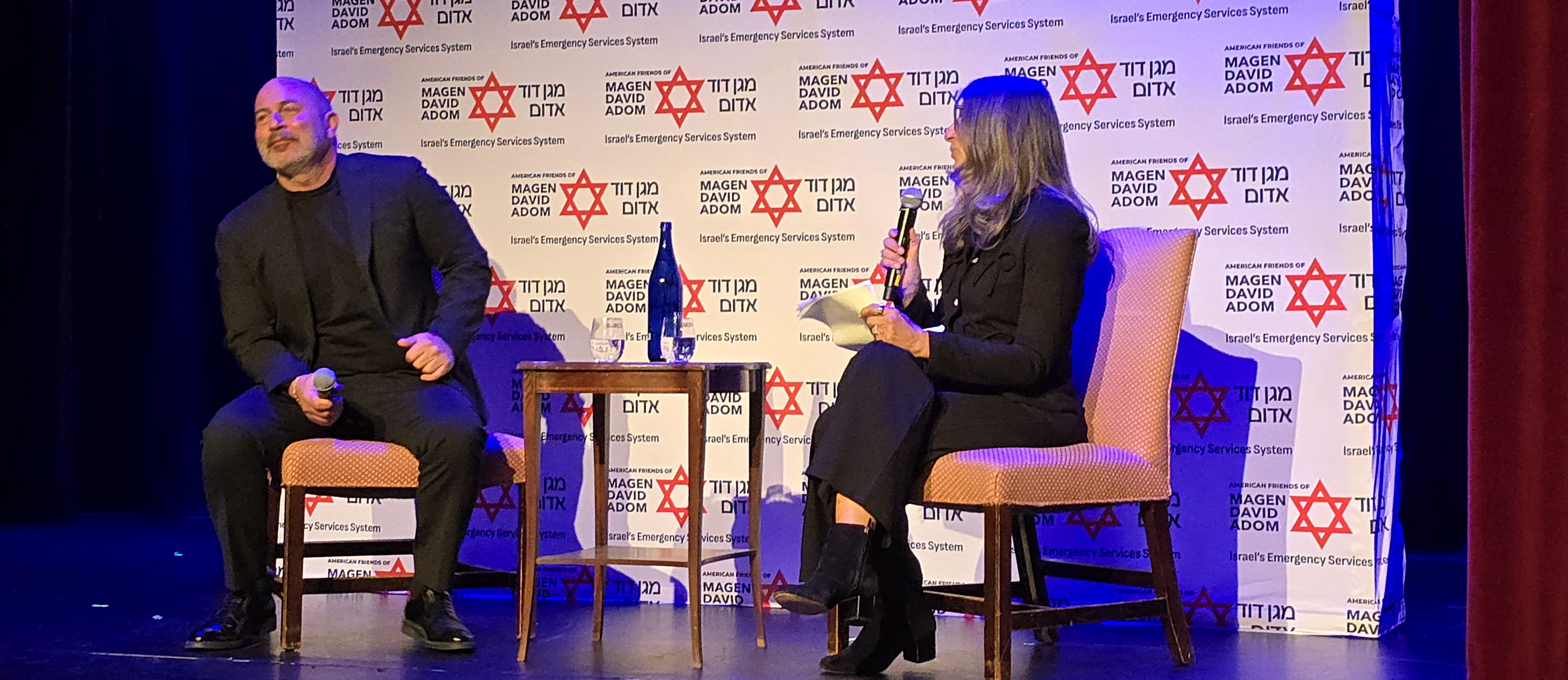
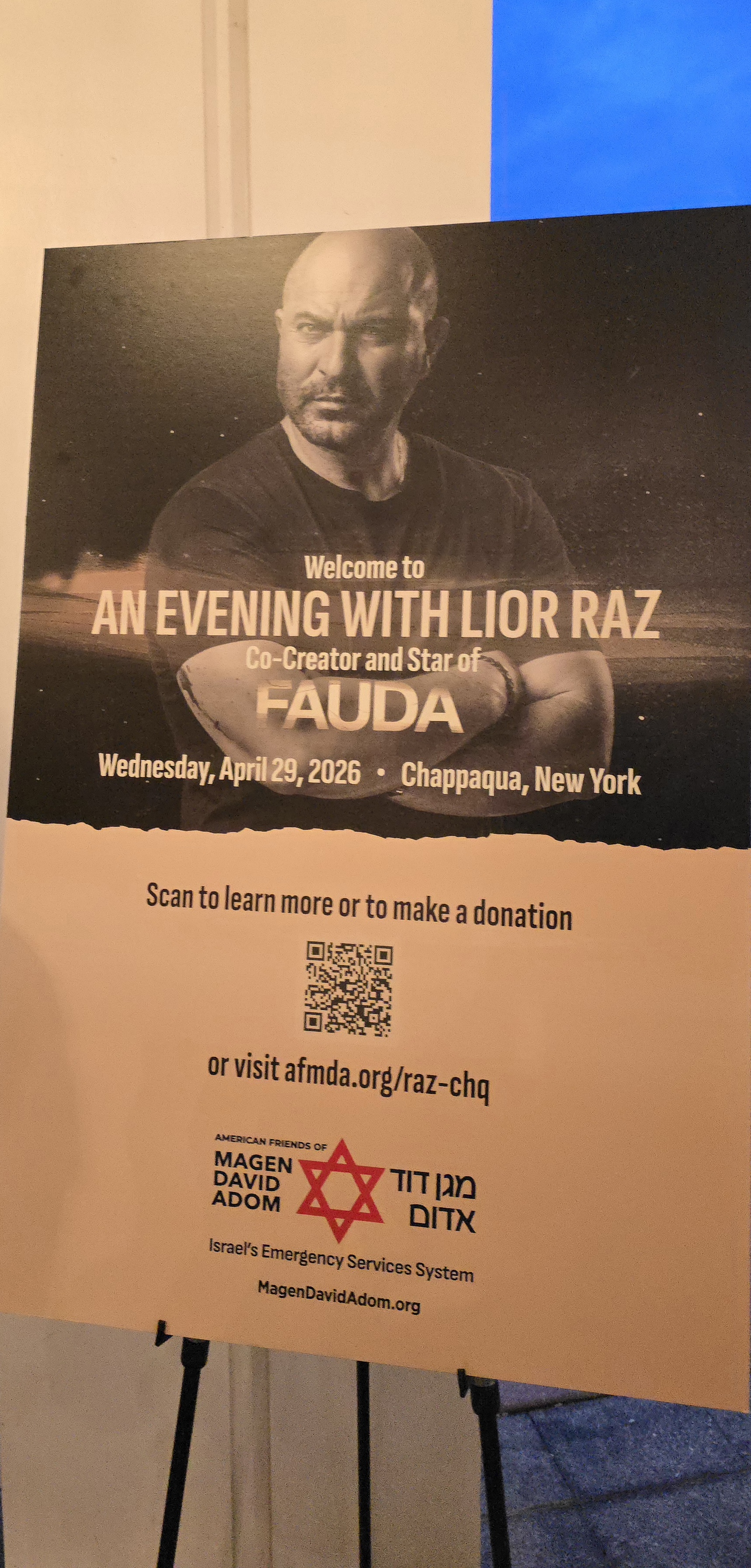
There was something fitting about Lior Raz standing in Chappaqua, New York last night raising money for Magen David Adom. Raz built his career dramatizing the hunt for terrorists. Magen David Adom exists for the moments after the hunt fails.

Lior Raz being interviewed at a fundraiser for Magen David Adom in Chappaqua, NY April 29, 2026 (photo: First One Through)

For those unfamiliar with Raz, he is more than an actor. Before becoming one of Israel’s most recognizable cultural figures, he served in an undercover Israeli military unit operating inside Arab communities, gathering intelligence and carrying out operations in hostile environments. He grew up with Iraqi and Algerian parents speaking Arabic, making him deeply bi-cultural in Jewish and Arab worlds. That experience and background became the foundation for Fauda, the global hit he co-created and stars in, a drama centered on Israeli undercover units hunting terrorists in the West Bank and Gaza.

What made Fauda different was never simply its action but its realism. Israelis and Palestinian Arabs were not rendered as symbols, but as human beings moving through an intimate, brutal conflict where ideology, family, fear, and violence occupy the same space. For international audiences it was compelling fiction. For Israelis and Stateless Arabs from Palestine (SAPs) it often felt closer to lived reality.

Then October 7 collapsed whatever distance remained between fiction and reality.

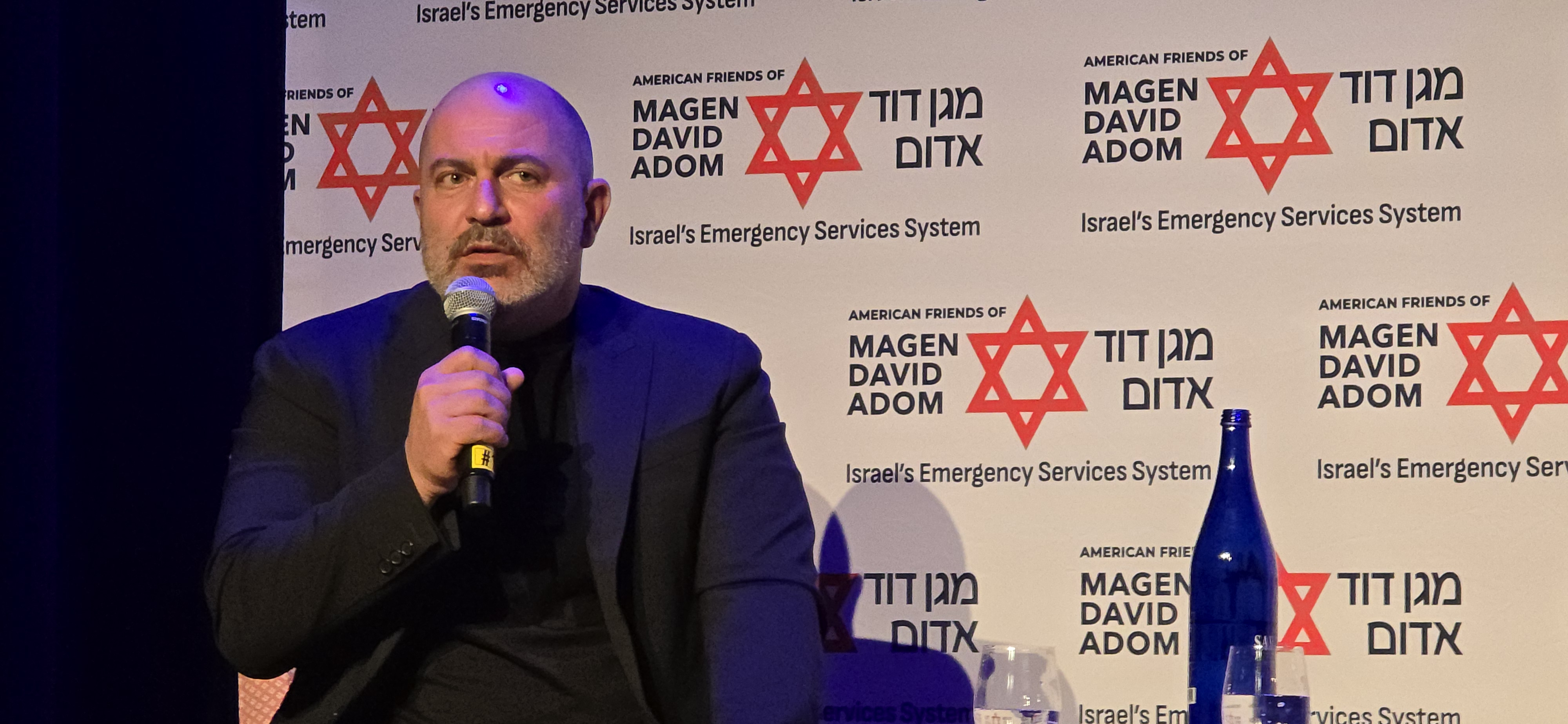
At the fundraiser, Raz put words to what that rupture did to Israel.

Israel, he said, is living in trauma, not PTSD. It was not an echo of horror but the continuation of it.

It was the most important thing said all night because it captured something essential about the country after October 7. PTSD belongs to memory. Trauma belongs to the present. PTSD is what remains after danger has passed. Trauma is what happens when danger tears through your assumptions and reorganizes how you live.

That is Israel now.

Lior Raz being interviewed at a fundraiser for Magen David Adom in Chappaqua, NY April 29, 2026 (photo: First One Through)

The hostages are home or accounted for. The war has shifted phases. But the rupture remains embedded in Israeli life. The confidence that catastrophe could be anticipated and contained has been broken. Every family understands more intimately how quickly ordinary life can split into irreversible loss. The danger may have changed form, but the nervous system of the country remains altered.

That is where Magen David Adom enters the story.

If Fauda is about the front edge of violence—the raid, the chase, the interception—Magen David Adom lives on the back edge: the ambulance, the paramedic, the trauma room, the blood bank, the race to preserve life after violence has already landed. Security exists to stop attacks. Emergency medicine exists for when stopping fails.

Raz spoke with particular pride about what Magen David Adom represents: Jews, Christians, Druze, and Muslims working side by side to save lives. In a region where identity so often organizes conflict, MDA operates at the level beneath identity, at the essence of humanity. No politics, no theology, no tribal sorting. Just the oldest civilizational imperative there is: preserve life.

It is one of Israel’s deepest strengths that even under permanent security pressure, its emergency institutions remain organized around life itself.

Raz also looked forward. The next season of Fauda which will come out in a few months, he said, will directly reflect October 7 and the years after, with half of it set in Marseille, France. That choice is revealing. Marseille is one of Europe’s great pressure-point cities, where migration, communal fragmentation, criminality, radicalization, and fractured civic identity collide. It is a city where many of the tensions Israel has lived with for decades are becoming visible in European form.

The movement of Fauda into Europe suggests something larger. The Israeli condition is no longer entirely Israeli. The fractures Israel has lived with for decades—terror, divided loyalties, imported ideological battles, fear in public life—are increasingly visible across Western democracies. Israel was simply earlier, home to 45% of global Jewry. The anti-Jewish attacks and growing anti-Western attacks are everywhere.

When Raz was pressed on American politics, he declined to engage. He understood the trap of America’s partisan machinery and would have no part of it. He was there to fight violence from wherever it came from, not from a single ideology.

At an event raising money for ambulances, blood banks, and emergency responders, it became clear that this too belongs to the same mission.

Raz is known for Fauda, for portraying the hunt for terrorists, the intelligence work, the raids, the violence used to stop violence. But that is only the outer layer. Beneath it lies something older and deeper.

The mission is to save lives.

To save lives in Israel when violence breaks through. To protect Jewish life abroad when antisemitism rises. To defend the perimeter and preserve the people. These are not separate missions. They are one.

For most of Jewish history, Jews endured violence dependent on the mercy or restraint of others. Now there is a Jewish state with power, intelligence capabilities, and institutions of rescue, carrying with it not only sovereignty but obligation. That obligation no longer ends at Israel’s borders. A Jew threatened in Paris, attacked in New York, harassed in London, or targeted in Melbourne enters the same moral universe.

The perimeter has widened.

Fauda may be about counterterrorism and Magen David Adom may be about emergency medicine. Together, they represent the fight against antisemitism which lies in the same ancient Jewish imperative: protect life, preserve the people, continue.

That may define the ever-present trauma among Jewry today: the need to constantly think about personal and communal safety, without the calm to simply sit at a cafe or send one’s kids to school and purely enjoy life’s moments.

Hey NY Times, Nerdeen Kiswani Wants Zionists Killed and Israel Destroyed

Nerdeen Kiswani is not quiet about her views. She wants the Jewish State obliterated and Zionists killed. She says it openly and proudly in front of loud cheering crowds.

So why did The New York Times soften her stance? Why did it say that she was simply assembling “protests to draw attention to the suffering of Palestinians,” when her entire movement is about the destruction of Israel?

“I hope that pop-pop is the last noise that some Zionists hear in their lifetime!” – Nerdeen Kiswani, Youtube, Aug 4 2021

Why did the Times make it sound like pro-Israel groups were uniquely offended that “she supports the liberation of the Palestinian people “by any means necessary,” including armed resistance.”?

“Israel must be annihilated.” – Nerdeen Kiswani, Instagram, Mar 3 2017

Why did the Times use so much energy and so many words to say “that her activism opposes Israel, its policies and its structure as a Jewish State,” without saying that she supports targeting Jewish organizations and the annihilation of the only Jewish State?

“We marched today, we took over the streets and we visited multiple Zionist settler foundations. Multiple. We let them know we know where they’re at. We know where they work. We’re gonna find out more about where they’re at too. And we’re gonna go after them.” – Nerdeen Kiswani, YouTube, Jun 11 2021

Why didn’t the Times explicitly state that Kiswani endorses US designated terrorist groups and individuals?

Picture on left is Kiswani with pin of Abu Obaida, a spokesman for Hamas, while protesting in front of a synagogue in Teaneck, NJ on April 1, 2024 (from ADL website)

On June 10, 2024, Kiswani led a protest outside a memorial exhibit in downtown New York City about the Nova Music Festival where she said that young partygoers enjoying music was “like having a rave right next to the gas chambers during the Holocaust,” mocking not only the hundreds of murdered youth but millions of Jews slaughtered in the Holocaust.

Kiswani doesn’t hide her love of the genocidal antisemitic group Hamas. She posts her fondness to the public.

Kiswani post of a child kissing an armed Hamas terrorist, like those that burned Jewish families alive

In short, Kiswani is a proud supporter of terrorism against Jews and American allies. Yet The New York Times made it appear that her stances were simply pro-Palestinian, which some members of the pro-Israel community found offensive.

The reality is that a pro-Israel “extremist” allegedly planned an attack on a pro-Palestinian “extremist.” But the Times editorialized by showing the smiling face of an “activist” worried about the “suffering” of her people. Such is the alt-left embrace of the toxic “deformity in Palestinian culture.”

Savannah Guthrie Times 250

Savannah Guthrie tried to describe the indescribable.

Her 84 year old mother was taken from her home, with signs of violence left behind, a masked man on camera. And then nothing. A void where a mother used to be. She spoke about sleepless nights, about imagining fear she cannot reach, about a word she kept returning to: unbearable.

That word should end the conversation. It should strip away everything else.

Because everyone understands what it means when someone you love is taken.


Now Multiply That by 250

What Guthrie is living through is devastating.

In Israel, it happened at scale.

Over 250 people were abducted violently—children, parents, grandparents—dragged from homes, shoved into vehicles, disappeared into tunnels by jihadi terrorists. The same questions Guthrie now asks became a national condition: Are they alive? Are they suffering? What are they thinking?

The same agony. Multiplied. Multiplied. Multiplied.


Where the World Breaks

Here is the dividing line.

When Guthrie speaks, there is no debate. No one justifies it. No one says her mother deserved it. No one rallies in defense of the abductor.

The reaction is immediate and human: bring her home.

But when Israeli families faced the same horror, the reaction in too many places—especially on college campuses—was not sympathy.

It was celebration.

Not confusion. Not distance. Celebration of the very act Guthrie calls unbearable.


The Only Question That Matters

Her interview removes every excuse. No politics, no slogans—just a daughter describing what it feels like to have a mother taken.

If you can feel that—and then justify or cheer when it happens to someone else—you are not misinformed. You are choosing evil.

And that is the part that is unbearable to civilized people.

The New Ground Zeros

We tend to think of “ground zero” as a place, a site of destruction. Where you can point to and say: it happened here.

The new ground zeros are not simply where attacks occur. They are where the vulgar idea stops sounding outrageous.

They form in environments where the rules quietly change, where violence against Jews is never explicitly endorsed, but is no longer cleanly condemned. It is where it is explained. Contextualized. Where the language shifts just enough that the victim is converted into the villain.

You can see it in parts of political culture that elect figures like Rashida Tlaib and Zohran Mamdani without seriously confronting the ideological space around them.

Rep. Rashida Tlaib called Jews conspirators who operate “behind the curtain” to “make money off of racism” at the Democratic Socialist of America convention

Ayman Mohamad Ghazali, the man who came to murder hundreds of children at a Jewish day school in Michigan, lived in Rashida Tlaib’s Michigan district, home to thousand of people who believe Tlaib’s rhetoric, who support – or least excuse – her vile antisemitism.

The same motion can be seen in New York City where Emir Balat, 18, and Ibrahim Kayumi, 19, pledged allegiance to the Islamic State and came to the city that elected a jihadist mayor to rain violence on perceived enemies.

Emir Balat, 18, and Ibrahim Kayumi, 19, readying a bomb to throw at police and civilians in New York City

Ideas shape environments. And environments shape what becomes possible.

It happens quickly: it took barely a decade for NYC to go from a capitalist moderate Jewish mayor in Michael Bloomberg, to an anti-capitalist jihadist in Zohran Mamdani.

When enough people participate in erasing the moral line, the boundary that once made violence unthinkable begins to weaken. And when that boundary weakens, the outliers don’t need instructions.

They need atmosphere.

The new ground zero is not the place where it happens. It is where it no longer feels impossible.

All Muslims Are Not Jihadists

There is a temptation in moments of fear and anger to reach for the bluntest possible instrument: collective blame.

We are seeing it again now, in calls from some politicians and commentators to treat Muslim Americans not as individuals, but “as a class.” It is offensive. It is wrong. And it is profoundly un-American.

We have been here before.

American history offers a warning that should never be forgotten: General Ulysses S. Grant’s order expelling Jews “as a class” from parts of the South during the Civil War. It was born of frustration, prejudice, and expedience. It is remembered today as a stain.

That is what collective guilt produces. Not security. Not clarity. Just injustice.

And it obscures the truth.

Because the truth is more important: not all Muslims are jihadists. The overwhelming majority are not. But there exists, within every society, a subset animated by radical, supremacist ideology. In this case, that subset is jihadists and they are a very real problem.

We have seen synagogues attacked, Jewish schools targeted, and civilians murdered around the world – from New York to Paris, from Sydney to Jerusalem. These acts are not isolated. They are the violent edge of a broader ideological ecosystem that glorifies terror, sanctifies hatred, and seeks legitimacy in the West.

That ecosystem is not confined to foreign battlefields. It has nodes here.

Organizations like Students for Justice in Palestine (SJP) and Within Our Lifetime do not operate as neutral advocacy groups. Their rhetoric, tactics, and alliances echo the narratives of jihadist movements – erasing terrorism, justifying atrocities, and turning mass violence against Jews into something to be rationalized and celebrated.

This is where scrutiny belongs.

Not on millions of Muslim Americans living ordinary lives who are part of the American fabric. But on the networks, organizations, and ideologies that radicalize, that excuse violence, and that deliberately blur the moral line between protest and terror.

Failing to make that distinction is not only unjust but dangerous.

When everything is labeled the problem, nothing is. When all Muslims are treated as suspects, actual jihadists disappear into the noise. They benefit from that confusion. They rely on it.

And worse, it hands them a propaganda victory: proof, in their telling, that the West is inherently hostile, that coexistence is impossible, that radicalism is justified.

That is why calls to expel Muslims from the United States are not just racist; they are strategically self-defeating. They punish the innocent, betray American principles, and distract from the real threat.

A serious society does not fight ideologies with hysteria. It fights them with precision.

It identifies the threat clearly: jihadist ideology, its enablers, and the institutions that normalize or legitimize it. It protects the innocent. And it refuses, no matter how charged the moment, to abandon the principles that distinguish a free society from the movements that seek to destroy it.

Jihadi-washing and the Ideology the Times Won’t Name

A bombing attempt near Gracie Mansion followed a pattern Americans have seen before: young men radicalized online, pledging allegiance to the Islamic State of Iraq and Syria, and attempting violence in the name of jihad.

But if you read the The New York Times, you might never notice the pattern at all.

Two men were charged after attempting the ISIS-inspired bombing near Gracie Mansion. Prosecutors say the suspects pledged allegiance to ISIS and threw improvised explosive devices toward a protest crowd and police. The bombs failed to detonate, but the casualties could have been catastrophic. The bombing suspects were 18-year-old Emir Balat, a high school student, and Ibrahim Kayumi, 19.

The plot followed a model ISIS has promoted for years: radicalize individuals already living in Western societies and encourage them to strike where they live. No training camps. No command structure. Just ideology delivered through propaganda, social media and Muslim countries money in American schools.

America has already seen the results.

In 2015, a radicalized couple carried out the San Bernardino attack. Syed Rizwan Farook was 28 and Tashfeen Malik was 29.

In 2016, Omar Mateen29, murdered forty nine people in the Pulse nightclub shooting in Orlando while declaring loyalty to ISIS.

In 2017, Sayfullo Saipov, also 29, drove a rented truck onto the Hudson River bike path in Manhattan in the 2017 New York City truck attack, killing eight people and leaving a note pledging allegiance to ISIS.

This pattern is not accidental. ISIS propaganda deliberately targets young Muslims in their late teens and twenties, the age when identity and grievance can be shaped by ideology. The strategy is not to import terrorists into the West. It is to cultivate them here.

Yet when the New York Times recently referenced the Hudson River attack, it described it simply as “a terrorist driving a truck killed eight people.”

The ideology behind the attack vanished from the story.

When the ideology behind violence disappears, the violence itself begins to look random. But it is not random. It is ideological.

The same pattern of New York Times’ language appears elsewhere.

After the October 7 massacre carried out by Hamas, the New York Times described social media posts celebrating the attack as being “supportive of the Palestinian cause.” One of the examples involved Rama Duwaji, the wife of New York mayor Zohran Mamdani, who had liked posts praising the attack shortly after it occurred. At the time, Duwaji was 26 years old.

October 7 was a terrorist assault in which more than a thousand Israelis were murdered and civilians were kidnapped. Describing celebration of that massacre as support for a “cause” transforms the event itself, and radical jihadi terrorism disappears.

ISIS and Hamas operate in different places and pursue different strategies, but they draw from the same radical Islamist narrative that frames Jews as enemies and violence as religious duty.

Online, that narrative increasingly reaches the same audience: young people in Western societies, including young Muslims searching for identity and purpose.

In New York the consequences are already visible. According to the New York City Police Department, Jews consistently account for the largest share of hate crime victims in the city, far out of proportion to their share of the population.

We now face two related problems.

First, there is an ideology problem. Radical Islamist movements openly encourage violence against Western societies and portray Jews as enemies in a religious struggle.

Second, there is a sanitization problem. When that ideology is softened, blurred, or renamed as a “cause,” the public cannot see the pattern.

San Bernardino.
Orlando.
The Hudson River bike path.
Bombing attempt near Gracie Mansion.
Young people celebrating Muslim massacres of Jews.

A sick 60% of Americans aged 18-24 polled said the October 7 massacre was “justified,” 50% support Hamas, and 51% said Israel should end and be handed to Hamas

Different attacks with the same ideological current reaching the same young audience, and pointing toward the same enemies.

The violence makes headlines yet the ideology poisoning western youth is being whitewashed. That is jihadi-washing, and it endangers us all.

The New York Times Calls the Massacre of Jews a “Cause”

Words matter. Especially when a newspaper chooses them carefully.

In a recent article, The New York Times wrote that New York City Mayor Zohran Mamdani’s wife, Ms. Duwaji had “liked Instagram posts supportive of the Palestinian cause immediately after the attacks,” referring to October 7.

Read that sentence again.

October 7 was the largest massacre of Jews since the Holocaust. Hamas terrorists murdered about 1,200 people, raped women, burned families alive, and kidnapped 251 civilians.

Yet approval of posts celebrating that moment is described by the Times as support for a cause.

A cause sounds political. Principled. Even noble.

But immediately after October 7 the images circulating online were not debates about borders or statehood. They were videos of murdered Israelis, kidnapped civilians, and triumphant Hamas fighters.

Calling appreciation of those posts “support for the Palestinian cause” launders the meaning of the act. The language turns approval of atrocities into activism. And it did the spin repeatedly.

Then the article pivots.

The Times raises concerns about a Jewish congressman from New York because his wife had “liked or reposted” posts from right wing accounts that some people considered hateful or insensitive.

So approval of posts DIRECTLY ABOUT a terrorist massacre is softened, while a Jewish public official becomes controversial through a chain of ASSOCIATIONS.

One situation involves praise for the moment Jews were slaughtered. The other involves subjective offense. Yet the newspaper treats them as comparable.

And this pattern did not begin here.

For years the Times has regularly described Israel’s elected government as “the most right wing in its history,” a political judgment embedded in news reporting. At the same time, the paper often avoids stating a simple fact: Hamas is a U.S.-designated terrorist organization.

So the judgmental language is applied freely to Israel and the factual label is avoided for Hamas.

Frighteningly, the framing has sunk even lower. The New York Times has moved from absolving terrorists to sanctifying the antisemitic genocidal terror itself as a “cause.”

It is a moral inversion that reflects a deeper rot in how the story is being told.

And it arrives at a moment when hostility toward Jews is rising once again across the world, seemingly with the endorsement of The New York Times.

Two Condemnations, One Moral Collapse

By any ordinary moral standard, the murder of worshippers in a house of prayer should provoke the clearest possible response: name the crime, demand justice, stand with the people and the government under attack. No hedging. No balancing. No political caveats.

The United Nations does that, except when Israeli Jews are the victims.

Read the paired statements issued by António Guterres after two attacks on places of worship: one at a mosque in Pakistan, the other at a synagogue in Jerusalem. The contrast reveals a complete moral collapse at the heart of the global body.

This matters even more because the Jerusalem statement was issued before Israel responded to October 7, 2023. Before Gaza. Before counteroffensives. Before a single Israeli military action the UN would later cite as justification for its posture.

Restraint was not urged because of Israeli action. It was urged instead of justice itself.

Statement by UN Secretary-General Antonio Guterres in February 2026 about the bombing of a mosque in Pakistan

In Pakistan, the Secretary-General “condemns in the strongest terms” the attack on worshippers. He demands that the perpetrators be “identified and brought to justice.” He affirms the “solidarity of the United Nations with the Government and people of Pakistan” and situates the crime squarely within the global fight against terrorism and violent extremism.

That is what moral clarity looks like.

Yet in Jerusalem, when Jews are murdered outside a synagogue in 2023—on International Holocaust Remembrance Day- a whisper. The Secretary-General “strongly condemns” the attack. He offers condolences. He notes that it is abhorrent to attack a place of worship. And then he pivots—not to justice, not to accountability, not to solidarity with the state charged with protecting its citizens.

He pivots to restraint.

Statement by UN Secretary-General Antonio Guterres in January 2023 about murder of Jews outside Jerusalem synagogue

The synagogue becomes a geographic detail. The murders are folded into “the current escalation in Israel and the occupied Palestinian territory.” There is no demand that the killers be found. No insistence on prosecution. No solidarity with the Government of Israel. No recognition that deterrence requires consequence.

This is not diplomatic caution. It is moral abdication.

This did not begin with Guterres

If this were merely the idiosyncrasy of one Secretary-General nearing the end of his ten year tenure, it might be dismissed as tone or temperament. It is not.

In 2014, after Arab terrorists entered a synagogue in Jerusalem wielding meat cleavers and hacked Jewish worshippers to death, Ban Ki-moon issued a statement that follows the exact same structure.

Statement by UN Secretary-General Ban Ki Moon in January 2014 about murder of Jews inside Jerusalem synagogue

He “strongly condemns” the attack. He offers condolences. And then—almost immediately—he moves “beyond today’s reprehensible incident” to discuss “clashes between Palestinian youths and Israeli security forces.” The massacre is submerged into “the situation.” The killers disappear into context.

There is no call to bring the perpetrators to justice.
No solidarity with the Israeli government.
No affirmation of Israel’s duty to eradicate the threat.

Instead, Ban Ki-moon calls for leadership on “both sides”, urges all parties to avoid “provocative rhetoric,” and frames the slaughter of Jews in a synagogue as a destabilizing dimension of the conflict—not as terrorism demanding elimination.

Different Secretary-General. Same choreography.

The explanation is not mysterious because the United Nations does not conceptualize Palestinian violence as extremism.

Extremism, in UN doctrine, is something that happens elsewhere—to states battling jihadists, insurgents, or transnational terror networks. Palestinian murder, by contrast, is treated as political expression: contextualized by grievance, softened by narrative, absorbed into a permanent dispute. It is violence to be managed, not defeated.

That is why justice is demanded in Pakistan and restraint is demanded in Jerusalem. One fits the UN’s extremism framework. The other does not.

“Restraint” here is not a plea for peace. It is a veto on justice.

When Jews are murdered, the UN permits mourning but denies agency. Condolences are extended to families, while the legitimacy of Jewish self-defense and Jewish sovereignty is quietly withheld. Sympathy is offered—but solidarity with the state is conspicuously absent.

The global body created in the shadow of the Holocaust cannot bring itself to say, plainly, that Jews murdered in synagogues deserve the same moral response as anyone else. It cannot say that Jewish sovereignty is legitimate. It cannot say that justice must follow Jewish bloodshed.

And the Stateless Arabs from Palestine (SAPs), its perennial wards, must be granted absolution.

Israel should draw the only conclusion that matters: the United Nations is not a moral compass or humanitarian organization. It is purely a political instrument.

#terrorismnotterrorism