Even a word as straightforward as “violence” can no longer be exchanged among people who strongly disagree.
On October 7, while Israeli families were still being burned alive in their homes, while women were being brutalized and dragged into Gaza, while children and grandparents were being taken hostage, the Democratic Socialists of America issued a statement expressing solidarity with Palestinians and calling for an end to violence.
Read that sentence again.
Solidarity with the side carrying out the massacre whicle simultaneously being opposed to violence.
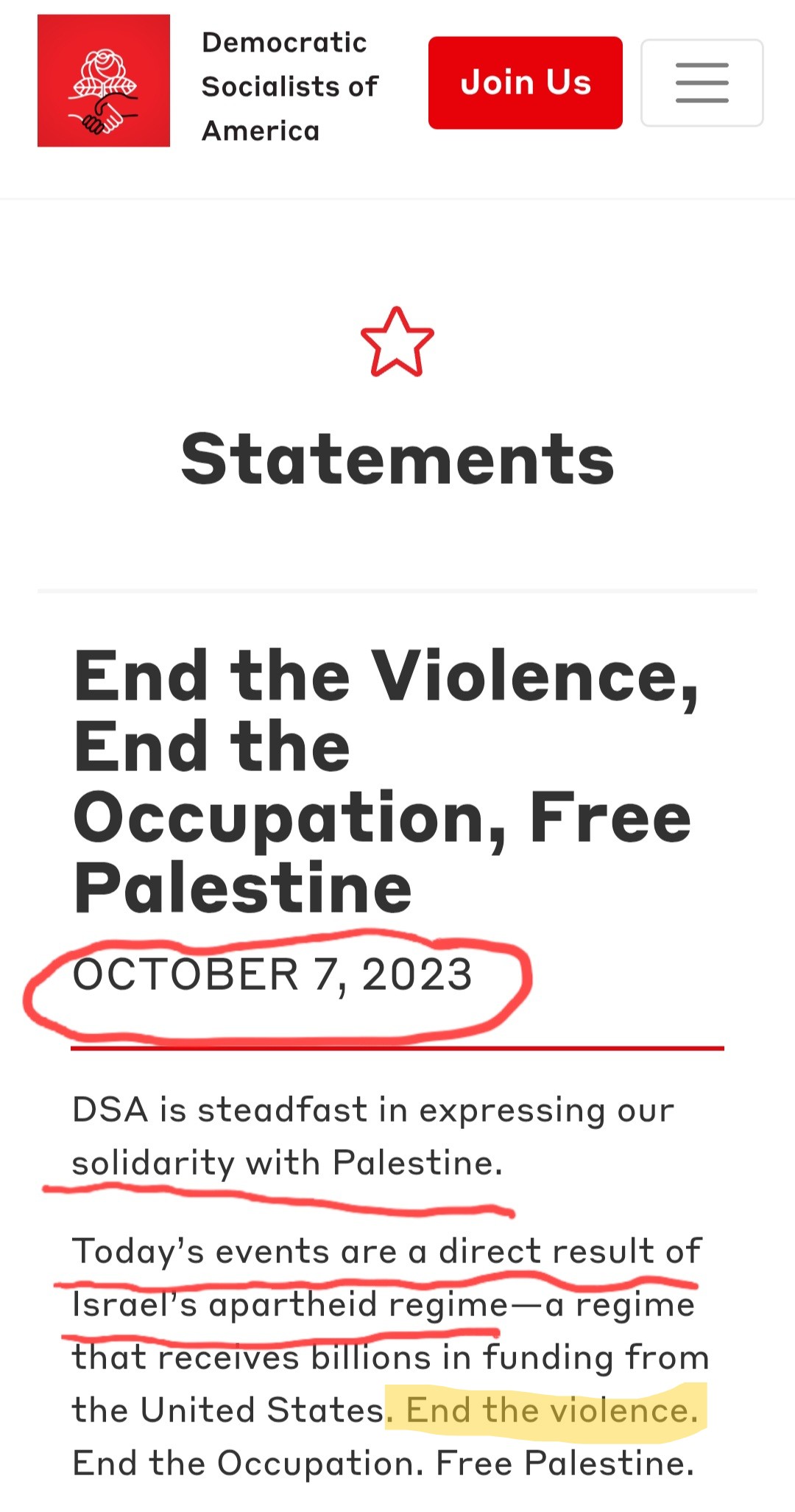
Under any normal understanding of language, those two positions cannot coexist. Even if one sides with Palestinian Arabs doing the slaughter, one cannot deny that killing 1,200 people and taking over 250 people hostage is anything but violence.
Yet for much of today’s activist left, there is no inconsistency because violence has been redefined.
Violence is no longer judged by the act itself. It is judged by the political identity of the actor and the victim. Violence against the oppressed is evil. Violence by the oppressed is resistance.
That single inversion explains nearly everything.
It explains why people can chant “globalize the intifada” and insist it is not a call for violence. Because intifada, in their lexicon, is not violence. It is justice.
But words have histories. And intifada has a very specific one.
The fact is that the Second Intifada was not a symbolic protest. It was suicide bombings on buses, massacres in cafés, shootings in markets, families murdered at holiday tables. The later “stabbing intifada” turned sidewalks and bus stops into hunting grounds. The “car intifada” transformed vehicles into weapons aimed at civilians.
So when Jews hear “globalize the intifada,” they do not hear an abstract call for liberation. They hear a political tradition with a body count. They hear the globalization of a tactic that has repeatedly targeted Jewish civilians.
That is why the argument over this slogan so often goes nowhere.
One side hears history. The other hears ideology. One side sees violence in the act itself. The other sees violence only when the “wrong” people commit it.
The socialist-jihadi moral framework launders murder into resistance and terror into liberation, because the victims are placed on the wrong side of the political hierarchy.
October 7 exposed with horrifying clarity that while the massacre itself was monstrous, the reaction to it revealed something even deeper: a political culture that could look directly at burned families, raped women, butchered children, and kidnapped grandparents and still speak of “ending violence” while standing in solidarity with those who had just committed it.
And when Jews and decent people watch those same people – in the same breadth – call for following the charge of a young aspiring politician named Zohran Mamdani to redefine both violence and “peace” in the cause of annihilating the oppressor class, they have reason to fear.
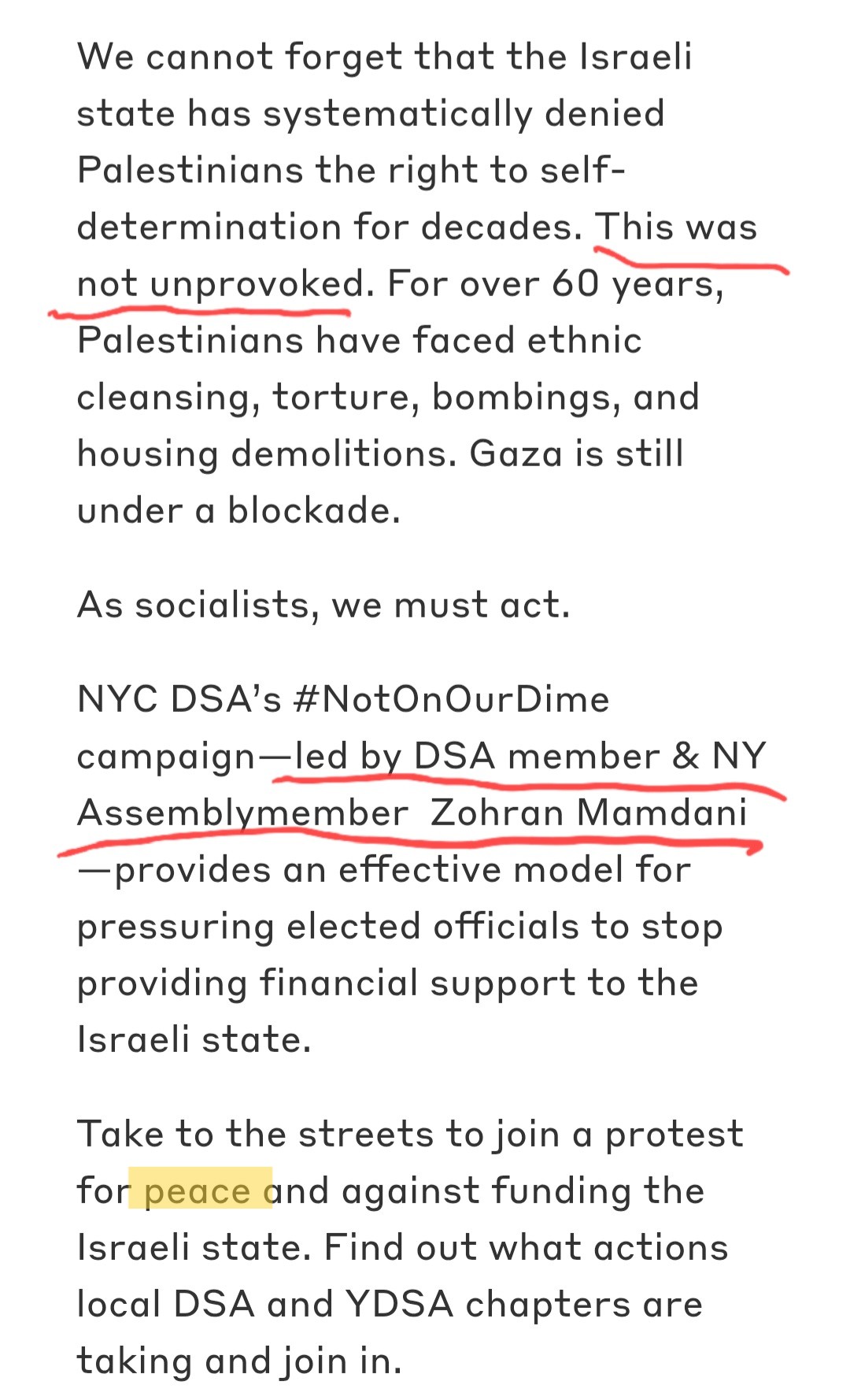
The sanitation of violence against certain undesirable groups – Zionists for example – was voted into power in New York City. With easy smiles that come from people who have long internalized that eradicating “oppressors” is a noble cause in which bloody hands do not stain the oppressed.


Pingback: Stop Marching for 1948. Start Building 2048. | First One Through