
Resilience is a word we use so casually that we sometimes forget what it actually means. It comes from the idea of springing back: absorbing a blow without allowing the blow to determine what comes next.
Israel received an extraordinary demonstration of it Wednesday morning.
Flydubai Flight FZ1073 was flying from Dubai to Tel Aviv carrying roughly 150 Israelis when something went terribly wrong in the cockpit. The plane plunged rapidly, eventually transmitted the international code for unlawful interference and diverted to Saudi Arabia. Israeli officials now say they are investigating the incident as an attempted terrorist attack. According to Israeli officials cited in press reports, a pilot was stabbed during the cockpit struggle, and passengers and crew helped overpower the attacker. Everyone aboard survived.
The investigation is continuing, and some details remain unsettled. But the response aboard the aircraft is striking. A plane full of people suddenly drops thousands of feet. There is violence in the cockpit. Passengers realize their lives may depend upon what happens in the next few minutes. People act and the attacker is subdued. The aircraft lands.
That is resilience in its most compressed form.

For a slower version, look at Kibbutz Be’eri.
On October 7, 2023 Be’eri suffered a horrific massacre at the hands of jihadists from Gaza. Nearly three years later, its residents are rebuilding houses, schools and community facilities and preparing for a broader return. Most of the community says it wants to return. The rebuilding effort describes its purpose in the simplest possible terms: returning home rather than allowing jihadi terror to decide whether the community continues to exist.
That is resilience too. Not forgetting or forgiving. Not pretending nothing happened nor escaping grief. Rebuilding anyway.
There is another way some societies and movements can process grievance, and it has almost the opposite dynamic.
A grievance can become something to preserve rather than overcome. Suffering becomes justification for retaliation. Retaliation produces a counterattack. The counterattack becomes a new grievance. That grievance then justifies another attack. Instead of absorbing catastrophe and trying to restore ordinary life, the political ideology continually replenishes itself from catastrophe.
There is a name for this process: grievance-fueled radicalization. Over the course of a century, it has become the mantra of Palestinian Arabs.
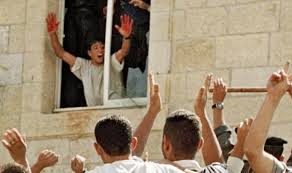
And it is impossible to understand Hamas and Palestinian Islamic Jihad without understanding how powerfully this mechanism operates within their ideology.
Hamas’ foundational charter did not merely object to particular Israeli borders or governments. It presented Palestine as an Islamic waqf that could not be surrendered and described the struggle over the land in explicitly religious terms. It was a call to “cleanse” the land of Jews and “Crusaders.”
Palestinian Islamic Jihad is even less ambiguous. The U.S. State Department has described PIJ as committed to Israel’s destruction and the creation of an Islamic state throughout historic Palestine, including present-day Israel.
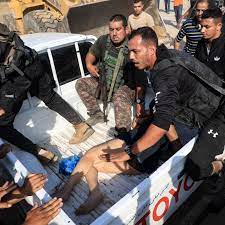
The Palestinian jihadi movement built around grievance can interpret the consequences of its own violence as additional evidence for the grievance that justified the violence in the first place.
Hamas political bureau member Ghazi Hamad supplied an unusually stark example after October 7. He argued that Israel itself was responsible for the bloodshed, said Hamas would repeat October 7 again and again, and rejected the idea that Israel had a legitimate place on the land.
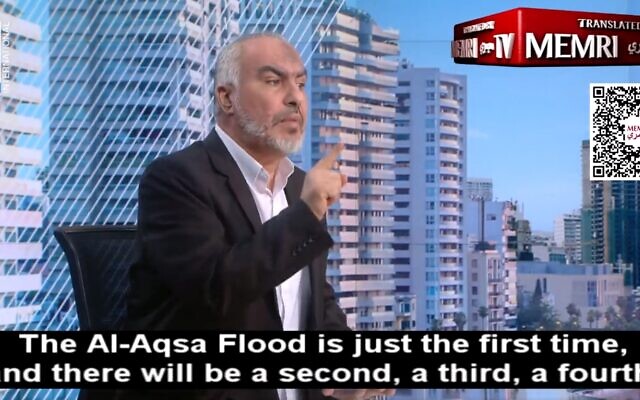
Consider the circularity. Israel’s existence is a grievance > Hamas attacks Israel is resistance > Israel response is a new grievance.
The cycle reproduces itself indefinitely because almost every possible outcome feeds it.
That is fundamentally the opposite of resilience.
Resilience does not require forgetting a grievance. Israelis certainly have not forgotten October 7, just as the people of Be’eri have not forgotten what happened in their homes. Resilience is the decision that suffering will not become the organizing principle of everything that follows.
The passengers on FZ1073 did not have the luxury of theorizing about any of this. Their aircraft was falling. They fought for control of it.
Be’eri has been doing essentially the same thing for three years, only much more slowly: taking back control of what comes next.
Israel has built resilience around what comes after catastrophe: survive, rebuild and move forward. Palestinian jihadist movements have built their cause around grievance that must be preserved, intensified and avenged. Coexistence becomes possible only when their stated mission to eliminate the Jewish state no longer governs the conflict.


