
The uniform matters. The place matters more.
At Buchenwald concentration camp, the ground holds ash. It exists for a single purpose: to remember the industrial murder of Jews. The expectations are clear without being written—restraint, silence, humility.
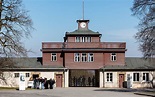
Bring a keffiyeh into that space and call it “expression” and the word collapses under the weight of context. Symbols do not travel untouched. In that setting, it reads as intrusion—present politics laid over a site of extermination. Memory for mockery.
Yet the pro-Palestinian Arab mob wants to remind Jews that the genocide of Jews is not just in the past but in the present. They want their right of “free expression” precisely where it can hurt Jews the most. The right to bring a cause onto ground that was meant to remind people “never again” was targeted with “again now.”
In their antisemitic zeal, they push the opposite at Temple Mount, the holiest site in Judaism. For centuries, Jewish prayer has pointed toward this place. Yet the pro-Palestinian crowd demands Jews be barred- not only no free expression but no freedom of religion.
“Status quo!” and “Provocation!” used very selectively, when Jews are the target.
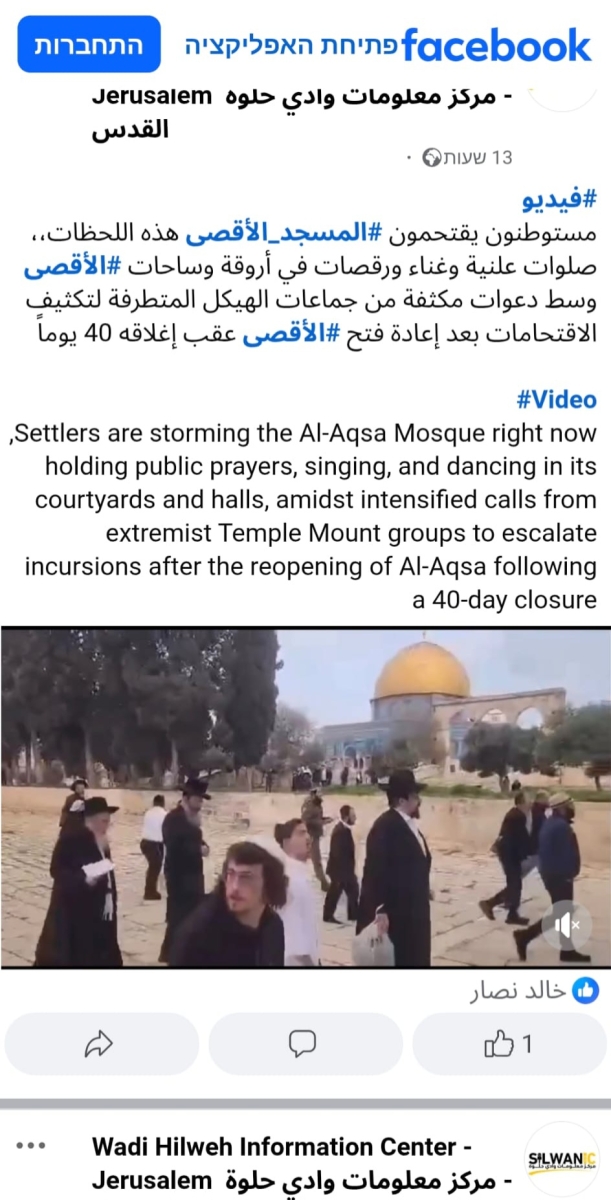
The same principle—expression—stretches in one place and shrinks in another.
Expanded to override the norms of a concentration camp. Constrained to block prayer at Judaism’s holiest site.
That is the pattern.
It is not only a double standard. It is a antisemitism squared.
The past is diluted when a site of Jewish death is treated as open terrain for contemporary symbolism. The present is constrained when Jewish prayer is treated as a threat rather than a right.
Buchenwald should demand humility before the dead.
The Temple Mount should allow the living to pray.
When those principles reverse, the fracture is not rhetorical. It is civilizational. And the pro-Palestinian camp continues to reveal the profound “deformity in its culture,” and how it revels in Jew hatred.


