At Buchenwald concentration camp, the ground holds ash. It exists for a single purpose: to remember the industrial murder of Jews. The expectations are clear without being written—restraint, silence, humility.
Buchenwald concentration camp
Bring a keffiyeh into that space and call it “expression” and the word collapses under the weight of context. Symbols do not travel untouched. In that setting, it reads as intrusion—present politics laid over a site of extermination. Memory for mockery.
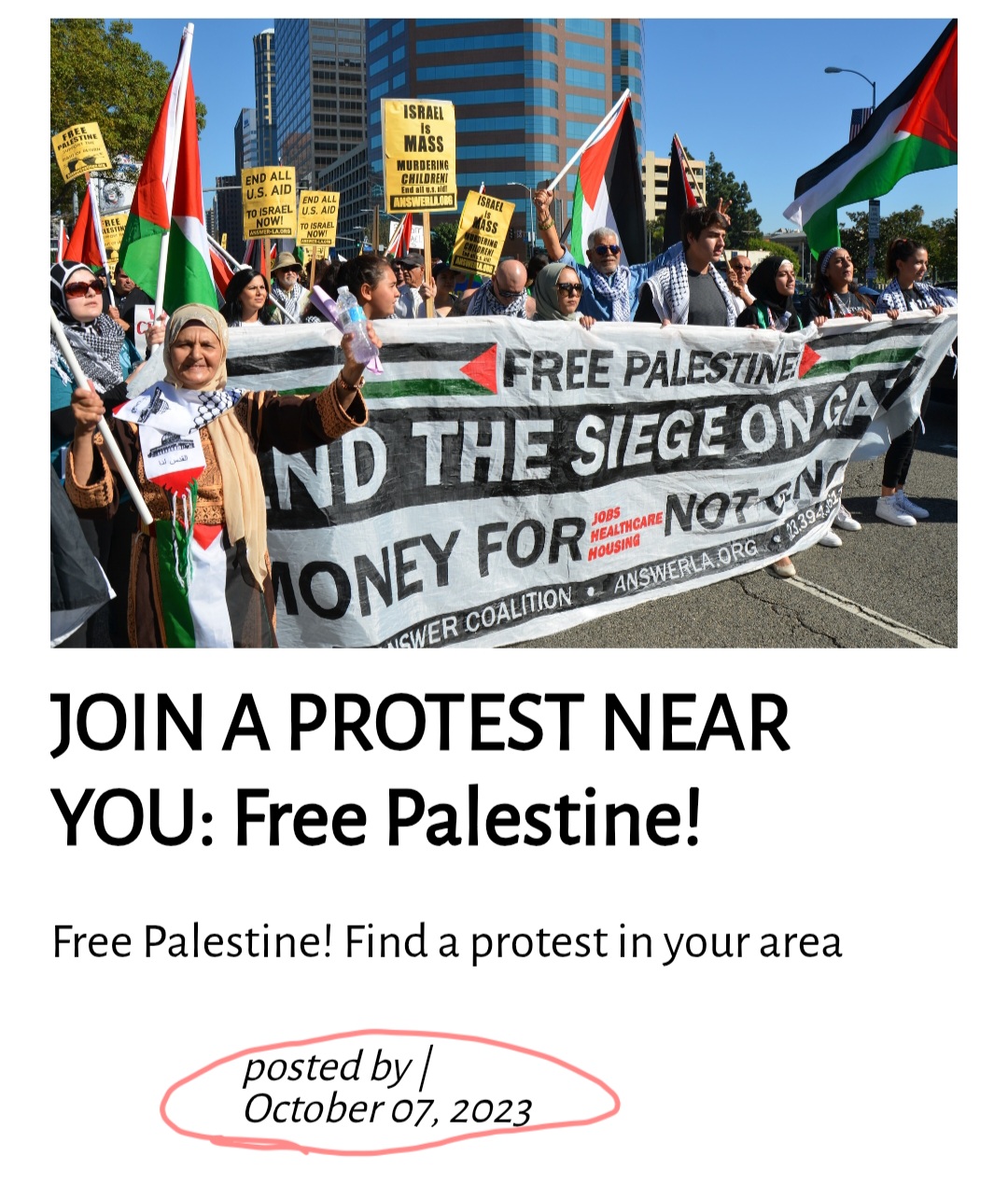
Yet the pro-Palestinian Arab mob wants to remind Jews that the genocide of Jews is not just in the past but in the present. They want their right of “free expression” precisely where it can hurt Jews the most. The right to bring a cause onto ground that was meant to remind people “never again” was targeted with “again now.”
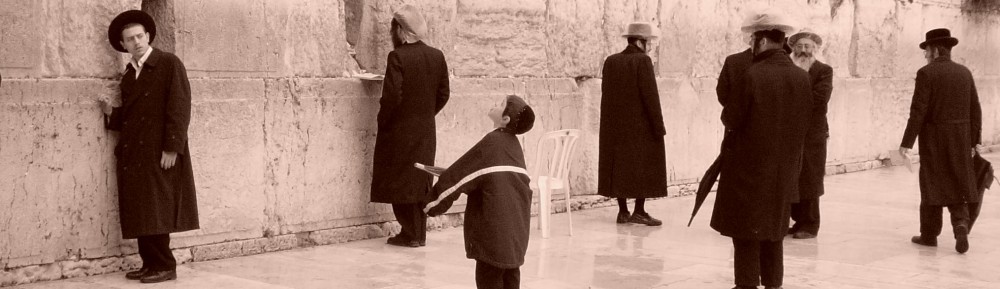
In their antisemitic zeal, they push the opposite at Temple Mount, the holiest site in Judaism. For centuries, Jewish prayer has pointed toward this place. Yet the pro-Palestinian crowd demands Jews be barred- not only no free expression but no freedom of religion.
“Status quo!” and “Provocation!” used very selectively, when Jews are the target.
The same principle—expression—stretches in one place and shrinks in another.
Expanded to override the norms of a concentration camp. Constrained to block prayer at Judaism’s holiest site.
That is the pattern.
It is not only a double standard. It is a antisemitism squared.
The past is diluted when a site of Jewish death is treated as open terrain for contemporary symbolism. The present is constrained when Jewish prayer is treated as a threat rather than a right.
Buchenwald should demand humility before the dead. The Temple Mount should allow the living to pray.
When those principles reverse, the fracture is not rhetorical. It is civilizational. And the pro-Palestinian camp continues to reveal the profound “deformity in its culture,” and how it revels in Jew hatred.
Spring break arrives and the terminals fill. Families in flip-flops inch forward. Teenagers clutch boarding passes. Parents juggle passports, snacks, and patience. The line barely moves. Weeks later it repeats on Passover and Easter: travel with checkpoints.
While it feels like inconvenience, it is much more.
It is memory. It is cost. It is consequence.
The line begins with the September 11 attacks, when operatives from the genocidal jihadist group al-Qaeda boarded planes as passengers and turned them into weapons. Nearly three thousand civilians were killed in a single morning. The attack followed a clear logic: target civilians in the West, maximize scale, use the openness of modern Democratic systems against themselves.
Out of that morning came the Transportation Security Administration. The bins. The scanners. The choreography of shoes, belts, and laptops. A system built to harden what had already been breached.
It continues today at scale.
The United States still designates a range of these Islamic superiority groups as terrorist organizations:
al-Qaeda
Islamic State (ISIS)
al-Shabaab
Boko Haram
Tehrik-i-Taliban Pakistan
Hamas
Hezbollah
They differ in leadership, geography, and strategy yet converge in one place: the justification of violence against western civilians in the name of radical Islam.
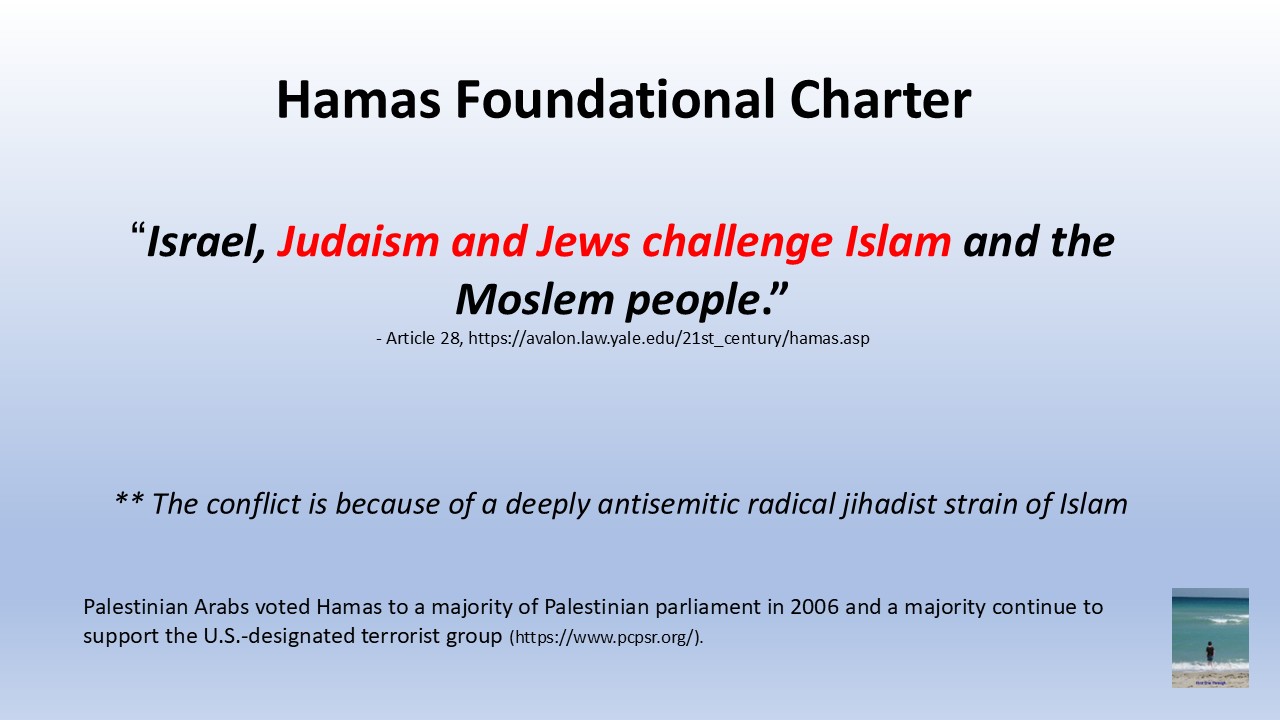
Hamas makes the convergence unmistakable. Its founding charter is replete with calls to kill Jews and destroy the Jewish State. Its leadership has framed the conflict in absolutist terms. And on October 7, its fighters carried out coordinated attacks that deliberately targeted civilians—families in homes, people at a music festival—turning them into instruments of terror in a way that was both intentional and public.
Different names and different flags. Same methodology and targets.
Those jihadi ideas do not stay contained to a battlefield. They reshape daily life.
It shows up in synagogues and churches where doors are locked and guards stand watch during prayer. In stadiums and concerts where bags are checked and perimeters hardened. In city streets lined with barriers. In subway systems with armed patrols. In office buildings where access is controlled and monitored.
Islamic extremist Salman Abedi and his brother Hashem Abedi bomb Ariana Grande concert in Manchester, UK
Everyday life has been redesigned around the possibility of civilian targeting.
Every traveler standing in a TSA line is paying part of that price. Every secured synagogue, every guarded stadium, every hardened entrance carries the same cost.
TSA lines at American airports
Aviation remains a focus for a reason. It concentrates civilians. It symbolizes openness. It offers reach. So the security system stays because the threat did not disappear.
As in Israel, faced with daily threats.
Spring break travelers do not think about jihadi ideology when they remove their shoes. Families heading to a Passover seder or an Easter gathering do not connect their delay to Islamic extremist networks.
But they are connected.
To a morning in September. To an idea that still circulates. To organizations that still recruit, plan, and attack.
Which are now being promoted and protected by elected officials and a socialist-jihadi alliance growing inside the West.
Civilization reveals itself most clearly on a highway. Not in speeches, not in policy, but in how people move when no one is in charge.
Watch long enough and you will see the whole of society pass by.
There is the nervous driver. Hands clenched. Eyes darting. Checking mirrors, shoulders, blind spots, and then checking them again. Twenty miles an hour in a lane built for sixty. Every decision delayed, every movement tentative. They do not mean harm, but they cause it anyway. Traffic bunches. Others brake. The rhythm breaks. Their insecurity becomes everyone else’s problem.
Then there is the other kind. The overconfident driver. No signal. No glance. No pause. They cut across lanes as if physics were optional and other people were props. High beams on, blinding anyone in their path. They do not doubt themselves, which is exactly the problem. They move fast, loud, and wrong, leaving everyone else to react.
And then there is the third type. The one you barely notice. The competent driver. They check their mirrors, but not compulsively. They signal, they merge, they move with purpose. They understand the road is shared space. They are neither timid nor reckless. They are simply capable.
And this is not a story about driving. It is a map of how people move through the world.
Every organization, every community, every institution, every family is filled with these same three types. The insecure. The reckless. And the competent. We like to pretend the difference is about intention or ideology or background. It is not. It is about capacity. The ability to function in a shared system without forcing everyone else to compensate for you.
The insecure person does not trust their own judgment, so they slow everything down. Meetings drag. Decisions stall. Progress waits for reassurance that never fully arrives. They believe they are being careful. Others experience them as paralyzing.
The overconfident person has the opposite problem. They trust themselves too much without the discipline to match. They move before understanding. They decide before listening. They assume outcomes will bend to their will. Others experience them as chaos.
Here is the part people do not like to say out loud: both types resent the third. They do not just resent competence; they reinterpret it as wrongdoing and personal slight.
The insecure look at the competent and see a threat. Proof that the world can move without constant hesitation. So they question them. Undermine them. Suggest they are reckless or insensitive. “You do not know your place,” and “you are too big for your britches” and other insults fly. Anything to explain away the gap.
The overconfident look at the competent and see a constraint. Someone who refuses to play along with their improvisation. Someone who insists on reality. So they attack them. Call them rigid. Accuse them of stealing. Anything to avoid confronting their own lack of discipline.
In both cases, the reaction is the same. Lash out at the person who works within the system, rather than confront the behavior that breaks it.
Over time, this creates a quiet moral inversion. The people causing friction claim victimhood. The people maintaining order are cast as the problem.
The people who cannot act blame those who can. The people who act without thinking blame those who impose structure. And the people in the middle, the ones who actually keep things functioning, absorb the cost.
Competence rarely gets credit because its success looks like nothing happening at all. Meanwhile, those who cannot function easily do not just flail on their own but pull down as many as they can.
On elite campuses, something more consequential than protest is unfolding. Jewish life is being redefined by extremists.
Groups like Jewish Voice for Peace and “Jews for Liberation” present themselves as the authentic moral voice of Jewish students. They speak in the language of justice, liberation, and equality that resonates with their peers. But strip away the branding and the position is blunt: the Jewish state is illegitimate and cast as a project of racial supremacy, apartheid, even genocide.
That is not critique. That is an argument for erasure.
The danger is not only that these claims are false. It is that they are being laundered into the mainstream through the fig leaf of Jewish identity. When anti-Israel activism is voiced by non-Jews, it is political. When it is voiced by Jews, it is marketed as moral truth. Then the fringe becomes credible and slogans become scholarship. Eliminationist ideas acquire the authority of internal dissent.
That shift matters.
Once Israel is no longer seen as a flawed state – much like others – but as an illegitimate one, every boundary collapses. If the state itself is the crime, dismantling it becomes justice, and whatever follows can be rationalized as liberation.
This is how language is turned into a weapon.
Mainstream Jewish campus institutions have not met this moment with equal clarity. Groups like Hillel are focused, rightly, on building Jewish life: community, ritual, continuity. They create space. They avoid litmus tests. They keep doors open. But when the central attack is not on Jewish practice but on Jewish legitimacy, generality reads as hesitation.
When others define Zionism as racism, it is not enough to respond with programming and belonging. The argument has moved to first principles. It demands an answer at that level.
And so a vacuum has opened.
Into that vacuum have stepped the loudest voices, not the most representative ones. The result is a distorted picture of Jewish opinion, one in which the extremes are visible and the center is absent.
That center needs a voice of its own.
Not a mirror image of the anti-Zionist fringe. Not a reaction that turns legitimate security concerns into collective hostility toward all Arabs. But a clear, unapologetic articulation of what most Jews actually believe, and what a sustainable future requires.
That position is not complicated.
The Jewish people have a right to sovereignty in their historic homeland. Israel must remain secure and capable of defending itself against those who seek its destruction. Terrorism and the glorification of violence are disqualifying, not contextual. No serious political future can be built on a culture that celebrates October 7 or teaches that murder is resistance.
The “two-state solution” is treated as moral doctrine, as if repeating it resolves the conflict. It does not. Self-determination is not a slogan tied to a single map. It can take different forms across different political arrangements. Millions of Palestinian Arabs have held Jordanian citizenship. Others live under varying structures of autonomy. The real question is not whether self-determination exists in theory, but whether any proposed structure can produce stability rather than violence.
A future Palestinian state, if it is ever to emerge, must come after a profound transformation: demilitarization, institutional reform, and an educational shift away from incitement and toward coexistence. Statehood is not an entitlement. It is a responsibility.
This is baseline reality, yet it is rarely stated plainly on campus.
A new kind of Jewish student group is needed, one that is explicit where others are cautious and disciplined where others are reckless. A group that centers Israel not as an abstraction but as a living, embattled state. One that can say, without hedging, that Jewish self-determination is legitimate, that its delegitimization is dangerous, and that moral seriousness requires both strength and restraint.
Such a group would do three things differently.
It would reject the language trap. Words like apartheid and genocide would be treated not as serious analysis but as distortions that inflame rather than illuminate.
It would refuse the false binary. Supporting Israel does not require abandoning moral judgment. Rejecting terror does not require rejecting an entire people.
It would re-anchor the conversation in reality. Israel exists. Threats are real. Peace requires conditions, not just intentions.
The goal is not to win an argument in a seminar room. It is to prevent a generation from being taught that the existence of the world’s only Jewish state is a moral error to be undone.
Campus Jewish life needs a mainstream voice that is willing to speak clearly – and be heard.
There are moments when language has to carry more than meaning. It has to carry memory. It has to carry consequence. When the subject is the death of Jesus and the role of Jewish leadership in that story, every word is loaded with two thousand years of fallout.
That is the backdrop to a recent homily reported by Vatican News, where the Pope recounts how members of the Sanhedrin planned to put Jesus to death and frames the decision as a political calculation rooted in fear.
On its face, this is familiar terrain. The Gospel of John tells that story. The Pope emphasizes fear, power, and the instinct of leadership to preserve order when threatened. He broadens the lesson, warning about “hidden schemes of powerful authorities” and concluding that not much has changed when we look at the world today. It is a universal moral frame, the kind clergy have used for centuries to draw a line from ancient texts to modern behavior.
But this is not a normal moment, and that is not neutral language.
We are living through a surge in antisemitism that is not subtle, not isolated, and not theoretical. Jews are being targeted in cities, on campuses, and online. The State of Israel is being recast in mainstream discourse as uniquely illegitimate, even genocidal. The old accusations have not disappeared. They have been updated, rebranded, and redeployed. In that environment, the space between what is said and what is heard narrows dangerously.
The Catholic Church knows this better than anyone. For centuries, Christian teaching around the Passion narrative fed the idea that Jews, as a people, bore responsibility for the death of Jesus. That charge—deicide—did not stay in theology. It moved into law, into mobs, into expulsions and massacres. It became part of the architecture of antisemitism in Europe.
The Church confronted that history in Nostra Aetate, a landmark statement of the Second Vatican Council. The declaration made clear that Jews as a whole, then or now, cannot be blamed for the death of Christ. That was not a minor clarification. It was a doctrinal line drawn after catastrophe, an effort to shut down a pattern of interpretation that had proven lethal.
Successive Popes understood what that required in practice. Pope John Paul II did not rely on implication. He spoke directly, repeatedly, calling Jews “our elder brothers” and making visible gestures that reinforced the message. Pope Benedict XVI went further in precision, arguing explicitly that references to “the Jews” in the Gospel of John describe a specific leadership group, not a people across time. They closed interpretive doors because history showed what happens when those doors are left ajar.
That is why the current language matters. “Religious leaders saw Him as a threat.” “Hidden schemes of powerful authorities.” “Not much has changed.” None of these phrases, standing alone, violates Church teaching. None explicitly assigns blame to Jews today or draws a line to the modern State of Israel. But they operate in a space that has been misused for centuries, and they leave enough room for that misuse to return.
In a different era, that looseness might pass without consequence. Today, it does not. The categories are too easily mapped by those already inclined to do so. “Religious leaders” becomes “rabbis and synagogues.” “Powerful authorities” becomes a stand-in for Jewish power, whether the government of Israel or leaders in the Jewish diaspora. “Not much has changed” becomes an argument for continuity from the first century to the present. And in a climate where Israel is already being portrayed as a moral outlier among nations, the slide from scripture to contemporary politics is not a leap. It is a small step.
This is not about intent. The Pope is speaking in a long Christian tradition of drawing moral lessons from the Passion. The emphasis on fear and political calculation is, in fact, a move away from older, more dangerous framings. But intent does not control reception, especially when the subject has such a charged history.
The standard here cannot be whether the words are technically defensible. It has to be whether they are tight enough to prevent foreseeable distortion.
Because the distortion is not hypothetical. It is already happening in the broader culture. Jews are being pushed out of public spaces, treated by default as representatives of a state and a government they may or may not support, whether they live there or not. Israel is singled out in ways that strip context and complexity, recast as uniquely evil in a world that has no shortage of brutality. In that environment, any rhetoric that can be bent toward those narratives will be bent.
The Church has done the hard work of confronting its past. It has the doctrine. It has the precedent. What it needs, in moments like this, is the discipline to match.
Abraham had two sons. That is not only history; it is the underlying structure of the Middle East.
From Isaac came Jacob (Israel) and the Jews. From Ishmael came peoples that would become much of the Arab world. One father. Two lines. A separation that began in a household and expanded into history.
“And the thing was very grievous in Abraham’s sight… and he sent her [Hagar and Ishamael] away” (Genesis 21:11–14)
A rupture in youth. Ishmael into the wilderness. Isaac remaining with the covenant, inheritance, and land. Two trajectories set before either became a nation.
They meet again only once.
“And his sons Isaac and Ishmael buried him in the cave of Machpelah” (Genesis 25:9)
The text records a moment that refuses to disappear: the separated sons standing together over their father.
History widened the gap.
The descendants of Ishmael became many: spread across vast geographies, largely Muslim, with enduring Christian communities. The region became overwhelmingly Arab.
The descendants of Isaac became few. Driven out, dispersed, conquered repeatedly, yet carrying something that would not yield: memory, covenant, and a fixed orientation toward their promised land.
Eventually, they returned. A small people, back in a narrow strip of that land, surrounded by a region that traced itself, at least in part, to the other son.
That imbalance defines the present.
Then something shifted.
The Abraham Accords – named for their common forefather – introduced a different possibility. Arab states choosing open relationship with Israel, shaped by economics, technology, security, and a recognition that the region was already changing beneath older narratives.
A shared pressure point sharpened that shift: Iran.
A Muslim non-Arab power, Persian in identity and imperial in ambition, projecting influence across Arab capitals and against Israel alike, forcing alignments that would have seemed implausible only years ago.
The Accords opened a door for a new future. Now widen it.
Bring the Abraham Accords to Hebron.
Bring them to the Cave of Machpelah, the burial place of Abraham, Isaac, and Jacob, and the Jewish matriarchs as well. The place where the text records Isaac and Ishmael standing together.
Let the leaders of Israel and the Arab world stand there.
Let it be an invitation – especially to Saudi Arabia – to step fully into this framework, not only as a strategic actor but as a central inheritor of the Abrahamic story.
Let it also be a reminder closer to the ground.
To Jews and Arabs living in the disputed lands east of the 1949 armistice lines (E49AL) that includes Hebron, that their conflict sits inside a much older relationship. They are not strangers placed side by side by accident. They are descendants of a shared origin, living out a divergence that began long before modernity created borders.
Ishmael did not return to neutral ground. He came back to the land understood to be Isaac’s inheritance. He stood with his brother there and buried their father.
That moment carries a clarity that history has often obscured: the land of Israel is the Jewish home.
The Arab world does not disappear in recognizing that. It becomes something stronger—anchored in reality, aligned with its own long-term interests, and reconnected to a shared origin that was never erased.
The Abraham Accords can move from alignment to acceptance.
Hebron is where that truth can be stated without abstraction.
The region has spent centuries replaying the separation.
Saudi Arabia and the Gulf States can choose, now, during their common battle against Iran, to stand again at the place where Isaac and Ishmael met thousands of years ago, and acknowledge what each brought with them when they arrived: a common bond and their own roots in the region.
Her 84 year old mother was taken from her home, with signs of violence left behind, a masked man on camera. And then nothing. A void where a mother used to be. She spoke about sleepless nights, about imagining fear she cannot reach, about a word she kept returning to: unbearable.
That word should end the conversation. It should strip away everything else.
Because everyone understands what it means when someone you love is taken.
Now Multiply That by 250
What Guthrie is living through is devastating.
In Israel, it happened at scale.
Over 250 people were abducted violently—children, parents, grandparents—dragged from homes, shoved into vehicles, disappeared into tunnels by jihadi terrorists. The same questions Guthrie now asks became a national condition: Are they alive? Are they suffering? What are they thinking?
The same agony. Multiplied. Multiplied. Multiplied.
Where the World Breaks
Here is the dividing line.
When Guthrie speaks, there is no debate. No one justifies it. No one says her mother deserved it. No one rallies in defense of the abductor.
The reaction is immediate and human: bring her home.
But when Israeli families faced the same horror, the reaction in too many places—especially on college campuses—was not sympathy.
It was celebration.
Not confusion. Not distance. Celebration of the very act Guthrie calls unbearable.
The Only Question That Matters
Her interview removes every excuse. No politics, no slogans—just a daughter describing what it feels like to have a mother taken.
If you can feel that—and then justify or cheer when it happens to someone else—you are not misinformed. You are choosing evil.
And that is the part that is unbearable to civilized people.
Religious liberty is not complicated. It does not require panels, frameworks, or warnings about artificial intelligence. It requires clarity.
The right to choose your faith. The right to practice it as you see fit. The right to pray openly, in your way, at your holy places. The right to walk away from it—without fear, without punishment, without death.
This is not a modern reinterpretation. It is the original standard.
In 1948, in the aftermath of a world war that exposed the catastrophic consequences of state control over belief and identity, the United Nations adopted the Universal Declaration of Human Rights. At its core sat Article 18, crafted with precision that set religious freedom as a benchmark of human rights.
“Everyone has the right to freedom of thought, conscience and religion; this right includes freedom to change his religion or belief, and freedom, either alone or in community with others and in public or private, to manifest his religion or belief in teaching, practice, worship and observance.” – UN Declaration of Human Rights, Article 18
Change it. Practice it. Live it.
That was the UN at its founding: defining principles meant to bind nations, not accommodate them.
If the speech had stayed anchored to Article 18, the omissions would have been impossible to ignore: apostasy treated as a crime, in some places a capital one; the right to convert denied in law; and access to holy sites restricted where it is most visible and most contested, to Jews on the Temple Mount in Jerusalem.
These are not edge cases. They are direct contradictions of the standard set in 1948.
They went unmentioned.
The reason is not subtle. The United Nations that wrote Article 18 was asserting principle in the shadow of catastrophe. The United Nations that speaks today operates at the consent and behest of large voting blocs. Many of those blocs come from the Global South, including dozens of Muslim-majority states that reject the core of Article 18 where it matters most: the right to change religion and the expectation that religious access should be reciprocal.
Within that reality, the boundaries of acceptable language narrow.
No mention of apostasy laws. No mention of capital punishment for conversion. No mention of restricted prayer where it cuts closest to the principle.
So the language adapts. The sharp edges of Article 18 are rounded into generalities that everyone can endorse, including those who, in practice, deny them. The result is a version of “religious liberty” that survives as rhetoric while its substance is negotiated away.
This is not an evolution of human rights. It is a retreat from them.
The United Nations once set a standard that stood above politics. Today, it reflects the ugly politics of those who sit within it. And as the Pope will tell you, there can be no peace without religious liberty. Ergo, the UN has become one of the primary sources of discord and violence in the world today.
There is something striking about Parshat Vayikra.
Just weeks after the drama of Exodus – splitting seas, revelation at Sinai, a nation coming into being – the Torah seemingly turns inward. The focus shifts to offerings, detail, repetition, and discipline. It feels quieter, but far more demanding.
Because the Torah is no longer telling the story of a history of a people. It is shaping the inner life of a person and framing a community.
Korban: The Work of Drawing Close
The word korban comes from the Hebrew word karov, to draw close.
This is the Torah’s language for repairing distance. Every lapse in judgment, every compromise, every moment we fall short creates space between who we are and who we are meant to be. That distance accumulates. It dulls awareness. It reshapes identity over time.
Korban is the act of closing that gap through deliberate engagement.
The Offering as Mirror
The individual places hands on the offering before it is brought forward. The gesture is direct and personal.
The animal reflects the instinctive layer of the self: of impulse, appetite, anger, ego. The act forces recognition: this energy exists within me. It must be directed, refined, elevated.
The fire on the altar becomes the mechanism of transformation. What is raw is lifted. What is uncontrolled is shaped into something purposeful.
Responsibility leads to possibility.
Atonement Requires Engagement
Vayikra establishes a system built on participation. Atonement unfolds through action, awareness, and presence.
A person must recognize the failure, step toward it, and engage with it. That process creates movement. It slows the instinct to gloss over mistakes and replaces it with something more durable: change that is earned.
The Hidden Becomes Visible
As important, korbanot were not private moments.
They took place in the open, at the center of the community. A person brought an offering in full view; sometimes for something no one else knew, a failure that could have remained hidden.
That public act carries a dual force. It is a form of confession. It acknowledges that private actions shape a public self.
It also reshapes how we see each other. Everyone comes forward. The composed, the successful, the admired, all stand at the same altar. They, too, confront failure. They, too, seek repair.
The system dismantles the illusion of perfection and replaces it with something far more stable: a community built on shared imperfection and ongoing effort.
The World We Built Instead
Today, we have constructed the opposite system.
Our lives are increasingly public, yet carefully edited. Success is broadcast. Struggle is concealed. Identity becomes something managed rather than lived.
Platforms reward the appearance of control, clarity, and achievement. Failure is filtered out. Weakness is reframed or hidden entirely.
The result is a quiet distortion.
People begin to believe that others are living more complete, more resolved lives. The gap between appearance and reality widens. Struggle becomes isolating rather than connective.
In a world like this, growth becomes harder. Without visibility, there is less accountability. Without shared imperfection, there is less permission to confront what is broken.
The Measure Is Intent
The mincha, the simple grain offering, carries the same weight as more elaborate offerings.
A handful of flour stands beside an animal offering because the Torah measures sincerity. The system resists performance and centers intention, reinforcing that what matters is the internal work, not the external display.
The Real Offering
At the center of Vayikra is a simple idea: the offering is the self, refined over time.
The challenge today is not understanding that idea. It is living it in a world that encourages concealment over confrontation.
Vayikra describes a life where people engage their shortcomings directly and are willing to be seen in that effort. The question that remains is whether we can build lives that allow for that kind of honesty again.
There is a temptation in moments of fear and anger to reach for the bluntest possible instrument: collective blame.
We are seeing it again now, in calls from some politicians and commentators to treat Muslim Americans not as individuals, but “as a class.” It is offensive. It is wrong. And it is profoundly un-American.
We have been here before.
American history offers a warning that should never be forgotten: General Ulysses S. Grant’s order expelling Jews “as a class” from parts of the South during the Civil War. It was born of frustration, prejudice, and expedience. It is remembered today as a stain.
That is what collective guilt produces. Not security. Not clarity. Just injustice.
And it obscures the truth.
Because the truth is more important: not all Muslims are jihadists. The overwhelming majority are not. But there exists, within every society, a subset animated by radical, supremacist ideology. In this case, that subset is jihadists and they are a very real problem.
We have seen synagogues attacked, Jewish schools targeted, and civilians murdered around the world – from New York to Paris, from Sydney to Jerusalem. These acts are not isolated. They are the violent edge of a broader ideological ecosystem that glorifies terror, sanctifies hatred, and seeks legitimacy in the West.
That ecosystem is not confined to foreign battlefields. It has nodes here.
Organizations like Students for Justice in Palestine (SJP) and Within Our Lifetime do not operate as neutral advocacy groups. Their rhetoric, tactics, and alliances echo the narratives of jihadist movements – erasing terrorism, justifying atrocities, and turning mass violence against Jews into something to be rationalized and celebrated.
This is where scrutiny belongs.
Not on millions of Muslim Americans living ordinary lives who are part of the American fabric. But on the networks, organizations, and ideologies that radicalize, that excuse violence, and that deliberately blur the moral line between protest and terror.
Failing to make that distinction is not only unjust but dangerous.
When everything is labeled the problem, nothing is. When all Muslims are treated as suspects, actual jihadists disappear into the noise. They benefit from that confusion. They rely on it.
And worse, it hands them a propaganda victory: proof, in their telling, that the West is inherently hostile, that coexistence is impossible, that radicalism is justified.
That is why calls to expel Muslims from the United States are not just racist; they are strategically self-defeating. They punish the innocent, betray American principles, and distract from the real threat.
A serious society does not fight ideologies with hysteria. It fights them with precision.
It identifies the threat clearly: jihadist ideology, its enablers, and the institutions that normalize or legitimize it. It protects the innocent. And it refuses, no matter how charged the moment, to abandon the principles that distinguish a free society from the movements that seek to destroy it.