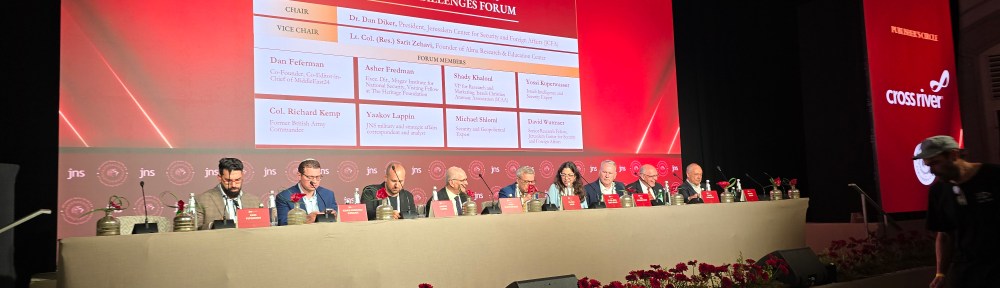
A friend noticed I had attended the JNS International Policy Summit in Jerusalem and asked if it was worthwhile.
I paused. “That’s actually a harder question than it sounds. I have too many thoughts for a text message.”
This article is my answer.
The event. Alex Traiman, CEO of JNS, and Richard Heideman, Chairman of the JNS International Policy Summit, assembled an impressive three-day program. Israeli Prime Minister Benjamin Netanyahu, President Isaac Herzog, U.S. Ambassador Mike Huckabee, the “Green Prince” Mosab Hassan Yousef and dozens of leading policymakers, legal experts and advocates discussed nearly every dimension of Israel’s current challenges.
Topics: The summit covered twelve main topics with a few breakaway panels for each so people could listen to various subjects. It covered everything from antisemitism and regional security to international law, Judea and Samaria, Israel’s democracy, Christian-Israel relations and the narrative war playing out across traditional and social media.
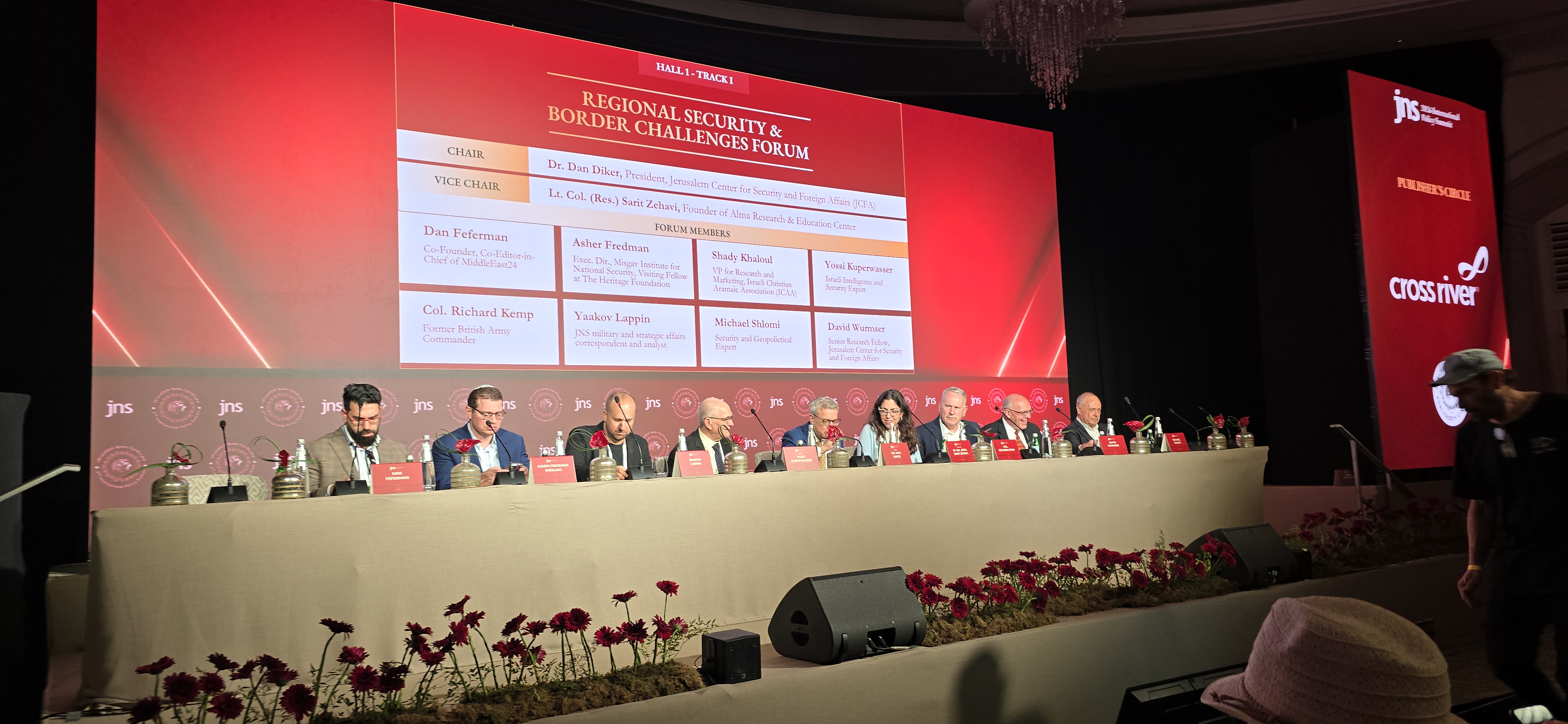
What makes a conference worthwhile? Many conferences share the discussions online – as did JNS – so people often question the value of devoting so much time to listening to so many speakers. I usually attend conferences to become energized and to meet like-minded people. That has been my experience at Tikvah events in New York, for example. I will share that it was not my feeling at this JNS conference.
For one thing, the attendees here were much more engaged in politics professionally than at a Tikvah Leadership Conference. Most of the people at the Waldorf Astoria knew everyone on the panels, worked with them and could have joined any of the discussions. It felt like the crowd was full of understudies ready to assume an empty chair on stage, or ready to have working sessions in side rooms. It made talking to fellow attendees extremely interesting for anyone looking to fully engage in the various subject matters.
However, the vibe of the Jerusalem News Syndicate conference was much more right-wing than I had anticipated. I had thought of JNS as simply an alternative to AP and Reuters, providing an Israeli perspective on the news. While I expected it to be right-of-center, I was surprised at how many deeply right-wing people were both speakers and attendees.
Two Themes: Trump-Iran/Lebanon: The backdrop for the event must be set, as events in the Middle East move quickly.
At the time of the conference, June 21-23, it appeared that the Trump Administration was striking a deal with Iran that was viewed by the speakers as profoundly weak regarding Iran, and deeply flawed as it related to Israel’s war with Hezbollah. Speakers went out of their way to say how much they love Donald Trump and Israel could never ask for a better friend, so such a skilled negotiator obviously just needed to buy time through July 4 celebrations and the World Cup, and would then return to finishing the Iranian nuclear and ballistic threats. Speakers avoided smearing Vice President JD Vance in public, but the quiet discussions near the cookies in the hallway were that they would like to see Marco Rubio as the president after Trump.
The opinions were definitely hawkish: Israel needs to maintain a buffer in Lebanon until Hezbollah is disarmed and terrorist infrastructure is removed. The same format is required in Gaza for Hamas. Iran must continue to be attacked until a long-term favorable deal can be struck.
It was interesting to hear how the various speakers thought of the regimes and people in each theater: In Iran, the government is horrible and must be removed while the people are intelligent and wonderful allies-in-waiting. Hezbollah is a rogue Iranian proxy that must be expunged so Israel can develop a long-term peace with the legitimate government of Lebanon. However, the situation in Gaza had no rainbow at the end. While the determination to finish Hamas and disarm it was viewed as non-negotiable, the prognosis for peace with everyday Gazans was viewed as so distant in the future to not even warrant near-term discussions.
Antisemitism/ Narrative: The “eighth front” of the current war is sometimes referred to as the narrative war in the global media and social media by Netanyahu. I believe Israel’s deteriorating image around the world has fueled antisemitism, even if hostility toward Israel and hatred of Jews ultimately remain distinct phenomena.
Michal Cotler-Wunsh, CEO of the International Legal Forum, called “October 7 the Kristallnacht of our times” that will ultimately “come for all democracies.” Lori Lowenthal Marcus of the Deborah Project said that “teacher unions are like the Hamas tunnels in American education,” part of an insidious infrastructure that systemically vilifies Israel. David Brog of the Maccabee Task Force suggested bringing social media influencers to Israel to see the truth, and that those people will become strong advocates when they realize that they’ve been fed lies for years. Miss Israel, Melanie Shiraz suggested changing the entire dynamic: to engage in sports, cultural events and other places where people engage directly in a common arena. “Let them see Israel, not as an argument to be won but a beauty to be shared…. Not with better corrections but better invitations.”
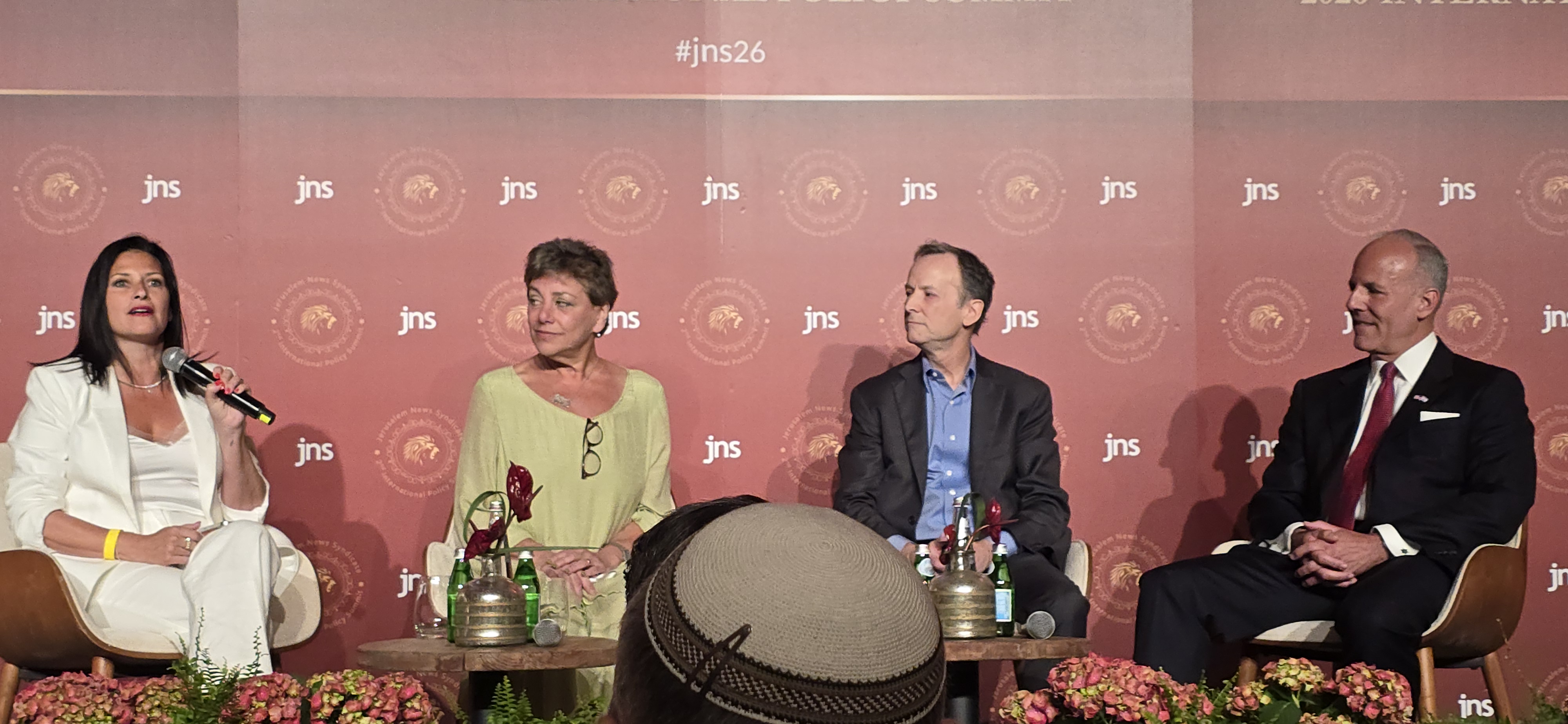
She received one of only a handful of standing ovations.
So, was the JNS International Policy Summit worthwhile?
Yes, but not for the reason I expected.
The speeches were informative, and many are available online for anyone willing to invest the time. What cannot be livestreamed are the conversations over lunch, the chance encounters in the hallway, and the immersion in an ecosystem of people who have dedicated their lives to defending Israel and Jews in ways most of us never see. Some fight in courtrooms. Others rewrite school textbooks, monitor the United Nations, expose campus antisemitism, advocate for terror victims, build alliances with Christians, or wage the daily battle for truth on social media.

Like any gathering of passionate people, I did not agree with everyone. Some speakers left me inspired; others left me shaking my head. But perhaps that is part of the value of attending in person. A conference is not worthwhile because it confirms everything you already believe. It is worthwhile because it exposes you to the people, personalities, and competing ideas that shape a movement.
The summit reminded me that the defense of Israel and Jewish people around the world is no longer just the work of soldiers and diplomats. It is also carried by lawyers, educators, journalists, researchers, politicians, influencers, and ordinary citizens who understand that ideas, narratives, and public opinion have become battlefields of their own.
That, more than any individual panel, was the lasting lesson I brought home from Jerusalem.


