
For more than sixteen centuries, the Catholic Church has wrestled with one of humanity’s most difficult questions: When, if ever, is war morally justified?
St. Augustine laid the foundation by teaching that, “The purpose of all wars is peace.” War was never to be pursued for conquest, revenge, or hatred, but only to restore a just peace.
St. Thomas Aquinas refined that principle, writing that, “In order for a war to be just, three things are necessary. First, the authority of the sovereign… Secondly, a just cause… Thirdly… the belligerents should have a rightful intention, so that they intend the advancement of good, or the avoidance of evil.”
The Catechism of the Catholic Church later added that “The strict conditions for legitimate defense by military force require rigorous consideration.” It identifies four additional requirements: the aggressor must inflict lasting, grave and certain damage; peaceful alternatives must have been exhausted; there must be a serious prospect of success; and the use of force must not create evils greater than those it seeks to eliminate.
These principles have recently been invoked by Catholics questioning Israel’s wars against Hamas, Hezbollah, and Iran.
The first question is legitimate authority.
Israel is a sovereign state with an elected government entrusted with protecting its citizens. Hamas is a terrorist organization that seized control of Gaza by force. Hezbollah is an Iranian-backed militia that operates independently of the Lebanese government while maintaining its own army. Iran finances, arms, trains, and directs proxy organizations across the region while repeatedly calling for Israel’s destruction.
The Catholic tradition recognizes a government’s duty to defend those under its care. That responsibility belongs to Israel’s government. It does not belong to terrorist organizations.
The second question is just cause.
Israel did not manufacture this conflict. On October 7, Hamas crossed into Israel and deliberately massacred civilians, raped women, tortured families, burned people alive in their homes, and kidnapped more than 250 men, women, children, and elderly people. Hezbollah opened a northern front with sustained rocket attacks, while Iran’s regional proxy network joined the conflict.
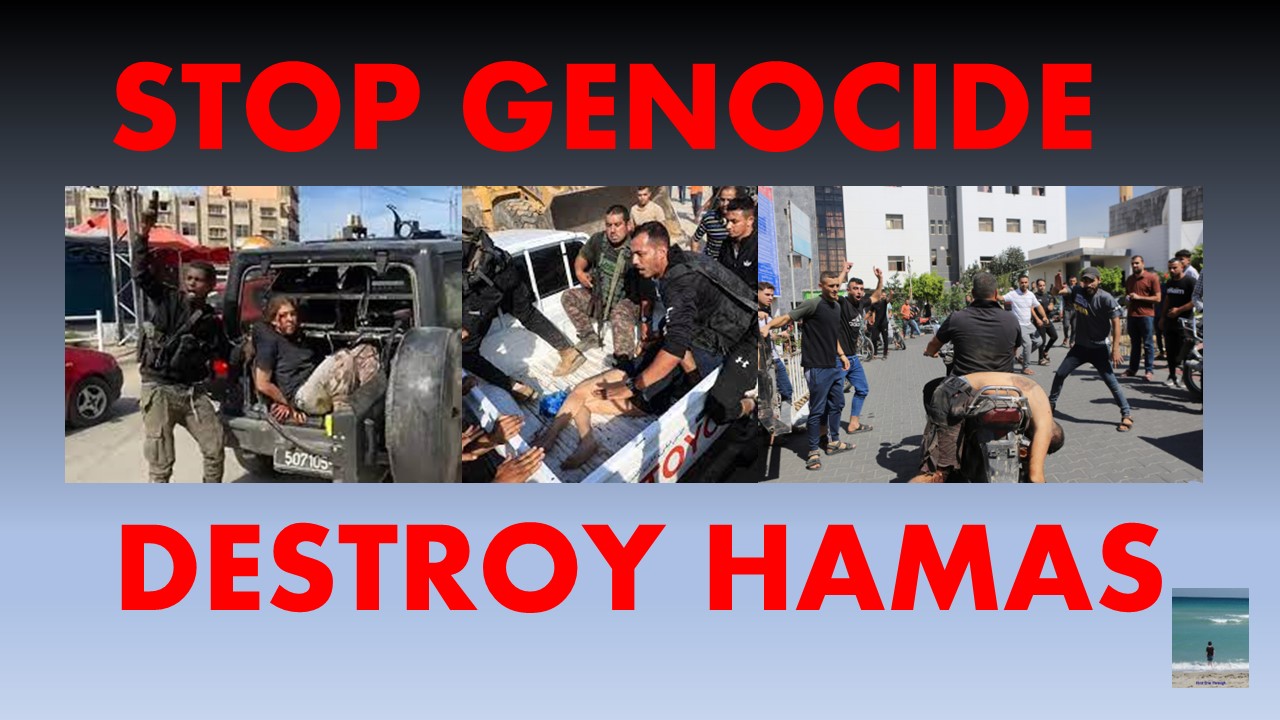
Catholic teaching has long recognized that governments possess both the right and the obligation to defend innocent life against grave aggression.
The third question is right intention.
Israel has repeatedly stated that its objective is the dismantling of Hamas’s military capability, the removal of Hezbollah’s threat along its northern border, and the degradation of Iran’s ability to wage war through proxies. Those are military objectives directed toward restoring security.
Its enemies have declared something fundamentally different: that the Jewish state should be destroyed. One side seeks to eliminate a military threat. The other seeks to eliminate a nation.
The Catechism next asks whether war is truly the last resort.
Israel withdrew every soldier and civilian from Gaza in 2005. Instead of peace, Hamas transformed Gaza into an armed fortress, investing billions in rockets, tunnels, command centers, and military infrastructure embedded beneath civilian neighborhoods. Ceasefires repeatedly collapsed. Diplomatic initiatives failed to end the attacks. Every pause became an opportunity for Hamas and Hezbollah to rearm.

Catholic teaching does not require a nation to absorb repeated massacres while endlessly hoping the next ceasefire will succeed where every previous one failed.
There must also be a reasonable chance of success.
Israel’s objectives have been difficult but attainable: dismantling terrorist command structures, destroying military infrastructure, rescuing hostages, degrading missile capabilities, and reducing Iran’s capacity to project violence through its proxies. Success doesn’t mean perfect peace. It means substantially reducing a continuing threat to innocent life.
Finally comes proportionality and discrimination.
These principles are often reduced to comparing casualty figures. That is not how Catholic teaching understands proportionality. The question is whether the military response is proportionate to removing the evil being confronted and whether civilians are intentionally protected.
Hamas deliberately embeds military assets beneath hospitals, schools, mosques, and residential neighborhoods. It stores weapons among civilians, fires rockets from civilian areas, steals humanitarian aid, and has long been accused of using civilians as shields. It refuses to let civilians enter the tunnels for shelter. Hezbollah has similarly embedded military infrastructure within Lebanese civilian communities.
Those realities fundamentally shape how Israel’s responsibilities must be judged.
The Catholic just war tradition was never intended to evaluate only one participant in a conflict. Every criterion applies equally to every combatant. A moral framework that scrutinizes Israel while ignoring Hamas, Hezbollah, or Iran is no longer applying Catholic teaching consistently.
When the Church’s own criteria are applied carefully – legitimate authority, just cause, right intention, last resort, reasonable hope of success, proportionality, and discrimination – Israel’s campaign against Hamas and Iran’s proxy network presents a strong case for satisfying the classical requirements of a just war.


Excellent treatise!🕊️🇮🇱🕊️
LikeLike
Thanks. Please share
LikeLike