
Parashat Balak contains one of the most unusual narratives in the Torah. For almost the entire portion, the Jewish people disappear from the story.
Throughout the Torah, we experience events through Moses, the Israelites, or God speaking directly to His people. This week is different. The Israelites continue their journey completely unaware of the drama unfolding around them. Instead, the Torah lifts us to the mountaintops of Moab, where King Balak and the prophet Balaam stand overlooking the Israelite camp below.
For the only time in the Torah, we see the Jewish people entirely through the eyes of outsiders.
That perspective is striking. The story told reminds us that long before anyone attempts to destroy a people, they first seek to define them.
Balak does not look upon Israel and see the descendants of Abraham returning to the land God promised their forefathers. He does not see a nation recently liberated from slavery or a people carrying a covenant that would shape the moral foundations of civilization. Looking down from the mountain, he sees only a threat. Once he reaches that conclusion, everything else follows naturally. A dangerous people deserve to be weakened. A dangerous people deserve to be cursed.
Before there is violence, there is narrative.
Balak understands that words have power. If Israel can be portrayed as an illegitimate menace, hostility becomes easier to justify. He therefore summons Balaam, believing that the right words can reshape reality itself.
But the Torah teaches exactly the opposite lesson.
Each time Balaam opens his mouth to curse Israel, God compels him to describe what he actually sees rather than what Balak wishes were true. The curses become blessings. The accusations become admiration. Instead of condemning Israel, Balaam proclaims, “How goodly are your tents, O Jacob, your dwelling places, O Israel.”
The battle in Parashat Balak is ultimately not over land or military strength. It is over definition. Who has the authority to describe the Jewish people? A fearful king looking down from a distant mountain, or the God who entered into covenant with them?
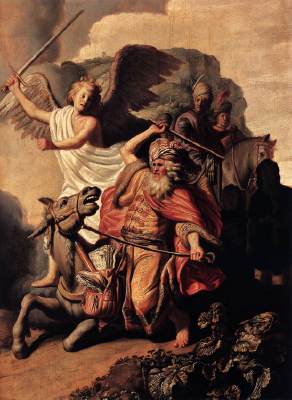
That ancient struggle continues today.
Many of the loudest voices speaking about the Jewish people insist on defining them for themselves. Jewish history is recast as though the connection between the Jewish people and the Land of Israel were a modern political invention rather than the foundation of Jewish civilization. Jerusalem is detached from the people who have been praying toward it for thousands of years. The descendants of ancient Israel become foreign colonizers in the very land where their national story began.
“European Jewish Zionists claimed to be descendants of the ancient Palestinian Hebrews and to be merely “returning” to their ancient land.” – Columbia University professor Joseph Massad, July 2022
The same impulse appears in discussions of antisemitism. Increasingly, others claim the authority to determine what Jews should consider antisemitic while dismissing the experience of Jewish communities themselves. The people who are the object of hatred are told they cannot define the hatred directed against them.
The pattern is remarkably familiar.
Balak first decided the Israelites were a threat and concluded they deserved condemnation. The false identity justified the action.
The Torah overturns that process.
The only outsider whose words are remembered for eternity is the one whom God compels to abandon prejudice and speak truth. Balaam climbed the mountain intending to curse Israel, but he remained a prophet. He still recognized that there was a Judge above him. When God commanded him to bless, his own desires gave way to a higher truth.
Today’s loudest critics acknowledge no such authority beyond themselves. They do not seek God’s judgment but the approval of crowds, political movements, or academic fashions. Their words may echo through universities, international institutions, social media, and the halls of government, but they carry no weight in Heaven. They resonate only among fellow travelers who have already chosen contempt over truth.
Three thousand years ago, God refused to allow those who hated Israel to define Israel. That remains the enduring lesson of Parashat Balak. The Jewish people are not who their enemies say they are. They are who God says they are.


