
There was a time when many New Yorkers dismissed the Democratic Socialists of America (DSA) as a fringe movement. Their rallies were loud. Their rhetoric was provocative. But surely the city that built Wall Street, welcomed millions of immigrants, and was attacked on September 11 would never hand real political power to a movement whose rhetoric after October 7 shocked so many Americans.
Yet here we are.
The new mayor is part of the DSA. DSA-backed candidates continue to win elections across New York City.

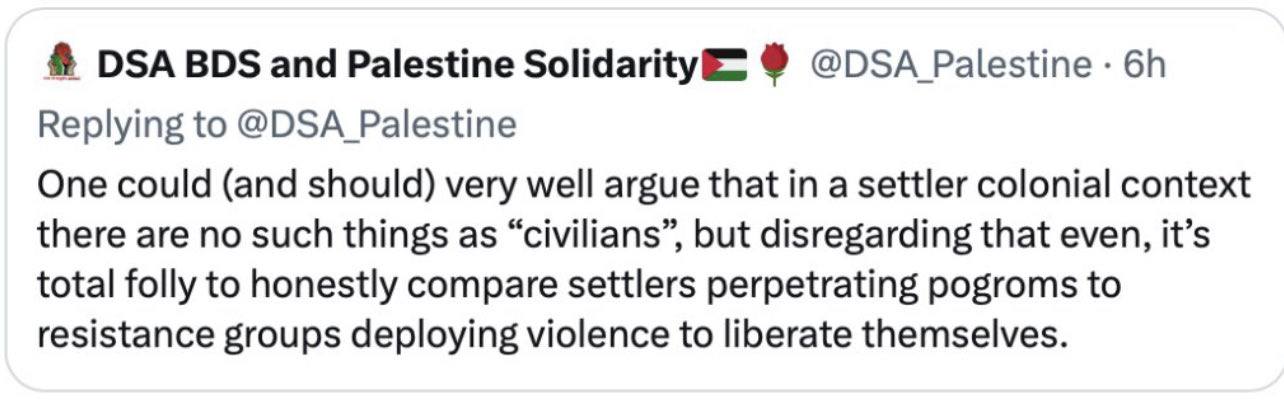
This is not merely a debate over tax rates or rent control. After Hamas murdered more than 1,200 Israelis on October 7, the New York City chapter of DSA helped organize demonstrations almost immediately afterward. Slogans and statements in Times Square celebrated the attack as “resistance” and chanted for it to continue “long live the Intifada!” DSA-NYC had long argued that Israeli civilians should not be viewed as innocent because they were participants in a “settler-colonial” society.
One might have expected that such rhetoric would permanently marginalize it. Instead, it grew. How?
Because its opponents fought the wrong war.
Organizations such as AIPAC concentrated enormous resources on defeating individual candidates where the ground game already indicated it could win. Sometimes they succeeded spectacularly. Millions of dollars were spent. Headlines proclaimed another victory over the anti-Israel Left.
But every expensive primary also reinforced the story DSA wanted to tell.
They were no longer simply neighborhood activists. They became the underdogs standing up to a wealthy political establishment. Every television advertisement became another fundraising email. Every outside dollar became another recruiting tool. Every victory over one candidate left the movement itself intact and often stronger.

AIPAC won campaigns but DSA built a movement.
Politics is ultimately about culture before it is about elections. Elections simply reveal where the culture already stands.
While establishment organizations measured success by defeating a particular candidate, DSA measured success by opening another neighborhood chapter, training another organizer, recruiting another volunteer, and persuading another generation that its worldview represented justice.
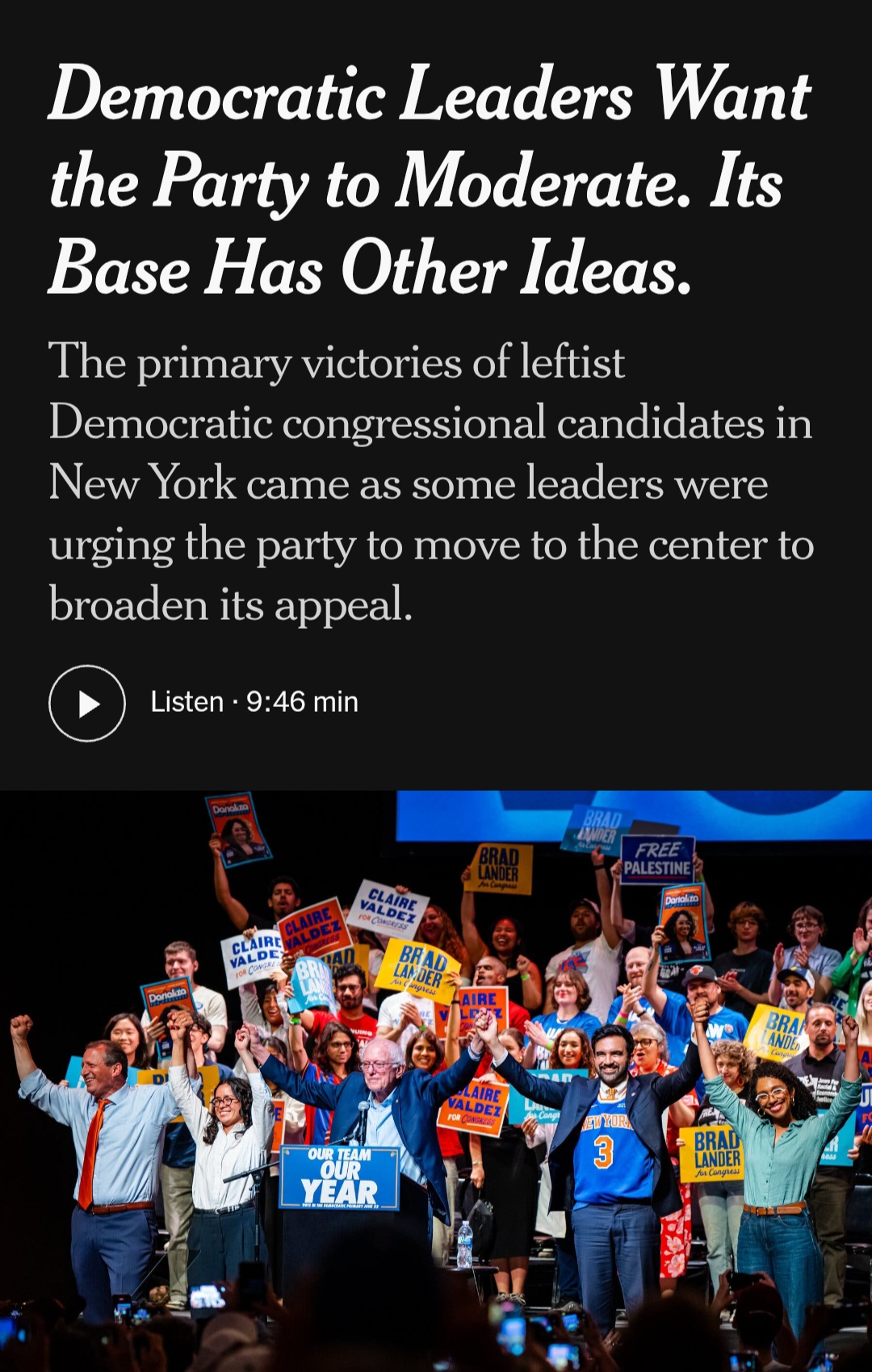
The results are now visible. A virtual sweep of DSA candidates in New York this week.
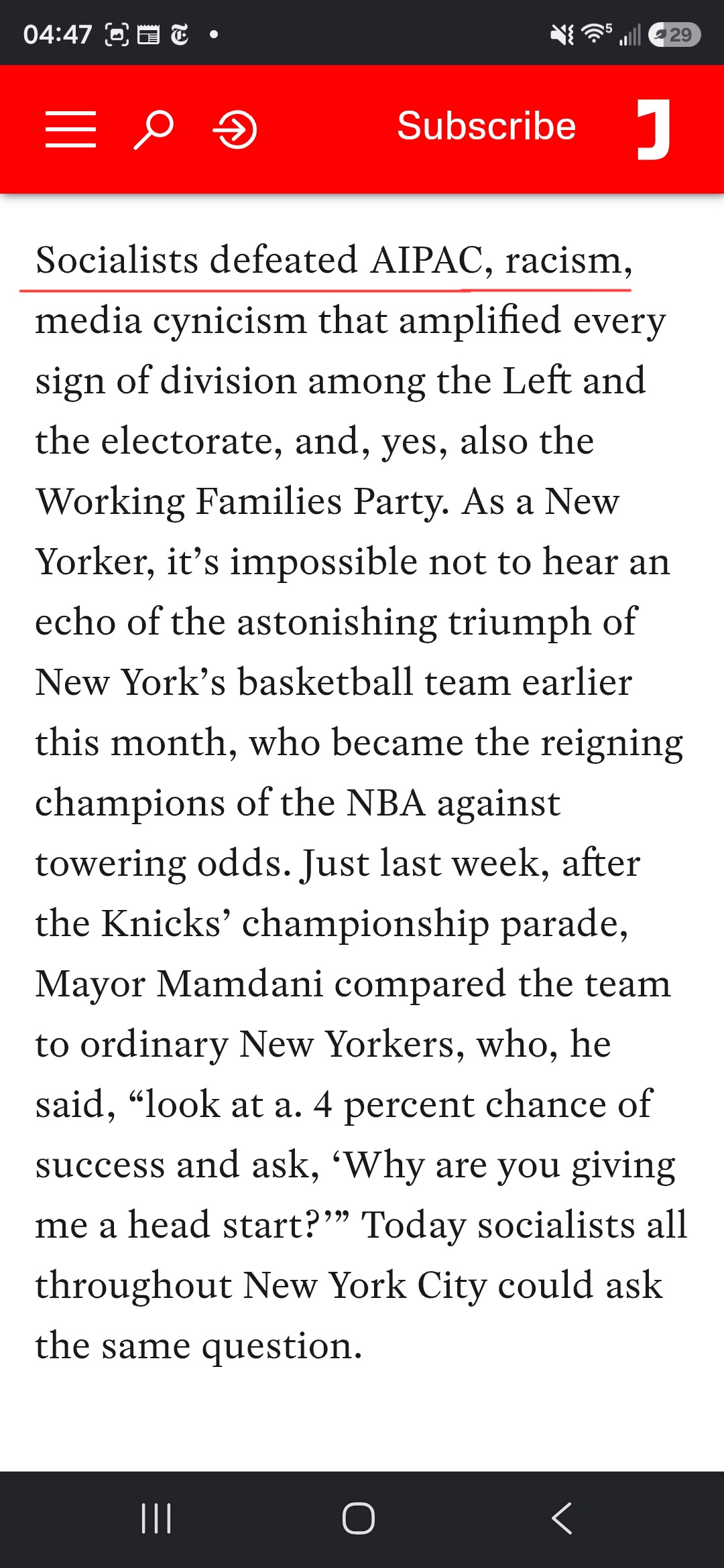
New York did not suddenly become socialist. It was organized into becoming more receptive to socialist candidates over many years. One neighborhood at a time. One group at a time.
J Street spent considerable time and effort over the past few years bashing AIPAC to build better alliances with the far-left. Now that multiple anti-Israel extremists have entered office while effectively echoing J Street’s smears of AIPAC, the left-wing “pro-Israel” group stayed mum and didn’t print a single press release.
That should be the lesson – not only for those who support Israel, but for anyone concerned about the city’s future.
Money can influence an election. It cannot substitute for a movement.
If New York is to change course, it will not happen because one organization writes larger checks. It will happen because people who believe in liberal democracy, civic responsibility, pluralism, and the moral distinction between murdering civilians and defending them begin organizing with the same patience and persistence that their opponents have displayed for years.
Cities are not lost in a single election. They are lost one neighborhood at a time.
Related:
Overwinning (Sept 2025)


