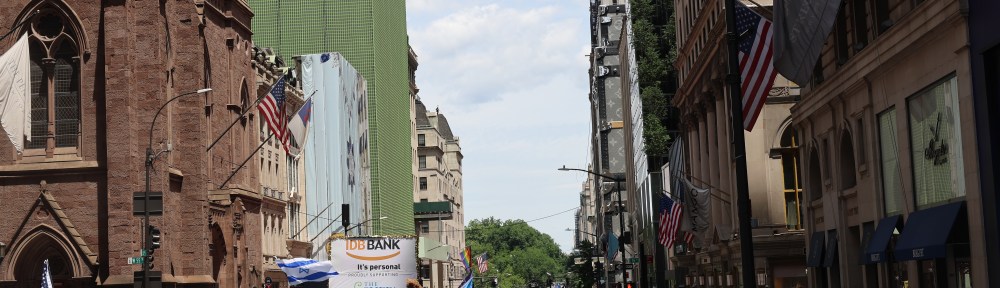
The children who dominate New York’s Israel parade are no longer the children who dominate Jewish education.
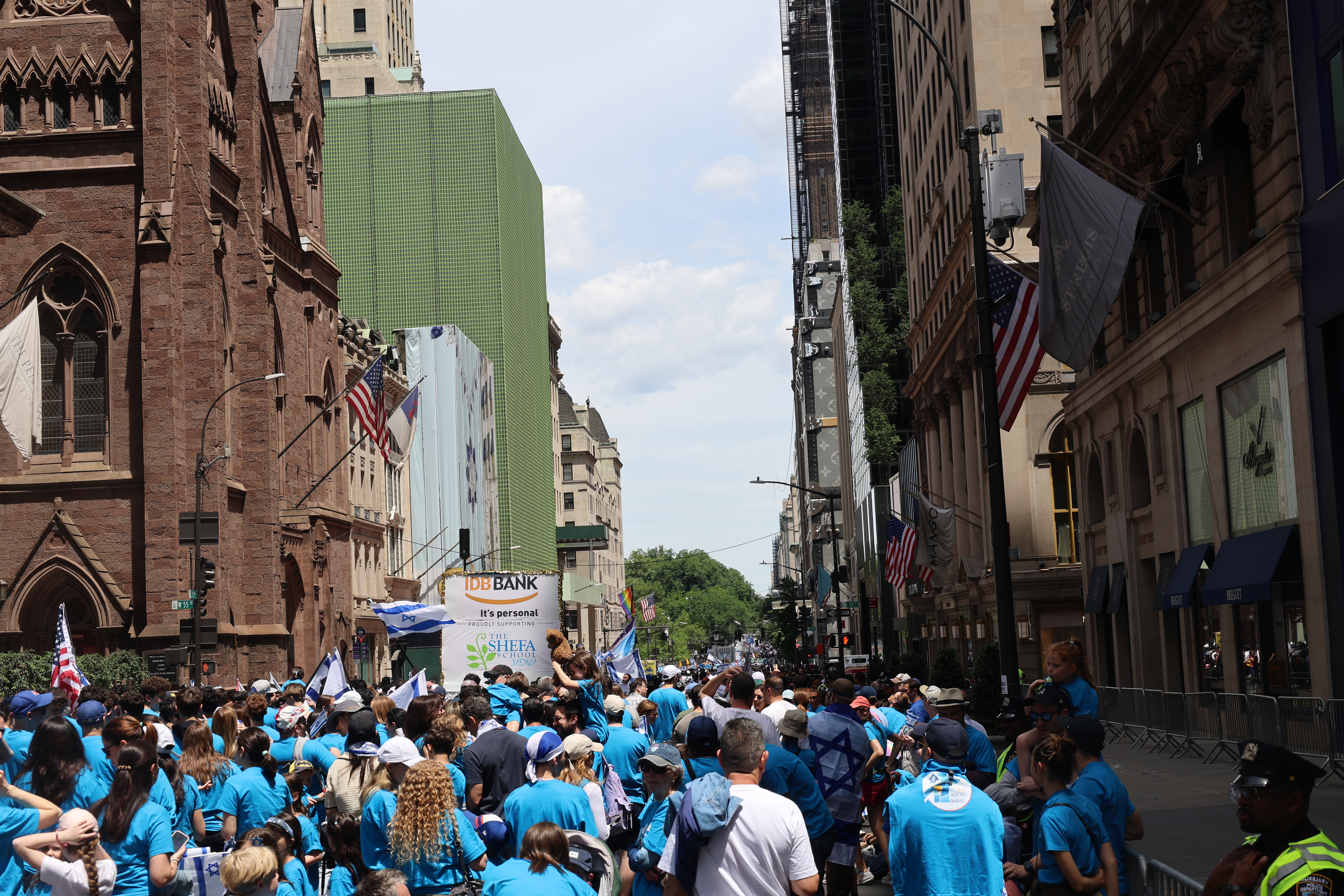
Each spring, Fifth Avenue fills with students from Modern Orthodox and Religious Zionist schools waving Israeli flags, singing Hebrew songs, and celebrating the Jewish state. Yet these students represent only a small fraction of Jewish children in the New York metropolitan area. The largest group of Jewish children attends public and secular private schools. The largest group attending Jewish schools is Chassidic and Yeshivish.
That reality raises an important question about the future of one of American Jewry’s most visible public events.
The parade’s own history reflects the evolution of American Jewish identity.
When it was founded in 1964, it was called the Youth Salute to Israel Parade. The name reflected its era. Israel was only sixteen years old. The Holocaust was still within living memory. American Jews were not merely celebrating Israel; they were standing with it.
In 2011, the event became the Celebrate Israel Parade. Israel was no longer a struggling young state. It was a global technology center, a military power, and home to millions of Jews. The emphasis shifted from solidarity to celebration.
After October 7, the parade adopted a third name: Israel Day on Fifth.
The parade’s three names trace the evolution of American Zionism itself. The first generation saluted Israel. The second celebrated Israel.
Today, the challenge is different. Support for Israel can no longer be assumed, and Jewish unity can no longer be taken for granted. The question is whether Israel can continue to serve as a bridge connecting an increasingly diverse Jewish community.
The challenge is particularly visible when looking at Jewish children in the greater NYC area.
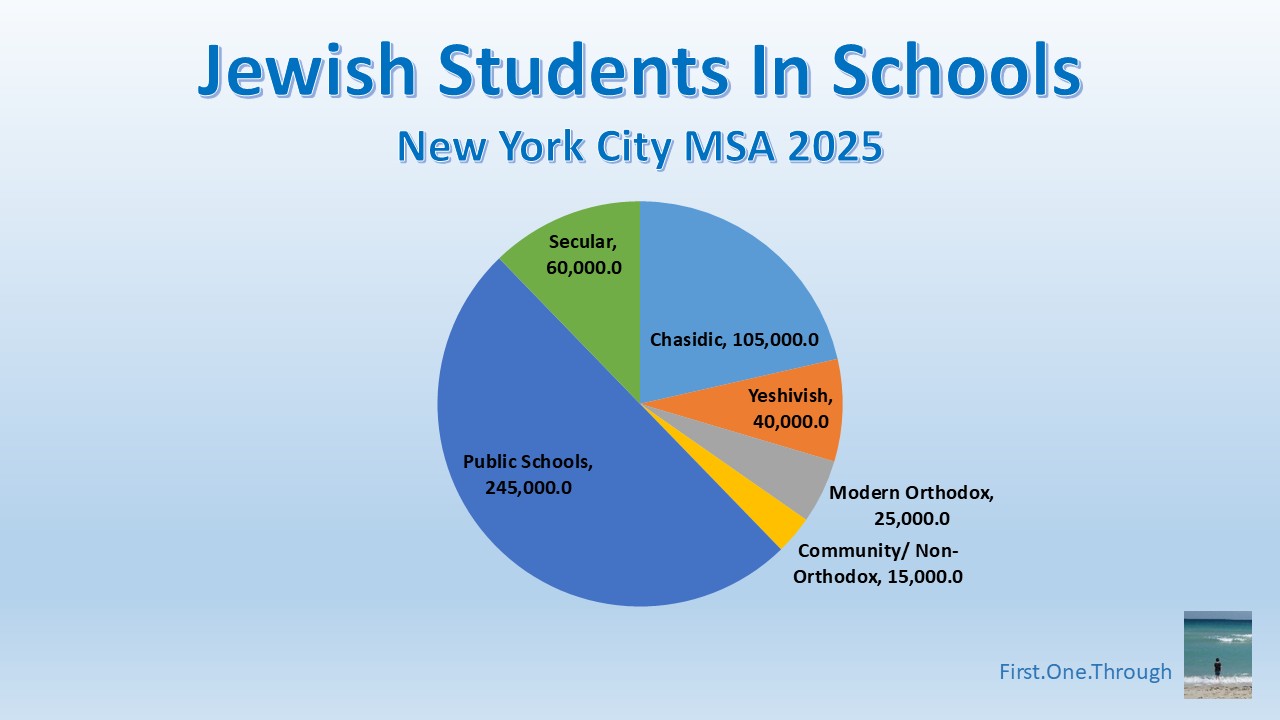
The best available estimates suggest that roughly 450,000 to 500,000 Jewish school-age children live in the greater New York metropolitan area. About 170,000 attend Jewish day schools and yeshivot.
Of those, roughly 130,000 to 140,000 attend Chassidic and Yeshivish schools, compared with only 20,000 to 25,000 in Modern Orthodox schools. Outside the day-school world are another 280,000 to 330,000 Jewish children attending public schools, secular private schools, Catholic schools, and other educational settings.
Yet anyone watching the parade could be forgiven for drawing the opposite conclusion.
The schools most visible on Fifth Avenue are overwhelmingly Modern Orthodox and Religious Zionist institutions. They are among the most committed supporters of Israel in American Jewish life. But they represent only a small share of Jewish youth. The fastest-growing segment of Jewish education is Chassidic and Yeshivish. The largest segment of Jewish children overall attends public and secular private schools.
The parade therefore showcases some of the most engaged Jewish children in America, but not necessarily the full spectrum of Jewish youth.
That matters because Israel remains one of the few ideas capable of connecting Jews across denominational, ideological, and educational lines. At a moment when Jewish attachment to Israel is increasingly challenged on college campuses, contested on social media, and questioned in parts of American public life, institutions that connect young Jews to Israel have become more important, not less.
If the goal is Jewish unity in the decades ahead, the parade may need to ask a different question.
Rather than “How do we celebrate Israel?” the question may be “How do we bring the Jewish people together around Israel?”
A future parade organized around Am Yisrael rather than a particular expression of Zionism could create room for every community to participate in its own way.
- Charedi schools could march under banners celebrating Torah in the Land of Israel.
- Public-school students could march through camps, youth groups, synagogue programs, and community organizations.
- Modern Orthodox schools could continue expressing their Religious Zionist vision.
- Israeli cultural groups, charities, universities, first responders, and innovation organizations would all still have their place.
This would be Am Yisrael Day on Fifth Avenue.
The original parade was created to demonstrate solidarity with a young Jewish state. The next challenge is ensuring that future generations of American Jews remain connected both to Israel and to one another.
Should the future of the parade remain with the niche schools that already fill Fifth Avenue, it will become a symbol of the fragmentation of Israel support even within the Jewish community, let around the broader world. That would not bode well for Jewish New Yorkers or Israel.
The first generation saluted Israel. The second celebrated Israel. The challenge for the third generation is to ensure that Israel remains a force capable of uniting the Jewish people.


