One of the most common claims in the Arab-Israeli conflict is that Jews took the land from Palestinian Arabs and denied them self-government.
History tells a different story.
For four hundred years, the Holy Land was ruled by the Ottoman Empire. There was no Palestinian Arab state.
After World War I, Britain took control under the Mandate for Palestine. Again, there was no Palestinian Arab state.
In 1947, the United Nations proposed creating both a Jewish state and an Arab state. The Jewish leadership accepted the plan. Arab leaders rejected it and chose war.
When the fighting ended, Jordan occupied the West Bank and East Jerusalem while Egypt controlled Gaza. For the next nineteen years, neither country established a Palestinian state. Neither granted sovereignty to the local Arab population. Neither created independent Palestinian governing institutions.
The first meaningful Palestinian self-government did not emerge under Ottoman rule, British rule, Jordanian rule, or Egyptian rule.
It emerged through agreements with Israel.
The Oslo Accords created the Palestinian Authority and transferred governing responsibilities in Palestinian cities to Palestinian leaders. For the first time in modern history, Palestinian Arabs exercised substantial self-rule in the territory where they lived.
Signing of Oslo II Accords
Then in 2005, Israel withdrew every soldier and civilian from Gaza, leaving the territory entirely under Palestinian administration.
Israel is often accused by Israel haters of having stolen a Palestinian state. Yet no Palestinian state existed under Ottoman rule, British rule, Jordanian rule, or Egyptian rule. The first meaningful Palestinian self-government emerged only through agreements negotiated with Israel.
For decades the argument over the Jewish Temple Mount has been framed in one direction only: Jewish prayer must be restricted because Jewish prayer may trigger Muslim violence. The legal scaffolding for that argument is old and sturdy. The British Mandate for Palestine built it directly into Article 13, promising free exercise of worship while “ensuring the requirements of public order and decorum.” Later arrangements, including Oslo, preserved the same operating logic in practical form, with Israel retaining security authority even while leaving day-to-day religious administration to the Jerusalem Islamic Waqf.
That logic has governed the Mount for a century.
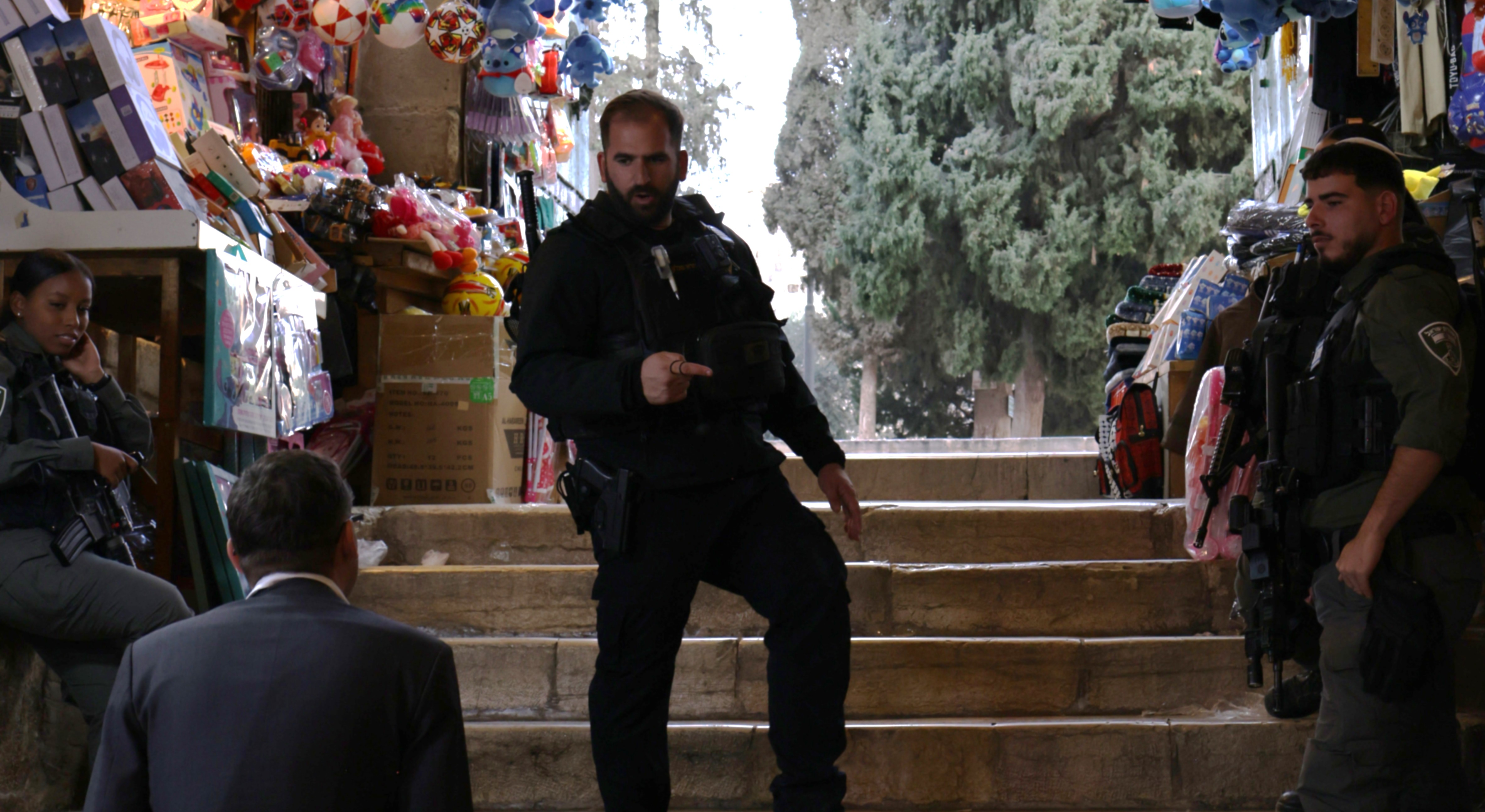
Israeli police block a Jew from ascending steps to the Temple Mount at the Cotton Gate in November 2025 (photo: First One Through)
But what happens when the status quo itself becomes the source of disorder?
This is the question no one wants to ask.
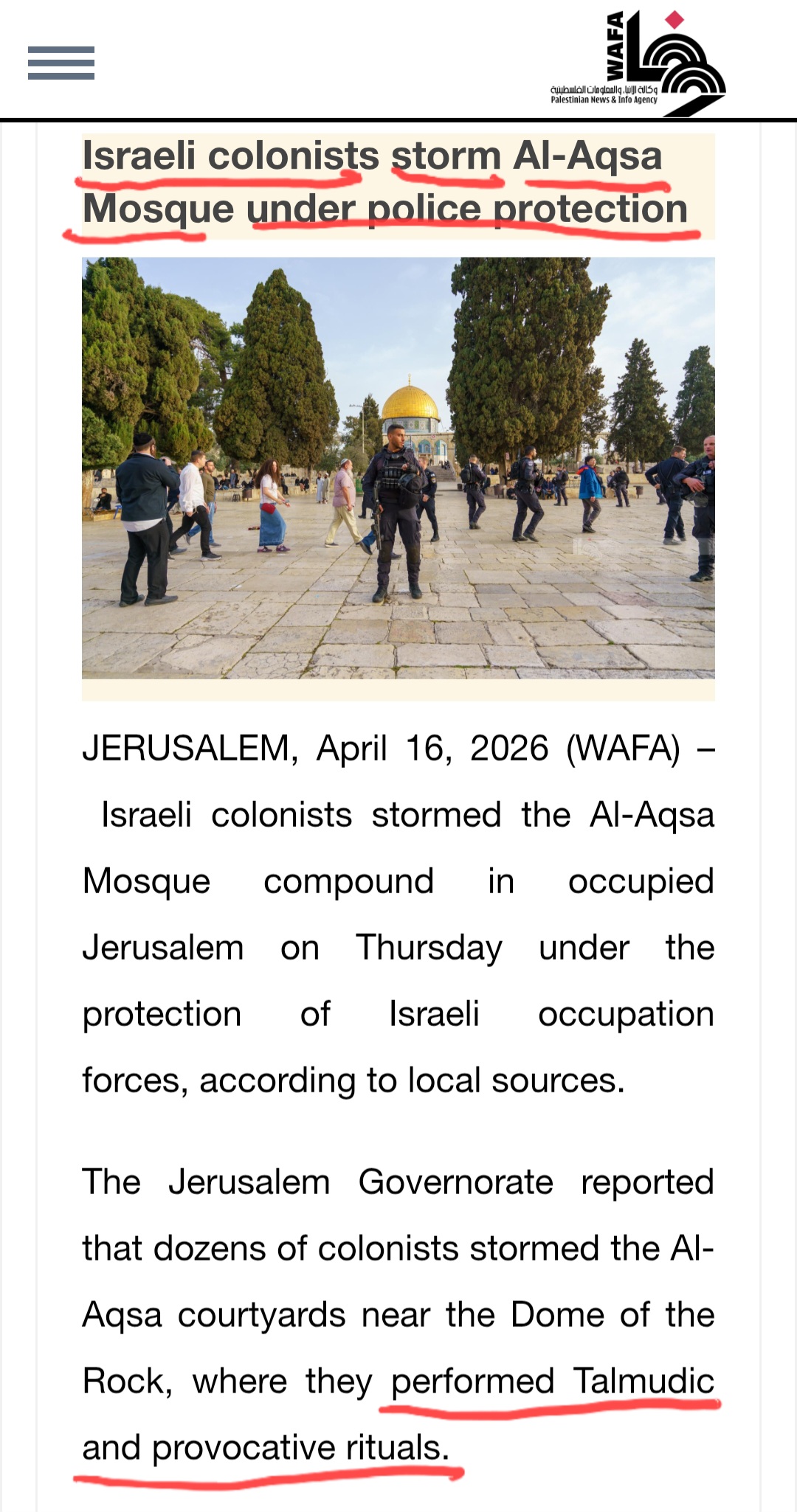
Every few weeks, Palestinian media like WAFA warns that “the Al Aqsa Mosque is in danger” from “radical settlers.” The phrase has become ritualized, almost liturgical in Palestinian political culture. A Jew walking quietly on the Mount becomes a provocation. A Jew moving his lips in silent prayer becomes an assault. A Jew bowing his head becomes a threat to Islam itself.
That rhetoric has had a practical effect. It has transformed Jewish prayer into a public order problem.
But there is another side to this equation.
What if the continued suppression of Jewish prayer is itself becoming a generator of instability? What if the status quo, designed to contain conflict, has begun producing it?
A legal order built to preserve peace cannot become a machine for preserving grievance.
Under the British Mandate, the answer is surprisingly clear. Article 13 protects “existing rights,” but only while ensuring public order. That means the status quo is protected only insofar as it serves order. If preserving inherited arrangements creates recurring confrontation, the law and history allows recalibration.
That was the hidden flexibility in the Mandate and ongoing governing principle. Status quo is presumptive; order is mandatory.
Oslo is even more direct, though in a different way. Oslo does not sanctify the Temple Mount arrangement. It simply leaves it in place while preserving Israeli security. That means if Israeli authorities conclude that the present arrangement itself is a long term security risk, they possess the legal architecture to modify access, prayer rules, and crowd management.
The Old City of Jerusalem including the Jewish Temple Mount/ Al Aqsa Compound. Thousands of Jews can be sound in the Western Wall Plaza, unable to ascend onto the Temple Mount.
The irony is brutal.
For decades the legal doctrine has been used to suppress Jewish prayer because Muslim violence was threatened. But if that suppression itself produces radicalization, frustration, and growing confrontation, the same legal doctrine could justify expanding Jewish prayer in order to restore order.
The law cuts both ways.
“The status quo” sounds ancient and immovable. In truth it is neither. It is a management system. And management systems are judged by outcomes.
If a system preserves peace, it earns its legitimacy. If a system preserves resentment and recurrent crisis, its legal rationale weakens.
The day may soon be arriving that structured, regulated Jewish prayer may become the stabilizing mechanism rather than the destabilizing one.
A designated time. A designated place. A formalized right.
The central legal truth of the Temple Mount has always been misunderstood. The governing principle was never the status quo itself. The governing principle was order.
In Biblical times, wells were beacons of life. To dig and find water was to unlock the possibility of home and permanence. Water fed crops and cattle; it drew families and trade; it birthed cities. Wells were light in the desert.
But not every hole in the ground was a well. Some were empty pits, barren of water and purpose. They became places of danger—sites where wanderers fell or where enemies cast prisoners to languish. Wells meant sustenance, while pits meant despair.
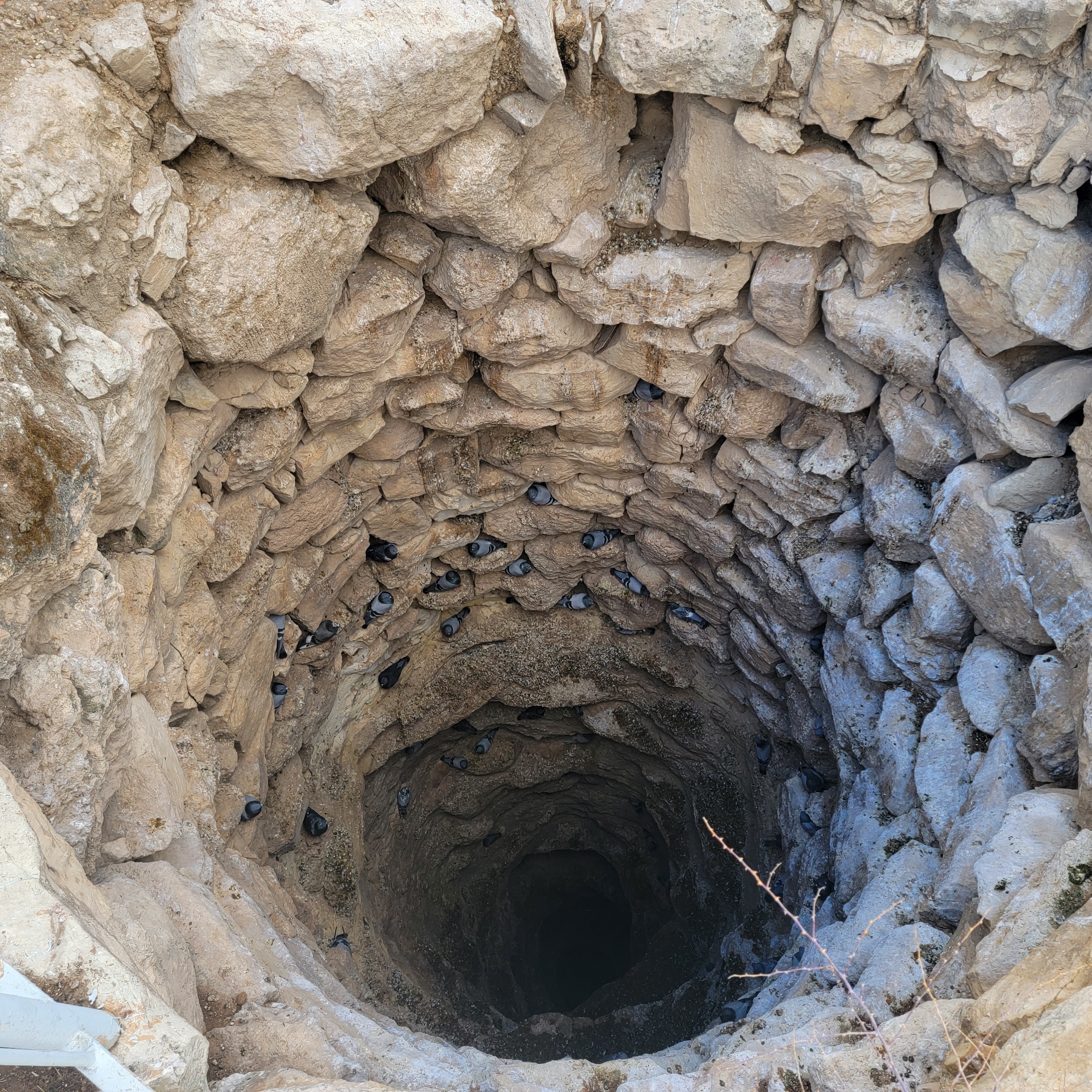
Well in the Judean city of Lachish
Today, the search for peace in the Middle East feels much the same. Those who find the right spring, like the signatories of the Abraham Accords, discover flourishing opportunities for coexistence. New ties of trade, technology, and tourism have watered once-barren fields.
But failed efforts—like the Oslo Accords—are pits. They began with hope, but quickly turned treacherous. The optimism of 1993 was buried under the violence of the Second Intifada (2000–2004) and has been further extinguished by the ongoing Gazan War since 2023. What was meant to be a well has become a hazard, a pit in the sand that swallows the unsuspecting. Like any abandoned well, it should be filled in and covered, not revisited.
The digging was not in vain; the effort was noble. But it is time to recognize Oslo for what it became—a failed blueprint. A peace process crafted with antisemitic design that insisted Jews may not live in a Palestinian state or pray at their holiest site in Jerusalem, while promising a false faith that millions of Arabs would be welcomed into Israel, is not a formula for life. It is an unbalanced design destined for collapse.
And the Philistines stopped up all the wells which his father’s servants had dug in the days of his father Abraham, filling them with earth. (Genesis 26:15)
A new well must be dug with clear foundations:
A State of Palestine where millions of Arab “refugees” can live—but not in Israel.
A Palestine that allows Jews to live there, just as Arabs live in Israel.
A Jerusalem under Israeli sovereignty, open to all religions for access and worship.
Only once these parameters are accepted can the finer details of peace be discussed. Until then, the Oslo pit must be buried beneath the sand, its lessons remembered but its structure abandoned. The new effort can be called the Isaac Accords, to reflect the promise of wells of peace and abundance for everyone.
Isaac dug anew the wells which had been dug in the days of his father Abraham and which the Philistines had stopped up after Abraham’s death; and he gave them the same names that his father had given them. (Genesis 26:18)
Wells give life. Pits destroy. The task before us is to dig with the knowledge of past failures and not let ignorant hope set our shovels.
The Israeli-Arab conflict has long been viewed as an intractable problem. The gap between what one side is willing to accept and another willing to give is both wide and deep. Even with such reality, governments around the world verbally encourage direct communication between the parties and state their support of an outcome which both Israelis and Palestinians would endorse.
But those parties then do everything to undermine that very concept.
The United Nations and many Arab countries stated that the basis for a peace agreement was two states along the 1949 Armistice Lines with “East Jerusalem” as the capital, echoing the stated position of one side, the Palestinians. The UN and Arab countries pushed laws that made it illegal for Israeli Jews to live in those lands and promoted a boycott movement of any business that operated east of the Green Line. These were not activities designed to promote Palestinian-Israeli dialogue but to hand the Palestinians everything they sought WITHOUT dialogue.
Further, the Palestinian Authority and Israel had signed agreements specifically stating that Israel controlled most of the “West Bank,” an area known as “Area C” in the Oslo Accords. So not only did the global community hinder dialogue between the parties, it ignored and undermined the agreements already signed by them!
The United States under President Donald Trump moved to reorient the two parties and the global community back to the basic principles of having two parties desirous of peace sit and negotiate treaties which would THEN be accepted by the entire world.
Rather than parrot the Arab Peace Initiative of 2002 which gave the Palestinians everything they desired, Trump put forward a plan which Israelis desired. Finally there were two plans made public by third parties which could serve as the starting points for negotiation.
More directly, Trump advanced the Taylor Force Act which precluded handing the Palestinian Authority U.S. money while the PA financed terrorism. Trump also endorsed the Oslo Accords which stated that Area C is Israeli Territory. U.S. Secretary of State Mike Pompeo visited some of those Israeli Territories this week and stated clearly that any product made in those areas should carry the label “Made in Israel,” much the way products made in Puerto Rico and American Samoa are labeled “Made in U.S.A.”
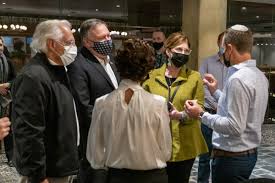
US Secretary of State Mike Pompeo at Israeli winery of Psagot stated on Twitter: “Enjoyed lunch at the scenic Psagot Winery today. Unfortunately, Psagot and other businesses have been targeted by pernicious EU labeling efforts that facilitate the boycott of Israeli companies. The U.S. stands with Israel and will not tolerate any form of delegitimization.”
For too long the world gave Palestinians a pass for terrorism and the impression that they will get everything they desire now without negotiating and signing agreements with Israel. The Trump Administration has taken several important actions to refocus the parties towards a roadmap for an enduring peace.






 First One Through