
For over twenty-five years, the Palestinian Center for Policy and Survey Research has tracked Palestinian political opinion. Through wars, peace talks, intifadas, and four American presidents, one pattern remains strikingly consistent:
Palestinians have never been broadly pro-American.
That may sound counterintuitive. The United States has spent decades mediating the conflict, funding Palestinian institutions, and pouring diplomatic capital into the region. If goodwill were built by investment alone, the polling should show it.
It does not.
PCPSR rarely asks, Do you like America? Instead, it asks the more revealing questions: Do you trust the United States as a mediator? Do you want American involvement? Do you believe Washington is fair?
Across twenty-five years, the answers tell the story.
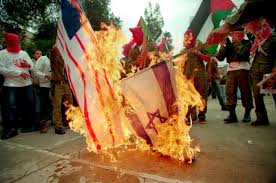
After the collapse of the 2000 Camp David Summit and the violence of the Second Intifada, positive views of America’s political role sat around 20 to 35 percent. Negative views often exceeded 60 percent. America was seen less as a broker than as Israel’s protector.
That became the baseline.
The mid-2000s brought modest movement. After Mahmoud Abbas replaced Yasser Arafat, some Palestinians supported stronger American engagement. Yet the support was tactical hoping that Washington might pressure Israel. That did not translate into trust.
Then came the only real exception.
Barack Obama produced the highest pro-American opening in the polling record. In 2009, roughly 60 percent supported a stronger American role in negotiations.
Washington read that as goodwill. The polling suggests something narrower: hope that Obama would pressure Israel.
Even at that high point, majorities still believed America fundamentally favored Israel. The atmosphere improved. The structure did not.
By Obama’s second term, positive sentiment had fallen back into the 20 to 30 percent range.
Then Donald Trump recognized Jerusalem as Israel’s capital and trust collapsed into single digits.
In some surveys, roughly 90 percent rejected American mediation. The illusion of neutrality disappeared. America was no longer seen as merely tilted toward Israel, but openly aligned with Israeli claims to Jerusalem.
Joe Biden lowered the temperature but did not restore trust. The numbers recovered slightly, climbing back into the teens and twenties.
“Regardless of how great the power of Israel, America, and the world may be, in the end they will disappear, while we are remaining.” – Fatah Central Committee member Abbas Zaki, April 2021
Then came the October 7 attacks and the war that followed. With Washington backing Israel militarily and diplomatically, Palestinian hostility surged again toward its floor: single-digit trust, overwhelming distrust.
The pattern is unmistakable.
When America pressures Israel, Palestinian approval rises. When America stands with Israel, it collapses.
For twenty-five years, Palestinians have periodically wanted America involved. They have never wanted America embraced.
Not under George W. Bush. Not under Obama. Not under Trump. Not under Biden.
The names changed. The percentages moved. The structure held.
America, in Palestinian political opinion, has never been a friend. Only a force—useful when applying pressure, hostile when withholding it.
After a quarter century of polling, that may be the clearest finding of all.


