A Story At The Jaffa Gate

An AI Amalgam Story.

Outside the Jaffa Gate in Jerusalem, the day unfolds with layers of complexity. The stone walls, ancient and storied, bear witness to the lives that pass through.

On this morning, an Arab man stands near the portal entrance, his posture slumped, eyes lowered. His expression speaks of a quiet sorrow—perhaps personal, perhaps born of circumstances beyond his control.

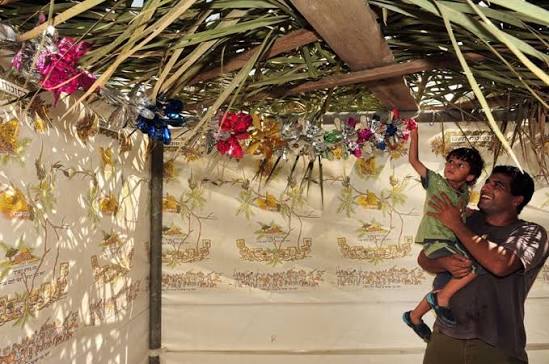
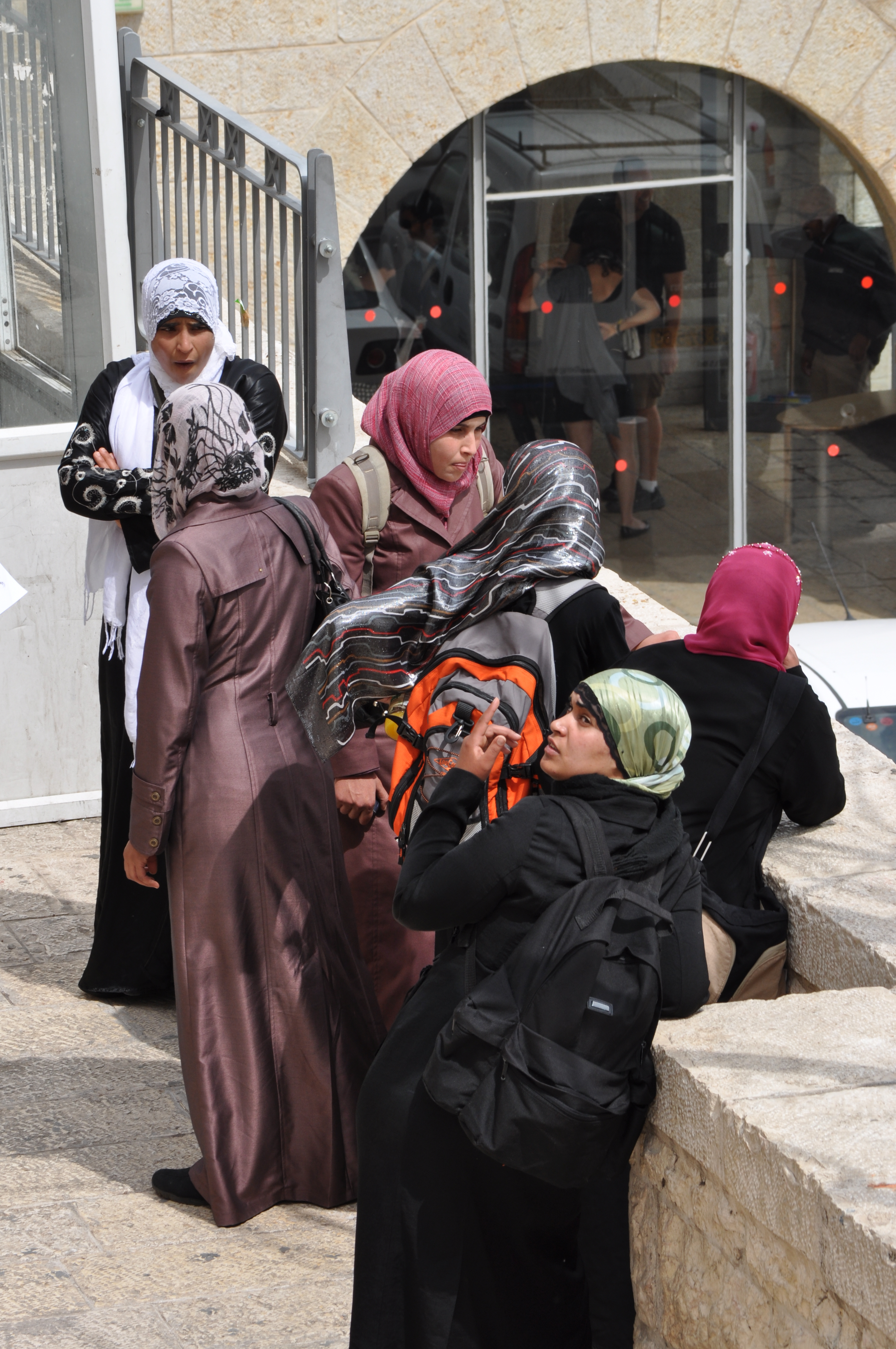
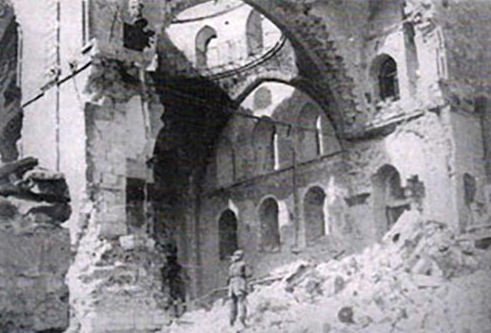
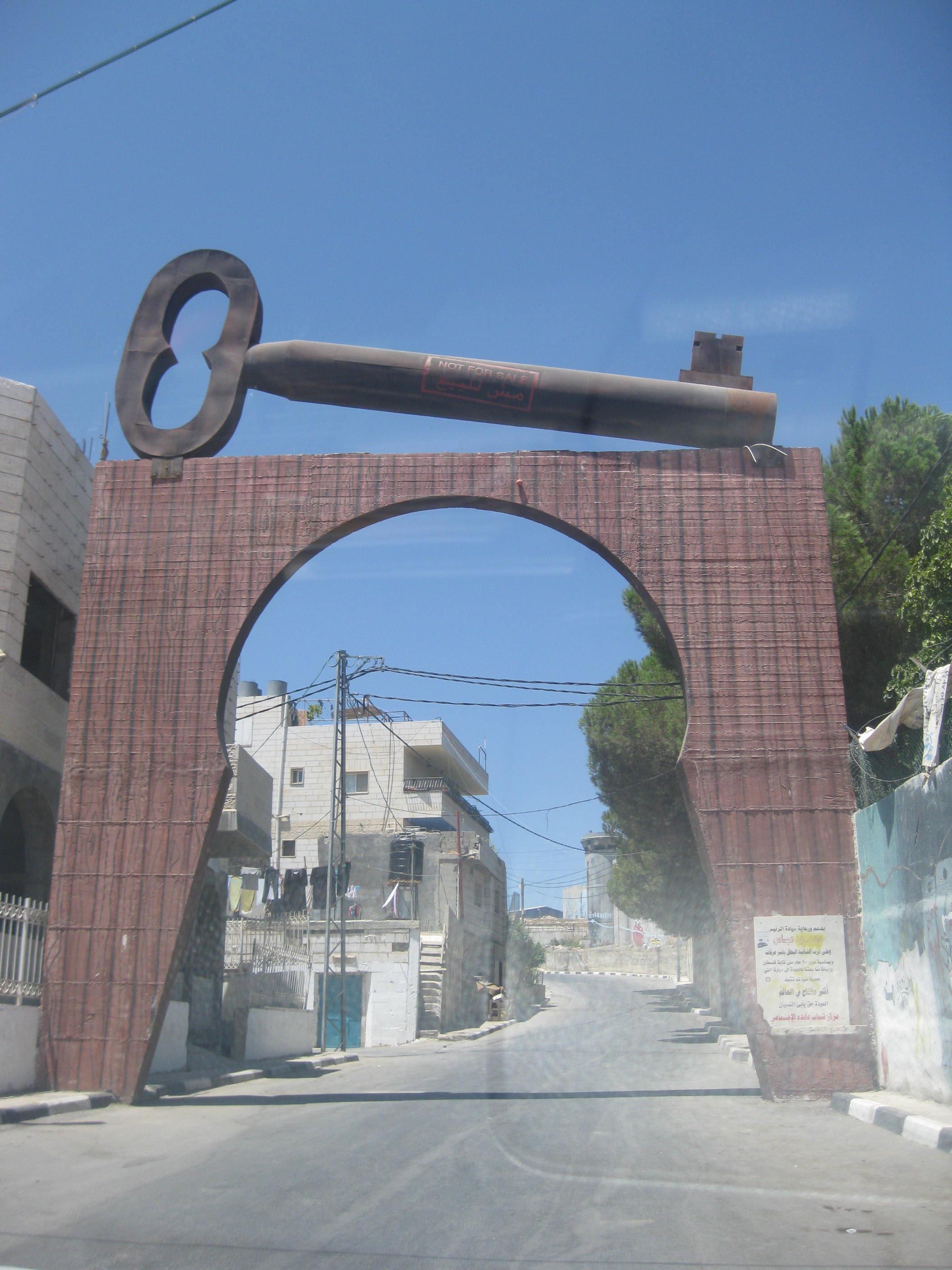
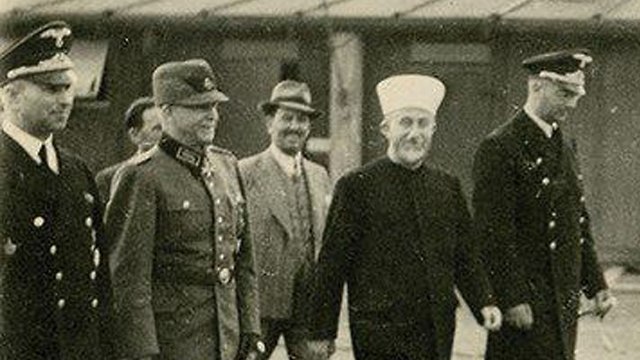
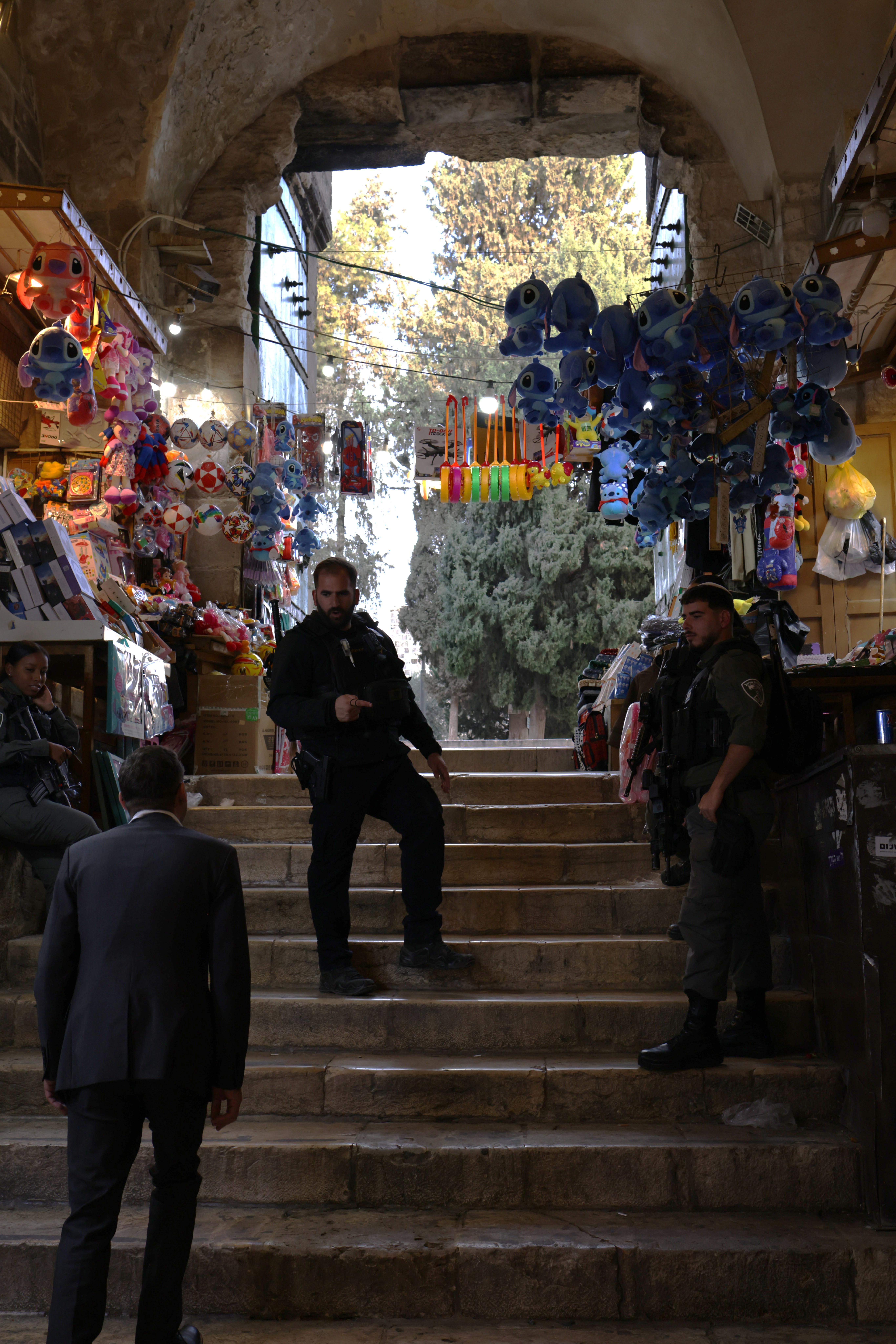
Picture amalgam of four different scenes, presenting a view of the entry portal of the Jaffa Gate in Jerusalem, Israel (by First One Through)

Meanwhile, just feet away, an Orthodox Jewish man, dressed in traditional black attire, moves with purpose. He hurries toward his daily prayers at the Kotel, following a routine as old as the stones beneath his feet. The rhythm of Jerusalem’s life, with its sacred moments, continues without pause.

Standing between them is a medic from Magen David Adom. His presence is a testament to the tension that often simmers beneath the surface of the city. He watches both men—attentive, calm, ready to act if needed. His role is not in the realm of politics or faith but in the safeguarding of human life.

This moment encapsulates the juxtaposition of daily routines—spiritual devotion, personal struggle, and the ever-present readiness to heal. In Jerusalem, where layers of history meet contemporary reality, even the quietest scene can tell a deeper story.

Israel Is Surrounded by Failed States – and Failed States in Waiting

Much of the discussion about Israel’s security focuses on borders, settlements, or ceasefires. Less attention is paid to a more fundamental reality: Israel is surrounded by governments that have failed – or have yet to demonstrate they can function as sovereign states.

To Israel’s north lies Lebanon, a country where the government spent years unable to enforce a monopoly on force within its own territory. While the Lebanese Army wore the national uniform, Hezbollah built an independent army, amassed an enormous missile arsenal, dug tunnels, launched drones, and ultimately dragged the country into war. A sovereign state that cannot control its own territory has surrendered one of the defining responsibilities of statehood.

Lebanese pound to Israeli shekel exchange rate, defaulting on debt in March 2020, enormous explosion in Beirut for stored Hezbollah weapons in August 2020. The bank devalued currency by 90% in February 2023 and again in February 2024

Next to Lebanon is Syria. More than a decade of civil war shattered the country’s institutions, fractured its territory among competing armed groups and foreign militaries, and left millions displaced. Syria has long stood as one of the clearest examples of state failure in the modern Middle East.

Syrian civil war killed nearly 600,000 and dispersed 13 million. It is now ruled by Abu Mohammad al-Jolani who headed ISIS in the region

To Israel’s south lies Gaza. Hamas spent years and billions of dollars to build an underground military fortress instead of a functional society. The result was war after war after war. Destruction and death.

Hamas on October 7, 2023 slaughtered 1,200 people in Israel and brought over 250 people as hostages into Gaza to cheering crowds.

In the West Bank, the picture is different but equally troubling. The Palestinian Authority maintains civil institutions in parts of the territory, yet it has never established a monopoly on force or unified governance. Rival armed factions continue to operate, political legitimacy remains deeply contested, and governance has been divided from Gaza for nearly two decades.

recent poll shows a majority of Palestinians rejecting moderate leadership, despairing of peaceful change and now favouring armed struggle? That tragic deformity in Palestinian political culture is the result of the continued brutality of the occupation.” – James Zogby, President of the Arab American Institute at the United Nations Security Council on June 27, 2023

The collapse of governance in the states surrounding Israel has turned the region into one of the world’s greatest concentrations of terrorist groups. This is the strategic reality Israel faces every day.

Its neighbors are not peaceful democracies with settled borders and accountable institutions. They are governments weakened by civil war, dominated by militias, or unable to establish unified authority. Israel is repeatedly asked to take security risks on the assumption that these entities will prevent terrorism and enforce agreements, even though their recent history demonstrates the opposite.

The tragedy is not only Israel’s. The greatest victims of failed governance are the Lebanese, Syrians, and Stateless Arabs from Palestine (SAPs) themselves. They deserve governments that build economies instead of militias, schools instead of tunnels, courts instead of armed factions, and national institutions instead of perpetual conflict.

Peace agreements are negotiated between states because states can make commitments and enforce them. Militias cannot. Failed governments cannot. A failed state in waiting cannot.

Until the governments surrounding Israel control their territory, uphold the rule of law, and prioritize their people over perpetual conflict, Israel’s security challenges will remain the consequence of failed governance, not simply hostile neighbors.

When Hezbollah’s Media Cheers Your Human Rights Report

Human rights organizations earn credibility by applying the same principles to everyone. The moment they tell only half the story, they cease to document conflict and begin shaping a narrative.

That has been the history of Amnesty International‘s sole focus on Israel as it fights a multifront war. It showed why it deserves no support again this week as it took aim on Israel’s fight against Hezbollah, the Iranian proxy terrorist group inside Lebanon.

The report argues that a proposed ceasefire agreement could deny Lebanese victims an avenue to pursue justice for alleged Israeli war crimes. Astonishingly absent from Amnesty’s presentation is the war that made the agreement necessary in the first place and justice for Israeli victims.

There is virtually no discussion of Hezbollah’s decision to begin attacking Israel on October 8, 2023, opening a second front one day after the Hamas massacre. There is no meaningful discussion of the years Hezbollah spent building an armed state within a state in southern Lebanon despite international commitments to disarm. There is no recognition that Israeli towns endured months of rockets, missiles and drones, forcing tens of thousands of civilians from their homes. Instead, 98 percent of the focus is on alleged Israeli violations and on preserving legal avenues to prosecute Israel.

Perspective matters.

Imagine writing about the Second World War while barely mentioning who invaded whom. Or discussing a peace agreement without explaining why civilians had to flee their homes on both sides of the border. A report that omits the conflict’s central facts cannot claim to provide a complete moral picture.

Even when Hezbollah is mentioned, it is a single sentence in passing. The sustained campaign against Israeli communities, the human cost borne by Israeli civilians, and Hezbollah’s own violations of the laws of war receive scant attention compared with the extensive treatment of allegations against Israel.

Perhaps the clearest indication of how this report is perceived came not from Israel, but from Hezbollah’s own media ecosystem.

Al-Manar, Hezbollah’s media network, prominently highlighted the report’s conclusions.

Hezbollah media, Al Manar, highlighting Amnesty report

When the propaganda outlet of a terrorist group that initiated the northern front eagerly amplifies your work, it is time to confront the reality that your organization no longer serves the cause of universal human rights.

Palestinians and Their Supporters in the Global South Hunt Jews

On June 27, 1976, Palestinian terrorists hijacked Air France Flight 139, a civilian airliner traveling from Tel Aviv to Paris. The operation by the Popular Front for the Liberation of Palestine‘s external operations network diverted the aircraft to Entebbe, Uganda, where the hijackers, aided by Idi Amin’s regime, held more than one hundred civilians hostage while demanding the release of imprisoned terrorists.

Then came the moment that revealed the deeper nature of the conflict.

The hijackers separated Israeli and non-Israeli Jewish passengers from the rest of those on board. Many other passengers were eventually released. The Israelis and Jews remained in captivity.

Had nationality been the only issue, non-Israeli Jews would have been released alongside the other foreign passengers. Instead, Jewish identity itself became grounds for continued imprisonment. The selection demonstrated that the target extended beyond the State of Israel to the Jewish people themselves. Decades after the Holocaust, Jewish civilians once again found themselves sorted from their fellow passengers because they were Jews.

The crimes committed during the hijacking were numerous. Palestinian terrorists seized a civilian aircraft, held innocent men, women and children hostage, threatened mass murder to secure political concessions, and singled out Jews for continued captivity. Three hostages died during the Israeli rescue operation, and Dora Bloch, an elderly Jewish hostage who had been taken to a hospital in Kampala, was later murdered by Ugandan authorities.

Hostages saved from Palestinian terrorists in Entebbe Airport, Uganda, July 4, 1976

Palestinian terrorists and their sympathizers have often come for non-Israeli Jews. Synagogues and Jewish community centers were attacked in cities far removed from the Middle East battlefield. Rome. Athens. Istanbul. Hezbollah and Iran often acted in support of Palestinian Arabs, just as they have since October 7, 2023.

Palestinian Arab opened fire in the Great Synagogue in Rome, Italy October, 1982, killing a 2-year old and wounding 37

And the Palestinian Arabs don’t hide it. The 1988 Hamas Charter is not simply a terrorist manifesto, but a deeply antisemitic one. Palestinians voted Hamas to 56% of parliament with such screed and continue to vote for the group over Fatah in every poll.

Fifty years ago, on July 4, 1976, the Israeli Defense Forces saved over 100 Israeli and non-Israeli Jews who were held hostage by terrorists. The rescue operation only killed Ugandan soldiers and the terrorists themselves – no Ugandan nor Gazan civilian was harmed.

Yet countries still rebuked Israel in the week that followed:

  • Libya: “Israel’s wanton aggression is a serious and grave crime against international law.”
  • Benin: “act of aggression committed by Israel against Uganda.”
  • Somalia: “Israel’s flagrant aggression against the sovereignty and territorial integrity of Uganda.”
  • Cuba: “The action of Israel… unquestionably constitutes a flagrant violation of the basic provisions of the United Nations Charter.”
  • Mauritius: “act of aggression.”
  • Pakistan: “the Council should demand that compensation for the great loss of life and property caused by the Israeli action be paid to Uganda.”
  • Mauritania, sponsored the complaint on behalf of the African Group.

“the Western Powers have manifested a racist and fanatic solidarity with the white minority settlement in Palestine. For them, the Israeli aggression merely demonstrated a highly successful operation performed by the white man against the blacks of Africa and against the browns of the Arab lands -against the blacks and the browns of another and hostile world, that of the Arab-African community.” – Libya regarding Israeli rescue of 100+ hostages held by Palestinian Arabs in Uganda

The total populations of Uganda and the countries above is roughly 373 million. The Jewish population in all of these countries combined is under 5,000, 0.001%. They are unwelcome and unwanted.

Wheelchair-bound, 69-year old American Leon Klinghoffer, killed by Palestinian terrorists October 8, 1985

Palestinian Arabs and their supporters in the Global South are ingrained with a deeply hostile view of Jews and the Global North. The latest manifestation has been seen since the barbaric attacks of October 7, 2023, but can be seen just as clearly fifty years ago, when Israel rescued other Jewish hostages.

Names and Narrative: “Right to Exist”

Words do more than describe reality. They shape it.

Few phrases demonstrate this better than questioning or supporting “Israel’s right to exist.”

At first glance, it sounds like a reasonable principle. Until one pauses to think about it. It is a question asked of no other nation. Countries are criticized for their policies or leaders. Their continued existence is not routinely presented as a subject for debate.

Only Israel is.

Because the question isn’t about particular policy. No country has an inherent right to exist. Not Spain, not South Sudan, not Somaliland.

The issue is not whether Israel has a right to exist. The issue is whether people support destroying an existing country, specifically, destroying the only Jewish State.

While Holocaust Survivors are still alive to recount the horror of the genocide of one-third of world Jewry, people discuss the destruction of Jews in their homeland where nearly half of world Jewry resides.

It is an abomination.

And the irony is that the unresolved question of statehood is not Israel’s; it is Palestine’s.

Israel declared independence in 1948 and has been a member of the United Nations ever since. The Palestinians declared the State of Palestine in 1988, and while many countries have recognized that declaration, neither the United States nor Israel has done so. Further, Palestine is not a full member state of the United Nations. Palestine still fails to meet many of the basic criteria for statehood.

If there is a legitimate debate about a state’s existence, it concerns whether a Palestinian state should be established. After the October 7 massacre, the abduction of civilians, and the persistence of violent extremism and antisemitism within Palestinian society, many people argue that recognition of Palestinian statehood should depend on profound political and cultural change.

Instead, the narrative has been inverted. And weaponized. Rather than asking whether yet another Arab and Muslim state should be created under present circumstances, the debate is reframed as whether the one existing Jewish state has a “right to exist.”

The “right to exist” narrative should be placed squarely on Palestine, not Israel. And the current verdict is not positive.

UNRWA Is Not What You Think It Is

Most people think UNRWA exists to care for Palestinian refugees until a Palestinian state is created.

Not so.

If that were its purpose, its schools, healthcare, and social services would have gradually been transferred to the Palestinian Authority as Palestinian self-government expanded these past many years, especially in the “West Bank” / East of the 1949 Armistice Lines.

UNRWA’s mission would shrink as Palestinian institutions grew stronger. Instead, UNRWA has remained a permanent parallel system that continues to grow every year.

Unlike every other refugee agency in the world, UNRWA passes refugee status across generations, creating an ever-growing population of registered refugees. That population’s political claim is not to a future Palestinian state, but to a claimed so-called “right of return” to towns in Israel.

That distinction is critical.

A “two-state solution” is based on two peoples exercising self-determination in two states. A mass movement of millions of Arabs who never lived in Israel into Israel would produce 1.5 states for Arabs and 0.5 states for Jews. Further, stripping Israel of its right to determine who gets to enter its country means it doesn’t have basic sovereignty.

While UN Secretary-General Antonio Guterres claims that “UNRWA is a stabilizing force” it is precisely the opposite. As he urges the world to fund the immoral project, he lies that the agency is the force for “countering the hopelessness that can fuel insecurity.”

UNRWA has fed the lie that – and demands that it will continue to exist until – 6 million Arabs will move into Israel. Such mission is precisely opposite the goal of an Arab and Jewish state living in coexistence.

At its core, UNRWA is a political organization that negates Israel’s sovereignty, cloaked as a humanitarian organization. If the goal is truly a Palestinian state living alongside Israel, then UNRWA must be closed permanently as well as the discussion of a so-called “right of return” .

Was the JNS International Policy Summit Worthwhile?

A friend noticed I had attended the JNS International Policy Summit in Jerusalem and asked if it was worthwhile.

I paused. “That’s actually a harder question than it sounds. I have too many thoughts for a text message.”

This article is my answer.

The event. Alex Traiman, CEO of JNS, and Richard Heideman, Chairman of the JNS International Policy Summit, assembled an impressive three-day program. Israeli Prime Minister Benjamin Netanyahu, President Isaac Herzog, U.S. Ambassador Mike Huckabee, the “Green Prince” Mosab Hassan Yousef and dozens of leading policymakers, legal experts and advocates discussed nearly every dimension of Israel’s current challenges.

Topics: The summit covered twelve main topics with a few breakaway panels for each so people could listen to various subjects. It covered everything from antisemitism and regional security to international law, Judea and Samaria, Israel’s democracy, Christian-Israel relations and the narrative war playing out across traditional and social media.

JNS panel discussion on Regional Security

What makes a conference worthwhile? Many conferences share the discussions online – as did JNS – so people often question the value of devoting so much time to listening to so many speakers. I usually attend conferences to become energized and to meet like-minded people. That has been my experience at Tikvah events in New York, for example. I will share that it was not my feeling at this JNS conference.

For one thing, the attendees here were much more engaged in politics professionally than at a Tikvah Leadership Conference. Most of the people at the Waldorf Astoria knew everyone on the panels, worked with them and could have joined any of the discussions. It felt like the crowd was full of understudies ready to assume an empty chair on stage, or ready to have working sessions in side rooms. It made talking to fellow attendees extremely interesting for anyone looking to fully engage in the various subject matters.

However, the vibe of the Jerusalem News Syndicate conference was much more right-wing than I had anticipated. I had thought of JNS as simply an alternative to AP and Reuters, providing an Israeli perspective on the news. While I expected it to be right-of-center, I was surprised at how many deeply right-wing people were both speakers and attendees.

Two Themes: Trump-Iran/Lebanon: The backdrop for the event must be set, as events in the Middle East move quickly.

At the time of the conference, June 21-23, it appeared that the Trump Administration was striking a deal with Iran that was viewed by the speakers as profoundly weak regarding Iran, and deeply flawed as it related to Israel’s war with Hezbollah. Speakers went out of their way to say how much they love Donald Trump and Israel could never ask for a better friend, so such a skilled negotiator obviously just needed to buy time through July 4 celebrations and the World Cup, and would then return to finishing the Iranian nuclear and ballistic threats. Speakers avoided smearing Vice President JD Vance in public, but the quiet discussions near the cookies in the hallway were that they would like to see Marco Rubio as the president after Trump.

The opinions were definitely hawkish: Israel needs to maintain a buffer in Lebanon until Hezbollah is disarmed and terrorist infrastructure is removed. The same format is required in Gaza for Hamas. Iran must continue to be attacked until a long-term favorable deal can be struck.

It was interesting to hear how the various speakers thought of the regimes and people in each theater: In Iran, the government is horrible and must be removed while the people are intelligent and wonderful allies-in-waiting. Hezbollah is a rogue Iranian proxy that must be expunged so Israel can develop a long-term peace with the legitimate government of Lebanon. However, the situation in Gaza had no rainbow at the end. While the determination to finish Hamas and disarm it was viewed as non-negotiable, the prognosis for peace with everyday Gazans was viewed as so distant in the future to not even warrant near-term discussions.

Antisemitism/ Narrative: The “eighth front” of the current war is sometimes referred to as the narrative war in the global media and social media by Netanyahu. I believe Israel’s deteriorating image around the world has fueled antisemitism, even if hostility toward Israel and hatred of Jews ultimately remain distinct phenomena.

Michal Cotler-Wunsh, CEO of the International Legal Forum, called “October 7 the Kristallnacht of our times” that will ultimately “come for all democracies.” Lori Lowenthal Marcus of the Deborah Project said that “teacher unions are like the Hamas tunnels in American education,” part of an insidious infrastructure that systemically vilifies Israel. David Brog of the Maccabee Task Force suggested bringing social media influencers to Israel to see the truth, and that those people will become strong advocates when they realize that they’ve been fed lies for years. Miss Israel, Melanie Shiraz suggested changing the entire dynamic: to engage in sports, cultural events and other places where people engage directly in a common arena. “Let them see Israel, not as an argument to be won but a beauty to be shared…. Not with better corrections but better invitations.”

Sara Friedman, CEO WJC Israel; Lori Lowenthal Marcus, Legal Director of the Deborah Project; David Brog, Executive Director of Macabee task Force, and Elan Carr, CEO Israeli-American Council

She received one of only a handful of standing ovations.


So, was the JNS International Policy Summit worthwhile?

Yes, but not for the reason I expected.

The speeches were informative, and many are available online for anyone willing to invest the time. What cannot be livestreamed are the conversations over lunch, the chance encounters in the hallway, and the immersion in an ecosystem of people who have dedicated their lives to defending Israel and Jews in ways most of us never see. Some fight in courtrooms. Others rewrite school textbooks, monitor the United Nations, expose campus antisemitism, advocate for terror victims, build alliances with Christians, or wage the daily battle for truth on social media.

Miss Israel, Melanie Shiraz, surprised the crowd with passionate advocacy for greater cultural exchanges and received a standing ovation

Like any gathering of passionate people, I did not agree with everyone. Some speakers left me inspired; others left me shaking my head. But perhaps that is part of the value of attending in person. A conference is not worthwhile because it confirms everything you already believe. It is worthwhile because it exposes you to the people, personalities, and competing ideas that shape a movement.

The summit reminded me that the defense of Israel and Jewish people around the world is no longer just the work of soldiers and diplomats. It is also carried by lawyers, educators, journalists, researchers, politicians, influencers, and ordinary citizens who understand that ideas, narratives, and public opinion have become battlefields of their own.

That, more than any individual panel, was the lasting lesson I brought home from Jerusalem.

Does Israel’s War Meet the Catholic Just War Test?

For more than sixteen centuries, the Catholic Church has wrestled with one of humanity’s most difficult questions: When, if ever, is war morally justified?

St. Augustine laid the foundation by teaching that, “The purpose of all wars is peace.” War was never to be pursued for conquest, revenge, or hatred, but only to restore a just peace.

St. Thomas Aquinas refined that principle, writing that, “In order for a war to be just, three things are necessary. First, the authority of the sovereign… Secondly, a just cause… Thirdly… the belligerents should have a rightful intention, so that they intend the advancement of good, or the avoidance of evil.”

The Catechism of the Catholic Church later added that “The strict conditions for legitimate defense by military force require rigorous consideration.” It identifies four additional requirements: the aggressor must inflict lasting, grave and certain damage; peaceful alternatives must have been exhausted; there must be a serious prospect of success; and the use of force must not create evils greater than those it seeks to eliminate.

These principles have recently been invoked by Catholics questioning Israel’s wars against Hamas, Hezbollah, and Iran.

The first question is legitimate authority.

Israel is a sovereign state with an elected government entrusted with protecting its citizens. Hamas is a terrorist organization that seized control of Gaza by force. Hezbollah is an Iranian-backed militia that operates independently of the Lebanese government while maintaining its own army. Iran finances, arms, trains, and directs proxy organizations across the region while repeatedly calling for Israel’s destruction.

The Catholic tradition recognizes a government’s duty to defend those under its care. That responsibility belongs to Israel’s government. It does not belong to terrorist organizations.

The second question is just cause.

Israel did not manufacture this conflict. On October 7, Hamas crossed into Israel and deliberately massacred civilians, raped women, tortured families, burned people alive in their homes, and kidnapped more than 250 men, women, children, and elderly people. Hezbollah opened a northern front with sustained rocket attacks, while Iran’s regional proxy network joined the conflict.

Catholic teaching has long recognized that governments possess both the right and the obligation to defend innocent life against grave aggression.

The third question is right intention.

Israel has repeatedly stated that its objective is the dismantling of Hamas’s military capability, the removal of Hezbollah’s threat along its northern border, and the degradation of Iran’s ability to wage war through proxies. Those are military objectives directed toward restoring security.

Its enemies have declared something fundamentally different: that the Jewish state should be destroyed. One side seeks to eliminate a military threat. The other seeks to eliminate a nation.

The Catechism next asks whether war is truly the last resort.

Israel withdrew every soldier and civilian from Gaza in 2005. Instead of peace, Hamas transformed Gaza into an armed fortress, investing billions in rockets, tunnels, command centers, and military infrastructure embedded beneath civilian neighborhoods. Ceasefires repeatedly collapsed. Diplomatic initiatives failed to end the attacks. Every pause became an opportunity for Hamas and Hezbollah to rearm.

Hamas tunnels

Catholic teaching does not require a nation to absorb repeated massacres while endlessly hoping the next ceasefire will succeed where every previous one failed.

There must also be a reasonable chance of success.

Israel’s objectives have been difficult but attainable: dismantling terrorist command structures, destroying military infrastructure, rescuing hostages, degrading missile capabilities, and reducing Iran’s capacity to project violence through its proxies. Success doesn’t mean perfect peace. It means substantially reducing a continuing threat to innocent life.

Finally comes proportionality and discrimination.

These principles are often reduced to comparing casualty figures. That is not how Catholic teaching understands proportionality. The question is whether the military response is proportionate to removing the evil being confronted and whether civilians are intentionally protected.

Hamas deliberately embeds military assets beneath hospitals, schools, mosques, and residential neighborhoods. It stores weapons among civilians, fires rockets from civilian areas, steals humanitarian aid, and has long been accused of using civilians as shields. It refuses to let civilians enter the tunnels for shelter. Hezbollah has similarly embedded military infrastructure within Lebanese civilian communities.

Those realities fundamentally shape how Israel’s responsibilities must be judged.

The Catholic just war tradition was never intended to evaluate only one participant in a conflict. Every criterion applies equally to every combatant. A moral framework that scrutinizes Israel while ignoring Hamas, Hezbollah, or Iran is no longer applying Catholic teaching consistently.

When the Church’s own criteria are applied carefully – legitimate authority, just cause, right intention, last resort, reasonable hope of success, proportionality, and discrimination – Israel’s campaign against Hamas and Iran’s proxy network presents a strong case for satisfying the classical requirements of a just war.

Israel’s Permanent Elimination Game

Every sports fan understands the pressure of an elimination game. One team takes the field knowing that a loss ends its season. There are no adjustments, no second chances. Everything rests on one contest.

The opposing team may desperately want to win, but the consequences of defeat are entirely different. It can return for another attempt with a new strategy, a new line up.

The scoreboard is the same. The stakes are not.

Now imagine a tournament where one team disappears forever if it loses, while its opponent simply waits for the next season. We would never describe that as an even contest. Yet that is remarkably close to the strategic reality Israel has faced throughout its history.

For Israel’s enemies, wars are not elimination games.

  • Egypt fought Israel repeatedly and lost. Egypt survived and eventually chose peace.
  • Syria launched major wars in 1948, 1967 and 1973. Each ended in defeat. Syria remained Syria.
  • Jordan lost territory but continued as a kingdom.

The pattern extends beyond states. Hamas has suffered repeated military defeats, lost senior leaders, and watched much of its military infrastructure destroyed. Yet after every conflict it has sought to rebuild. Hezbollah has absorbed devastating blows over decades while remaining a powerful force in Lebanon. Military defeat has never meant the end of either organization. They regroup, recruit, rearm and wait for another opportunity.

Hamas official stating that it will repeat the massacres of October 7 again and again

Israel has fought many opponents. Repeatedly.

That is because Israel’s war aims have been limited. Israel seeks to remove the military threat confronting its citizens. It has not sought the disappearance of Egypt, Syria, Lebanon or Iran. Even against terrorist organizations, its objective has been to dismantle military capabilities, not to eradicate an entire population.

Conversely, Israel’s adversaries have declared that the Jewish state should be destroyed. The objective was not merely to reverse a battlefield defeat or gain negotiating leverage. It was to eliminate Israel altogether.

That changes the meaning of every war.

Israel believes it cannot afford to lose an existential conflict because defeat would not simply mean surrendering territory, replacing a government, or rebuilding an army. Defeat would mean the destruction of the Jewish state.

Its adversaries have confronted a different calculation. If they fail, they survive. Their governments continue. Their organizations recruit new members. Their ideology remains intact. History gives them another chance.

Israel never assumes it will receive that luxury.

This asymmetry is one of the least understood aspects of the Arab-Israeli conflict. Outside observers often judge each round of fighting as though both sides enter the contest with identical risks and identical objectives.

They do not.

One side has repeatedly demonstrated that it can lose wars and return years later to fight again. The other has long believed that losing an existential war would leave no opportunity for a comeback.

Israel has lived for nearly eight decades in what often feels like a permanent one-sided elimination game. Its opponents have repeatedly lost wars and returned for another season. Israel has never believed it would be granted that same privilege.

That is why Israelis often see war differently than much of the world. The debate is rarely about this season’s standings. It is about whether there will be another season at all.

Completing Jerusalem

In July 1980, the Knesset passed the Basic Law: Jerusalem, Capital of Israel. Its opening declaration remains one of the clearest statements of Zionist purpose ever enacted by the State of Israel:

“Jerusalem, complete and united, is the capital of Israel.”

The law settled a question that had haunted Jewish history for centuries. Jerusalem would never again be divided by barbed wire, minefields, and sniper positions. The city reunited in 1967 would remain the political and spiritual heart of the Jewish state.

Forty-six years later, it is worth asking a simple question:

What does “united” mean?

The answer cannot be limited to municipal boundaries. It cannot be measured solely by roads, tax collection, or police jurisdiction. A united city is ultimately a civic reality. It is a city whose residents share a common framework of governance and belonging.

Image of man walking through Herod’s Gate in Old City of Jerusalem (FirstOneThrough with AI)

When Israel reunited Jerusalem in 1967, the decision to grant permanent residency rather than citizenship to the Arab residents made practical sense. The future of the broader Arab-Israeli conflict remained uncertain, and the status of Jerusalem itself was still contested internationally.

But those residents’ children are no longer children.

An Arab born in eastern Jerusalem in 1981 is now in his mid-forties. He has spent his entire life under Israeli administration. He attended schools in Jerusalem, received healthcare through Israeli institutions, worked in Jerusalem businesses, and raised a family in Jerusalem. For an entire generation born after the Jerusalem Law, the temporary arrangement has become a permanent condition.

An Arab born in Nazareth in 1981 became an Israeli citizen at birth. An Arab born in Jerusalem in 1981 generally remained a permanent resident. Both have lived under Israeli sovereignty their entire lives. One votes in national elections while the other does not.

If Jerusalem is truly united, how should that distinction be understood nearly half a century after the Basic Law was enacted?

The question is no longer theoretical. In recent years, thousands of eastern Jerusalem Arabs have applied for Israeli citizenship, reflecting a significant shift from earlier decades. The demand exists. What many applicants encounter instead is a cumbersome process that can stretch for years.

The issue has taken on added significance since October 7.

Hamas named its attack the “Al-Aqsa Flood” because it sought to seize sovereignty in Jerusalem. For decades, Hamas and other rejectionist movements have portrayed Jerusalem as a city temporarily under Jewish control and awaiting liberation.

A confident nation answers such claims by strengthening the institutions of sovereignty.

The ramifications would extend far beyond voting rights in Israel.

The Palestinian Authority presents “East Jerusalem” as the capital of a future Palestinian state. International organizations continue to describe “East Jerusalem” as occupied territory, while critics accuse Israel of apartheid and permanent disenfranchisement.

Yet what would happen if large numbers of Arabs born in Jerusalem after 1980 chose Israeli citizenship?

Hamas would struggle to explain why residents supposedly awaiting liberation had instead chosen participation in Israeli democracy. The Palestinian Authority would find it difficult to claim as its constituency citizens voting in Israeli elections. International institutions would confront a reality more complicated than diplomatic formulas unchanged since 1967. Critics would have to reconcile accusations of apartheid with a policy that expands citizenship and voting rights.

Jerusalem also offers a practical test for Israel’s broader sovereignty debate. Politicians who advocate annexing parts or all of Judea and Samaria should first explain their position regarding Arabs born after 1980 in Israel’s declared and united capital. If no consensus exists in Jerusalem, it is difficult to imagine one elsewhere.

Every party seeking to govern Israel should therefore answer a simple question: Do you support an expedited path to citizenship for Arabs born in eastern Jerusalem after the passage of the Jerusalem Law?

Such a program could include security screening, an oath of loyalty to the State of Israel and its laws, and a streamlined administrative process. Those who prefer permanent residency could retain it. Those seeking citizenship would no longer spend years navigating bureaucratic obstacles.

Jerusalem was reunited in 1967 and anchored in law in 1980. As the fiftieth anniversary of the Jerusalem Law approaches, Israelis should decide whether the next step is to complete the city’s civic integration.

The question is larger than citizenship. It is about the meaning of a united Jerusalem and the confidence of a sovereign nation in its eternal capital.