Al Jazeera is the global media company funded by Qatar, governed through a board appointed by the Qatari state and used to project Qatari influence around the world. Its digital arm, AJ+, was built in 2013 specifically for younger Americans who consume news through social media rather than television. By the late 2010s, it had become one of Facebook’s largest news-video publishers, generating billions of views and millions of followers while focusing heavily on race, social justice and the Israeli-Palestinian conflict, a peculiar cocktail of a socialist-jihadi alliance at that time, which is now mainstreamed.
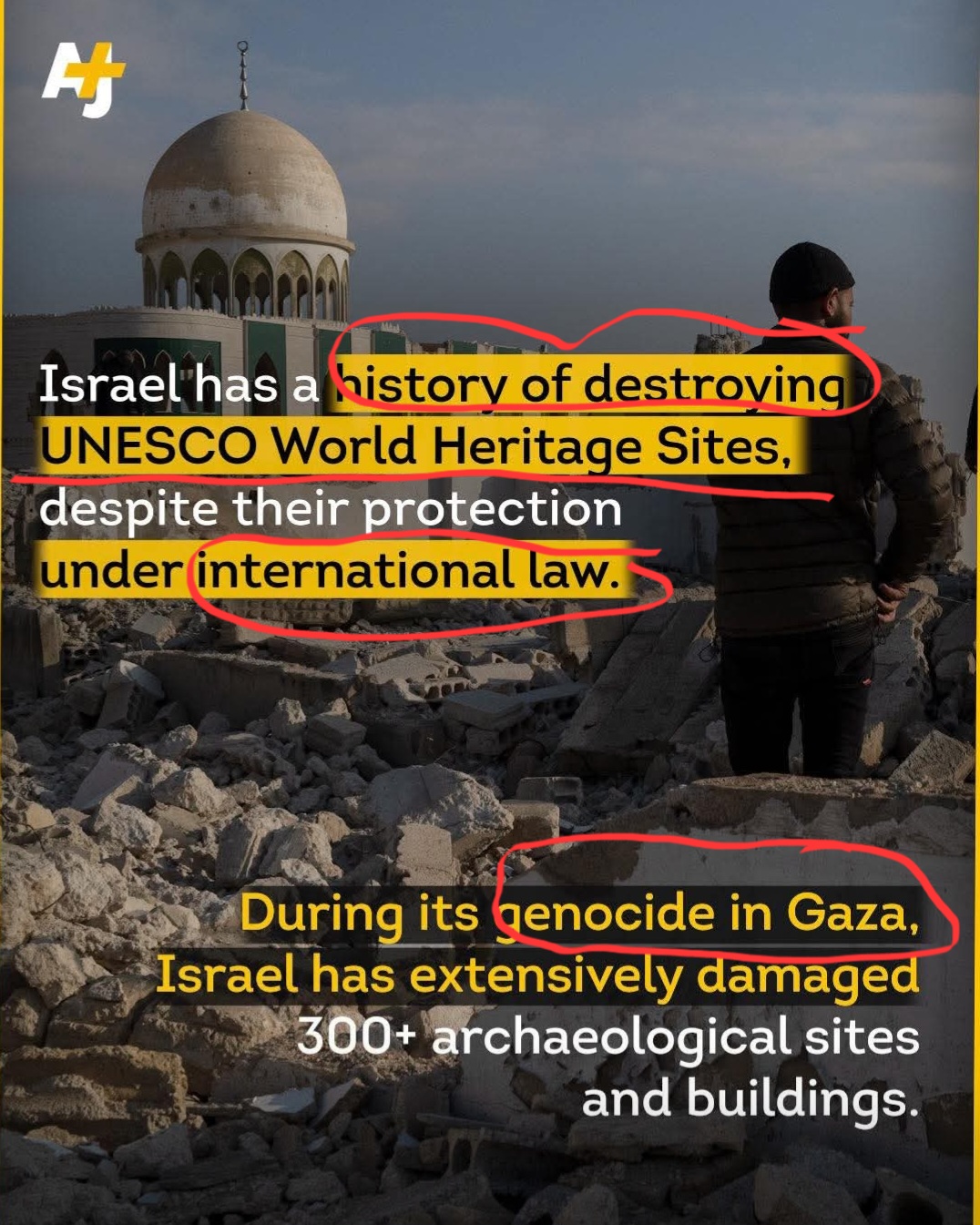
AJ+ has a long history of peddling Hamas propaganda
In September 2020, the Trump Justice Department concluded that AJ+ was acting on behalf of a foreign principal and ordered it to register under the Foreign Agents Registration Act (FARA). Registration would not have restricted its journalism, but simply would have required public disclosure of its relationship with Qatar and periodic reporting similar to that required of other foreign state-backed media organizations like those from Turkey (TRT), China (CGTN) and Russia (RT).
AJ+ refused to register. Republican lawmakers including Chuck Grassley, Marco Rubio, Tom Cotton, Ted Cruz and Todd Young pressed DOJ to enforce its own determination.
Then, in May 2022, the Biden Justice Department withdrew the order after reviewing additional information submitted by AJ+. What changed has never been publicly explained. DOJ has not identified the decisive new facts, released its legal analysis or explained why AJ+ was treated differently from other foreign state-funded broadcasters.
“AJ+’s reporting ‘supports an inference’ that its broadcasts are ‘designed to influence the opinions and perspectives of its U.S. audience as directed by the foreign principals and for their principal benefit.’…
Given Al Jazeera’s and TikTok’s public prominence in the U.S., mounting evidence of their use to advance foreign agendas, and the Biden Administration’s own national security concerns with the two companies, the Committee is puzzled that the Department appears to have either ceased or paused enforcement of FARA registration requirements for the companies without explanation.” – February 8, 2024 letter from the Committee on Oversight and Accountability
The timing naturally raises questions.
Only months earlier, the United States had completed its withdrawal from Afghanistan. Qatar had become indispensable to Washington—hosting negotiations with the Taliban, assisting the evacuation from Kabul and serving as one of America’s principal diplomatic intermediaries in the region.
There is no public evidence that the FARA reversal was connected to Qatar’s diplomatic role but it is reasonable to ask whether a government relying heavily on Doha’s cooperation became less interested in forcing Qatar’s flagship media network to register as a foreign agent.
The same question now confronts the second Trump administration. Although Trump’s first Justice Department initiated the FARA action, his current administration has not publicly reopened the case. That may simply reflect DOJ’s legal judgment or competing priorities. It may also reflect Qatar’s continuing importance as a partner in addressing Iran, Gaza and other regional crises.
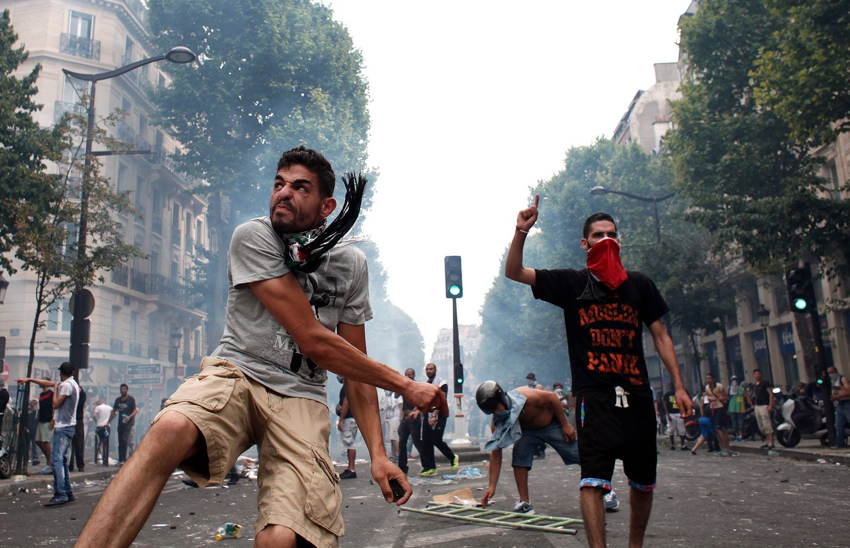
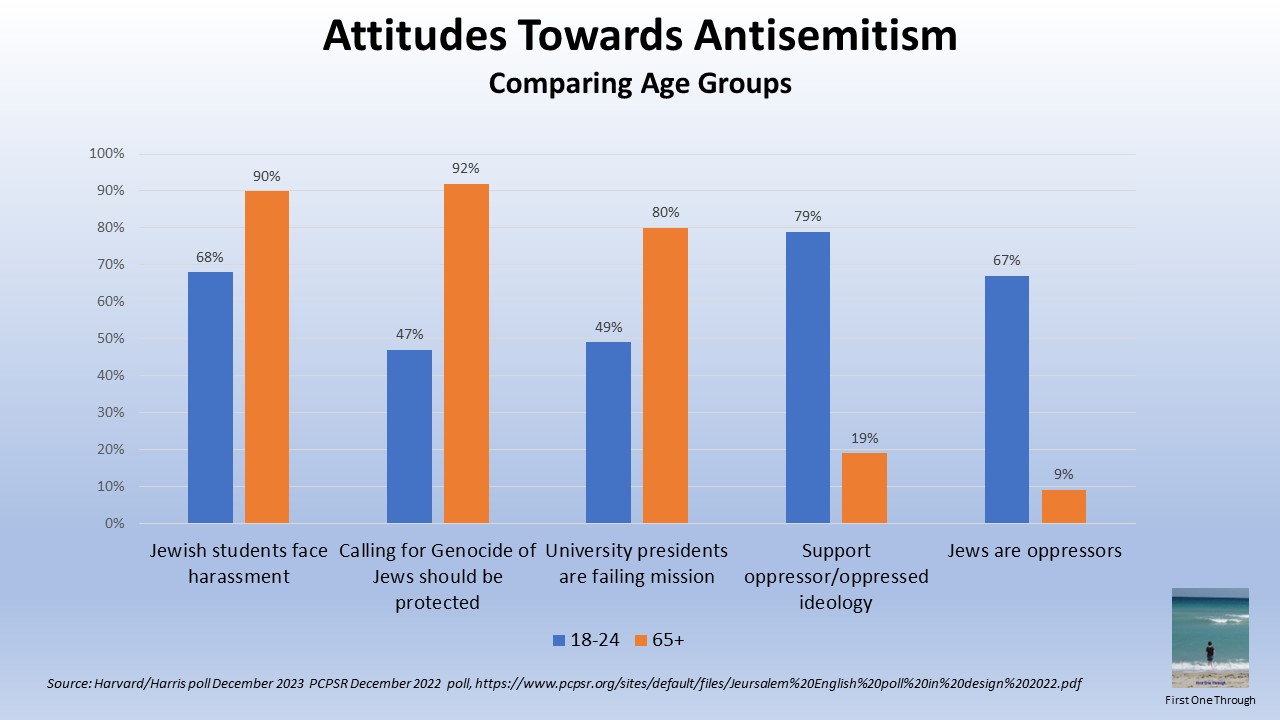
A final question – closer to home – may be the most consequential. During this same period, antisemitism reached levels not seen in decades while anti-Israel activism surged across American campuses and social media, principally from young people. And AJ+ was one of the most influential foreign state-funded digital news brands reaching young Americans, peddling such hatred over this time.
The unanswered question is whether Washington accepted greater Qatari influence inside the United States – including directly and indirectly promoting antisemitism – in exchange for Qatar’s assistance abroad.
Whether making Al Jazeera and AJ+ register under FARA would suddenly change these trends is unknown. But it is also unknown and curious why the government stopped asking the Qatari media powerhouse to do so.
When Iran offered condolences after the death of former Qatari emir Sheikh Hamad bin Khalifa Al Thani, the gesture appeared incongruous. Iran had recently been firing missiles and drones at Qatar and across the Gulf. So why the words of consolation?
Iran was not primarily attacking Qatar as a Muslim or Arab society. It was targeting the American military presence on Qatari soil. The same pattern has extended across the region: U.S. facilities and assets in Qatar, Bahrain, Kuwait and Jordan, as well as American positions in Iraq and Syria, have come under Iranian attack. Recent strikes included an early-warning installation in Qatar, Patriot systems in Kuwait, a U.S. fuel depot in Bahrain and military facilities in Jordan.
That reveals the real fault line in the Middle East.
It is not simply Sunni against Shia, Arab against Persian or even Muslim country against Muslim country. It is increasingly a divide over how to handle the United States: between governments and movements determined to expel American power and those that invite it in and then seek to shape it.
Iran represents the first model. Since 1979, its hostility has been explicit. It calls America the enemy, demands the removal of U.S. forces and uses missiles, drones and proxies against American military positions. Its war is visible. It announces its contempt and fires at the flag.
Qatar perfected a more nuanced model.
Under Sheikh Hamad, Qatar financed and expanded Al Udeid Air Base, which became central to U.S. operations in Afghanistan, Iraq and across the region. At the same time, Doha built influence inside the United States, financing American university campuses, purchased entry into American television distribution, invested in think tanks and businesses, hired lobbyists and cultivated political relationships. It also hosted anti-Western terrorist groups including Hamas leaders and Muslim Brotherhood figures, and used Al Jazeera to broadcast narratives often deeply hostile to the West and its allies.
Iran attacks American power from the outside. Qatar embraces it corrodes it from within.
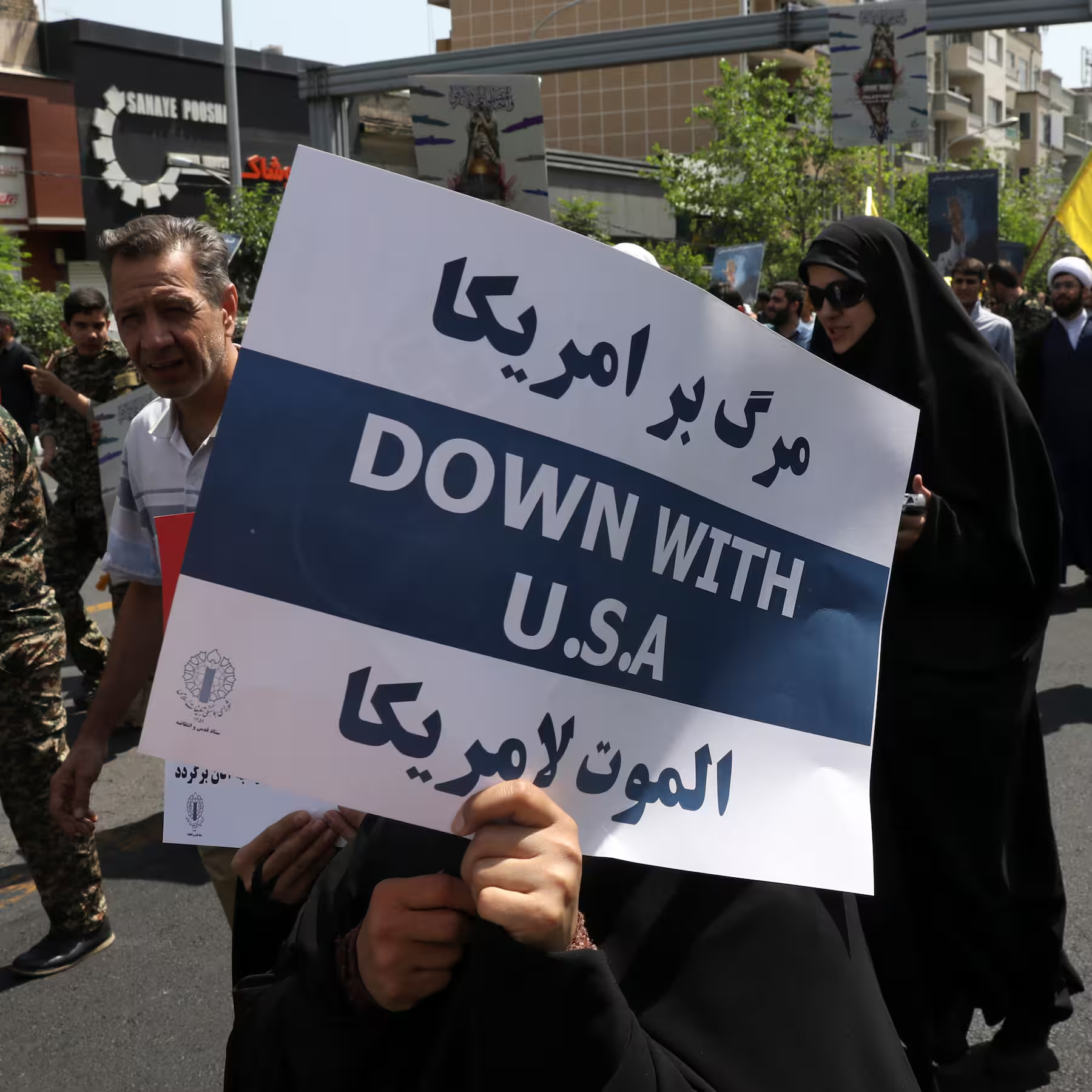
anti-American Iranians
Iran seeks direct confrontation; Qatar seeks leverage.Iran’s weapons are missiles and militias. Qatar’s are money, access, prestige and indispensability.
The West is naturally more alarmed by Iran’s model. And Qatar’s model is harder to confront because it arrives as partnership.
The military base protects American interests. The university campus carries a prestigious name. The investment creates jobs. Each relationship is defensible in isolation. Together, however, they create influence on a scale no tiny monarchy could achieve through military power alone.
The broader contest is therefore not between countries that love America and countries that hate it. Iran and Qatar represent different tactics of genocidal jihadists. One strategy attacks the fortress. The other purchases rooms inside it.
Iran’s war is louder. Qatar’s may prove more insidious and enduring.
There are many ways to measure whether politicians are guided by principle or politics. One is to compare what provokes their outrage and what does not.
In April 2024, a Jewish student at UCLA tried to walk across his own campus.
Pro-Palestinian protesters physically blocked his path and decided, on their own authority, who could and could not pass. UCLA security officers stood by and did nothing. A federal judge later ruled that UCLA could not permit Jewish students to be excluded from parts of campus because of their identity or beliefs, calling such exclusion “unimaginable” and “abhorrent.”
Where were California’s Democratic members of Congress about the incident? Other “progressive” members of Congress? Where were the press conferences, the demands for investigations and the flood of social media condemnations?
Their silence was striking.
Then came Rep. Ro Khanna’s recent 7,500-mile trip to the West Bank in July 2026.
Khanna claimed that armed settlers and Israeli soldiers prevented his delegation from proceeding and that U.S. Embassy involvement helped resolve the situation. Israeli officials, the U.S. embassy, and various partiesdispute key parts of that account, saying the delegation entered a restricted security area without proper coordination and denying Khanna’s characterization of the encounter.
Yet progressive members of Congress like Ilhan Omar quickly rallied behind Khanna, condemning Israel and amplifying his account around the world.
The comparison is not between two people who were blocked. It is between two very different reasons for being blocked and the reactions that followed.
At UCLA, private protesters established their own checkpoint and allegedly decided which Americans could pass based on who they were or what they believed. A federal court concluded that a public university could not allow that to happen.
In the West Bank, the issue was about security. The area was subject to access restrictions because it was an active conflict zone. The dispute is over whether those security measures were properly applied not whether Ro Khanna had a right to unrestricted entry.
One concerns equal treatment under American law, the other concerns the exercise of security authority in a foreign conflict zone. Yet the louder political outrage came in response to the latter.
If elected officials cannot summon the same moral urgency when a Jewish American student is excluded from his own campus as they do when a colleague encounters a disputed security checkpoint overseas, the question is no longer whether they oppose injustice. It is what kinds of injustice – and for whom – they choose to notice.
We are witnessing more and more of the elected progressive wing marking American and Israeli Jews as “absolutely vile” people unworthy of basic protections and rights who “must be stopped.”
Sometimes, sudden death is simply that. But conspiracy theories rarely leave a vacuum unfilled.
The first kind of conspiracy theory follows ordinary logic. It begins with motive.
If someone believes Lindsey Graham was murdered, the obvious suspects would be the governments whose interests he spent years opposing: Russia or Iran, or some combined efforts by both. Perhaps it was an American anti-war agitator. Whether true or false, at least the theory follows a recognizable chain of reasoning.
The second kind works very differently.
It begins with a worldview that history is shaped by hidden forces operating behind governments and public events. Facts are gathered afterward to support that assumption.
For centuries, one of the most enduring versions of that worldview has been antisemitic: the claim that Jews secretly manipulate governments, wars, finance, or the media. The alleged hidden actor changes with the era, but the underlying story remains remarkably consistent.
Antisemites from Nazi Germany to Rep. Rashida Tlaib (D-MI) talk about Jews operating in the shadows
That helps explain why some recent conspiracy theories about the murder of Charlie Kirk have implicated Israel or Mossad where the alleged motive is counterintuitive. The target is chosen less because of the evidence than because it fits an existing narrative about hidden power.
One conspiracy theory asks, “Who had the motive?” The other asks, “Who do I already believe secretly runs the world?”
The first can be tested against evidence, the second is designed to survive it.
Today’s front pages will convey that a strong advocate of American allies’ defense against common American foes has died. He will be mourned by conservatives in the United States and supporters of Ukraine and Israel. In the not too distant future in our crazy conspiratorial-laden present, new distinct strains of headlines are likely to emerge.
Social scientists have long observed that ideas do not need majority support to transform a community. Research on social norms has repeatedly found that once a committed minority reaches roughly 25 to 30 percent of a group, opinions once considered beyond the pale can become normalized. The Overton window shifts. People become more willing to voice views they once kept private because they no longer fear social disapproval.
That is what makes Pew Research Center’s July 2026 findings so alarming.
In 2024, Pew found that 37% of American Muslims viewed Hamas favorably. Two years later, that figure has risen to 44%.
July 2026 Pew Poll showing 44% of American Muslims support Hamas, almost the same as the Palestinian Authority. This is a gross outlier relative to all other Americans.
Vile extremism has not only been mainstreamed in the American Muslim community, it is accelerating.
Hamas is not merely another Palestinian political movement. It is a U.S.-designated terrorist organization that carried out the October 7 massacre. Its members murdered civilians, took hostages, committed widespread sexual violence, and burned families alive. Hamas has long promoted antisemitic ideology, seeks Israel’s destruction, refuses to disarm or allow civilians to use its protective shelters, and has repeatedly embedded military operations among civilians, leaving Gaza’s population to be destroyed.
Forty-four percent is not a fringe. It is well above the level social scientists associate with changing social norms. It IS the norm.
Viewed through that lens, the chants heard on American streets become easier to understand. “Globalize the Intifada” is no longer merely the slogan of isolated radicals. Celebrating the killing of Jews no longer needs to be hidden but can be posted on social media.
For American Jews, this is not an abstract polling result. Hamas and “Globalize the Intifada” mean antisemitic violent jihad. It is the embrace of a death cult. A poll showing growing favorability of Hamas inevitably deepens fear that the moral barrier has been broken and violence is near.
But this is not only a Jewish concern.
No society should become comfortable with growing support for a terrorist organization whose defining acts include the deliberate murder of civilians, hostage-taking, and an explicitly antisemitic ideology. When favorable views of such an organization increase rather than decline after its atrocities, the implications extend beyond the community it targets. They speak to the moral health of the the American Muslim community.
Every community contains extremists. The defining question is whether they remain isolated or become influential enough to reshape what is considered acceptable. Pew’s findings suggest that sympathy for Hamas is no longer confined to the margins of American Muslim opinion. It has become substantial enough to influence public discourse and to shape the boundaries of acceptable speech, and likely action.
The Hamas Charter is the most antisemitic governmental charter ever produced
The issue has grown beyond Hamas in Gaza. It is American Hamas – the normalization of support for a terrorist organization within American society. If support for Hamas among American Muslims has risen from 37% to 44% in just two years, Americans should ask not only what this means for Jews, but what it says about the values we are willing to tolerate in America.
The greatest danger is not merely that extremists exist. It is that extremism ceases to be recognized as extreme.
The debate over American support for Ukraine and Israel has largely focused on the cost. Politicians argue over billions of dollars appropriated, weapons transferred, and whether American taxpayers are carrying too much of the burden. Far less attention has been paid to the return on that investment.
Since 2022, the United States has authorized roughly $195 billion related to Ukraine and approximately $16–22 billion in supplemental wartime assistance for Israel. Critics see enormous expenditures. Strategically, however, those dollars have enabled two allies to inflict historic damage on two of America’s principal adversaries – Russia and Iran – without the United States deploying large combat formations or suffering the thousands of battlefield casualties that defined Vietnam, Iraq, and Afghanistan.
That comparison matters.
The wars in Iraq and Afghanistan cost the United States more than $5 trillion in direct and related costs, with broader post-9/11 war obligations rising above $8 trillion when future veteran care, interest, and long-term commitments are included. Nearly 7,000 American service members were killed. More than 52,000 were wounded.
And what was the lasting strategic benefit?
Afghanistan ended with the Taliban back in power. Iraq removed Saddam Hussein, but the aftermath empowered Iran, fractured the region, drained American credibility, and produced years of instability. The United States paid in terrible blood and treasure, and the final balance sheet is hard to defend.
Ukraine and Israel present a very different model.
Consider Russia.
More than four years after launching its invasion of Ukraine, Russia has suffered an estimated1.4 million military casualties, including approximately 450,000 dead. Its armored forces have been severely depleted. The Black Sea Fleet has largely been driven from its historic operating areas. Ukraine has repeatedly demonstrated the ability to strike deep inside Russian territory. The military once regarded as NATO’s greatest conventional threat has been dramatically weakened.
“The number of Russian casualties and fatalities are astonishing. Since World War II, no major power has suffered anywhere near these numbers of casualties or fatalities in any war…. Russia’s economy is in distress, and Russia’s wartime spending may be increasingly untenable.” – Center for Strategic and International Studies July 2026
Now consider Iran.
For four decades the leading state sponsor of terrorism invested billions of dollars constructing what it proudly called the “Axis of Resistance” – a network stretching from Iran through Iraq and Syria to Lebanon and Gaza. Hamas, Hezbollah, Shiite militias, the Houthis, and the Assad regime were components of a single strategy designed to project Iranian power, surround Israel and challenge American influence in the region and threaten much of the global oil supply.
That strategy has suffered a tremendous setback.
Hamas has lost much of its military and infrastructure. Hezbollah has absorbed devastating blows to its command structure and missile capabilities. The Assad regime in Syria – Tehran’s indispensable Arab ally and the geographic bridge connecting Iran to Hezbollah – has fallen, shattering the land corridor that Iran spent decades building. The regional network that once appeared to surround Israel and terrorize America’s Arab allies now is dramatically weakened.
Iran’s nuclear ambitions have suffered major setbacks as well. Israeli and American strikes severely damaged key nuclear facilities, disrupted important elements of Iran’s enrichment infrastructure, and forced Tehran to devote enormous resources simply to rebuilding capabilities it once assumed were secure. Intelligence agencies continue to debate precisely how long the program has been delayed, but there is broad agreement that it suffered one of the most significant setbacks in its history.
None of this diminishes the immense human suffering. Ukraine has endured staggering casualties and destruction. Israel suffered the deadliest attack in its history on October 7 and has paid a heavy military, economic, and emotional price ever since.
But viewed through an American lens of grand strategy, another reality emerges.
Rather than sending hundreds of thousands of American troops to fight Russia or Iran directly as was done in Afghanistan and Iraq, the United States enabled allies already under attack to defend themselves. Those allies have imposed extraordinary military and strategic costs on governments that have spent decades challenging American interests.
This is what is so often missing from the public debate.
The wars are typically discussed separately. Ukraine is presented as a European conflict while Israel is portrayed as a Middle Eastern conflict. Yet both Russia and Iran were strategic partners, cooperating militarily, economically, and diplomatically while sharing an interest in weakening the United States and the Western alliance. Seen together, Ukraine and Israel have not merely been fighting for their own survival, they have been successfully degrading two pillars of a powerful anti-Western axis.
The long-term upside could be enormous. A surviving, Western-aligned Ukraine would become one of Europe’s most battle-tested militaries, a major reconstruction market, an energy and agricultural partner, and a permanent barrier to Russian expansion. A stronger Israel, with Iran weakened and Syria and Lebanon no longer functioning as Tehran’s strategic bridge, could help reshape the Middle East around technology, defense cooperation, energy corridors, trade, and normalization with Arab states that increasingly fear Iran more than they resent Israel.
That is the opportunity Iraq and Afghanistan never produced. Those wars consumed American power and America left no assets behind. These wars, fought by allies, may extend American power with powerful allies at the vanguard.
History may conclude that this period represents one of the most effective uses of American alliance power in generations. For roughly $215 billion – less than one-twentieth of the direct and related cost of Iraq and Afghanistan – the United States helped enable allies to severely weaken Russia’s conventional military, fracture Iran’s regional proxy empire, remove Syria and Lebanon from Tehran’s sphere of influence, and significantly set back Iran’s nuclear program, all without committing large American ground forces or sustaining the massive battlefield casualties that characterized previous generations of U.S. warfare.
America’s greatest military victory in the past 75 years may ultimately be its most subtle.
There was a time when many New Yorkers dismissed the Democratic Socialists of America (DSA) as a fringe movement. Their rallies were loud. Their rhetoric was provocative. But surely the city that built Wall Street, welcomed millions of immigrants, and was attacked on September 11 would never hand real political power to a movement whose rhetoric after October 7 shocked so many Americans.
Rally in Times Square the day after the massacre of 1,200 people in Israel and abduction of 251.
Yet here we are.
The new mayor is part of the DSA. DSA-backed candidates continue to win elections across New York City.
This is not merely a debate over tax rates or rent control. After Hamas murdered more than 1,200 Israelis on October 7, the New York City chapter of DSA helped organize demonstrations almost immediately afterward. Slogans and statements in Times Square celebrated the attack as “resistance” and chanted for it to continue “long live the Intifada!” DSA-NYC had long argued that Israeli civilians should not be viewed as innocent because they were participants in a “settler-colonial” society.
One might have expected that such rhetoric would permanently marginalize it. Instead, it grew. How?
Because its opponents fought the wrong war.
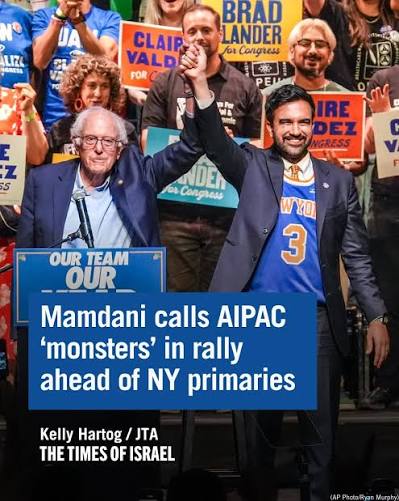
Organizations such as AIPAC concentrated enormous resources on defeating individual candidates where the ground game already indicated it could win. Sometimes they succeeded spectacularly. Millions of dollars were spent. Headlines proclaimed another victory over the anti-Israel Left.
But every expensive primary also reinforced the story DSA wanted to tell.
They were no longer simply neighborhood activists. They became the underdogs standing up to a wealthy political establishment. Every television advertisement became another fundraising email. Every outside dollar became another recruiting tool. Every victory over one candidate left the movement itself intact and often stronger.
AIPAC won campaigns but DSA built a movement.
Politics is ultimately about culture before it is about elections. Elections simply reveal where the culture already stands.
While establishment organizations measured success by defeating a particular candidate, DSA measured success by opening another neighborhood chapter, training another organizer, recruiting another volunteer, and persuading another generation that its worldview represented justice.
The results are now visible. A virtual sweep of DSA candidates in New York this week.
New York did not suddenly become socialist. It was organized into becoming more receptive to socialist candidates over many years. One neighborhood at a time. One group at a time.
J Street spent considerable time and effort over the past few years bashing AIPAC to build better alliances with the far-left. Now that multiple anti-Israel extremists have entered office while effectively echoing J Street’s smears of AIPAC, the left-wing “pro-Israel” group stayed mum and didn’t print a single press release.
That should be the lesson – not only for those who support Israel, but for anyone concerned about the city’s future.
Money can influence an election. It cannot substitute for a movement.
If New York is to change course, it will not happen because one organization writes larger checks. It will happen because people who believe in liberal democracy, civic responsibility, pluralism, and the moral distinction between murdering civilians and defending them begin organizing with the same patience and persistence that their opponents have displayed for years.
Jacobin lead is that Socialists defeated “AIPAC, racism” before anything else
Cities are not lost in a single election. They are lost one neighborhood at a time.
One of the most enduring images of the American Revolution is not a musket fired at Lexington or a cannon at Yorktown. It is a flag.
“Spirit of ’76” by Archibald Willard, 1875
In paintings celebrating the American Revolution, men advance carrying banners while drummer boys beat the cadence beside them. Often these figures are unarmed or lightly armed. To a modern observer, this seems irrational. Why would an army send men into battle carrying flags and drums instead of rifles?
Because they were not there to fight but to remind others why the fight mattered.
The flag represented the regiment, the cause, and the emerging nation. The drum provided rhythm and cohesion amid the chaos of battle. Neither was a weapon. Yet both were indispensable.
While tools like weapons help achieve an objective, symbols give meaning to the objective.
The Declaration of Independence was not a weapon. Neither was the America flag. Yet without them, the American Revolution would have been little more than a military rebellion. The cause and symbols transformed a collection of armed colonists into a people united by a common purpose.
The same lesson appeared thousands of years earlier in the Torah.
Moses’ staff began as an ordinary shepherd’s stick. In Egypt it became a symbol of divine authority. It was present during the plagues, at the splitting of the sea, and throughout Israel’s journey in the wilderness.
Similarly, during the battle against Amalek, Moses stood on a hill overlooking the fighting. When he raised his hands, Israel prevailed.
The rabbis famously ask whether Moses’ hands actually won the battle. Of course not. Joshua and the soldiers were the actual fighters. Like the flag carried by a Revolutionary soldier, the Moses’ raised arms pointed upwards. It reminded the warriors that victory depended not only on military strength but on the faith that united them.
Moses’ arms raised during fight with Amalek
Unfortunately, Moses later forgot the important distinction between symbol and tool. In Numbers 20, God instructs Moses to speak to a rock to make it produce water but instead Moses used the staff to hit the rock.
“And the LORD spake unto Moses, saying, Take the tent and gather the congregation together, you and Aaron your brother, and speak to the rock before their eyes, and give them water from it,… And Moses lifted up his hand, and smote the rock with his rod, and there came out abundant water,… And the LORD said unto Moses and unto Aaron, Because ye believed me not, to sanctify me in the sight of the children of Israel, therefore ye shall not bring this congregation into the land which I have given them.”
Had Moses held the staff and spoken to the rock, it would have been clear that Moses was acting as an agent of God. However, by using the staff to hit the rock, the appearance to the congregation was that Moses produced the water through his physical actions. The important symbol was converted into a mere tool.
That temptation remains with every generation.
Today, neither America nor Israel doubts the superiority of its weapons. The United States and Israel possess military capabilities far beyond those of the jihadist movements that seek their destruction.
But this war is not only about weapons and short-term military victory.
The jihadists understand the power of symbols. They flew their flags over burned civilian homes and corpses of families. Their propaganda celebrates martyrdom of their own people. Their movements are built around vile narratives and identity.
So the engagement with the enemies must be beyond tools and include symbols.
The challenge facing America as it approaches its 250th birthday, and Israel as it continues its long war against jihadist movements sworn to its destruction, is not merely maintaining military superiority. It is ensuring that the superiority of their cause is just as visible.
For Israel, that means rebuilding the communities of the Gaza Envelope, returning families to their homes, raising the flag over places terrorists tried to erase, and celebrating Jewish life where jihadists sought death.
For America, it means reclaiming the language of the Declaration of Independence, speaking unapologetically about liberty and human rights, and using international forums not merely to condemn violence in general but to condemn noxious jihadist violence specifically.
The free world must repeatedly denounce genocidal jihadists like Hamas and Hezbollah and pass resolutions that celebrate democracy, defend religious freedom, and affirm the dignity of every human being.
The current fight matters more than military victory. It requires weapons, and also a proud display of enduring Jewish and Democratic values.
Tools win battles. Symbols sustain civilizations. They are both distinct and required at pivotal moments like today.
A text message arrived from Alexandria Ocasio-Cortez asking for money.
The appeal struck her familiar tone of class warfare.
“I don’t spend hours every day calling wealthy people to ask them for money,” she wrote. “No call time with wealthy donors or billionaires.” Instead, she said, her campaign is powered by “regular people giving what they can.”
The imagery is deliberate: a grassroots insurgent taking on powerful interests.
The reality is that that Ocasio-Cortez is so 2018. Today, she has become one of the most powerful fundraising forces in American politics.
According to campaign finance disclosures, she has raised roughly $27.5 million this election cycle—more than the two largest Republican House fundraisers combined. Nearly 88% of that money came from outside New York. Even the portion of her fundraising that comes from larger individual donors totals roughly $8.4 million, a figure that by itself would rank among the strongest fundraising efforts in New York politics.
Those are not the numbers of a beleaguered local fighter. They are the numbers of the richest campaign in the nation.
The irony becomes even sharper later in the appeal. Ocasio-Cortez warns supporters that one of her primary opponent is “a former Wall Street banker.”
The phrase is meant to tell readers everything they need to know: Wall Street. Banker. Establishment.
But AOC is the money. She’s the power in politics. She’s the institutional heavyweight.
That is what makes the fundraising appeal so jarring. Millions of Americans are struggling with rent, mortgages, groceries, tuition, insurance bills, and credit-card debt. Yet the wealthiest campaign in Congress continues to ask ordinary people for another $5, pretending that it’s the underdog.
The Tikvah Society recently gathered in lower Manhattan to celebrate America’s 250th birthday and make the Jewish case for American exceptionalism.
It was an impressive gathering. Jonathan Silver moderated a conversation between Ruth Wisse, Bret Stephens, and Eric Cohen. Yet as the evening unfolded, a question lingered:
Who was missing?
Not from the audience, but from the conversation itself.
The answer matters because the people in the room represent a remarkably small slice of both America and American Jewry. Jews comprise roughly 6 million people in a nation of 330 million (1.8%). Within American Jewry, the Modern Orthodox and strongly Zionist non-Orthodox communities that dominate much of American Jewish intellectual life represent only a fraction of the next generation. And the attendees represented the most engaged of that small sliver.
The setting itself made the omission more striking. The discussion took place in the very neighborhood where some of the foundational events of the American Republic unfolded. Within walking distance stand the sites of Washington’s inauguration, the first Congress, and the earliest experiments in American self-government. Yet for an event dedicated to celebrating America, surprisingly little attention was paid to the place itself.
American flags on Fifth Avenue (photo: First One Through)
Instead, the conversation focused on the future of Jews, universities, religion, and politics.
The panelists disagreed on important questions. Wisse argued that Jewish unity is not paramount if unity comes at the expense of conviction: better a smaller community of committed Jews than a larger one saturated in ambivalence. Stephens returned to a theme he has emphasized before: stop obsessing over the haters and invest in Jewish education. Cohen broadened the argument, suggesting that both Jewish and Christian religious education are essential to strengthening America itself. The country’s experiment with secularism, he argued, has weakened the civic and moral foundations on which the Republic depends.
Jonathan Silver, Eric Cohen, Bret Stephens and Ruth Wisse address audience at Tikvah Society event on June 9, 2026 in New York City (photo: First One Through)
Both Stephens and Cohen spoke favorably about Chabad. It is not difficult to see why. Chabad has become one of the few institutions capable of reaching Jews across virtually every level of observance. The Rebbe’s army continues to grow because it understands something many institutions have forgotten: people are attracted to confidence, purpose, and personal relationships. Tikvah has absorbed this – it is curious how it plans on applying it.
Education
The discussion of education was compelling. Nothing is more important than good teachers, and few things are more destructive than bad ones. The panelists lamented the continuing flow of Jewish philanthropy into institutions such as Columbia University, where many faculty members and students openly disparage Zionism, America, and increasingly Jews themselves.
Yet the evening largely avoided a more uncomfortable reality.
In the greater New York area, roughly 490,000 Jewish students attend K-12 schools. Only about 40,000 (8.2%) are found in the Modern Orthodox and Zionist day-school ecosystem (“The 8%”) that forms the backbone of many organizations such as Tikvah. The largest and fastest-growing populations are elsewhere. The majority remain in public and secular schools. Even more significant is the extraordinary growth of Chassidic and Yeshivish communities, which now educate approximately 145,000 students (“30% and Growing”).
Those numbers matter.
Ultra-Orthodox
A strategy centered solely on strengthening the already committed may preserve one segment of Jewish life. It does not answer the larger demographic question facing American Jewry. The central challenge is will Tikvah and “The 8%” engage the overwhelming majority of Jewish children who are either in public schools or in the rapidly growing ultra-Orthodox world.
The same demographic blind spot appeared later in the discussion. Cohen argued that religious Jews and religious Christians should work more closely together to defend the values that built America. There is logic to that argument. Tikvah itself appears to be moving in that direction through its decision to award its Herzl Prize to U.S. Ambassador to Israel Mike Huckabee, one of Israel’s most outspoken Christian supporters.
Yet there is a striking irony here. As Jewish leaders search for allies among millions of religious Christians, they overlook the “30% and Growing” communities. Leaders commend Chabad for successful outreach to the secular but don’t consider building bridges to the Chasidic and Yeshivish communities, and engaging the majority of students in public and secular schools.
Public Schools
The challenge facing American Jewry is therefore not simply how to build alliances with Christians who share Jewish concerns. It is also how to build relationships among Jews whose lives increasingly unfold in separate educational, cultural, and social worlds.
The same issue applies to America’s educational crisis. If America is worth saving, public schools matter. Any serious defense of American exceptionalism must include an effort to improve the institutions educating most American children. Reforming public education should not be viewed as somebody else’s problem. It is central to the future of both America and American Jewry.
American Jews need to become highly engaged in local school boards. They need to help moderate and defend the institutions form the worst influences which are overwhelming America’s public schools, poisoning America’s future. The evening was silent on this crucial point.
Universities
The conversation about universities also requires greater precision.
Harvard is not a monolith. Columbia is not a monolith. Administrations, trustees, faculty, students, and donors often have different interests and agendas. Too often Jewish philanthropists write nine-figure checks in exchange for buildings bearing their names. It is a poor investment.
The activists and professors who dominate many campuses are not impressed by another Jewish donor’s name on a wall. In some cases, they actively mock the very people who funded the buildings in which they teach.
A better approach would be to invest in people rather than structures: scholars, faculty, teachers, fellowships, civic education programs, and scholarships for students committed to the values that made America successful. Buildings create monuments. Educators create generations.
Area
Tikvah Approach
Reality
Better Tactic
Ultra-Orthodox
Ignore. Focus on Christian groups
Fastest growing population
Engage, perhaps via important issues for both like public funding for religious schools
Public Schools
Unaddressed
Largest current segment
Engage school boards
Universities
Don’t fund or send students / make new ones
Still prevalent and dominant
Redirect contributions
Perhaps the most important lesson from the evening is that preserving American exceptionalism requires more than celebrating it.
American exceptionalism was never simply a belief that America was superior. At its best, it reflected an understanding that liberty is fragile and must be constantly renewed by citizens willing to sacrifice for something larger than themselves.
The people gathered in that room care deeply about America and about the future of the Jewish people. Their commitment is admirable. But commitment alone is not enough. The arithmetic cannot be ignored.
A movement centered on “The 8%” in a community of 1.8% of Americans (0.15%) cannot secure the future.
The challenge is larger than preserving one vision of Jewish life. It is rebuilding the institutions that form Americans in the first place: families, schools, synagogues, churches, civic organizations, and local communities. That is where outreach to BOTH Christian and Ultra-Orthodox groups matters.
And that work begins with Humble Faith. Humble faith built the America being celebrated in lower Manhattan. Humble faith may also be the only way to bridge the growing divides within the Jewish community itself. As we search for a better America, American Jews may first need to rediscover one another.