
Frontier Airlines CEO Barry Biffle once watched 20 passengers board a flight using wheelchairs. When the plane landed, only three needed wheelchairs to get off.
“We are healing so many people,” he joked.
Airline executives and frequent travelers have complained for years about what has become known as “Jetway Jesus”: passengers who seemingly need a wheelchair to board but miraculously walk after landing.
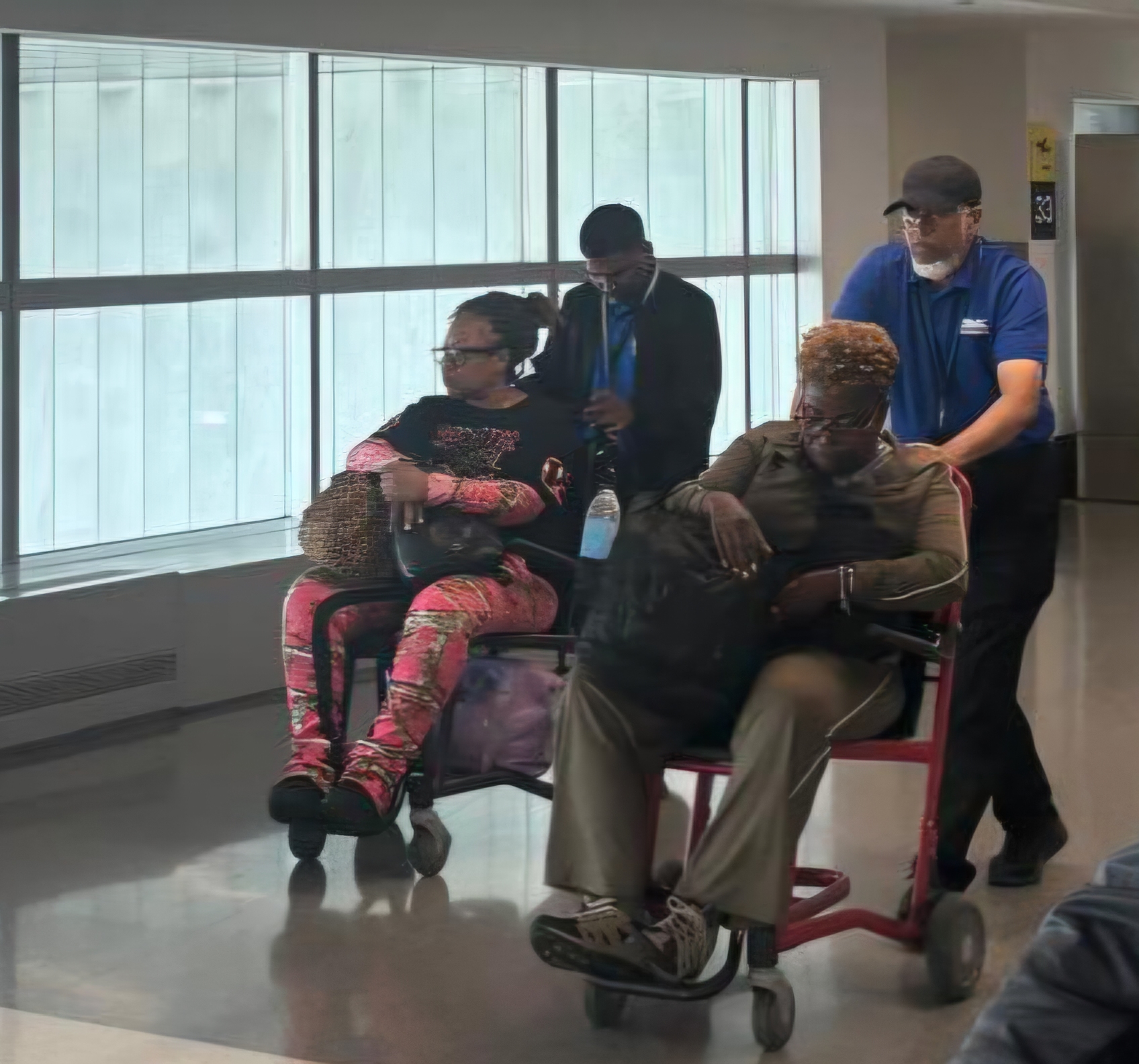
Some of those passengers undoubtedly have legitimate needs. Being able to walk off an airplane does not mean someone can walk a mile through an enormous airport. Disabilities can be invisible, intermittent and complicated.
But the incentives to game the system are also obvious.
Airlines for America estimated that its members were providing about 1.77 million wheelchair assists every month in 2018—more than 21 million annually. American Airlines alone reported more than eight million wheelchair-assistance requests in 2023.
The Government Accountability Office found that some international flights can arrive with 50 to 80 wheelchair requests. More tellingly, airport and airline stakeholders told the GAO that some passengers request wheelchairs because they believe assistance will move them through the airport faster.
Why wouldn’t they?
Wheelchair assistance can come with an attendant through a sprawling terminal, help navigating security, preboarding and early access to increasingly scarce overhead-bin space. The passenger pays nothing.
The airline does. So do the passengers waiting for attendants and chairs that have been diverted elsewhere. And ultimately so does the genuinely disabled traveler whose assistance is delayed because a finite system is overwhelmed.
The instinctive solution is to catch the fakers. It is also perhaps the wrong one.
A gate agent cannot determine whether the person standing up from a wheelchair has arthritis, multiple sclerosis, heart disease—or no disability at all. Requiring medical documentation would create another bureaucracy while inevitably making travel harder for people who actually need help.
There is a much simpler answer:
Make wheelchair assistance easier to get, but less valuable to game.
Europe offers the beginning of a model.
In America, wheelchair assistance through an airport is generally the responsibility of the airline. Airlines commonly hire contractors, meaning multiple carriers operating in the same terminal maintain separate obligations for moving passengers through the same building.
Europe largely puts that responsibility on the airport.
That makes intuitive sense. Airports operate the terminal, elevators, escalators, trains and other common infrastructure. Mobility through the terminal can be another common airport service.
America should consider adopting that model—and then go further.
Imagine the passenger’s journey.
At the curb, anyone who needs mobility assistance gets it. No doctor’s note. No interrogation. No charge. The airport’s common mobility service gets that passenger through the terminal and to the gate.
But a wheelchair is transportation, not a Fast Pass.
Needing help traveling three-quarters of a mile through Newark does not necessarily mean someone cannot wait in the ordinary security process. Assistance should help passengers through security without automatically moving them ahead of everyone else.
The same principle should apply at the gate.
A passenger who needs help crossing the terminal does not necessarily need help boarding an airplane. Passengers requiring an aisle chair, additional boarding time, assistance transferring to a seat or other physical accommodation should continue to preboard.
Someone who simply needed a ride to the gate can board with the appropriate regular group.
That distinction matters because early boarding has acquired real economic value. When airlines charge for checked luggage and overhead-bin space becomes scarce, getting onto the aircraft first means getting the bin. Wheelchair assistance should not be the way to acquire it.
Arrival could work similarly.
Passengers who need physical assistance getting off the aircraft receive it. Where operationally appropriate, assistance requiring an attendant could occur after ordinary deplaning rather than creating another potential time advantage. Current federal rules would need modification before airlines could impose a universal last-off requirement, but the principle is worth considering.
The objective is not to punish someone for needing help. It is to make assistance neutral.
And then measure it.
DOT and airports should publish wheelchair-assistance requests per 1,000 passengers, broken down by airport, airline and perhaps domestic and international routes. If comparable flights routinely generate radically different assistance rates, operators and regulators would finally have data to investigate rather than anecdotes about miraculous recoveries on the jetway.
Most importantly, none of these reforms requires deciding who is disabled. That is the elegance of changing the incentive instead of policing the passenger.
The wheelchair should get that passenger exactly what was requested: Mobility. Nothing more—and nothing less.


