
Hamas called its October 7, 2023 war “Al-Aqsa Flood”. The name announced its ambition to ignite a religious war that would mobilize the Muslim world against Israel and ultimately destroy the Jewish state.
The attack began in southern Israel, far from Jerusalem. Hamas terrorists invaded Jewish communities, murdered families, raped and slaughtered young people at a music festival, and dragged 251 hostages into Gaza. Yet the operation was named for Al-Aqsa Mosque, on the Temple Mount, Judaism’s holiest site.
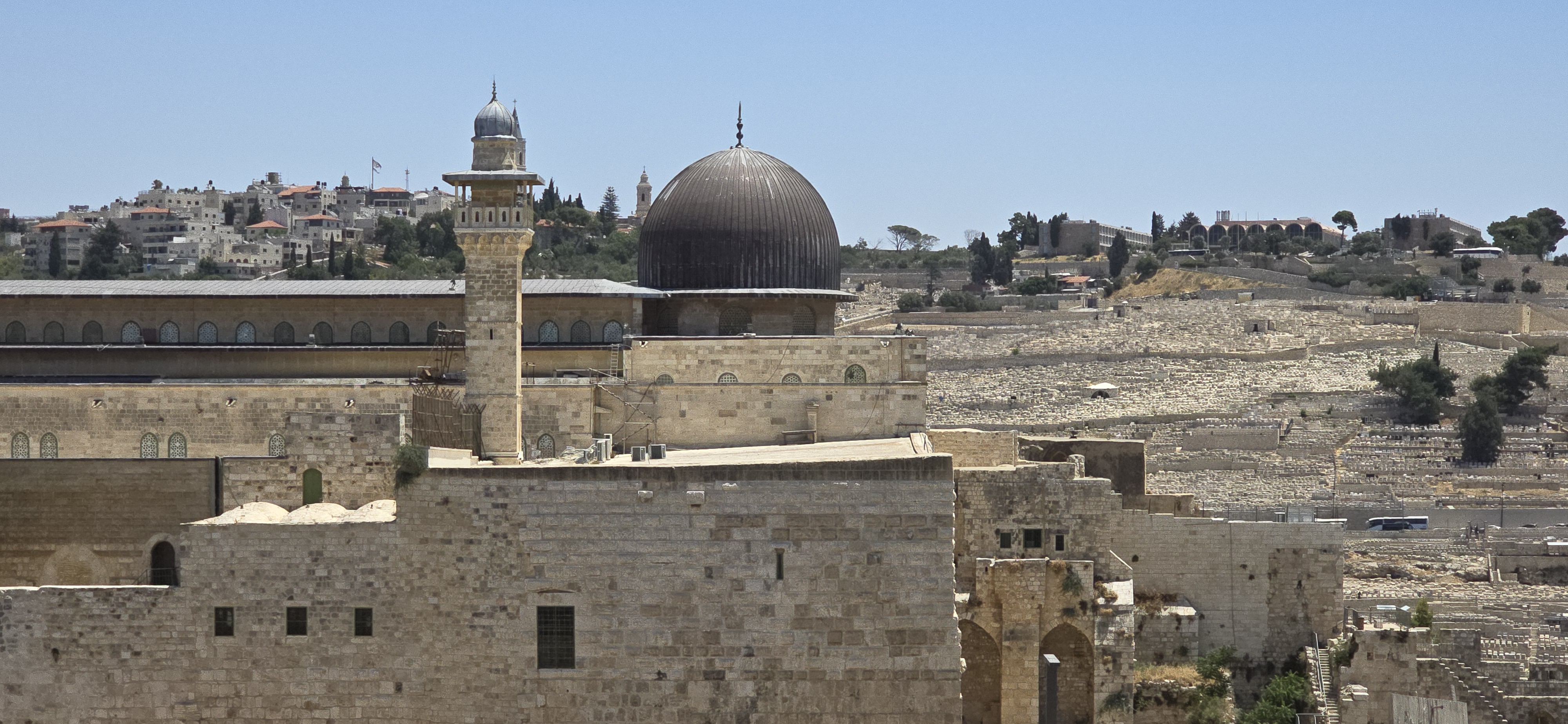
Jerusalem was the rallying cry. The destruction of Israel was the objective.
Hamas’s 1988 founding charter called for Israel’s destruction via jihad, invoked religious teachings about killing Jews, and envisioned an Islamic Palestine encompassing the entire land.
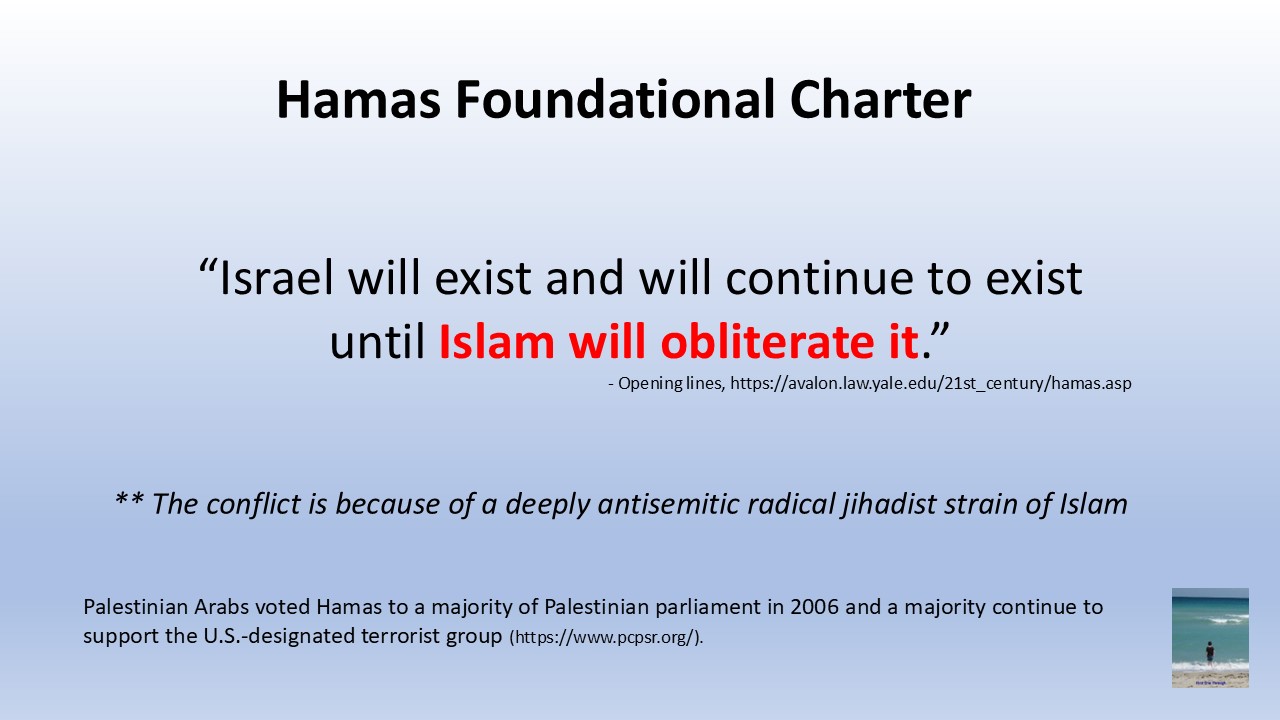
On October 7, Hamas military commander Mohammed Deif called on Muslims throughout the region to join the battle. He summoned armed organizations in Lebanon, Syria, Iraq, and Yemen and appealed to Arabs in Jerusalem, the Negev, the Galilee, and across Israel to rise up. Al-Aqsa, located on the site of the ancient Jewish Temples, provided the religious banner under which Hamas hoped to unite Muslims across national borders.
“Today, the people are bringing back the revolution and reviving the March of return.” [Arabs in Jerusalem and inside Israel, in the Negev, the Galilee and the Triangle area:] “set the earth on fire under the feet of the occupiers.” – Mohammed Deif on October 7, 2023
Hezbollah answered the following day, attacking Israel from Lebanon. The Houthis subsequently launched missiles and drones from Yemen and attacked commercial shipping in the Red Sea. Iranian-backed militias joined the fighting from Iraq and Syria. Iran, which had spent decades arming and financing organizations dedicated to Israel’s destruction, eventually attacked Israel directly.
The war spread across the region, drawing in Iran’s network of armed allies. The broader Muslim uprising Hamas sought, however, never materialized. Egypt and Jordan maintained their peace treaties with Israel. Saudi Arabia stayed out of the fighting. Muslim-majority countries across Asia and Africa condemned Israel’s military campaign but kept their armies at home.
Most revealing was the response of Israeli Arabs, whom Deif had specifically called upon to rise against Israel, hoping they would further their war against the Jews they had started in May 2021.
Yet they overwhelmingly stayed out of the fighting. A December 2023 Israel Democracy Institute survey found that 56% agreed the October 7 attack did not reflect the values of Arab society, the Palestinian people, or Islam. Nearly two-thirds felt part of Israel and its problems, while 86.5% supported civilian volunteering during the war. [Note that the Israeli Arab response about feeling part of Israel varied by religion: Druze (80%), Christians (73%) and Muslims (62%)].
Israeli Muslims had access to Al-Aqsa. They could judge Hamas’s claims about the mosque against their own experience.
While Hamas’s appeal for a mass Muslim uprising went largely unanswered, a very different movement was taking shape thousands of miles away.
On October 12, five days after the massacre, National Students for Justice in Palestine organized a “Day of Resistance” on American college campuses. Its organizing materials celebrated October 7 massacre as a historic victory for Palestinian resistance and called for the dismantling of Zionism.

The language spread through campuses, demonstrations, and activist networks. Some Western radicals celebrated the attack on Israeli civilians as resistance against colonialism. Hamas’s religious struggle acquired the vocabulary of progressive politics that had been promoted on campuses over the prior decade.
As the war continued, international attention increasingly centered on Israel’s military campaign, Palestinian civilian suffering, and smears of apartheid, colonialism, and genocide. Within activist narratives celebrating October 7, Hamas’s original declaration of a religious war and its eliminationist objectives disappeared behind the language of so-called “liberation.”

Hamas declared a jihad against the Jewish state but Israeli Arabs overwhelmingly declined the call. Yet Western radicals thousands of miles away celebrated the massacre as “liberation,” volunteering to become the political instruments of a jihad they mistook for social justice.


