
“Israel’s only existed since 1948,” declared political streamer Hasan Piker during a June 2026 interview on The Breakfast Club, explaining that Palestine had existed for far longer.
That’s moronic.
Piker was comparing a modern sovereign country with an ancient geographic designation. By that logic, Greece is younger than ancient Greek civilization, and Italy has existed for only 165 years.
The confusion arises because Israel is not simply a modern country. It is also a people, a land, a government with a collection of policies. These five meanings are related but profoundly different. Switching between them can erase thousands of years of Jewish history, turn criticism of a government into condemnation of a people, and make Jews appear to be foreigners in their ancestral homeland.
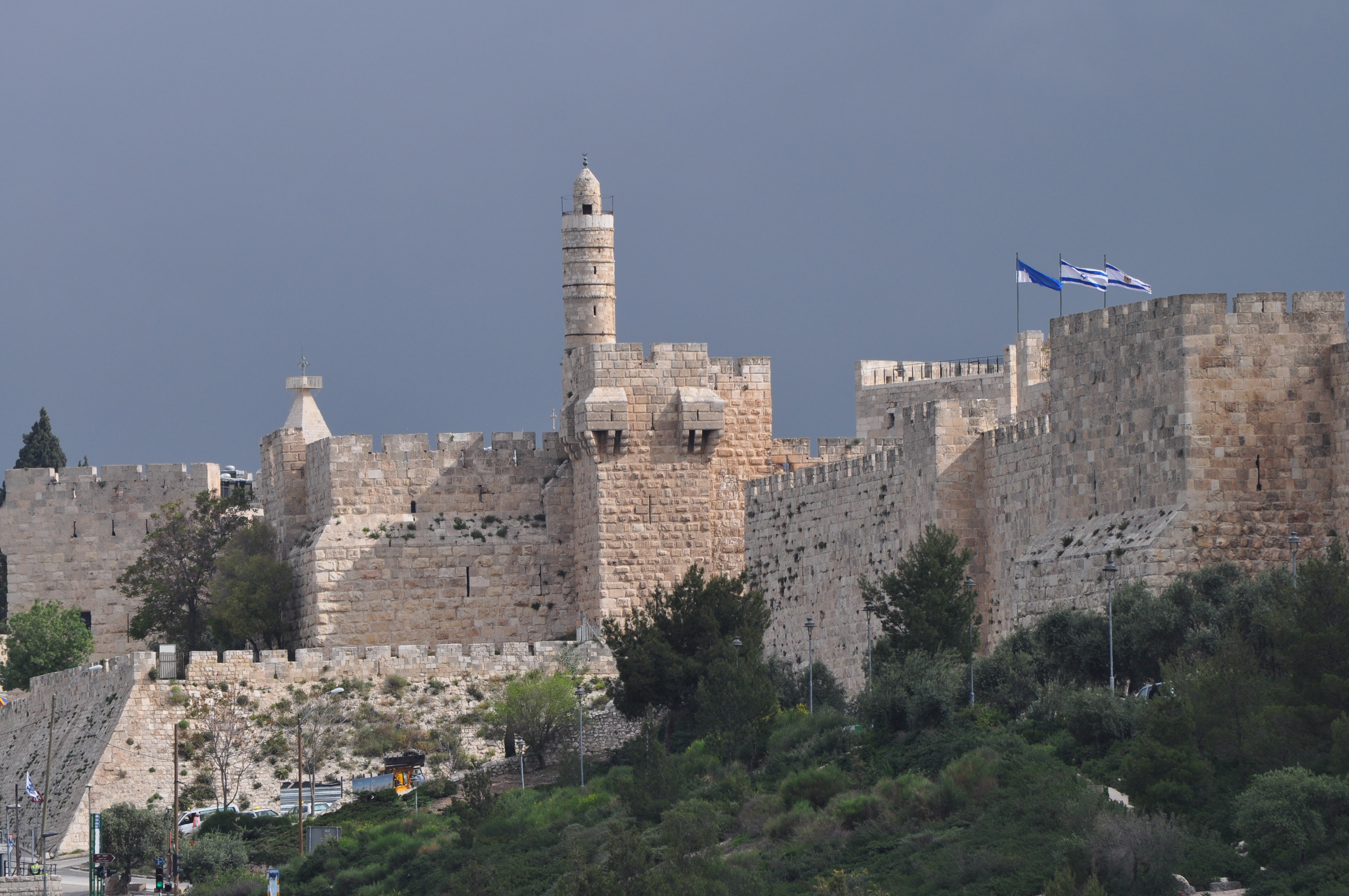
The Five Israels
The People of Israel, or Children of Israel (Bnei Yisrael or Am Yisrael), are the Jewish people, whose name derives from the biblical patriarch Jacob, renamed Israel. The people existed thousands of years before the modern country bearing their name.
The Land of Israel, Eretz Yisrael, is the ancestral homeland of the Jewish people, where ancient Israelite and Jewish kingdoms existed, Jerusalem became the center of Jewish religious and national life, and Judaism developed. It is core element of the Jewish people and Judaism.
The State of Israel, Medinat Yisrael, is the modern sovereign country established in 1948, nearly two thousand years after the destruction of the Second Temple in Jerusalem.
The Government of Israel consists of the political leaders who govern the country. Governments change through elections, coalitions collapse, and prime ministers come and go.
The Policies of Israel are the decisions those governments make concerning security, diplomacy, immigration and other matters. They can be supported, opposed, modified or reversed.
These five meanings move from the enduring identity of a people and their homeland to the changing decisions of political leaders. Confusing them produces arguments that can sound reasonable at first blush while being historically and logically indefensible.
Making Jews Newcomers to Their Own Homeland
Piker’s comparison illustrates the problem.
The name “Palestine” has been used for centuries, including under Roman, Byzantine, Islamic, Ottoman and British rule. But the existence of an old geographic designation does not establish the existence of a sovereign Palestinian Arab country throughout those centuries. More specifically, no such Palestine has ever existed. If it had, it would not have needed to declare itself a country in November 1988.

The modern State of Israel was established in 1948. The People of Israel and their connection to the Land of Israel existed thousands of years earlier. Ancient Israelite kingdoms, Jewish religious institutions and Jerusalem’s central place in Jewish life preceded both Christianity and Islam.
The sleight of hand is simple. Compare the modern State of Israel with the historical land called Palestine, and Israel suddenly appears young while Palestine appears ancient. Then treat those dates as proof that Palestinian Arabs are indigenous and Jews are foreign colonizers. Jewish history disappears through a quick change in definitions. A complete lie appears logical.
Judaism Is a Religion of a Particular Land
Part of the confusion comes from a misunderstanding of Judaism itself.
Christianity and Islam, which together account for more than half the world’s population, are universal religions. They have sacred places, including Jerusalem, Bethlehem and Mecca, but their adherents are not collectively defined as one ancestral nation awaiting restoration to a particular homeland.
Judaism is both a religion and the national tradition of a people whose history, laws and identity are deeply rooted in the Land of Israel.
God’s covenant with Abraham includes the promise of that land to Isaac, Jacob and their descendants. The Exodus from Egypt is a journey toward it as are later prophets discussing Jewish return from diaspora. Many commandments in the Torah concern its agriculture, harvests and religious obligations. Jerusalem and the Temple became the center of Jewish worship.
Even after the destruction of the Temple and the dispersal of much of the Jewish population, the connection endured. Jews continue to pray toward Jerusalem, mourn the Temple’s destruction, celebrate holidays tied to the agricultural seasons of the Land of Israel, and conclude the Passover Seder with the hope of being in Jerusalem the following year.
Christians do not need to live in Bethlehem to fulfill their identity as Christians. Muslims do not need to live in Mecca to fulfill their identity as Muslims. Jews do not need to live in Israel to be Jews, either. But Jews have a diaspora; Christians and Muslims do not because Judaism is a particular land-based religion.
Zionism did not invent the Jewish attachment to the land in the nineteenth century. It was a modern political movement seeking to restore Jewish national sovereignty in the ancestral homeland. Similarly, Jews did not become connected to Israel because a country was established in 1948. The country was established in a land to which Jews had been connected for thousands of years.
From Criticizing Policies to Denying a People’s History
The same confusion that distorts history also distorts contemporary political debate.
Someone may criticize an Israeli military operation or decision by a prime minister. That is criticism of government policy. But the argument can morph: Israel’s government becomes “genocidal”; Israel itself is declared illegitimate; Zionism becomes inherently evil and racist. Finally, the Jewish people’s connection and rights in their ancestral homeland is rejected.
That’s a preposterous slide from natural criticism to antisemitism.
Consider someone who objects to Israeli Jews living in Judea and Samaria / the West Bank. That is a dispute over policy and territory. But when the argument becomes that Jews are foreign colonizers with no legitimate claim to any part of the land, the discussion has moved from settlements to Jewish history and Judaism itself.
One can criticize a policy without denying a people’s history, oppose a government without opposing the country, and defend Jewish national rights without endorsing every action taken in their name.
When Israel Becomes a Substitute for Jews
The most dangerous shift occurs when Israel stops referring to a government or country and becomes a substitute for the Jewish people.
A Jewish student in New York is not the Israeli government. A synagogue in London is not an Israeli military installation. A Jewish business in Paris is not responsible for decisions made in Jerusalem.
Yet Jews around the world are confronted over policies they did not create, governments they did not elect and military operations they did not authorize. Jewish institutions become targets of protests ostensibly directed at a foreign government. Jews are expected to disavow Israel to establish their own moral legitimacy.
Antisemitism can hide inside this ambiguity. A speaker claims to be criticizing government conduct while advancing accusations against Jewish collective identity. The word remains the same even as its target changes.
Israel
The People of Israel are ancient and their bond to the Land of Israel is ancient. Those are facts not subject to debate or approval.
The State of Israel is modern, and its government and policies belong to the present. They are political beings and entities like others and subject to scrutiny in the same manner of others. No more, no less.
Five meanings. One name: Israel.


