The devil does not wear horns, a red cape and carry a pitchfork. That would make him far too easy to recognize.
In his 1942 book The Screwtape Letters, C. S. Lewis imagined a senior demon, Screwtape, instructing his nephew Wormwood on how to corrupt an ordinary man. The secret was not some spectacular act of evil, but a succession of seemingly harmless compromises.
“Indeed the safest road to Hell is the gradual one—the gentle slope, soft underfoot, without sudden turnings, without milestones, without signposts.”
Lewis was particularly perceptive about politics. Screwtape advised Wormwood to encourage either extreme patriotism or extreme pacifism. The ideology was unimportant. What mattered was making political allegiance more important than moral conviction.
“Once you have made the World an end, and faith a means, you have almost won your man.”
Lewis wasn’t warning that people would choose the wrong political ideology. He was warning that they would make their ideology the measure of right and wrong.
In 2026, Screwtape might find his work considerably easier.
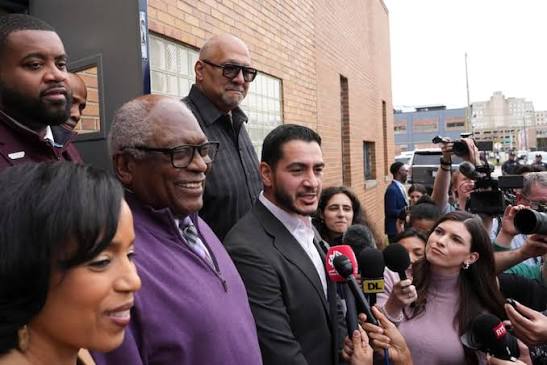
Consider Zohran Mamdani and Abdul El-Sayed. The winning smiles, easy confidence and appealing promises of affordable housing, healthcare and social justice. Their supporters feel they are participating in something noble, standing up for the poor and vulnerable, making the world a better place.

But what happens when the people delivering that appealing message embrace allies who traffic in antisemitism and use such language themselves?
In Michigan, El-Sayed campaigned with Hasan Piker, whose statements about Jews have drawn widespread condemnation. Cenk Uygur’s Rebellion PAC subsequently promoted an advertisement blaming American support for Israel for rising grocery prices and other economic hardships. Democratic Congresswoman Haley Stevens called the advertisement antisemitic and demanded that El-Sayed condemn it.
El-Sayed said the advertisement was produced independently of his campaign and that he disagreed with its contents. But when Stevens continued pressing the issue, she was told to stay away from campaign events. She ultimately endorsed Republican Mike Rogers.
Senate Democratic leader Chuck Schumer called her decision a ““despicable betrayal,” and other Democrats joined the denunciations. The political establishment was more interested in punishing Stevens for breaking party ranks than confronting antisemitism.
That is precisely the danger Lewis identified.
First, supporters overlook objectionable rhetoric because they believe in the larger cause. Then they defend the politicians who tolerate it. Eventually, they attack the people who refuse to make the same exceptions.
Each compromise makes the next one easier.
This is not simply the familiar horseshoe theory, in which the far left and far right meet at the extremes. Tucker Carlson and Hasan Piker occupy different political worlds, yet both have promoted troubling rhetoric about Jews and become mouthpieces for El-Sayed. Lewis understood the deeper problem: political allegiance can corrupt moral judgment from either direction.
And here is where his story takes on a new dimension in 2026.
In The Screwtape Letters, Wormwood was assigned to corrupt one man. Today, political movements and social media can turn individual moral compromise into the mass propagation of moral compromise. Supporters rationalize objectionable rhetoric, persuade others to accept it and reward those who join them. Each newly persuaded follower can recruit thousands more.
Evil no longer advances one conscience at a time. It multiplies.
Lewis’s Patient ultimately escaped the demons. But in today’s politics, the danger is that the Patient never realizes he has become Wormwood himself.
When you support a Nazi, you are not clean when leaving the polling station. “Allegiance to party” has a ring of Nazi Germany for a reason.