The New York Times Has Some Questions for the Jews

The New York Times wants to know what New York Jews think about Israel.

Its new questionnaire asks Jewish New Yorkers whether they think about Israel more since October 7. Whether their opinion of Israel has changed. Whether they call themselves Zionists. Whether they have become more vocal or politically active.

The frame is revealing.

The Times wants to know how Israel has changed the Jews.

It does not ask whether October 7 changed their opinion of Hamas.

Did the murder, rape and kidnapping of Israelis change their understanding of the conflict? Did years of Israelis held hostage in Gaza change it? What have they learned about Hamas, its genocidal antisemitic foundational charter, Palestinian politics or jihadist movements committed to Israel’s destruction?

Those questions aren’t there.

Neither is another actor in the past three years: the New York Times.

Has its coverage changed your trust in the newspaper? Do you believe its reporting on Israel and Gaza has been fair? Has its treatment of antisemitism changed your relationship with the paper? Has its language surrounding “genocide”, “occupation” and “resistance” changed how you understand the conflict or how you perceive of the media?

The newspaper wants to know what changed the Jews without asking whether the newspaper helped change them.

Then there is the matter of which Jews.

The questionnaire asks whether you are a Jewish New Yorker. It does not ask whether you are 22 or 72. Orthodox, Conservative, Reform or secular. Democrat, Republican or independent. Progressive, moderate or conservative. Those differences may explain the answers, as discussed in many other polls.

More important, this is an open call published by the New York Times. It is not a random survey of New York Jews. For years, parts of the Jewish community have fought bitterly with the paper over its coverage of Israel and antisemitism. Many longtime Jewish readers have publicly canceled their subscriptions over that coverage. Thousands more privately.

The Jews most alienated by the Times may also be the least likely to see its callout, trust its reporter or volunteer their thoughts. Jews comfortable with the newspaper and its worldview may be more inclined to respond, biasing the poll results. It could collect hundreds of responses showing its Jewish respondents moving away from Israel without knowing whether the Jews moved or its sample did.

Then comes the missing questionnaire.

Where are the questions for Arab and Muslim New Yorkers?

Did October 7 change your opinion of Hamas? Do you consider Hamas a terrorist organization? Do you believe Jews are entitled to national self-determination? Should Jews be allowed to freely access and pray at their holiest site? Should Hamas and other Palestinian armed groups surrender their weapons? Has your opinion of Israel changed? Of Jews?

Those answers would tell New Yorkers quite a lot too.

And the timing is particularly ugly.

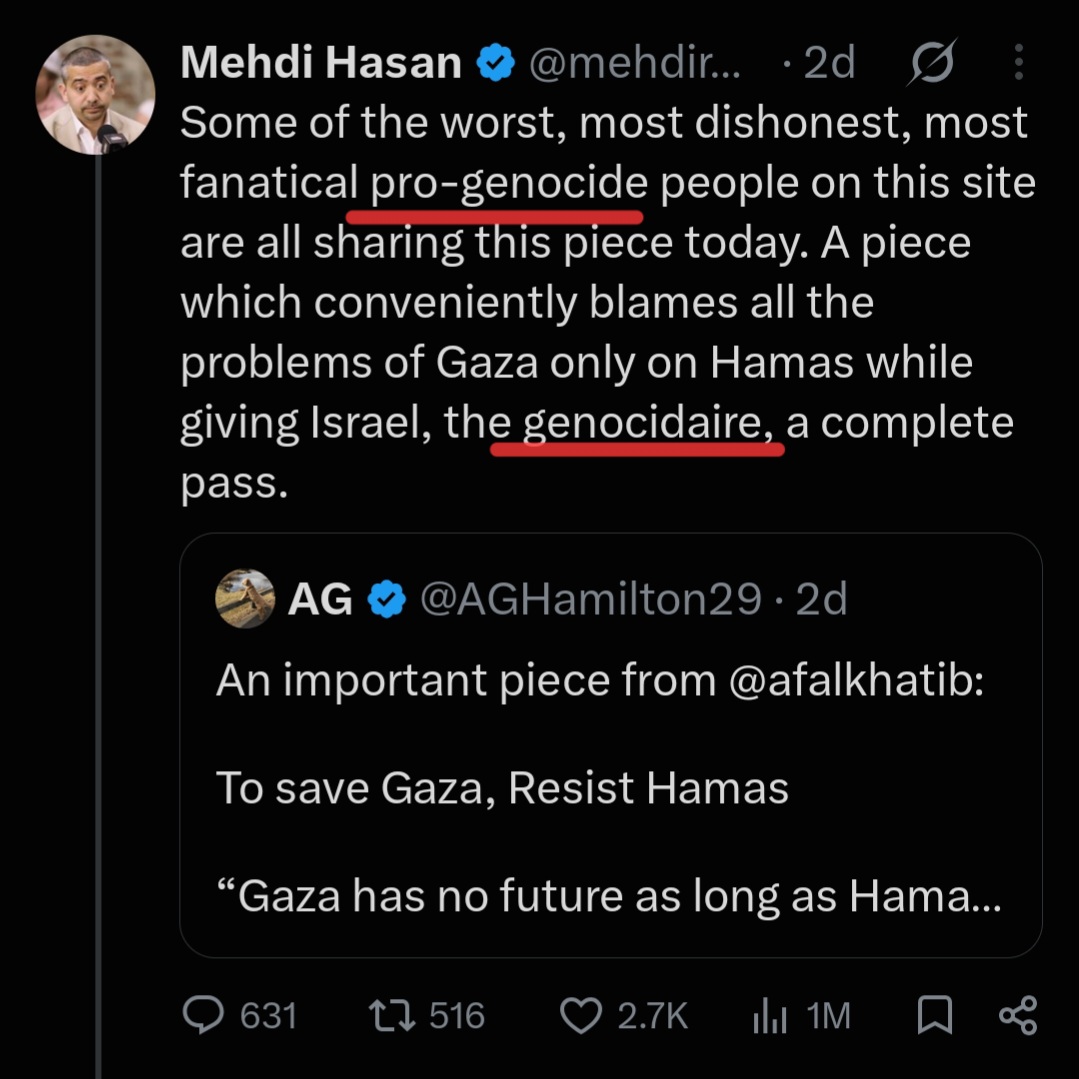
Hasan Piker has recently been asking his own version of precisely this question: How attached are American Jews to Israel?

Piker has called Israel “Jewish ISIS” and previously said Hamas was “a thousand times better” than Israel. More recently, he warned that if American Jews continue presenting themselves as deeply invested in Israel, eventually someone may take action against American Jews rather than Israel.

That is antisemitism dressed up as a warning.

And now the New York Times arrives with a questionnaire measuring whether Jewish New Yorkers still call themselves Zionists and whether their feelings about Israel have changed.

The disturbing convergence is the question itself: How attached are the Jews to Israel now? The New York Times wants to know. Millions of antisemites that follow Piker want to know.

ACTION ITEM

So answer the poll. But not their questions.

Tell the Times exactly how October 7 changed your thinking.

Tell it what you think about Hamas. Tell it what you have learned about jihadism, hostage-taking and fighters operating among civilians. Tell it whether Palestinian Arabs support for the October 7 massacre and Hamas have changed your understanding of the conflict.

Then tell it about the New York Times.

Tell it whether its coverage has increased or destroyed your trust in the newspaper—its language, its emphasis, its omissions, its telling of the Jihadi-Israel conflict.

Hasan Piker and The New York Times are polling Jews for their attachment towards Israel. Tell them what you think of the global jihad sweeping the world.

The Met Announces the Anna Wintour Center for Antisemitic Excellence

A satire.

The Metropolitan Museum of Art has canceled its planned 2027 exhibition honoring John Galliano, after people objected to the museum bestowing one of its highest honors on a designer convicted of an antisemitic hate crime.

The Met has promised a replacement. And to go bigger.

Instead of John Galliano, the Costume Institute will honor Kanye West. It is an inspired substitution. Kanye is enormously influential in fashion, globally famous and has expressed considerably more recent thoughts about Hitler and Jews. He brings the Met’s original concept fully into the 21st century.

But fashion is only one artistic medium. The Met will establish the Anna Wintour Center for Antisemitic Excellence, celebrating achievement across the arts, literature, media and public life.

Roger Waters will anchor the music galleries and show clips of “Protocols of the Elders of Zion, The Musical.” Inflatable pigs adorned with Jewish stars will be available for purchase in the gift shop.

The children’s wing will celebrate Roald Dahl. Parents can walk their children through an oversized exhibit of Charlie and the Chocolate Factory, Matilda and James and the Giant Peach, followed by an interactive display of Dahl’s thoughts about Jews.

The Met’s new Film Department will honor Mel Gibson, ensuring his legacy.

The American Wing will have a permanent exhibit for Henry Ford. Many of the automobiles will remain in Detroit, but the Met will showcase Ford’s other publishing achievement, The International Jew, allowing visitors to explore how an industrial genius helped mass-produce something besides automobiles.

Contemporary media deserves its own galleries.

  • Candace Owens can become Director of Jewish Studies.
  • Tucker Carlson can chair the Department of Contextualization.
  • Nick Fuentes can lead Emerging Voices, introducing younger audiences to one of civilization’s oldest traditions.

Institutional leadership should reflect the museum’s expanded mission.

Representative Rashida Tlaib (D-MI) has been asked to join the Board’s Committee on Jewish Community Relations.

The Met should also dramatically expand accessibility.

All United Nations personnel receive complimentary membership. Security Council members receive Patron status. UN Human Rights Council members enter through a dedicated express lane.

And the Met needs an international partner for 2027. Fortunately, Iran has experience.

In 2006, Tehran hosted its Holocaust-denial conference. Two decades later, the Islamic Republic can bring the concept to New York as a special Met partnership: ERASURE: Reimagining Holocaust Memory Presented in partnership with the Islamic Republic of Iran and the Anna Wintour Center for Antisemitic Excellence.

Vogue will commemorate each new addition to the Met lineup with a full spread in every international edition. Antisemitism, after all, should never be allowed to suffer from poor distribution.

New York City Mayor Zohran Mamdani cheered the latest Met and Vogue moves and is considering making attendance to the museum mandatory for all public school students.

John Galliano was still disappointed about being canceled but was thrilled to see how the Met stepped up with counter-measures. He has moved on. He is pushing Britain and France to move past their memories of World War II, and reimagine their police uniforms to echo the outfits donned by the military of Nazi Germany.

Related:

Eyal Gilad Naftali Klinghoffer. The new Blood Libel. (June 2014)

The Arab League Condemns New Jewish Communities Inside Israel. Is This Simple Antisemitism or Strategic?

The Arab League issued a remarkable condemnation of Israel: it objects to the “expansion of new Jewish communities in the Negev and Galilee and increasing their Jewish populations.”

These are not settlements in the West Bank. They are areas inside Israel’s pre-1967 borders.

Further, Israel is described as “1948 territories.”

That makes the statement difficult to reconcile with the Arab League’s simultaneous support for a Palestinian state based on the June 4, 1967 lines. Under that formula, the Negev and Galilee remain part of Israel. And why suggest that Israel is just part of Palestine, calling the entire state “1948 territories?”

The question is particularly relevant to Egypt.

Egypt was the first Arab country to recognize Israel and signed a peace treaty with Israel in 1979, ending the two countries’ state of war. Nearly fifty years later, Cairo continues to endorse a two-state solution: a Palestinian state based on the 1967 lines alongside a secure Israel.

That position should carry a simple implication: Israel’s right to develop its own communities within its own territory.

Egyptian officials should therefore answer a straightforward question: Does Egypt believe Israel has the same right to develop Jewish communities within its territory that a future Palestinian state would have to develop its own communities?

If the answer is yes, Cairo should say so.

If the answer is no, then the issue is not simply the borders of a future Palestinian state. It is whether Jewish demographic and community development inside Israel is itself considered illegitimate. It reeks of antisemitism.

But is their another way to think of these hateful remarks?

Egypt made peace with Israel nearly half a century ago to get back the Sinai Peninsula it lost in the 1967 Six Day War. Is Egypt deliberately opening cracks in that treaty? Is it preparing to push Israel to hand some of the Negev to Gazans now – alongside its own contribution of part of the Sinai – as Gazans hope to rebuild the strip after its failed war on Israel?

Is the Arab League simply being antisemitic or is it deliberately setting the course for a new map for Gaza?

October 7, 2026: When an Ottoman Land Law Could Change the Map of Judea and Samaria

Everyone knows why October 7, 2023 changed Israel. But an obscure Ottoman law makes another date worth watching: October 7, 2026.

In 1858, the Ottoman Empire enacted a land code under which three consecutive years without cultivation could have consequences for rights to certain agricultural land.

Now, three years after October 7, that old rule may suddenly matter.

The Three-Year Rule

Much of the agricultural land of the Ottoman Empire was classified as miri. The sovereign retained ultimate title (“state land”) while individuals could acquire valuable rights of possession and use, known as tasarruf.

Active use of the land mattered.

Article 68 of the Ottoman Land Code addressed agricultural land left uncultivated for three consecutive years without a valid excuse. The original Ottoman mechanism was more complicated than “three years and the government automatically owns your land,” involving tapu, the status of the holder and opportunities to recover the right.

But the underlying principle was clear: continued cultivation could matter to continued land rights.

Ottoman termMeaningRelevance
MiriState land carrying individual possession/use rightsMuch agricultural land
TasarrufRight of possession and useThe individual’s valuable land right
MahlulLapsed/reverted possessory rightPotential consequence of qualifying non-cultivation
TapuLand registration/title systemDocumentary evidence of rights

This is not merely an Ottoman historical curiosity. It passed on to the British, Jordanians and then Israel with few modifications.

In 2020, Israel’s Supreme Court addressed the rule directly in HCJ 5426/17, Barakat v. Head of the Civil Administration in the West Bank (Nov. 29, 2020). The Court held that under the Jordanian land law still applicable in the territory, an unregistered tasarruf right acquired through cultivation could be extinguished if the land was left uncultivated for three consecutive years, causing the land to revert to the government under Article 68’s mahlul doctrine. By contrast, a tasarruf right that had been formally registered generally was not lost merely because the land subsequently lay fallow.

So the three-year rule remains relevant to unregistered land in Judea and Samaria today.

Goats owned by Bedouins graze in Judea and Samaria (photo: FirstOneThrough)

Then Came October 7

After the October 7 massacre by Gazans, security conditions dramatically changed access to agricultural land across the region. OCHA reported that more than 96,000 dunams of olive-cultivated land went unharvested during the 2023 season following access restrictions and violence. By the 2025 olive harvest, OCHA was reporting that farmers from multiple villages had been completely denied access for the third consecutive year to certain olive groves.

That creates the question: How much unregistered agricultural land has actually gone uncultivated since October 7, 2023?

The Eye in the Sky

There is something unusual about these particular three years.

Israel has had extraordinary security reasons since October 7 to maintain extensive aerial surveillance of Judea and Samaria.

At the same time, the Civil Administration already uses sophisticated geographical information in determining land status. Its Surveying Unit maintains cadastral and mapping information, while its Supervision Unit operates a team whose stated function is examining land through survey procedures “aimed at locating state land in the area, for declaration as such.”

The Civil Administration therefore potentially possesses an extraordinarily detailed record of whether cultivation occurred.

Request For Access

Consider two claimants whose land appears uncultivated in aerial photographs for three years. One produces repeated applications showing: I wanted to cultivate my land. Israel prevented me from reaching it. The other has no comparable record.

Those are materially different factual cases based on the background discussed above.

OCHA reports that Palestinian liaison authorities submit farmers’ access requests to Israeli authorities and tracks approvals, denials and pending requests in particular areas. Those applications coupled with the aerial documentation, may move the land into a different legal category.

Meanwhile, Israel Is Looking for State Land

This is where the 1858 law meets 2026.

The Civil Administration openly maintains a Survey Lands team charged with examining whether land can be declared government property. Its newly published procedures show that potential survey areas are placed on a priority list requiring approval by the head of the Civil Administration and the Defense Minister or an authorized representative.

The State Comptroller describes the same team’s purpose as locating and marking land in Judea and Samaria that can be declared government property.

And Israel has dramatically accelerated state-land declarations.

In February 2026, the Israeli government approved the resumption of systematic land-registration proceedings in Area C, allocating approximately NIS 244 million to the effort—the first such broad registration initiative since Israel suspended the previous settlement-of-title process after 1967.

Peace Now calculates that approximately 27,119 dunams had been declared state land under the current government by June 2026, nearly as much as it says had been declared during the entire period since the Oslo Accords. A Palestinian Authority commission consequently calculates that approximately 29,335 dunams have been included in state-land declarations since October 7, 2023.

And we haven’t yet reached the anniversary when many West Bank Arabs encountered more restrictions on movement due to the war their Gazan brothers waged on Israel.

October 7, 2026

That is what makes the third anniversary different.

Consider the ramifications of Ottoman law to this point in time:

  • 1858: Ottoman law makes three years of non-cultivation legally significant for certain land rights.
  • 2020: Israel’s Supreme Court confirms that the Article 68 mahlul doctrine remains relevant to unregistered tasarruf rights in Judea and Samaria.
  • 2023: October 7 is followed by enormous disruption of access to agricultural land.
  • 2023–2026: Israel accumulates an extraordinary photographic record of what is happening on the ground.
  • 2024–2026: state-land declarations accelerate.
  • 2026: Israel funds a major new land-registration initiative.
  • October 7, 2026: three years have elapsed for when many West Bank Arabs accessed land they had used previously.

Nothing automatically changes ownership at midnight of 10/7. Many questions remain.

How much affected land is actually unregistered miri land? Was it legally “uncultivated”? What constitutes a sufficient excuse? What happens when Israeli security restrictions themselves prevented cultivation? And what evidence exists showing that individual claimants continued asserting their rights?

Those questions will have to be answered parcel by parcel.

But after October 7, something will exist that did not exist before: three complete post-massacre years of evidence.

October 7, 2023 changed the security map of the Middle East. October 7, 2026 may begin changing the actual map of Judea and Samaria as well.

From Shut Up to Get Out

There is a progression from intimidation and expulsion.

  • A heckler’s veto prevents you from speaking.
  • A chilling effect teaches you to remain silent.
  • Self-concealment teaches you to hide the identity that makes you a target.
  • Constructive exclusion makes the environment sufficiently hostile that you stay away or leave.
  • Forced expulsion completes the progression: someone else decides you must go.

American Jews have been moving through these stages over the last decade.

Don’t Speak

In 2015, Israeli philosopher Moshe Halbertal came to the University of Minnesota to lecture on the ethical obligations of militaries to protect civilians. Protesters repeatedly interrupted him, delaying his lecture for about half an hour as police removed them.

It was a classic heckler’s veto: make enough noise and the speaker cannot speak.

Eventually, Halbertal did.

Over time, intimidation becomes more efficient. People learn the consequences of speaking and begin censoring themselves. The expectation of the heckler creates the chilling effect.

Then the intimidation moved beyond speech.

Hide Who You Are

In May 2021, Hamas launched thousands of rockets at Israel and antisemitic incidents surged concurrently in the United States.

Aaron Keyak had served as Jewish engagement director for Joe Biden’s presidential campaign and would become the State Department’s deputy special envoy to monitor and combat antisemitism. His advice to frightened American Jews was extraordinary: “If you fear for your life or physical safety take off your kippah and hide your magen david.”

The Jew walking down the street had given no speech and joined no protest. His Jewish identity itself made him a target.

The response from the highest levels of government was self-concealment: take off the kippah and hide the Star of David.

This was 2021, more than two years before the October 7 massacre.

Stay Out

After the October 7, 2023 massacre in Israel, the progression took over the Democratic Party.

Dana Nessel is Michigan’s attorney general, the state’s chief law-enforcement officer and its highest-ranking Jewish state official. This June she decided to stay away from the Michigan Democratic Party convention. “I don’t feel safe going,” Nessel said. She feared being chased, harassed, yelled at and booed because, she explained, “it’s been happening to me.”

Consider where the progression had reached: Michigan’s chief law-enforcement officer felt safer staying away from her own political party’s convention out of fear.

And Nessel is not alone.

Earlier in the summer, Pennsylvania Supreme Court Justice David Wecht left the Democratic Party and became an independent. Wecht is Jewish, was elected as a Democrat and had once served in the leadership of the Pennsylvania Democratic Party. “Acquiescence to Jew-hatred is now disturbingly common among activists, leaders and even many elected officials in the Democratic Party,” he wrote. “I can no longer abide this.”

Nessel stayed away. Wecht walked away. Revulsed by what they saw happening inside the Democratic Party.

Get Out

The next stage has already begun.

In 2024, anti-Israel artists protesting at San Francisco’s Yerba Buena Center for the Arts issued a list of demands. Among them: remove all “Zionist Board members and funders. While the institution rejected the demand, its Jewish interim CEO, Sara Fenske Bahat, subsequently resigned, saying the climate surrounding Israel and Palestine in the Bay Area had become “untenable.”

The demand itself crossed the line into the final stage: Get them out.

If one needs proof, consider how the alt-left treated one of its own, NYC Mayor-endorsed politician Brad Lander. He was tossed from a far-left political rally in August 2026 because he was a “Zionist,” even though he is highly critical of Israel.

Democratic politician Brad Lander – supported by NYC Mayor, DSA’s own Zohran Mamdani – tossed from a rally because he is a “Zionist”

The heckler’s veto was already an assault on a basic American principle: everyone gets to enter the public square and speak. What has grown from it is far uglier and deeply un-American:

Don’t speak.
Don’t be seen.
Don’t come.
Get out.

This is intimidation being rewarded with territory. Each retreat gives the intimidators another piece of the public square: the microphone, the street, the political convention, the institution itself.

And this poison is now flourishing inside the Democratic Party.

A party that claims to champion minorities and protect people from intimidation now has a Jewish attorney general afraid to attend its own convention, a Jewish state supreme court justice who concluded that Jew-hatred had become sufficiently tolerated that he could no longer remain a Democrat, and an anti-Israel DSA-mayor-endorsed Jewish politician run out of the streets of New York.

That is disgraceful. It is frightening.

The American answer to intimidation is to protect the person being intimidated and confront the intimidator. Nobody should gain control of a microphone, a street, a political convention or an institution by making someone else afraid to enter it.

Leaders of the Democratic Party should understand what is happening inside its own tent. The heckler’s veto has metastasized into something deeply toxic and deeply un-American.

The hecklers no longer simply want to only decide what Jews may say. They want to expel Jews from the room.

Jews Never Left the Land Voluntarily And They Never Stopped Coming Back

The Jewish story in the Land of Israel is often told with an enormous hole in the middle.

The script runs something like: there were ancient Jewish kingdoms and then Rome destroyed the Second Temple in 70 CE. Jews were forced into exile, and then, nearly 1,800 years later, Zionists began arriving in Palestine.

That shorthand turns one of history’s longest relationships between a people and a land into an unexplained disappearance and sudden reappearance.

The actual story is more remarkable.

After the Destruction of the Second Temple

The destruction of Jerusalem in 70 CE was catastrophic, but it did not empty the land of Jews. Six decades later, Jews launched the Bar Kokhba Revolt from Judea. After its defeat in 135, Roman repression devastated Jewish life in Judea and severely restricted Jews in Jerusalem.

Ancient coins minted during the Bar Kochba revolt

So Jewish life shifted north. The Galilee became its major center, particularly Tiberias and Sepphoris. Around 200 CE, Judah ha-Nasi compiled the Mishnah in the Land of Israel. Centuries later, Jewish scholars there produced the Jerusalem Talmud. Archaeology has uncovered synagogues across the country from this period.

The Jewish state was gone. The Jews were not.

Jerusalem, Tiberias, Safed and Hebron

The rulers changed repeatedly with new invaders: Roman, Byzantine, Muslim, Crusader, Mamluk and Ottoman. So did the size and location of the Jewish population.

Under early Muslim rule, Jews reestablished themselves in Jerusalem. The Crusader conquest brought another catastrophe, including killings and displacement.

Again, Jews returned.

In 1267, Nachmanides—Ramban—arrived in Jerusalem and helped rebuild its shattered Jewish community.

After the expulsion from Spain in 1492 and the Ottoman conquest in 1517, Safed became an international center of Jewish civilization, producing Joseph Karo, whose Shulchan Aruch became a foundational code of Jewish law, and Isaac Luria, whose teachings transformed Jewish mysticism.

Old synagogue in Safed / Tzfat (photo: FirstOneThrough)

Ottoman tax records make the population visible. Safed/Tzfat contained 233 Jewish households in 1525–26; by 1567–68 there were 945. Jews were also recorded in Jerusalem, Gaza, Nablus, Peki’in and elsewhere.

The Four Holy Cities

Over time, four cities became especially identified with Jewish life in the land: Jerusalem. Hebron. Safed. Tiberias.

Their Jewish populations rose and fell through war, disease, earthquakes, economic hardship and persecution. The communities kept being rebuilt, and Jews kept arriving.

Hundreds accompanied Judah HeHasid to Jerusalem in 1700. Hasidic Jews came from Eastern Europe in 1777. Beginning in 1808, disciples of the Vilna Gaon arrived in successive waves.

The cemetery in Jerusalem’s Mount of Olives has Jewish graves going back to the 15th century (photo: FirstOneThrough)

Follow the Population

By the nineteenth century, the continuity becomes difficult to miss. Moses Montefiore’s censuses recorded dramatic growth:

City18391875
Jerusalem2,91611,237
Safed1,3843,753
Tiberias8011,552
Hebron419939
Jaffa86660
Haifa138531

The communities covered by the census tripled from 6,173 Jews in 1839 to 18,672 in 1875.

Historical estimates differ because Ottoman-era demographic records were not modern censuses. But the trend is unmistakable. One reconstruction estimates roughly 6,700 Jews in the country in 1800, 42,900 in 1890 and 94,000 by 1914.

And Jews were not simply scattered individuals. By 1880, one reconstruction estimates Jews constituted approximately 57% of Jerusalem, 52% of Safed and 60% of Tiberias.

Modern Zionism Accelerated the Return

This is where conventional histories often begin. But it wasn’t the beginning; it was an acceleration.

Petah Tikva was founded in 1878, in part by Jews from the existing Jerusalem community. The First Aliyah began in the 1880s, helping establish and expand agricultural communities including Rishon LeZion, Zikhron Ya’akov and Rosh Pina.

The Second Aliyah brought another wave. In 1909, Jews founded Tel Aviv.

Meanwhile, something extraordinary was occurring: Hebrew returned as the everyday language of a society. A language preserved through centuries of prayer, scholarship and literature became the language of children, workers and shopkeepers.

What About the Land?

By the end of the British Mandate, Jews did not privately own most of Palestine. British statistics for April 1945 put Jewish landholdings at approximately 1.49 million dunams, or 5.67% of the total territory.

The remaining territory was not privately owned “Arab land.” It included state domain, desert, communal lands and other Ottoman and British legal classifications.

Jewish ownership was concentrated where Jewish society was developing. By the mid-1940s, historical land statistics put Jewish ownership at roughly 39% in the Jaffa/Tel Aviv subdistrict, 38% in Tiberias, 35% in Haifa, and 18% in Safed.

And much of this land had been purchased.

The British Survey of Palestine recorded a net 938,365 dunams purchased and registered by Jews between 1920 and the end of 1945 alone.

Presence, Memory, Return

The nearly 1,900 years between Rome and Israel can be understood through three words.

Presence. Jews continued living in the land, sometimes in substantial communities, despite conquest, persecution and repeated displacement.

Memory. Jews elsewhere continued facing Jerusalem in prayer, praying for return, remembering Jerusalem at weddings, ending Passover with the hope of being there the following year and financially supporting Jewish communities in the land.

Return. Ramban came in 1267 after the Crusades. Jews came from Spain after 1492. Many followed Judah HeHasid in 1700, the Hasidim in 1777, the disciples of the Vilna Gaon beginning in 1808, the First and Second Aliyahs, fleeing Russian pogroms and Nazism, and as survivors of the Holocaust.

The scale changed. The political objective changed. The ability to return changed.

1948 Was Not the Beginning

Beginning the story of Israel in 1948 – or even with Herzl in 1897 – fundamentally distorts Jewish history. Those were not years when Jews suddenly showed up. They were the times when Jews accelerated their return and became self-governing once again.

The Israeli flag waves in the foreground, with the white domes of the rebuilt Tiferet Israel and Hurva Synagogues in the center, and the grey Al Aqsa mosque dome to the right. In the distance, cranes build new residential towers in the western parts of the city. (photo: FirstOneThrough)

Related:

The Greatest Decolonization Story, Inverted (August 2026)