
This was the third assassination attempt against Donald Trump. He survived but the deeper story lies elsewhere. By the third attempt, the country barely pauses. The first attack should have shaken a nation to its core; the second should have deepened the sense of alarm. By the third, something more dangerous has taken hold: familiarity. Political violence begins to feel woven into the atmosphere, another storm system passing through.
That is the shift in American life. Political violence has moved from rupture to expectation. The country has grown accustomed to the possibility that power will be contested through force.

The evidence stretches across the last several years. There was the attempted kidnapping of Gretchen Whitmer, where executive authority itself became the target. There was the hammer attack on Paul Pelosi, where proximity to political authority was enough to invite violence. There was the arson attack on the home of Governor Josh Shapiro. There was the assassination of Charlie Kirk.
Each attack carried its own political coloration. Different grievances, different ideologies, different enemies.
Yet they share the same underlying grammar. The human being is transformed into an idea.
The governor becomes the state. The executive becomes capital. The politician becomes the regime.
That transformation is the hinge upon which violence swings. A person who stands as an abstraction for a hated system becomes easier to strike. Violence acquires moral clothing. The blow feels righteous because the target has already been converted into a symbol.
That is why the public reaction to United Healthcare CEO Brian Thompson’s killing mattered so much. The killing itself was one event. The social response revealed the deeper current. The alleged killer, Luigi Mangione, became a hero in corners of the internet. Memes spread. Fundraisers appeared. Admiration followed. A killer became an instrument of vengeance against a hated system.
It felt like the movie Joker come to life. In Joker, an unstable man carries the plot forward, but the real engine is the crowd waiting to celebrate him. The mob grants moral legitimacy to the violence. The killer becomes a vessel for collective resentment.
That is the deeper American drift. Violence increasingly invites sympathy, reinterpretation, and applause. The act becomes secondary to the story society tells itself about why the victim represented something worth destroying.
This can be seen in the Middle East as well.
Palestinian political culture offers a longer and starker example of how this process unfolds. For roughly twenty-five years, polling by the Palestinian Center for Policy and Survey Research has repeatedly shown majority support for violence against Jewish civilians inside Israel. This stretches back before the Gaza blockade and before the present war. The permission structure came first.
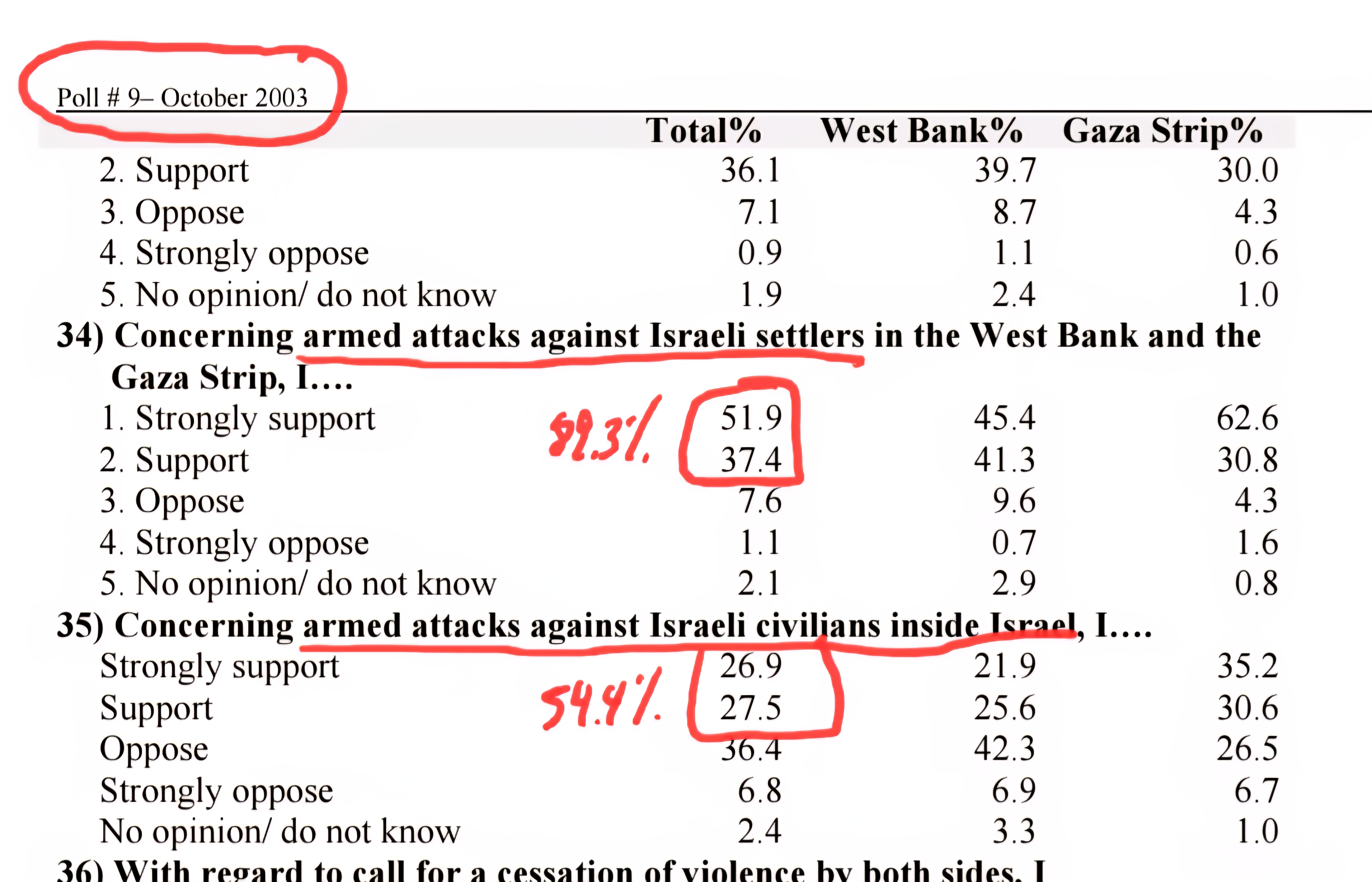
Then politics followed.
In 2006, Palestinians elected Hamas to a parliamentary majority, fully aware of its openly antisemitic and eliminationist charter. October 7 emerged from that political soil. The massacre fit within a culture that had long accepted the killing of Jewish civilians as part of political struggle.
That is why it was celebrated.
And the celebration reached far beyond Gaza. American campuses, Western cities, and activist spaces erupted with demonstrations that folded the massacre into broader narratives of liberation. The same reduction had already taken place. Jews had been recast as symbols of systems: colonialism, finance, whiteness, Western power, institutional dominance.

This is the ancient machinery of antisemitism. Jews become the human face of structural resentment.
The FBI hate-crime statistics show the physical consequences of that social logic. Americans often picture hate crime through property damage: a swastika painted on a synagogue, a church defaced, a mosque vandalized. Yet for more than a decade, the majority of hate crimes in America have been crimes against persons.
In 2019, 62.6 percent of hate-crime offenses targeted people. In 2020, the FBI recorded 7,750 crimes against persons, with nearly half involving direct physical assault. The figures jumped to over 11,000 in 2023 and 2024, with Jewish accounting for the vast majority of hate crimes by religion.

The reason sits in plain sight. Jews occupy a permanent place in political imagination as concentrated power: finance, media, institutions, influence. Even when stated softly, the accusation remains the same: too much influence, too much reach, too much control.
Once power itself is treated as morally suspect, violence against those imagined to embody it starts to feel cleansing. Society begins teaching itself that rage against elites is a form of justice. Institutions become enemies. Authority becomes corruption. Violence becomes political purification.
That moral structure echoes the French Revolution. The crowd gathers. The elite are marched into the square. Their status dissolves. Their destruction becomes public theater.
That is the destination of normalized violence.
The warning sign is larger than the incident. The warning lies in the crowd, in the cultural ecosystem that grants permission, supplies applause, and tells itself that the target stood for something hateful enough to justify blood.
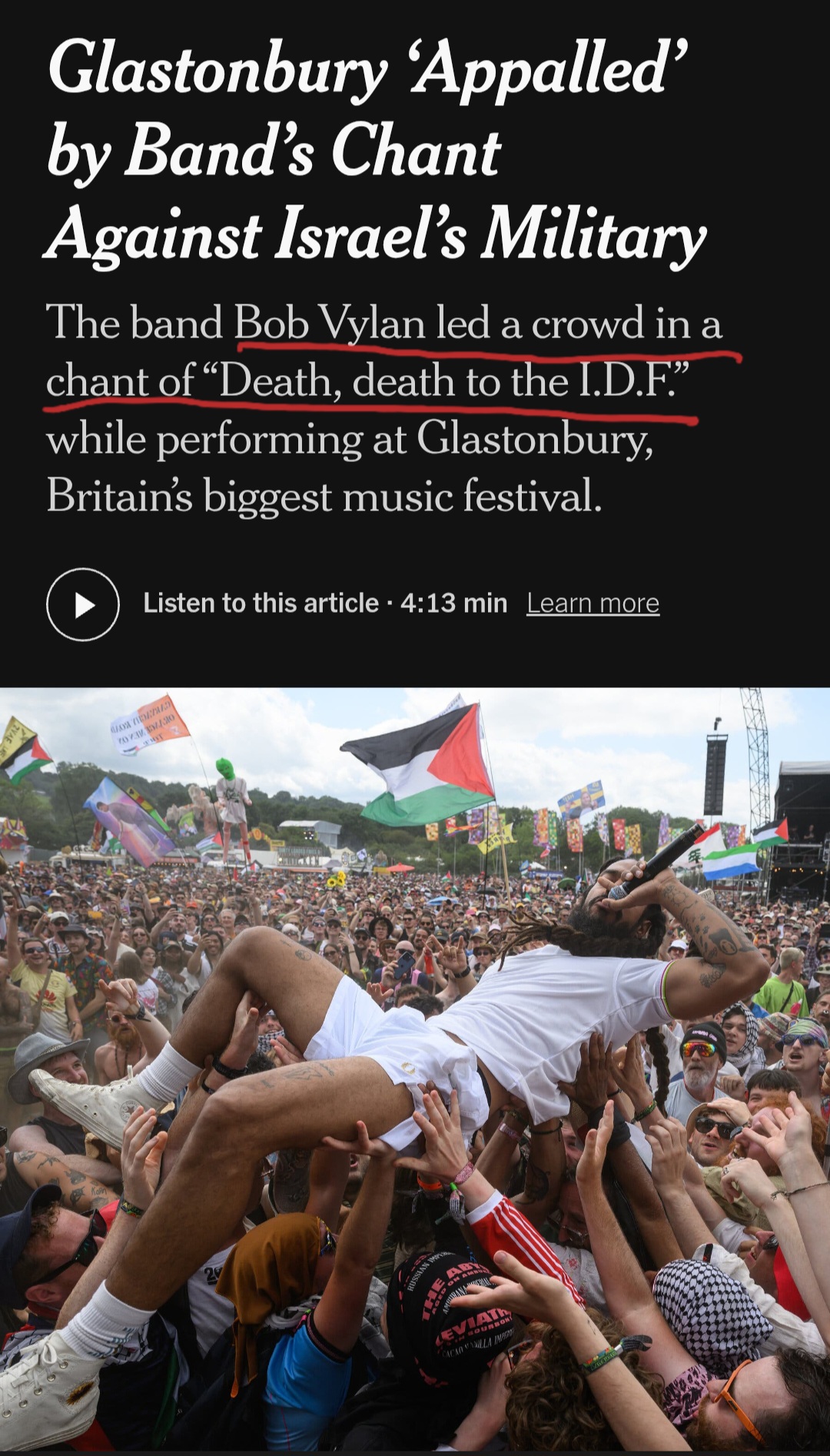
Society has normalized violence as the media and school systems falsely rebranded America as a deeply unfair caste system. In the masses attempt for a complete redistribution of power and wealth, those with or with perceived power – politicians and Jews – will be open game for the angry mob.
Related:
The Broke-n Generation (December 2024)


Pingback: Schaschlik | abseits vom mainstream - heplev
Pingback: The Audience Has Changed | First One Through