On May 28, 1964, the Palestinian National Charter was adopted in Jordanian-controlled Jerusalem. At that time, the West Bank was under Jordanian rule and Gaza was under Egyptian rule.
The Charter explicitly excluded both territories from its claims. It focused on Israel.
“This Organization does not exercise any regional sovereignty over the West Bank in the Hashemite Kingdom of Jordan, on the Gaza Strip or in the Himmah Area.”
The Charter did not challenge Arab sovereignty. It only challenged Jewish sovereignty.
Palestinian leaders supplied the national cause; Arab governments supplied the armies.
The Charter left little doubt about its objective. It declared:
“The partition of Palestine in 1947 and the establishment of the State of Israel are entirely illegal.” – Article 17
And that “liberation” of the land is the common cause of all Arabs:
“Arab unity leads to the liberation of Palestine, and the liberation of Palestine leads to Arab unity.” – Article 12
The Palestinian movement was therefore born not as a campaign against an Israeli occupation of the West Bank and Gaza, but as a movement that denied the legitimacy of Israel itself, and one in which the entire Arab world must unite.
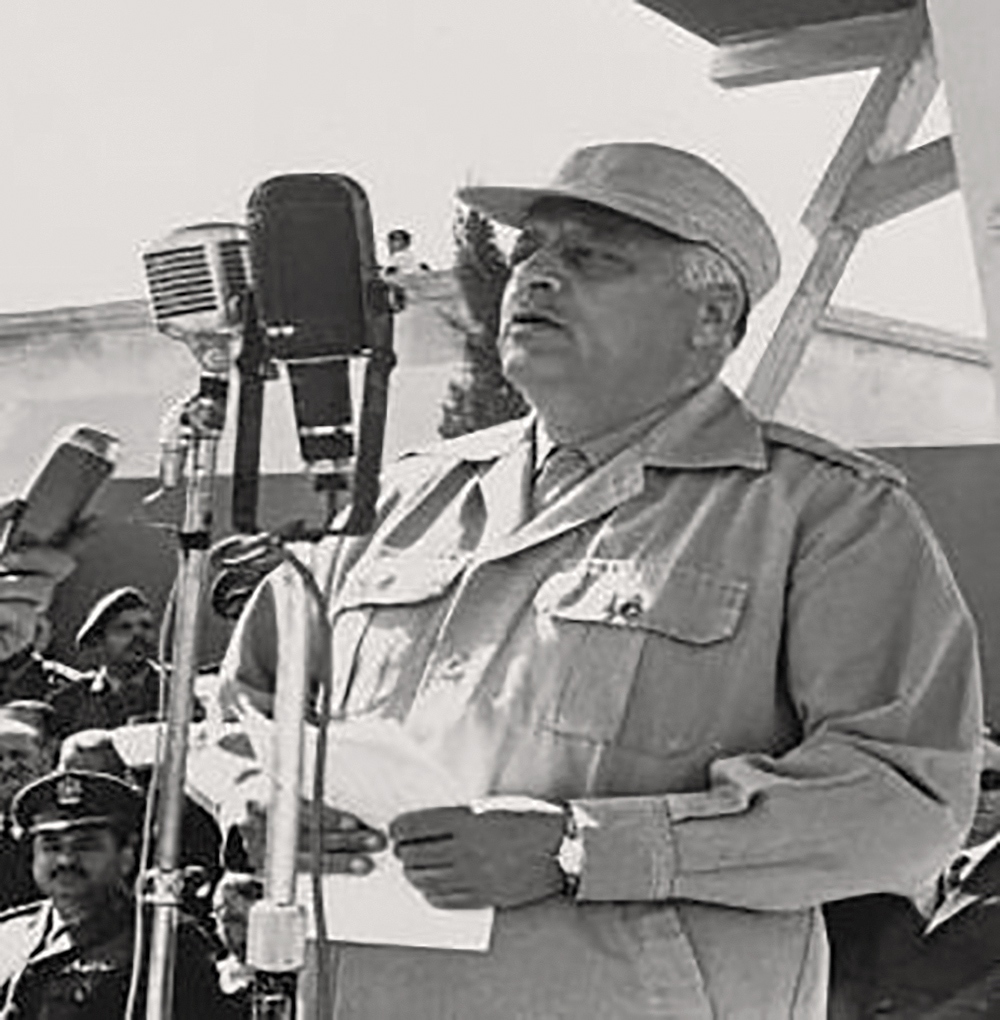
The Charter’s author, Ahmad Shukeiri, was born in Lebanon and was Saudi Arabia’s ambassador to the United Nations from 1957 to 1962. His pan-Arab worldview called for Arab armies to destroy Israel:
“Those who survive will remain in Palestine, but I estimate that none of them will survive.” – Ahmad Shukeiri June 1, 1967
Another widely reported statement attributed to him declared:
“The Jews of Palestine will have to leave…We shall destroy Israel and its inhabitants and as for the survivors – if there are any – the boats are ready to deport them.“
Ahmad Shukeiri, circa 1965
Shukeiri’s brothers-in-arms said much the same.
In October 1964, Syrian leader Salah Jadid declared:
“Our army will be satisfied with nothing less than the disappearance of Israel.”
“The Arab national aim is the elimination of Israel.”
That same year, Egyptian President Gamal Abdel Nasser proclaimed:
“We shall not enter Palestine with its soil covered in sand; we shall enter it with its soil saturated in blood.”
Iraqi President Abdul Rahman Arif described Israel as:
“an error which must be rectified.”
In June 1967, the Palestinian movement and the surrounding Arab states were speaking a common language. The PLO and Arab leaders denied Israel’s legitimacy and spoke openly of its disappearance, elimination, and destruction.
The rhetoric was matched by action. Egypt expelled the United Nations Emergency Force from Sinai, followed by Egyptian troops pouring into the peninsula. The Straits of Tiran were closed to Israeli shipping. Military alliances linked Egypt, Syria, Jordan, and Iraq. Arab armies massed on Israel’s borders.
Against that backdrop, Nasser announced on May 26, 1967:
“The battle will be a general one and our basic objective will be to destroy Israel.“
Nine days later, war began.
Today, one of the most recognizable slogans associated with the Palestinian movement is “From the River to the Sea.” People often pretend that it is a call to free the West Bank and Gaza from “occupation” but the Arabic phrase speaks to the deeper truth as outlined by history.
“Min al-nahr ila al-bahr, Filastin ‘arabiyyah” meaning “from the river to the sea, Palestine will be Arab.”
Whether controlled by Jordan or Egypt or a hoped for Palestine, the Palestinian movement at its core has always been an anti-Israel movement to destroy the presence of Jews in “any part of Palestine.”
The June 1967 Six-Day War did not create the current dynamic in the Israel-Arab conflict. It was the conclusion of the first chapter of the Palestinian-led pan-Arab rejection of Jews living in and having sovereignty in land they view as purely Arab.
On November 1, 2026, Palestinians are scheduled to elect a new Palestinian National Council (PNC), the legislative body of the Palestine Liberation Organization.
Before they can choose their leaders, however, they must answer a more fundamental question: Who gets to vote?
The PNC claims to represent Palestinians everywhere, not merely those living in the West Bank and Gaza. Its members help determine the leadership and direction of the Palestinian national movement itself. The question of voter eligibility is therefore inseparable from the question of who is represented.
The new electoral framework approved by President Mahmoud Abbas reserves 200 seats for Palestinians living in the West Bank, Gaza, and Jerusalem, and 150 seats for the diaspora.
The allocation itself reveals a dilemma.
The Palestinian national movement claims to represent over fourteen million people worldwide. Yet more than nine million live outside the territories. A fully proportional system could allow voters in Jordan, Europe, North America, and elsewhere to dominate institutions that claim to represent Palestinians living in Ramallah, Hebron, Nablus, and Gaza. The 200-150 split appears to give preference to those who live with the consequences of Palestinian political decisions over the larger voices from around the world.
That raises a more difficult question.
Who qualifies as Palestinian?
Should Jordanian citizens of Palestinian origin – like Queen Rania – vote? What about Americans, Canadians, or Europeans whose grandparents left the region decades ago? How many generations removed from Palestine remain eligible?
Queen Rania of Jordan, also a Palestinian
The question may be most consequential in Jordan, where millions of people of Palestinian origin – estimated at 70% of the population – already participate in the political life of another state. Would Jordanian citizens vote in elections for a body that claims to represent Palestinians globally? If so, how many generations removed from Palestine remain eligible?
The question becomes even more complicated inside Israel.
Roughly two million Israeli Arabs vote in Israeli elections and participate in Israeli political life. Many also identify as Palestinian. Will they vote in elections for the Palestinian National Council?
Jerusalem creates an additional complication. Palestinian leaders seek participation from Arab residents of eastern Jerusalem, which they view as part of a future Palestinian state. Israel considers Jerusalem part of Israel, and many Arab residents of eastern Jerusalem hold Israeli citizenship.
If eastern Jerusalem residents vote while Arab citizens of Israel elsewhere do not, Palestinian leaders will be drawing distinctions that many people may find difficult to explain. Why should an Israeli citizen in eastern Jerusalem participate while an Israeli citizen in Haifa, Nazareth, Acre, or Jaffa cannot?
Arabs in the Old City of Jerusalem. Some are Israeli citizens while others only residents. Who will be invited to participate in Palestinian elections? (photo: First One Through)
The Jerusalem question raises another issue Palestinian leaders will eventually have to address.
If current residency in eastern Jerusalem or the West Bank is enough to qualify someone to participate in Palestinian national elections, what about the hundreds of thousands of Jews who live in those same areas?
Palestinian leaders consider eastern Jerusalem and the West Bank part of the territory of a future Palestinian state. More than 700,000 Israeli Jews live there today. Will any of them be eligible to vote for the Palestinian National Council?
The issue extends beyond contemporary residents. Before 1948, the term Palestinian was often used in a geographic sense. Jews living in Mandatory Palestine carried Palestinian passports and considered themselves Palestinian.
A descendant of an Arab family that left Jaffa, Haifa, or Jerusalem generations ago may be eligible to vote despite never having lived there. A descendant of a Jewish family that lived continuously in Jerusalem, Hebron, Safed, or Tiberias for centuries almost certainly will not be allowed to participate in PNC elections.
The distinction reveals that eligibility is not based solely on current residence, geography, or even historical presence in the land. The electorate is being defined through a more specific combination of ancestry, identity, and connection to a particular historical community.
For decades, Palestinian leaders have often left the boundaries of Palestinian identity deliberately broad. Political movements can operate with ambiguity. Elections cannot.
The voter rolls will reveal whether Palestinian nationhood is principally based on residence, citizenship, ancestry, ethnicity, geography, national affiliation, or some combination of all six. Ethnicity alone cannot fully explain the answer. Palestinians, Jordanians, Syrians, Lebanese, and many others share substantial linguistic, cultural, familial, and ethnic ties. The decisive factor appears to be a connection to a particular place and to people who lived there at a particular moment in history.
That is what makes the exercise so unusual. A Palestinian born in Chile, Canada, or the United States may qualify because a grandparent once lived in Jaffa or Jerusalem. A Jordanian or Syrian whose family never lived in Mandatory Palestine may not qualify despite sharing many of the same cultural and ethnic characteristics. A Jew – regardless of where he currently or historically lived – may be excluded.
Every eligibility rule will draw a line. Some people will be included while others will be excluded. Every decision will reveal how Palestinian leaders understand nationality, citizenship, ancestry, and belonging.
In many ways, Palestinians are attempting something few modern national movements have ever attempted: defining a political nation across multiple countries, generations, and citizenships while simultaneously deciding who belongs to it.
Imagine a movement claiming to represent all Black people whose families lived in North Carolina before 1948. Descendants living in California, London, or Johannesburg could vote even if they had never visited the state. Non-Black current residents of North Carolina could not. The electorate would be defined by ancestry tied to a place and a moment in history.
Whether one finds that model compelling or problematic, the Palestinian election will force its architects to explain where they draw those lines.
Whatever rules emerge, millions of people will discover whether they are considered part of the Palestinian political nation, observers of it, or something in between.
Most elections choose leaders. This election may do something far rarer: define the nation itself.
Before Palestinians can elect their leaders, they must first answer a more difficult question:
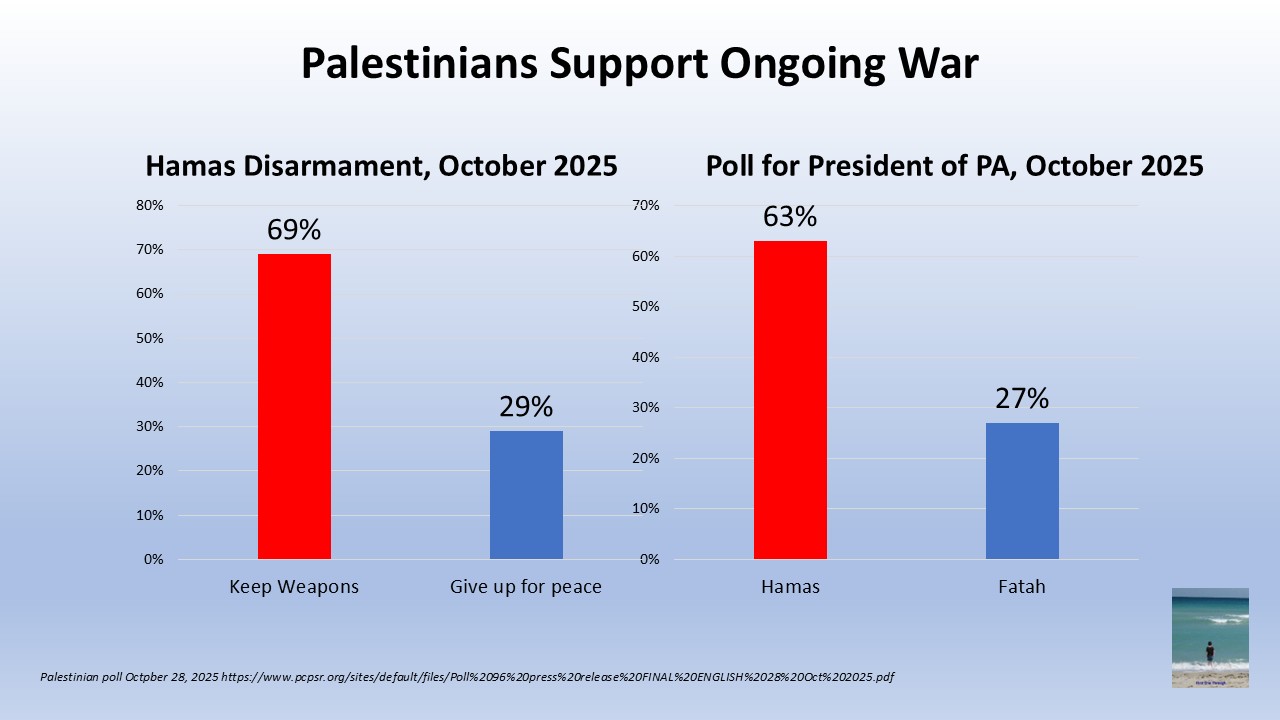
In October 2025, after two years of war and the devastation of Gaza, the Palestinian Center for Policy and Survey Research published findings that should have dominated headlines around the world:
Hamas remained the most popular Palestinian political movement.
More than half of Palestinians continued to view October 7 as the correct decision.
Nearly seven in ten opposed Hamas disarmament even if disarmament would prevent another war.
After two years of destruction, support for Hamas remained strong. Support for October 7 remained widespread. Opposition to disarmament remained overwhelming.
These findings did not come from Israeli politicians or government spokesmen. They came from Palestinians speaking to Palestinian pollsters.
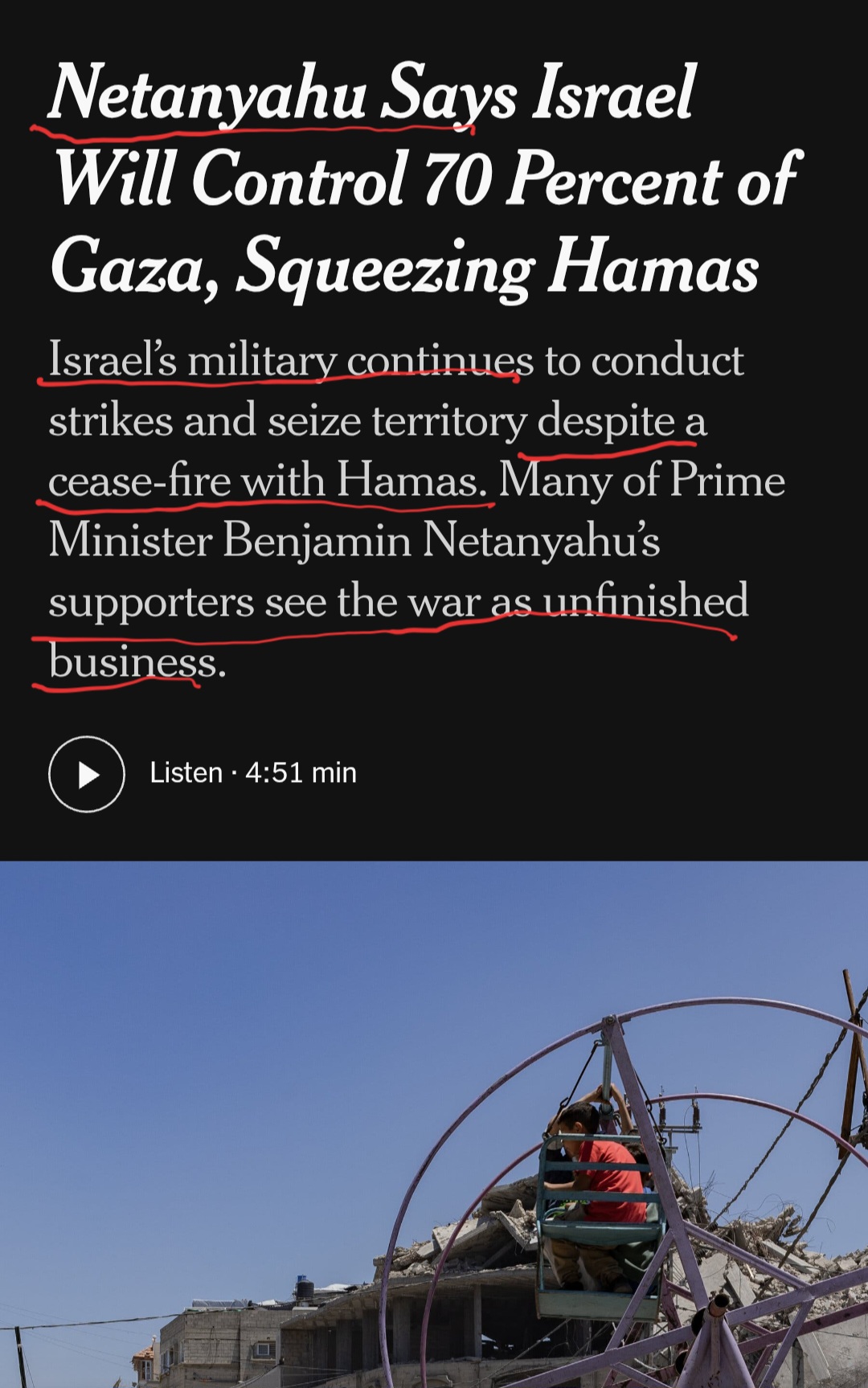
Yet still, the New York Times publishes lengthy articles that the Gaza war continues because of Israel.
Readers were taken inside Benjamin Netanyahu’s political calculations. They learned about coalition pressures, right-wing ministers, territorial ambitions, and supporters who view the war as unfinished business.
By the end, a clear narrative emerged: the war continues because Israelis want it to continue. Because of greed for land, for power.
There was no mention that Gazans want Hamas to remain armed and for the war to continue. That is the political reality that keeps a ceasefire from taking hold.
The omission matters because it changes the reader’s understanding of the conflict. It places blame solely on Israel when a majority of Palestinians continue to seek the destruction of Israel despite the devastation in Gaza.
Until journalists devote the same attention to Palestinian motivations that they devote to Israeli motivations, Americans will continue receiving a false explanation for why this war endures.
Europe spent twenty years explaining that Hamas had a “political wing.” Hezbollah too. The bomb throwers were one thing, the parliamentarians another. The rocket launchers belonged in one legal bucket, the social service offices reserved for a different one. Western diplomats performed intellectual yoga worthy of Cirque du Soleil to preserve the distinction. The “military wing” was terrorist while the “political wing” was complicated. Nuanced. An unavoidable interlocutor for peace.
Britain finally gave up the act in 2019 with Hezbollah. The distinction, it concluded, was largely fictional. Same leadership, same financing, same ideology, same organization. Europe still technically preserves some of these distinctions in various legal frameworks, but fewer people pretend anymore that the “armed wing” and “political branch” emerge from separate planets.
Which makes the growing sanctions campaign against Jewish housing rights groups so fascinating.
Because now the question flips. Suddenly Europe is no longer carefully distinguishing between ideology and violence. Advocacy for controversial positions – not for violence – can suddenly become complicity in terrorism. Entire categories of speech are treated as unlawful conduct even absent anything remotely resembling the classic terrorism that justified Hamas and Hezbollah designations in the first place.
Take Nachala. It is not Hamas. It does not have brigades. It does not launch rockets. It does not run suicide bombing cells. It is an ideological movement advocating Jewish settlement in disputed territory. One may agree with it or despise it. One may view Jews living in land the Stateless Arabs from Palestine (SAPs) want as a future Palestinian state as historic justice or catastrophic policy. But that is precisely the point. The dispute is fundamentally political and ideological.
For decades Europe insisted ideology alone was not terrorism. Supporting Palestinian “resistance” rhetorically was not enough. Calling for the destruction of Israel was grotesque but still politics. The line was violence. Actual violence. Material support for violence. Operational involvement in violence.
That was the principle.
Until suddenly the principle became inconvenient.
Now the standard appears to be evolving into something far murkier: movements may be sanctioned not necessarily for carrying out terrorism, but for contributing to environments viewed as extremist or against government foreign policy. Perhaps that standard is morally justified. Perhaps some Israeli activists have crossed legal and moral lines. But if this is the new doctrine, then the West should at least admit the doctrine changed.
Nachala’s Daniella Weiss
If ideology itself is now sanctionable, Western governments cannot apply the principle selectively.
For years crowds across London, Paris, Barcelona and university campuses have openly chanted for the elimination of the Jewish state “from the river to the sea.” Activists routinely declare that Israeli Jews should “go back to Poland,” despite the fact that millions of Israeli Jews descend from families expelled from Arab countries, Ethiopia, Iran and elsewhere. Imagine any other minority in Europe being told to leave the country and “go back” to lands where many never lived, or to where their families were annihilated. Authorities would instantly recognize the ethnic character of the demand.
If Israelis arguing that Jews should again live in Gaza constitutes sanctionable extremism, then what exactly should Britain call organizations openly advocating a “right of return” designed to flood Israel demographically out of existence? If the standard is advocacy for the removal or replacement of another national group, then the principle cannot stop with some Jewish activists in the West Bank.
London protest against Israel in 2021, including rap song
If the line is now ideological support for demographic elimination, then governments must police the radicalism inside their own societies with equal vigor.
That means groups explicitly advocating the destruction of Israel should face the same scrutiny directed at Jewish expansionist movements. Organizations and individuals promoting the forced removal of Jews from the Middle East “from the river to the sea” should not receive a special exemption dressed up as mere “anti-Zionism,” as if Israel is a concept and not a reality. Calls for the end of the Jewish State are not sophisticated geopolitical critiques. They are ethnic slogans calling for violence. And if governments now believe rhetoric itself creates dangerous ecosystems, they cannot pretend those ecosystems exist only on one side of the conflict.
Anti-Israel protesters in Rome, Oct. 28, 2023, shortly after the October 7 massacre and abduction of Israelis by thousands of Gazans. (AP Photo/Andrew Medichini)
The irony is extraordinary. Europe once bent over backwards to separate terrorism from politics when the movements in question were Palestinian or Islamist. Now governments increasingly collapse politics into extremism to be sanctioned only when the movements are Jewish nationalist.
Europe spent decades insisting that ideas were not terrorism. If it now believes otherwise, it should say so openly and explain where the line will be drawn for everyone else.
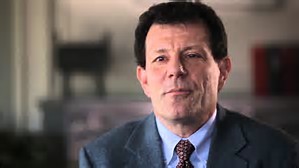
The New York Times’ Nicholas Kristoff caused a stir when he reported on the daily rape of Palestinian Arabs by Israeli dogs while incarcerated. Pro-Palestinians were appalled and pro-Israelis were shocked at the charge – what kind of inanity? How is this even possible?
New York Times’ Nicholas Kristoff
Let me tell everyone about the ugly reality. I have been investigating this for years. I have a mole (an actual one) as well as a source inside the Zionist security apparatus. Let me just call him Colonel Klink to protect his identity, and I will fully expose what Kristoff only touched upon.
The Israeli prisons have vast storehouses of Bamba that they crumble and smear all over their Arab captives for interrogations. The peanut butter smell drives the dogs wild as they sexually maul the exposed Gazans and West Bank Arabs. The Israeli guards allow the abuse to go on until the Arab prisoners reveal the sordid plans they have for Israeli Jews, which the guards write down and then sell to Lior Raz for plots for the next season of Fauda.
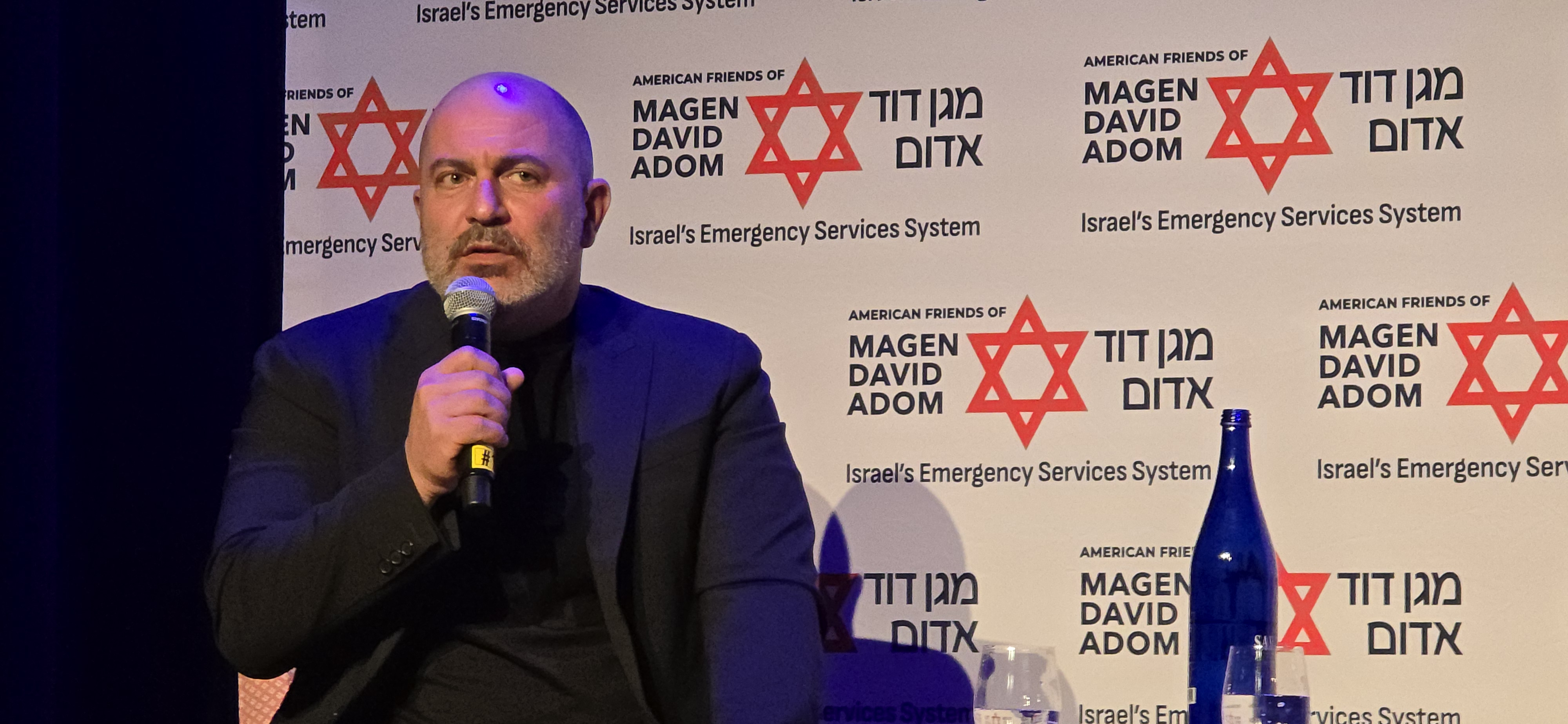
Lior Raz of Fauda during a fundraiser for the Zionist ambulance service
This is only the tip of the canine iceberg.
Israeli border collies have been herding Palestinian sheep into “open air prisons” for years. The Israel Guide Dog Center for the Blind offers the yellow Labradors and Golden Retrievers to Jews, while reserving the black Labradors for Israeli Arabs because of the deep racism embedded in Israeli society – even for blind people.
The animal cruelty knows no bounds.
ASPCA locations around the United States have been used as Mossad safe houses since the founding of the Zionist state. Dogs that people adopt have chips in them which the Israeli government uses to track millions of Americans.
The colonialists have even established an elite cat unit trained in pickpocketing, emotional manipulation, and knocking over glasses of water during hostage negotiations. One tabby roaming tourist cafes allegedly stole three passports, two vapes, and an unopened yogurt from a Scandinavian journalist.
In New York, Israeli units have dispatched Portuguese Water Dogs in Times Square where they operate Thee Card Monte tables to rob tourists. The same unit uses Standard Poodles to sell knock-off Gucci handbags while they gather intel on Muslim Halal food cart vendors, who are in turn, casing American streets for easy targets.
In the Holy Land, Palestinian Authority President-for-life Mahmoud Abbas has accused Israel of “weaponizing pigeons” to deliberately defecate across public spaces in Palestinian cities. “This is organized biological warfare,” Abbas reportedly declared. “The pigeons target only Palestinian vehicles, Palestinian balconies, and Palestinian laundry.”
The humanitarian crisis expanded into the political sphere this week after activists accused Israel of operating what one NGO called “a sophisticated interspecies apartheid system” stretching across land, sea, air, and now apparently pollination networks, as Israeli bees are chemically treated to be unable to approach plants in Arab fields.
Speaking emotionally before reporters, Rep. Rashida Tlaib (D-MI) condemned what she described as “the ongoing Animal Nakba. Not only are Palestinians suffering under the imperialist Zionist regime,” she declared, “the indigenous animals and insects are suffering too.”
One Gazan who was set free in a prisoner exchange told me that he witnessed parrots repeatedly curse prisoners in multiple languages to degrade the Palestinian spirit. Worst of all, the parrots deliberately spoke in Arabic with a lisp, which made several Palestinians admit to raping Israelis.
Students for Justice in Palestine at Harvard, having heard of this, set up in the center of the campus with placards “Polly want a ceasefire!” Brown University faculty followed launching a new course “Decolonizing Veterinary Power Structures.” Col. Klink has been drafted to be one of the lecturers. The university is seemingly unaware that he is a double agent, trashing the Jewish State to progressive audiences while simultaneously surveilling them.
Brown University online lecture about decolonizing Palestine, seeking to replicate Hamas around the world
Francesca Albanese of the United Nations said the latest findings are deeply upsetting and more evidence regarding the “occupation of bees, apartheid Labradors, militant parrots, and psychologically traumatized hamsters,” although no reports of hamsters being involved in Zionist oppression have emerged. Yet.
Anti-Israel members of New York City’s Mayor Zohran Mamdani’s team have urged the mayor to stop the Celebrate Israel Parade, which the mayor is reportedly considering. He has also suggested banning all Jews from adopting pets in the city, but his lawyers said that crossed the line into antisemitism. Zohran reportedly just shrugged and said “so what?”
In Washington, DC, President Trump has reportedly asked Israeli Prime Minister Benjamin Netanyahu about deploying the specially trained animal units in the Islamic Republic of Iran and against various anti-American groups inside the United States. “Bibi” is expected to not only comply, but share data from the sleeper pet cells in millions of American homes.
A new front in the Zionist war has been exposed which runs much deeper than even the most virulently anti-Israel groups ever imagined. It’s inter-species, which Candace Owens claimed further proved that Jews aren’t even 100 percent human. (Her agent continues to state that she is not antisemitic).
For years, one of the most common accusations leveled against Israel has been the charge of “apartheid.” International NGOs invoke it routinely and campus activists repeat it endlessly. Much of the Western conversation now treats the claim not as an argument to be debated, but as an established fact.
The accusation carries a very specific implication: that Arab citizens of Israel are a permanently segregated and oppressed population fundamentally excluded from the society around them, and that Israel is a racist illiberal regime.
But the polling data emerging from inside Israel tells a profoundly different story. Not a simplistic story. Not a utopian story. But a far more human and complicated one.
For decades, much of the world has spoken about Arab Israelis without ever seriously listening to them. Western activists speak in the language of revolution. International NGOs speak in the language of permanent oppression. Campus protesters speak in the language of “decolonization,” “resistance,” and “right of return.” The underlying assumption is always the same: Israeli Arabs are presumed to be a permanently alienated population waiting for the eventual dismantling of the Jewish state.
Yet the actual polling of Arab Israelis increasingly points somewhere else entirely.
The newest evidence comes from a May 2026 study by the Konrad Adenauer Program for Jewish-Arab Cooperation at Tel Aviv University. The survey found that 75.8% of Israeli Arab 12th graders support volunteering for non-security national service. Even more striking, 77.2% supported Arab political parties joining Israeli governing coalitions, while substantial numbers supported joining coalitions across the political spectrum rather than only left-wing alliances. More than half reported a strong sense of belonging to the State of Israel.
This is not the polling profile of a population preparing for insurrection. It is the polling profile of a population increasingly interested in civic participation, integration, and practical coexistence.
The trajectory matters even more than the raw numbers. In 2010, support for national service among Arab youth stood at only 43%. In fifteen years, support nearly doubled. That is not statistical fluctuation. It is societal evolution.
Then came October 7.
If the fashionable revolutionary narrative were true, one might have expected Arab citizens of Israel to radicalize after the Hamas massacre and the Gaza war that followed. Yet a 2024 survey from Tel Aviv University found that 57.8% of Arab Israelis said the war had actually strengthened feelings of “shared destiny” between Arab and Jewish citizens of Israel.
That may be the single most important polling result of the post-October 7 era.
Because it directly collides with the apartheid framework so dominant in Western discourse. Apartheid systems do not typically produce growing feelings of shared civic destiny during wartime. Whatever tensions and inequities exist inside Israel, the polling increasingly suggests Arab Israelis themselves do not see their future primarily through the lens of permanent separation.
The polls also tell a subtler story about the so-called “right of return,” perhaps the most emotionally charged issue in the entire conflict. Western activists frequently present the demand for millions of Palestinian descendants to move into Israel proper as though it were universally embraced by all Palestinian Arabs and Israeli Arabs alike.
That finding matters enormously because a genuine two-state framework implicitly rejects the maximalist interpretation of “right of return” that would demographically dissolve Israel as a Jewish-majority state. The same survey found only small minorities supporting one-state frameworks built around domination or elimination of the other side.
In other words, the polling increasingly suggests Israeli Arabs distinguish between support for Palestinian national aspirations and support for eliminating Israel altogether.
That distinction is almost entirely absent from Western activist discourse.
Arab Israelis clearly continue to identify deeply with Palestinians culturally and emotionally. They remain sharply critical of many Israeli government policies. A March 2025 survey by the Institute for National Security Studies found extremely low trust among Arab Israelis in Prime Minister Benjamin Netanyahu and his government.
But dissatisfaction with the government has not translated into broad support for Hamas or revolutionary confrontation. Quite the opposite. Poll after poll since October 7 has shown far greater fear of instability, communal violence, and economic disruption than enthusiasm for armed struggle. The dominant priorities emerging from repeated surveys are public safety, economic opportunity, education, housing, infrastructure, and reducing violent crime inside Arab communities.
Communities preparing for revolution do not consistently rank municipal policing, school quality, infrastructure investment, and economic mobility among their highest priorities. Citizens do.
The polling increasingly shows Arab Israelis sounding less like Western campus radicals and more like citizens trying to improve daily life for their families.
This is why the rise of pragmatic Arab political participation inside Israel matters so much. Figures like Mansour Abbas represent something many outsiders still struggle to understand: a growing willingness among Arab Israelis to work within Israeli political institutions rather than reject them outright.
Then Israeli Prime Minister Naftali Bennett (L) shakes hands with the leader of the United Arab List Mansour Abbas during a Knesset session in Jerusalem, Israel, June 13, 2021. — AP/File
But here again, the crucial issue is what Arab Israelis increasingly appear to want done about those grievances. The polls suggest the overwhelming preference is not dismantling Israel, but improving their place within it.
Feeling of “shared destiny” with Jewish Israelis after Oct. 7
57.8% said war strengthened it
Polling shows sharply increased hostility after war
Preferred priorities
Crime reduction, housing, education, infrastructure, jobs
Conflict, statehood, war recovery, resistance politics
Support for two-state solution
72%
Lower and declining in recent polling
Participation in Israeli institutions
Increasingly normalized
Generally viewed as illegitimate
Attitudes toward Hamas after Oct. 7
Little evidence of broad support
Significantly higher support in multiple polls
The table reveals a profound disconnect between Israeli Arabs and Palestinian Arabs, as well as in the ideological activism abroad and lived reality inside Israel itself.
The activists chanting “globalize the intifada” imagine permanent struggle. Yet the polling increasingly points toward coexistence mixed with frustration, and integration mixed with cultural distinctiveness.
Which is why another recent trend in Western media coverage increasingly looks detached from reality: the insistence on replacing the term “Israeli Arabs” with “Palestinian citizens of Israel” as though the latter fully captures how this population sees itself.
These citizens are clearly Arab. Clearly connected culturally and emotionally to the broader Palestinian story. But the surveys increasingly show they also see themselves as participants in Israeli civic life, Israeli institutions, Israeli politics, Israeli education systems, and the Israeli economy. They vote in Israeli elections and increasingly support joining Israeli governing coalitions. Increasingly support national service and increasingly express a sense of belonging to the state itself.
Western activists speak the language of permanent revolution and endless “resistance.” The polling shows Arab Israelis speaking the language of citizenship, coexistence, opportunity, safety, and practical reality.
Israeli Arabs make up 21% of the Israeli population. Their numbers have grown faster than Israeli Jews since 1948. And they increasingly feel at home inside the Jewish State.
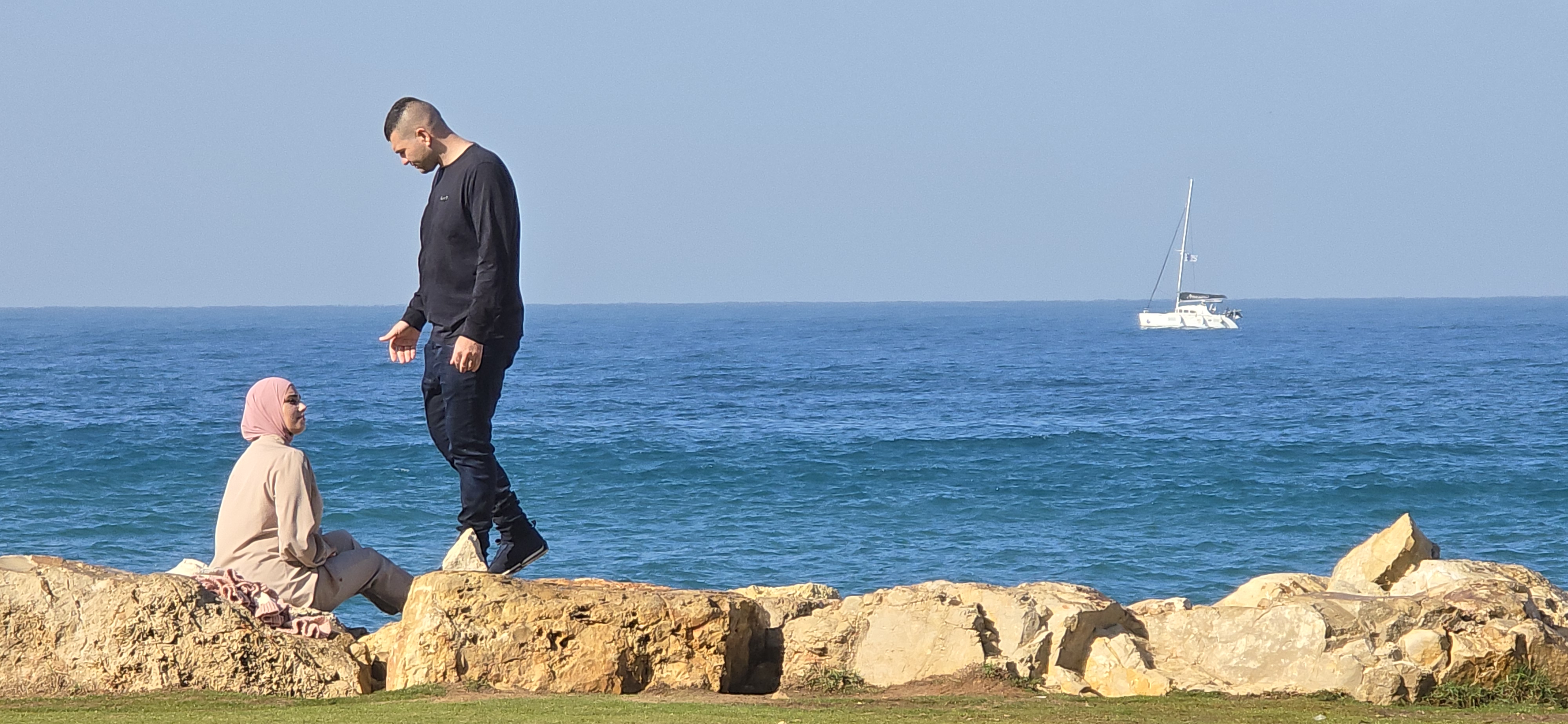
Israeli Arabs enjoying the beach in Tel Aviv, Israel (photo: First One Through)
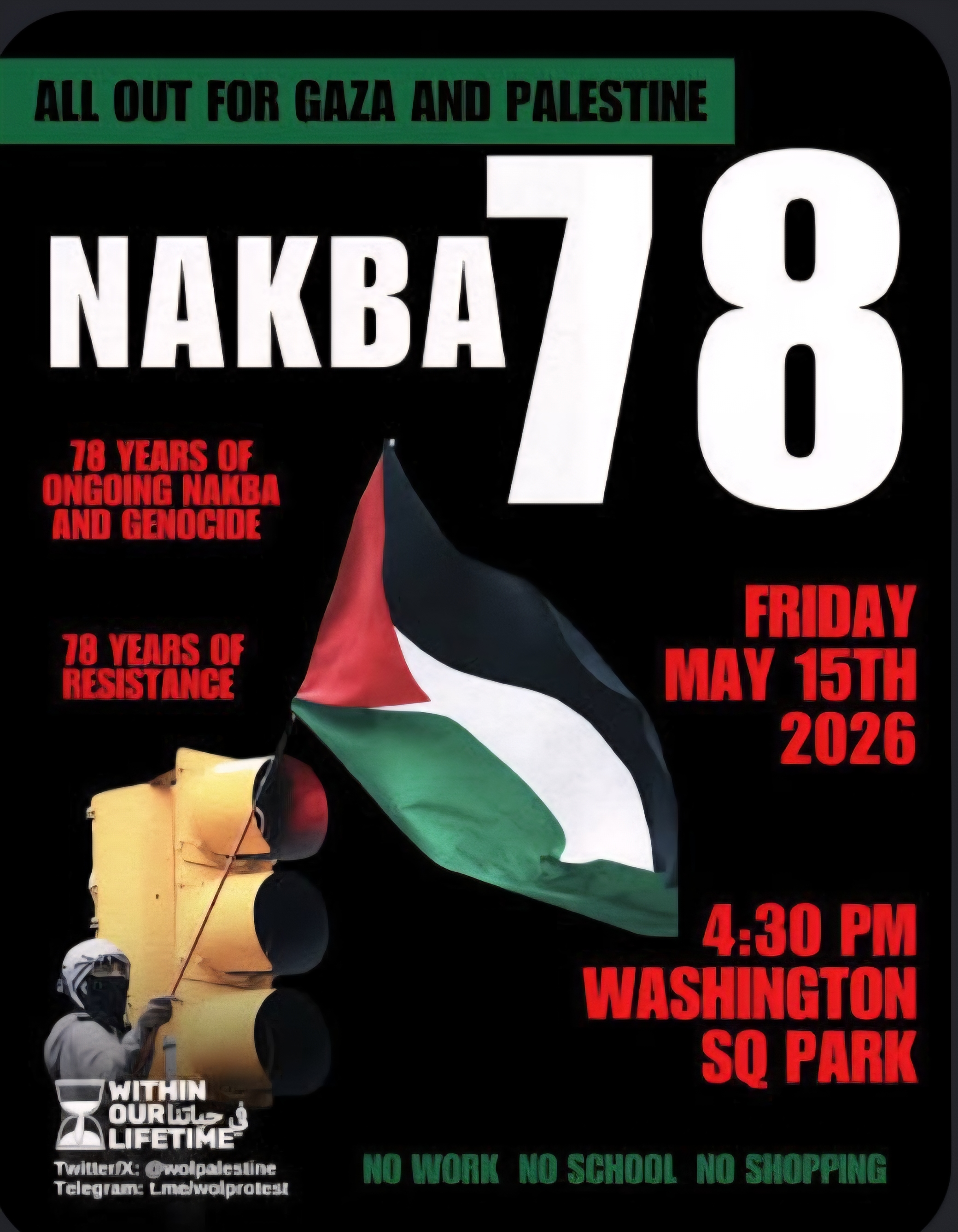
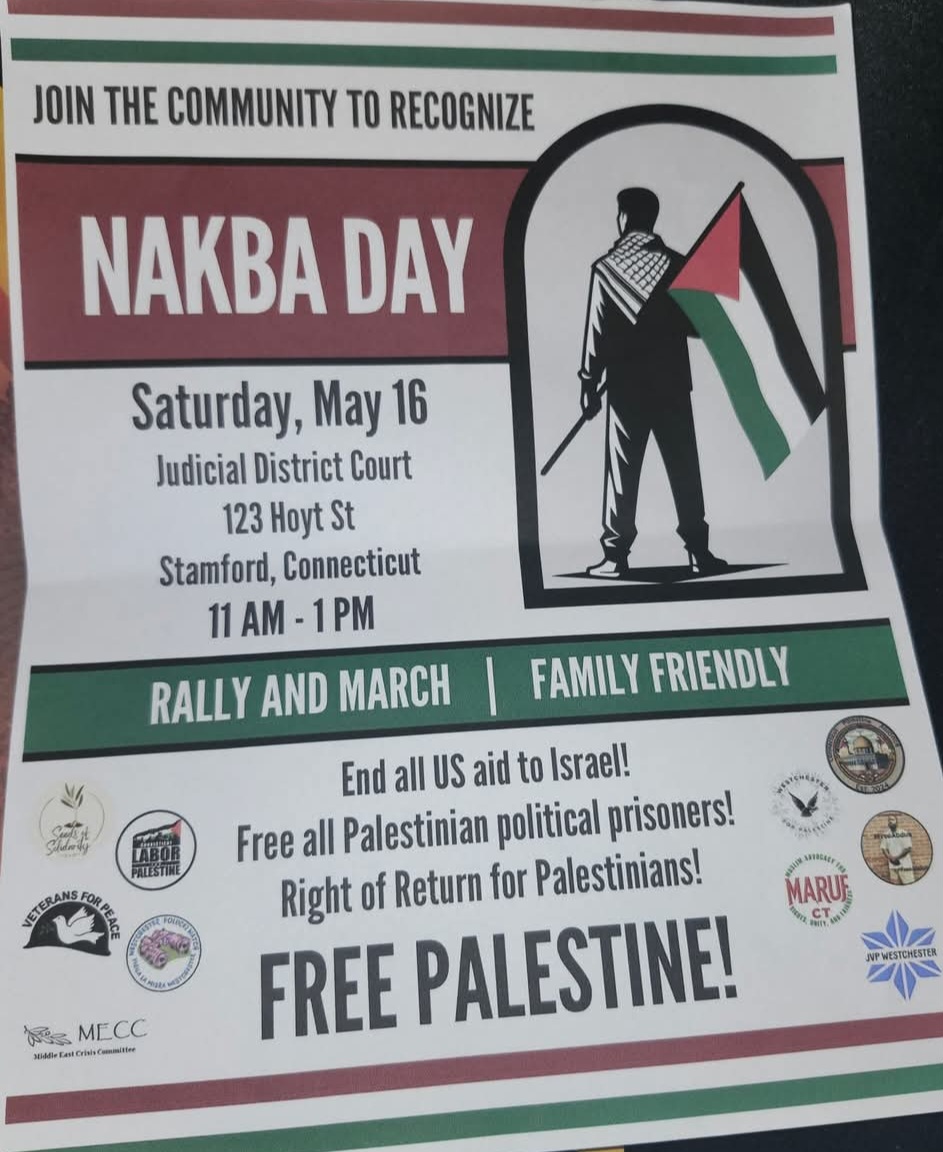
Every May, “Nakba Day” protests erupt across Western cities under the claimed banner of justice and liberation. Organizers describe them as commemorations of displacement and suffering. Yet listen carefully to the chants, read the signs, and study the ideology driving many of these demonstrations, and a darker reality emerges.
Nakba Day events are not about building a future alongside a Jewish state. They are about keeping alive the dream that the Jewish state should never have existed at all, and must be destroyed.
That is why the rhetoric so often revolves around “resistance until liberation,” “from the river to the sea,” and “globalize the intifada.” The message is unmistakable. The war of 1948 is not viewed as tragic history. It is viewed as unfinished business.
For 78 years, generations of the Stateless Arabs from Palestine (SAPs) and their supporters have been taught that the central injustice was not war itself, nor the suffering that war inevitably unleashed on all sides, but Jewish sovereignty. The catastrophe, in this telling, was that Jews regained independence anywhere in their ancestral homeland.
That poisonous premise has trapped both Palestinian Arabs and Israelis inside an endless cycle of bloodshed.
A movement built around the belief that Israel must someday disappear cannot produce coexistence. A political culture that teaches Jews are foreign colonial invaders rather than an indigenous Middle Eastern people returning to the land where Jewish civilization was born cannot produce peace. A worldview that refuses to acknowledge Jewish history in Jerusalem, Jewish ties to Hebron, or the sanctity of the Temple Mount to Judaism is rooted in antisemitism, not “anti-Zionism.” It is a deep “deformity” in Palestinian culture.
And so Nakba Day has increasingly become less a memorial to suffering than a ritual of perpetual war.
There is nothing wrong with mourning loss. Every nation remembers tragedy. The problem begins when remembrance becomes a doctrine that denies another people’s right to exist. To basic human rights. No peace movement can emerge from teaching generation after generation that coexistence itself is betrayal.
It is time to break that cycle.
Replace Nakba Day with Two State Day. A day dedicated not to reversing 1948, but to building 2048.
Imagine a new annual movement where Palestinian Arabs openly recognize that Jews are indigenous to the Land of Israel. One where activists acknowledge that Jewish attachment to Jerusalem did not begin in 1967 or 1948, but stretches back thousands of years. One where the Temple Mount is recognized not merely as a Muslim site built atop forgotten ruins, but as the spiritual center of Jewish civilization.
Imagine a Two State Day where Palestinian leaders finally say openly that Jews are not crusaders, not European interlopers, not temporary occupiers, but a people who originated in the very land they returned to.
And imagine Israeli Jews responding not with suspicion, but with an outstretched hand.
Imagine Israeli Independence Day celebrations where Muslim neighbors, Arab citizens, and Palestinians willing to embrace coexistence are invited to participate. Imagine Jewish speakers recognizing Palestinian suffering and aspirations, while Muslim speakers recognize Jewish indigenousness, Jewish history, and Israel’s permanence. Imagine both peoples publicly declaring that neither side is leaving and neither side’s history will be erased.
That would not erase either people’s narrative. It would humanize both.
The current version of Nakba politics freezes Palestinians psychologically in 1948, teaching generation after generation that justice means reversing history rather than building a future. It glorifies “resistance-violence” while discouraging reconciliation. It romanticizes intifada while Palestinians themselves continue paying the price in blood, corruption, isolation, and failed leadership.
This ideology has harmed Palestinians no less than Israelis.
Every year spent teaching children that Haifa, Jaffa, and Tel Aviv must someday be “liberated” is another year not spent building functioning institutions, economic opportunity, civil society, or genuine pathways to coexistence. Every rally that denies Jewish legitimacy hardens Israelis further against compromise and strengthens extremists on all sides.
The world has already seen where this road leads. October 7 was not born in a vacuum. It emerged from decades of indoctrination insisting that Jewish sovereignty itself is intolerable “in any part of Palestine” and that violence against it is inherently righteous “resistance.” The cheering crowds in Western capitals after the massacre exposed how deeply this toxic worldview has spread far beyond Gaza, chumming for the anti-Jewish horde.
But history is not destiny.
Two State Day could become something profoundly different. A day not of denial, but of mutual recognition. A day where SAPs mourn losses without denying Jewish legitimacy. A day where Jews acknowledge Palestinian Arab suffering without questioning Israel’s basic right to exist. A day where both peoples reject the poison of perpetual grievance and choose coexistence over endless war.
The future cannot belong to people still marching psychologically toward 1948. It must belong to those willing to build 2048.
A future where Palestinian children are not taught that Jews are foreign usurpers, but neighbors with ancient roots in the same land. A future where Jewish children no longer grow up expecting every concession to be answered with more violence. A future where the Temple Mount is not a symbol of exclusion, but proof that the land carries the sacred history of multiple peoples.
Real peace will never emerge from chants demanding the disappearance of one side or the other. It begins only when both peoples recognize each other’s humanity, legitimacy, and permanence.
For over twenty-five years, the Palestinian Center for Policy and Survey Research has tracked Palestinian political opinion. Through wars, peace talks, intifadas, and four American presidents, one pattern remains strikingly consistent:
Palestinians have never been broadly pro-American.
That may sound counterintuitive. The United States has spent decades mediating the conflict, funding Palestinian institutions, and pouring diplomatic capital into the region. If goodwill were built by investment alone, the polling should show it.
It does not.
PCPSR rarely asks, Do you like America? Instead, it asks the more revealing questions: Do you trust the United States as a mediator? Do you want American involvement? Do you believe Washington is fair?
Across twenty-five years, the answers tell the story.
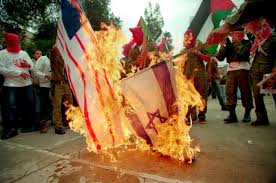
Palestinians burn American and Israeli flags
After the collapse of the 2000 Camp David Summit and the violence of the Second Intifada, positive views of America’s political role sat around 20 to 35 percent. Negative views often exceeded 60 percent. America was seen less as a broker than as Israel’s protector.
That became the baseline.
The mid-2000s brought modest movement. After Mahmoud Abbas replaced Yasser Arafat, some Palestinians supported stronger American engagement. Yet the support was tactical hoping that Washington might pressure Israel. That did not translate into trust.
Then came the only real exception.
Barack Obama produced the highest pro-American opening in the polling record. In 2009, roughly 60 percent supported a stronger American role in negotiations.
Washington read that as goodwill. The polling suggests something narrower: hope that Obama would pressure Israel.
Even at that high point, majorities still believed America fundamentally favored Israel. The atmosphere improved. The structure did not.
By Obama’s second term, positive sentiment had fallen back into the 20 to 30 percent range.
Then Donald Trump recognized Jerusalem as Israel’s capital and trust collapsed into single digits.
In some surveys, roughly 90 percent rejected American mediation. The illusion of neutrality disappeared. America was no longer seen as merely tilted toward Israel, but openly aligned with Israeli claims to Jerusalem.
Palestinian Arabs burn American flag in 1998
Joe Biden lowered the temperature but did not restore trust. The numbers recovered slightly, climbing back into the teens and twenties.
Then came the October 7 attacks and the war that followed. With Washington backing Israel militarily and diplomatically, Palestinian hostility surged again toward its floor: single-digit trust, overwhelming distrust.
The pattern is unmistakable.
When America pressures Israel, Palestinian approval rises. When America stands with Israel, it collapses.
For twenty-five years, Palestinians have periodically wanted America involved. They have never wanted America embraced.
Not under George W. Bush. Not under Obama. Not under Trump. Not under Biden.
The names changed. The percentages moved. The structure held.
America, in Palestinian political opinion, has never been a friend. Only a force—useful when applying pressure, hostile when withholding it.
After a quarter century of polling, that may be the clearest finding of all.
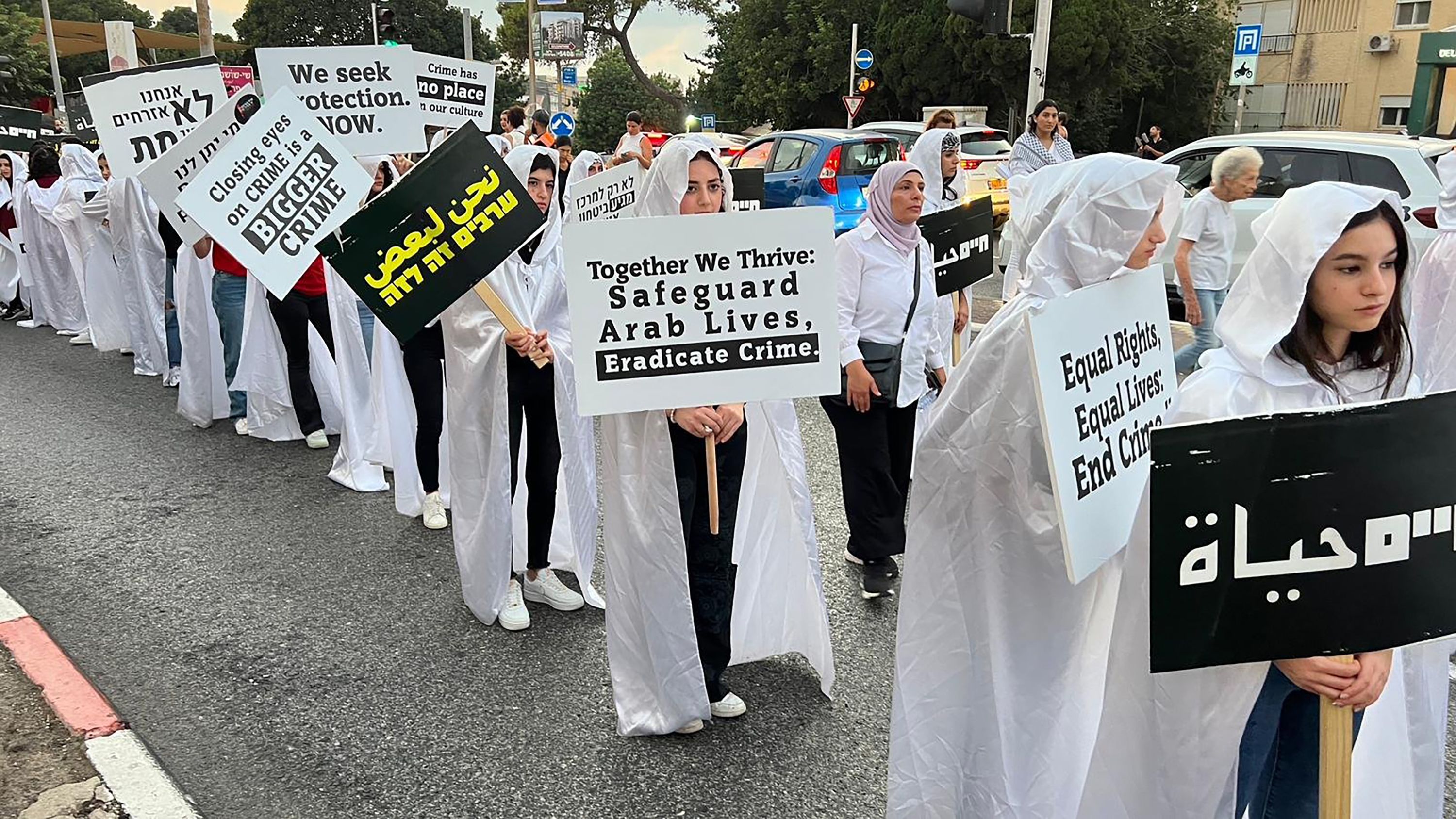
Among the dead in Israel were a young Arab man and his fiancée in Yarka, shot dead together just weeks before their wedding. They were building a home, planning a life, and in a moment both were gone.
Their murders did not trigger an emergency session at the United Nations Human Rights Council. No international campaign formed around their names. No protests filled campuses demanding justice.
But the ratio matters.
For every SAP killed by a West Bank Jew this year, more than six Israeli Arabs have been killed by fellow Arabs.
Yet only one category reliably commands international attention.
When Jews kill Arabs, the broader human rights ecosystem reacts swiftly. The UN warns of “ethnic cleansing.” Condemnations follow. Activists mobilize.
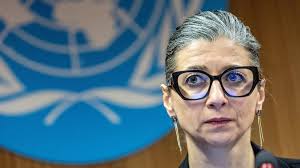
Francesca Albanese, UN special rapporteur on human rights in the Palestinian territories, attends a side event during the Human Rights Council at the United Nations in Geneva on March 26, 2024. Photo: Reuters / Denis Balibouse
When Arabs kill Arabs, the deaths rarely travel beyond the local crime blotter.
If Arab life matters, it should matter regardless of who pulls the trigger.
A human rights system that treats one dead Arab as an international crisis and six dead Arabs as a local inconvenience is not organized around human dignity.
It is organized around narrative.
Somewhere in Yarka, two families are mourning a wedding that will never happen.
And the world moved on because no Jew could be blamed.
When Israel declared independence in 1948, it had roughly 717,000 Jews and roughly 156,000 Arab citizens and residents. Those numbers were small, but what they carried was enormous: the ambition to reverse two thousand years of Jewish dispersion and gather a scattered people back into sovereignty.
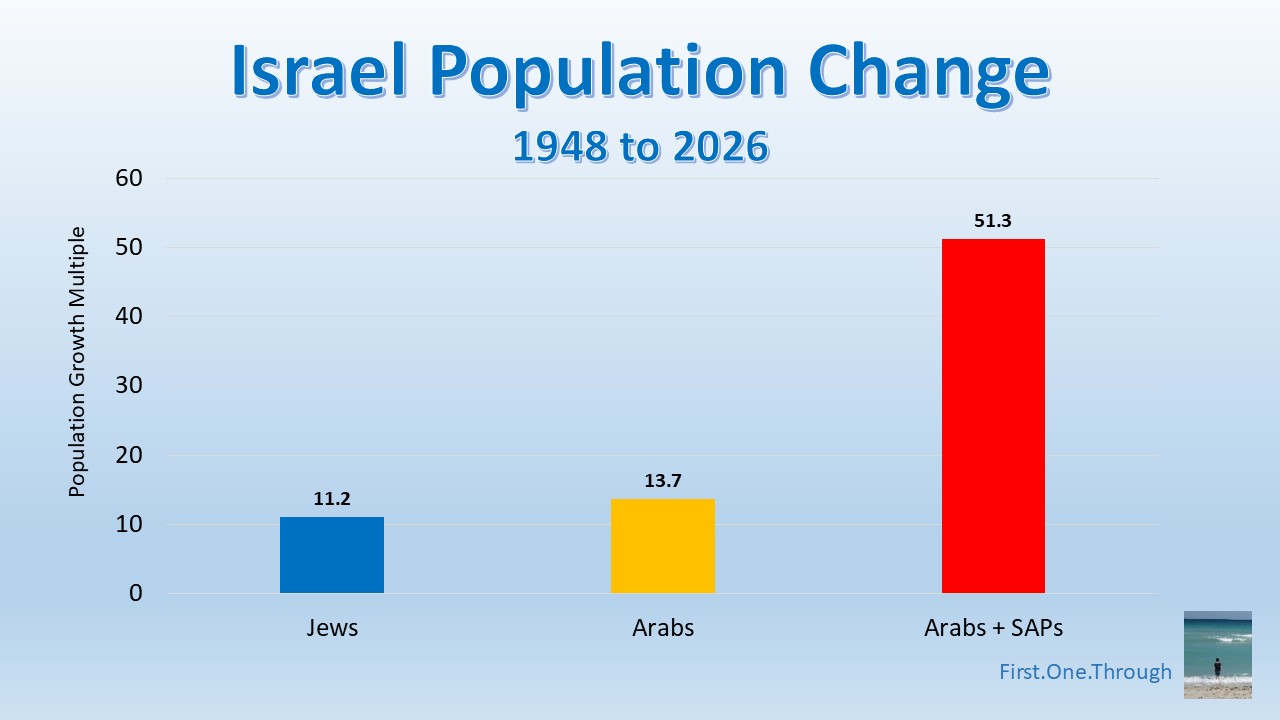
Yet the first demographic fact that emerges from Israel’s modern history cuts against so much of the political mythology surrounding it. Since 1948, Israel’s Arab minority expanded at a faster proportional rate than its Jewish majority. The Jewish population grew from 717,000 to nearly 8 million, roughly elevenfold. Israel’s Arab population grew from 156,000 to more than 2.1 million, more than thirteenfold.
That fact strips away one of the central distortions in the debate over Israel. The rise of the Jewish state did not require the disappearance of its Arab minority. Quite the opposite. Israel’s Arab population expanded dramatically under Israeli sovereignty. Two populations grew inside the same state, but through entirely different engines. The Jewish story was one of ingathering, especially during the early years.
Today, Israel stands at more than 10.2 million people, nearly 8 million Jews and more than 2.1 million Arabs. A state born in scarcity became a fully formed society. But the road from 1948 to 2026 can best be understood through four distinct demographic phases: ingathering, expansion, retention, and preservation.
The first phase was ingathering. At first, Israel was an immigration state, and its earliest years were powered by catastrophe. The survivors of Europe came first, the broken remnant of the Holocaust arriving in a country still fighting its first war. Then came the collapse of Jewish life across the Arab world. Ancient Jewish communities in Iraq, Yemen, Morocco, Egypt, and Libya emptied under expulsion, violence, and state pressure. More than 800,000 Jews left the Arab world, many rebuilding their lives in Israel.
Then came the Soviet opening. The collapse of the Soviet Union released nearly one million Jews into the largest migration wave since the founding of the state. Europe’s destruction, the Arab world’s expulsion, and the Soviet opening formed the three great waves of Jewish ingathering. Three different historical ruptures, one destination. That is how Jewish Israel was built.
While Jewish Israel was growing through migration, Israel’s Arab population was growing through birth. Higher fertility and falling mortality created uninterrupted expansion over decades. That is why the proportional growth of Israel’s Arab population exceeded the proportional growth of the Jewish population.
Then the second phase began: expansion. At first, Jewish growth depended on aliyah. Over time, it depended increasingly on birth. The immigrants became citizens, the citizens became parents, and the children of refugees became the country itself. The engine of Jewish demographic growth shifted from the airport to the maternity ward. That is the deepest demographic transition in Israel’s history.
In 2025, Israel recorded approximately 177,000 births. Immigration that year stood at roughly 24,600. Births now outnumber immigration by more than seven to one. What would have been unimaginable in 1948 has become ordinary in 2026. Israel began as a refuge. It now reproduces itself.
That changes the meaning of the state. Political Israel started as the answer to Jewish vulnerability, a place Jews could flee to when the world closed. That remains true. But demographically, it is no longer Israel’s primary function. Israel is no longer merely where Jews go when exile fails. It is where Jewish continuity principally lives.
And here, another old assumption collapsed. For decades, Israeli politics was shaped by demographic anxiety: would Arab fertility permanently outpace Jewish fertility? Would a demographic clock eventually run down the Jewish majority? That fear shaped strategy, borders, and diplomacy. For years, the numbers seemed to support it.
Then the numbers changed. Arab fertility declined as Arab society modernized. Jewish fertility remained unusually strong for an advanced economy. Today, Jewish fertility has reached parity with, and in some years slightly exceeded, Arab fertility. The demographic trajectory shifted. A generation of political strategy was shaped by a demographic clock that slowed while everyone kept hearing it tick.
Fertility Shift
1990
Arab     █████
Jewish   ███
2026
Arab     ███
Jewish   ████
But demographic success creates its own new challenge.
For most of Israeli history, migration remained positive. Even when aliyah slowed, more Jews came than left. That changed in the last two years. In 2022, Israel absorbed more than 74,000 immigrants, driven heavily by war in Ukraine and departures from Russia. That surge faded quickly. By 2024 and 2025, net migration turned negative – more Israelis left than new immigrants arrived.
This is not a demographic crisis. Births still overwhelm migration losses, and Israel continues to grow. But the Zionist test has changed. For decades, the question was how many Jews Israel could gather. Now the question is how many it can keep.
The founding generations came because they had to. Future generations stay because they choose to. That is a different kind of national test. And the retention question is not merely numerical. If those leaving are disproportionately engineers, doctors, founders, investors, and elite military talent, the demographic issue changes shape. A state can absorb numerical loss. It feels the loss of capability much faster.
Above all these numbers sits the larger civilizational shift. In 1948, around six percent of world Jewry lived in Israel. Today, around 45% does. Soon it may be the majority.
Share of World Jewry Living in Israel
1948    ██ 6%
1970    ████ 18%
1990    ███████ 30%
2010    ██████████ 42%
2026    ████████████ 45%
There is one more demographic question hanging over Israel in 2026, larger than fertility, migration, or retention. It sits beneath almost every diplomatic formula and every argument about the future of the conflict.
The question is the scale and meaning of the Stateless Arabs from Palestine (SAPs) having a “right of return.”
For decades, the Palestinian Authority and the United Nations have insisted on a “right of return” for Palestinian “refugees” and their descendants. The number most commonly cited is roughly 5.9 million. That number matters because it clarifies what the argument actually means in demographic terms.
Israel today has roughly 10.2 million people. Add 5.9 million Palestinian Arabs to that number and the demographic map changes overnight. Israel would become a country of more than 16 million people. Its Arab population would jump from 2.1 million to more than 8 million. Its Jewish population would remain just under 8 million. The Jewish majority would collapse into parity or slightly minority status.
That is not a marginal adjustment. It is a structural transformation of the state itself.
Put into historical perspective, the scale becomes even sharper. In 1948, Israel’s Arab population stood at roughly 156,000. By 2026, it had already grown to more than 2.1 million, more than thirteenfold growth, already exceeding Jewish proportional growth over the same period. Add 5.9 million more, and that Arab population would stand at more than 8 million, representing more than fiftyfold growth since the founding of the state.
A “right of return” on this scale is not simply an immigration proposal, already stripping Israel a basic right of sovereignty to determine who to admit into the country. It further demands that the Jewish State cease to be one.
That is why this issue forms the fourth demographic challenge: preservation. Preservation of the demographic framework that allowed Jewish self-determination to return after two thousand years of dispersion and discrimination.
For most of Jewish history, survival meant enduring dispersion. In Israel, survival became concentration, then continuity, and now choice. The next phase may determine whether it remains preservation.
Very few countries have grown by over 10 times since 1948, and none in the developed “Global North”, with Australia and Canada leading the group at 2.5x and 1.9x, respectively (no European country even doubled its population). In the Middle East and North Africa (MENA) region which saw explosive growth due to the discovery of oil, no country has had the minority populations grow faster than the majority.
Israel is a true anomaly, a developed country with explosive growth, sitting in the MENA region which suppresses the growth of minority groups but the Jewish State still saw oversaw a faster growth of non-Jews. Despite the basic facts, the world still pressures the country to admit even more people adding to the population density, and with minorities who never lived in the country, in particular, undermining the demographic status quo.
As Israel considers its plans for the years ahead, retaining educated talent and ending the so-called SAP “right of return” rank as the leading causes to maintain a thriving democracy.