
This week, Palestinian officials accused Israeli Finance Minister Bezalel Smotrich of making a “terrorist decision” after he announced that Israel would assume planning authority around Hebron’s Cave of the Patriarchs.
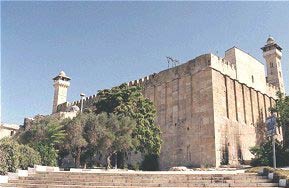
The rhetoric was explosive. Yet the dispute reaches far beyond construction permits or municipal authority. It touches one of Judaism’s holiest sites, one of the most complicated agreements of the Oslo era, and one of Hamas’s strongest bastions in the West Bank.
If you read Palestinian official state media, the story sounds straightforward: Israel has seized Palestinian powers and is annexing another piece of the West Bank. If you read Israeli nationalist media, the story sounds equally straightforward: Israel is finally correcting a decades-old mistake and restoring authority over one of Judaism’s holiest sites.
Neither version tells readers what is actually happening. To understand the dispute, you first need to understand Hebron.
Hebron is not just another city in the West Bank. According to the Bible, it is where Abraham purchased the Cave of Machpelah as a burial place for Sarah. Jewish patriarchs and matriarchs Abraham and Sarah, Isaac and Rebecca, and Jacob and Leah are buried there. Long before Jerusalem became the capital of King David, Hebron was David’s first capital.
For Jews, it is one of the holiest places on earth. For Muslims, the same structure is known as the Ibrahimi Mosque and is among Islam’s revered sites in the region.
Unlike most cities in the West Bank, Hebron is also home to a small Jewish community living amid a much larger Palestinian population. That unique reality led negotiators in the Oslo era to treat Hebron differently from every other Palestinian city.
In 1997, Israel and the Palestinian Authority signed the Hebron Protocol. The agreement divided the city into two sectors: H1, roughly 80 percent of the city, was placed under Palestinian Authority control. H2, roughly 20 percent of the city, remained under Israeli security control and included the Jewish neighborhoods and the Cave of the Patriarchs.

What many people do not realize is that the Protocol never clearly settled who would ultimately govern Hebron. It created temporary arrangements and postponed the hardest questions to future negotiations that never happened.
Yet today’s argument is unfolding against a backdrop far different than the one envisioned by Oslo.
Hebron has become one of Hamas’s strongest centers in the West Bank. In 2025, Israeli security forces announced the dismantling of one of the largest Hamas networks uncovered in E49 (east of the 1949 Armistice Lines)/ “West Bank” in years, centered in the Hebron area. Authorities alleged the network included dozens of operatives, weapons caches, financing channels, recruitment efforts, and plans for future attacks.
The threat remains active. This week Hamas claimed responsibility for the shooting attack near Hebron that killed an Israeli officer.
For many Israelis, the debate over Hebron is therefore inseparable from a larger question: if authority shifts in the city, who ultimately benefits from that shift?
That brings us to the current controversy.
For years, Israeli officials sought approval for maintenance, accessibility, and infrastructure projects at the Cave of the Patriarchs, including an elevator for elderly and disabled worshippers and improvements to covered prayer areas. Palestinian municipal authorities and the Islamic Waqf opposed those projects, arguing that such decisions belonged to Palestinian institutions under the Hebron Protocol.
To Israelis, the arrangement had become unworkable. To Palestinians, it represented one of the few remaining authorities preserved under the Oslo framework.
Over time, courts, administrators, and politicians became entangled in disputes that were ostensibly about construction but were really about governance. Now they have exploded.
The argument unfolding in Hebron sits atop three unresolved realities: the ancient claim of Abraham’s burial place, the unfinished compromises of Oslo, and the persistent presence of Hamas in and around the city.
Nearly thirty years after negotiators divided Hebron into H1 and H2, the questions they postponed have returned. Not as diplomatic clauses on paper, but as arguments over sovereignty, security, and history.


Pingback: Der Krieg um Hebron: Abrahams Grab, das Erbe von Oslo und der Schatten der Hamas | abseits vom mainstream - heplev