Words do more than describe reality. They shape it.
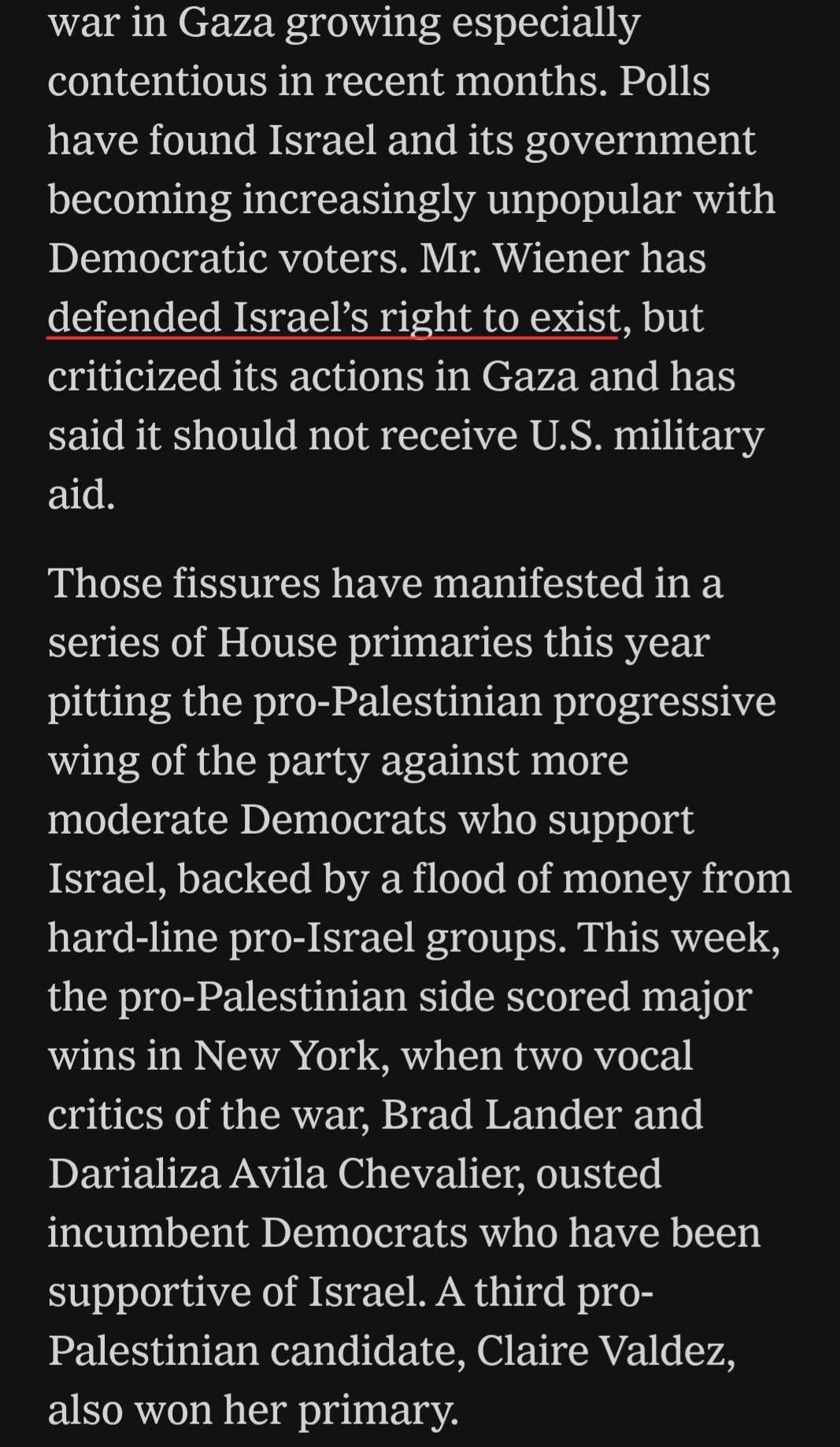
Few phrases demonstrate this better than questioning or supporting “Israel’s right to exist.”
At first glance, it sounds like a reasonable principle. Until one pauses to think about it. It is a question asked of no other nation. Countries are criticized for their policies or leaders. Their continued existence is not routinely presented as a subject for debate.
The issue is not whether Israel has a right to exist. The issue is whether people support destroying an existing country, specifically, destroying the only Jewish State.
While Holocaust Survivors are still alive to recount the horror of the genocide of one-third of world Jewry, people discuss the destruction of Jews in their homeland where nearly half of world Jewry resides.
It is an abomination.
And the irony is that the unresolved question of statehood is not Israel’s; it is Palestine’s.
Israel declared independence in 1948 and has been a member of the United Nations ever since. The Palestinians declared the State of Palestine in 1988, and while many countries have recognized that declaration, neither the United States nor Israel has done so. Further, Palestine is not a full member state of the United Nations. Palestine still fails to meet many of the basic criteria for statehood.
If there is a legitimate debate about a state’s existence, it concerns whether a Palestinian state should be established. After the October 7 massacre, the abduction of civilians, and the persistence of violent extremism and antisemitism within Palestinian society, many people argue that recognition of Palestinian statehood should depend on profound political and cultural change.
Instead, the narrative has been inverted. And weaponized. Rather than asking whether yet another Arab and Muslim state should be created under present circumstances, the debate is reframed as whether the one existing Jewish state has a “right to exist.”
The “right to exist” narrative should be placed squarely on Palestine, not Israel. And the current verdict is not positive.
Why would a vigilante movie cause international controversy in 2026?
After all, Hollywood has been making vigilante films for more than half a century. Death Wish, Taxi Driver, The Equalizer, Taken, John Wick. Millions have watched ordinary people take justice into their own hands. Critics warned they would inspire copycats but by and large, they did not.
Because this film is not simply about revenge. It is set against one of the most divisive political questions of our time: immigration.
The story follows a man who concludes that his government has abandoned its most basic duty: to protect its own citizens. He begins targeting migrants whom he sees as responsible for violent crime while officials either refuse or fail to act. Critics argue the film risks legitimizing violence against immigrants. Supporters respond that it dramatizes the consequences of government paralysis rather than endorsing vigilantism.
Whether one agrees with either side, the film did not emerge in a vacuum.
Across Britain, years of revelations about organized child sexual exploitation gangs – most involving men of Pakistani heritage in towns such as Rotherham, Rochdale, and other communities – left many citizens convinced that authorities failed to protect vulnerable girls and, in some instances, were reluctant to confront offenders for fear of inflaming racial tensions. The scandals produced multiple official inquiries and enduring public anger over institutional failures. For many viewers, Citizen Vigilante taps into that frustration: the fear that government sees, knows, and still does not act, while the mainstream media diverts attention away from it.
That fear is not unique to Britain. In the United States, the conflict is different but follows a similar pattern.
Immigration enforcement is primarily a federal responsibility. Yet the Biden administration allowed a constant flow of illegal immigrants to enter the US – multiple times as many who arrived legally. It was a contributing factor of Donald Trump being elected in 2024.
In response to Trump’s crackdown on illegal immigrants, liberal municipalities declared themselves “sanctuaries,” limiting cooperation with U.S. Immigration and Customs Enforcement (ICE). Federal officials argue that dangerous offenders remain because local jurisdictions refuse to honor immigration detainers. Sanctuary jurisdictions answer that they are respecting constitutional limits on federal power and preserving trust between immigrant communities and local police.
The legal arguments belong in court but the psychological consequences live in society.
When one level of government says, “We must enforce the law,” and another responds, “We will not help you,” ordinary citizens no longer see a single sovereign speaking with one voice. They see governments arguing over who bears responsibility while serious problems remain unresolved.
That is ripe ground for the vigilante to enter, not because movies create him, but because confidence in public institutions has eroded.
Every stable democracy rests on one indispensable principle: the state holds a monopoly on the legitimate use of force. Citizens may vote, petition, protest, organize, criticize, litigate, and campaign for new laws. They may not decide for themselves who should be detained, punished, expelled, or attacked. The moment private groups begin enforcing their own version of justice, the rule of law gives way to competing factions.
South Africa illustrates how quickly that line can blur. Recent anti-migrant demonstrations included many people calling for stricter enforcement of immigration law. But alongside lawful protest came reports of intimidation, assaults, and migrants fleeing violence. The movement did not remain solely a political demand. In some instances, private citizens began acting as if enforcement belonged to them.
People will seek alternatives if they begin to doubt that the government will protect them.
Consider New York’s Jewish community. Antisemitic incidents have reached historic levels in recent years. At the same time, some prominent political figures have used language that many Jews regard as deeply dehumanizing or have expressed intense hostility toward Zionism, which many Jews see as an integral part of their collective identity. When Jewish New Yorkers hear rhetoric describing Zionists as “monsters,” some inevitably ask a question that no democratic society should want its citizens to ask: If violence comes, will the government protect us with the same determination that it protects everyone else?
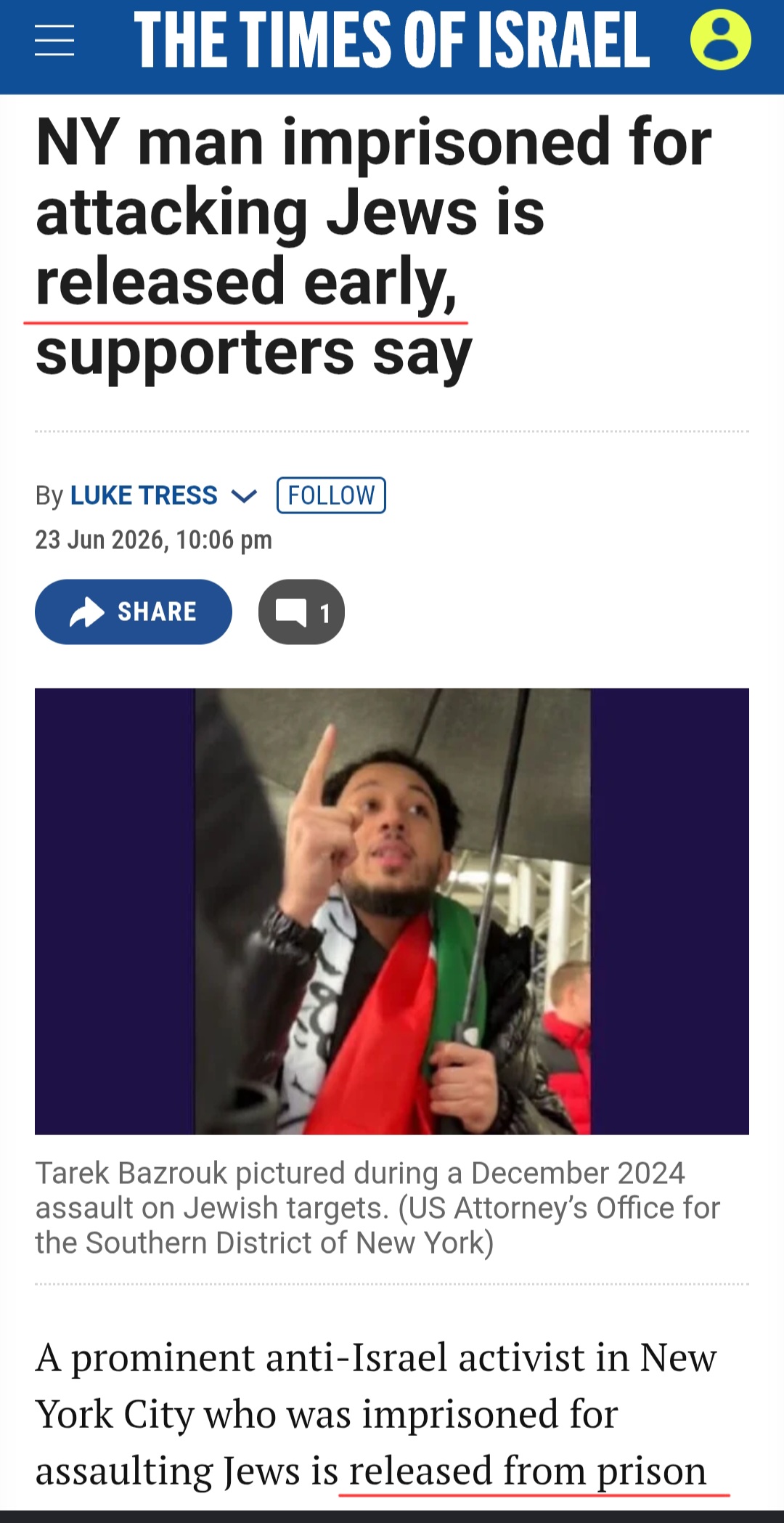
“He [Tarek Bazrouk] targeted these New Yorkers based on their religion and national origin. And he was undeterred by multiple arrests following these assaults, instead quickly returning to violently targeting Jews. The prosecution of this case and the sentence imposed make clear that New Yorkers will not tolerate hate-based violence and that this Office will aggressively prosecute those who perpetrate senseless crimes of hate.” – Jay Clayton, the United States Attorney for the Southern District of New York; Christopher G. Raia, the Assistant Director in Charge of the New York Field Office of the Federal Bureau of Investigation (“FBI”) October 31, 2025. Released early on June 23, 2026 under NYC DSA Mayor Zohran Mamdani
The appeal of the vigilante has never really been about revenge. It has always been about confidence. People cheer the vigilante only after they conclude that the institutions designed to provide justice have failed.
That is why the debate over Citizen Vigilante is larger than one controversial film.
It is about whether citizens still believe that governments – federal, state, and local – are willing and able to carry out their most fundamental obligation: to enforce the law fairly, protect the innocent, and maintain a single, legitimate monopoly on force.
If that confidence disappears, the next vigilante will not step out of a movie theater. He will step out of a society that has stopped believing the state will do its job.
New York has embraced an important idea: identity deserves respect.
Its laws explicitly protect both gender identity and gender expression, recognizing that identity is not merely an internal characteristic but something people live and communicate publicly through appearance, speech, names, clothing, and behavior.
That principle is admirable but is it applied consistently?
The Jewish people also possess an identity that is both internal and external. Jews express that identity through religion, language, holidays, history, culture, family traditions, symbols, and connection to their ancestral homeland.
For many Jews, that expression includes Zionism.
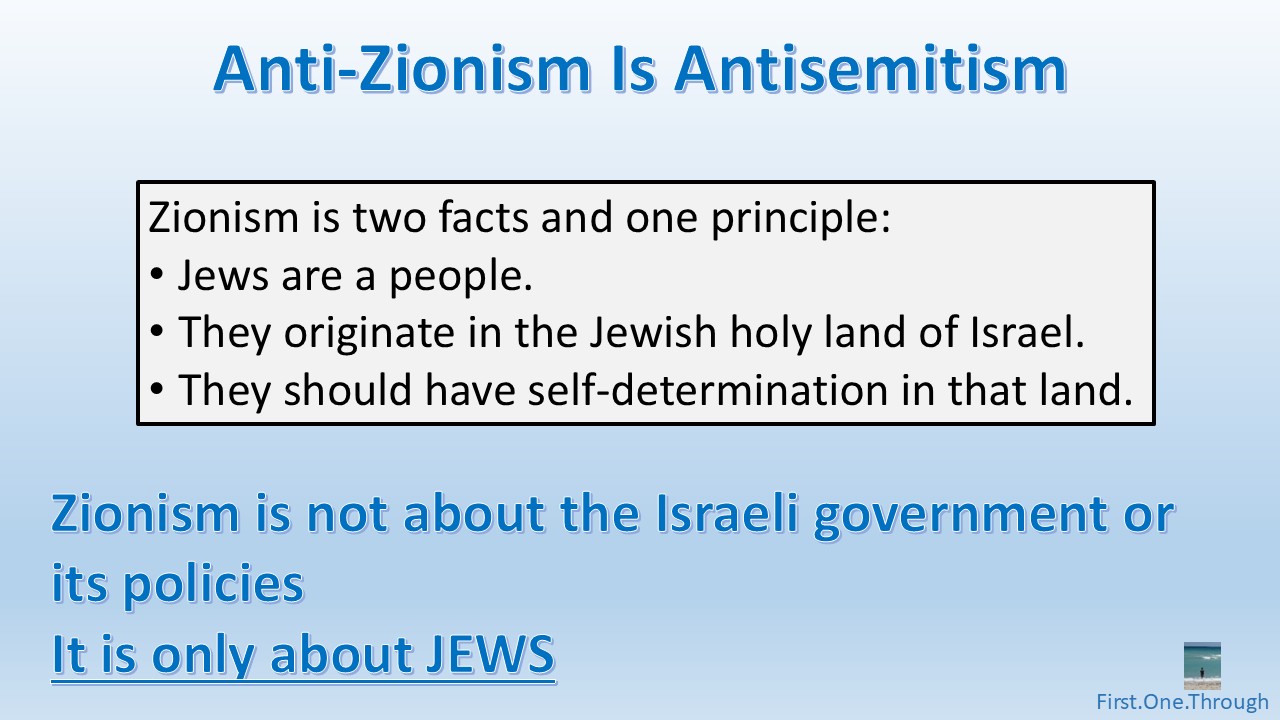
Contrary to its frequent caricature, Zionism is not a political opinion. It rests on two historical facts and one political principle: Jews are a people; they originated in the Land of Israel; and therefore they are entitled to national self-determination and sovereignty in their ancestral homeland.
Like wearing a kippah, lighting Shabbat candles, speaking Hebrew, or displaying a Star of David, affirming the Jewish people’s right to their homeland is, for many Jews, a basic expression of Jewish identity.
Yet this expression is increasingly treated as unacceptable.
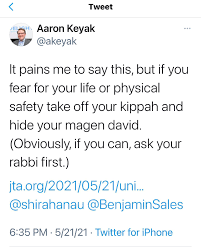
President Biden’s U.S. Deputy Special Envoy to Monitor and Combat Antisemitism at the State Department, told Jews to hide expressions of their Judaism on May 21, 2021
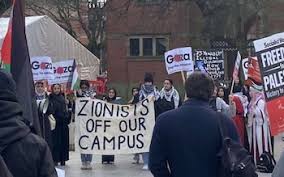
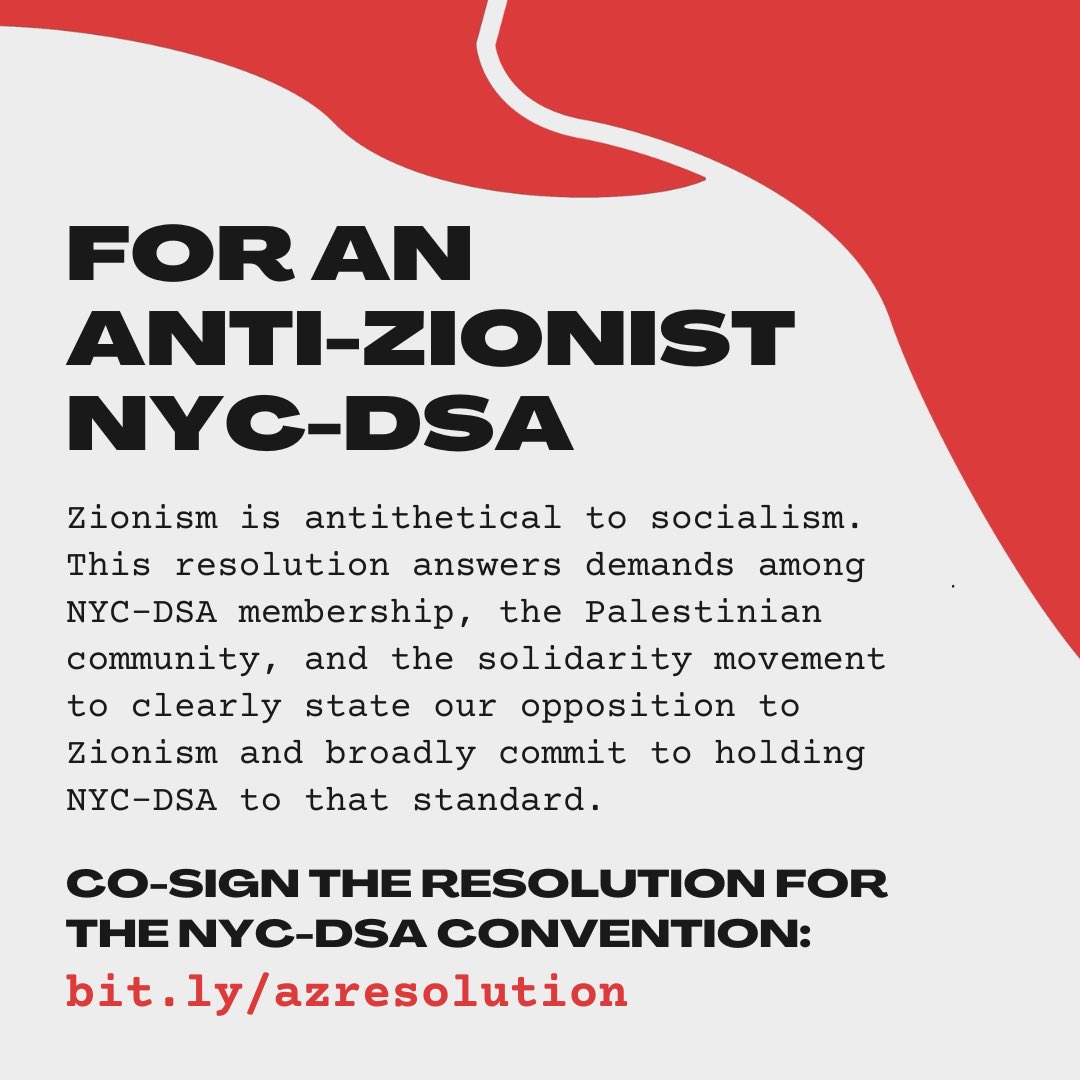
Across universities, workplaces, and public institutions, “Zionist” is often used to describe a political viewpoint and as a label for exclusion. Students are told Zionists are unwelcome. Employees are pressured to distance themselves from Zionism. Organizations adopt anti-Zionist litmus tests that, for many Jews, require repudiating a central expression of their identity.
New York City subway where anti-Israel protestors call for Zionists to get out
If society recognizes that identity includes both who a person is and how that person expresses that identity, why should that principle stop with gender?
No one should be expected to abandon a central expression of identity in order to participate in public life, attend a university, or feel welcome in a workplace.
“Zionists don’t deserve to live,” and “Be grateful that I’m not just going out and murdering Zionists.” – Columbia University student Khymani James
This is not a request for special treatment. It is a request for consistency.
If identity deserves dignity, then every community’s identity deserves dignity. If expression deserves respect, then that principle should not end where Jewish identity begins.
The United Nations has a Pact for the Future. It looks ahead to artificial intelligence, digital governance, climate change, sustainable development, financing, debt and even discussions of global taxation. The underlying premise is that humanity faces challenges unlike those of previous generations and that international cooperation must evolve accordingly.
Yet there is one omission that is difficult to ignore. While the international community has developed increasingly sophisticated frameworks to protect biodiversity, endangered languages, cultural artifacts and World Heritage Sites, it has produced no comparable vision for preserving one of humanity’s oldest living inheritances: its religions.
We have become remarkably good at preserving the products of civilization. Archaeologists restore temples after earthquakes. UNESCO protects historic churches, synagogues and mosques. Museums conserve ancient manuscripts while linguists race to document disappearing languages before the last native speakers die. We understand instinctively that once these treasures are lost, they cannot truly be recreated. Yet we devote far less attention to the living communities that gave those monuments meaning. A restored monastery is no substitute for the monks who once prayed there. An ancient synagogue is just beautiful stone if the Jewish community that sustained it for centuries has vanished. Preserving the architecture while allowing the faith itself to disappear is to save the shell while losing the civilization.
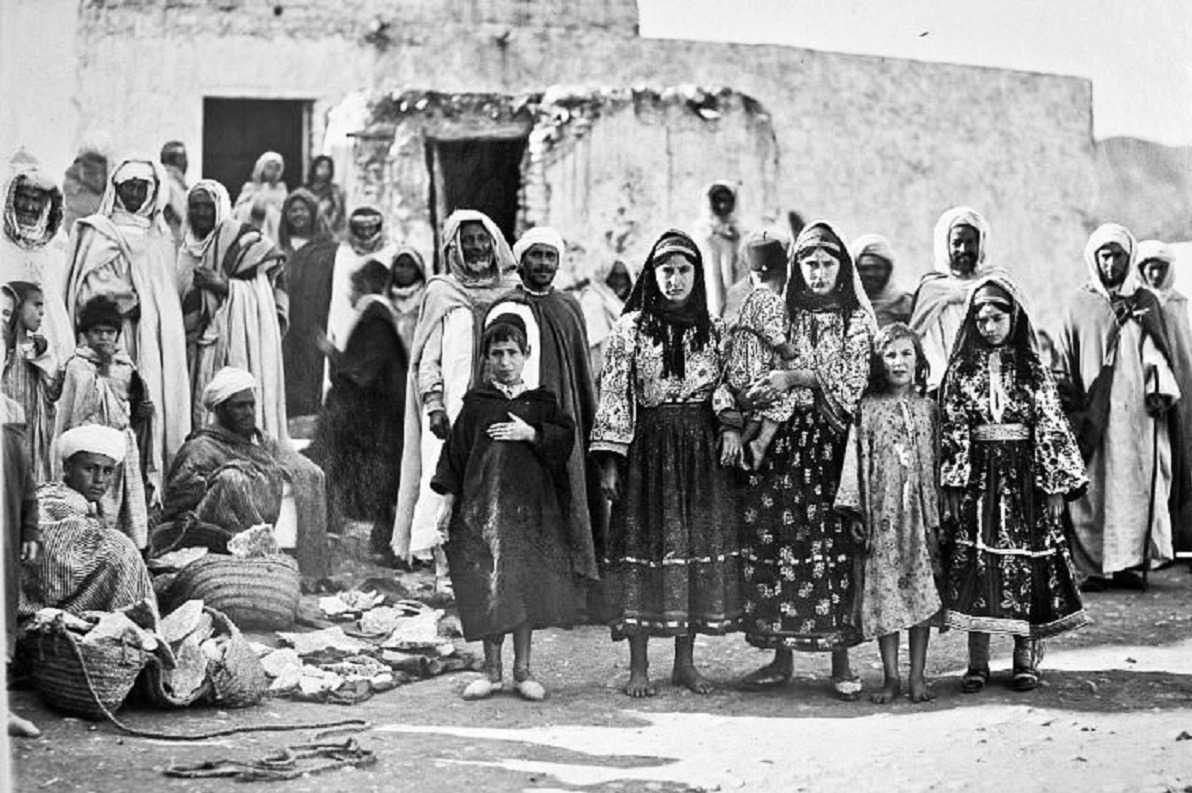
This is no longer a hypothetical concern. In only a generation, ISIS nearly exterminated the Yazidis while devastating ancient Christian communities whose roots stretched back to the earliest centuries of Christianity. The Taliban’s return to power accelerated the disappearance of Afghanistan’s Hindu and Sikh communities and forced Christians even deeper underground. Across parts of Africa, jihadist movements have burned churches, murdered clergy and displaced entire Christian villages. Indigenous and tribal religions continue to fade through modernization, migration and demographic collapse, while Jewish communities that had flourished across much of the Middle East and North Africa (MENA) for two millennia have largely disappeared. These are different stories unfolding on different continents, but together they reveal the same pattern: humanity’s religious diversity is steadily shrinking.
There were once an estimated 250,000 Jews in Morocco. They are have almost all left since 1948
Recent years have demonstrated how fragile minority religious and ethnic groups can be. Christians have seen ancient churches destroyed or emptied by war. Pilgrimages have been disrupted by conflict in multiple regions. Jews continue to be barred from praying openly at the Temple Mount in Jerusalem, the holiest site in Judaism.
The legal foundations for religious liberty already exist. Article 18 of the Universal Declaration of Human Rights recognizes the freedom of thought, conscience and religion, including the right to change one’s religion. Yet millions still live where that freedom exists only on paper. Apostasy remains punishable under law or through the application of religious law in several countries, while blasphemy laws continue to imprison people or expose them to severe punishment simply for changing or expressing their beliefs. At the same time, digital surveillance, online incitement and transnational extremist movements have created entirely new forms of religious persecution that the architects of the postwar human rights system could scarcely have imagined.
Radical Islamists call for killing converts from Islam
Perhaps the world needs a Pact for the Future of Religious Heritage – one that treats living religious communities with the same urgency that we reserve for endangered species, disappearing languages and historic monuments. Such a framework would protect sacred sites, preserve endangered faith traditions, defend freedom of conscience, encourage the repeal of laws criminalizing apostasy and blasphemy, establish rapid international responses to religious persecution, and affirm that followers of every religion should be able to freely, safely and openly worship at their sacred sites and undertake traditional pilgrimages.
Civilizations are remembered not only for the monuments they leave behind, but for the beliefs that inspired them and the communities that kept those beliefs alive. Humanity has learned to preserve forests, wildlife, manuscripts and archaeological treasures. The next step is to preserve something even older and even more fragile: the living faiths that have shaped civilizations for thousands of years.
A friend noticed I had attended the JNS International Policy Summit in Jerusalem and asked if it was worthwhile.
I paused. “That’s actually a harder question than it sounds. I have too many thoughts for a text message.”
This article is my answer.
The event. Alex Traiman, CEO of JNS, and Richard Heideman, Chairman of the JNS International Policy Summit, assembled an impressive three-day program. Israeli Prime Minister Benjamin Netanyahu, President Isaac Herzog, U.S. Ambassador Mike Huckabee, the “Green Prince” Mosab Hassan Yousef and dozens of leading policymakers, legal experts and advocates discussed nearly every dimension of Israel’s current challenges.
Topics: The summit covered twelve main topics with a few breakaway panels for each so people could listen to various subjects. It covered everything from antisemitism and regional security to international law, Judea and Samaria, Israel’s democracy, Christian-Israel relations and the narrative war playing out across traditional and social media.
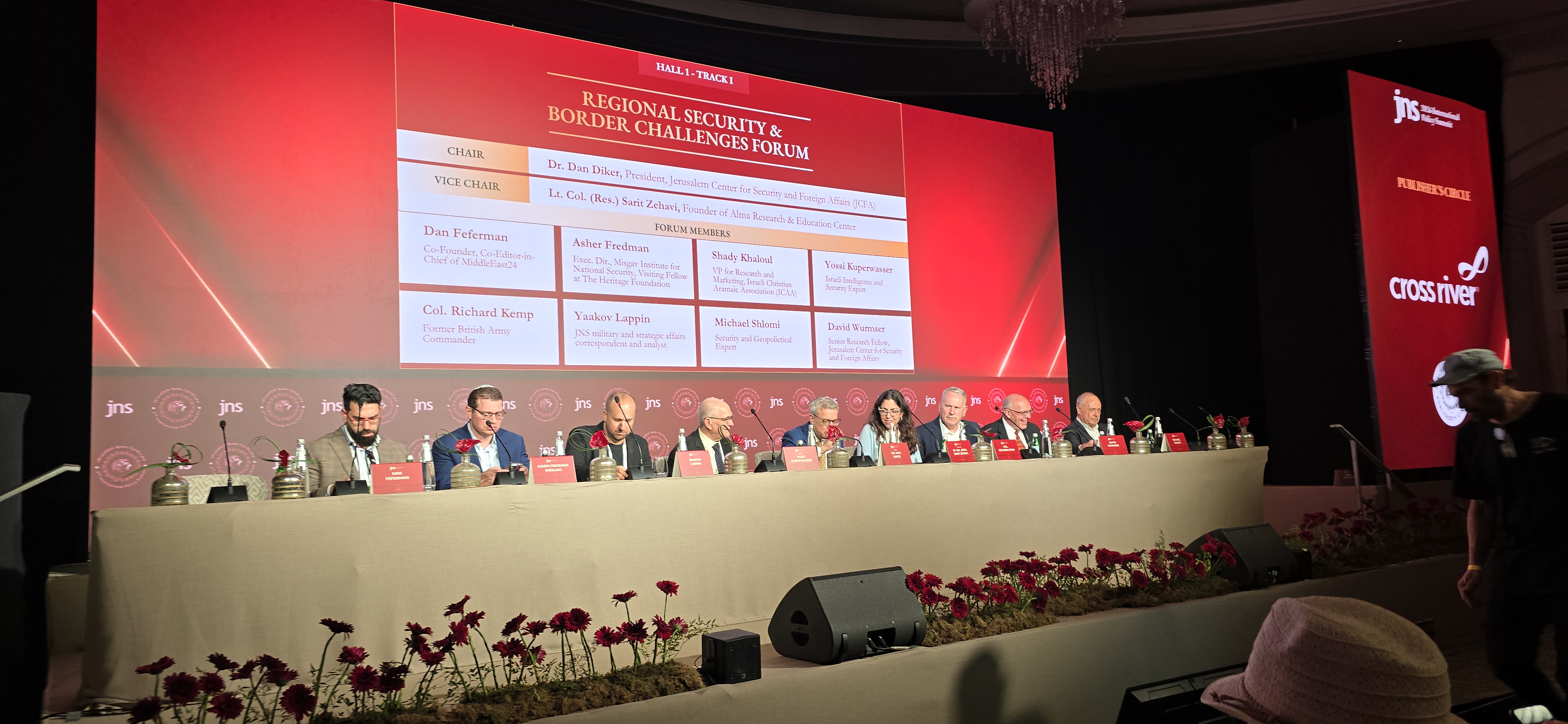
JNS panel discussion on Regional Security
What makes a conference worthwhile? Many conferences share the discussions online – as did JNS – so people often question the value of devoting so much time to listening to so many speakers. I usually attend conferences to become energized and to meet like-minded people. That has been my experience at Tikvah events in New York, for example. I will share that it was not my feeling at this JNS conference.
For one thing, the attendees here were much more engaged in politics professionally than at a Tikvah Leadership Conference. Most of the people at the Waldorf Astoria knew everyone on the panels, worked with them and could have joined any of the discussions. It felt like the crowd was full of understudies ready to assume an empty chair on stage, or ready to have working sessions in side rooms. It made talking to fellow attendees extremely interesting for anyone looking to fully engage in the various subject matters.
However, the vibe of the Jerusalem News Syndicate conference was much more right-wing than I had anticipated. I had thought of JNS as simply an alternative to AP and Reuters, providing an Israeli perspective on the news. While I expected it to be right-of-center, I was surprised at how many deeply right-wing people were both speakers and attendees.
Two Themes:Trump-Iran/Lebanon: The backdrop for the event must be set, as events in the Middle East move quickly.
At the time of the conference, June 21-23, it appeared that the Trump Administration was striking a deal with Iran that was viewed by the speakers as profoundly weak regarding Iran, and deeply flawed as it related to Israel’s war with Hezbollah. Speakers went out of their way to say how much they love Donald Trump and Israel could never ask for a better friend, so such a skilled negotiator obviously just needed to buy time through July 4 celebrations and the World Cup, and would then return to finishing the Iranian nuclear and ballistic threats. Speakers avoided smearing Vice President JD Vance in public, but the quiet discussions near the cookies in the hallway were that they would like to see Marco Rubio as the president after Trump.
The opinions were definitely hawkish: Israel needs to maintain a buffer in Lebanon until Hezbollah is disarmed and terrorist infrastructure is removed. The same format is required in Gaza for Hamas. Iran must continue to be attacked until a long-term favorable deal can be struck.
It was interesting to hear how the various speakers thought of the regimes and people in each theater: In Iran, the government is horrible and must be removed while the people are intelligent and wonderful allies-in-waiting. Hezbollah is a rogue Iranian proxy that must be expunged so Israel can develop a long-term peace with the legitimate government of Lebanon. However, the situation in Gaza had no rainbow at the end. While the determination to finish Hamas and disarm it was viewed as non-negotiable, the prognosis for peace with everyday Gazans was viewed as so distant in the future to not even warrant near-term discussions.
Antisemitism/ Narrative: The “eighth front” of the current war is sometimes referred to as the narrative war in the global media and social media by Netanyahu. I believe Israel’s deteriorating image around the world has fueled antisemitism, even if hostility toward Israel and hatred of Jews ultimately remain distinct phenomena.
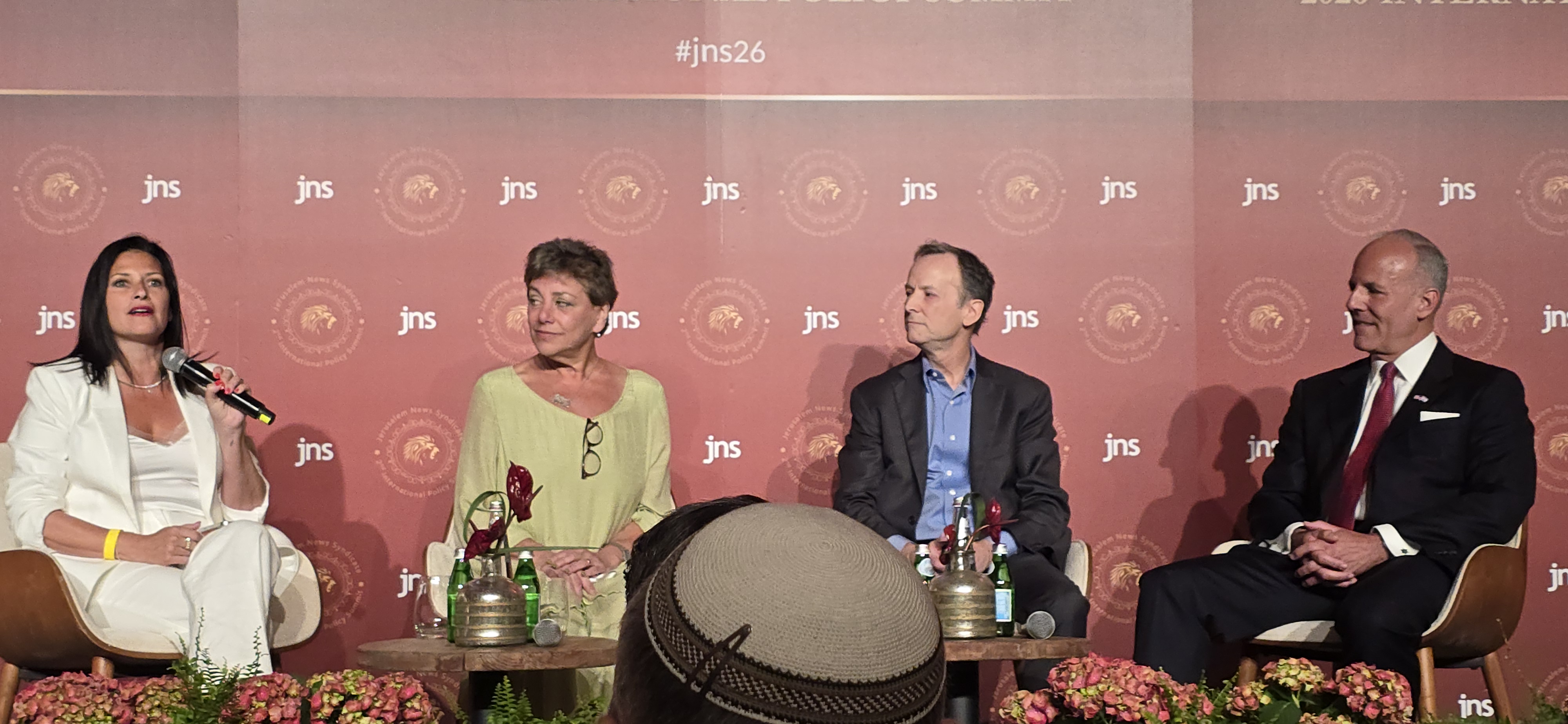
Michal Cotler-Wunsh, CEO of the International Legal Forum, called “October 7 the Kristallnacht of our times” that will ultimately “come for all democracies.” Lori Lowenthal Marcus of the Deborah Project said that “teacher unions are like the Hamas tunnels in American education,” part of an insidious infrastructure that systemically vilifies Israel. David Brog of the Maccabee Task Force suggested bringing social media influencers to Israel to see the truth, and that those people will become strong advocates when they realize that they’ve been fed lies for years. Miss Israel, Melanie Shiraz suggested changing the entire dynamic: to engage in sports, cultural events and other places where people engage directly in a common arena. “Let them see Israel, not as an argument to be won but a beauty to be shared…. Not with better corrections but better invitations.”
Sara Friedman, CEO WJC Israel; Lori Lowenthal Marcus, Legal Director of the Deborah Project; David Brog, Executive Director of Macabee task Force, and Elan Carr, CEO Israeli-American Council
She received one of only a handful of standing ovations.
So, was the JNS International Policy Summit worthwhile?
Yes, but not for the reason I expected.
The speeches were informative, and many are available online for anyone willing to invest the time. What cannot be livestreamed are the conversations over lunch, the chance encounters in the hallway, and the immersion in an ecosystem of people who have dedicated their lives to defending Israel and Jews in ways most of us never see. Some fight in courtrooms. Others rewrite school textbooks, monitor the United Nations, expose campus antisemitism, advocate for terror victims, build alliances with Christians, or wage the daily battle for truth on social media.
Miss Israel, Melanie Shiraz, surprised the crowd with passionate advocacy for greater cultural exchanges and received a standing ovation
Like any gathering of passionate people, I did not agree with everyone. Some speakers left me inspired; others left me shaking my head. But perhaps that is part of the value of attending in person. A conference is not worthwhile because it confirms everything you already believe. It is worthwhile because it exposes you to the people, personalities, and competing ideas that shape a movement.
The summit reminded me that the defense of Israel and Jewish people around the world is no longer just the work of soldiers and diplomats. It is also carried by lawyers, educators, journalists, researchers, politicians, influencers, and ordinary citizens who understand that ideas, narratives, and public opinion have become battlefields of their own.
That, more than any individual panel, was the lasting lesson I brought home from Jerusalem.
There was a time when many New Yorkers dismissed the Democratic Socialists of America (DSA) as a fringe movement. Their rallies were loud. Their rhetoric was provocative. But surely the city that built Wall Street, welcomed millions of immigrants, and was attacked on September 11 would never hand real political power to a movement whose rhetoric after October 7 shocked so many Americans.
Rally in Times Square the day after the massacre of 1,200 people in Israel and abduction of 251.
Yet here we are.
The new mayor is part of the DSA. DSA-backed candidates continue to win elections across New York City.
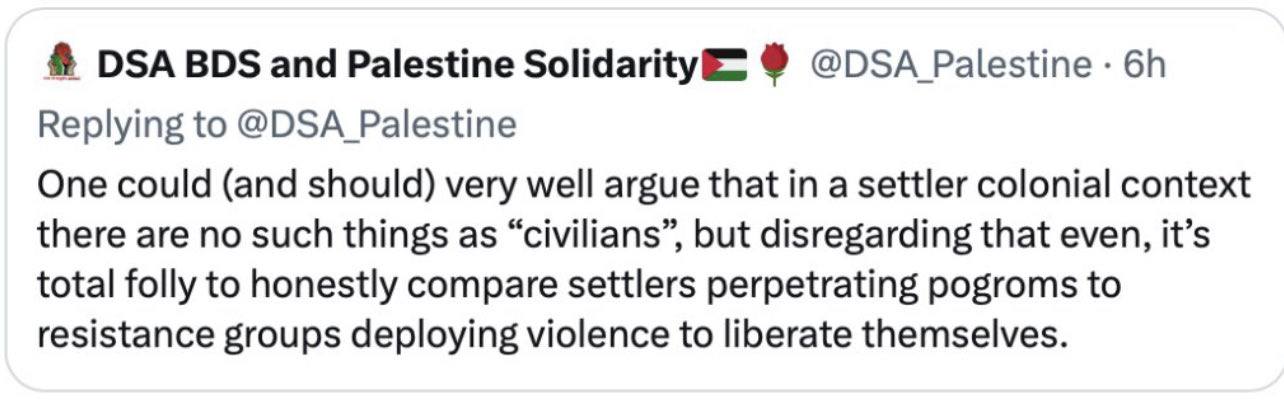
This is not merely a debate over tax rates or rent control. After Hamas murdered more than 1,200 Israelis on October 7, the New York City chapter of DSA helped organize demonstrations almost immediately afterward. Slogans and statements in Times Square celebrated the attack as “resistance” and chanted for it to continue “long live the Intifada!” DSA-NYC had long argued that Israeli civilians should not be viewed as innocent because they were participants in a “settler-colonial” society.
One might have expected that such rhetoric would permanently marginalize it. Instead, it grew. How?
Because its opponents fought the wrong war.
Organizations such as AIPAC concentrated enormous resources on defeating individual candidates where the ground game already indicated it could win. Sometimes they succeeded spectacularly. Millions of dollars were spent. Headlines proclaimed another victory over the anti-Israel Left.
But every expensive primary also reinforced the story DSA wanted to tell.
They were no longer simply neighborhood activists. They became the underdogs standing up to a wealthy political establishment. Every television advertisement became another fundraising email. Every outside dollar became another recruiting tool. Every victory over one candidate left the movement itself intact and often stronger.
AIPAC won campaigns but DSA built a movement.
Politics is ultimately about culture before it is about elections. Elections simply reveal where the culture already stands.
While establishment organizations measured success by defeating a particular candidate, DSA measured success by opening another neighborhood chapter, training another organizer, recruiting another volunteer, and persuading another generation that its worldview represented justice.
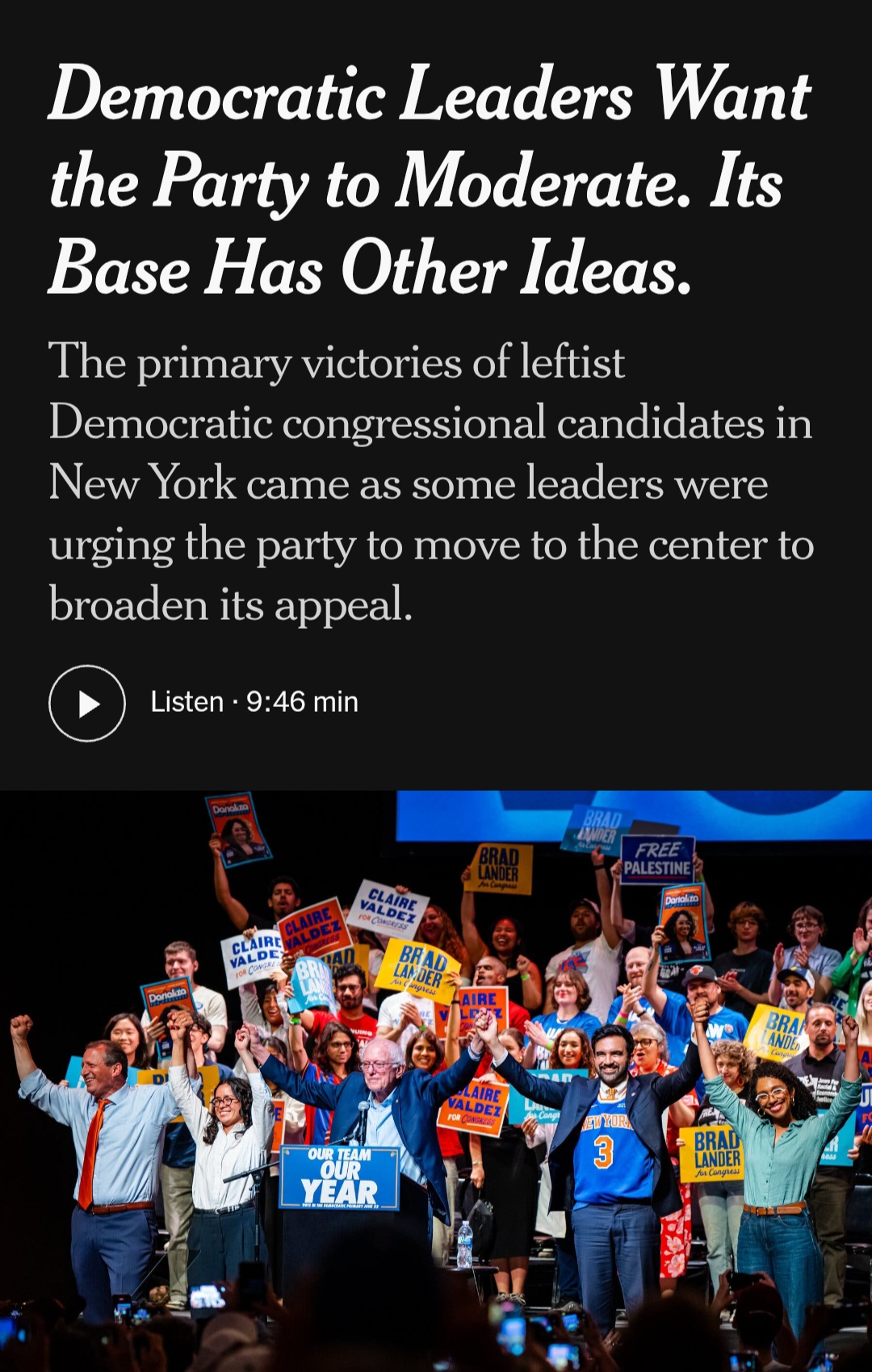
The results are now visible. A virtual sweep of DSA candidates in New York this week.
New York did not suddenly become socialist. It was organized into becoming more receptive to socialist candidates over many years. One neighborhood at a time. One group at a time.
J Street spent considerable time and effort over the past few years bashing AIPAC to build better alliances with the far-left. Now that multiple anti-Israel extremists have entered office while effectively echoing J Street’s smears of AIPAC, the left-wing “pro-Israel” group stayed mum and didn’t print a single press release.
That should be the lesson – not only for those who support Israel, but for anyone concerned about the city’s future.
Money can influence an election. It cannot substitute for a movement.
If New York is to change course, it will not happen because one organization writes larger checks. It will happen because people who believe in liberal democracy, civic responsibility, pluralism, and the moral distinction between murdering civilians and defending them begin organizing with the same patience and persistence that their opponents have displayed for years.
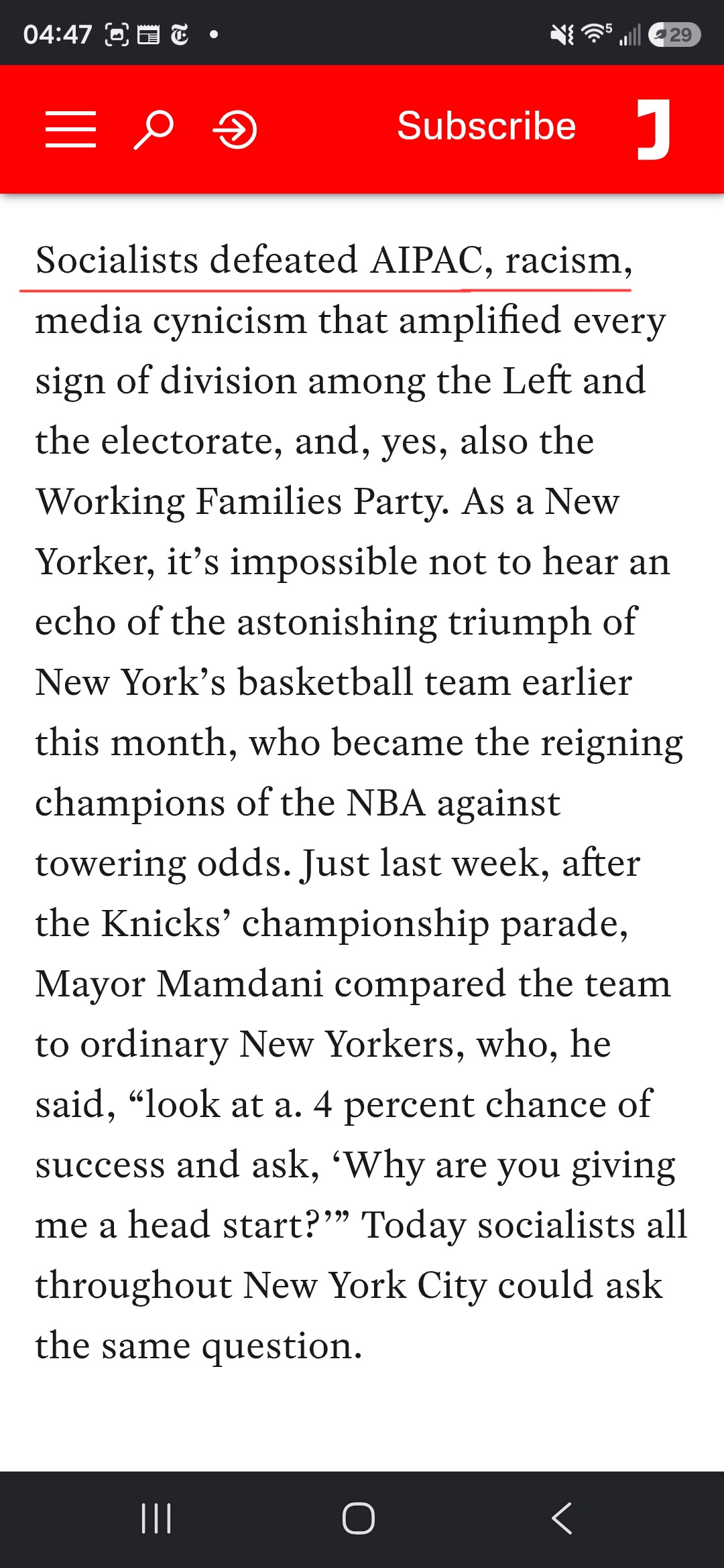
Jacobin lead is that Socialists defeated “AIPAC, racism” before anything else
Cities are not lost in a single election. They are lost one neighborhood at a time.
How do you comprehend six million murdered Jews? One million murdered children?
The numbers are so large that the human mind struggles to grasp it. Six million becomes a statistic. A statistic becomes an abstraction. And an abstraction risks becoming forgettable.
For decades, Holocaust educators wrestled with that problem. Their answer was simple: stop counting and start remembering.
Programs such as Names, Not Numbers were created in Jewish schools to teach students that every Holocaust victim was an individual human being. Students interviewed survivors, recorded testimonies, learned family histories, and transformed statistics back into people. The goal was not merely to teach history. It was to restore identity to those whom the Nazis sought to erase.
The same idea appeared in the remarkable documentary Paper Clips.
In the film, students in a small town in Tennessee learned that six million was too large a number to understand. They discovered that Norwegians had worn paper clips as symbols of resistance to Nazi occupation and decided to collect six million paper clips – one for every murdered Jew.
As the clips accumulated, the students began to understand something profound. It was hard to gather millions of ordinary clips – it required enormous resources and participation of people and organizations far and wide. That millions of people could be exterminated deliberately was terrifying.
The educational programs also sought to do more than humanize the victims and demonstrate the scale of the atrocities.
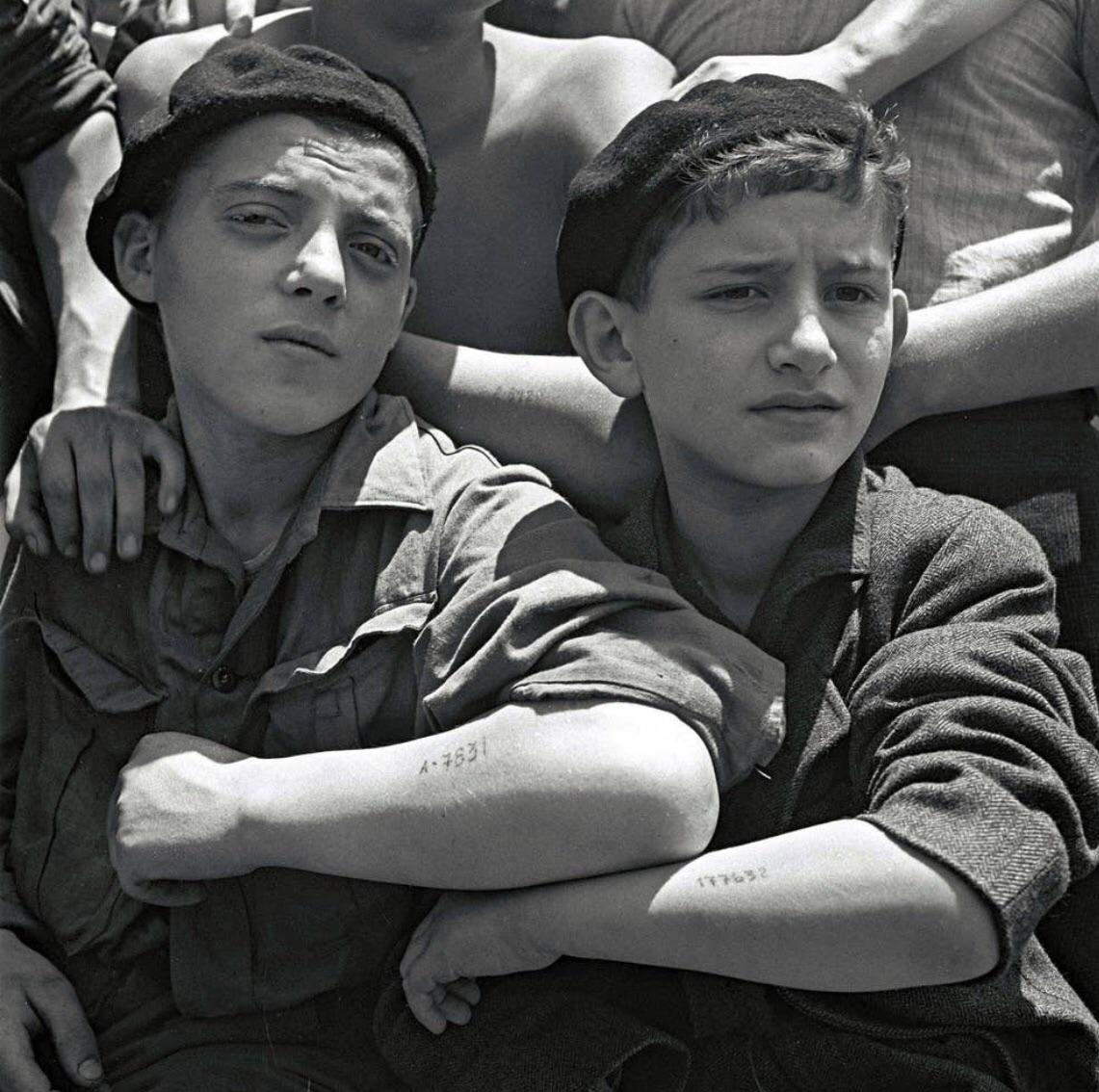
Nazis literally transformed people into numbers. Upon arrival at Auschwitz, many prisoners were stripped of their names and tattooed with identification numbers. It was part of a larger project to erase individuality, dignity, and humanity. The Holocaust was not only a campaign to murder Jews. It was a campaign to reduce them to anonymous units in a machinery of extermination.
Jewish children display tattooed numbers that Nazis put on their arms during the Holocaust
The Holocaust was not simply a story within a war. More than one million Jewish children were murdered not because they were caught in a battlefield, not because they belonged to an opposing army, but because they were Jewish. The Nazi regime actively hunted them for liquidation. Jewish babies, toddlers, and schoolchildren were marked for death from birth.
They were not collateral damage. They were targets.
For decades, educators, museums, survivors, and Jewish communities worked to preserve those names and those stories. The idea that victims should be remembered as human beings rather than statistics became one of the defining themes of Holocaust education around the world.
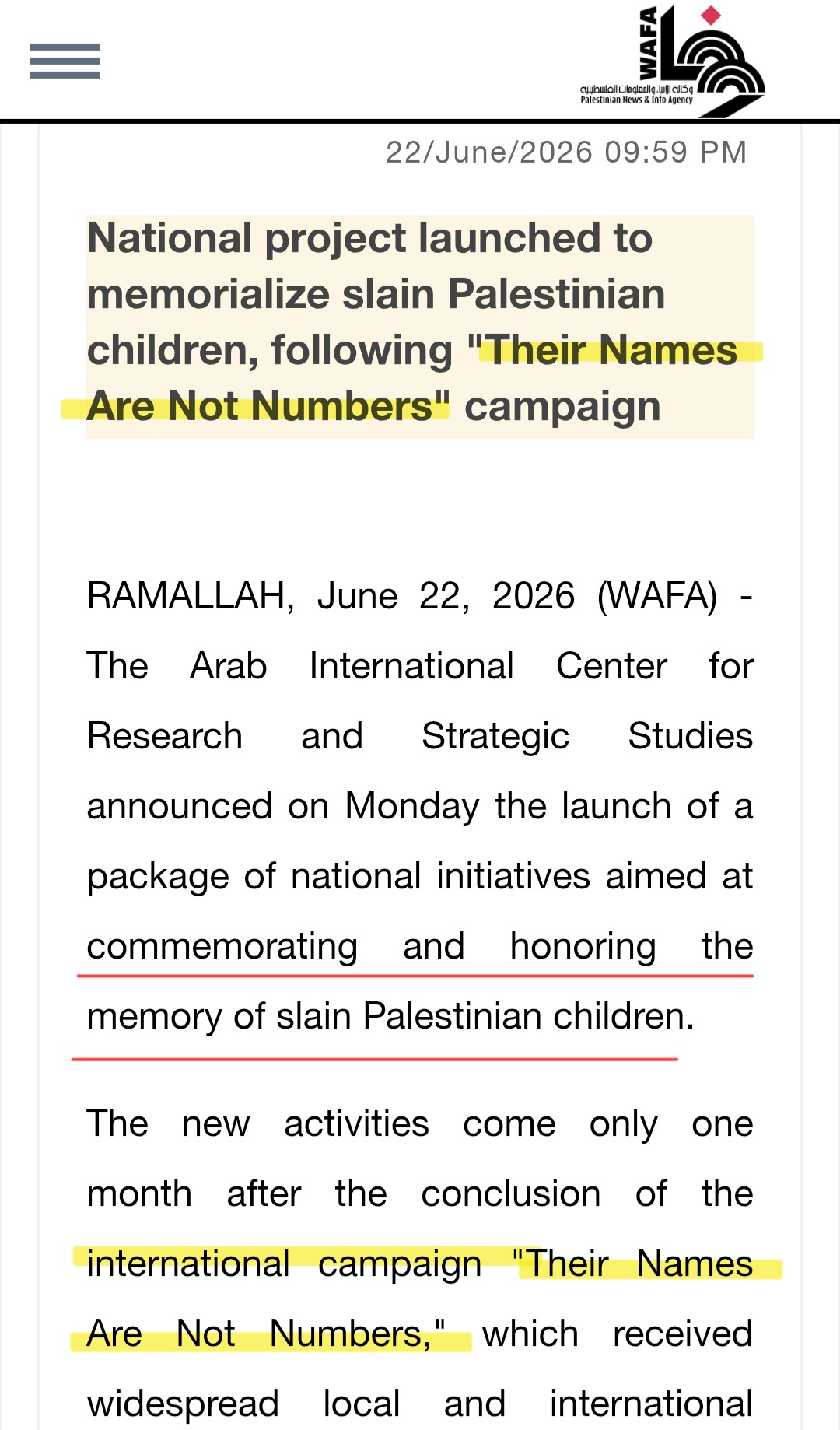
The slogan echoes language that Holocaust educators spent generations developing. It draws upon a framework created to explain why victims of genocide should be remembered as individuals rather than numbers.
Palestinian Arabs are using a cruel tool in a flimsy attempt to wipe away their own guilt for launching a genocidal war with broad support, and for deliberately banning children from entering the tunnel infrastructure that leadership spent years and billions of dollars constructing. The Palestinian Authority is not merely making the dead children martyrs at someone else’s hands rather than their own, but deliberately lifting the campaign from an actual genocide. They have turned Holocaust remembrance against the Jewish state.
This is a moral perversion.
The Holocaust was a state-directed project of extermination whose goal was the disappearance of the Jewish people. Israel’s war against Hamas is a war against an armed movement that invaded Israel, massacred civilians, took hostages, and openly declares its intention to destroy the Jewish state.
Equating those realities with the Holocaust is not simply immoral but antisemitic. Borrowing the language developed to remember murdered Jews is not simply appropriation but sadistic.
Names, Not Numbers was created to ensure that the victims of history’s greatest campaign of anti-Jewish extermination would never be reduced to statistics. To take that language and deploy it as part of a campaign that casts Israel as Nazi Germany not only vilifies Israel unjustly but negates the Holocaust of its meaning and mocks the memory of a million murdered Jewish children.
I took this photograph at the 9/11 memorial in Westchester the morning after the Knicks’ victory. Above the memorial, two airplane contrails crossed in the sky. For a moment, the come from behind basketball victories and terrorist tragedies made time collapse. The memory of loss, the joy of victory, and the story of New York itself all appeared in a single frame.
No city I know lives more intensely between triumph and tragedy.
This is the city that stood at the center of the world, nearly went bankrupt, reinvented itself, endured the horror of September 11th, and somehow found a way to rise again. It is a place of breathtaking architecture, relentless ambition, and an economy that continues to attract dreamers from every corner of the globe.
It is also a city of contradictions. A city capable of extraordinary tolerance and extraordinary intolerance. A city that nurtured one of the greatest Jewish communities in history, yet today struggles with normalized antisemitism many thought belonged to the past. A city whose institutions remain among the world’s finest, yet whose values are constantly being tested.
For much of my life, I thought Sinatra’s line—“If I can make it there, I’ll make it anywhere”—meant New York was the ultimate destination. The summit. The place where success itself was measured.
Standing beneath this memorial, I wondered whether I had misunderstood the lyric.
Maybe New York’s greatest lesson is not that it’s the “top of the heap.” Maybe its lesson is resilience.
To make it in New York is to learn how to navigate uncertainty. To endure setbacks. To celebrate victories without believing they will last forever, and to face disappointments without believing they are permanent. The city rises, falls, and rises again. So do the people who call it home.
And if you learn to survive the waves here, you will never fear the next horizon.
The children who dominate New York’s Israel parade are no longer the children who dominate Jewish education.
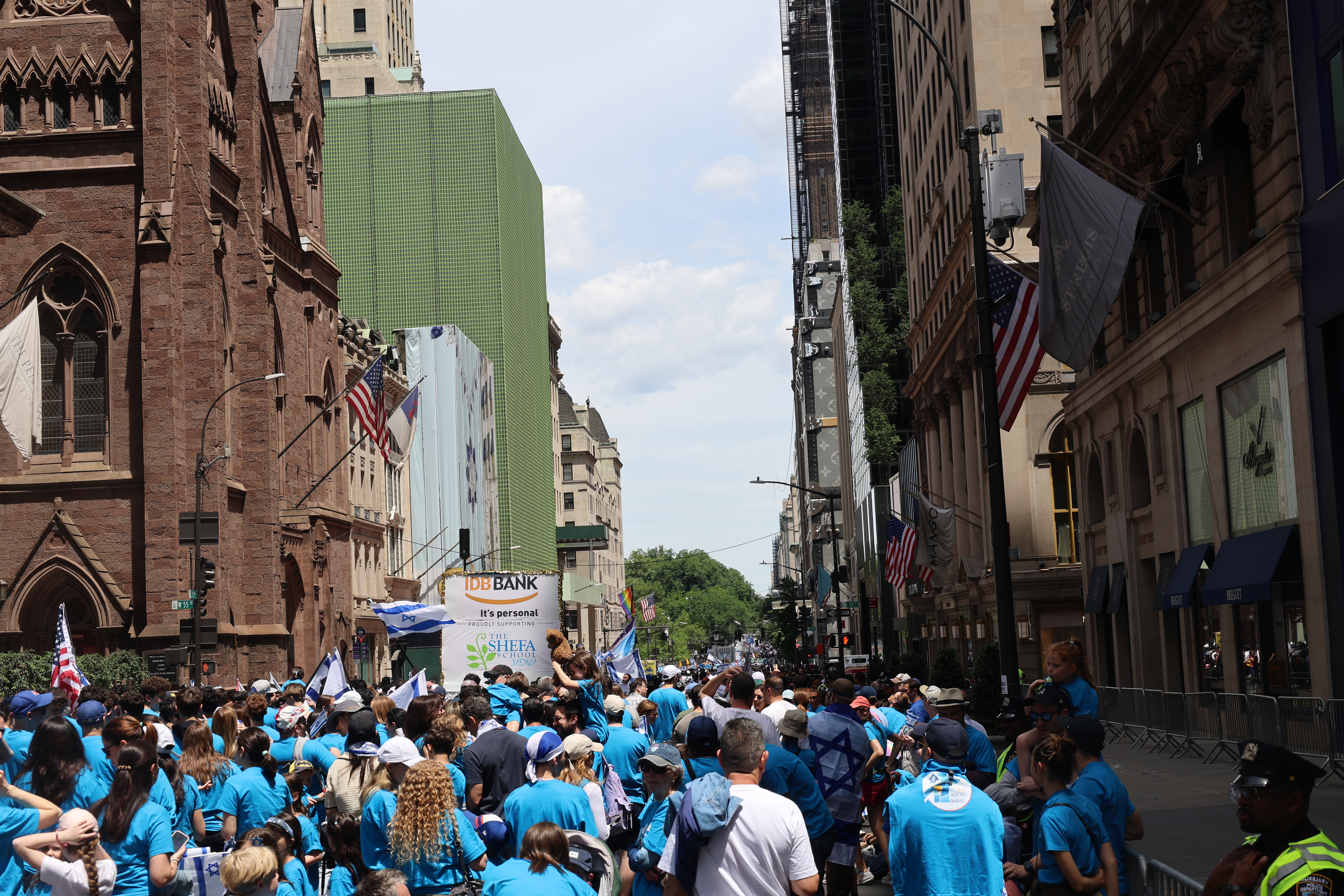
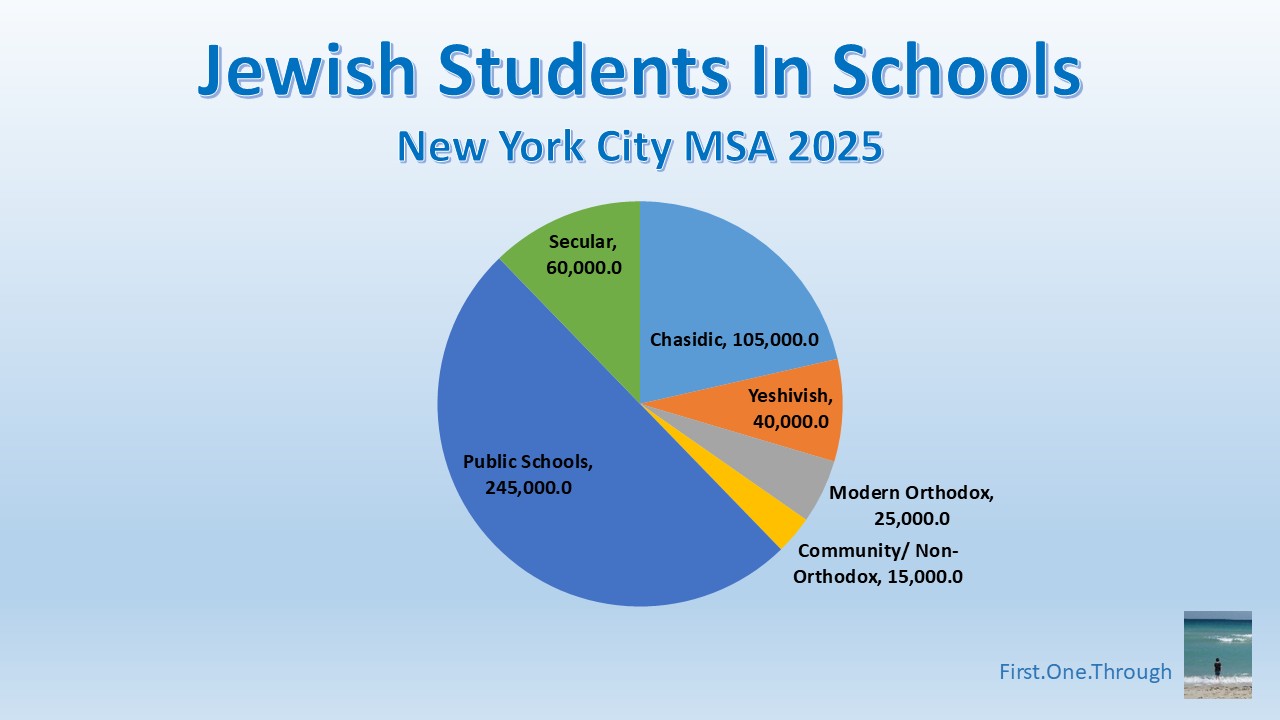
Each spring, Fifth Avenue fills with students from Modern Orthodox and Religious Zionist schools waving Israeli flags, singing Hebrew songs, and celebrating the Jewish state. Yet these students represent only a small fraction of Jewish children in the New York metropolitan area. The largest group of Jewish children attends public and secular private schools. The largest group attending Jewish schools is Chassidic and Yeshivish.
Jewish yeshiva day school students and faculty march up Fifth Avenue in New York City’s Israel parade, May 31, 2026 (photo: First One Through)
That reality raises an important question about the future of one of American Jewry’s most visible public events.
The parade’s own history reflects the evolution of American Jewish identity.
When it was founded in 1964, it was called the Youth Salute to Israel Parade. The name reflected its era. Israel was only sixteen years old. The Holocaust was still within living memory. American Jews were not merely celebrating Israel; they were standing with it.
In 2011, the event became the Celebrate Israel Parade. Israel was no longer a struggling young state. It was a global technology center, a military power, and home to millions of Jews. The emphasis shifted from solidarity to celebration.
After October 7, the parade adopted a third name: Israel Day on Fifth.
The parade’s three names trace the evolution of American Zionism itself. The first generation saluted Israel. The second celebrated Israel.
Today, the challenge is different. Support for Israel can no longer be assumed, and Jewish unity can no longer be taken for granted. The question is whether Israel can continue to serve as a bridge connecting an increasingly diverse Jewish community.
The challenge is particularly visible when looking at Jewish children in the greater NYC area.
The best available estimates suggest that roughly 450,000 to 500,000 Jewish school-age children live in the greater New York metropolitan area. About 170,000 attend Jewish day schools and yeshivot.
Of those, roughly 130,000 to 140,000 attend Chassidic and Yeshivish schools, compared with only 20,000 to 25,000 in Modern Orthodox schools. Outside the day-school world are another 280,000 to 330,000 Jewish children attending public schools, secular private schools, Catholic schools, and other educational settings.
Yet anyone watching the parade could be forgiven for drawing the opposite conclusion.
The schools most visible on Fifth Avenue are overwhelmingly Modern Orthodox and Religious Zionist institutions. They are among the most committed supporters of Israel in American Jewish life. But they represent only a small share of Jewish youth. The fastest-growing segment of Jewish education is Chassidic and Yeshivish. The largest segment of Jewish children overall attends public and secular private schools.
The parade therefore showcases some of the most engaged Jewish children in America, but not necessarily the full spectrum of Jewish youth.
That matters because Israel remains one of the few ideas capable of connecting Jews across denominational, ideological, and educational lines. At a moment when Jewish attachment to Israel is increasingly challenged on college campuses, contested on social media, and questioned in parts of American public life, institutions that connect young Jews to Israel have become more important, not less.
If the goal is Jewish unity in the decades ahead, the parade may need to ask a different question.
Rather than “How do we celebrate Israel?” the question may be “How do we bring the Jewish people together around Israel?”
A future parade organized around Am Yisrael rather than a particular expression of Zionism could create room for every community to participate in its own way.
Charedi schools could march under banners celebrating Torah in the Land of Israel.
Public-school students could march through camps, youth groups, synagogue programs, and community organizations.
Modern Orthodox schools could continue expressing their Religious Zionist vision.
Israeli cultural groups, charities, universities, first responders, and innovation organizations would all still have their place.
This would be Am Yisrael Day on Fifth Avenue.
The original parade was created to demonstrate solidarity with a young Jewish state. The next challenge is ensuring that future generations of American Jews remain connected both to Israel and to one another.
Should the future of the parade remain with the niche schools that already fill Fifth Avenue, it will become a symbol of the fragmentation of Israel support even within the Jewish community, let around the broader world. That would not bode well for Jewish New Yorkers or Israel.
The first generation saluted Israel. The second celebrated Israel. The challenge for the third generation is to ensure that Israel remains a force capable of uniting the Jewish people.
Every modern humanitarian organization insists the same thing: suffering is not a business. The starving child is not a marketing asset. The bombed hospital is not a fundraising funnel. The crying mother under rubble is not a revenue generator.
Then the annual reports arrive.
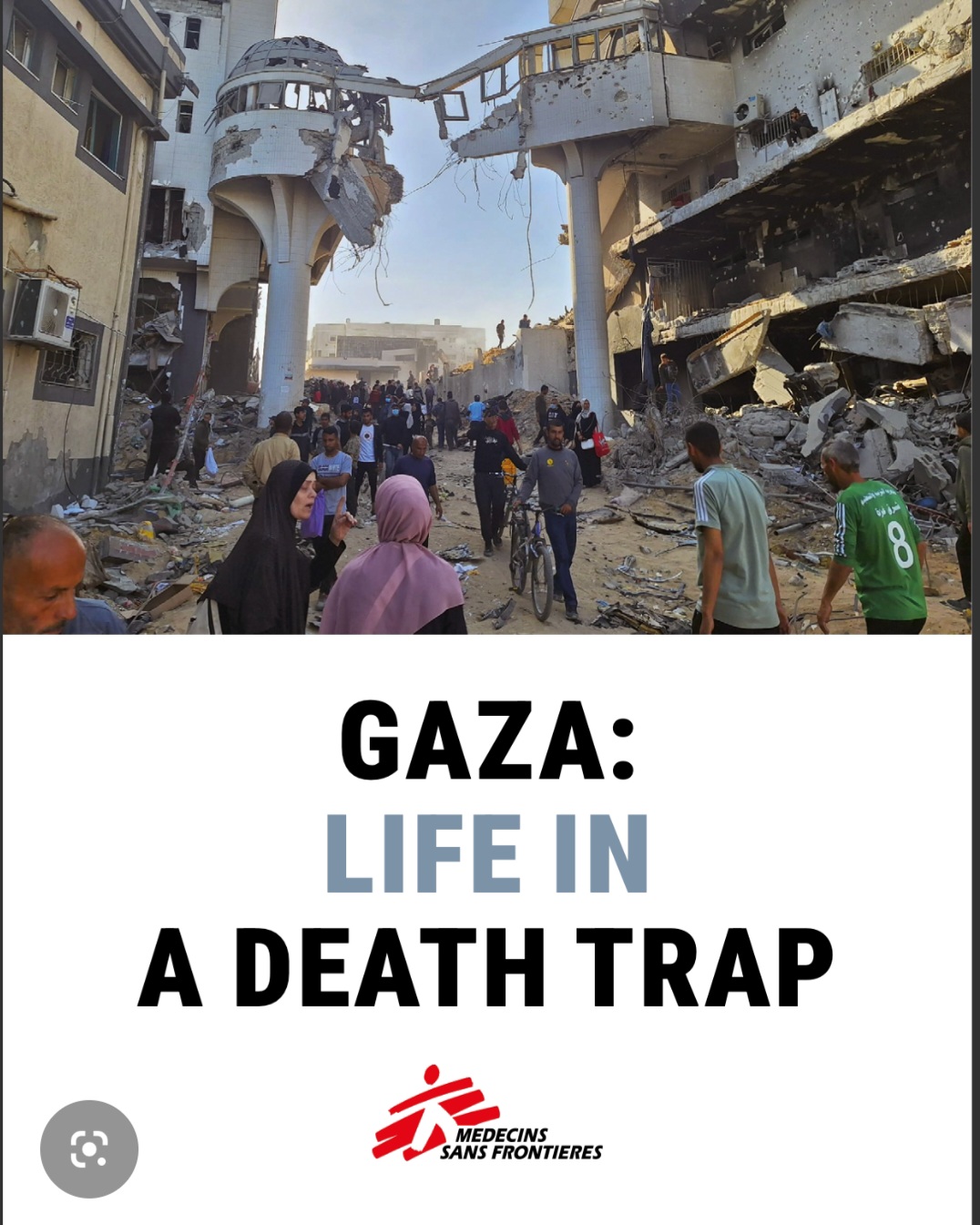
Médecins Sans Frontières (MSF) / Doctors Without Borders crossed roughly €2.3 billion in annual revenue in 2022. Then roughly €2.35 billion in 2023 and €2.36 billion in 2024. Three consecutive years above €2 billion. Ninety-eight percent of funding came from private donors. More than seven million donors worldwide.
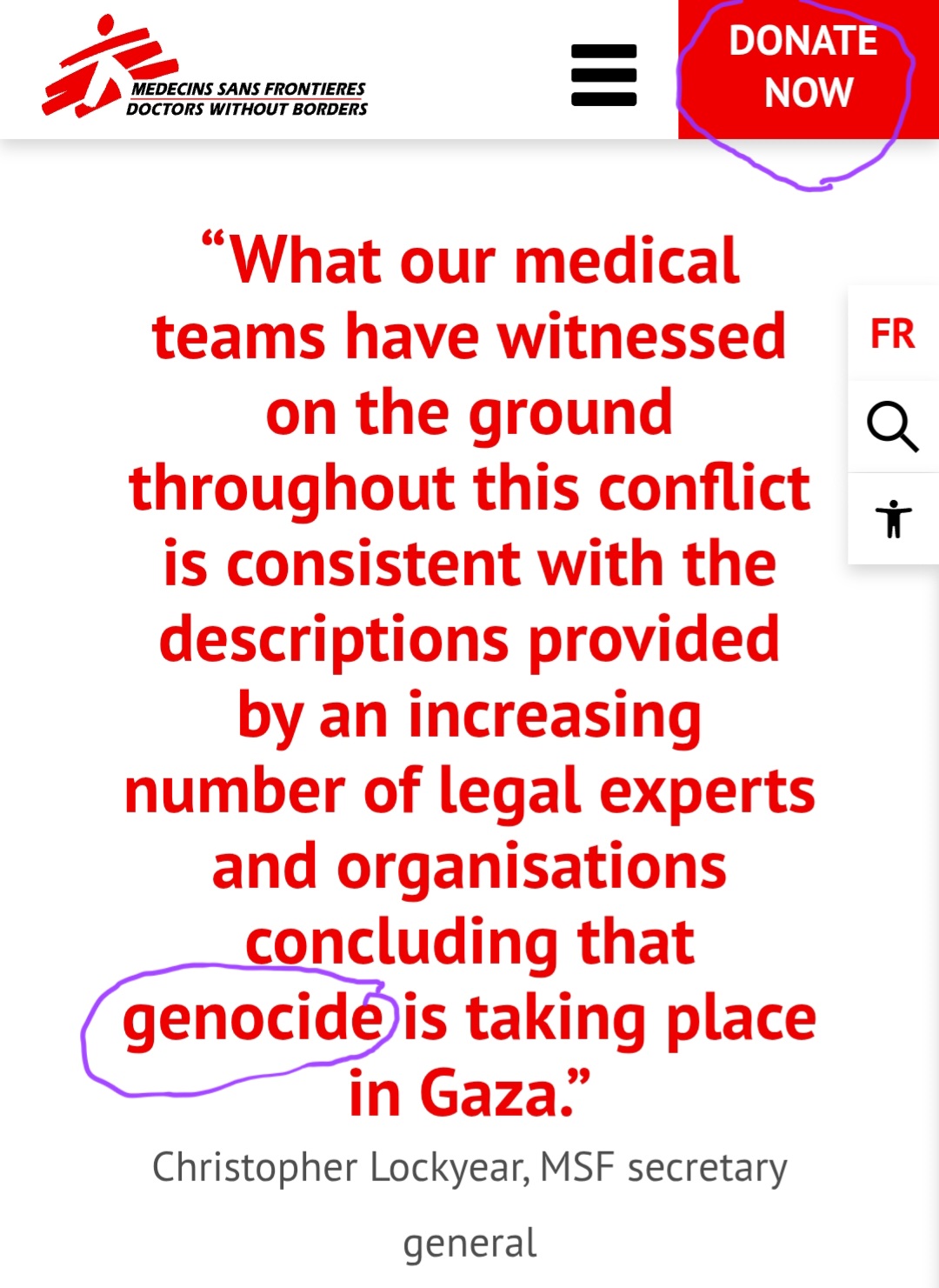
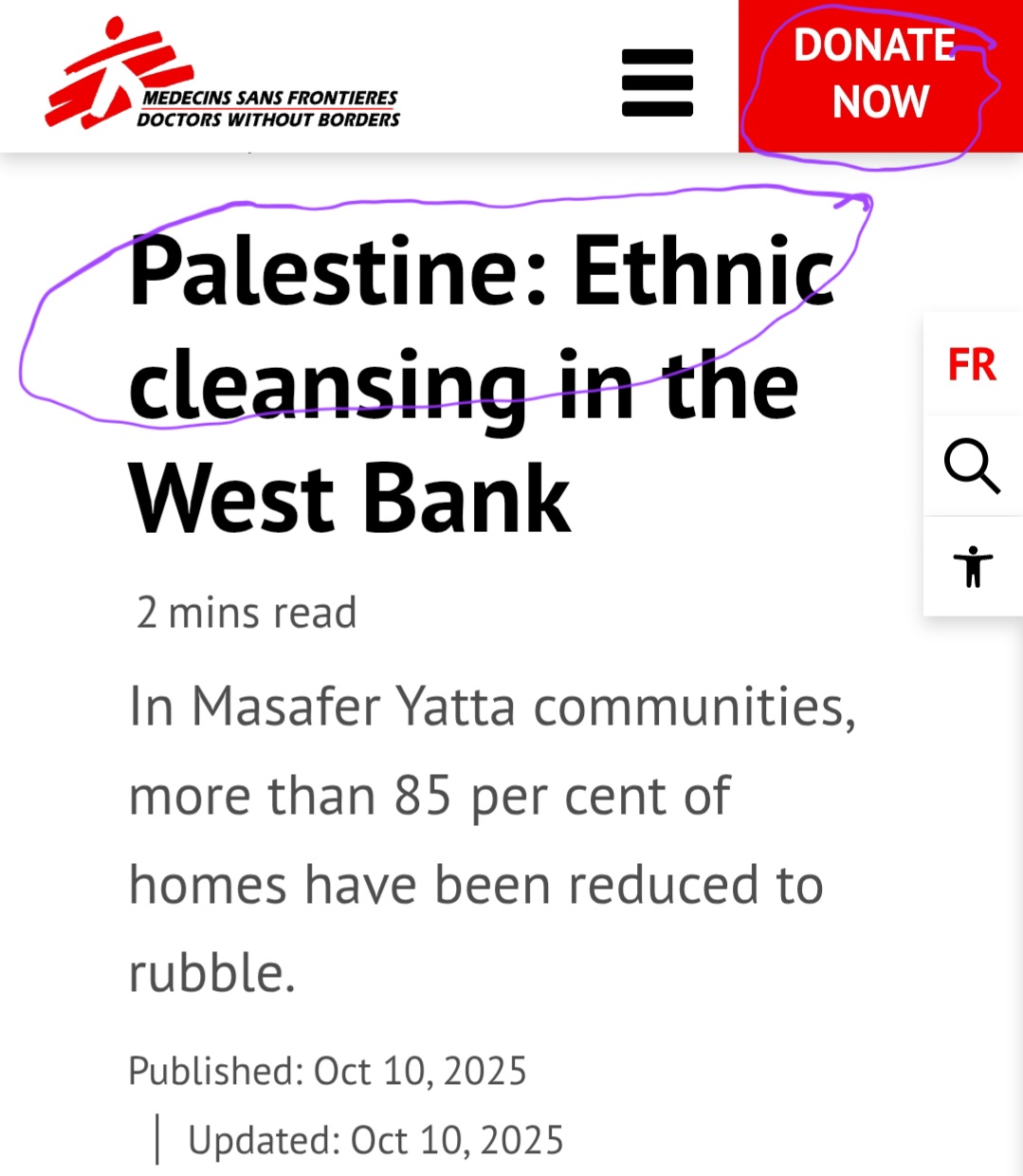
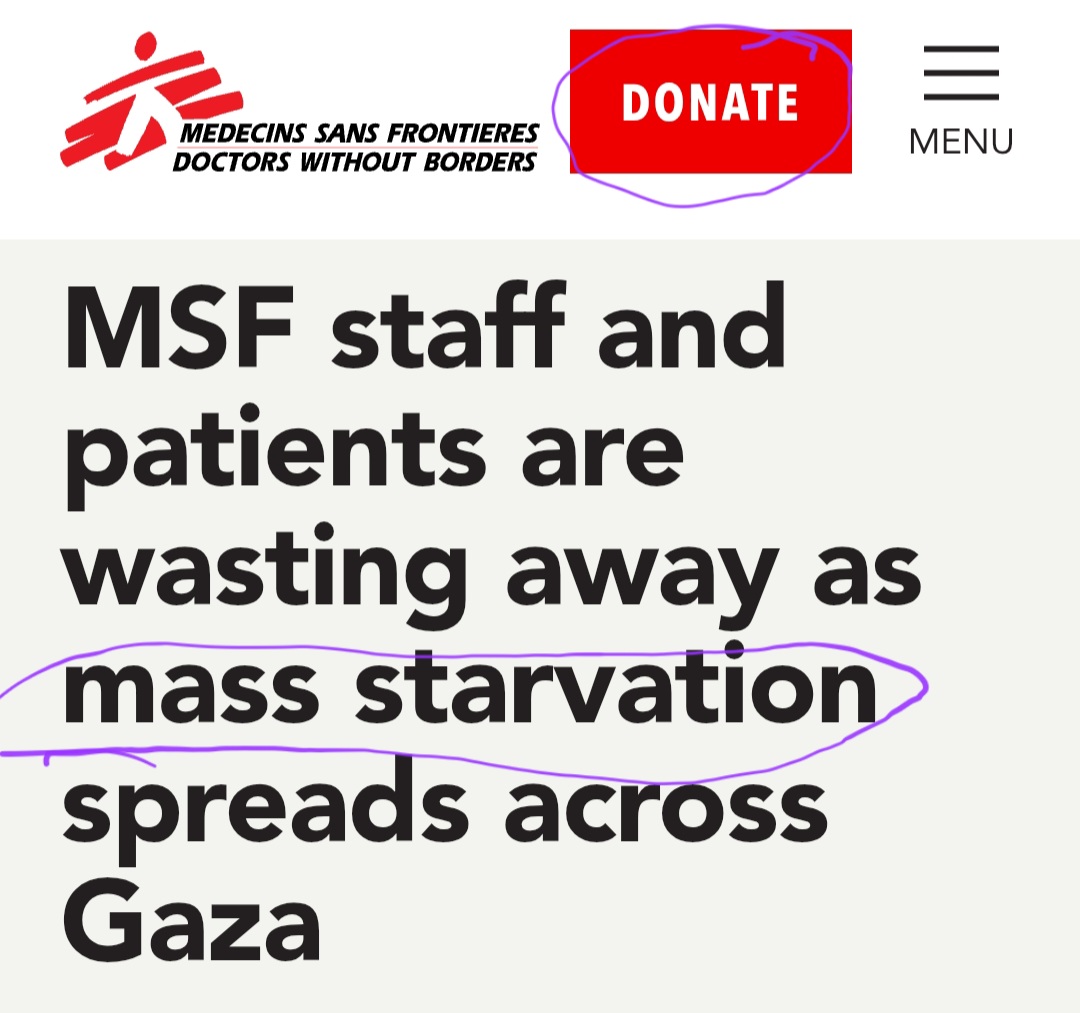
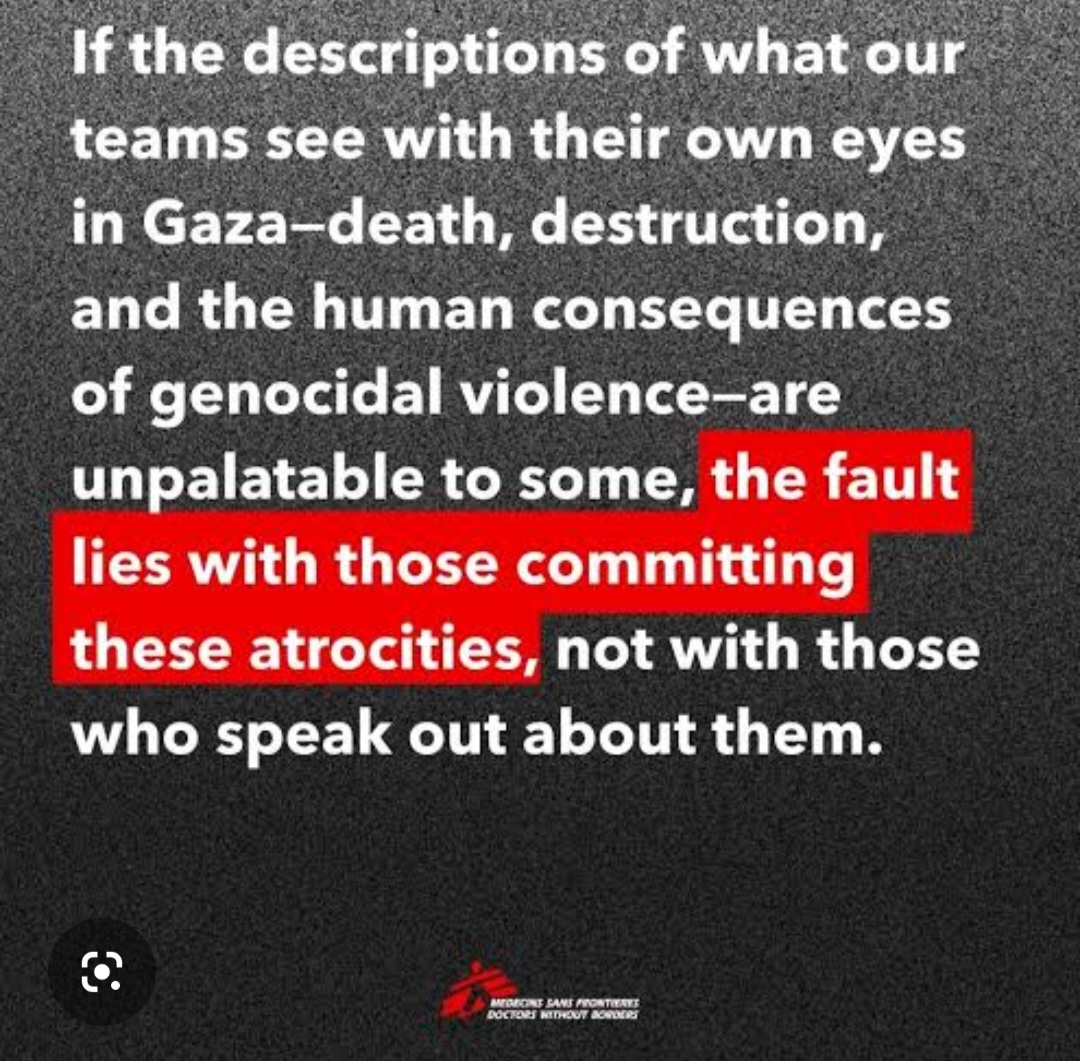
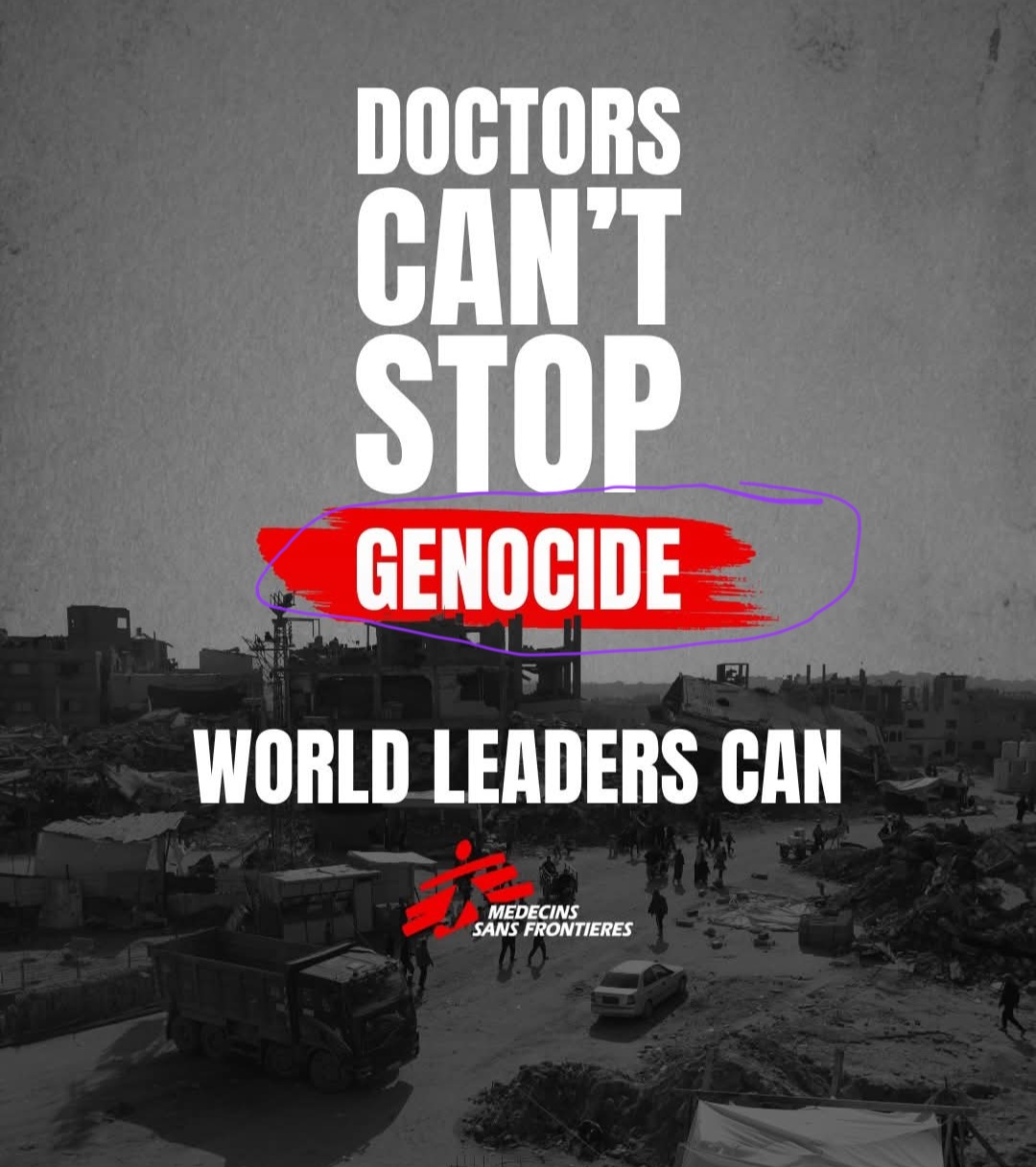
The organization presents this as proof of global compassion. It is also evidence of something else: misery has become one of the most effective fundraising products on earth. Especially if loaded with charges: “Genocide.” “Starvation.” “Ethnic cleansing.”
The humanitarian industry now operates inside the same emotional attention economy that drives political campaigns, cable news, and social media outrage. The more horrifying the imagery, the more morally charged the narrative, the more emotionally shattered the audience becomes, the faster the money moves.
And nobody understands this dynamic better than MSF.
MSF’s public communications increasingly fused emotionally maximalist language with direct fundraising infrastructure. A visitor no longer encountered merely medical updates. They encountered emotional conversion architecture.
The modern humanitarian sector has discovered what every digital platform already knows: emotionally devastating content converts. A dusty child under rubble produces more engagement than a policy paper. A charge of genocide and starvation moves directly into emotional reflex.
The uglier the images and explosive the charges, the healthier the fundraising pipeline becomes.
Doctors Without Borders is very selective in its explosive terminology regarding Israel. For MSF, Israel is the cause of all the ills in Gaza, not Hamas. Israel is directly called out, not the genocidal terrorist group that launched the war and hides in tunnels without letting civilians use them for protection. No excuse proffered by Israel will satisfy.
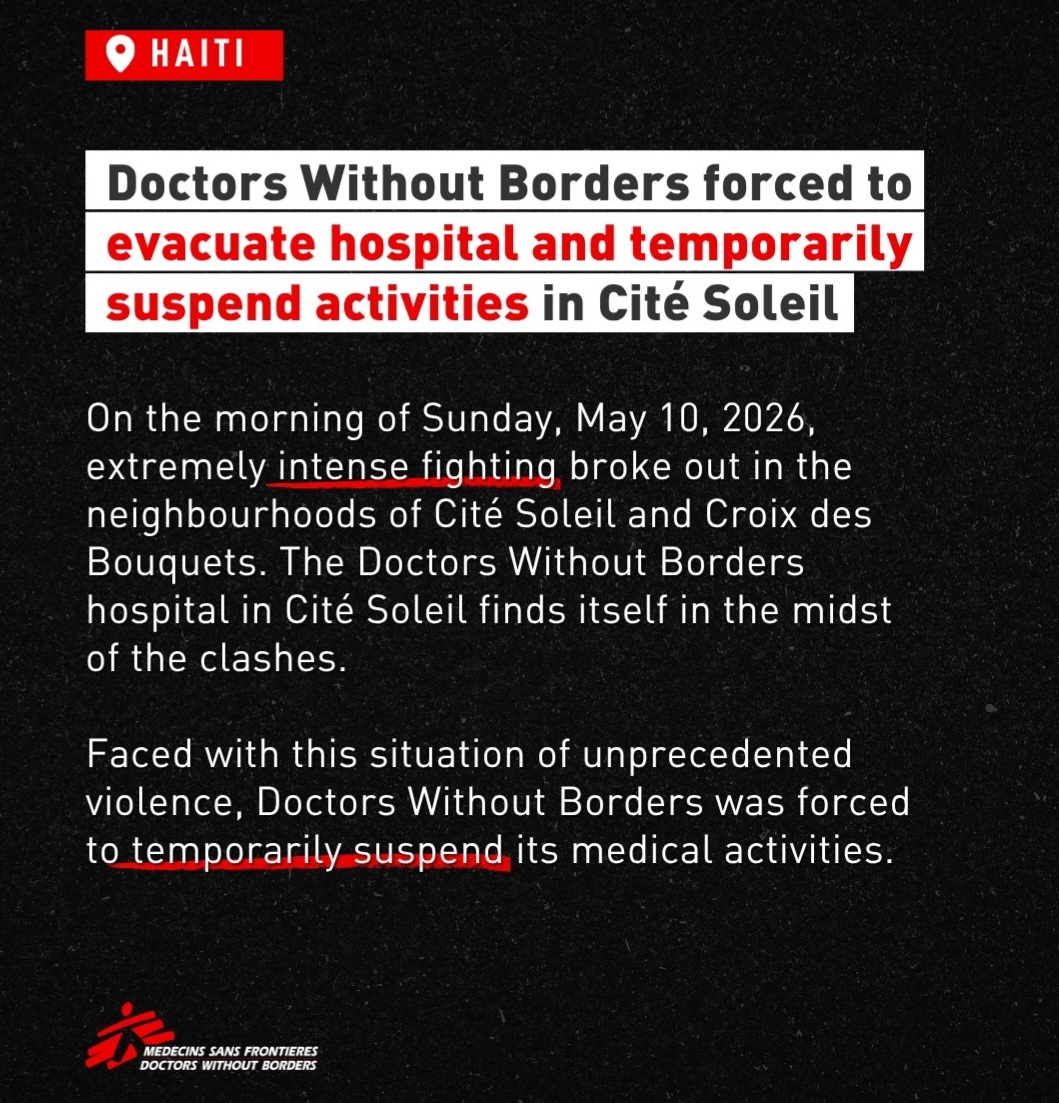
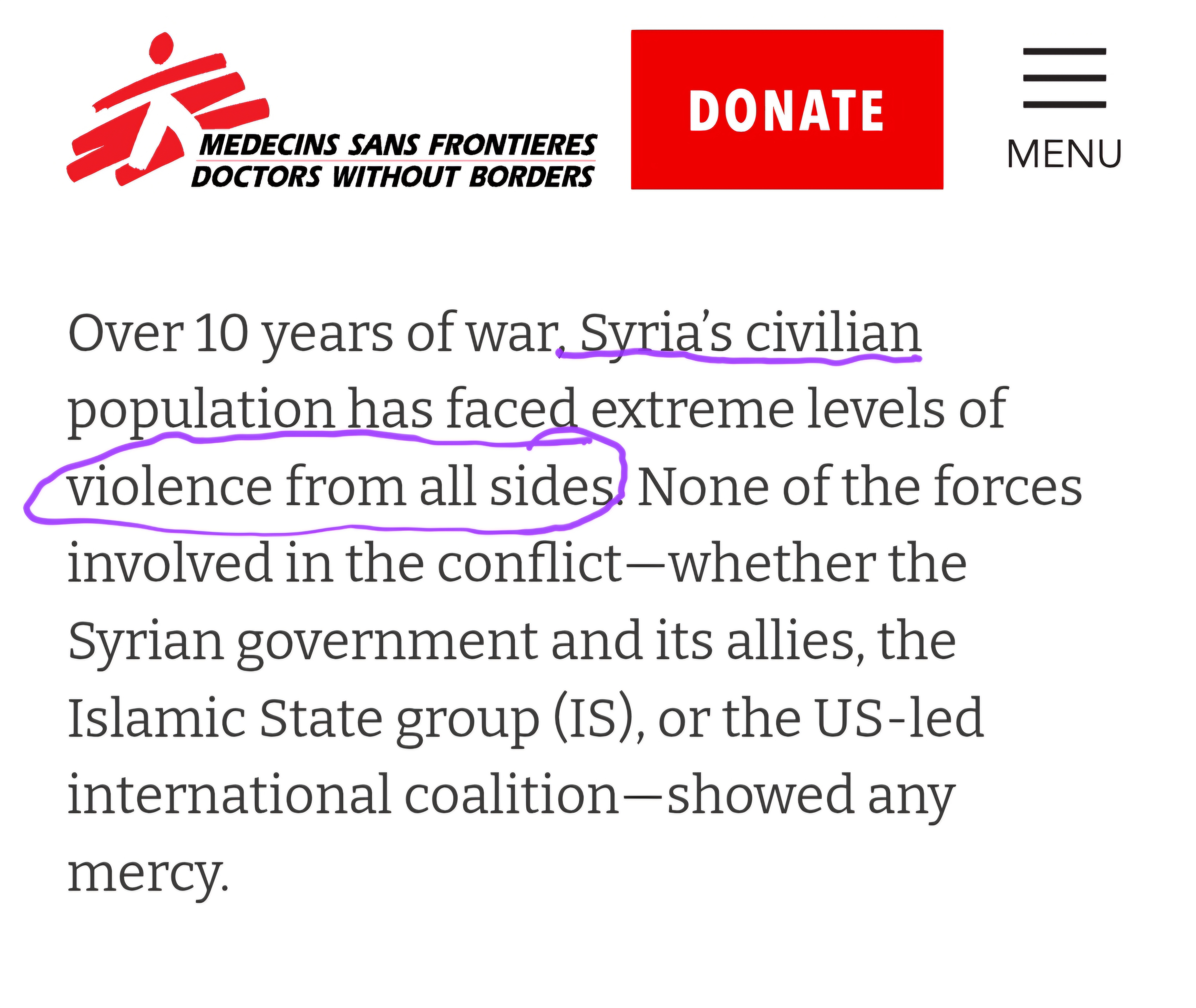
Doctors Without Borders doesn’t do this in other conflicts. Not in Sudan nor Somalia. Not in Syria nor Haiti. In those wars, either no one is called out or “all sides” are vilified.
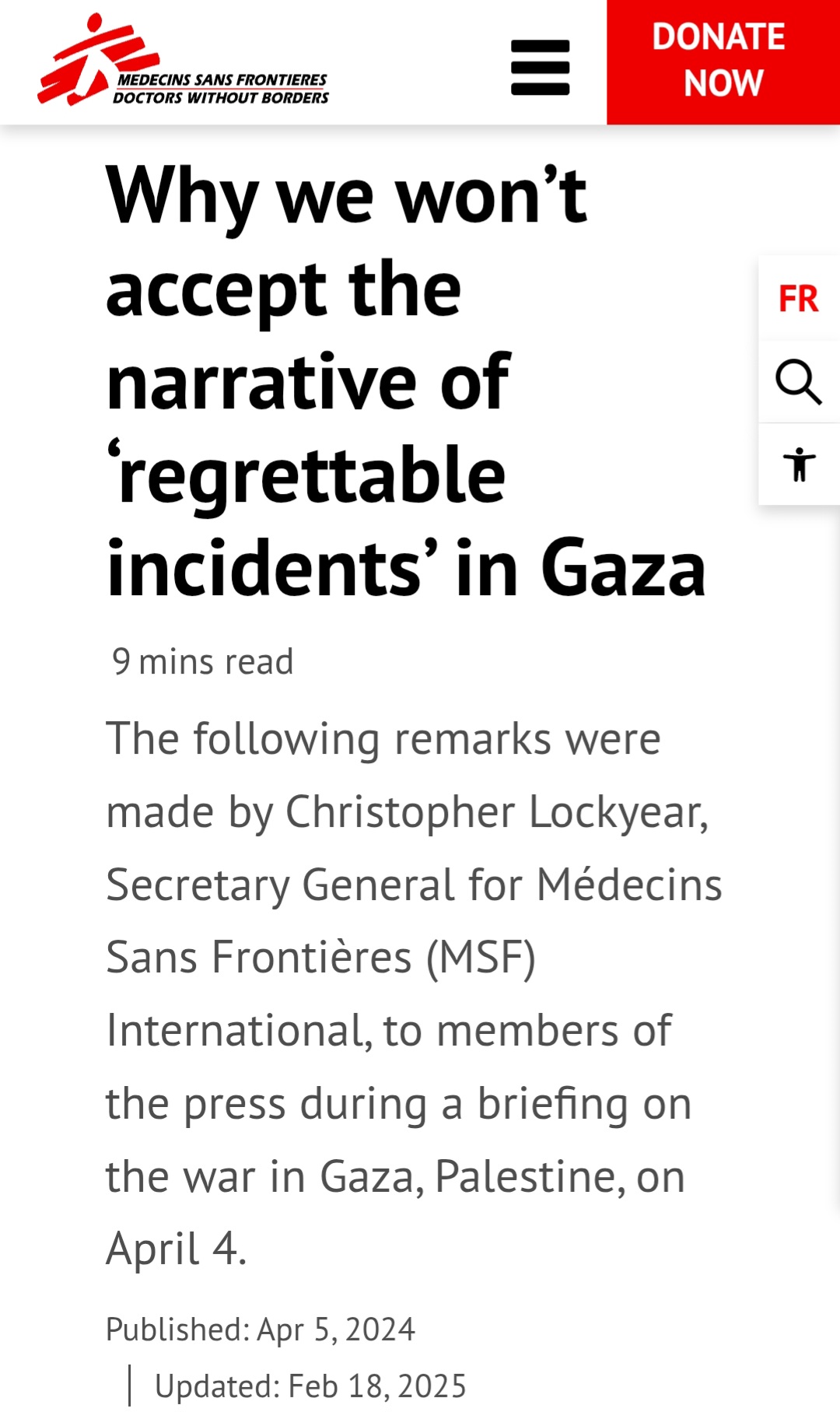
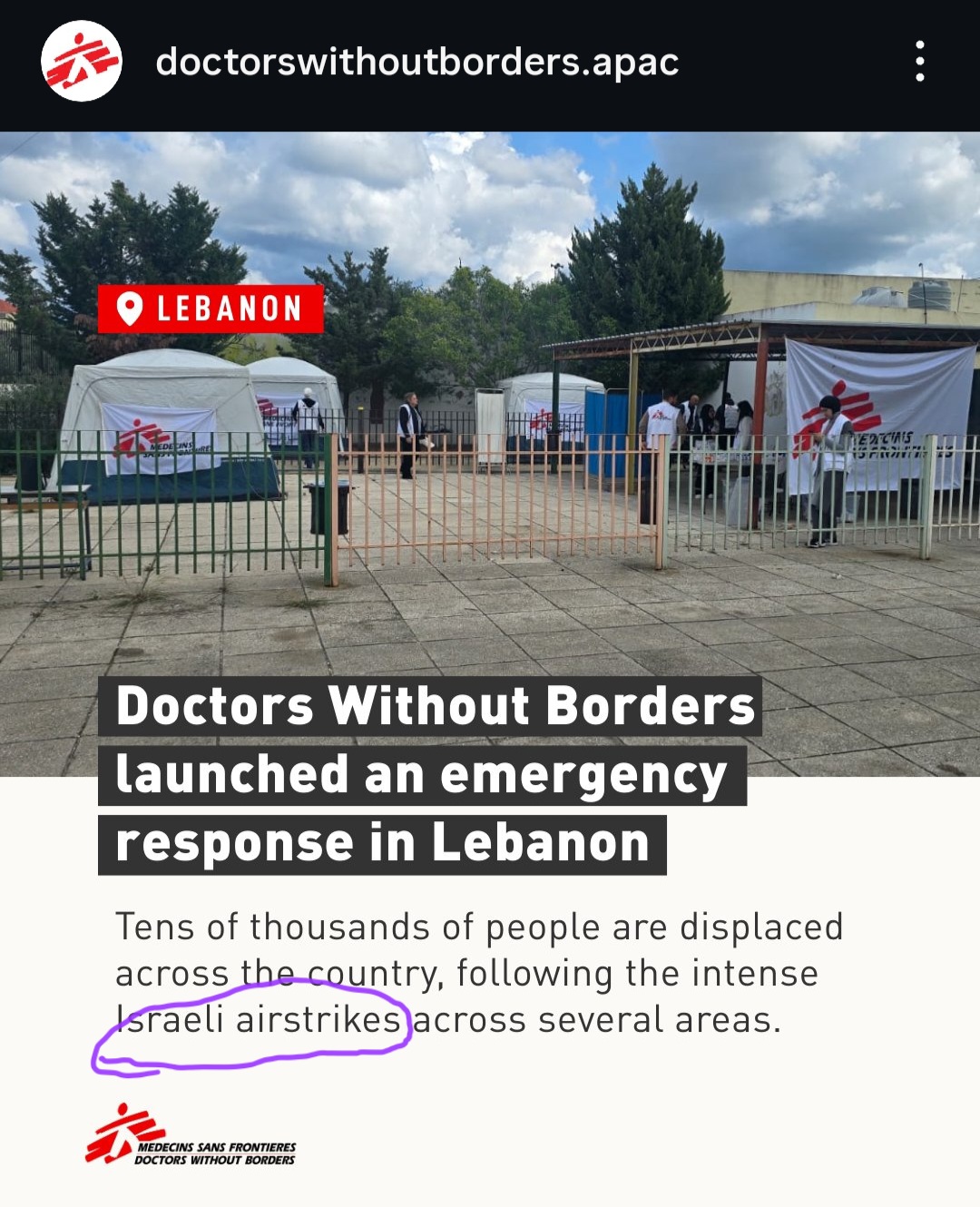
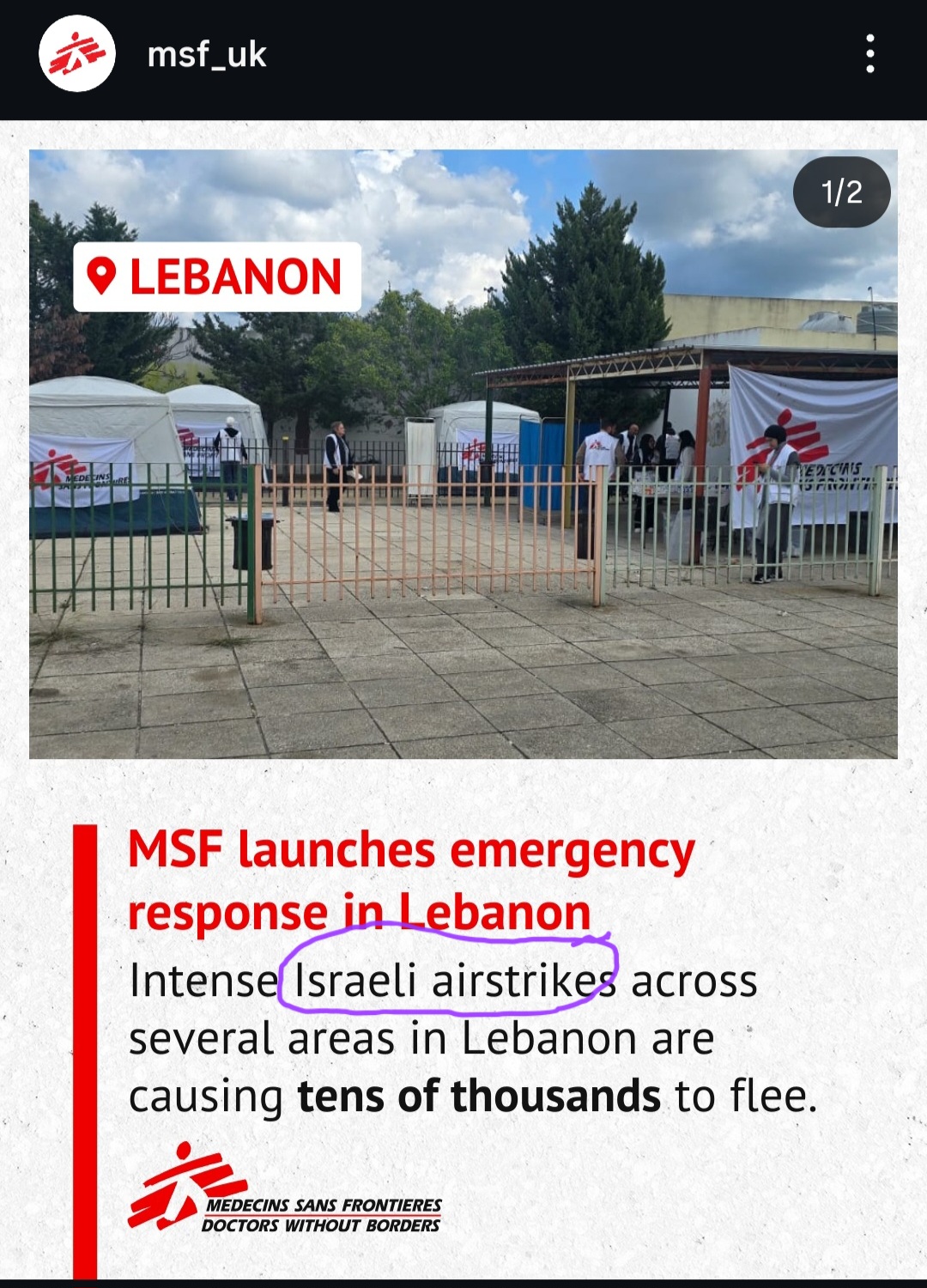
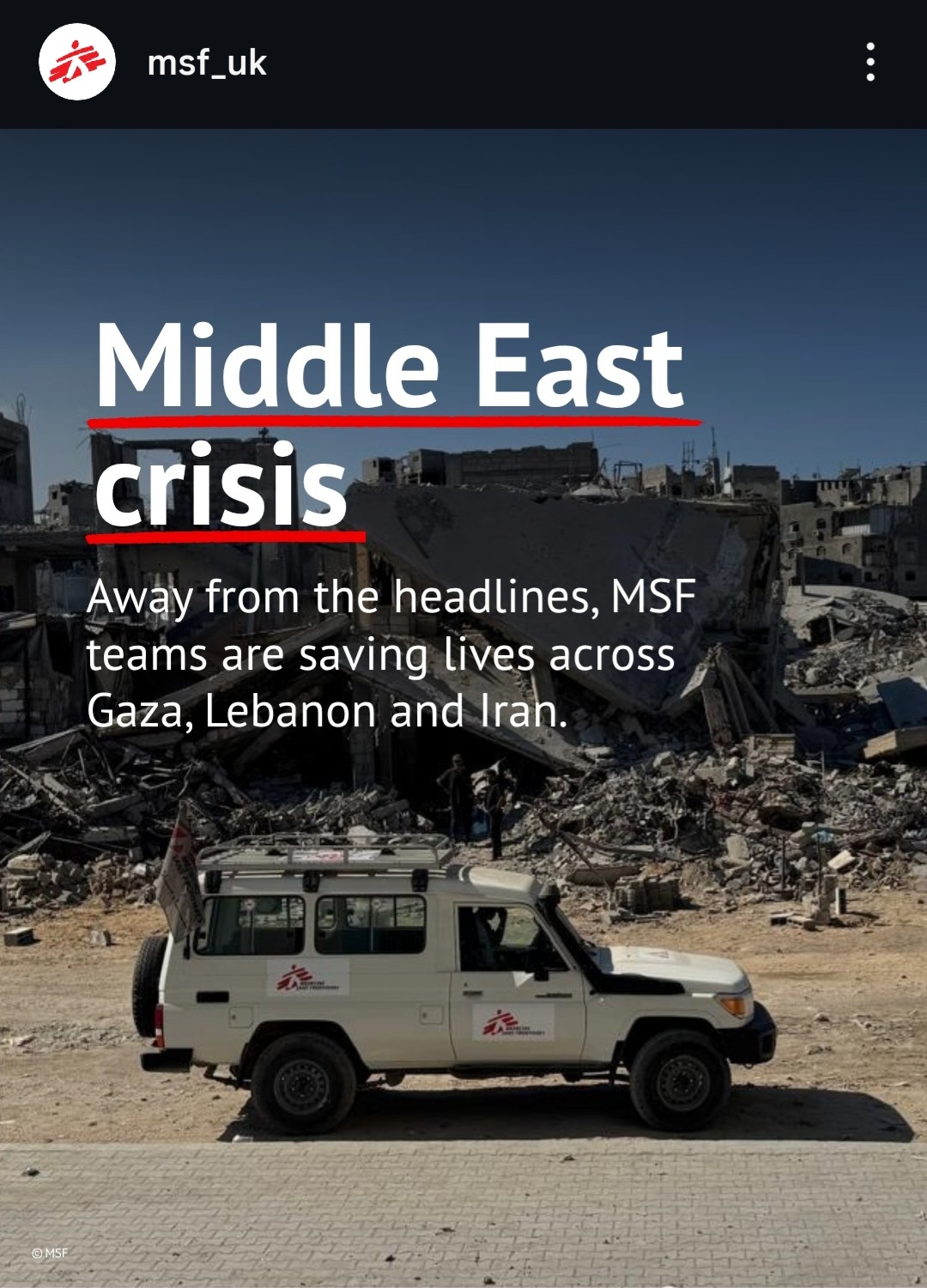
And MSF takes its anti-Israel campaign on the road. Wherever Israel is dragged into a defensive war against those determined to annihilate it, like Lebanon and Iran, MSF is standing guard and pointing fingers.
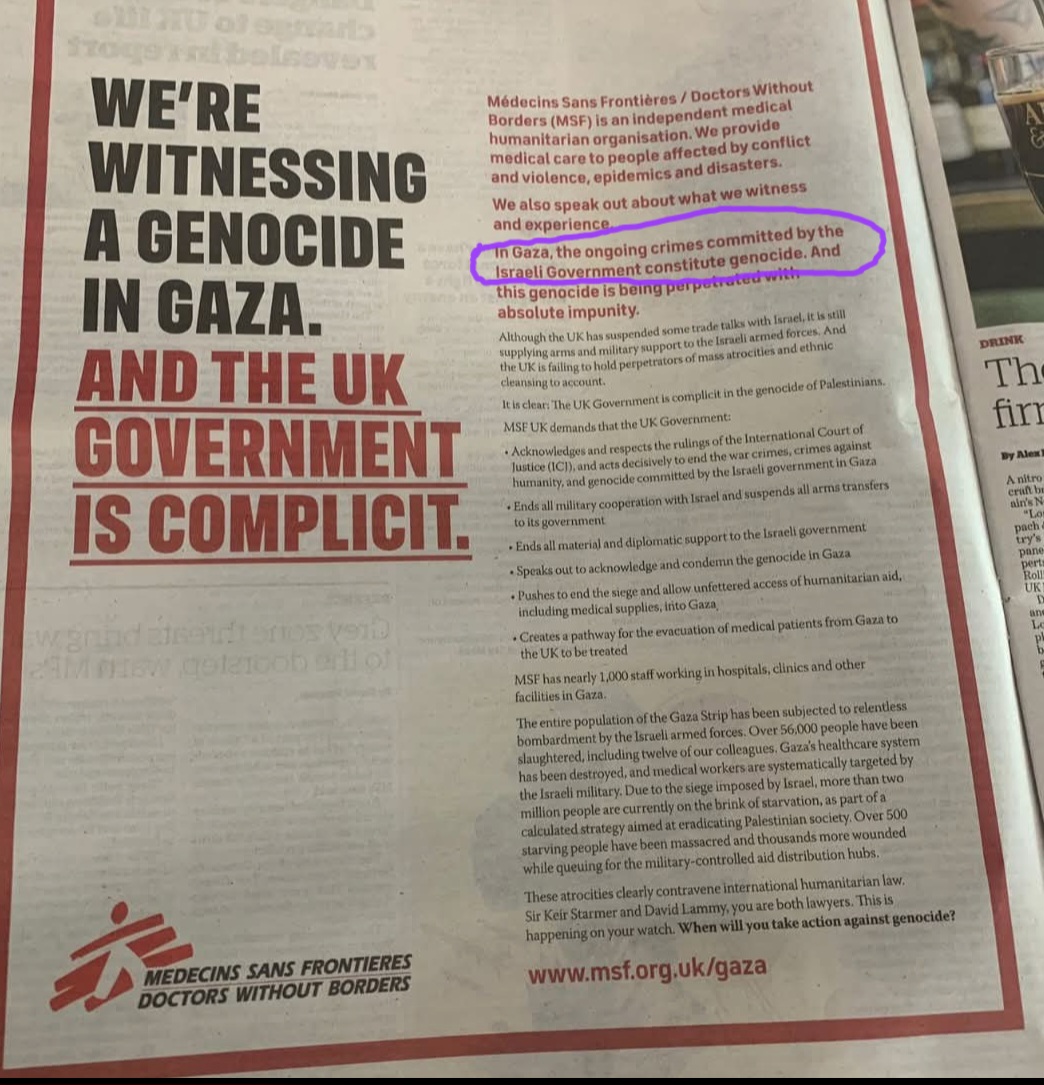
MSF does not limit itself to smear campaigns against Israel. It is a full lobbying shop, taking out full page ads in newspapers to rally the public against Israel. It pushes governments to stop supporting Israel in its defensive war.
So it is no surprise that MSF has officially backed the entire Iranian proxy war against Israel, telling the world that it rushes to protect “Gaza, Lebanon and Iran” from Israel.
Doctors Without Borders: 1) runs to assist jihadists in their active war against Israel; 2) raises money claiming the belligerent parties are the victims; 3) lobbies to have governments stop supporting Israel and 4) calls for the masses to protest the Jewish State. It does all of this, uniquely in Israel’s war.
Doctors Without Borders is not a humanitarian organization but an active instrument in the war to destroy Israel.