The Eclipse of Jihad

Staring at the sun is dangerous. It can permanently damage your eyes.

That is true today, during a solar eclipse. It was true yesterday. And it will be true tomorrow.

Yet almost no one spends an ordinary sunny day warning people not to stare at the sun. There are no news alerts. No public-service campaigns. No rush to buy protective glasses.

Then an eclipse arrives, and suddenly everyone is talking about retinal damage.
The eclipse does not make the sun more dangerous. It makes us more likely to look.

On an ordinary day, the sun is painfully bright. We instinctively turn away. During an eclipse, the moon covers much of that brightness. The sun becomes darker, stranger and irresistible. Curiosity tells us to keep looking precisely when the covering makes the danger easier to underestimate. We look at the danger precisely when the danger hides behind a mask.

The danger was always there. What changed was our behavior.

Violent jihad presents a darker version of the same phenomenon.

An ideology that glorifies murdering civilians, suicide bombings and religious war does not become less dangerous because something is placed in front of it. Yet organizations, activists and politicians can provide a kind of ideological eclipse—describing jihadist violence primarily through the language of “resistance,” “liberation” or Palestinian Arab self-determination.

October 7 should have been impossible to romanticize. Thousands of Hamas terrorists murdered families in their homes, slaughtered young people at a music festival and dragged hostages into Gaza. Yet almost immediately, people began searching for language that could place a covering over the horror.

“Palestinian self-determination” became one such covering. It transformed a discussion about what Hamas actually did and what it openly sought into a more familiar political argument about nationalism, borders and statehood. The words did not change the violence. They changed how people were invited to look at it.
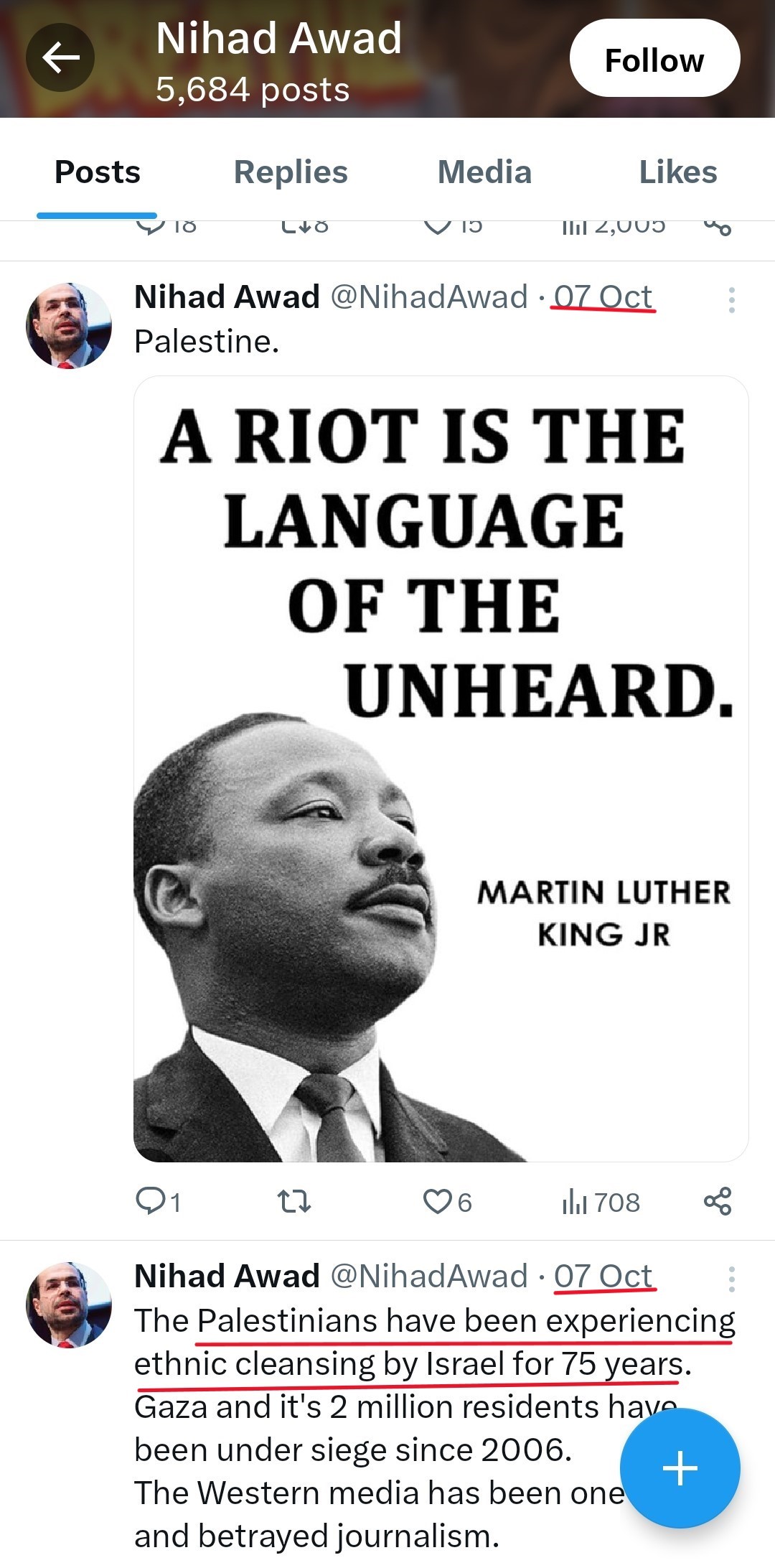
The head of the CAIR posted that October 7 was a Martin Luther King moment for Palestinian Arabs while the massacre in Israel was ongoing

And once the horror is covered, something disturbing happens. What should repel people can become a passing fascination. Violence acquires slogans, symbols and intellectual rationalizations. Terrorists are recast as revolutionaries; psychopaths and cowards as heroes. People who would instinctively recoil from the naked ideology are encouraged to stare at a filtered version of it.

That is the danger of an eclipse. It does not destroy the source of the danger. It obscures enough of it to change human behavior.

The sun was dangerous before the moon passed in front of it. It will remain dangerous when the moon moves away.

Violent jihad was dangerous before October 7. It remained dangerous while people explained its atrocities through socialist-jihadi language. And it will remain dangerous after today’s political fascination moves somewhere else.

The eclipse does not change the sun nor does political covering change violent jihad. It only changes whether people recognize the danger when they look at it.

Totalities

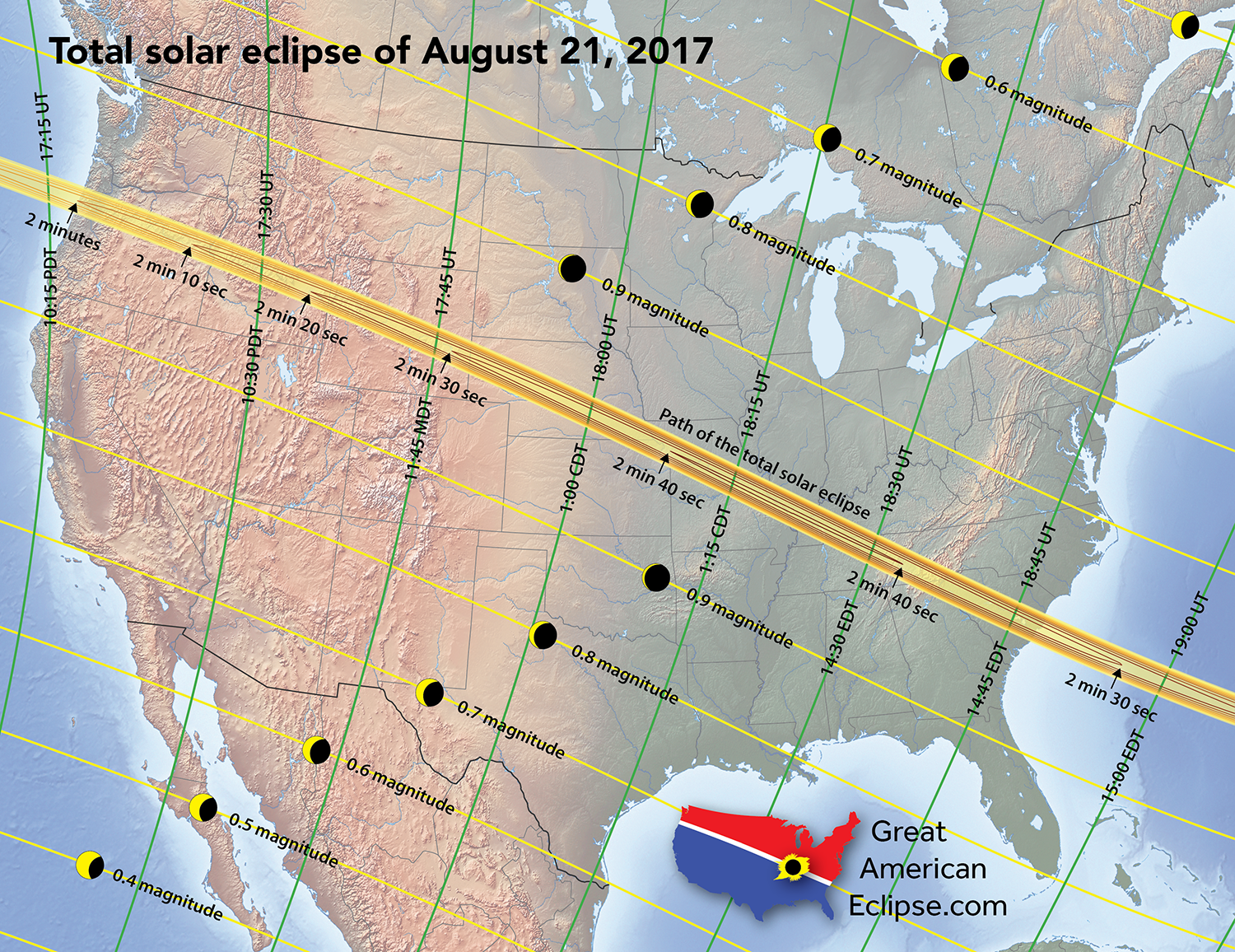
The United States got a chance to view a solar eclipse on August 21, 2017. Most of the country only saw a partial eclipse, with a narrow band of the country from South Carolina to Oregon witnessed the solar eclipse in its totality.

The Solar Eclipse 

The “totality” was a remarkable site to behold. The sun was completely eclipsed by the moon passing before it, rendering the sun as a dark orb, and bringing darkness to that section of the country during daylight hours. The phenomena was short – just three minutes – but its impact on those in its path was amazing.

Total Solar Eclipse
(photo by Ari Mendelow, August 21, 2017)

One would imagine that witnessing such a dramatic event would be easy to see and capture, but it wasn’t. Due to the overall brightness of the sun, one needed to look at the sun through special glasses to capture the sight.


The eclipse through special glasses
(photo: Ari Mendelow)

For those not in the path of totality and without the special glasses, the hours from the very beginning of the eclipse through the end passed without incident. There was no perceptible difference in sunlight during the hot summer day.

Visible Anti-Semitism

August 2017 also brought to light the scourge of anti-Semitism in the United States.

A protest march in Charlottesville, VA about the removal of Confederate war heroes revealed ugly shouts against Jews by White supremacists. Their hatred was laid bare and much of the nation was in shock at the vile display of hate.

However, many advocacy and educational groups – including First.One.Through – have been writing about the rampant anti-Semitism for years. They have repeatedly shown the bias of the media to downplay anti-Semitism, whether in the United States or in Europe; the sad slanders in governmental bodies such as the United Nations and the Obama Administration.

But despite the many articles and videos about prevalent Jew-hatred, people have been dismissive. Much like the millions of people in the United States that did not wear special eclipse glasses, they could not see the hatred that was happening all around them.

Anti-Semitism – like solar eclipses – has always been present. Sometimes the blatant anti-Semitism – a “totality,” to borrow eclipse terminology  – is so overwhelming that the ground becomes darkened as it was in Charlottesville, VA. The hatred was actually visible, and people were astonished.

But such moments come and go. The solar eclipse moves on, to appear in another part of the world, in part and in totality. We will read about the totality events far from our shores. We will be unmoved.

People trying to highlight the incessant anti-Semitism in the world may benefit from a moment of pause, even in the shadow of the great solar eclipse of 2017. One cannot convince people to view the world through the special glasses which highlight the anti-Semitism. It may be there, but only those people that go through the effort of donning the glasses or happen to be in the path of totality will recognize it.

It may be that the best form of education is nature. Educating people to not look at the sun as it will damage their eyes benefits from being both simple and selfish. Perhaps the best message for combating anti-Semitism would be  something similar, like avoiding hating anyone. The blanket message covers sunny and cloudy days, those areas with and without eclipses, hating Jews, Muslims, gays or anyone else.

Totalities are moments in time to acknowledge prevailing realities – not just the unusual moment itself. The moon always circles the earth and anti-Semitism is all around us. Let’s acknowledge the moment and absorb important lessons for a healthy life and society.


Related First.One.Through articles:

Your Father’s Anti-Semitism

The Long History of Dictating Where Jews Can Live Continues

Students for Justice in Palestine’s Dick Pics

Subscribe YouTube channel: FirstOneThrough

Join Facebook group: FirstOne Through  Israel Analysis