Standing before a grieving audience, Bono argued that the terrorists wanted more than bodies. They wanted souls. They wanted free people to surrender their openness, joy, and humanity. His message was simple: we cannot become monsters to defeat the monsters.
But that never meant the monsters should be left undefeated.
A decade later, Bono’s words resonate with renewed force. Islamist terrorists butchered hundreds at the Nova Music Festival in Israel on October 7, 2023, turning a celebration of life into a killing field. Yet Nova has refused to surrender. The festival has returned, even as Hamas and its supporters continue to mock the victims and celebrate the massacre.
That is the challenge every free society faces.
Love is not an alternative to defeating evil. Without security, there can be no concerts, no festivals, no freedom to gather. Evil must be confronted and defeated, or it will make love, music, and joy impossible.
The West must therefore pursue twin imperatives: defeat those who seek to destroy civilization, while steadfastly embracing the values of love, creativity, and human dignity that make civilization worth defending. Terror must never be allowed to decide either who lives or how we live.
Noa Beer, one of the SuperNova X music and arts festival organizers.
The English language is constantly changing. Sometimes a person’s or group’s name becomes a verb.
We boycott because of Charles Boycott. We lynch because of William Lynch. We pasteurize because of Louis Pasteur. We sandwich because of the Earl of Sandwich.
The verb survives because it captures something distinctive that no existing word quite conveys.
What if the same happened with Hamas?
At first glance, someone might say, “We already have a word. It’s called pillaging.”
But pillaging isn’t nearly enough to convey the particular depredation.
The Vikings pillaged. They raided villages, stole livestock, carried off treasure, and sometimes took captives. Their brutality was driven by conquest and material gain. History rightly remembers them as ruthless raiders.
Yet even “to pillage” fails to capture what the world witnessed on October 7.
If “to Hamas” became a verb, it would not simply mean to rob, raid, or kill.
It would mean to deliberately massacre civilians, rape and murder, burn families alive, and carry away even the bodies of the dead – not merely to deny burial, but to torment loved ones and use the dead as bargaining chips. It would mean celebrating those acts publicly, then, when the victims fight back, proclaiming yourself to be the true victim. It would mean embedding fighters among civilians, hiding like cowards behind women and children while forcing every effort to rescue hostages or defeat you into another propaganda opportunity.
Dead Israeli woman hauled back to Gaza by Hamas, spat on by local Gazans on October 7, 2023
The cruelty is not only in the violence itself. It is in the inversion.
“To Hamas” is to attack and demand sympathy for committing crimes against humanity. The hostage-taker claims oppression. The organization that began the war insists the people searching for their murdered and kidnapped relatives are the real aggressors.
Hamas genocidal jihadist in Israeli kibbutz, celebrating killing families
“To Hamas” is to invite the world to join the crime and taunt the victims. To call “globalize the Intifada” in the streets of the Global North. To say the victims are not welcome on street signs. To taunt worshippers working into prayer halls.
Language evolves because sometimes old words are no longer enough.
If someone someday asks, “Are you going to Hamas me?” they would not be asking whether you’re going to steal from them or rape them. They would be asking something far darker.
Vikings pillaged. English already has a word for that.
“To Hamas” is to commit heinous atrocities, run for physical and emotional cover, and call for support to exploit the victims further.
Many Jews are being Hamased daily. It is time to label it clearly.
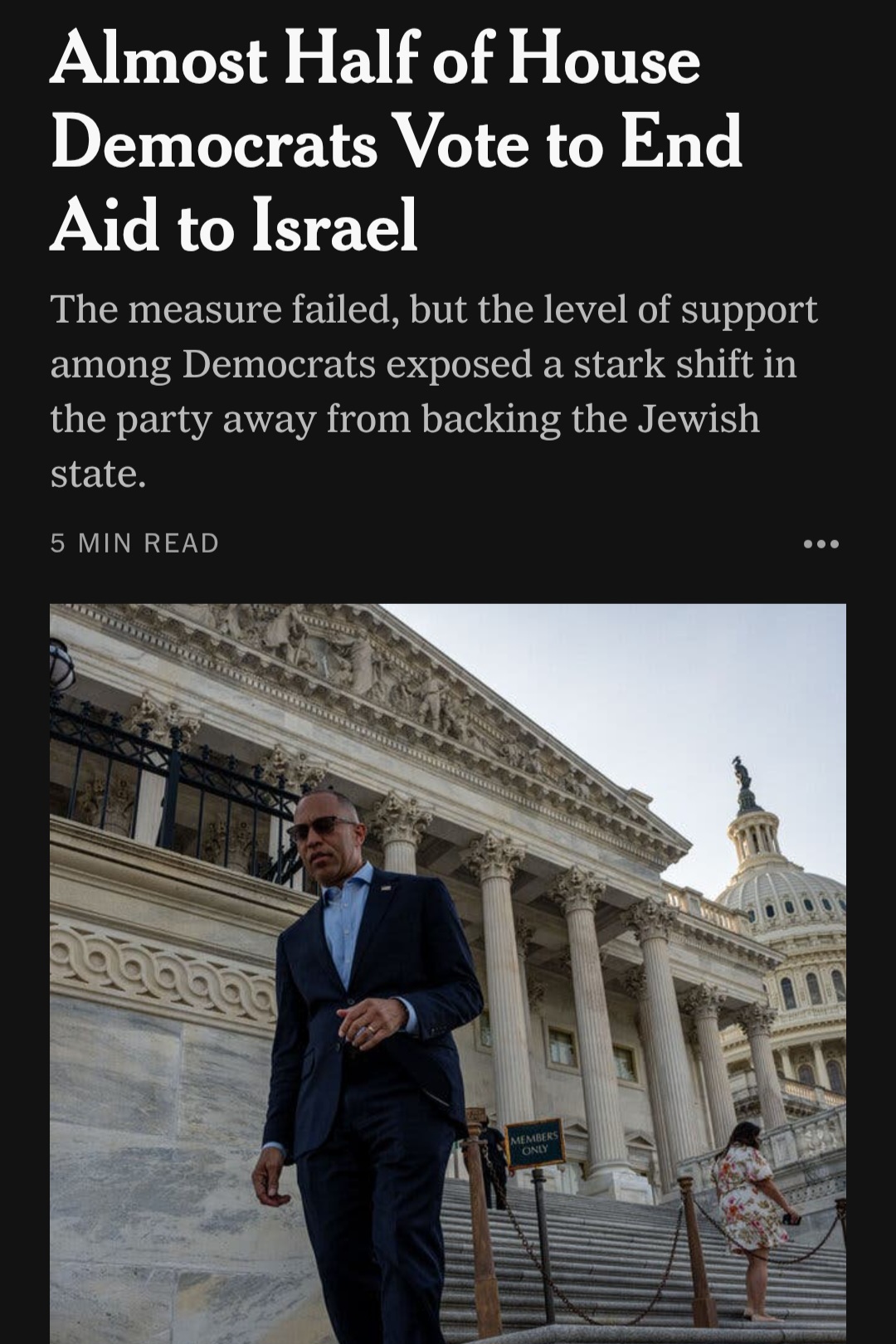
This week’s House debate over Israel’s $3.3 billion in annual military assistance was more than a vote. It was a test of leadership.
Many Democratic members of Congress allowed the debate to become one of competing sympathies: Israel versus American families, Israel versus veterans, Israel versus schools and health care. Some even embraced that framing themselves.
But leadership is not about amplifying the loudest voices in your coalition. It is about explaining difficult truths.
Over the past months, I wrote two essays that made straightforward strategic arguments.
In “Nobody Protests the Military Bases in Germany,” I argued that Americans have long understood military commitments abroad not as charity, but as investments in American security. We maintain troops, aircraft, and bases around the world because we believe confronting threats abroad is less costly than confronting them at home. It runs around $75 billion annually.
In “America’s Greatest and Quietest Military Victory in Nearly a Century,“ I argued that the wars in Israel and Ukraine should be viewed together, not separately. Two American allies have spent the last several years severely weakening two of America’s principal adversaries—Iran and Russia—while requiring virtually no American combat casualties and only a fraction of the cost of wars like Iraq and Afghanistan.
One can disagree with either argument. What is remarkable is how rarely Democratic leaders even attempted to make it.
Instead of explaining that military aid is part of a broader American strategy, they allowed it to be portrayed as a gift to a foreign country. And to only one country – Israel.
Instead of explaining that weakening Russia and Iran advances American interests, they permitted the conversation to revolve almost entirely around domestic tradeoffs. Only relative to Israel.
Instead of educating their constituents about seventy-five years of American global defense strategy, they surrendered the debate to slogans about “blank checks.” Specifically to the Jewish State.
Leadership requires more than counting votes. It requires helping citizens understand why America stations forces overseas, why it supports allies under attack, why it spends money beyond its borders, and why deterrence is almost always less expensive than war.
That conversation becomes even more important when the facts are uncomfortable.
The United States has committed far more aid to Ukraine than to Israel. Over eight times as much.
The wars involving Ukraine and Russia have produced far greater casualties than the war in Gaza. As much as eight times as much.
It spends vastly more each year defending allies through bases and military deployments across Europe and Asia. About 18 times as much.
Yet Israel alone has become the symbol of America’s supposedly misplaced priorities.
Statesmanship is not measured by how well elected officials echo the passions of the moment. It is measured by whether they are willing to explain complex realities even when doing so is politically difficult.
This week’s vote exposed more than a divide over Israel.
It exposed a failure to teach. A failure to lead. And a willingness to lean into vile antisemitic tropes.
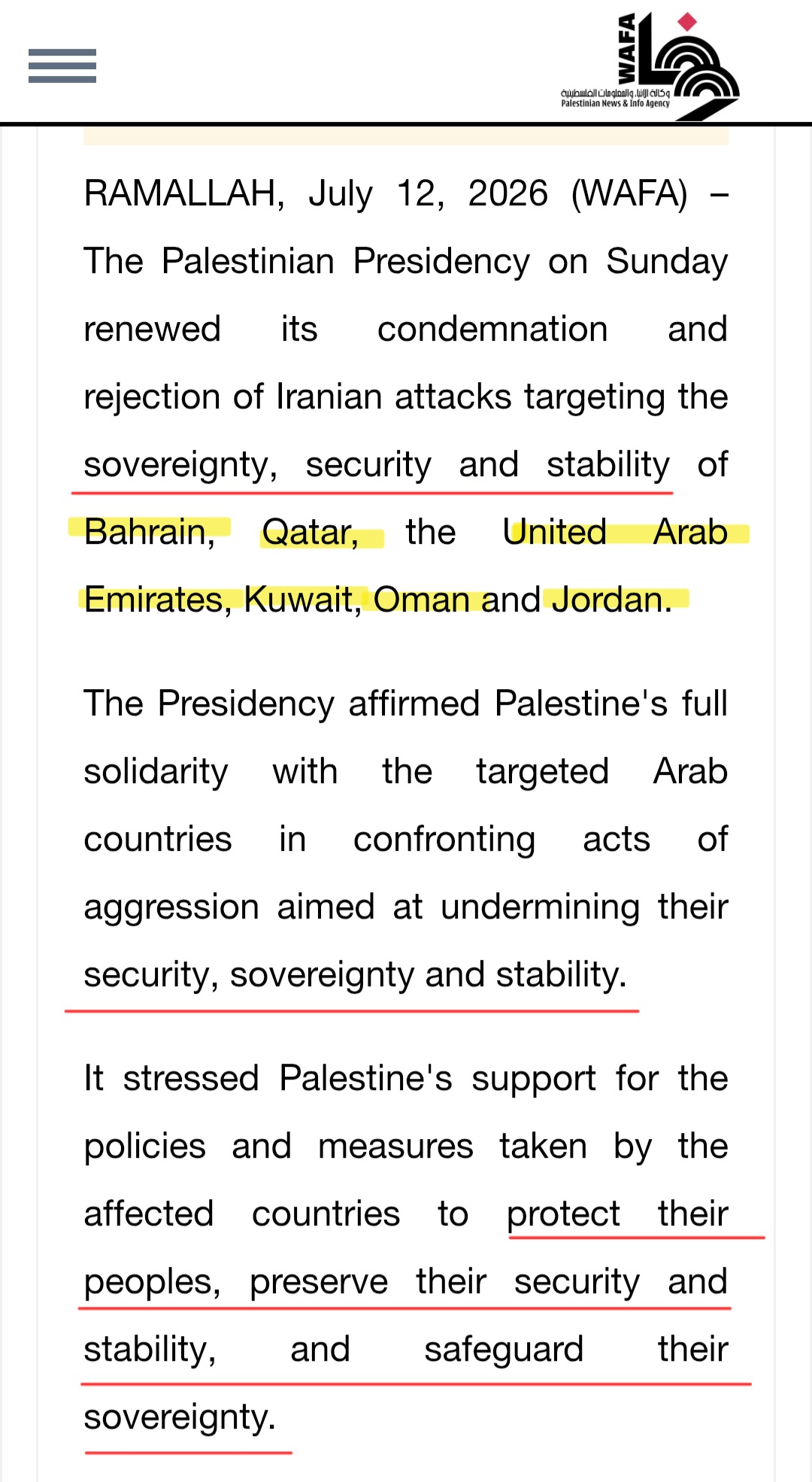
The Palestinian Authority had no trouble explaining what every nation deserves.
In a statement condemning Iran’s attacks on Bahrain, Qatar, the United Arab Emirates, Kuwait, Oman, and Jordan, the PA repeatedly invokes the same principles: sovereignty, security, stability, and protection of civilians.
Where were these principles when Israel was attacked?
When Iran launched missiles at Israel, did the Palestinian Authority defend Israel’s sovereignty?
When Hezbollah rained rockets on Israeli cities for months, did it affirm Israel’s right to security and stability?
states “refrain… from the threat or use of force against the territorial integrity or political independence of any state.” UN Charter (Article 2(4))
When the Houthis fired missiles toward Israel, did it support Israel’s right to protect its people?
And most pointedly, when Hamas – fellow local Arabs of the Palestinian parliament – crossed an international border on October 7, murdered civilians, kidnapped hostages, and occupied Israeli communities, did the PA condemn it as an assault on Israel’s sovereignty?
“the inherent right of individual or collective self-defence if an armed attack occurs against a Member of the United Nations.” UN Charter (Article 51)
A principle that applies only to friends is not a principle. It is a preference.
The Palestinian Authority’s own statement demonstrates that it understands exactly what every nation deserves. Its silence when those same principles are violated openly and repeatedly against Israel says just as much as its words.
Long before the current war began, prominent advocates for the Palestinian cause were describing Gaza as “hell on earth.”
In January 2009, Palestinian Queen Rania of Jordan released a video for UNRWA titled “Hell on Earth.” Eight months later, speaking at UNRWA’s 60th anniversary, she recalled that video and lamented that Gaza was still “Hell on Earth.”
Palestinian Queen of Jordan Rania called Gaza “Hell on Earth” in 2009
In May 2021, UN Secretary-General António Guterres declared, “If there is a hell on earth, it is the lives of children in Gaza today.”
When Israel began to respond to the war waged by Gazans in 2023, UNRWA Commissioner-General Philippe Lazzarini said Gaza had become “a living hell.” In January 2024, UN humanitarian coordinator Sigrid Kaag told the Security Council, “Gaza is hell on earth.”
The description has been remarkably consistent. What has often been missing is the question: Why?
Hell is not merely a place of suffering. It is a place where evil reigns.
Hamas violently seized Gaza in 2007 after defeating Fatah in a brief but brutal civil war. Fighters executed political rivals, threw some from rooftops, publicly brutalized opponents, and dragged the bodies of alleged collaborators through the streets. Those who challenged Hamas risked imprisonment, torture, or death. Independent political life disappeared, and an entire generation grew up under the rule of an armed Islamist movement that prioritized rockets, tunnels, and perpetual conflict over building a prosperous society.
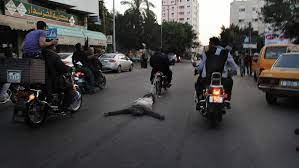
Hamas drags a disloyal Gazan through the streets to his death
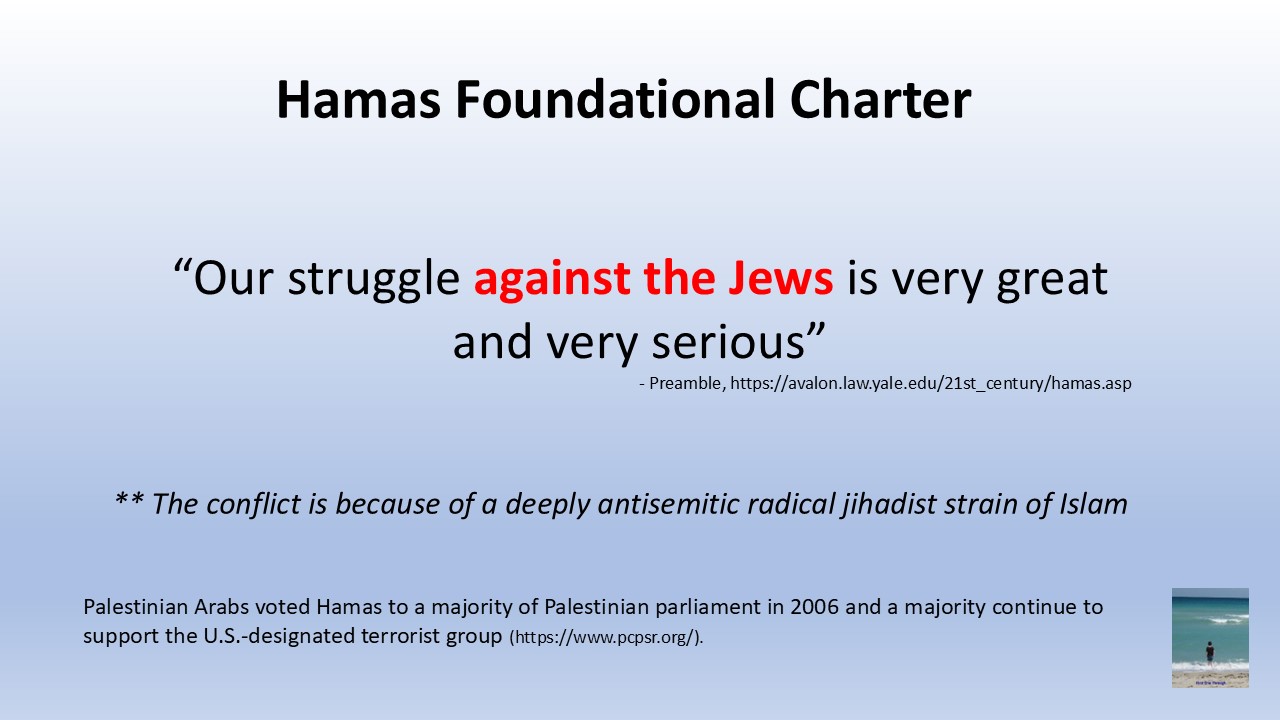
And Hamas was a known entity, a political party which won 56% of Palestinian parliament in elections with the most antisemitic political charter ever written. It remains the most popular political group to this day, expected to win Palestinian elections in every poll.
Calling Gaza “hell on earth” without acknowledging who built that system leaves the story unfinished. Should people want to transform the region, they must work to end the evil rule and worldview that turned part of the holy land into such a place in the first place.
For more than fifteen years, Boko Haram has waged one of the world’s deadliest terrorist insurgencies. Since 2009, the group has been responsible for the deaths of more than 35,000 people, with some estimates placing the toll significantly higher when indirect deaths from the conflict are included. It has massacred civilians in villages, churches, mosques, schools, and marketplaces. It has bombed public places, murdered those who refused to submit to its rule, and driven millions from their homes across Nigeria and neighboring countries.
Kidnapping has been one of its defining tactics. The 2014 abduction of 276 schoolgirls from Chibok drew worldwide attention, but it was only one of thousands of kidnappings. Women and girls have been forced into marriage and been raped. Boys have been recruited as child soldiers. Entire communities have lived for years under the constant threat of murder, abduction, and terror.
Boko Haram rejects the legitimacy of Nigeria, a United Nations-member state. It seeks to replace it with its own extremist Islamist regime.
Yet almost no one argues that Boko Haram deserves its own country. No demonstrations demand that its leaders be rewarded with sovereignty. No governments argue that decades of massacres, hostage-taking, and terrorism should culminate in international legitimacy.
There are now 157 countries that recognize Palestine. That look at the war between Israel and Palestine as one between two sovereign states, one which invaded another, raped and burned people alive, and took 251 hostages. These nations didn’t pause to question whether Palestine has a right to exist, but got three more countries to join in their sadistic effort.
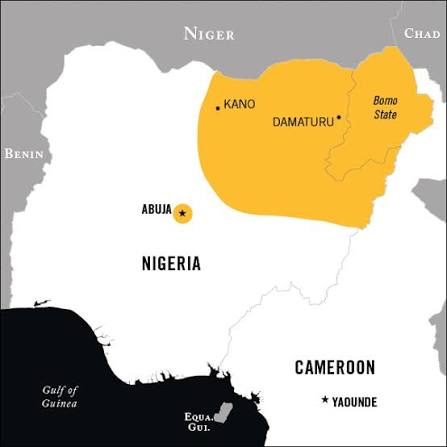
Perhaps it is time for the 36 countries which do not recognize Palestine to put a resolution before the UN to recognize Boko Haram as the legitimate government of Nigeria, or at least a breakaway state in the northeastern corner which they control.
Much of the discussion about Israel’s security focuses on borders, settlements, or ceasefires. Less attention is paid to a more fundamental reality: Israel is surrounded by governments that have failed – or have yet to demonstrate they can function as sovereign states.
To Israel’s north lies Lebanon, a country where the government spent years unable to enforce a monopoly on force within its own territory. While the Lebanese Army wore the national uniform, Hezbollah built an independent army, amassed an enormous missile arsenal, dug tunnels, launched drones, and ultimately dragged the country into war. A sovereign state that cannot control its own territory has surrendered one of the defining responsibilities of statehood.
Lebanese pound to Israeli shekel exchange rate, defaulting on debt in March 2020, enormous explosion in Beirut for stored Hezbollah weapons in August 2020. The bank devalued currency by 90% in February 2023 and again in February 2024
Next to Lebanon is Syria. More than a decade of civil war shattered the country’s institutions, fractured its territory among competing armed groups and foreign militaries, and left millions displaced. Syria has long stood as one of the clearest examples of state failure in the modern Middle East.
Syrian civil war killed nearly 600,000 and dispersed 13 million. It is now ruled by Abu Mohammad al-Jolani who headed ISIS in the region
To Israel’s south lies Gaza. Hamas spent years and billions of dollars to build an underground military fortress instead of a functional society. The result was war after war after war. Destruction and death.
Hamas on October 7, 2023 slaughtered 1,200 people in Israel and brought over 250 people as hostages into Gaza to cheering crowds.
In the West Bank, the picture is different but equally troubling. The Palestinian Authority maintains civil institutions in parts of the territory, yet it has never established a monopoly on force or unified governance. Rival armed factions continue to operate, political legitimacy remains deeply contested, and governance has been divided from Gaza for nearly two decades.
The collapse of governance in the states surrounding Israel has turned the region into one of the world’s greatest concentrations of terrorist groups. This is the strategic reality Israel faces every day.
Its neighbors are not peaceful democracies with settled borders and accountable institutions. They are governments weakened by civil war, dominated by militias, or unable to establish unified authority. Israel is repeatedly asked to take security risks on the assumption that these entities will prevent terrorism and enforce agreements, even though their recent history demonstrates the opposite.
The tragedy is not only Israel’s. The greatest victims of failed governance are the Lebanese, Syrians, and Stateless Arabs from Palestine (SAPs) themselves. They deserve governments that build economies instead of militias, schools instead of tunnels, courts instead of armed factions, and national institutions instead of perpetual conflict.
Peace agreements are negotiated between states because states can make commitments and enforce them. Militias cannot. Failed governments cannot. A failed state in waiting cannot.
Until the governments surrounding Israel control their territory, uphold the rule of law, and prioritize their people over perpetual conflict, Israel’s security challenges will remain the consequence of failed governance, not simply hostile neighbors.
For more than sixteen centuries, the Catholic Church has wrestled with one of humanity’s most difficult questions: When, if ever, is war morally justified?
St. Augustine laid the foundation by teaching that, “The purpose of all wars is peace.” War was never to be pursued for conquest, revenge, or hatred, but only to restore a just peace.
St. Thomas Aquinas refined that principle, writing that, “In order for a war to be just, three things are necessary. First, the authority of the sovereign… Secondly, a just cause… Thirdly… the belligerents should have a rightful intention, so that they intend the advancement of good, or the avoidance of evil.”
The Catechism of the Catholic Church later added that “The strict conditions for legitimate defense by military force require rigorous consideration.” It identifies four additional requirements: the aggressor must inflict lasting, grave and certain damage; peaceful alternatives must have been exhausted; there must be a serious prospect of success; and the use of force must not create evils greater than those it seeks to eliminate.
These principles have recently been invoked by Catholics questioning Israel’s wars against Hamas, Hezbollah, and Iran.
The first question is legitimate authority.
Israel is a sovereign state with an elected government entrusted with protecting its citizens. Hamas is a terrorist organization that seized control of Gaza by force. Hezbollah is an Iranian-backed militia that operates independently of the Lebanese government while maintaining its own army. Iran finances, arms, trains, and directs proxy organizations across the region while repeatedly calling for Israel’s destruction.
The Catholic tradition recognizes a government’s duty to defend those under its care. That responsibility belongs to Israel’s government. It does not belong to terrorist organizations.
The second question is just cause.
Israel did not manufacture this conflict. On October 7, Hamas crossed into Israel and deliberately massacred civilians, raped women, tortured families, burned people alive in their homes, and kidnapped more than 250 men, women, children, and elderly people. Hezbollah opened a northern front with sustained rocket attacks, while Iran’s regional proxy network joined the conflict.
Catholic teaching has long recognized that governments possess both the right and the obligation to defend innocent life against grave aggression.
The third question is right intention.
Israel has repeatedly stated that its objective is the dismantling of Hamas’s military capability, the removal of Hezbollah’s threat along its northern border, and the degradation of Iran’s ability to wage war through proxies. Those are military objectives directed toward restoring security.
Its enemies have declared something fundamentally different: that the Jewish state should be destroyed. One side seeks to eliminate a military threat. The other seeks to eliminate a nation.
The Catechism next asks whether war is truly the last resort.
Israel withdrew every soldier and civilian from Gaza in 2005. Instead of peace, Hamas transformed Gaza into an armed fortress, investing billions in rockets, tunnels, command centers, and military infrastructure embedded beneath civilian neighborhoods. Ceasefires repeatedly collapsed. Diplomatic initiatives failed to end the attacks. Every pause became an opportunity for Hamas and Hezbollah to rearm.
Hamas tunnels
Catholic teaching does not require a nation to absorb repeated massacres while endlessly hoping the next ceasefire will succeed where every previous one failed.
There must also be a reasonable chance of success.
Israel’s objectives have been difficult but attainable: dismantling terrorist command structures, destroying military infrastructure, rescuing hostages, degrading missile capabilities, and reducing Iran’s capacity to project violence through its proxies. Success doesn’t mean perfect peace. It means substantially reducing a continuing threat to innocent life.
Finally comes proportionality and discrimination.
These principles are often reduced to comparing casualty figures. That is not how Catholic teaching understands proportionality. The question is whether the military response is proportionate to removing the evil being confronted and whether civilians are intentionally protected.
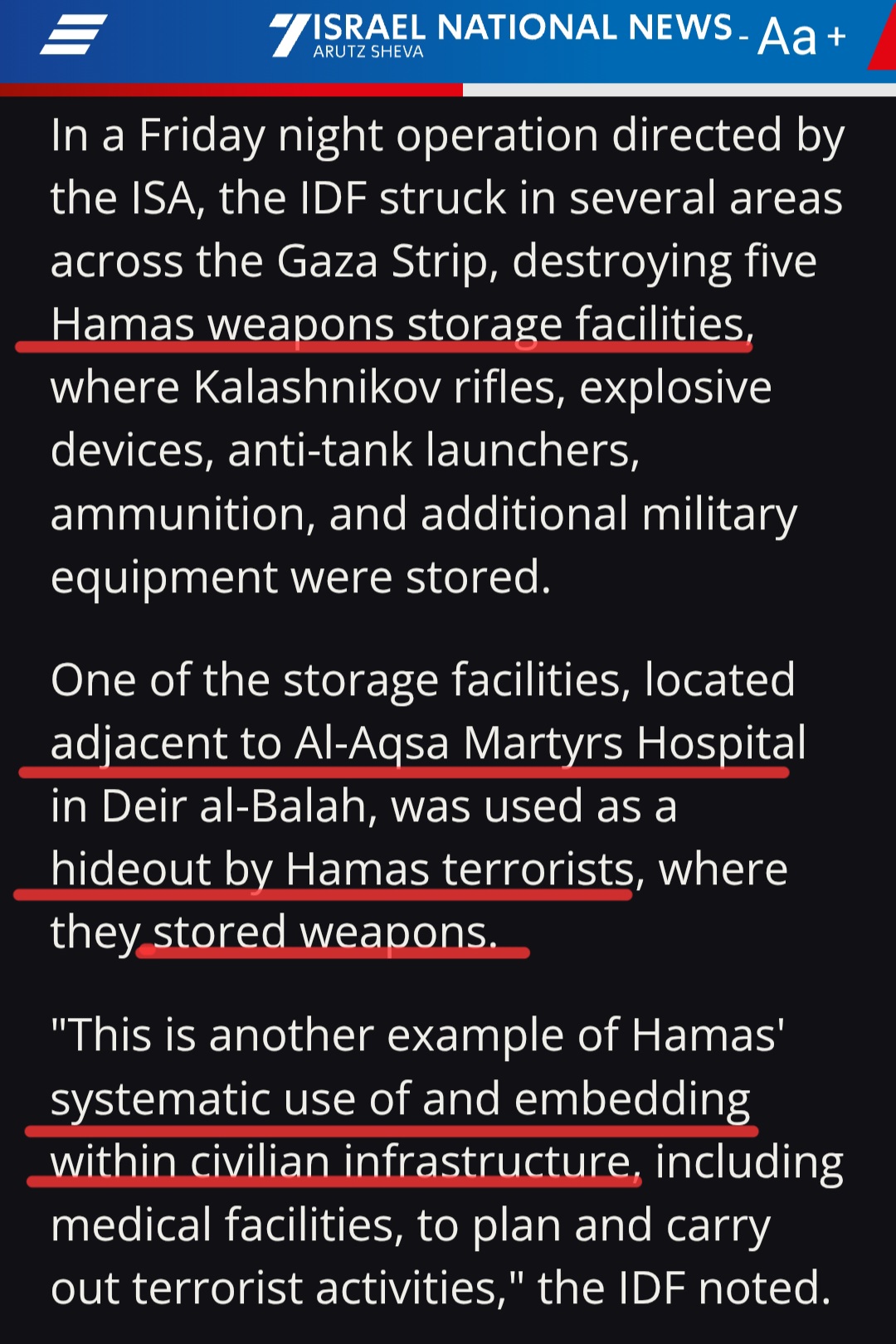
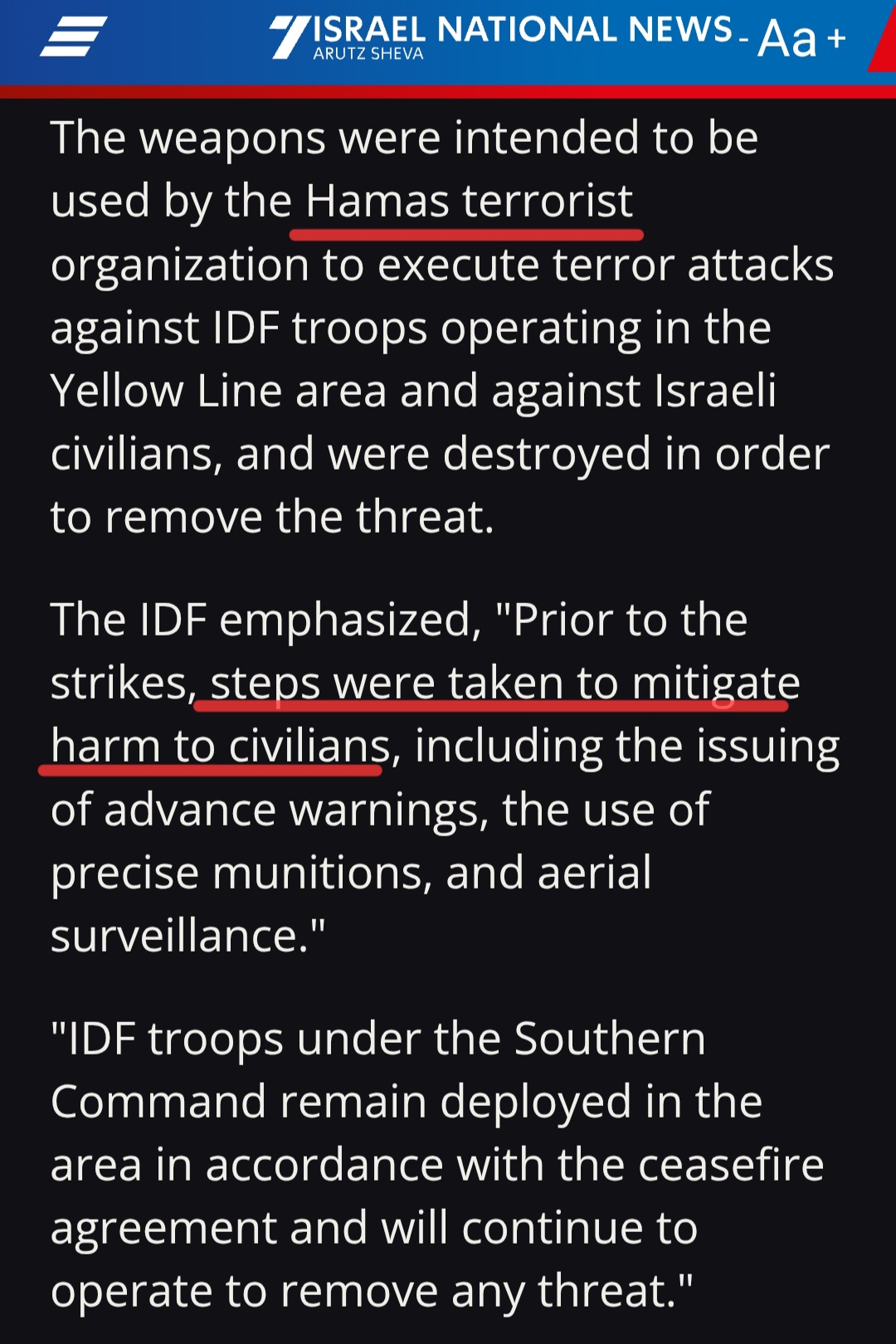
Hamas deliberately embeds military assets beneath hospitals, schools, mosques, and residential neighborhoods. It stores weapons among civilians, fires rockets from civilian areas, steals humanitarian aid, and has long been accused of using civilians as shields. It refuses to let civilians enter the tunnels for shelter. Hezbollah has similarly embedded military infrastructure within Lebanese civilian communities.
Those realities fundamentally shape how Israel’s responsibilities must be judged.
The Catholic just war tradition was never intended to evaluate only one participant in a conflict. Every criterion applies equally to every combatant. A moral framework that scrutinizes Israel while ignoring Hamas, Hezbollah, or Iran is no longer applying Catholic teaching consistently.
When the Church’s own criteria are applied carefully – legitimate authority, just cause, right intention, last resort, reasonable hope of success, proportionality, and discrimination – Israel’s campaign against Hamas and Iran’s proxy network presents a strong case for satisfying the classical requirements of a just war.
Jesus was a Jew, born to a Jewish family, living in the Jewish homeland, speaking to Jewish audiences, teaching from the Hebrew Bible, and making pilgrimages to the Jewish Temple in Jerusalem. The word “Palestine” was not even the name of the province during His lifetime. The Roman renaming of Judea to Syria Palaestina occurred about a century after His death.
Yet the claim persists because it serves an ahistorical but political purpose: If Jesus can be transformed from a Jew into a Arab, then the central figure of Christianity can be detached from Jewish history and reinserted into a modern political narrative. Suddenly, Jews are no longer obvious indigenous people in the Holy Land, but Arabs – who did not arrive en masse to region for another six centuries – are the real Jews.
The article does not explicitly call Jesus a Palestinian. Instead, it wraps a Gazan narrative in the language of Christ’s passion, death, and resurrection. Gaza becomes the tomb. The refugee becomes the suffering servant. The journey out becomes resurrection.
The symbolism is unmistakable.
For centuries, Christians looked to the suffering of Jesus as a uniquely sacred story. Increasingly, anti-Israel agitators are attempting to woo parts of the Christian world by recasting that story through the lens of the Israeli-Palestinian conflict, with Palestinian Arabs occupying the role once reserved for Christ Himself.
The war in Gaza did not begin with suffering descending from heaven. It began with decisions made by thousands of Gazans. Hamas invaded Israel, murdered civilians and took hostages. Hamas launched a war that it knew would bring devastating consequences to Gaza as it hid it tunnels and refused to let women and children enter the shelters.
Does that resemble Jesus?
Genocidal psychopaths are being transformed into the innocent sufferer. The political and military context disappears from view. Agency gives way to symbolism.
What makes this especially troubling for many Jews is that the institution promoting this narrative is no longer just fringe anti-Israel groups or university protest movements.
It is the Vatican itself.
For two thousand years, the Church has wrestled with the consequences of separating Christianity from its Jewish roots. In recent decades, Catholic-Jewish relations made enormous progress by reaffirming the Jewishness of Jesus and Christianity’s historical connection to the Jewish people.
That progress is undermined when contemporary narratives replace Jesus the Jew with a new symbolic figure: the Palestinian sufferer who cheered Jews being burned alive.
United Nations Secretary-General António Guterres recently declared that he supports “a monopoly on weapons by the Lebanese Government.”
He is right.
No sovereign state can exist when an organization maintains its own army outside central government control. Hezbollah may hold seats in parliament and participate in Lebanese politics, but that does not give it the right to possess an independent military force and wage war outside the direction of the government.
The obvious question is why the Secretary-General does not apply the same principle to Gaza.
If Lebanon requires a state monopoly on force, then so does any future Palestinian state. Hamas must be disarmed. There is no path to peace while an independent army remains outside governmental authority.
Yet the United Nations does not say so. Instead, it issues endless calls for ceasefires, negotiations, and diplomacy while avoiding the central reality that an armed movement dedicated to Israel’s destruction cannot simultaneously be the foundation for coexistence.
That double standard helps sustain the current conflict. Israelis and Gazans continue to suffer while international institutions refuse to confront the most basic requirement for ending the war.
But today’s war is not the real danger.
The real danger is what comes next.
Every major Palestinian poll points in the same direction. Palestinians are increasingly likely to hand control of the Palestinian Authority itself to Hamas or leaders who share Hamas’s objectives.
The result will not be a Palestinian Authority that replaces Hamas but Hamas becoming the Palestinian Authority.
At that point, Hamas will no longer be an armed movement operating from Gaza. It will be the internationally recognized government of Palestinian Arabs in Gaza and the West Bank. Its army will no longer be described as a militia but the armed forces of Palestine, internationally recognized, and still committed to the destruction of the Jewish state.
If so, the suffering of Israelis and Gazans today will pale in comparison to the conflict that follows.
Difficult situations are sometimes referred to as being between a rock and a hard place. The popular Palestinian terrorist group places the Middle East between a double standard and a destructive standard.