The Polls Tell a Very Different Story About Israeli Arabs

For years, one of the most common accusations leveled against Israel has been the charge of “apartheid.” International NGOs invoke it routinely and campus activists repeat it endlessly. Much of the Western conversation now treats the claim not as an argument to be debated, but as an established fact.

The accusation carries a very specific implication: that Arab citizens of Israel are a permanently segregated and oppressed population fundamentally excluded from the society around them, and that Israel is a racist illiberal regime.

But the polling data emerging from inside Israel tells a profoundly different story. Not a simplistic story. Not a utopian story. But a far more human and complicated one.

For decades, much of the world has spoken about Arab Israelis without ever seriously listening to them. Western activists speak in the language of revolution. International NGOs speak in the language of permanent oppression. Campus protesters speak in the language of “decolonization,” “resistance,” and “right of return.” The underlying assumption is always the same: Israeli Arabs are presumed to be a permanently alienated population waiting for the eventual dismantling of the Jewish state.

Yet the actual polling of Arab Israelis increasingly points somewhere else entirely.

The newest evidence comes from a May 2026 study by the Konrad Adenauer Program for Jewish-Arab Cooperation at Tel Aviv University. The survey found that 75.8% of Israeli Arab 12th graders support volunteering for non-security national service. Even more striking, 77.2% supported Arab political parties joining Israeli governing coalitions, while substantial numbers supported joining coalitions across the political spectrum rather than only left-wing alliances. More than half reported a strong sense of belonging to the State of Israel.

This is not the polling profile of a population preparing for insurrection. It is the polling profile of a population increasingly interested in civic participation, integration, and practical coexistence.

The trajectory matters even more than the raw numbers. In 2010, support for national service among Arab youth stood at only 43%. In fifteen years, support nearly doubled. That is not statistical fluctuation. It is societal evolution.

Then came October 7.

If the fashionable revolutionary narrative were true, one might have expected Arab citizens of Israel to radicalize after the Hamas massacre and the Gaza war that followed. Yet a 2024 survey from Tel Aviv University found that 57.8% of Arab Israelis said the war had actually strengthened feelings of “shared destiny” between Arab and Jewish citizens of Israel.

That may be the single most important polling result of the post-October 7 era.

Because it directly collides with the apartheid framework so dominant in Western discourse. Apartheid systems do not typically produce growing feelings of shared civic destiny during wartime. Whatever tensions and inequities exist inside Israel, the polling increasingly suggests Arab Israelis themselves do not see their future primarily through the lens of permanent separation.

The polls also tell a subtler story about the so-called “right of return,” perhaps the most emotionally charged issue in the entire conflict. Western activists frequently present the demand for millions of Palestinian descendants to move into Israel proper as though it were universally embraced by all Palestinian Arabs and Israeli Arabs alike.

The polling suggests otherwise.

A September 2024 joint survey by Tel Aviv University and the Palestinian Center for Policy and Survey Research found that 72% of Israeli Arabs supported a two-state solution. That number was substantially higher than among Israeli Jews and even higher than among Palestinians living in the territories.

That finding matters enormously because a genuine two-state framework implicitly rejects the maximalist interpretation of “right of return” that would demographically dissolve Israel as a Jewish-majority state. The same survey found only small minorities supporting one-state frameworks built around domination or elimination of the other side.

In other words, the polling increasingly suggests Israeli Arabs distinguish between support for Palestinian national aspirations and support for eliminating Israel altogether.

That distinction is almost entirely absent from Western activist discourse.

Arab Israelis clearly continue to identify deeply with Palestinians culturally and emotionally. They remain sharply critical of many Israeli government policies. A March 2025 survey by the Institute for National Security Studies found extremely low trust among Arab Israelis in Prime Minister Benjamin Netanyahu and his government.

But dissatisfaction with the government has not translated into broad support for Hamas or revolutionary confrontation. Quite the opposite. Poll after poll since October 7 has shown far greater fear of instability, communal violence, and economic disruption than enthusiasm for armed struggle. The dominant priorities emerging from repeated surveys are public safety, economic opportunity, education, housing, infrastructure, and reducing violent crime inside Arab communities.

Communities preparing for revolution do not consistently rank municipal policing, school quality, infrastructure investment, and economic mobility among their highest priorities. Citizens do.

The polling increasingly shows Arab Israelis sounding less like Western campus radicals and more like citizens trying to improve daily life for their families.

This is why the rise of pragmatic Arab political participation inside Israel matters so much. Figures like Mansour Abbas represent something many outsiders still struggle to understand: a growing willingness among Arab Israelis to work within Israeli political institutions rather than reject them outright.

Then Israeli Prime Minister Naftali Bennett (L) shakes hands with the leader of the United Arab List Mansour Abbas during a Knesset session in Jerusalem, Israel, June 13, 2021. — AP/File

That does not mean tensions have disappeared. The 2025 Israeli Democracy Index from the Israel Democracy Institute found Arab Israelis continue to report significant discrimination and identify Jewish-Arab relations as the country’s deepest social divide.

But here again, the crucial issue is what Arab Israelis increasingly appear to want done about those grievances. The polls suggest the overwhelming preference is not dismantling Israel, but improving their place within it.

That is a transformative distinction.

The divergence becomes even clearer when comparing Israeli Arab polling with polling from Palestinians in Gaza and the West Bank conducted by the Palestinian Center for Policy and Survey Research.

IssueIsraeli ArabsPalestinians in Gaza/West Bank
Support for joining Israeli governing coalitionsStrong majority supportGenerally reject Israeli political framework
Support for non-military national service75.8% among Arab Israeli 12th gradersNot applicable
Feeling of “shared destiny” with Jewish Israelis after Oct. 757.8% said war strengthened itPolling shows sharply increased hostility after war
Preferred prioritiesCrime reduction, housing, education, infrastructure, jobsConflict, statehood, war recovery, resistance politics
Support for two-state solution72%Lower and declining in recent polling
Participation in Israeli institutionsIncreasingly normalizedGenerally viewed as illegitimate
Attitudes toward Hamas after Oct. 7Little evidence of broad supportSignificantly higher support in multiple polls

The table reveals a profound disconnect between Israeli Arabs and Palestinian Arabs, as well as in the ideological activism abroad and lived reality inside Israel itself.

The activists chanting “globalize the intifada” imagine permanent struggle. Yet the polling increasingly points toward coexistence mixed with frustration, and integration mixed with cultural distinctiveness.

Which is why another recent trend in Western media coverage increasingly looks detached from reality: the insistence on replacing the term “Israeli Arabs” with “Palestinian citizens of Israel” as though the latter fully captures how this population sees itself.

These citizens are clearly Arab. Clearly connected culturally and emotionally to the broader Palestinian story. But the surveys increasingly show they also see themselves as participants in Israeli civic life, Israeli institutions, Israeli politics, Israeli education systems, and the Israeli economy. They vote in Israeli elections and increasingly support joining Israeli governing coalitions. Increasingly support national service and increasingly express a sense of belonging to the state itself.

Western activists speak the language of permanent revolution and endless “resistance.” The polling shows Arab Israelis speaking the language of citizenship, coexistence, opportunity, safety, and practical reality.

Israeli Arabs make up 21% of the Israeli population. Their numbers have grown faster than Israeli Jews since 1948. And they increasingly feel at home inside the Jewish State.
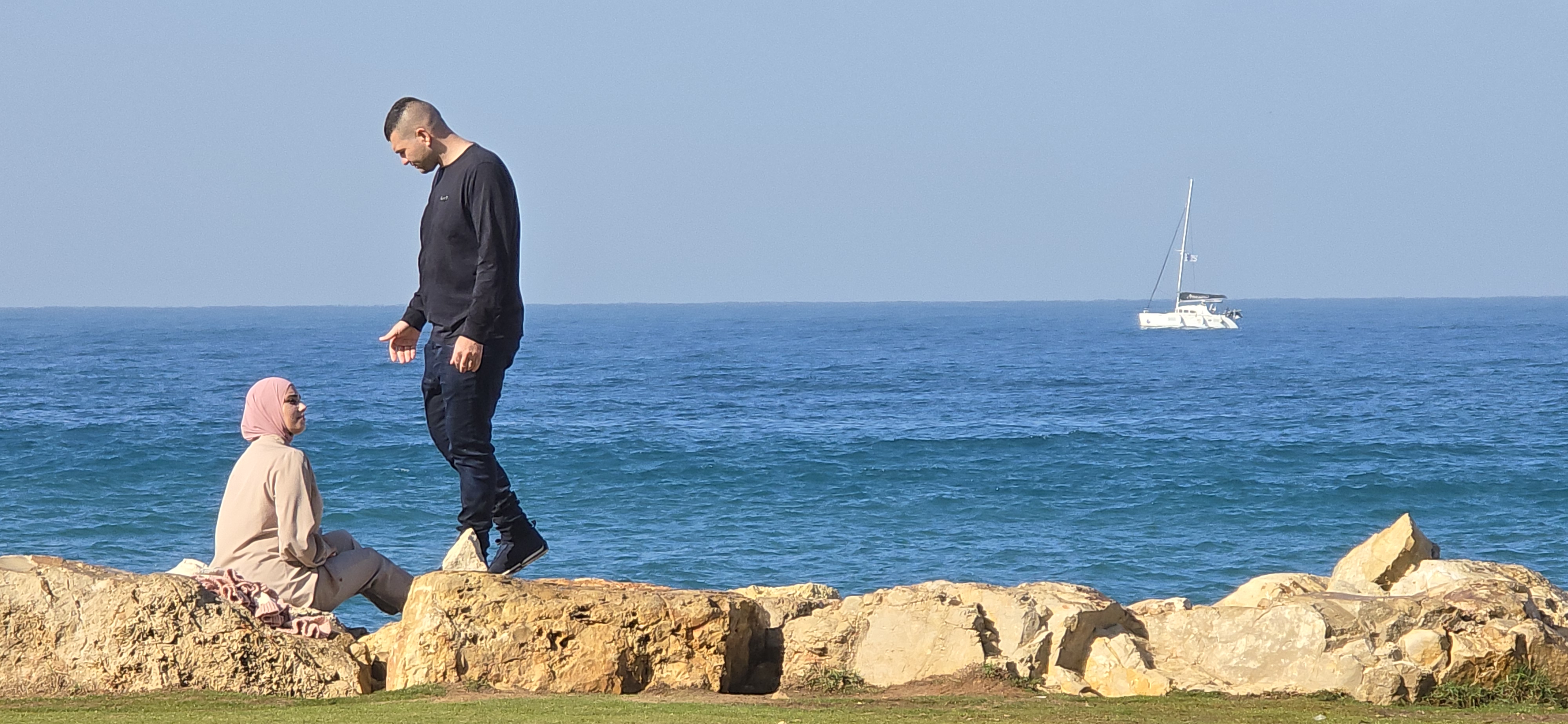
Israeli Arabs enjoying the beach in Tel Aviv, Israel (photo: First One Through)

Stop Marching for 1948. Start Building 2048.

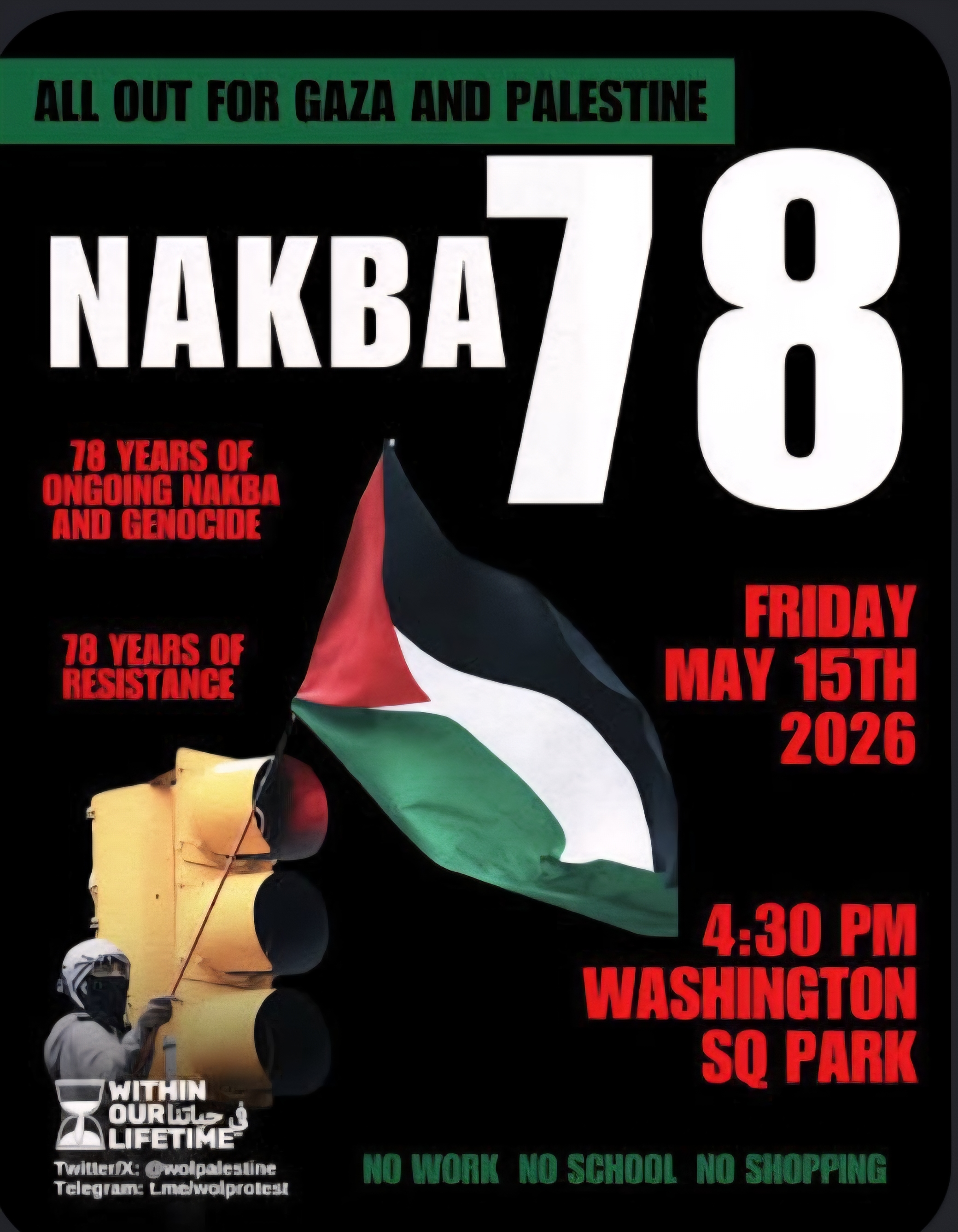
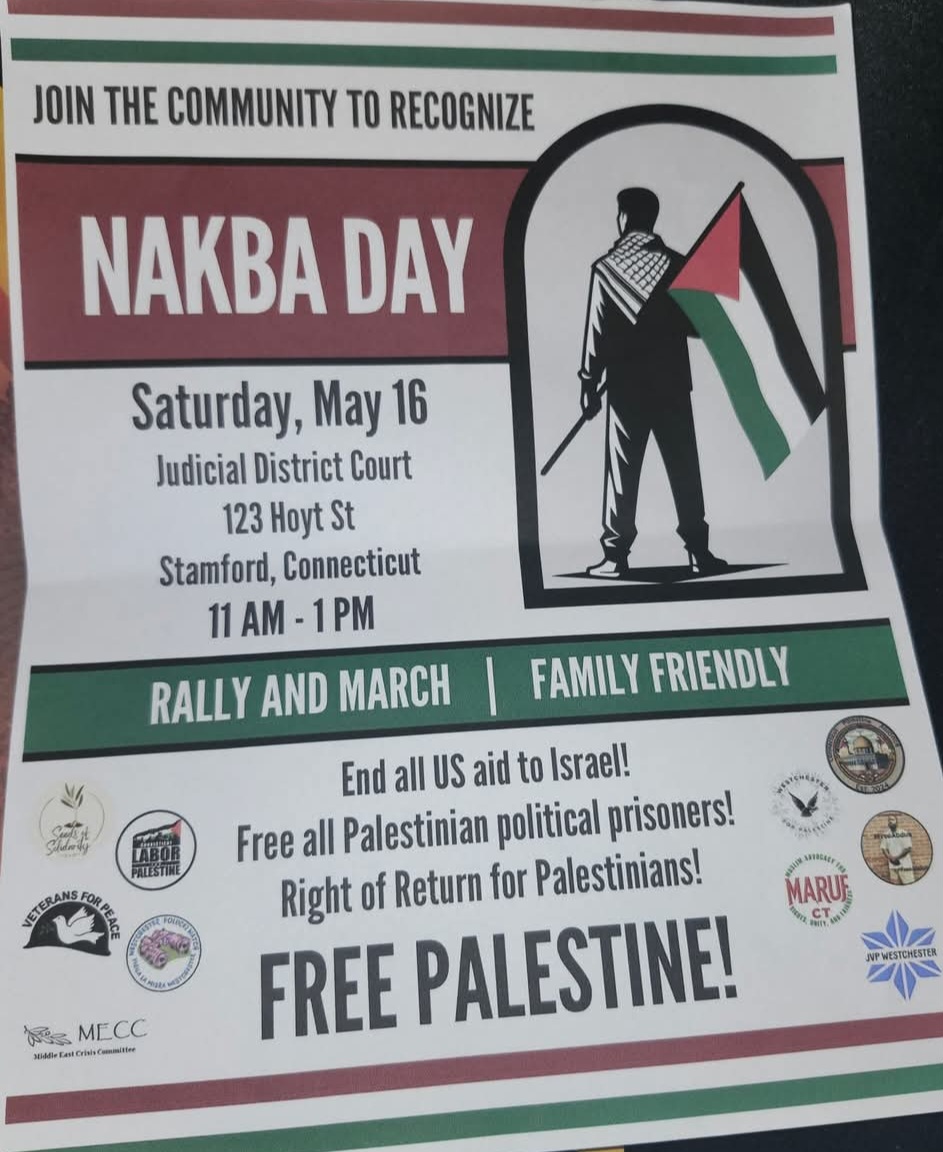
Every May, “Nakba Day” protests erupt across Western cities under the claimed banner of justice and liberation. Organizers describe them as commemorations of displacement and suffering. Yet listen carefully to the chants, read the signs, and study the ideology driving many of these demonstrations, and a darker reality emerges.

Nakba Day events are not about building a future alongside a Jewish state. They are about keeping alive the dream that the Jewish state should never have existed at all, and must be destroyed.

That is why the rhetoric so often revolves around “resistance until liberation,” “from the river to the sea,” and “globalize the intifada.” The message is unmistakable. The war of 1948 is not viewed as tragic history. It is viewed as unfinished business.

For 78 years, generations of the Stateless Arabs from Palestine (SAPs) and their supporters have been taught that the central injustice was not war itself, nor the suffering that war inevitably unleashed on all sides, but Jewish sovereignty. The catastrophe, in this telling, was that Jews regained independence anywhere in their ancestral homeland.

That poisonous premise has trapped both Palestinian Arabs and Israelis inside an endless cycle of bloodshed.

A movement built around the belief that Israel must someday disappear cannot produce coexistence. A political culture that teaches Jews are foreign colonial invaders rather than an indigenous Middle Eastern people returning to the land where Jewish civilization was born cannot produce peace. A worldview that refuses to acknowledge Jewish history in Jerusalem, Jewish ties to Hebron, or the sanctity of the Temple Mount to Judaism is rooted in antisemitism, not “anti-Zionism.” It is a deep “deformity” in Palestinian culture.

And so Nakba Day has increasingly become less a memorial to suffering than a ritual of perpetual war.

There is nothing wrong with mourning loss. Every nation remembers tragedy. The problem begins when remembrance becomes a doctrine that denies another people’s right to exist. To basic human rights. No peace movement can emerge from teaching generation after generation that coexistence itself is betrayal.

It is time to break that cycle.

Replace Nakba Day with Two State Day. A day dedicated not to reversing 1948, but to building 2048.

Imagine a new annual movement where Palestinian Arabs openly recognize that Jews are indigenous to the Land of Israel. One where activists acknowledge that Jewish attachment to Jerusalem did not begin in 1967 or 1948, but stretches back thousands of years. One where the Temple Mount is recognized not merely as a Muslim site built atop forgotten ruins, but as the spiritual center of Jewish civilization.

Imagine a Two State Day where Palestinian leaders finally say openly that Jews are not crusaders, not European interlopers, not temporary occupiers, but a people who originated in the very land they returned to.

And imagine Israeli Jews responding not with suspicion, but with an outstretched hand.

Imagine Israeli Independence Day celebrations where Muslim neighbors, Arab citizens, and Palestinians willing to embrace coexistence are invited to participate. Imagine Jewish speakers recognizing Palestinian suffering and aspirations, while Muslim speakers recognize Jewish indigenousness, Jewish history, and Israel’s permanence. Imagine both peoples publicly declaring that neither side is leaving and neither side’s history will be erased.

That would not erase either people’s narrative. It would humanize both.

The current version of Nakba politics freezes Palestinians psychologically in 1948, teaching generation after generation that justice means reversing history rather than building a future. It glorifies “resistance-violence” while discouraging reconciliation. It romanticizes intifada while Palestinians themselves continue paying the price in blood, corruption, isolation, and failed leadership.

This ideology has harmed Palestinians no less than Israelis.

Every year spent teaching children that Haifa, Jaffa, and Tel Aviv must someday be “liberated” is another year not spent building functioning institutions, economic opportunity, civil society, or genuine pathways to coexistence. Every rally that denies Jewish legitimacy hardens Israelis further against compromise and strengthens extremists on all sides.

The world has already seen where this road leads. October 7 was not born in a vacuum. It emerged from decades of indoctrination insisting that Jewish sovereignty itself is intolerable “in any part of Palestine” and that violence against it is inherently righteous “resistance.” The cheering crowds in Western capitals after the massacre exposed how deeply this toxic worldview has spread far beyond Gaza, chumming for the anti-Jewish horde.

But history is not destiny.

Two State Day could become something profoundly different. A day not of denial, but of mutual recognition. A day where SAPs mourn losses without denying Jewish legitimacy. A day where Jews acknowledge Palestinian Arab suffering without questioning Israel’s basic right to exist. A day where both peoples reject the poison of perpetual grievance and choose coexistence over endless war.

The future cannot belong to people still marching psychologically toward 1948. It must belong to those willing to build 2048.

A future where Palestinian children are not taught that Jews are foreign usurpers, but neighbors with ancient roots in the same land. A future where Jewish children no longer grow up expecting every concession to be answered with more violence. A future where the Temple Mount is not a symbol of exclusion, but proof that the land carries the sacred history of multiple peoples.

Real peace will never emerge from chants demanding the disappearance of one side or the other. It begins only when both peoples recognize each other’s humanity, legitimacy, and permanence.

Palestinians Have Always Been Anti-American

For over twenty-five years, the Palestinian Center for Policy and Survey Research has tracked Palestinian political opinion. Through wars, peace talks, intifadas, and four American presidents, one pattern remains strikingly consistent:

Palestinians have never been broadly pro-American.

That may sound counterintuitive. The United States has spent decades mediating the conflict, funding Palestinian institutions, and pouring diplomatic capital into the region. If goodwill were built by investment alone, the polling should show it.

It does not.

PCPSR rarely asks, Do you like America? Instead, it asks the more revealing questions: Do you trust the United States as a mediator? Do you want American involvement? Do you believe Washington is fair?

Across twenty-five years, the answers tell the story.

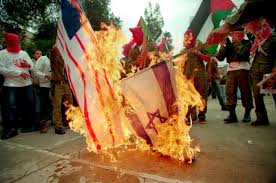
Palestinians burn American and Israeli flags

After the collapse of the 2000 Camp David Summit and the violence of the Second Intifada, positive views of America’s political role sat around 20 to 35 percent. Negative views often exceeded 60 percent. America was seen less as a broker than as Israel’s protector.

That became the baseline.

The mid-2000s brought modest movement. After Mahmoud Abbas replaced Yasser Arafat, some Palestinians supported stronger American engagement. Yet the support was tactical hoping that Washington might pressure Israel. That did not translate into trust.

Then came the only real exception.

Barack Obama produced the highest pro-American opening in the polling record. In 2009, roughly 60 percent supported a stronger American role in negotiations.

Washington read that as goodwill. The polling suggests something narrower: hope that Obama would pressure Israel.

Even at that high point, majorities still believed America fundamentally favored Israel. The atmosphere improved. The structure did not.

By Obama’s second term, positive sentiment had fallen back into the 20 to 30 percent range.

Then Donald Trump recognized Jerusalem as Israel’s capital and trust collapsed into single digits.

In some surveys, roughly 90 percent rejected American mediation. The illusion of neutrality disappeared. America was no longer seen as merely tilted toward Israel, but openly aligned with Israeli claims to Jerusalem.

Palestinian Arabs burn American flag in 1998

Joe Biden lowered the temperature but did not restore trust. The numbers recovered slightly, climbing back into the teens and twenties.

“Regardless of how great the power of Israel, America, and the world may be, in the end they will disappear, while we are remaining.” – Fatah Central Committee member Abbas Zaki, April 2021

Then came the October 7 attacks and the war that followed. With Washington backing Israel militarily and diplomatically, Palestinian hostility surged again toward its floor: single-digit trust, overwhelming distrust.

The pattern is unmistakable.

When America pressures Israel, Palestinian approval rises. When America stands with Israel, it collapses.

For twenty-five years, Palestinians have periodically wanted America involved. They have never wanted America embraced.

Not under George W. Bush. Not under Obama. Not under Trump. Not under Biden.

The names changed. The percentages moved. The structure held.

America, in Palestinian political opinion, has never been a friend. Only a force—useful when applying pressure, hostile when withholding it.

After a quarter century of polling, that may be the clearest finding of all.

Understanding Israel’s Latest Population and Demographic Numbers

When Israel declared independence in 1948, it had roughly 717,000 Jews and roughly 156,000 Arab citizens and residents. Those numbers were small, but what they carried was enormous: the ambition to reverse two thousand years of Jewish dispersion and gather a scattered people back into sovereignty.

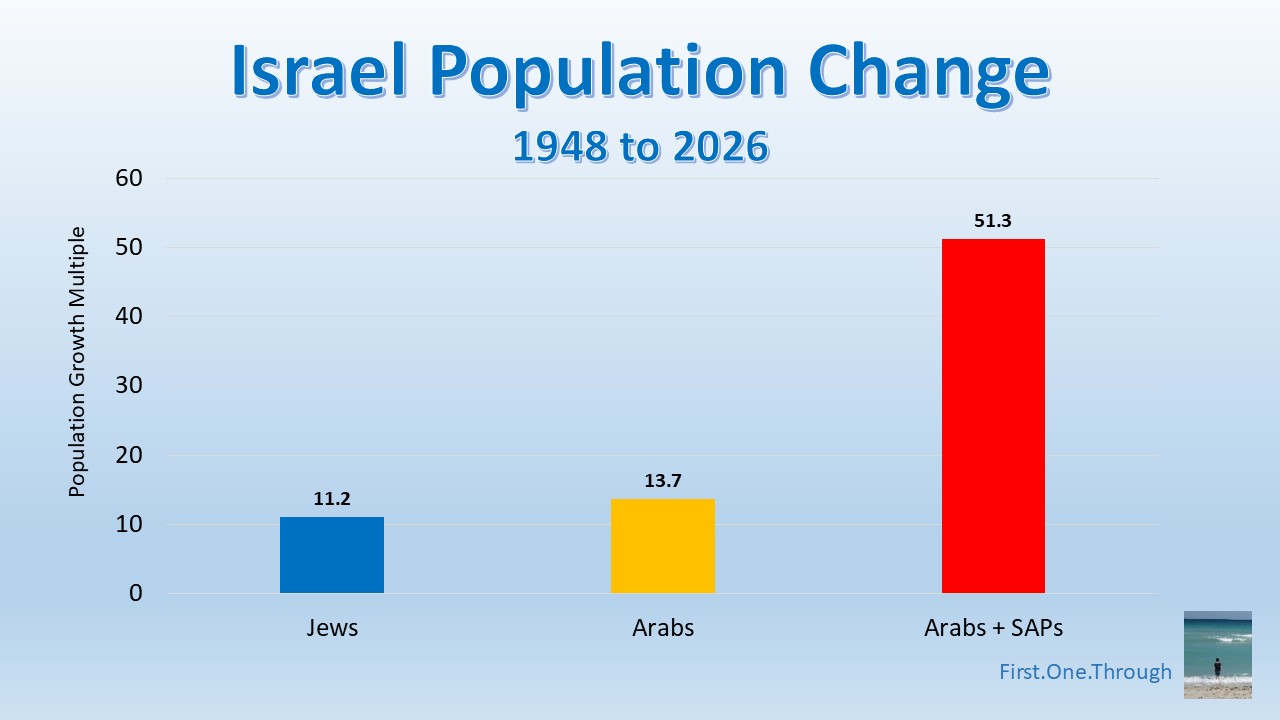
Yet the first demographic fact that emerges from Israel’s modern history cuts against so much of the political mythology surrounding it. Since 1948, Israel’s Arab minority expanded at a faster proportional rate than its Jewish majority. The Jewish population grew from 717,000 to nearly 8 million, roughly elevenfold. Israel’s Arab population grew from 156,000 to more than 2.1 million, more than thirteenfold.

That fact strips away one of the central distortions in the debate over Israel. The rise of the Jewish state did not require the disappearance of its Arab minority. Quite the opposite. Israel’s Arab population expanded dramatically under Israeli sovereignty. Two populations grew inside the same state, but through entirely different engines. The Jewish story was one of ingathering, especially during the early years.

Today, Israel stands at more than 10.2 million people, nearly 8 million Jews and more than 2.1 million Arabs. A state born in scarcity became a fully formed society. But the road from 1948 to 2026 can best be understood through four distinct demographic phases: ingathering, expansion, retention, and preservation.

The first phase was ingathering. At first, Israel was an immigration state, and its earliest years were powered by catastrophe. The survivors of Europe came first, the broken remnant of the Holocaust arriving in a country still fighting its first war. Then came the collapse of Jewish life across the Arab world. Ancient Jewish communities in Iraq, Yemen, Morocco, Egypt, and Libya emptied under expulsion, violence, and state pressure. More than 800,000 Jews left the Arab world, many rebuilding their lives in Israel.

Then came the Soviet opening. The collapse of the Soviet Union released nearly one million Jews into the largest migration wave since the founding of the state. Europe’s destruction, the Arab world’s expulsion, and the Soviet opening formed the three great waves of Jewish ingathering. Three different historical ruptures, one destination. That is how Jewish Israel was built.

Population Growth, 1948–2026

Jews
1948 ████ 0.72m
1970 █████████ 2.6m
1990 ███████████████ 4.8m
2000 ███████████████████ 5.2m
2026 ███████████████████████████ 7.97m
Arabs
1948 █ 0.16m
1970 ██ 0.47m
1990 ████ 0.95m
2000 █████ 1.2m
2026 █████████ 2.15m

While Jewish Israel was growing through migration, Israel’s Arab population was growing through birth. Higher fertility and falling mortality created uninterrupted expansion over decades. That is why the proportional growth of Israel’s Arab population exceeded the proportional growth of the Jewish population.

Then the second phase began: expansion. At first, Jewish growth depended on aliyah. Over time, it depended increasingly on birth. The immigrants became citizens, the citizens became parents, and the children of refugees became the country itself. The engine of Jewish demographic growth shifted from the airport to the maternity ward. That is the deepest demographic transition in Israel’s history.

In 2025, Israel recorded approximately 177,000 births. Immigration that year stood at roughly 24,600. Births now outnumber immigration by more than seven to one. What would have been unimaginable in 1948 has become ordinary in 2026. Israel began as a refuge. It now reproduces itself.

Annual drivers of growth, 2025
Births ███████████████████████
Immigration ███
Deaths ██████

That changes the meaning of the state. Political Israel started as the answer to Jewish vulnerability, a place Jews could flee to when the world closed. That remains true. But demographically, it is no longer Israel’s primary function. Israel is no longer merely where Jews go when exile fails. It is where Jewish continuity principally lives.

And here, another old assumption collapsed. For decades, Israeli politics was shaped by demographic anxiety: would Arab fertility permanently outpace Jewish fertility? Would a demographic clock eventually run down the Jewish majority? That fear shaped strategy, borders, and diplomacy. For years, the numbers seemed to support it.

Then the numbers changed. Arab fertility declined as Arab society modernized. Jewish fertility remained unusually strong for an advanced economy. Today, Jewish fertility has reached parity with, and in some years slightly exceeded, Arab fertility. The demographic trajectory shifted. A generation of political strategy was shaped by a demographic clock that slowed while everyone kept hearing it tick.

Fertility Shift

1990
Arab █████
Jewish ███
2026
Arab ███
Jewish ████

But demographic success creates its own new challenge.

For most of Israeli history, migration remained positive. Even when aliyah slowed, more Jews came than left. That changed in the last two years. In 2022, Israel absorbed more than 74,000 immigrants, driven heavily by war in Ukraine and departures from Russia. That surge faded quickly. By 2024 and 2025, net migration turned negative – more Israelis left than new immigrants arrived.

This is not a demographic crisis. Births still overwhelm migration losses, and Israel continues to grow. But the Zionist test has changed. For decades, the question was how many Jews Israel could gather. Now the question is how many it can keep.

Net Migration Trend
2022 +++++++++++++++++++++++
2023 +++++++
2024 ----------
2025 --------

The founding generations came because they had to. Future generations stay because they choose to. That is a different kind of national test. And the retention question is not merely numerical. If those leaving are disproportionately engineers, doctors, founders, investors, and elite military talent, the demographic issue changes shape. A state can absorb numerical loss. It feels the loss of capability much faster.

Above all these numbers sits the larger civilizational shift. In 1948, around six percent of world Jewry lived in Israel. Today, around 45% does. Soon it may be the majority.

Share of World Jewry Living in Israel
1948 ██ 6%
1970 ████ 18%
1990 ███████ 30%
2010 ██████████ 42%
2026 ████████████ 45%

There is one more demographic question hanging over Israel in 2026, larger than fertility, migration, or retention. It sits beneath almost every diplomatic formula and every argument about the future of the conflict.

The question is the scale and meaning of the Stateless Arabs from Palestine (SAPs) having a “right of return.”

For decades, the Palestinian Authority and the United Nations have insisted on a “right of return” for Palestinian “refugees” and their descendants. The number most commonly cited is roughly 5.9 million. That number matters because it clarifies what the argument actually means in demographic terms.

Israel today has roughly 10.2 million people. Add 5.9 million Palestinian Arabs to that number and the demographic map changes overnight. Israel would become a country of more than 16 million people. Its Arab population would jump from 2.1 million to more than 8 million. Its Jewish population would remain just under 8 million. The Jewish majority would collapse into parity or slightly minority status.

That is not a marginal adjustment. It is a structural transformation of the state itself.

Put into historical perspective, the scale becomes even sharper. In 1948, Israel’s Arab population stood at roughly 156,000. By 2026, it had already grown to more than 2.1 million, more than thirteenfold growth, already exceeding Jewish proportional growth over the same period. Add 5.9 million more, and that Arab population would stand at more than 8 million, representing more than fiftyfold growth since the founding of the state.

A “right of return” on this scale is not simply an immigration proposal, already stripping Israel a basic right of sovereignty to determine who to admit into the country. It further demands that the Jewish State cease to be one.

That is why this issue forms the fourth demographic challenge: preservation. Preservation of the demographic framework that allowed Jewish self-determination to return after two thousand years of dispersion and discrimination.

For most of Jewish history, survival meant enduring dispersion. In Israel, survival became concentration, then continuity, and now choice. The next phase may determine whether it remains preservation.


Very few countries have grown by over 10 times since 1948, and none in the developed “Global North”, with Australia and Canada leading the group at 2.5x and 1.9x, respectively (no European country even doubled its population). In the Middle East and North Africa (MENA) region which saw explosive growth due to the discovery of oil, no country has had the minority populations grow faster than the majority.

Israel is a true anomaly, a developed country with explosive growth, sitting in the MENA region which suppresses the growth of minority groups but the Jewish State still saw oversaw a faster growth of non-Jews. Despite the basic facts, the world still pressures the country to admit even more people adding to the population density, and with minorities who never lived in the country, in particular, undermining the demographic status quo.

As Israel considers its plans for the years ahead, retaining educated talent and ending the so-called SAP “right of return” rank as the leading causes to maintain a thriving democracy.

The Little Drummer Boys of Terror

President Obama once derided those who warned of Iran’s nuclear ambitions as promoting a “drumbeat of war.” It was a curious charge, especially as his negotiated JCPOA deal paved Iran’s legal pathway to nuclear weapons within a decade—despite Tehran’s unabashed calls to utterly destroy an American ally, and referred to the United States as “Satan.”

The phrase “drumbeat of war” is worth pausing over, because its imagery is meant to point a damning finger at generals and war profiteers, when in fact it refers to a beating passion that comes from a variety of sources.

Music itself teaches us the power of the drumbeat. Maurice Ravel’s “Bolero” begins as a whisper—a single snare tapping a faint rhythm—but its relentless pattern swells, layer by layer, into a rapturous explosion. Nothing changes except the intensity. It is a master class in how a simple beat, repeated without interruption, can inflame emotion, tighten resolve, and propel an entire orchestra toward an inevitable climax. Passion grows not from complexity but from persistence.

Cinema took that lesson to the battlefield. Ennio Morricone’s “L’Arena,” born from spaghetti-western duels and later carried into modern war films, shows how percussion can elevate tension into confrontation. Its pounding drums accompanied by trumpets push characters toward conflict; the beat does not merely accompany battle—it summons it. Morricone understood that rhythm can be a weapon, a psychological drumroll that makes violence feel fated long before the first shot is fired.

In American history, drummers were not symbolic ornaments—they were battlefield communicators. The famous “Spirit of ’76” painting captures a young boy and an old man beating time through the fog of revolution. In both the Revolutionary War and the Civil War, the drummer corps relayed commands, kept formation, and lifted morale. Soldiers needed to be adults to enlist, but drummer boys could be barely in their teens. They were not the policymakers of war; they were the ones whose youthful energy pushed men forward into battle.

“The Spirit of ’76” (1875) by Archibald Willard (1836-1918)

It is an uncomfortable truth: the drumbeat of war is often carried not by governments or generals but by the young.

We like to imagine youth as the innocent bystanders of conflict—swept up, exploited, or victimized by forces beyond their control. That is often tragically correct. But not always. In the Middle East, teenage Palestinian Arabs have repeatedly been at the center of anti-Jewish violence. During the knife intifada of 2015–2016, most of the attackers were adolescents. Arabic media even gave them a romanticized nickname: Ashbāl al-Quds—the lion cubs of Jerusalem.

On October 12, 2015, two Palestinian boys, 15-year-old Hassan Khalid Manasra and his cousin 13-year-old Ahmad Manasra, stabbed two Israeli civilians in Jerusalem

They were not pawns in someone else’s narrative. They were active participants in it.

While they were stabbing Israelis in the streets, new legions of drummer boys was forming. The Lions’ Den was inaugurated in the West Bank to unleash dozens of attacks. The United Arab Emirates named a school for children for these young murderers. In the United States, a group calling itself the Palestinian Youth Movement openly glorifies the murderers of October 7 and calls for an intifada on American soil. They harass Jews at universities, shut down bridges, disrupt traffic, and chant for “uprisings”—all under the pretext of activism, and often shielded by tax-exempt organizations like WESPAC.

In the immediate aftermath of the October 7, 2023 massacre by Gazans of Israelis, Cornel West marches with PYM calling for an “Intifada revolution”. West has taught at Princeton, Harvard and Yale, indoctrinating the next generation of American leaders on intifada.

The drumbeat is steady. It is disciplined. And it is aimed squarely at Jews.

Where does this beat begin? It is not in the Israeli cabinet rooms the media delights in blaming. It begins at UNRWA schools, where generations of children are taught that Jews are colonial invaders with no history in their homeland. It echoes through activist teacher unions in the United States, where “decolonization” rhetoric is repackaged into lesson plans that erase Jewish indigeneity. It thunders at the United Nations, where Muslim-majority blocs and their allies advance resolutions asserting that Jews must be removed from Judea, Samaria, and even parts of Jerusalem “by any means necessary.” The young Palestinian Arab terrorist are then shielded from blame and prosecution by the poorly named “UN Coordinator for Middle East Peace.” Laughable if not such a tragedy.

The young listen. And they march.

At Christmastime, the world hears “The Little Drummer Boy”—a melody of humility. A child with nothing to give but a simple rhythm of devotion for a newborn Jewish baby in Bethlehem. A beat based on innocence and purity.

But the modern Middle East and its Western echo chambers have perverted that image.

Today’s little drummer boys are not offering gentle hymns. They are being raised, trained, and celebrated for a beat of hatred—an indoctrinated cadence that valorizes “martyrs,” delegitimizes Jews, romanticizes violence, and promises glory for those who shed blood.

The world should hear the drumbeat. And it should finally ask: Who handed these children the drums? Who taught them that murder is heroism, that Jews are prey, that violence is virtue?

These teenagers did not invent the rhythm—they are marching to a score composed by UN agencies, radicalized teachers, political opportunists, and ideological arsonists who hide behind the language of “justice” while grooming minors for war.

UN Watch’s Hillel Neuer presents new report, “Schools in the Grip of Terror: How UNRWA Allowed Hamas Chiefs to Control its Education System,” to the Italian Senate in September 2025

At Christmas, we think of a young drummer offering a humble gift to a Jewish child in Bethlehem. Alas, today too many young drummers are taught to offer not devotion, but destruction—and the world nods along as if the rhythm were unavoidable. It isn’t.

The beat continues only because we refuse to silence the conductors who train the next generation of drummers to hate.

Guterres Sickening “Inspiration”

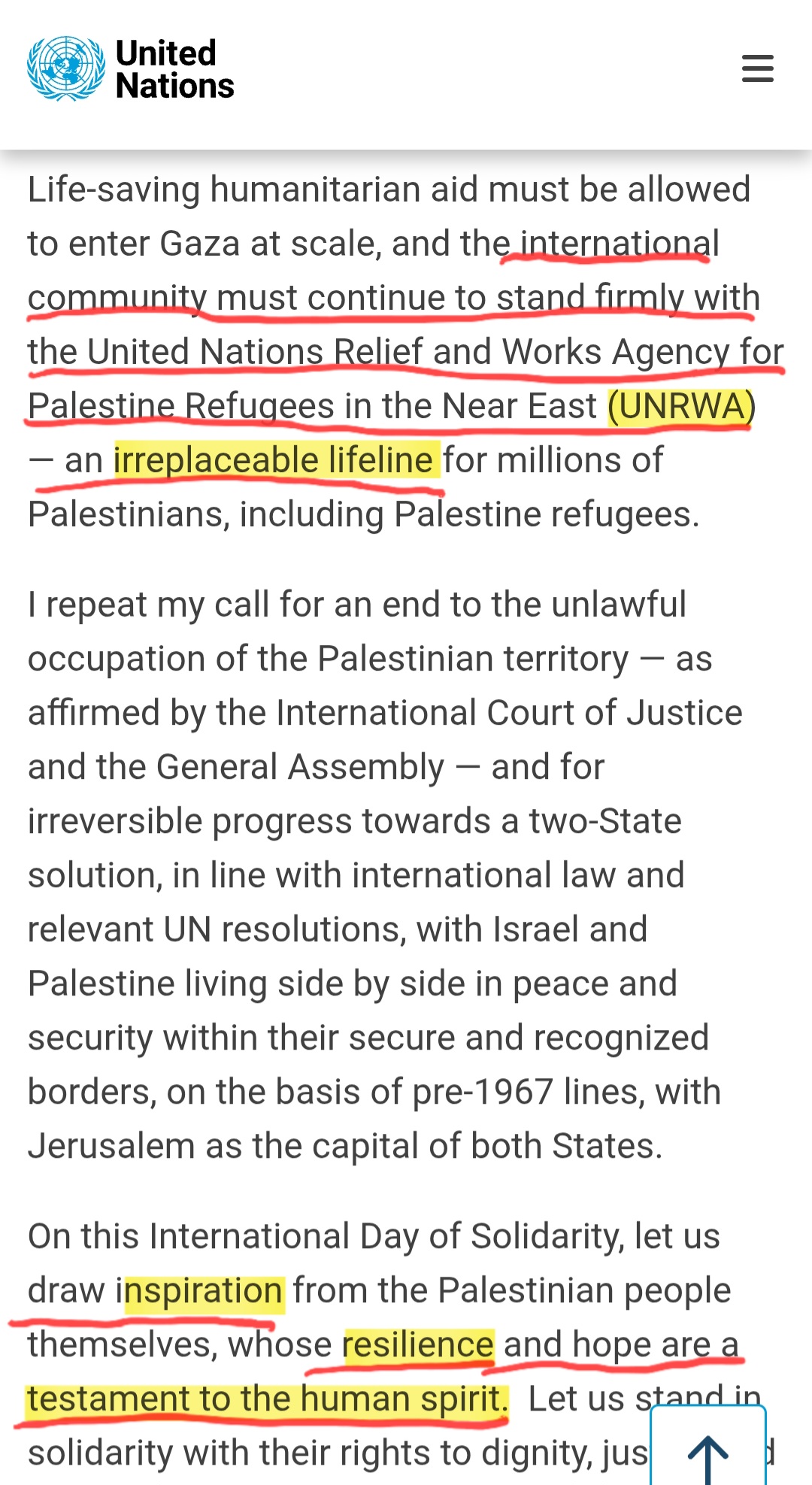
United Nations Secretary-General António Guterres crossed a moral line when he called Palestinian Arabs an “inspiration” and a model of “resilience” this week. Inspiring how? By the crowds who celebrated the October 7 massacre? By polls showing majorities still glorifying the murders of Israeli civilians? By a culture whose media, schools, and leaders reject coexistence and sanctify violence?

Statement by UNSG Guterres about Palestinian Arabs on November 18, 2025

Guterres didn’t qualify his praise. He erased the difference between the paltry few who seek peace and the dominant culture that cheers attacks on Jews. He took a society steeped in martyrdom worship and Jew-hatred — a culture that teaches children to dream of a land without Jews — and wrapped it in moral language.

That isn’t nuance. It’s whitewashing.

And the moral preening about UNRWA, the “irreplaceable lifeline for millions of Palestinians, including Palestine refugees“, which by his own admission is not just about an agency for descendants of displaced people from 75 years ago, but for ALL ARABS? That agency which was intimately engaged in fighting a war against Israel? He insists that the international “stand firmly” with the agency which fosters the violence and perpetual state of war?

Guterres has dignified the ideology that drives repeated attacks on Israeli families. He has signaled to the world that Jewish suffering is incidental, and Palestinian rejectionism is to be emulated.

If the Secretary-General looks at a society that celebrates slaughter and sees “a testament to the human spirit”, what won’t he excuse next?

It’s time for moral clarity. If Hamas supporters chant, “There is only one solution! Intifada Revolution!’— then outside the UN, people should gather in front of the campus with the truth:

“There is only one response — eradication of Hamas!”

Peace will never come from praising a culture of violence. Only from defeating it.

The Palestinian Authority Still Shields Extremism

To read the Western press, one might believe that the Stateless Arabs from Palestine (SAPs) in Gaza and the West Bank are reluctantly resigned to the idea that Hamas must go. Headlines routinely imply a growing consensus that Hamas is the past and some renewed Palestinian Authority is the future.

It could not be further from the truth.

The October 2025 PCPSR poll shows — unambiguously — that the Palestinian public has not turned away from Hamas. The majority would elect Hamas. The majority still supports the October 7 massacre. The majority wants Hamas to never disarm. This isn’t a fringe view or a warped reading of the data; it is the mainstream sentiment of Palestinian society two years after the massacre. Western analysts may avert their eyes, but the numbers do not.

And the Palestinian Authority knows this. That is why it continues to shield Hamas — not confront it.

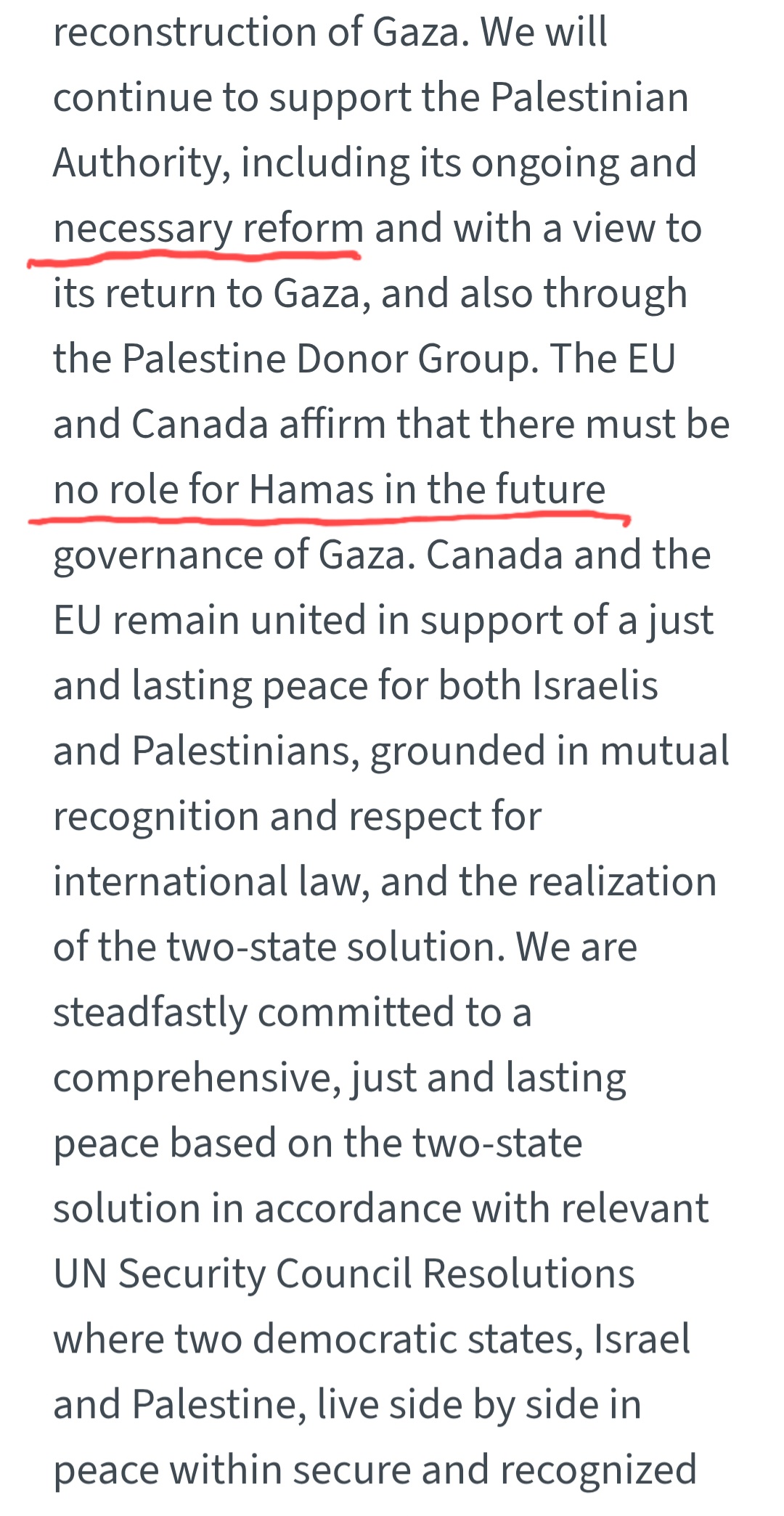
A perfect illustration can be found in WAFA, the PA’s official news agency. In reporting on a session held by Canada and the European Union calling for a renewed diplomatic push, WAFA framed the story as a call for a “two-state solution,” “Gaza reconstruction,” and vague Western support for Palestinian aspirations and condemnation of Israeli actions.

What it didn’t report is the crucial part: those same governments insisted that the Palestinian Authority must undergo significant “necessary reform” and that Hamas must have absolutely “no role” in the future of Gaza. This was not an afterthought in the meeting; it was a headline demand. Yet WAFA hid it from the Palestinian public.

Joint declaration from EU- Canada on November 12, 2025

Why? Because telling the truth would expose the central problem: Palestinian society is not being prepared for peace. It is being insulated from accountability.

A healthy political culture would confront the society’s own extremism. It would publish the poll numbers honestly and begin the painful process of restructuring education, media, and institutions. The PA instead chooses the opposite — suppressing outside criticism of Hamas and pretending that international actors want a Palestinian state under current conditions.

Deradicalization and re-education are not optional. They are essential.
And it is unmistakably clear that Palestinian society is incapable of doing so on its own.

For decades the PA has relied on a strategy of deflection — blaming Israel, minimizing internal dysfunction, and shielding extremist factions to avoid backlash from the street. That strategy has produced a generation that celebrates massacre, rejects coexistence, and sees disarmament as betrayal.

The Western world may cling to the comforting fiction that Hamas is isolated and universally rejected by Palestinians. The data say otherwise. The PA’s deliberate omissions say otherwise. The very architecture of Palestinian political life says otherwise.

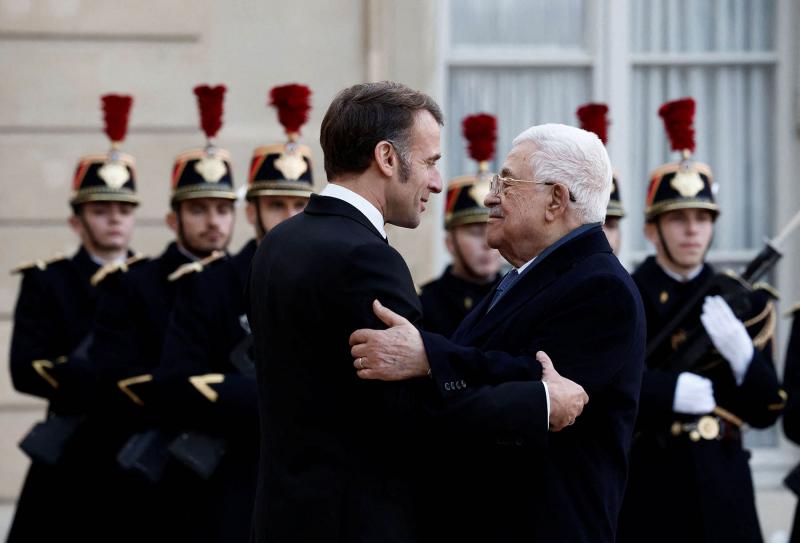
France may assuage the Muslim street when its Prime Minister has meetings and posts photos with PA President Mahmoud Abbas, but those actions make it complicit in promoting not only a fiction, but affirmatively dressing the wolf in sheep’s clothing.

French President Emmanuel Macron welcomes Palestinian President Mahmoud Abbas at the Elysée Palace in Paris, France November 11, 2025. Abbas told the west “We are committed to a culture of dialogue and peace, and we want a democratic, unarmed state committed to the rule of law, transparency, justice, pluralism and the rotation of power.” No such statement appeared about the meeting in Wafa.

Until the international community confronts this reality — and insists on genuine deradicalization rather than polite diplomatic euphemisms — there will be no meaningful change in Gaza, the West Bank, or the prospects for peace.

The Other Part of the Balfour Declaration Detested by Antisemites

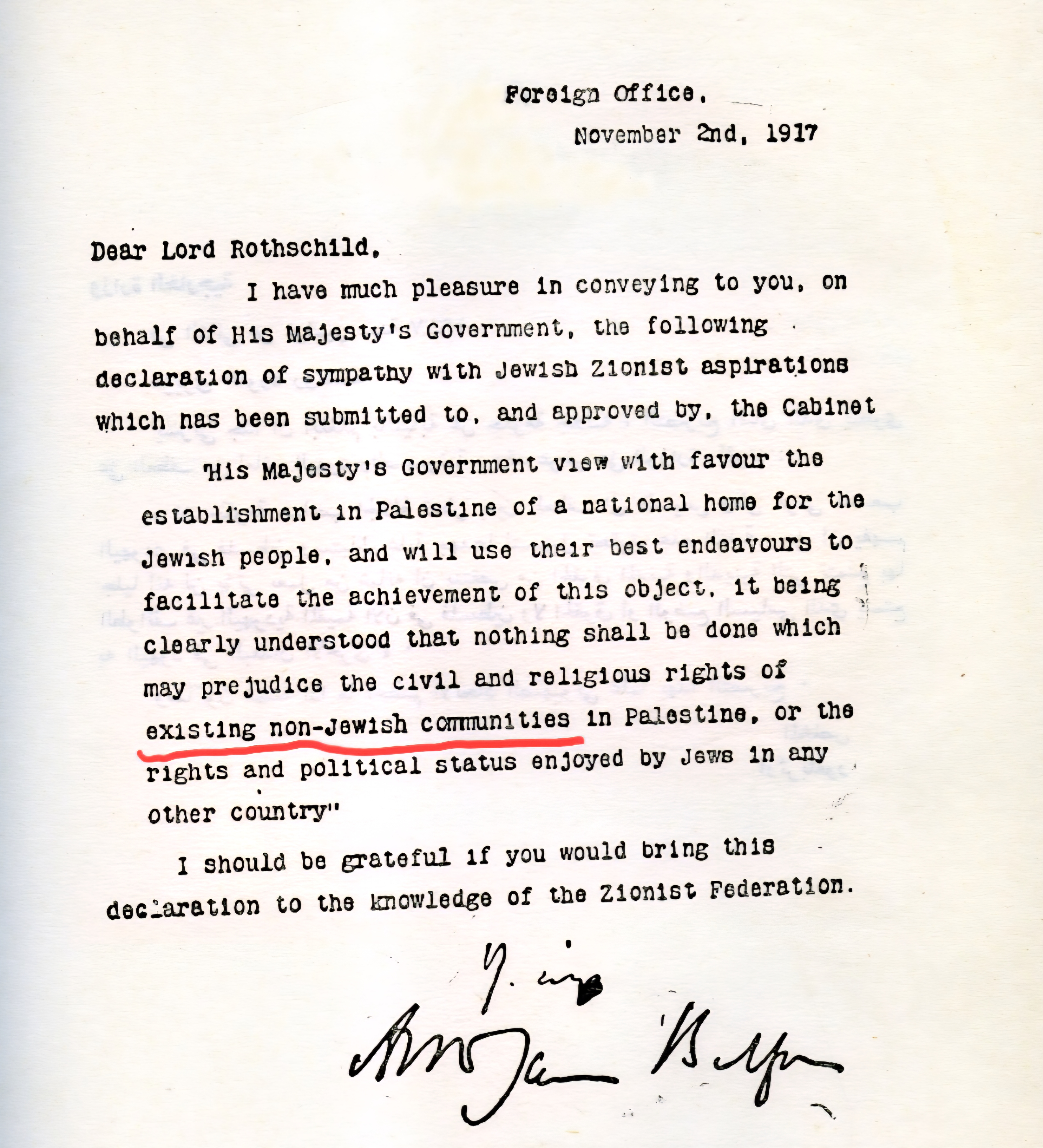
Much of the attention on the Balfour Declaration—issued on November 2, 1917—focuses on the United Kingdom’s pledge to “facilitate” “the establishment in Palestine of a national home for the Jewish people.” Israel-haters rage at this clause, claiming that Jews had no historical connection to their ancestral homeland and that Britain had no right to “hand over” immigration rights from local Arabs to Jews.

Balfour Declaration

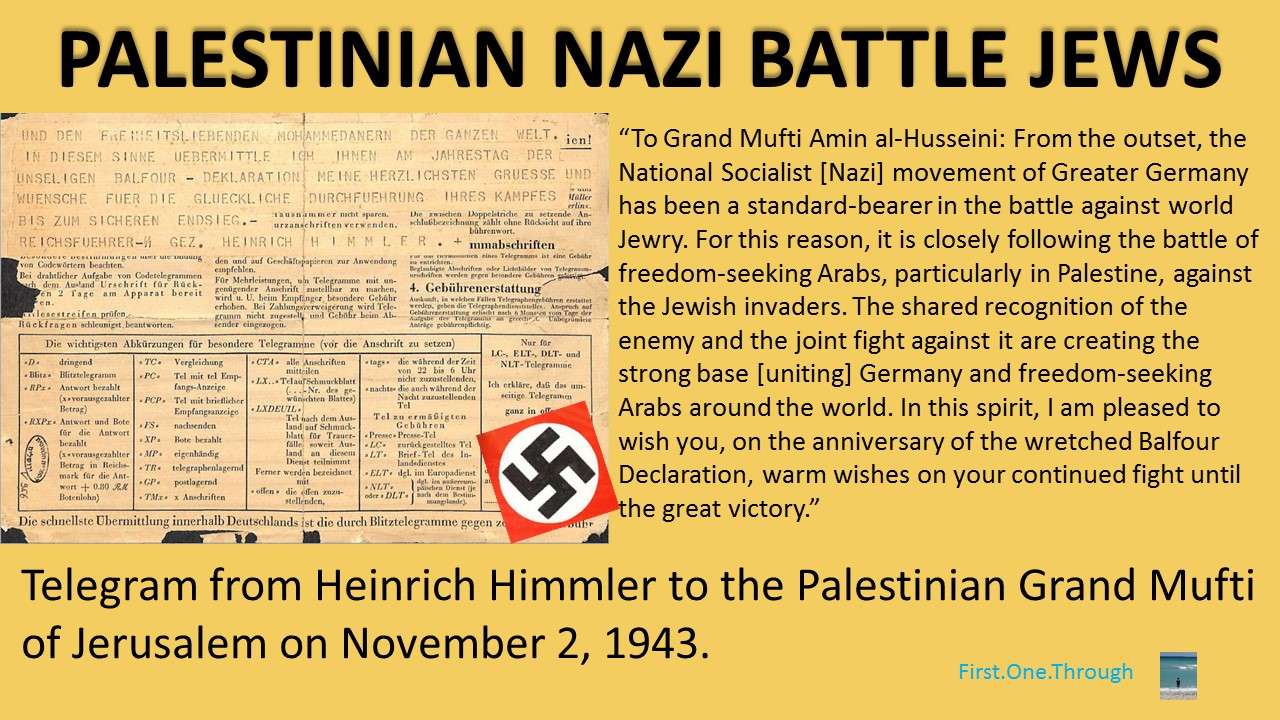
On the anniversary of the Declaration in 1943, Heinrich Himmler of Nazi Germany sent a telegram to the “Grand Mufti” of Jerusalem that Nazis and Arabs had the same enemies – Jewish invaders. In 2016, the President of the Palestinian Authority, Mahmoud Abbas demanded an apology and reparations from Britain for issuing the Balfour Declaration, having repeatedly failed to destroy the Jewish State.

Telegram from Heinrich Himmler to Amin al-Husseini on November 2, 1943

But there’s another part of that same document that antisemites also detest. The closing line reads:

“…nothing shall be done which may prejudice the civil and religious rights of existing non-Jewish communities in Palestine, or the rights and political status enjoyed by Jews in any other country.”

That final clause—protecting Jews’ rights around the world—is precisely what modern antisemitic movements are trying to undermine. Groups like Within Our Lifetime, CAIR, and the Democratic Socialists of America openly campaign to dismantle what they deride as “Jewish power” in America.

They smear Jews as self-serving “capitalists,” accuse them of exploiting “Black and Brown bodies” for profit (as Rep. Rashida Tlaib has said), and seek to push Jews to the margins of public life—all because Jews affirm that the land of Israel is their homeland.

A century after the Balfour Declaration, its promise remains under attack—not only in the Jewish homeland but wherever Jews dare to live proud and free.

UNRWA: The Antithesis of Its Mission

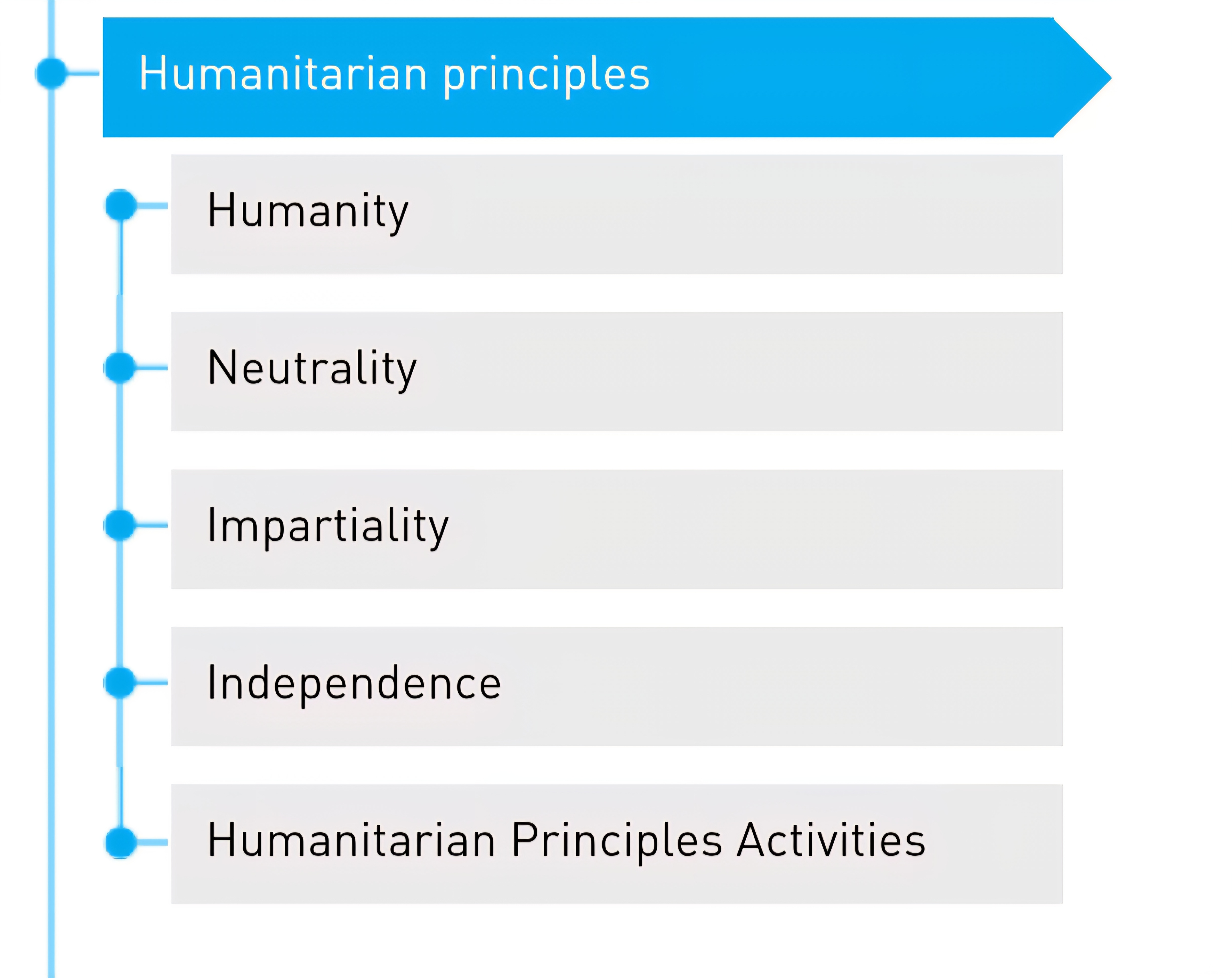
The United Nations Relief and Works Agency, UNRWA, declares that it operates on four humanitarian principles — humanity, neutrality, impartiality, and independence.
It is none of those things.

UNRWA is unlike any other UN agency. It is not the UNHCR, which manages refugees from every nation and conflict on earth. UNRWA is a creature of exception — created for a particular people, in a particular region, in a particular war.

The agency claims it was established to address the plight of refugees from Palestine following the 1948–49 Arab-Israeli War. But was that truly its purpose?
When the fighting ended, thousands of Jews were also expelled from their homes east of the 1949 Armistice Lines (E49AL) — from Jerusalem’s Old City, from Hebron, and across Transjordan’s illegally occupied territory. They, too, were refugees from Palestine. Did UNRWA help any of them? No.

Jews expelled from the Old City of Jerusalem via the Zion Gate by the army of Transjordan

From its inception, UNRWA was built to serve Arabs alone. Even when those same Arabs became full Jordanian citizens, the agency continued to provide them with housing, food, education, and medical care — benefits that by any logical standard should have ended once citizenship was granted. Instead, UNRWA preserved refugeehood as an inheritance, not a temporary condition.

Over time, UNRWA’s mission has morphed from relief to perpetuation.
It has shown itself highly partisan, politically entangled, and morally compromised. Its schools and clinics may operate under the UN flag, but the agency’s allegiance is often indistinguishable from the politics of rejectionism that dominate its host territories.

The entrance to UNRWA’s Aida “Refugee” Camp, near Bethlehem, with a key atop a keyhole, to demonstrate that the pathway to moving to Israel is via UNRWA

During the 2023 Gaza war, UNRWA boasted that only it had the infrastructure to provide food, education, and healthcare to the Gazan population.
Yet when 250 Israelis were dragged into Gaza as hostages, where was this agency of “humanity”? Did it deliver a single bandage or calorie to the kidnapped Israelis held underground? Did it condemn their abduction, or even acknowledge their suffering?
It did not.
UNRWA’s humanity proved selective, its independence nonexistent.

Its operations in Gaza function only through integration with Hamas, the political-terrorist organization that rules the territory. Schools double as weapons depots; employees have been implicated in massacres; aid is distributed by political loyalty, not human need. Leaders at the OCHA, another UN “humanitarian” group, are not shy to say they view Hamas a legitimate political representatives of Palestinians, not as a terrorist group.

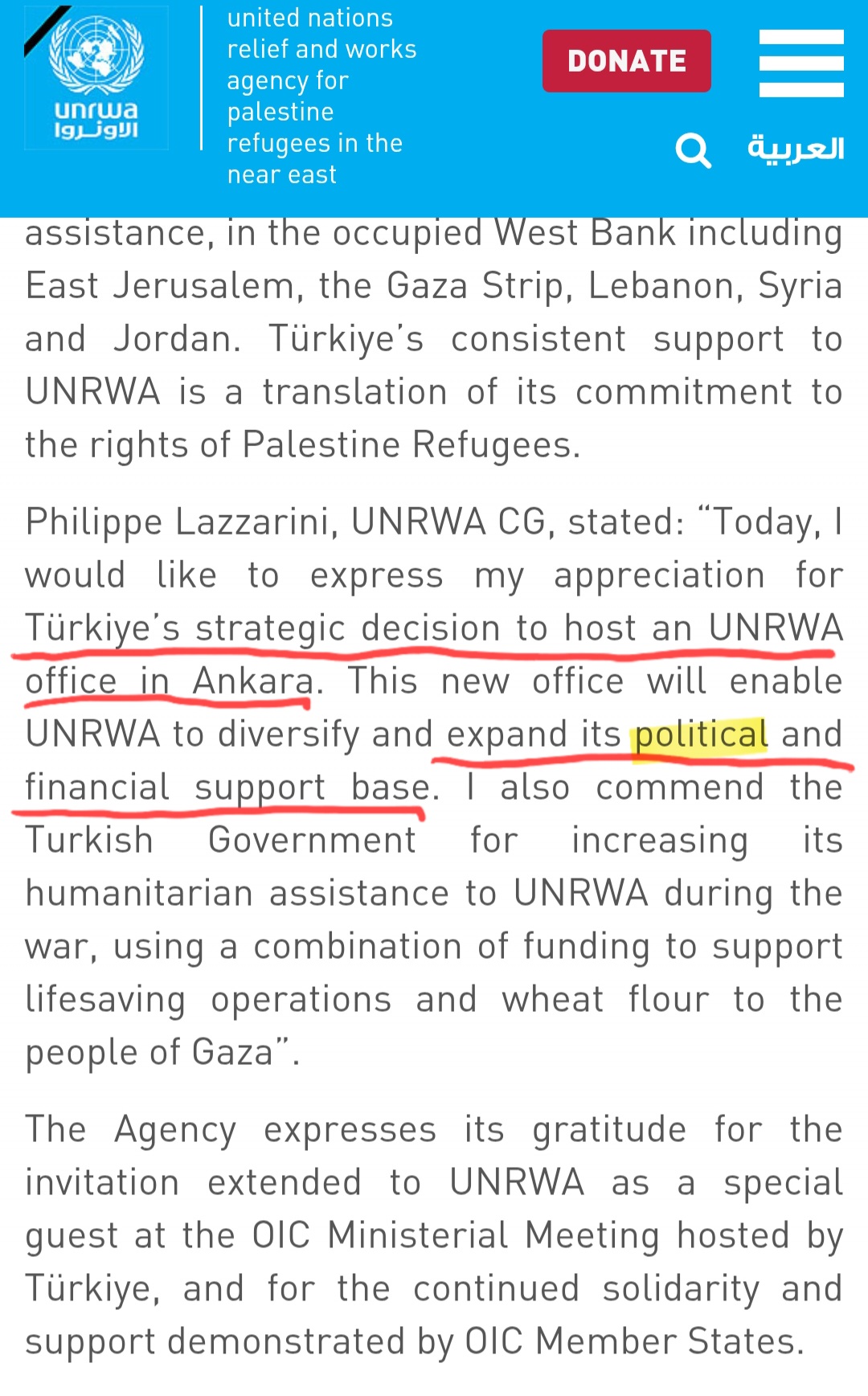
UNRWA now has additional offices outside of its field operations. It opened an office in Turkey to “expand its political and financial support base,” backed by the Organization of Islamic Cooperation (OIC), a political group. Very political. Neither independent nor neutral.

UNRWA is not a neutral humanitarian actor. It is a political instrument masquerading as one.
It fails every principle it proclaims.

It should be closed permanently.
Its essential services — food, healthcare, and education — can be absorbed either by host countries where these so-called “refugees” have lived for generations, or by the UNHCR, the global refugee agency that serves all peoples without prejudice.

So long as UNRWA exists, it will preserve resentment, dependency and hatred.
That agency founded in the shadow of war is the leading obstacle to peace.

The Next Part of the “20-Point Plan”: Drop Charges At The ICJ

The headline deal which everyone pretends is a simple human-rights triumph — hostages home in exchange for prisoners and a ceasefire — is, on its face, a moral imperative. Families and politicians, of course want the war to end and hostages back home. But if we treat this swap as merely a humanitarian ledger without thinking about incentives, strategy and deterrence, we invite a replay of October 7 — not because anyone wants it, but because the arithmetic of the deal makes another mass-carnage payoff seem rational to those who plan such crimes.

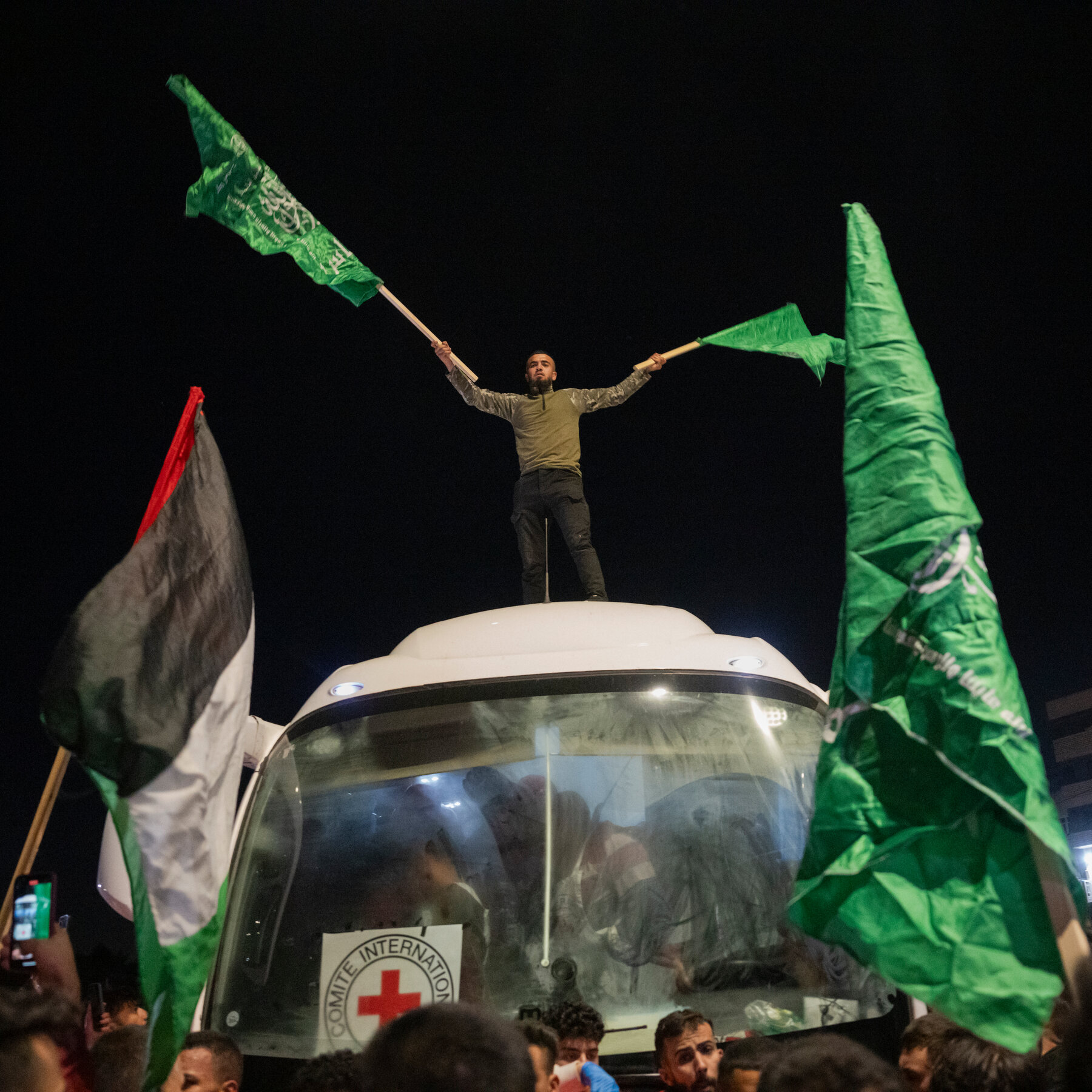
Palestinian Arabs wave Hamas flags atop the Red Cross truck bringing releases terrorists to the West Bank in November 2024

Here’s the cold calculus the bland statements miss.

Hostages for prisoners. Civilians for killers. A handful for hundreds. These trades have an immediate human relief value. The cost, however, is structural: they reset the reward function for terrorism. If a violent raid can reliably purchase the release of leadership, fighters, and political capital — and if the international response includes legal actions that delegitimize the responding state — then the net effect is to make mass atrocity an instrument of statecraft.

Celebrations for released Palestinian Arab terrorists in 2014

But the mathematics isn’t just – and must not be viewed as – the prisoner-to-hostage ratio. It includes the defensive response: the likely military, political, and territorial consequences of the assault. Hamas should be forced to accept that math too. If it contemplates another October 7-style operation as it has promised to do repeatedly, it must understand that the outcome will not be a tidy prisoner exchange and a televised victory lap. It will be the destruction of leadership and the decimation of military infrastructure, with broad international support for the defensive measures taken to prevent a repeat.

Which brings us to the international legal theater now playing out: the ICJ’s “genocide” accusations, the vociferous statements from states threatening arrest of Israeli officials, and the diplomatic embrace of Palestinian statehood in some quarters. These actions, however well intended by their proponents, have immediate strategic effects. They amplify Hamas’s narrative of global validation and, crucially, complicate the deterrent effect of defensive operations. If a state in self-defense risks being publicly criminalized or its leaders subject to arrest, the calculus of deterrence is altered – for the entire world.

So, what should sensible governments do if they insist on both protecting Palestinian rights and preventing another October 7? Two practical propositions:

  1. If regional governments want backing for Palestinian statehood and avoid terrorism in their own countries, they should drop the ICJ case. the Arab and Muslim countries which backed the U.S. ceasefire plan should pressure South Africa and other countries which brought the case to drop the charges and let diplomacy take center stage. Law and diplomacy should be tools of stability, not absolution for terror strategies.
  2. If the desired outcome is that populations on both sides live within range of cross-border terror and reprisals, then investing in defensive infrastructure as a bridge to a political solution is a rational step. The United Nations and donor states should be pressed to fund a replacement barrier between Gaza and Israel — walls and surveillance that reduce the risk of mass infiltrations, so that the question of where futures lie for Palestinians becomes a matter of state-building and safety inside Gaza, not a perpetual recruitment slogan for militancy.
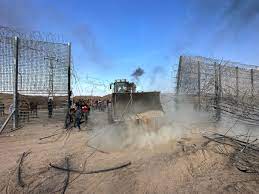
Hamas breaks through security fence between Gaza and Israel on October 7, 2023, on way for mass murder and abductions

This is not a call to abandon human rights oversight or to whitewash abuses. Accountability and adherence to international law matter. But timing and incentives matter too. Legal actions taken in the heat of war — unmoored from a strategy to prevent recurrence — can harden positions and diminish the tools of deterrence. If the objective is to keep people alive and build a durable peace that allows Stateless Arabs from Palestine (SAPs) self-determination without repeated massacres, then international actors must think like engineers of stability, not moral prosecutors on a press release timetable.

If we are serious about both ending the war and preventing future acts of mass terrorism and barbarity, we must stop evaluating deals by immediate feel-good optics alone. The right measure of a deal includes whether it reduces the incentive to perpetrate mass atrocities, strengthens deterrence against their planners, and clears a path toward political arrangements that give civilians on all sides a future. Anything less is not a solution — it is an invitation.