Why WESPAC?

When IsraelAnalysis.com first reported an act of anti-Israel vandalism on the streets of White Plains, it pointed to the possibility of WESPAC—a long-standing left-wing activist group with a record of anti-Israel rhetoric—as being behind the hate-fueled attack. While no individual has been arrested or charged, the suspicion is not without reason. The question arises: why WESPAC?

Let’s start with timing. The graffiti appeared around 5:00 p.m. on the Ninth of Av, the somber Jewish fast day that mourns the destruction of the First and Second Temples in Jerusalem. WESPAC planned a “urgent vigil for the children of Gaza” at the same time the next day in Peekskill. That city lies further north in Westchester, while many of WESPAC’s most vocal “activists” live in southern Westchester, including White Plains. “Solidarity” for these comrades in southern Westchester may have brought them out on a sunny Sunday.

WESPAC ad for a vigil for Gaza in northern Westchester

Moreover, the vandalized site itself—a street decorated with American and Israeli flags—was an obvious magnet for anti-Israel agitators. What better canvas for those hoping to make a statement on a Jewish day of mourning than one visually celebrating the very state they protest?

But the context runs deeper.

WESPAC has long used the veneer of social justice to cloak its deeply anti-Israel agenda. In neighboring Hartsdale, the group confronted Jews filled with virulent anti-Israel rhetoric. And the current chair of WESPAC, Howard Horowitz, isn’t just a local—he’s a paradoxical figure leading the Israel Action Committee at Temple Israel of New Rochelle, even while aligning publicly with radical anti-Zionist groups like Jewish Voice for Peace (JVP) and IfNotNow.

Horowitz’s own writings are telling. He lashed out at Jewish residents of New Rochelle who had the temerity to run for school board seats, accusing them—and by extension the broader Jewish community—of racism against people of color. He has taken aim at “the vast majority [who] repeat the “I stand with Israel” declarations, disregarding the horrific facts on the ground” in Gaza, making the banner-lined street in White Plains a perfect target for his vitriol. He further believes that such pro-Israel proclamation “denigrates the Jewish tragedies” like the Ninth of Av, making the fast day an appropriate moment to attack Israel supporters.

Horowitz makes no bones about mocking Jewish “nationalism” as evil and “antithetical to Yiddishkeit,” even while he advocates for Arab nationalism. That’s his right, but it doesn’t put him or his group beyond the sphere of suspicion.

As reported by Lohud, the media site covering the lower Hudson Valley, ADL reported that in 2024, Westchester was unique among the suburbs of New York City, to have an increase in antisemitic incidents, a rise of 22% from 2023. Rockland, Nassau and Suffolk counties had declines of 11%, 36% and 26%, respectively. The disparity had much to do with anti-Israel groups including JVP, Palestinian Youth Movement and Democratic Socialist of America – all groups aligned and supported by WESPAC.

Lohud article on rise of antisemitism in New York and Westchester County

To be clear: no direct evidence has emerged tying WESPAC—or Horowitz—to this act of vandalism in White Plains. But in a county like Westchester, where anti-Israel rhetoric has become increasingly normalized in certain activist circles, and where groups like WESPAC operate openly with impunity, the suspicion is understandable.

This wasn’t random graffiti. It was a calculated message, timed for maximum symbolic effect. It struck at a street display of solidarity, and a people commemorating thousands of years of trauma.

And when neighbors ask: Who would do something like this?—it’s not hard to see why eyes turn toward the radical group operating, quite literally, just down the street.

From Devarim to Today: Firsthand Testimony as a Covenant Across Generations

In Parshat Devarim, Moses begins his final speech to the Israelites. He does not begin with the Creation of the world or the stories of the Jewish patriarchs and matriarchs. The Book of Genesis — with its grand universal themes and personal family journeys — is set aside. Instead, Moses focuses on the collective journey he himself witnessed: the liberation from Egypt, the giving of the Ten Commandments, the rebellions and reckonings in the wilderness. It is as though this is where the Jewish people’s national story truly begins.

Rabbi Jonathan Sacks observed that Deuteronomy is not just a repetition of laws — it is Moses’ personal testimony, his urgent effort to pass on memory, meaning, and mission. As the Israelites stand poised to enter the Land, Moses knows he will not go with them. What he offers instead is the one thing only he can give: the lived truth of experience.

This resonates today more than ever. We are witnessing the passing of another generation of eyewitnesses: the survivors of the Holocaust and the founders of the modern State of Israel. Like Moses, they saw the journey with their own eyes — from slavery and destruction to sovereignty and rebuilding. They walked from Auschwitz to Jerusalem. They built a state out of the ashes, defended it in war, and gave it the infrastructure of a living, breathing nation.

Their stories — of suffering and survival, of faith and fortitude — are not just history lessons. They are testaments. And they come with a charge: to remember, to be vigilant, to defend our people and our land, and to carry forward the values of Torah and the reality of Jewish nationhood.

Just as Moses recounted the past to prepare the people for the future, so too must we internalize the legacy of those who came before us. Their firsthand accounts are not simply about what was, but about what must be. A people grounded in memory is a people prepared for destiny.

If we listen to their voices — and not merely archive them — we gain strength to resist the deniers, the revisionists, and the haters. We reaffirm that we are not just a people with a past, but a people with a purpose — a covenantal mission that stretches from Sinai to today.

Kotel Plaza

Diaspora Jews and the Promised Land

In the Book of Numbers, chapters 32 and 34, we find a powerful and enduring lesson for Jews living outside the land of Israel. The tribes of Reuben and Gad, later joined by half of the tribe of Manasseh, approached Moses with a bold request. They asked to settle on the east side of the Jordan River, outside the boundaries of the Promised Land, because the land there was suitable for their abundant livestock. Moses was skeptical: was this another rebellion, like the spies who had refused to enter the land decades earlier?

But the tribes made a solemn vow. They would not only join the conquest of the Land of Israel—they would be on the front lines. Only after the land was secured for their brethren would they return to their homes across the Jordan. They could live outside the Promised Land, but they could not abandon their people or their mission.

Wallis’s New map of The Holy Land (1815)

Fast forward thousands of years, and the question still echoes: Do Jews living in the diaspora bear a similar responsibility toward Israel today?

The modern State of Israel, reborn in 1948, has been under near-constant threat. From surrounding Arab nations launching wars to terrorist regimes like Hamas slaughtering civilians, Israel’s security is never guaranteed. The battlefield has expanded beyond the physical: anti-Israelism masquerades as social justice in Western institutions, and Jewish students face intimidation on campuses from New York to London to Sydney.

And yet, many diaspora Jews seem detached from the fight. Some claim that Israel’s policies are the cause of antisemitism. Others go further, actively criticizing the Jewish State in public forums – leading with “AsAJew” credentials – hoping that distancing themselves will spare them from scorn.

The lesson of Reuben and Gad was clear: you can live outside the land, but not outside the mission.

Reuben and Gad did not ask to be exempt from the battle. In fact, they pledged to be the vanguard. Likewise, Jews living in the diaspora, particularly those in free and prosperous nations, must recognize their role. They may not carry rifles in the IDF, but they must arm themselves with truth, courage, and commitment.

They should defend Israel in public discourse. They must call out antisemitism cloaked as “anti-Zionism,” a calling card demanding the destruction of Israel. They ought to support accurate Israel education, advocate with elected officials, and give generously to causes that strengthen Israel’s security and society. It is the price of living across the river.

Moses demanded a commitment from the tribes outside the land. Jewish history demands one now.

Cuomo, Jewish Champion, Aged Gladiator

Weekends in the Hamptons Synagogue are times to hear from politicians but infrequently a political war room. That changed on July 20. Former Governor Andrew Cuomo, political veteran and bruised warrior of Albany, came down from the bleachers and into the pit—this time, to describe the battle with far-left ideologue who had somehow captured the heart of New York City’s radical alt-left: Assemblyman Zohran Mamdani.

Cuomo stood before a predominantly older, anxious crowd—not in his home borough, but in the summer home of hundreds of Manhattan’s Jewish residents. Rabbi Marc Schneier introduced him warmly, a gesture that symbolized more than courtesy. It was a call for a lifeline from a community watching its city slip into madness.

From Apology to Attack

Cuomo opened with an apology for his lackluster primary campaign, acknowledging what everyone in the room already knew: Mamdani’s young, radical left had shown up to vote, and Cuomo hadn’t shown up at all. But that was going to change. Cuomo pledged to fight between now and November—and then made a pledge to follow the suggestion of former New Jersey Senator David Paterson, that if trailing Mayor Eric Adams in the fall polls, he would step aside in September to avoid splitting the anti-Mamdani vote. He implied Adams should do the same.

Former Governor Andrew Cuomo addressed crowd at the Hamptons Synagogue in Westhampton Beach, on the dias with Rabbi Marc Schneier, on July 20, 2025 (photo: First One Through)

“fueling antisemitism”

In responding to a direct question, Cuomo refused to label Mamdani an antisemite because “I cannot see into his heart,” but was clear that the 33-year old very much “fuels antisemitism,” and further “engages in hate speech.”

The crowd nodded, murmured. Some thought Cuomo was too polite. They’ve listened to Mamdani excuse phrases like “globalize the Intifada” to bring violence against the Jews everywhere. They saw the only legislation introduced by the radical socialist, a bill to strip the tax-exempt status of charities benefiting Israelis, like Hatzalah. They read his call to “defund the police.”

Mamdani’s platform is a direct threat to Jewish safety.

Eli Beer, founder of Hatzalah in Israel, asking a question of Andrew Cuomo at the Hamptons Synagogue on July 20, 2025 (photo: First One Through)

A Plan for the City

Cuomo laid out his blueprint:

  • Enforce the law and prosecute hate crimes.
  • Hire 5,000 new police officers.
  • Build housing in a supply-starved market.
  • Attract businesses and jobs to the city.

He didn’t let the crowd forget what they lost: 15,000 jobs from Amazon’s Long Island City project—killed, he reminded them, by Mamdani’s comrade-in-ideology, Alexandria Ocasio-Cortez. Cuomo said that he had worked hard to win that competition, only to be foiled by a Democratic-Socialist. When the city and state were not blocked by terrible ideologies, Cuomo was able to accomplish a lot, including the Second Avenue subway, a new Laguardia Airport and a replacement to the Tappan Zee Bridge.

He was a Democrat who accomplished tangible results, while the Democratic-Socialist wing of the party impeded any progress with “stupid ideas.”

Desperation and the Wounded Gladiator

When Cuomo finished, the crowd didn’t roar—it exhaled. One person whispered into the microphone that the speech needed to be given in every synagogue in the city. Cuomo responded that he will do what he can but you need to get and be messengers. If you don’t organize, Mamdani wins.

Cuomo offered data: Mamdani won the primary because the activist class under 30 turned out en masse. But the general electorate was different: 70% Democrats, 15% Independents, and 15% Republicans. With Adams or Sliwa out of the race, Cuomo insisted, the math would work and recent polls show he is correct. He could win. If the others dropped out.

The audience, mostly over 70, carried the unease of people who had seen this movie before. Socialist cities—Los Angeles, San Francisco, Chicago—were crumbling under the weight of their ideology and policies. New York had put its toe in the water in the past with Bill de Blasio and the results were terrible. A Mamdani mayoralty, Cuomo warned, could bury the city for two decades.

They wanted to believe Cuomo could win. But they also saw the crowded field ahead and Cuomo’s primary loss behind. It was like watching a wounded gladiator try to rise as the coliseum gates opened and the lions approached.

They weren’t cheering.
They were praying.

For him. For themselves.

Related:

From Vienna to Queens: Karl Lueger, Zohran Mamdani, and the Politics of Polite Antisemitism (June 2025)

Make New York Bankrupt Again: The Danger of Mamdani and 21st Century Socialism (June 2025)

DSA Goes Full Antisemite (July 2024)

Racism In The Old and Antisemitism In The Youth (February 2024)

Please Don’t Vote for a Democratic Socialist (November 2018)

From War To Heritage

As the Israelites were about to enter their Promised Land, the Bible relays stories of a series of conflicts.

After the spies delivered a bad report on the land in Parshat Shlach, we read the story of Korach who tried to launch a mutiny against Moses and Aaron. Then Chukat describes a war with Amorites, and Balak shares the story of a prophet trying to curse the Jewish people. At the end of Balak (Numbers 25:1-9), we read about Moabite women engaged in profanities with Jewish men. Pinchas, son of Elazar son of Aaron, took a spear and impaled the couple having sex in front of the Ohel Mo’ed, the tent Moses used to communicate with God.

Illuminated manuscript miniature from the 15th-century Alba Bible

And that is where Parshat Balak and the story seemingly end. With the murder of the couple and 24,000 others engaged in similar acts.

But it doesn’t really.

Parshat Pinchas continues the story with a pivot. Rather than highlighting the sins and the deaths, Numbers 25:10 begins with God appreciating the defense of holiness and His blessing Pinchas and his descendants. While the story may appear as a single episode, the Torah divides the parshas – and the narrative – between the violent and the holy, even when the violence was in the name of the holy.

The theme of separation can similarly be seen immediately after this in chapter 26, where God calls for another census of the tribes. Here, God counts the tribes and their families to allocate land for their inheritance. This is in contrast to the census of Numbers chapter 1 in which God wanted to account for how people would assemble in their journey and combat enemy forces. In the case of the journey and battle-readiness, there was a single head of each tribe; when they entered the land, each tribe’s family was specified.

It is a metaphor for how Jews assemble and coordinate today: there are wars that are fought in Israel and the diaspora against those who want to harm Jews and the Jewish State. Global Jewry understands the us-versus-them dynamic and the role for every Jew in the battle. It is related yet distinct from the interaction amongst Jews regarding our common heritage. We each have a part to play living together as a community.

Individuals fight with a common purpose. Families live under a societal umbrella.

We have tribes and borders and homes. We coexist with each other while understanding our peaceful lines. The separations today may be between synagogues or religious denominations. Between schools and political affiliations. Each aspiring for peace and holiness.

Those lines are very different than the battle lines between us and “them,” those who mean to harm us physically, morally and spiritually.

Upon entry into the Jewish holy land, Jews migrated from an army with legions to a people with property. While there were still wars to be fought inside the Jewish Promised Land, the muscle memory of understanding who is within the holy communal tent and those outside forces, was taught over the trials in the desert.

It is a lesson for our time as well: to clearly identify our allies and foes, and wage war and peace accordingly.

Related:

The Blessing of Jewish Distinctiveness (July 2025)

The Zone Of Jew Hatred Interest (March 2024)

Judaism Is Uniquely Tied To The Land Of Israel (December 2023)

Unity – not Unanimity – in the Pro-Israel Tent (November 2017)

Ilhan Omar’s Free Speech For Me Not Thee

Nothing seems to animate Rep. Ilhan Omar  (D-MN) as much as attacking America, Israel and Jews. Perhaps with the exception of defending those who do.

On July 15, 2025, the U.S. House of Representatives Education & Workforce Committee held a hearing on antisemitism at universities. Rather than show concern for Jewish Americans facing harassment, intimidation and persecution – the point of the hearing – Omar went on the attack against those who called out the Jew hatred.

Ilhan Omar at House hearing to address antisemitism at universities, July 15, 2025

At (2:28:09) of the hearing, Omar took the microphone and started to bash Canary Mission as a nefarious, shadow organization that worked in concert with the government to “dox” students and “repress speech” of those who spoke up on behalf of SAPs, the Stateless Arabs from Palestine. She called it “McCarthyism” in which the group denied “due process” to individuals, as though this group was an arm of the government, looking to silence dissent.

It was a wild and crazy display of her hypocrisy and lies.

First, some plain facts. Canary Mission is an independent group and not part of the government. It posts public information about what people say and doesn’t share personal information like home addresses or phone numbers (the definition of doxxing). It is all covered under free speech – sharing other people’s “free speech.”

Second, Canary Mission does not silence anyone the way Omar charged. It does not intimidate. It simply compiles the vitriol of those who intend to harm America, its citizens and its allies.

Here is one clip from the site about a 2024 conference where “Palestinian” radicals threatened to tear down “empire,” the code name for the United States.

Omar doesn’t want you to see this: Canary Mission video about jihadists looking to destroy the United States

Here is a review of CM’s profile of Columbia University professor Joseph Massad, one of its longer highlights as he has long been attacking Jews and the Jewish State. It includes a long list of links to HIS comments. Nowhere does it provide his personal information.

Canary Mission video about those celebrating the October 7 massacre and seeking the destruction of Israel

Omar wants free speech for anti-American and anti-Jewish voices but not those who call out the haters. She doesn’t want there to be any ramifications for people calling to “tear down empire,” but only for those who showcase those shrill voices. She claims small private groups have power while she uses her powerful position in government to attack them.

Omar is the embodiment of hypocrisy and anti-American views, which she’s proud to broadcast while people are gathered to consider how to protect the most vilified minority-minority in America.

Omar has made her career out of playing both the victim and the defender of so-called marginalized voices—so long as those voices align with her political narrative. In Omar’s worldview, free speech is sacred when it targets America or Israel—but it’s dangerous harassment when used to expose her ideological allies.

Omar demands impunity for those who cheer jihad, but censorship for those who expose them.

Omar’s double standard is not just hypocritical—it’s dangerous. By shielding radical voices from criticism, she normalizes antisemitism and delegitimizes the right of Jews to call out hatred. Worse, she uses her platform to chill lawful speech, by mislabeling documentation as “doxxing” and criticism as “violence.”

This isn’t about protecting the vulnerable; it’s about protecting the radical. Her priorities are crystal clear:

  • Defend Hamas sympathizers
  • Smear Jewish watchdogs
  • Turn antisemites into victims
  • Turn their critics into villains

If Ilhan Omar were genuinely concerned about threats and intimidation, she would condemn the harassment of Jewish students, the glorification of Hamas, and the calls for violent uprising on American soil. But she won’t—because those voices are her own echo.

ACTION ITEM

You can donate to Canary Mission here.

Related:

Global South’s Beachhead On American Universities (March 2025)

The Insidious Jihad in America (July 2019)

Mixed Dancing With Antisemites

In Jewish tradition, mixed dancing — men and women dancing together — is not banned because the act itself is necessarily sinful. Rather, it’s prohibited by Orthodox rabbis as a safeguard, a geder (protective fence) to keep people from straying into deeper moral danger. The actual target of the ban is adultery. The sages, with profound psychological insight, warned against behaviors that might lead to the destruction of intimate relationships. If lust can spark with a glance, how much more so with physical proximity, rhythmic movement, and emotional energy?

This ancient rabbinic logic should feel very familiar today. We are watching a tragic parallel unfold among secular and progressive Jews in America and the West, who, ignoring the early signs of danger, are “dancing” with partners who wish to destroy them and their relationships with the Jewish community.

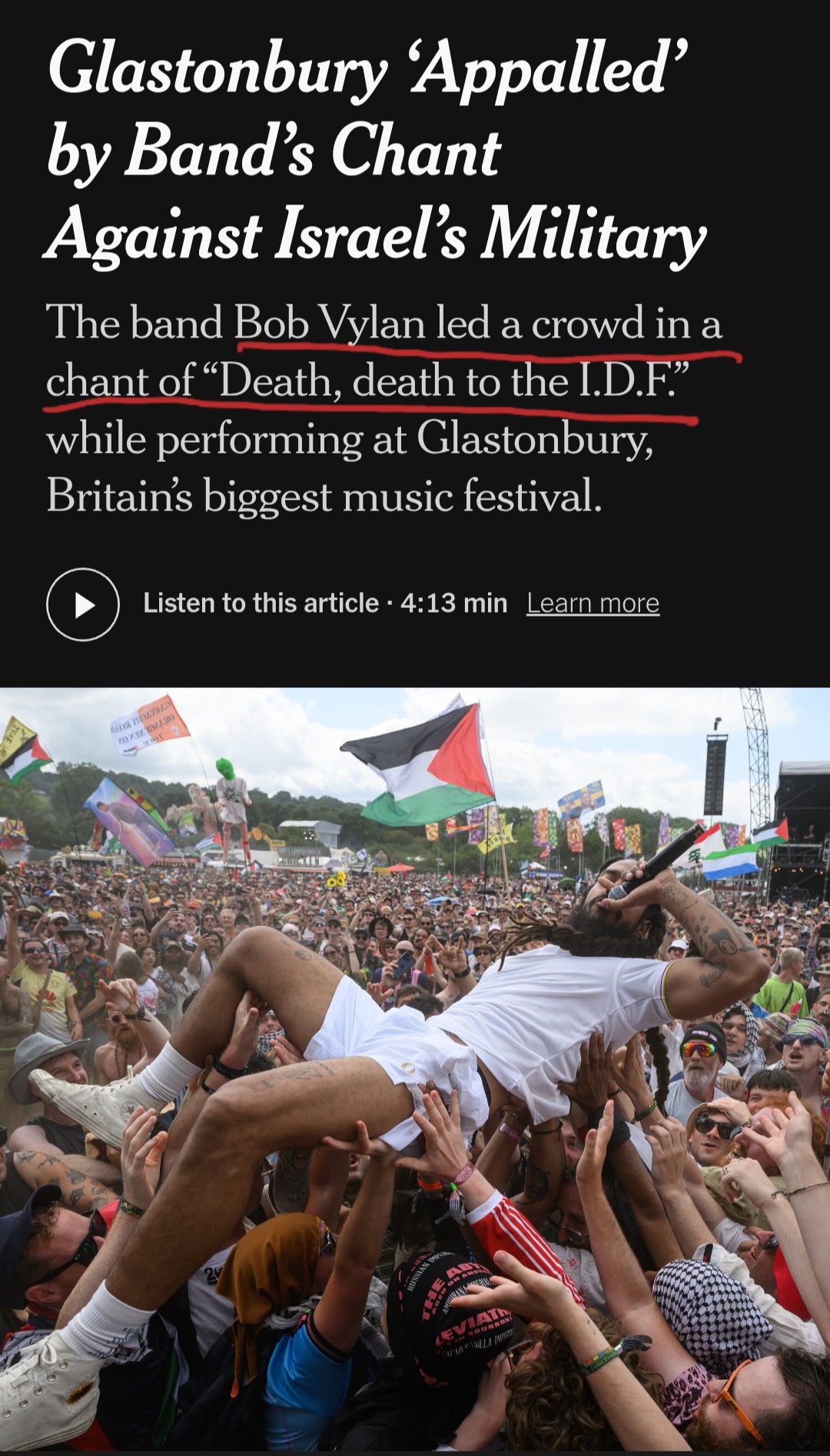
In the UK, members of the Masorti movement — the equivalent of Conservative Judaism — watched impassively as anti-Israel protestors screamed “Death, death to the IDF!” Rather than draw a red line against those openly calling for the annihilation of Israel and its defenders, these leaders tiptoed around offense, unwilling to rupture intercommunal alliances that feed their progressive sensibilities.

In New York, the problem took a sharper form. A candidate for public office — Zohran Mamdani, a Democratic Socialist and vocal supporter of anti-Israel slogans — dodged criticism over the genocidal phrase “Globalize the Intifada.” Far-left Reform rabbis in the city, self-anointed moral voices of the Jewish community, rushed to endorse him. They danced around the danger, preferring the fantasy of social justice alliances over the hard truth of growing antisemitism within their political home.

Article in the Times of Israel co-authored by co-authored by Rabbi Rachel Goldenberg, Rabbi Andy Kahn, Rabbi Abby Stein, Rabbi Barat Ellman, PhD, Rabbi Ellen Lippmann, Rabbi Nancy H. Wiener, and Rabbi Miriam Grossman.

The slope isn’t just slippery anymore — it’s greased with blood and cowardice. Mamdani’s continued place in the progressive tent is welcomed not only by radicals but by establishment Democrats, including Jews like Rep. Jerry Nadler. The Democratic National Committee embraces Mamdani with open arms, eyes shut tight to the threat he and his fellow “democratic socialists” pose to Jews in New York and beyond.

What’s most astonishing is not that radicals hate Jews — an old story — but that Jews are oblivious. Or worse, they see it and prefer the warmth of progressive adulation over the cold loneliness of standing apart.

This is not a moment for nuance or middle-ground moral posturing. The bell curve of American political identity has collapsed into a barbell — a society without a center and where extremes dominate. The Left hosts open antisemites under the banner of “justice,” while the Right has become a safer harbor for traditional Jews who value Israel and religion.

Still, many Jews still won’t leave the party. The music is loud, the slogans intoxicating, and the identity politics too thrilling to resist. They are reveling in center stage, swaying to the rhythm of the mob, arms locked with people who chant for Jewish blood. It is dirty dancing in every sense of the phrase.

While UK’s Glastonbury music festival condemned the violent chants, Masorti Jews excused the vitriol

The sages understood that proximity leads to temptation, and temptation leads to destruction. The rabbis who banned mixed dancing did not hate fun but feared the cost of heedless joy — of dancing with people who don’t have your best interest at heart. That entrance you with intoxicating passions that undermine foundational bonds.

Today, Jews must ask: Who are we dancing with, and how long until the music stops and we realize we are profoundly alone?

Related:

An Open Letter To Progressive Diaspora Jews (October 2023)

You Cannot Be Progressive And Pro-Palestinian (October 2022)

Peter Beinart is an Apologist for Anti-Semites (December 2020)

A Basic Lesson of How to be Supportive (August 2018)

The Non-Orthodox Jewish Denominations Fight Israel (January 2018)

There are Standards for Unity (October 2017)

Dancing with the Asteroids (November 2014)

Will Mamdani Support Converting the Dome of the Rock Into a Synagogue?

Zohran Mamdani, a rising star of the Democratic Socialists of America (DSA) and winner of the Democratic primary for mayor of New York City, is a vocal critic of Israel, consistently aligning himself with those who deny the Jewish state’s legitimacy. The DSA’s New York chapter, to which Mamdani belongs, infamously demanded that candidates pledge never to visit Israel, a democratic country that has long been an ally of the United States and home to nearly half of the world’s Jews. DSA-NYC only targeted the Jewish State in its campaign; not a single American adversary was listed.

This is not policy criticism—it is ideological exclusion.

Mamdani often speaks in terms of equality for all in the Holy Land, especially being opposed to a “hierarchy of citizenship on the basis of religion.” But it’s worth pressing on what that actually means. In Jerusalem today, at the holiest site in Judaism—the Temple Mount—only Muslims are allowed to pray. Jews, Christians, and all other non-Muslims are banned from uttering a prayer or even moving their lips in spiritual devotion on the site where the two Jewish Temples once stood, and which remains sacred to Jews.

The Old City of Jerusalem including the Jewish Temple Mount/ Al Aqsa Compound

This discriminatory policy is issued by the Jordanian-run Islamic Waqf, which holds administrative control of the Temple Mount under a decades-old, uneasy “status quo.” The United Nations repeatedly reinforces this Islamic exclusivity, often omitting any Jewish connection to the Temple Mount altogether. Both the Palestinian Authority and Hamas vocally oppose any Jewish prayer there, calling it a “provocation.” Jews just visiting the site  are denounced by Palestinian leadership with denunciation that Jews are “storming al Aqsa” in an attempt to rile up 2 billion Muslims to jihad Jews.

So, what does “equality” mean to Mamdani in this context?

Does he believe Jews should have the same right to worship – at their holiest site – as Muslims do at a site they consider less holy? Would he support Jewish prayer on the Temple Mount? Or would he continue the pattern of defending Islamic supremacy over Jewish heritage, consistent with the positions of his political allies?

More pointedly: would Mamdani support turning the Dome of the Rock, an Islamic shrine that sits on the very spot of the Jewish Temples, into a synagogue? And would he support giving Jews preference to the site on Saturday, comparable to Muslim access granted each Friday?

Mamdani’s party and political base support antisemitic edicts. They have increasingly mirrored the rhetoric of Palestinian leaders who call for the complete “de-Judaization” of Jerusalem. Hamas and the Palestinian Authority both deny any Jewish historical connection to the site. Any mention of rebuilding a synagogue—let alone a Temple—is immediately labeled “incitement” and met with threats of, and actual, violence.

The DSA has never condemned this apartheid of worship. Instead, it condemns Israel for even maintaining security on the Mount after violent jihadi riots. That Mamdani would remain silent or complicit on this speaks volumes.

The deeper truth is that equality in Mamdani’s rhetoric masks a goal for a radical reordering of the Middle East in which Jewish identity and history are subordinated or erased altogether. It is not about equal rights—it is about erasing Israel. Supporting open Jewish prayer on the Temple Mount would be a minimal step toward showing that his ““equality” includes Jews.

Will he denounce Hamas’s threats of violence against Jews praying in Jerusalem? Will he demand the Waqf end its ban on Jewish prayer? Will he advocate for genuine religious pluralism on the Temple Mount?

Or will he continue to chant slogans of “equality” in the language of Islamic supremacy, complicit in religious apartheid?

Related:

DSA Goes Full Antisemite (July 2024)

Will People Advocating For Equal Rights In A One State Solution Promote Jewish Prayer And A Jewish Temple On The Temple Mount? (April 2024)

Palestinian Authority Continues To Incite Violence Against Jews On Temple Mount (May 2023)

Open Letter To Politicians On Al Aqsa Mosque (March 2023)

Names and Narrative: CNN’s Temple Mount/ Al Aqsa Complex Inversion (September 2015)

Tolerance at the Temple Mount (November 2014)

The Blessing of Jewish Distinctiveness

In the book of Numbers, the Moabite king Balak summons the non-Jewish prophet Bilaam to curse the Israelite nation which was traveling near Moab. What unfolds, is one of the most mysterious blessings in the Bible.

As Bilaam gazes upon the people of Israel, he declares:

“How can I damn whom God has not damned, How doom when God has not doomed? As I see them from the mountain tops, Gaze on them from the heights, There is a people that dwells apart, Not reckoned among the nations,” “הֶן־עָם֙ לְבָדָ֣ד יִשְׁכֹּ֔ן וּבַגּוֹיִ֖ם לֹ֥א יִתְחַשָּֽׁב“(Numbers 23:8–9)

The statement is peculiar – a nation which dwells alone – has befuddled rabbis for centuries. Is it a curse? A blessing? A prophecy?

At first glance, the idea of being alone evokes discomfort. In Genesis, God explicitly declares, “It is not good for man to be alone” “לֹא־ט֛וֹב הֱי֥וֹת הָֽאָדָ֖ם לְבַדּ֑וֹ” (Genesis 2:18). From this verse, Jewish tradition emphasizes the centrality of community, companionship, and connection. So why would Bilaam say something seemingly negative—and continue with a positive blessing in Numbers 23:10 “Who can count the dust of Jacob, Number the dust-cloud of Israel? May I die the death of the upright, May my fate be like theirs!”

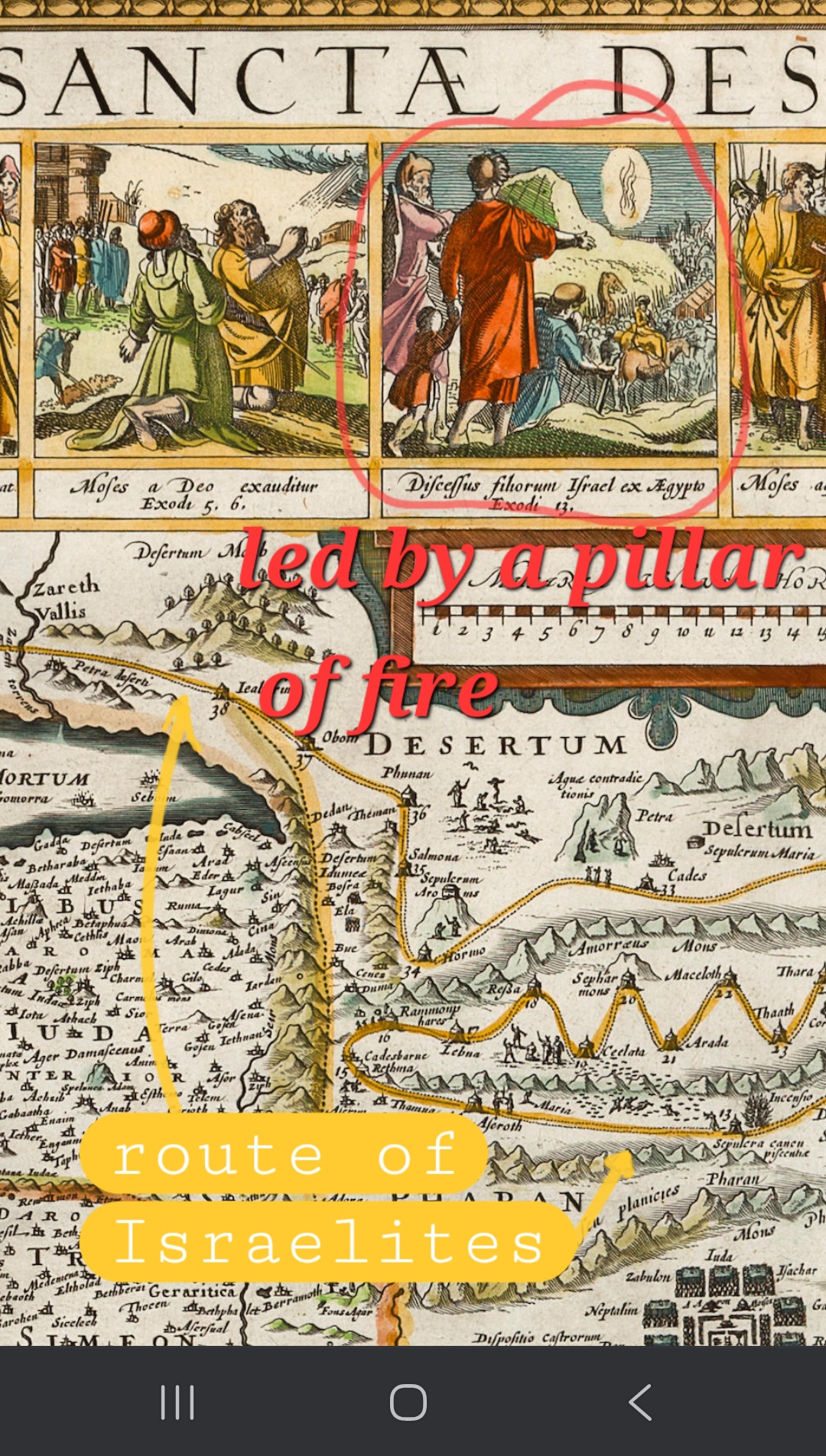
Jan Jansson (1588-1664) map of the Holy Land (c. 1630) showing the life of Moses in vignettes and the organization and route of the Israelites through the desert and then Moab above the Dead Sea on the map on their way to the Promised Land

The answer may lie in context of the event and the deeper meaning of distinctiveness. Bilaam was not commenting on mere social isolation. He was marveling at the singularity of an entire people traveling together through the desert, in unison, yet set apart in character and destiny. He was struck by the sight of an entire nation—young and old, rich and poor—not scattered as refugees or as imperial conquerors, but moving as one, under a divine mission. This was a nation on a journey, and yet already a people. They were not defined by geography, wealth, or military might—but by a relationship with God.

close up of Jansson map

In Jewish tradition, blessings are tied to recognition and distinction. Consider the rules of berachot (blessings): when a person eats an apple, it receives the blessing “borei pri ha’etz”—a specific blessing for fruit of the tree. If the apple is altered, like mashed into applesauce or mixed with other foods, the blessing remains the same ONLY if the fruit can still be identified. But if the fruit is so blended or processed that its original form can no longer be distinguished, it receives the general blessing of “shehakol“. The highest form of blessing is given to that which is most clearly recognizable.

In this light, Bilaam’s words take on added meaning. The Jewish people, by dwelling alone, are not to be pitied but admired. They are not a mashed mixture indistinguishable from general society but a clearly defined people, worthy of the highest blessing. Their uniqueness—religiously, culturally, and morally—is their spiritual signature.

Moreover, Bilaam wasn’t simply remarking on ethnic isolation. He noted the nation’s relationship with the Divine. Even when they seemed to be isolated, they were never truly alone—they were accompanied by God. The camp of Israel may have appeared vulnerable in the wilderness, but it was surrounded by divine presence, protected by a covenant older and stronger than any human alliance. As a prophet, he could not help but shout “How can I damn whom God has not damned” and “May my fate be like theirs!”

close up of Jansson map

This point is emphasized by commentators like Rashi (1040-1105), who notes that Bilaam’s phrase can be read as prophetic: “They do not come under the same reckoning (לא יתחשב) with other nations. — Another explanation is: When they rejoice, no other nation rejoices with them.”

This is certainly the case today, as Israel defeats one enemy after another. Each – Hamas, Hezbollah, Iran – armed with both weaponry and genocidal intent, have been neutralized. The Jewish world is relieved and gives thanks, while the United Nations runs to condemn the Jewish State for its defensive war.

The aloneness feels like isolation but is it? Is the success – and “aloneness” – to be read as a glory to God? Bilaam’s blessing isn’t merely poetic—it is theological. He sees a people whose separation from other nations isn’t a curse but a connection to God – for those, like him, who can appreciate the holy tie.

For those who recognize this divine connection, the Jewish people become a source of blessing. As Bilaam says later, “Blessed are those who bless you, and cursed are those who curse you” (Numbers 24:9). But for those who fail to see the holiness of that distinction and connection to God—who seek to blend, suppress, or erase it—the reading is a curse. The uniqueness is condemned as outside societal standards.

In the end, Bilaam’s words are not a curse in disguise. They are a prophetic blessing that reveals a truth that many overlook: there is holiness in standing apart when one stands with God. The Jewish people, though often alone among the nations, are never alone in essence. They are accompanied by the Divine, distinguished by faith, memory, and mission.

Related:

Judaism’s Blessings and Curses (June 2021)

The Karma of the Children of Israel (January 2021)

Antisemitism at CUNY, UC Berkeley, and Georgetown

The October 7 Hamas-led massacre by thousands of Gazans did not spark antisemitism on American campuses. It merely exposed how deeply embedded it already was. At CUNY, UC Berkeley, and Georgetown, students and professors came out to celebrate the torture and murder of Israeli victims of terror — with institutional protection, foreign funding, and a growing network of terror-affiliated faculty and student activists.

UC Berkeley protestors come for Jews

Organizations like Canary Mission have tracked and documented the alarming volume of antisemitic activity from students and professors — revealing how extremism isn’t on the fringe anymore. The Brandeis Center for Human Rights Under Law and StandWithUs have brought lawsuits against the universities. Now, the House Education & Workforce Committee is bringing the presidents of these three universities to Washington, D.C. on July 9.

CUNY: A Campus Captured by Hate

Canary Mission has documented dozens of CUNY students and professors who:

  • Featured speakers from U.S-designated foreign terrorist groups like Samidoun
  • Praised Hamas and Islamic Jihad
  • Supported Intifada
  • Called for the extermination of Zionists and Israelis
  • Calls Zionists “White Supremacists”

One notable example is Nerdeen Kiswani, a CUNY law graduate and founder of Within Our Lifetime (WOL), a group which openly calls for “globalizing the intifada” and “confront Zionists” wherever they are, including their homes and workplaces. Despite – or because of – this, she was chosen as the keynote speaker for the 2022 CUNY Law commencement — a decision defended by the law school.

Professors at CUNY have supported Hamas terrorism and protect antisemitic groups like Students for Justice in Palestine. They include Saadia Toor, Eve Tuck, Danny Shaw and Lucien Baskin. They have:

  • Called Israelis “Nazis”
  • Called to “Globalize the intifada”
  • Posted on social media the desire for destruction of Israel

They proudly teach this in their classrooms in departments that include “Center for the Humanities,” rebranding their noxious antisemitism as a component in the fight for human rights. This isn’t just tucked into a comment during a class; there are literally classes on globalizing the intifada.

UC Berkeley: The Legalization of Hate

Influence Watch has tracked Faculty for Justice in Palestine (FLP) which was founded in the 2023-4 school year. It is a network of professors which is associated with the U.S. Campaign for the Academic and Cultural Boycott of Israel (USACBI) and “advocates that universities end study abroad programs with Israeli universities, and advocates that universities end disciplinary action against students involved in pro-Palestinian campus protests.” There are chapters at UC Berkeley and Georgetown, among others.

Professors and students at Berkeley have:

In December 2022 – before the October 7, 2023 massacre – the Office of Civil Rights for the U.S. Department of Education (OCR) launched a formal investigation into UC Berkeley Law School over a controversial anti-Zionist bylaw adopted by several student groups in August. The groups sought to ban Zionists – individuals and groups – from campus.

Professors like Hatem Bazian are affiliated with several antisemitic and anti-Israel groups. He regularly calls out Jews and pro-Israel advocates as the leading spreaders of “Islamophobia” who are evil manipulators of Congress. He teaches courses at Berkeley on “Islam in America: Communities and Institutions” and “De-Constructing Islamophobia and Othering of Islam.” He addresses audiences and asks why there hasn’t been an intifada in the United States.

The school has been sued over its “unchecked antisemitism.”

Georgetown: Foreign Funds, Foreign Values

Georgetown – located in the nation’s capital of Washington, D.C. – is one of the most bought universities in America. It has received roughly $1.3 billion from foreign actors, with over $1 billion coming from Qatar, one of the leading sponsors of the U.S.-designated terrorist group Hamas.

Robert Groves, the interim president of Georgetown, is a regular in Qatar. Georgetown opened a campus in the sheikhdom and Groves interacts regularly with the royal family, seemingly as a conduit for influence in the nation’s capital.

Though Georgetown has a more diplomatic tone, Canary Mission has documented:

  • Students and guest speakers who supported Hamas and BDS
  • Faculty like Jonathan Brown, who have repeatedly called Israel practicing “apartheid” and “ethnic cleansing.” He said Jews and Christians view the Middle East through an anti-Muslim lens but Muslims do not think of the conflict as stemming from antisemitism. It’s a remarkable dynamic considering Brown is a director of the Prince Alwaleed bin Talal Center for Muslim-Christian Understanding in the School of Foreign Service and the Department of Arabic and Islamic Studies in the College of Arts & Sciences. The prince is a Saudi billionaire.

Georgetown has hosted a number of people with links to jihadi terrorism:

Georgetown professor Badar Khan Suri with Hamas leader Ismail Haniyeh as covered by CAMERA

Unsurprisingly, Georgetown students have rallied to the terrorist group Hamas and its supporters in the aftermath of October 7, joining in the Global Intifada against Jews.

The Middle East Forum did a 30 minute video about Georgetown’s ties to Hamas sympathizers. It is worth watching:

Conclusion: Universities Incubate And Spread Antisemitism

The picture is clear. Professors promote terror. Students celebrate slaughter. Hostile governments fund it, and administrations on the take allow it to fester.

If these universities continue to protect hate under the banner of “academic freedom,” they will soon graduate leaders who believe murder is resistance, and Jewish life is expendable.

“We are going to have an intifada on every college campus! We are going to shut down all the Zionist events!”

  • Husam Kaid, YouTube, Nov 15 2019
People from CUNY in Times Square in 2019 calling for an intifada in every classroom and the destruction of Israel

This is not a free speech issue. It’s a moral emergency.

ACTION ITEM

Call Rep. Tim Walberg’s office at (202) 225-6276 to thank him for holding the session on campus antisemitism.

Call your senator to support the DETERRENT Act and call Sen. Thom Tillis’s office at (202) 224-6342 to thank him for sponsoring it.

Related:

Preview of July 9, 2025 House Education Committee Session On University Antisemitism: Foreign Funding (July 2025)

Global South’s Beachhead On American Universities (March 2025)

CUNY’s New Anti-Education Professor Of Intimidation (February 2025)

Hamas At Hunter College (May 2024)

Considering Campus Antisemitism (November 2023)