The Leadership Democrats Didn’t Provide

This week’s House debate over Israel’s $3.3 billion in annual military assistance was more than a vote. It was a test of leadership.

Many Democratic members of Congress allowed the debate to become one of competing sympathies: Israel versus American families, Israel versus veterans, Israel versus schools and health care. Some even embraced that framing themselves.

But leadership is not about amplifying the loudest voices in your coalition. It is about explaining difficult truths.

Over the past months, I wrote two essays that made straightforward strategic arguments.

In Nobody Protests the Military Bases in Germany,” I argued that Americans have long understood military commitments abroad not as charity, but as investments in American security. We maintain troops, aircraft, and bases around the world because we believe confronting threats abroad is less costly than confronting them at home. It runs around $75 billion annually.

In America’s Greatest and Quietest Military Victory in Nearly a Century, I argued that the wars in Israel and Ukraine should be viewed together, not separately. Two American allies have spent the last several years severely weakening two of America’s principal adversaries—Iran and Russia—while requiring virtually no American combat casualties and only a fraction of the cost of wars like Iraq and Afghanistan.

One can disagree with either argument. What is remarkable is how rarely Democratic leaders even attempted to make it.

  • Instead of explaining that military aid is part of a broader American strategy, they allowed it to be portrayed as a gift to a foreign country. And to only one country – Israel.
  • Instead of explaining that weakening Russia and Iran advances American interests, they permitted the conversation to revolve almost entirely around domestic tradeoffs. Only relative to Israel.
  • Instead of educating their constituents about seventy-five years of American global defense strategy, they surrendered the debate to slogans about “blank checks.” Specifically to the Jewish State.

Leadership requires more than counting votes. It requires helping citizens understand why America stations forces overseas, why it supports allies under attack, why it spends money beyond its borders, and why deterrence is almost always less expensive than war.

That conversation becomes even more important when the facts are uncomfortable.

  • The United States has committed far more aid to Ukraine than to Israel. Over eight times as much.
  • The wars involving Ukraine and Russia have produced far greater casualties than the war in Gaza. As much as eight times as much.
  • It spends vastly more each year defending allies through bases and military deployments across Europe and Asia. About 18 times as much.

Yet Israel alone has become the symbol of America’s supposedly misplaced priorities.

Statesmanship is not measured by how well elected officials echo the passions of the moment. It is measured by whether they are willing to explain complex realities even when doing so is politically difficult.

This week’s vote exposed more than a divide over Israel.

It exposed a failure to teach. A failure to lead. And a willingness to lean into vile antisemitic tropes.

We Are Now Post Fact-Check

Politics has entered a new era.

The old model was simple: make a claim, defend it with evidence, and persuade people.

The new model is different: create an unforgettable image. Whether it survives careful scrutiny is almost beside the point.

Attention and truth now operate on different clocks. Attention is immediate and verification is slow. By the time the facts arrive, the emotional conclusion has often hardened.

Rep. Ro Khanna’s recent visit to the West Bank illustrates the phenomenon. He described armed settlers and Israeli soldiers detaining his delegation and suggested U.S. Embassy involvement was needed to secure their release. Israeli and American officials have disputed key elements of that account. The details remain contested.

Politically, however, the outcome may already be settled.

Millions will remember one thing: an American congressman confronting violent Israelis.

This is why fact-checks so often fail. They assume the original purpose was to establish the truth. Increasingly, the purpose is to create a narrative that people remember. Every indignant rebuttal, every television debate and every social media thread extends the life of that narrative. Even proving the story exaggerated may simply give it another news cycle.

This is not unique to Ro Khanna. It is how much of modern politics now works. Viral videos replace investigations. Emotion outruns evidence. Politicians compete less to be correct than to become impossible to ignore.

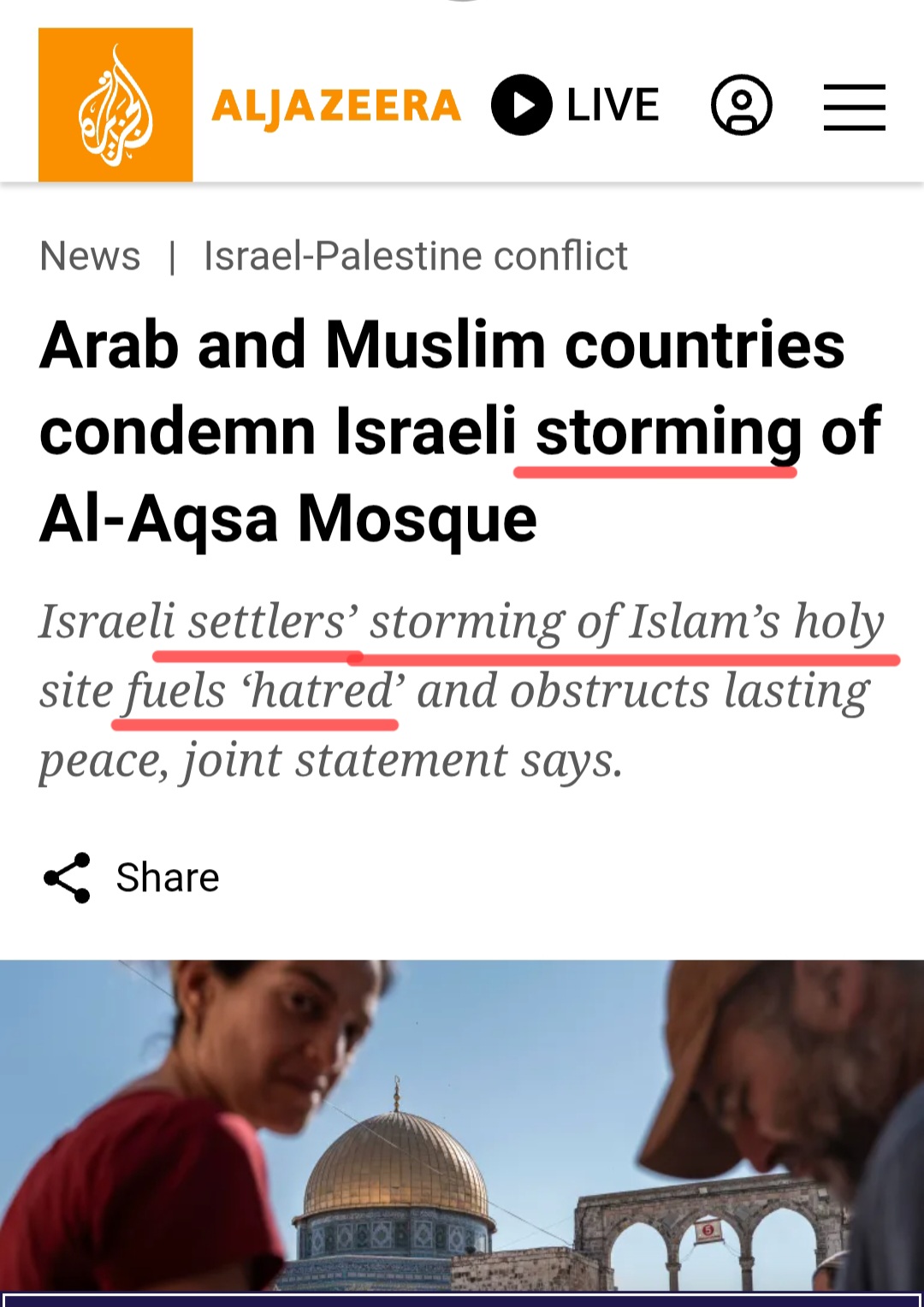
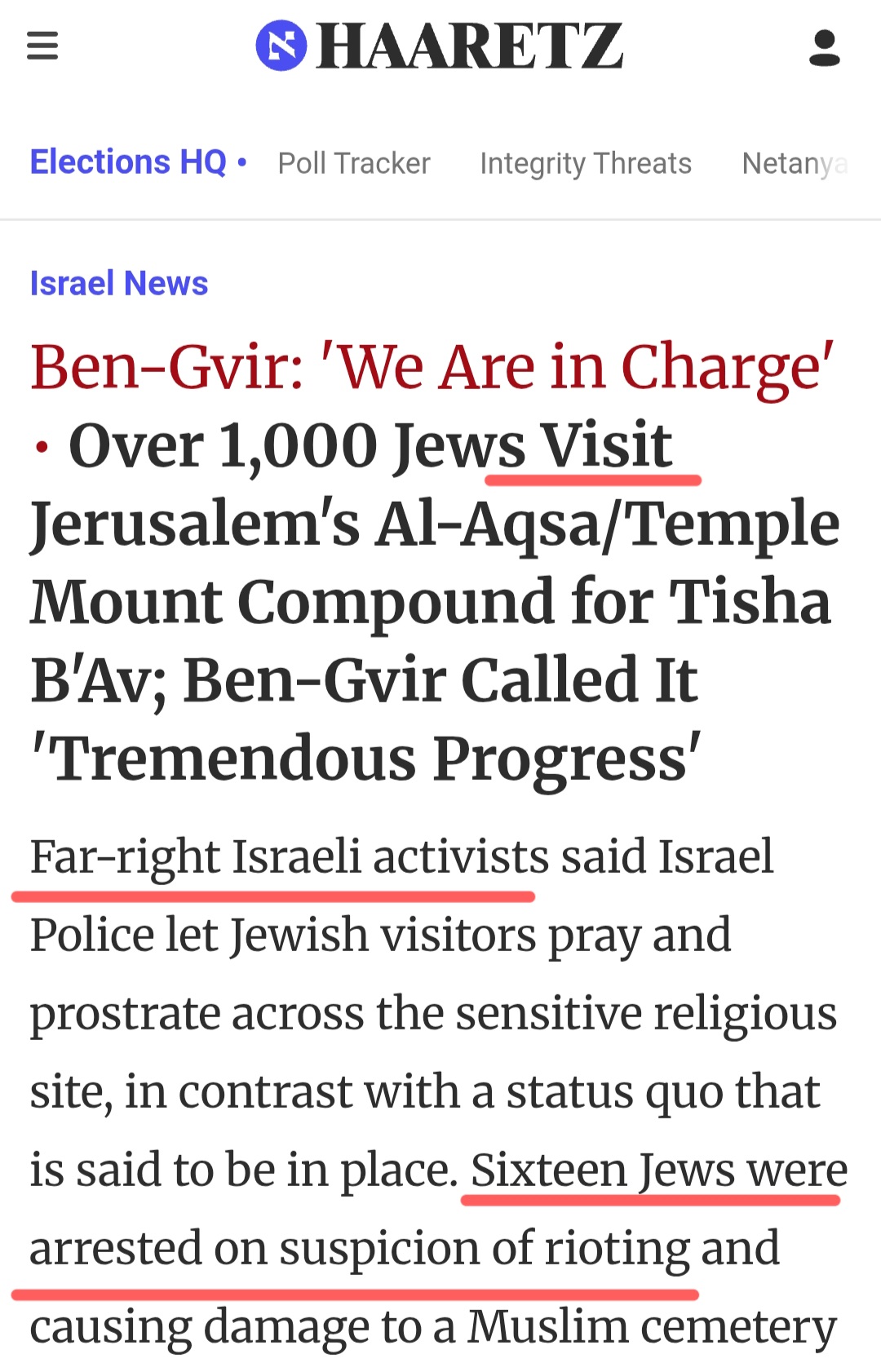
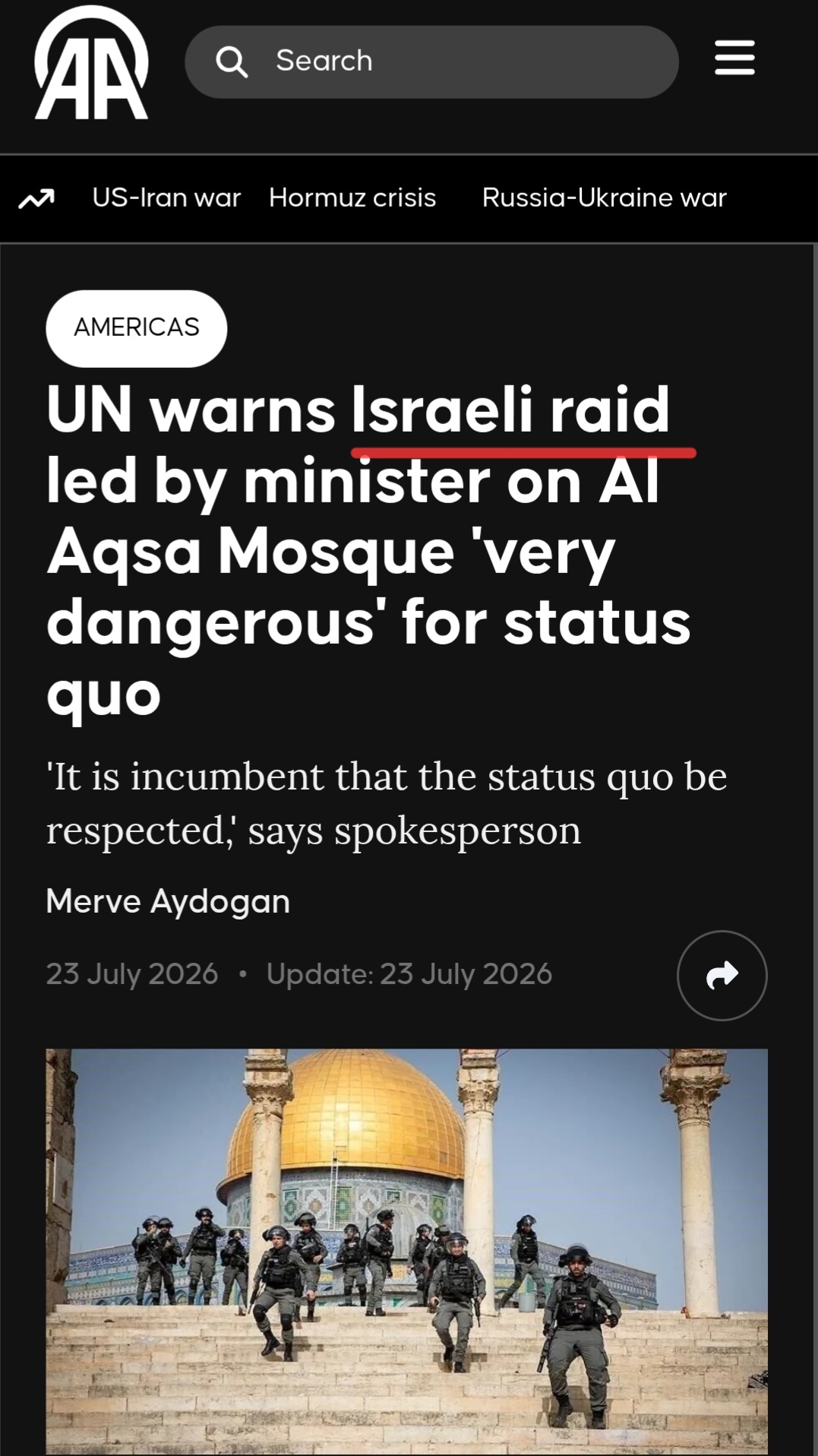
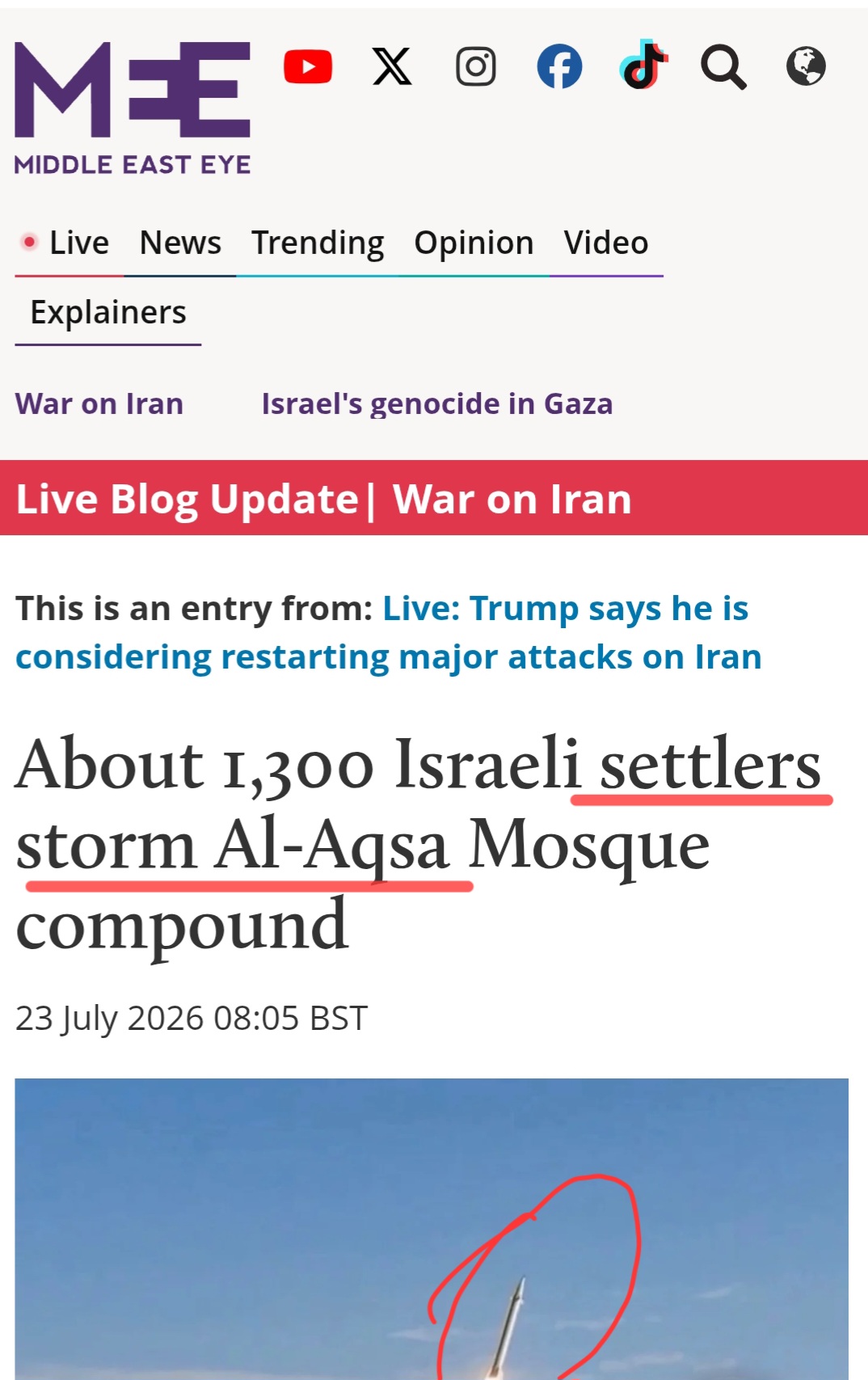
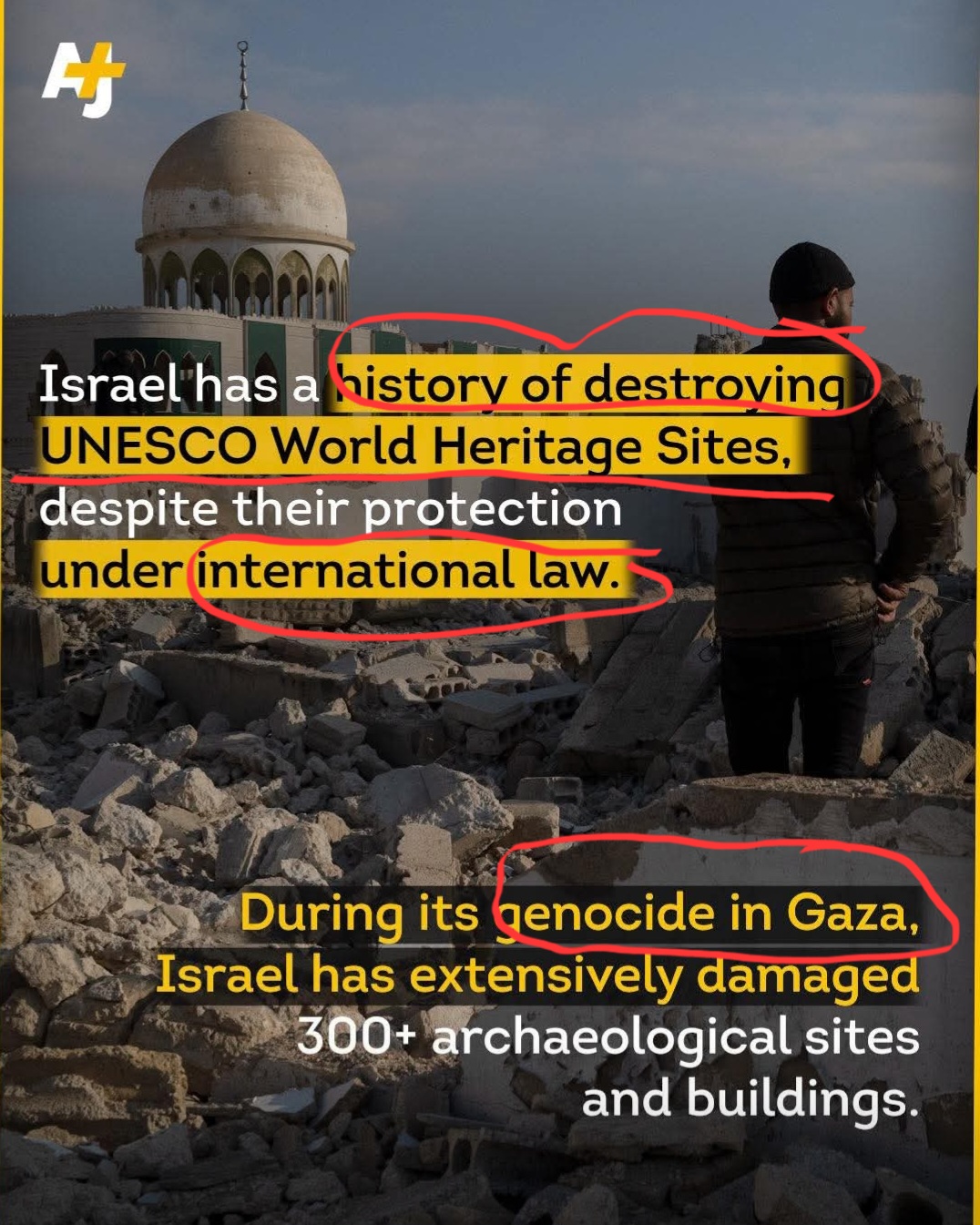
Qatar-funded Hamas propaganda outlet Al Jazeera knows it. They’re good at it, mocking Israel even when they pretend to make the country look good.

Facts still matter. Every false or misleading claim deserves a documented response. Public officials should be held accountable for accuracy. But the correction should be concise, supported by evidence and then left to stand.

The real battle is over what people picture when they think about an issue.

If opponents reduce Judea and Samaria to images of violence, the answer is NOT weeks of arguing over a single disputed incident. It is to show a different reality: positive, possibly confrontational, and above all, memorable. Perhaps ancient Jewish history, thriving communities, vineyards, archaeology, entrepreneurship, shared workplaces, families and landscapes that tell a far richer story than Khanna’s video.

The same principle applies elsewhere. When anti-Israel extremists celebrate terrorism, intimidate Jewish students or glorify those who murder civilians, expose it. Not as a legal brief but show the human story. Show the victims. Show the consequences. Show the moral contrast.

Israeli Arab Nuseir Yassin known as Nas, has a big social media following

For too long, those who value accuracy have assumed that the best response to a misleading story is a better fact-check. Increasingly, the better response is a better story—one that is equally compelling because it is true.

The choice is not between truth and attention. It is to make the attention focused on the stories you want.

Checkpoint in California and Checkpoint in the West Bank. Only One Sparked Outrage.

There are many ways to measure whether politicians are guided by principle or politics. One is to compare what provokes their outrage and what does not.

In April 2024, a Jewish student at UCLA tried to walk across his own campus.

Pro-Palestinian protesters physically blocked his path and decided, on their own authority, who could and could not pass. UCLA security officers stood by and did nothing. A federal judge later ruled that UCLA could not permit Jewish students to be excluded from parts of campus because of their identity or beliefs, calling such exclusion “unimaginable” and “abhorrent.”

Where were California’s Democratic members of Congress about the incident? Other “progressive” members of Congress? Where were the press conferences, the demands for investigations and the flood of social media condemnations?

Their silence was striking.

Then came Rep. Ro Khanna’s recent 7,500-mile trip to the West Bank in July 2026.

Khanna claimed that armed settlers and Israeli soldiers prevented his delegation from proceeding and that U.S. Embassy involvement helped resolve the situation. Israeli officials, the U.S. embassy, and various parties dispute key parts of that account, saying the delegation entered a restricted security area without proper coordination and denying Khanna’s characterization of the encounter.

Yet progressive members of Congress like Ilhan Omar quickly rallied behind Khanna, condemning Israel and amplifying his account around the world.

The comparison is not between two people who were blocked. It is between two very different reasons for being blocked and the reactions that followed.

At UCLA, private protesters established their own checkpoint and allegedly decided which Americans could pass based on who they were or what they believed. A federal court concluded that a public university could not allow that to happen.

In the West Bank, the issue was about security. The area was subject to access restrictions because it was an active conflict zone. The dispute is over whether those security measures were properly applied not whether Ro Khanna had a right to unrestricted entry.

One concerns equal treatment under American law, the other concerns the exercise of security authority in a foreign conflict zone. Yet the louder political outrage came in response to the latter.

If elected officials cannot summon the same moral urgency when a Jewish American student is excluded from his own campus as they do when a colleague encounters a disputed security checkpoint overseas, the question is no longer whether they oppose injustice. It is what kinds of injustice – and for whom – they choose to notice.

We are witnessing more and more of the elected progressive wing marking American and Israeli Jews as “absolutely vile” people unworthy of basic protections and rights who “must be stopped.”

Non Pareils and the Patriarchy

A Satire.

Emma had never intended to start a revolution. She had only come to the University of Greater Brooklyn’s annual Confectionery Justice Week because there was free candy.

As the bowl of Non Pareils reached her table, she froze.

A roomful of students kept eating while she stared in horror.

“Don’t you see it?” she whispered. Silence.

“The chocolate has been completely covered by thousands of tiny white spheres.”

Someone shrugged. “They’re sprinkles.”

Emma slowly stood. “They’re not sprinkles. They’re a visual representation of structural oppression.”

Within hours, her video – The Hidden Violence of Non Pareils – had accumulated two million views.

Her thesis was simple. The chocolate did all the work while an elite class of tiny white spheres occupied every visible position.

Then she discovered that nonpareil is French for “without equal.” Emma gasped. “So the elite didn’t just create the system,” she declared. “They named it after themselves.”

The university immediately established the Center for Inclusive Confectionery Studies. Professors from sociology, gender studies, and food anthropology praised Emma’s groundbreaking analysis.

The chemistry department quietly suggested that the sugar beads simply adhered to melted chocolate through basic physical processes. The department was reminded that lived experience outweighs molecular adhesion.

Emma unveiled her solution.

“The beads must no longer dominate the surface,” she explained. “They should be embedded within the chocolate itself.”

A food scientist politely observed that embedding sugar beads throughout chocolate would merely produce crunchy chocolate.

Emma smiled. “Exactly.”

The major candy companies thanked her for her presentation before declining to redesign one of America’s oldest candies.

Corporate resistance only confirmed her theory. Three weeks later, Emma withdrew from the university.

“Institutions cannot reform themselves,” she announced. “Real change requires disrupting the confectionery-industrial complex.”

She rented a converted warehouse in Brooklyn and founded EquiTreat Confections.

Each handcrafted chocolate disk contained precisely the same number of interior sugar beads, certified annually by an independent Equity Auditor. Exterior beads were prohibited.

The candies retailed for $24 each. Every box included a 1,700-word manifesto explaining why.

Food critics praised the company’s moral courage. Customers quietly admitted they preferred the original Non Pareils. Emma regarded this as further proof that society still had much work to do.

The original Non Pareils continued sitting quietly in candy dishes across America.

The candy never changed. Only the story people told about it did.


DISCLAIMER

This story is a work of satire. Any resemblance to actual persons, universities, professors, students, candy companies, Brooklyn startups, confectionery philosophies, academic movements, or desserts is entirely coincidental. No chocolate, sugar beads, sprinkles, or French vocabulary were harmed, marginalized, psychologically evaluated, or denied equal opportunity during the writing of this piece. Readers who experience offense, amusement, intellectual awakening, or an irresistible urge to reorganize the dessert aisle do so at their own risk and without creating any legal, nutritional, fiduciary, or confectionery relationship with the author. Any claim that this satire resembles real events should be directed to the Department of Coincidences, whose existence should not be inferred from this disclaimer.

Fiction vs. Fact: Palestine 1948 and PLO 1964

There is a popular belief that Palestine was a country stolen and occupied by invading Jews in 1948. This has no basis in fact.

When the British Mandate ended in May 1948, there was no sovereign Palestinian Arab government waiting to assume power. There was no functioning Arab parliament, cabinet, constitution, or national administration prepared to govern an independent state.

The Jewish community took a different path. Over decades it had built the institutions of self-government: representative political bodies, courts, schools, hospitals, financial institutions, and a defense force. When Britain withdrew, those institutions became the foundation of the State of Israel.

The local Arab leadership did not establish comparable institutions of national government. Not before 1948 nor after.

Instead, neighboring Arab armies invaded the newly declared Jewish state. Transjordan assumed control of the West Bank. Egypt administered Gaza. A short-lived All-Palestine Government was announced later that year, but it exercised little authority and never became an effective sovereign government.

For the next sixteen years, there was no effort to start a Palestinian State.

Only in 1964 did the Arab League create the Palestine Liberation Organization.

Even its name is revealing.

It was not called the State of Palestine. It was not called the Government of Palestine. It was called the Palestine “Liberation” Organization.

Governments are created to govern. Liberation movements are created to liberate territory from an existing sovereign.

First Chairman of the PLO, Ahmad al-Shukeiri, was born in Lebanon and served as both Syrian and Saudi Arabian delegate to the United Nations at different times. He had to resign in shame after failing to destroy Israel in 1967.

The PLO’s founding charter reinforces that distinction. Rather than outlining the institutions of a future Palestinian state, Article 24 declared:

“This Organization does not exercise any regional sovereignty over the West Bank in the Hashemite Kingdom of Jordan, on the Gaza Strip, or in the Himmah Area [where Israel, Jordan and Syria meet].”

The PLO’s founding charter expressly declined to claim sovereignty over the parts of historic Palestine then under Arab administration. Yet throughout the document, its central mission was the “liberation of Palestine” – a struggle directed at Israel, the Jewish State. At its core, local Arabs wanted Arab rule, wherever it may come from. They opposed the so-called “Zionist invasion” and Jewish sovereignty “in any part of Palestine.

When the first lasting Palestinian national organization finally appeared in 1964, it was constituted not as a government-in-waiting or a reclamation government but as a liberation movement, and its own charter expressly disclaimed sovereignty over the West Bank and Gaza while solely focusing its mission on Israel.

Within three years of its founding, the PLO and surrounding Arabs countries initiated their plan to wipe Israel off the face of the earth. They failed then as they failed in 1948.

The Palestinian “liberation” movement is a pan-Arab effort to remove the Jewish state first and foremost. Current efforts to portray it as a people seeking to reclaim their historic country is without any basis in fact.

The Jewish Anti-Zionist Congress and the Divide on the Future of Israeli Jews

From June 26–28, 2026, activists, academics, politicians, lawyers, and religious figures gathered in Dublin, Ireland for the Second Jewish Anti-Zionist Congress (JAZIC). The stated purpose was to build an international movement dedicated to dismantling Zionism and replacing the State of Israel with a different political order in the region of historic Palestine.

Despite its name, the congress was far from exclusively Jewish. The program featured well-known Jewish anti-Zionists such as Rabbi Brant Rosen, Ilan Pappé, Haim Bresheeth-Žabner, Ronnie Barkan, and Andrew Feinstein alongside prominent non-Jewish figures including Palestinian journalist Ramzy Baroud, UN Special Rapporteur Francesca Albanese, former UN official Craig Mokhiber, rocker Roger Waters, Irish parliamentarians, South African activists, and other international advocates.

On the central questions, there was remarkable agreement: Jewish and non-Jewish speakers alike described Israel as an apartheid state engaged in genocide. Both groups rejected Zionism as the legitimate expression of Jewish self-determination. Both endorsed Palestinian Arab “liberation” and opposed the continued existence of Israel as a Jewish state. Discussions of Hamas were comparatively limited; the conference overwhelmingly focused on Israeli conduct rather than Hamas’s governance of Gaza or the October 7 massacre. They spoke about the defeat of Zionism as the key to dismantling “western imperialism.”

Yet beneath this broad consensus was a subtle but revealing difference.

The Jewish speakers generally spent considerable time describing what they believed should replace Israel. Rabbi Brant Rosen, Ilan Pappé, and others spoke of a single democratic state in which Jews and Palestinians would remain together as equal citizens. Whether one finds that vision realistic or not, it was at least an attempt to answer a fundamental question: If Israel ceases to exist as a Jewish state, what becomes of the millions of Jews who live there?

In contrast, most of the non-Jewish speakers spoke of “liberation,” “decolonization,” “resistance,” “return,” and dismantling Zionism. In almost all of these presentations, the future political status, security, and place of Israel’s Jewish population after “decolonization” received little or no attention.

The silence is significant. If a movement calls for replacing an existing state, one of its most basic responsibilities is to explain what protections, rights, and security will exist for the people who currently live there. At JAZIC, that question received far more attention from the Jewish speakers than from their non-Jewish counterparts.

Many progressive Zionist Jews in the United States woke up on October 8, 2023 to realize that the people with whom they had fought together as allies really wanted them dead. At some point in the future, far-left anti-Zionist Jews will have their own awakening of their current comrades-in-arms.

One UN Agency for Every Nation in Waiting

If you want to understand an institution, don’t begin with its speeches. Begin with its organization chart.

Permanent agencies, permanent committees, permanent staff, permanent budgets, and permanent mandates reveal what an institution considers exceptional.

The United Nations generally operates through universal institutions. Refugees fall under the UN High Commissioner for Refugees (UNHCR). Racism is addressed through broad human rights mechanisms. Humanitarian crises are handled through agencies with global mandates.

Except in one case.

The Palestinian cause has an institutional architecture unlike any other.

Palestinian refugees have their own dedicated refugee agency, UNRWA. Every other refugee population in the world falls under UNHCR.

UNRWA offices in Jerusalem (photo: First One Through)

The General Assembly maintains the Committee on the Exercise of the Inalienable Rights of the Palestinian People, supported by the Division for Palestinian Rights within the UN Secretariat. Their mission is not to monitor or audit the Palestinian national movement, but to advance Palestinian rights, organize conferences, maintain documentation, and sustain international engagement.

The Human Rights Council appoints a permanent Special Rapporteur on the situation of human rights in the Palestinian territories occupied since 1967, dedicated exclusively to that issue. The Office for the Coordination of Humanitarian Affairs maintains a permanent office for the occupied Palestinian territory. The Human Rights Council also has Agenda Item 7, the only standing country-specific agenda item focused on a single member state.

That is the institutional asymmetry.

Institutions produce what they were built to produce. Permanent offices generate permanent reports. Permanent committees convene permanent meetings. Permanent mandates create permanent attention. The result shapes which stories are told, which voices are amplified, and which narratives become part of the world’s diplomatic conversation.

Since October 7, Palestinian voices have benefited from this enduring institutional infrastructure, while Israeli victims have had fewer dedicated mechanisms through which their experiences are consistently presented.

This institutional framework for the vilification of Israel was built over decades, setting the stage for antisemitism to permeate societies thousands of miles from the Middle East and those with no Jews even living there.

It is time for a fundamental change.

The United Nations is home to MANY peoples who aspire to statehood.

Kurds. Somalilanders. Sahrawis in Western Sahara. Tibetans. Kosovars. Taiwanese. Independence movements persist in Catalonia, Scotland, Greenland, the Faroe Islands, and elsewhere.

Flags of Somaliland hang in streets of Jerusalem, June 2026 (created by First One Through)

If the United Nations truly believes in the universal principle of self-determination, it should apply that principle universally.

Abolish the maze of Palestinian-specific institutions and replace them with a single body: The United Nations Agency for Nations in Waiting (UNNW).

Its mission would be straightforward: evaluate every national movement using the same transparent standards: effective governance, respect for human rights, peaceful conduct, democratic legitimacy, protection of minorities, and economic viability.

The Stateless Arabs from Palestine would remain part of the process – but alongside Kurds, Somalilanders, Tibetans, Sahrawis, Taiwanese, Kosovars, and every other people seeking recognition.

One standard. One agency. No exceptions.

Such a reform would move the UN away from political favoritism and toward institutional fairness. It would reward good governance instead of diplomatic influence and demonstrate that universal principles truly are universal.

If the United Nations wishes to champion nations in waiting, it should do so for all of them – not just one, and stem the tide of antisemitism at the same time.

Basic National Rights… For Some

The Palestinian Authority had no trouble explaining what every nation deserves.

In a statement condemning Iran’s attacks on Bahrain, Qatar, the United Arab Emirates, Kuwait, Oman, and Jordan, the PA repeatedly invokes the same principles: sovereignty, security, stability, and protection of civilians.

PA President condemns Iranian attacks on July 12, 2026

Iran is condemned for violating each of them. The Arab governments are praised for taking measures to defend them.

“The Organization is based on the principle of the sovereign equality of all its Members.” United Nations Charter (Article 2(1))

Where were these principles when Israel was attacked?

When Iran launched missiles at Israel, did the Palestinian Authority defend Israel’s sovereignty?

When Hezbollah rained rockets on Israeli cities for months, did it affirm Israel’s right to security and stability?

states “refrain… from the threat or use of force against the territorial integrity or political independence of any state.” UN Charter (Article 2(4))

When the Houthis fired missiles toward Israel, did it support Israel’s right to protect its people?

And most pointedly, when Hamas – fellow local Arabs of the Palestinian parliament – crossed an international border on October 7, murdered civilians, kidnapped hostages, and occupied Israeli communities, did the PA condemn it as an assault on Israel’s sovereignty?

“the inherent right of individual or collective self-defence if an armed attack occurs against a Member of the United Nations.” UN Charter (Article 51)

A principle that applies only to friends is not a principle. It is a preference.

The Palestinian Authority’s own statement demonstrates that it understands exactly what every nation deserves. Its silence when those same principles are violated openly and repeatedly against Israel says just as much as its words.

Lindsey Graham Died Suddenly. Expect Two Kinds of Conspiracy Theories

Just before his death, Senator Lindsey Graham returned from Kyiv, where he had met with Ukrainian President Volodymyr Zelenskyy.

It was a fitting final foreign trip. Graham had long been one of America’s strongest advocates for Ukraine against Russia and for Israel against Iran and its proxies.

Then he died suddenly.

Sometimes, sudden death is simply that. But conspiracy theories rarely leave a vacuum unfilled.

The first kind of conspiracy theory follows ordinary logic. It begins with motive.

If someone believes Lindsey Graham was murdered, the obvious suspects would be the governments whose interests he spent years opposing: Russia or Iran, or some combined efforts by both. Perhaps it was an American anti-war agitator. Whether true or false, at least the theory follows a recognizable chain of reasoning.

The second kind works very differently.

It begins with a worldview that history is shaped by hidden forces operating behind governments and public events. Facts are gathered afterward to support that assumption.

For centuries, one of the most enduring versions of that worldview has been antisemitic: the claim that Jews secretly manipulate governments, wars, finance, or the media. The alleged hidden actor changes with the era, but the underlying story remains remarkably consistent.

Antisemites from Nazi Germany to Rep. Rashida Tlaib (D-MI) talk about Jews operating in the shadows

That helps explain why some recent conspiracy theories about the murder of Charlie Kirk have implicated Israel or Mossad where the alleged motive is counterintuitive. The target is chosen less because of the evidence than because it fits an existing narrative about hidden power.

One conspiracy theory asks, “Who had the motive?” The other asks, “Who do I already believe secretly runs the world?”

The first can be tested against evidence, the second is designed to survive it.

Today’s front pages will convey that a strong advocate of American allies’ defense against common American foes has died. He will be mourned by conservatives in the United States and supporters of Ukraine and Israel. In the not too distant future in our crazy conspiratorial-laden present, new distinct strains of headlines are likely to emerge.

American Hamas

Social scientists have long observed that ideas do not need majority support to transform a community. Research on social norms has repeatedly found that once a committed minority reaches roughly 25 to 30 percent of a group, opinions once considered beyond the pale can become normalized. The Overton window shifts. People become more willing to voice views they once kept private because they no longer fear social disapproval.

That is what makes Pew Research Center’s July 2026 findings so alarming.

In 2024, Pew found that 37% of American Muslims viewed Hamas favorably. Two years later, that figure has risen to 44%.

July 2026 Pew Poll showing 44% of American Muslims support Hamas, almost the same as the Palestinian Authority. This is a gross outlier relative to all other Americans.

Vile extremism has not only been mainstreamed in the American Muslim community, it is accelerating.

Hamas is not merely another Palestinian political movement. It is a U.S.-designated terrorist organization that carried out the October 7 massacre. Its members murdered civilians, took hostages, committed widespread sexual violence, and burned families alive. Hamas has long promoted antisemitic ideology, seeks Israel’s destruction, refuses to disarm or allow civilians to use its protective shelters, and has repeatedly embedded military operations among civilians, leaving Gaza’s population to be destroyed.

Forty-four percent is not a fringe. It is well above the level social scientists associate with changing social norms. It IS the norm.

Viewed through that lens, the chants heard on American streets become easier to understand. “Globalize the Intifada” is no longer merely the slogan of isolated radicals. Celebrating the killing of Jews no longer needs to be hidden but can be posted on social media.

For American Jews, this is not an abstract polling result. Hamas and “Globalize the Intifada” mean antisemitic violent jihad. It is the embrace of a death cult. A poll showing growing favorability of Hamas inevitably deepens fear that the moral barrier has been broken and violence is near.

But this is not only a Jewish concern.

No society should become comfortable with growing support for a terrorist organization whose defining acts include the deliberate murder of civilians, hostage-taking, and an explicitly antisemitic ideology. When favorable views of such an organization increase rather than decline after its atrocities, the implications extend beyond the community it targets. They speak to the moral health of the the American Muslim community.

Every community contains extremists. The defining question is whether they remain isolated or become influential enough to reshape what is considered acceptable. Pew’s findings suggest that sympathy for Hamas is no longer confined to the margins of American Muslim opinion. It has become substantial enough to influence public discourse and to shape the boundaries of acceptable speech, and likely action.

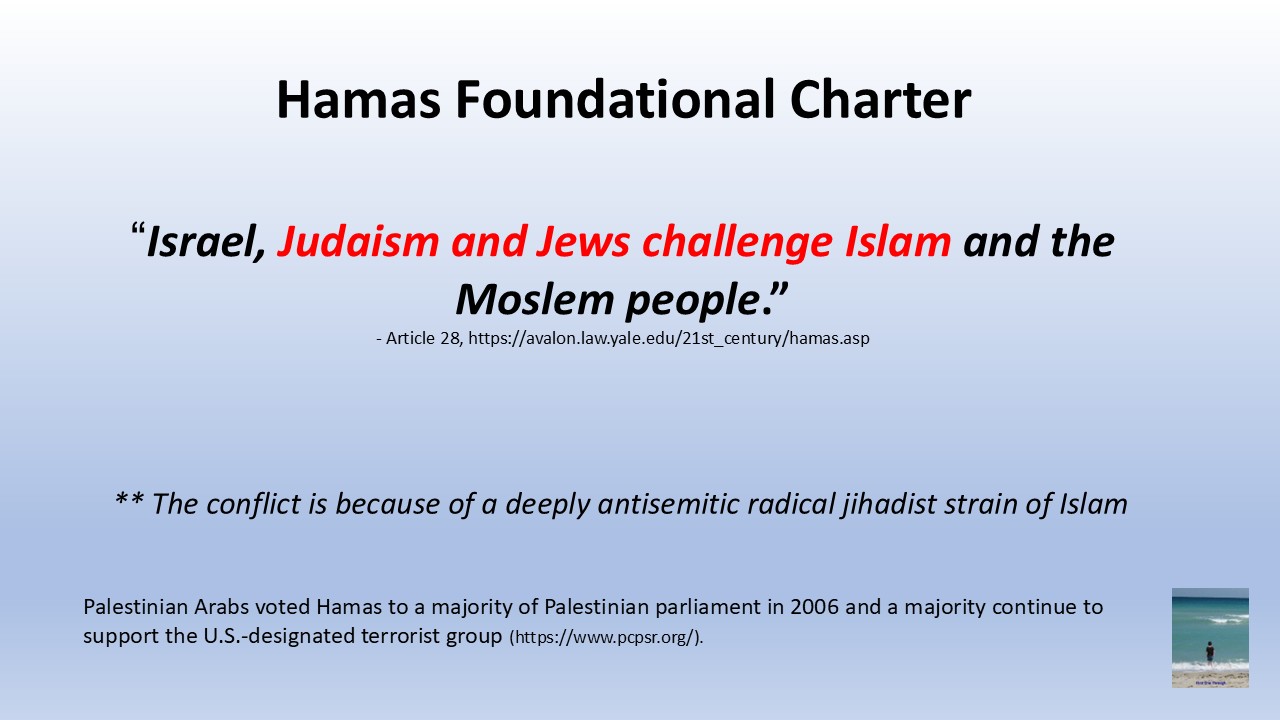
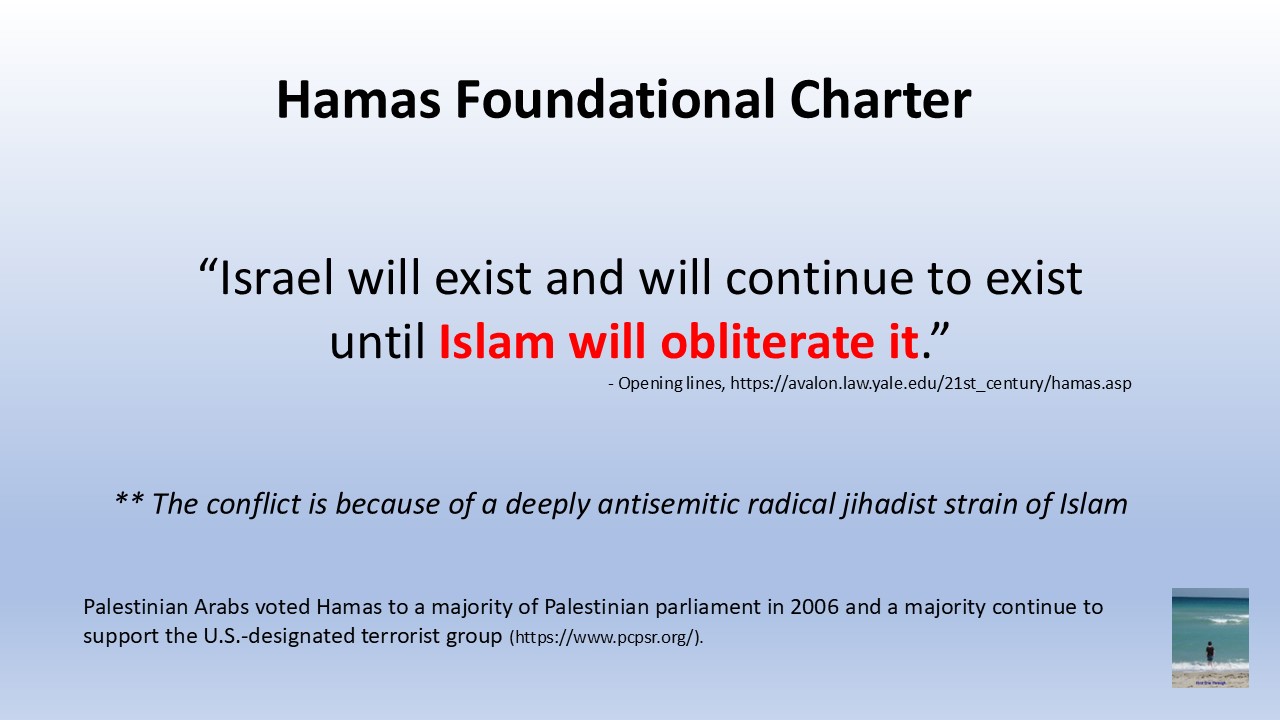
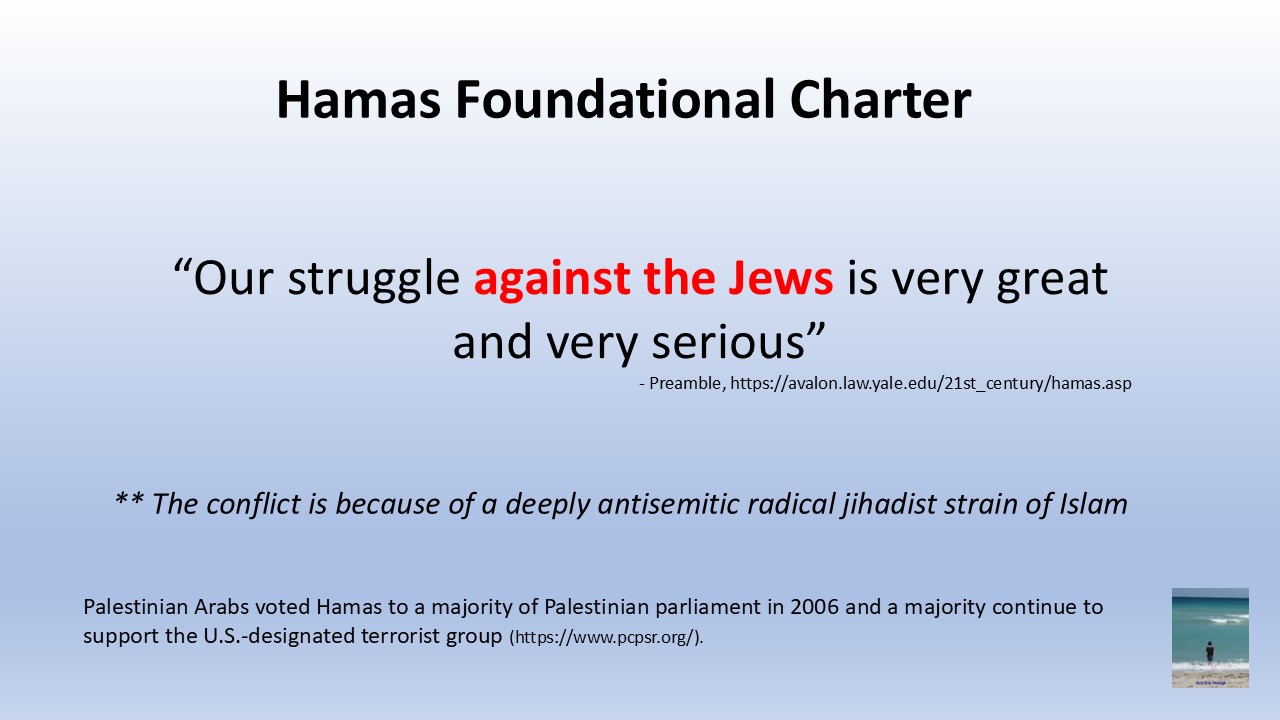
The Hamas Charter is the most antisemitic governmental charter ever produced

The issue has grown beyond Hamas in Gaza. It is American Hamas – the normalization of support for a terrorist organization within American society. If support for Hamas among American Muslims has risen from 37% to 44% in just two years, Americans should ask not only what this means for Jews, but what it says about the values we are willing to tolerate in America.

The greatest danger is not merely that extremists exist. It is that extremism ceases to be recognized as extreme.