I have a somewhat different view of cemeteries from many people in Orthodox Jewish circles.
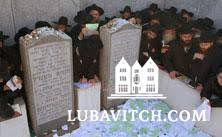
Many Jews visit the graves of famous rabbis and holy figures to pray. Friends travel to the Ohel in Queens, where the last Lubavitcher Rebbe is buried, or to the graves of Maimonides and other celebrated rabbis in Israel. I have never felt comfortable doing so.
My inclination begins with the Bible’s account of Moses. He died alone, outside the Land of Israel, and his burial place remains unknown. That detail does not appear incidental. In the Torah’s final lines, it seems almost deliberate: Moses was the greatest prophet, yet his grave was not to become a shrine. His teachings were to remain sacred, but his physical remains were not to become a destination or an intermediary.
When I asked friends why they visit the graves of holy people, they offered several explanations.
The first was that a righteous person enjoyed a special relationship with God, and that the place where such a person is buried therefore offers a closer portal to the divine.
The second was that a place where people have gathered in prayer for generations acquires a special spiritual character.
The third was that traveling deliberately to a particular place changes the visitor. The journey creates focus, humility and a frame of mind that may be difficult to achieve in ordinary surroundings.
The first explanation, I believe, is both the most common and the most troubling. The suggestion that the physical remains of a holy person can function as a medium to God comes dangerously close to the very impulse the Torah appears to guard against by concealing Moses’s grave. It risks replacing the person’s teachings with the person’s body.
A better way to preserve a righteous person’s connection to God is to study that person’s work, absorb his ideas and live according to his example. His thoughts, not his remains, should serve as the conduit. A grave contains the body he left behind. His Torah contains what he gave the world.
The second and third explanations are different. They do not necessarily treat the deceased as an intermediary. Instead, they recognize the power of place.
A site shaped by centuries of prayer may carry historical and emotional meaning. A family grave may help a child remember a parent, confront loss, express gratitude or recover a sense of continuity. Some people can reach that state of reflection anywhere. Others need a physical place that separates the moment from ordinary life.
And here is where the role of rabbis becomes interesting. How to handle a common situation and desire whose motivation is the dividing line between something permissible and not?
Orthodox Judaism frequently erects legal fences around conduct that may lead toward something prohibited. The belief that a deceased holy person can provide privileged access to God would seem to warrant precisely such caution. The practice risks sliding from remembrance into mediation, and from reverence into something uncomfortably close to worship.
But visiting a grave for memory, history, mourning or personal reflection does not necessarily carry the same danger. The distinction lies in what the visitor believes is happening there. Is the dead person being asked to act, or is the living person being moved to remember, think and pray?
That distinction deserves serious consideration as the Jewish community buries soldiers and victims of terror, cares for those carrying lasting injuries, remembers those who uplifted and supported the community, and confronts antisemitism on a scale not experienced in decades. Cemeteries will inevitably become increasingly powerful places of collective visitation and reflection.
They can remind us of sacrifice, courage, wisdom and the unfinished obligations of the living. But the grave should point beyond itself. It should direct us not toward the power of the dead, but toward the lives they led, the ideas they carried and the responsibilities they have left to us.


