
Thousands of Jews visited the Temple Mount in Jerusalem this week during normal visiting hours on Tisha B’Av, the day commemorating the destruction of the First and Second Jewish Temples that once stood on that very site.
That is the basic fact. Everything that follows depends on how news organizations chose to describe it.
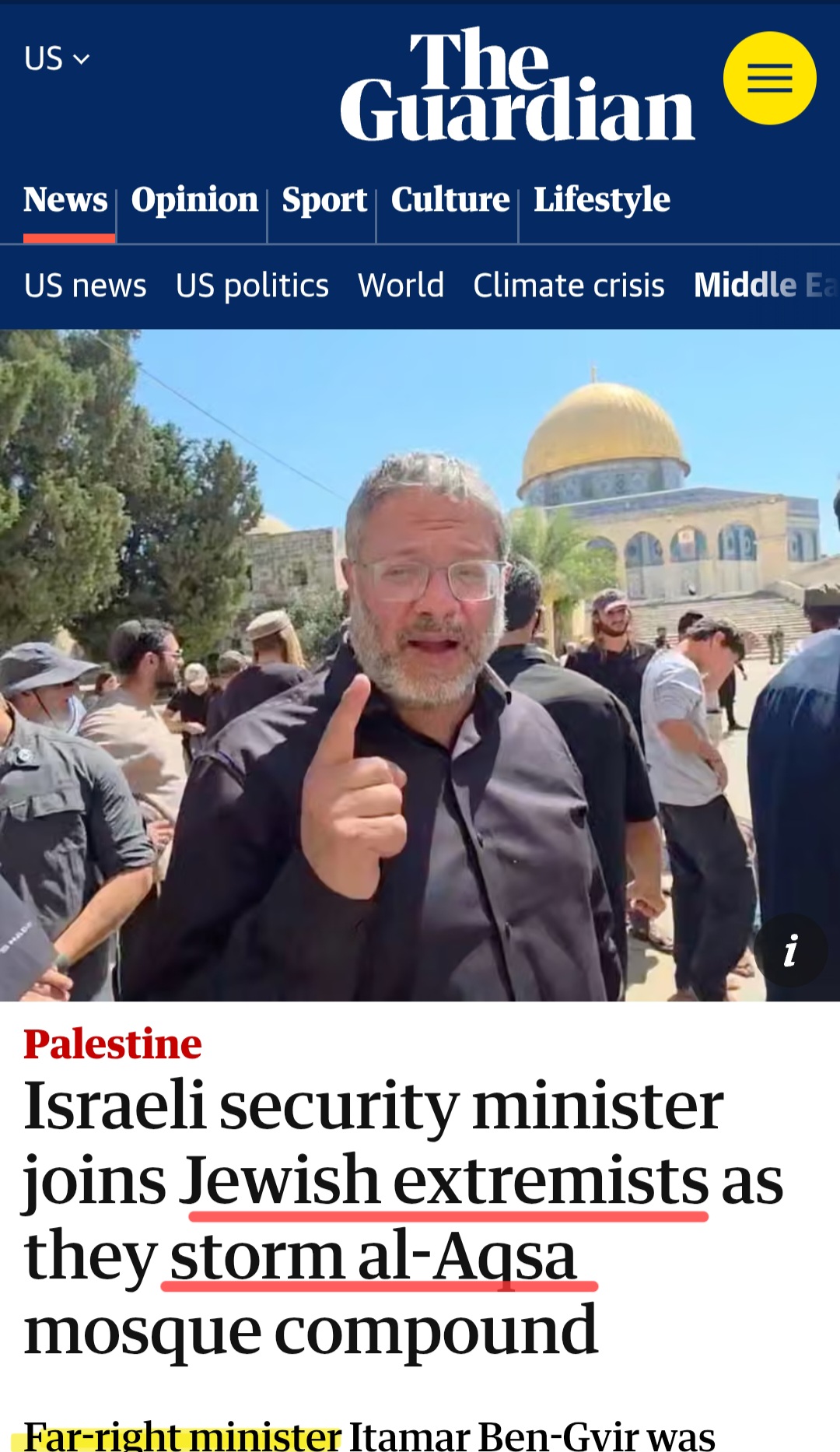
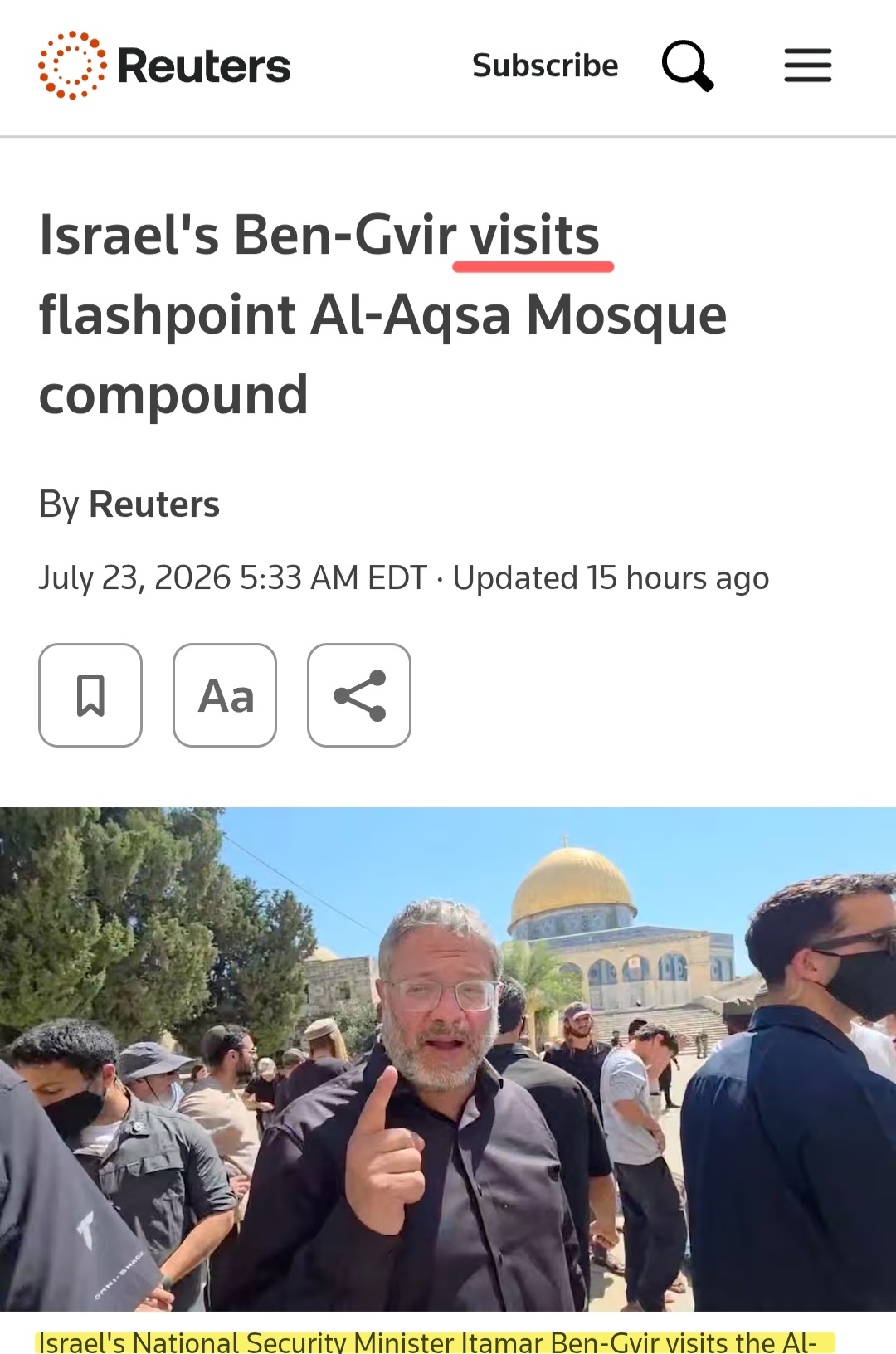
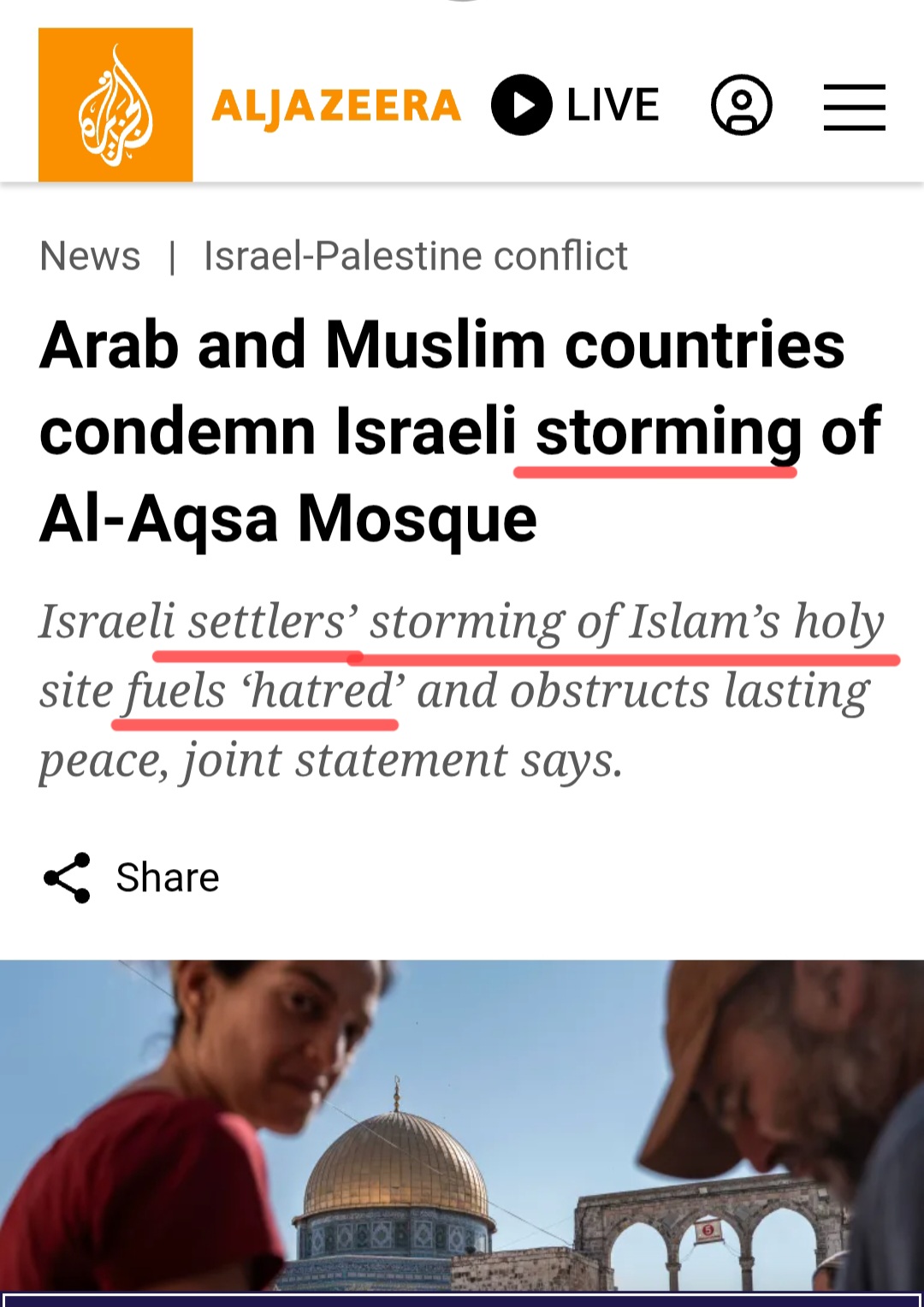
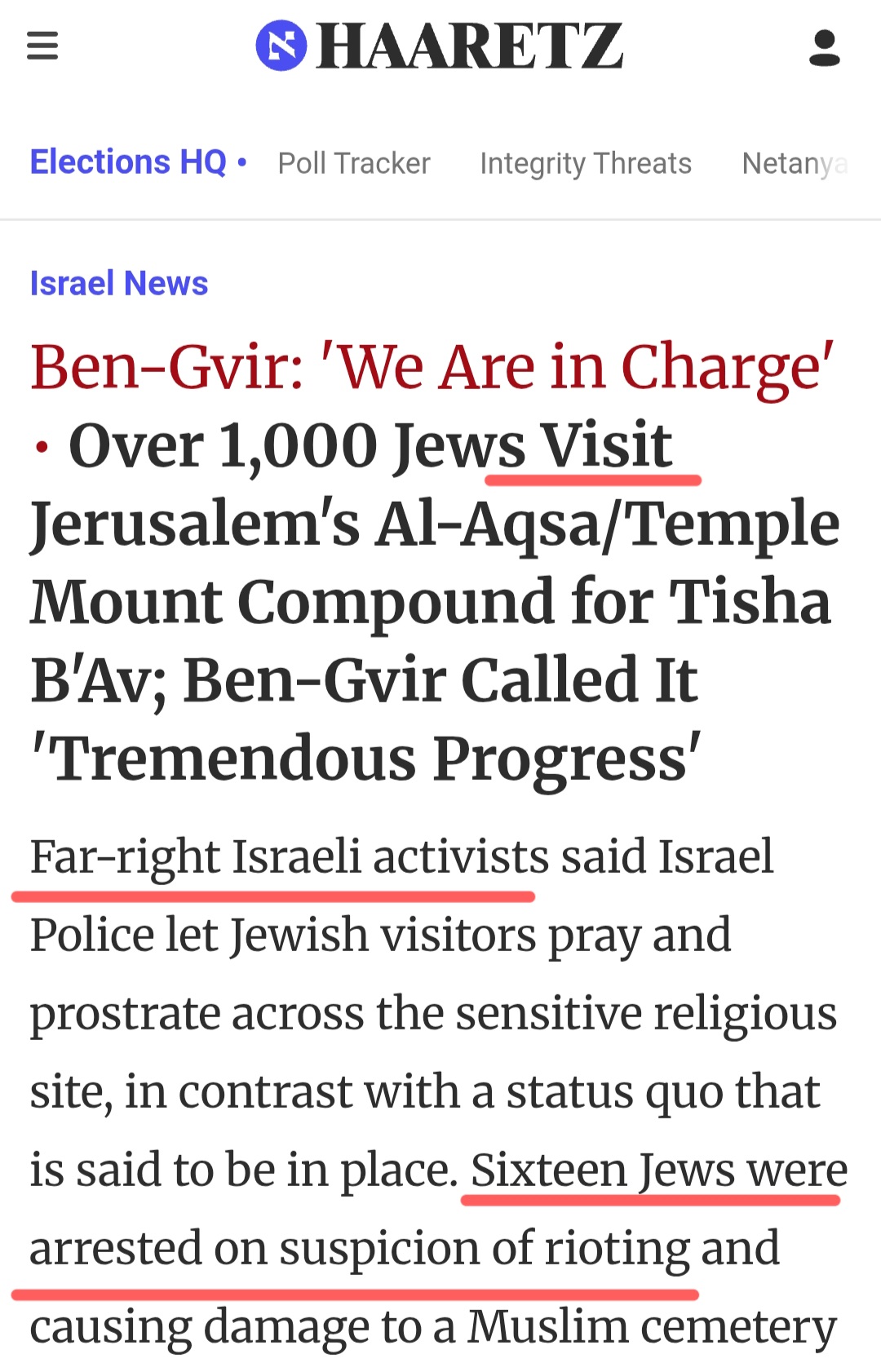
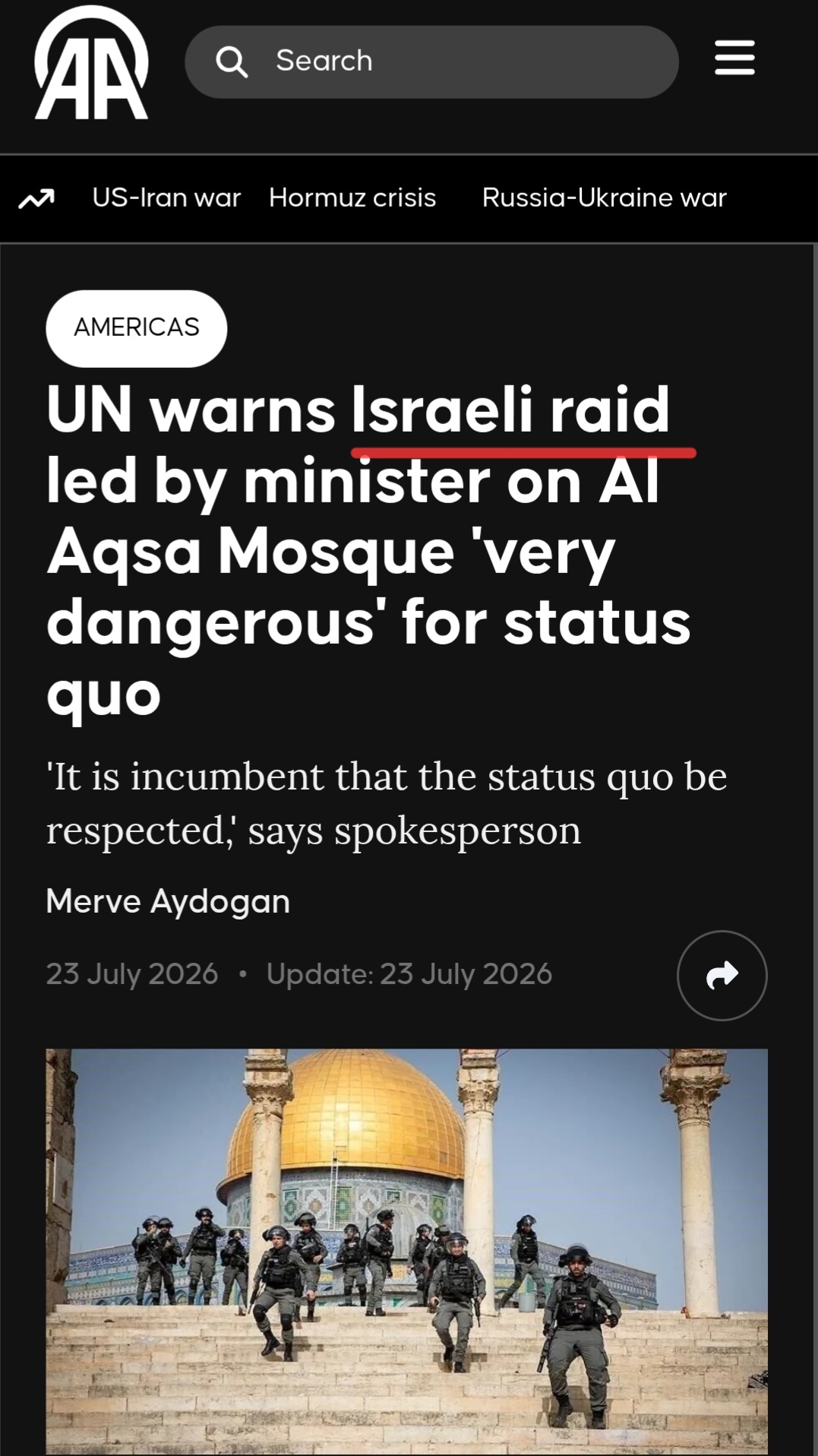
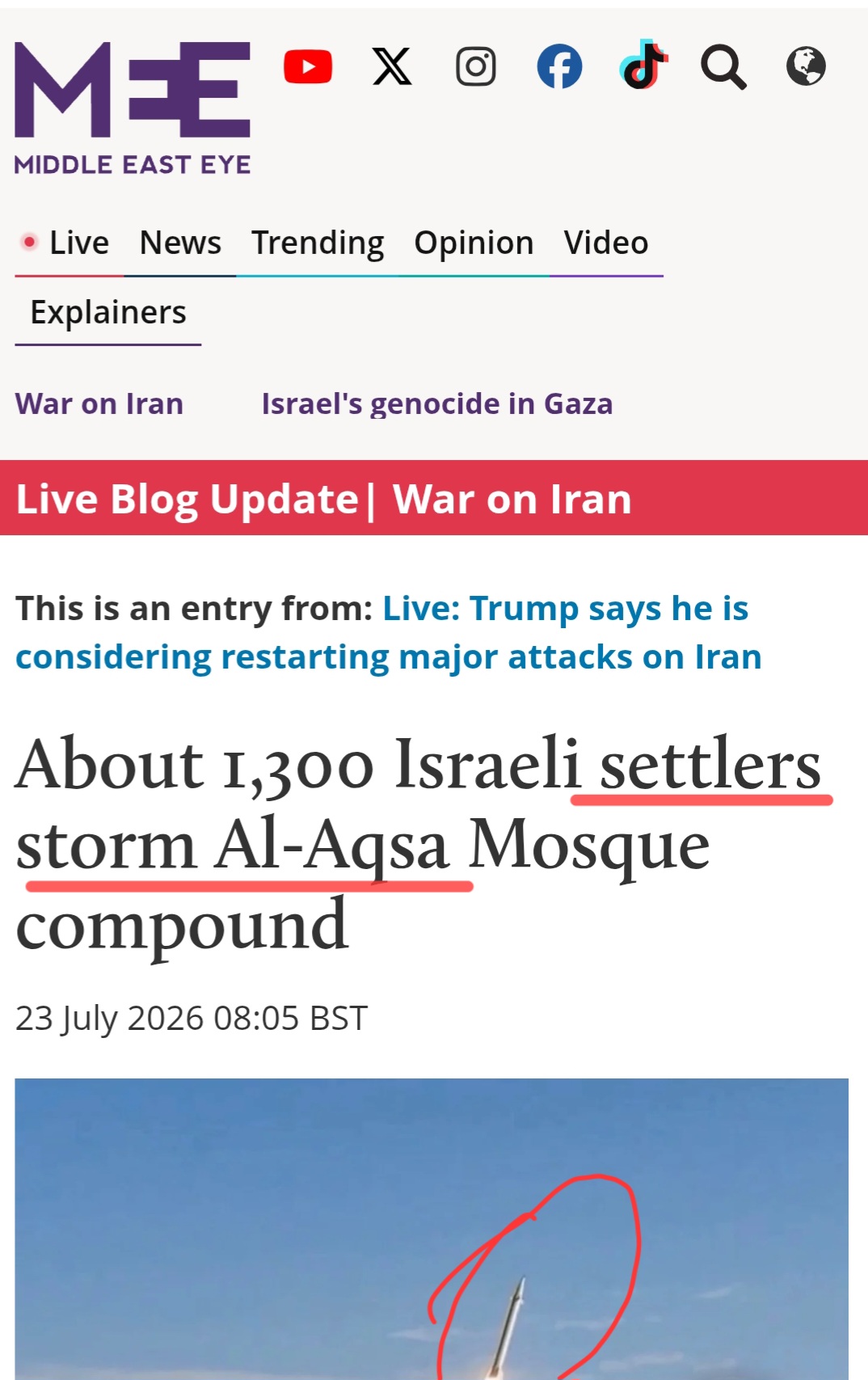
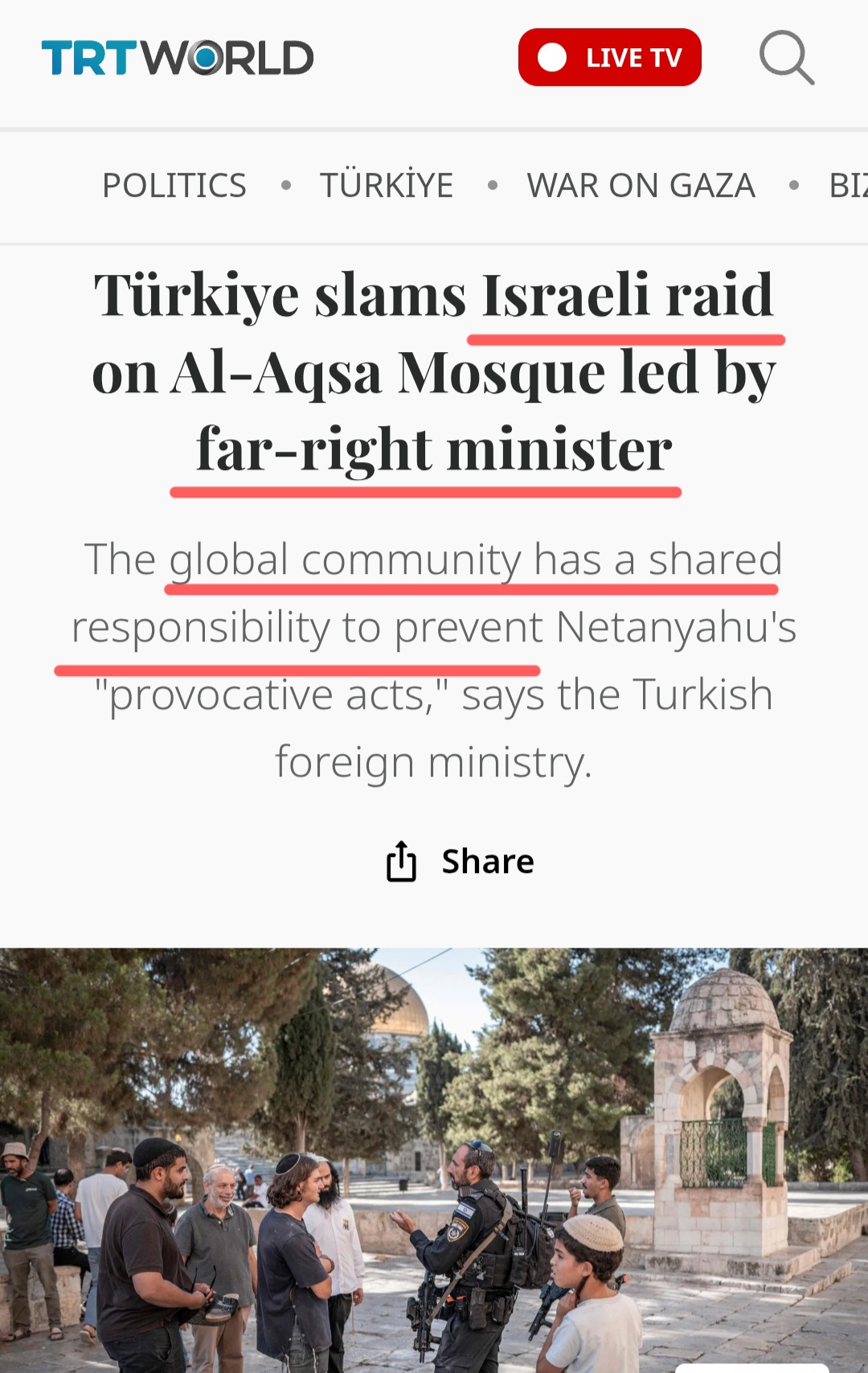
| Outlet | Who? | Place | Action |
|---|---|---|---|
| The Guardian | “Jewish extremists“; “far-right” ministers | “Al-Aqsa mosque compound” | “Storm” |
| Reuters | “Israel’s Ben Gvir”; “National Security Minister” | “Al-Aqsa Mosque compound” (also notes Jews call it the Temple Mount in article) | “Visits” |
| Haaretz | “Far right Israeli acitivists“ | “Al-Aqsa/Temple Mount Compound” | “Visit” |
| Arab & Palestinian media | “Settlers,” “far-right” or “extremists“ | “Al-Aqsa Mosque“ | “Raid” / “Storm“ |
The pattern is clear. The same event is transformed through language in the Muslim and Arab world: Temple Mount becomes Al-Aqsa; Jewish worshippers become “settlers” or “extremists”; a regulated religious visit during visiting hours becomes a “raid” or “storming.” And the results are laid out as “very dangerous” and “the global community has a shared responsibility to prevent Netanyahu’s ‘provocative acts.'”
This has a long ugly history and is expected in the radical Muslim press.
What is becoming more commonplace is for Europe to join this antisemitic framing. The United Kingdom’s The Guardian reported on the visit with the shrill tone and narrative of the Islamic world in a news article, not an opinion piece.
The visitors did not storm the site. They entered through Israeli security during established visiting hours. The Jews never entered the Al-Aqsa Mosque itself. They visited the Temple Mount – the holiest place in Judaism and site of the First and Second Jewish Temples – on a Jewish holiday about that specific location.
Calling thousands of Jewish worshippers “extremists” because they ascended Judaism’s holiest site on Tisha B’Av is itself an extraordinary editorial choice. The remarkable inversion is that the descendants of the people whose temples stood there are portrayed as intruders, while their religious observance is framed as an act of aggression.
Newspapers do not report that Muslims “stormed Mecca” during the Hajj or that Christians “stormed” the Vatican during Easter. Yet when Jews gather at Judaism’s holiest site, peaceful pilgrimage suddenly becomes an extremist assault.
This is especially troubling in Britain, where antisemitism has surged since October 7. British officials have repeatedly warned that the demonization of Israel spills into the demonization of British Jews, while chants of “jihad” and “intifada” have echoed through the country’s streets. The concern is no longer theoretical. Britain’s deadliest recent synagogue attack was carried out by an Islamic State adherent whose communications revealed deeply antisemitic views. More than half of Britain’s recorded antisemitic incidents in 2025 referenced Israel, “Palestine,” Hamas or the Gaza war.
The Guardian is not simply another British newspaper. It is one of the world’s most influential English-language news organizations, with most of its readership now outside Britain, including Ireland and Australia. Its reporting helps shape how millions understand events in Israel. Media watchdogs including CAMERA and HonestReporting have repeatedly criticized its language and framing on Israel and Jerusalem. Yet despite years of such criticism—and against the backdrop of rising antisemitism and repeated attacks on Jews in Britain—the newspaper chose to describe Jews observing one of Judaism’s most solemn days at their holiest site as fanatical Jews coming for Islamic holy sites. That framing does not remain confined to Britain. It travels with The Guardian‘s global audience.
Journalism’s first obligation is to help readers understand reality before interpreting it. When The Guardian abandons that duty in favor of inflammatory framing, it bears responsibility for contributing to the climate of hostility that encourages anti-Jewish hatred and violence.
ACTION ITEM
Contact The Guardian either through guardian.letters@theguardian.com or guardian.readers@theguardian.com and voicemail +44 (0)20 3353 4736 and opinion@theguardian.com
Related articles:
Storming Words, Not Mosques (April 2026)
The Dangerous ‘Settlers Storming Al Aqsa’ Fiction (October 2023)


