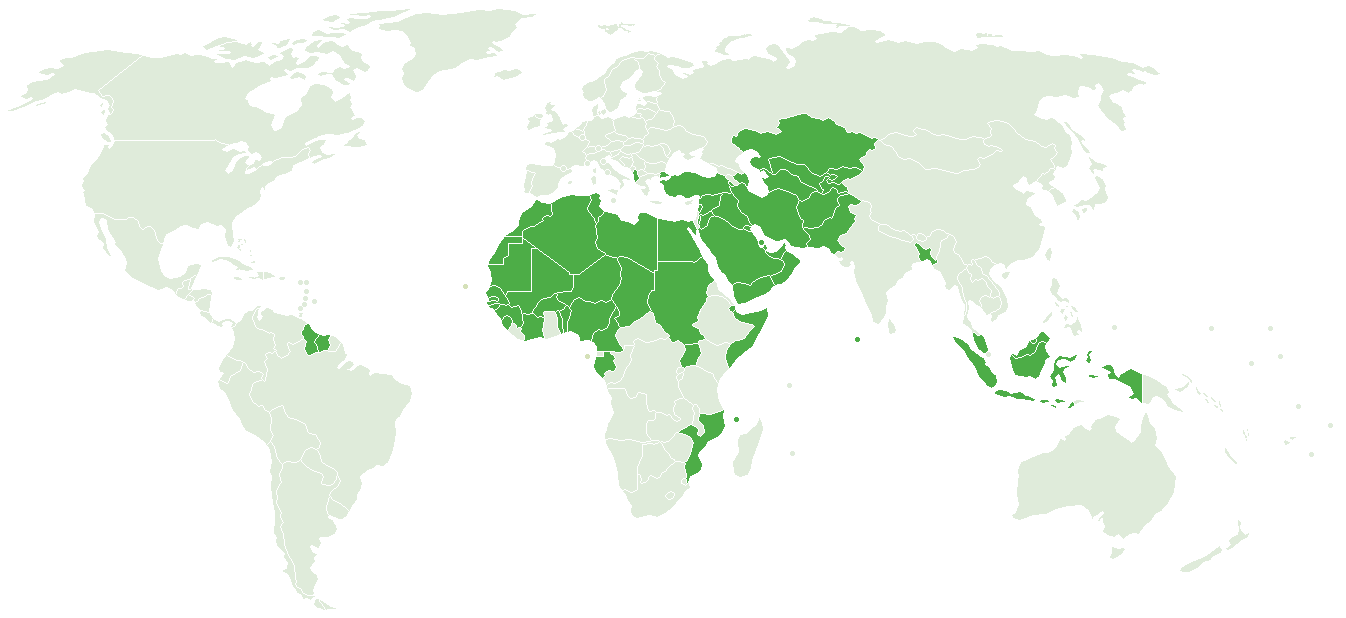
Founded in 1969, the Organization of Islamic Cooperation (OIC) is a coalition of 57 Muslim-majority nations, making it the second-largest intergovernmental organization in the world after the United Nations. Stretching from Morocco to Indonesia, and from Kazakhstan to Nigeria, it represents roughly a quarter of the world’s countries and speaks collectively on issues affecting the Muslim world.
OIC Member states
One of the organization’s longstanding positions is that extremist groups claiming to act in the name of Islam do not represent Islam. Over the years, the OIC has repeatedly condemned organizations such as:
ISIS (Daesh) — for attacks across Iraq, Syria, Libya, Afghanistan, and Nigeria, all OIC member states.
Al-Qaeda — for attacks in Saudi Arabia, Yemen, Pakistan, Afghanistan, Somalia, Iraq, and other Muslim-majority countries.
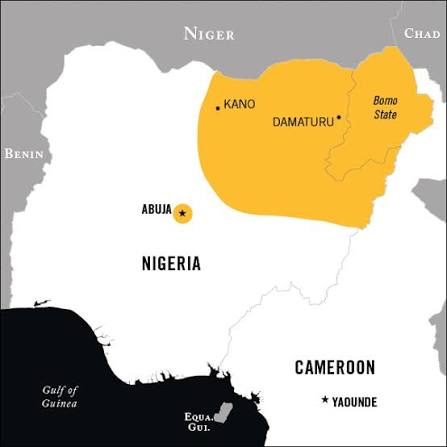
Boko Haram — for its insurgency in Nigeria, Niger, Chad, and Cameroon.
Al-Shabaab — for attacks centered in Somalia and extending into neighboring countries.
ISIS-K (Islamic State Khorasan Province) — for terrorism in Afghanistan and Pakistan.
Tehreek-e-Taliban Pakistan (TTP) — for its campaign against the government and civilians of Pakistan.
The common thread is unmistakable. Every one of these organizations has waged war against governments, civilians, or institutions in Muslim-majority countries, mostly members of the OIC itself.
The OIC has consistently argued that Muslims have been among the principal victims of jihadist terrorism. These groups bomb mosques, seek to overthrow Muslim governments, and destabilize OIC member states are denounced as terrorists and rejected as contrary to Islam.
Yet one jihadi terrorist groups is not called out. It is embraced.
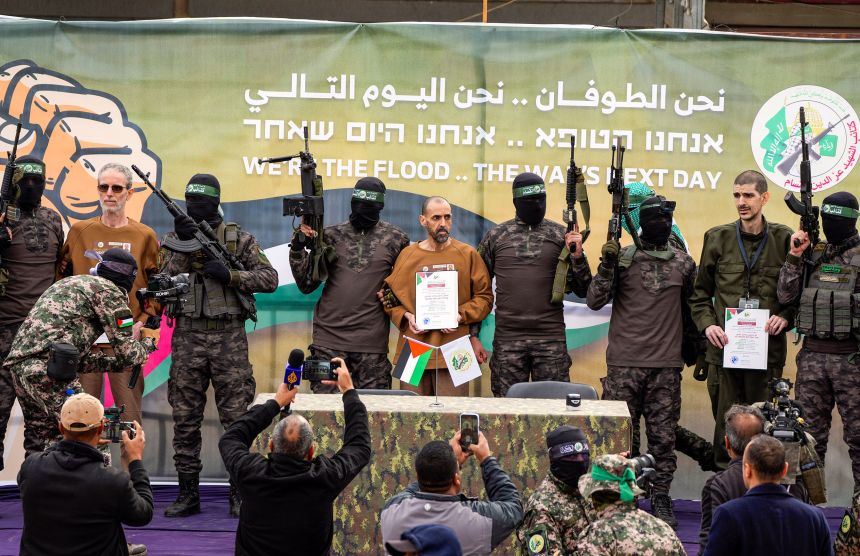
Hamas is an Islamist movement whose founding charter and rhetoric have long drawn on jihadist themes and whose October 7, 2023, attack deliberately targeted civilians. Nevertheless, the OIC has not designated Hamas as a terrorist organization or issued the kind of sweeping institutional condemnations that it has directed at ISIS, al-Qaeda, Boko Haram, Al-Shabaab, ISIS-K, or TTP.
The most obvious distinction is not the use of Islamist ideology or armed violence. It is the target: Israel, the Jewish State.
For an organization that frequently states that terrorism has no religion and that Muslims are among terrorism’s greatest victims, its record reveals a clear pattern. When jihadist groups attack the Muslim world, the OIC is unequivocal in its condemnation. When an Islamist movement wages jihad against the Jewish state, the organization’s response is support.
Shopping used to be simple. You bought food because it tasted good.
Today, every purchase arrives with a moral résumé.
The coffee is Fair Trade.
The chocolate is Rainforest Alliance Certified.
The eggs are Cage-Free.
The tuna is Dolphin Safe.
Soon the carton will tell you whether the chicken enjoyed equitable access to leadership opportunities.
With such established groundwork, the assertive red-green alliance / socialist-jihadi umbrella will undoubtedly develop a new standard for consumers to evaluate purchases:
Ethical Jihad Certification™
I imagine the following questionnaire for companies and organizations to complete, developed by the International Ethical Jihad Standards Council (IEJSC).
Supplier Ethics and Sustainability Review
If your organization employs child soldiers, is recruitment gender-balanced?
☐ Boys and girls equally represented ☐ Nonbinary recruitment targets adopted ☐ Diversity metrics forthcoming
If child brides are supplied, are they ethically sourced?
☐ Local ☐ Organic ☐ Family-owned supply chain
If weapons are stored among civilians, are they distributed equitably across community institutions?
☐ Hospitals ☐ Schools ☐ Mosques ☐ Balanced portfolio across all three
If hostages are held underground, are the tunnels built with recycled concrete?
If political opponents require corrective kneecapping, please confirm that your organization follows an equitable enforcement policy.
☐ Applied without regard to race, religion, gender, or political affiliation ☐ Accessibility accommodations provided during the disciplinary process ☐ Impact assessment completed ☐ Stakeholder feedback incorporated into future kneecappings
If political opponents are subjected to “involuntary rooftop relocation,” (tossed off of rooftops) please indicate which governance standards were followed.
☐ Community stakeholders notified ☐ Staff received annual safety training ☐ Proper signage installed ☐ Liability waivers completed
How does your organization incorporate the LGBTQ+ community?
☐ Rainbow headbands replace green ones during Pride month ☐ Local imams considering ordaining transwomen ☐ Gay men’s decapitated heads disposed of in another jurisdiction
☐ International NGOs ☐ Foreign correspondents ☐ Western university researchers ☐ Social media advocacy networks
Has your organization retained celebrity spokespersons to improve international brand perception?
☐ Actor ☐ Musician ☐ Influencer ☐ Climate activist
Has your organization demonstrated continuous improvement in expanding the number of international agencies, committees, or special offices devoted exclusively to your cause?
☐ Year-over-year growth achieved ☐ Additional mandate secured ☐ Dedicated rapporteur established ☐ Additional entities under consideration
Before issuing historical claims, has your organization completed a Heritage Simplification Assessment?
☐ Archaeological evidence destroyed ☐ Conflicting evidence omitted ☐ Timeline reduced to a convenient starting date ☐ Approved historical narrative distributed ☐ Site renamed in Arabic with only Islamic grounding
Has your organization’s founding charter undergone an independent review for language that may be inconsistent with modern human rights standards?
☐ Terminology modernized without changing intent ☐ Currently undergoing reputation management with select NGOs ☐ Using reputational management software to block viewers from finding foundational charter ☐ We prefer not to revisit founding documents
Has your organization successfully persuaded international stakeholders that your adversaries have no legitimate historical connection, cultural heritage, or rights associated with the land?
☐ Global awareness campaign exceeded expectations ☐ Educational materials updated accordingly ☐ Approved terminology adopted ☐ Further stakeholder engagement required
Has your organization successfully repositioned itself from perpetrator to primary victim in international discourse?
☐ Independent observers persuaded ☐ Media narrative successfully reframed ☐ Stakeholder sympathy increased ☐ Further communications investment required
Successful applicants receive one of four ratings:
Bronze: Mass violence, in recyclable packaging. Silver: Child soldiers recruited inclusively. Gold: Hostage facilities powered by solar panels. Platinum: Calls for genocide delivered with a complete ESG report.
For foods, there is an addition to the consumer label. For example:
Nutrition Facts
Calories: 140 Protein: 4g Sodium: 120mg Carbon footprint: Low Gender equity: Certified Child soldiers: Inclusive Child brides: Ethically sourced Weapons near civilians: Institutionally diversified Support for genocidal jihadists: Values-aligned
May contain traces of sesame.
May also contain an entire moral civilization that has forgotten the difference between auditing evil and opposing it.
The English language is constantly changing. Sometimes a person’s or group’s name becomes a verb.
We boycott because of Charles Boycott. We lynch because of William Lynch. We pasteurize because of Louis Pasteur. We sandwich because of the Earl of Sandwich.
The verb survives because it captures something distinctive that no existing word quite conveys.
What if the same happened with Hamas?
At first glance, someone might say, “We already have a word. It’s called pillaging.”
But pillaging isn’t nearly enough to convey the particular depredation.
The Vikings pillaged. They raided villages, stole livestock, carried off treasure, and sometimes took captives. Their brutality was driven by conquest and material gain. History rightly remembers them as ruthless raiders.
Yet even “to pillage” fails to capture what the world witnessed on October 7.
If “to Hamas” became a verb, it would not simply mean to rob, raid, or kill.
It would mean to deliberately massacre civilians, rape and murder, burn families alive, and carry away even the bodies of the dead – not merely to deny burial, but to torment loved ones and use the dead as bargaining chips. It would mean celebrating those acts publicly, then, when the victims fight back, proclaiming yourself to be the true victim. It would mean embedding fighters among civilians, hiding like cowards behind women and children while forcing every effort to rescue hostages or defeat you into another propaganda opportunity.
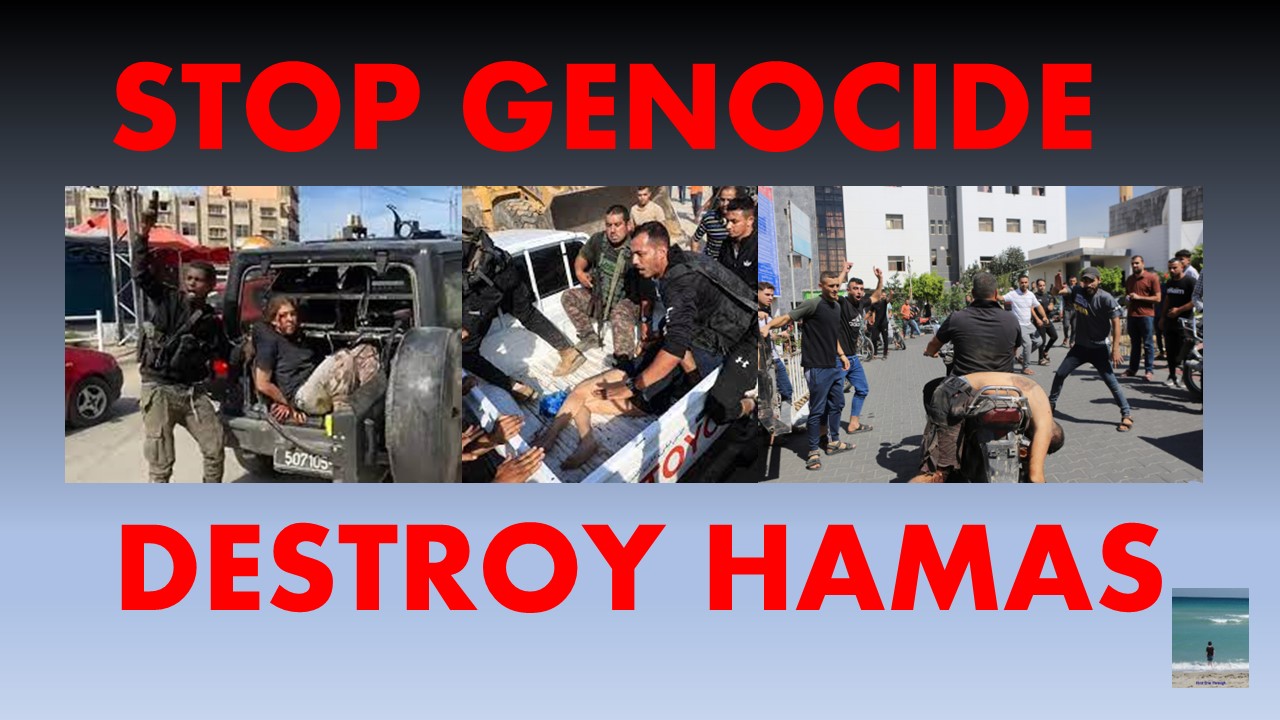
Dead Israeli woman hauled back to Gaza by Hamas, spat on by local Gazans on October 7, 2023
The cruelty is not only in the violence itself. It is in the inversion.
“To Hamas” is to attack and demand sympathy for committing crimes against humanity. The hostage-taker claims oppression. The organization that began the war insists the people searching for their murdered and kidnapped relatives are the real aggressors.
Hamas genocidal jihadist in Israeli kibbutz, celebrating killing families
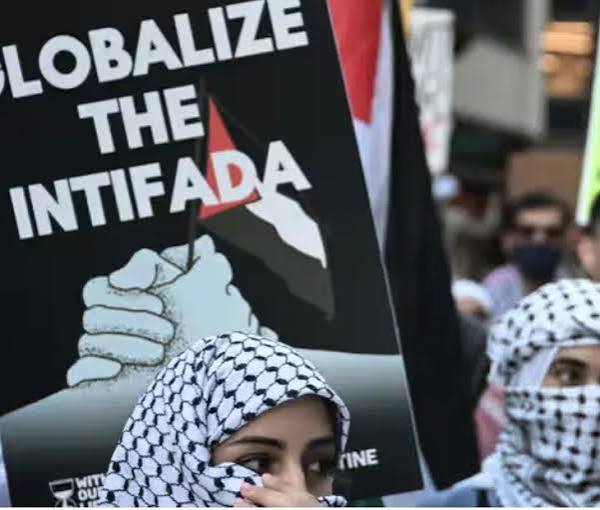
“To Hamas” is to invite the world to join the crime and taunt the victims. To call “globalize the Intifada” in the streets of the Global North. To say the victims are not welcome on street signs. To taunt worshippers working into prayer halls.
Language evolves because sometimes old words are no longer enough.
If someone someday asks, “Are you going to Hamas me?” they would not be asking whether you’re going to steal from them or rape them. They would be asking something far darker.
Vikings pillaged. English already has a word for that.
“To Hamas” is to commit heinous atrocities, run for physical and emotional cover, and call for support to exploit the victims further.
Many Jews are being Hamased daily. It is time to label it clearly.
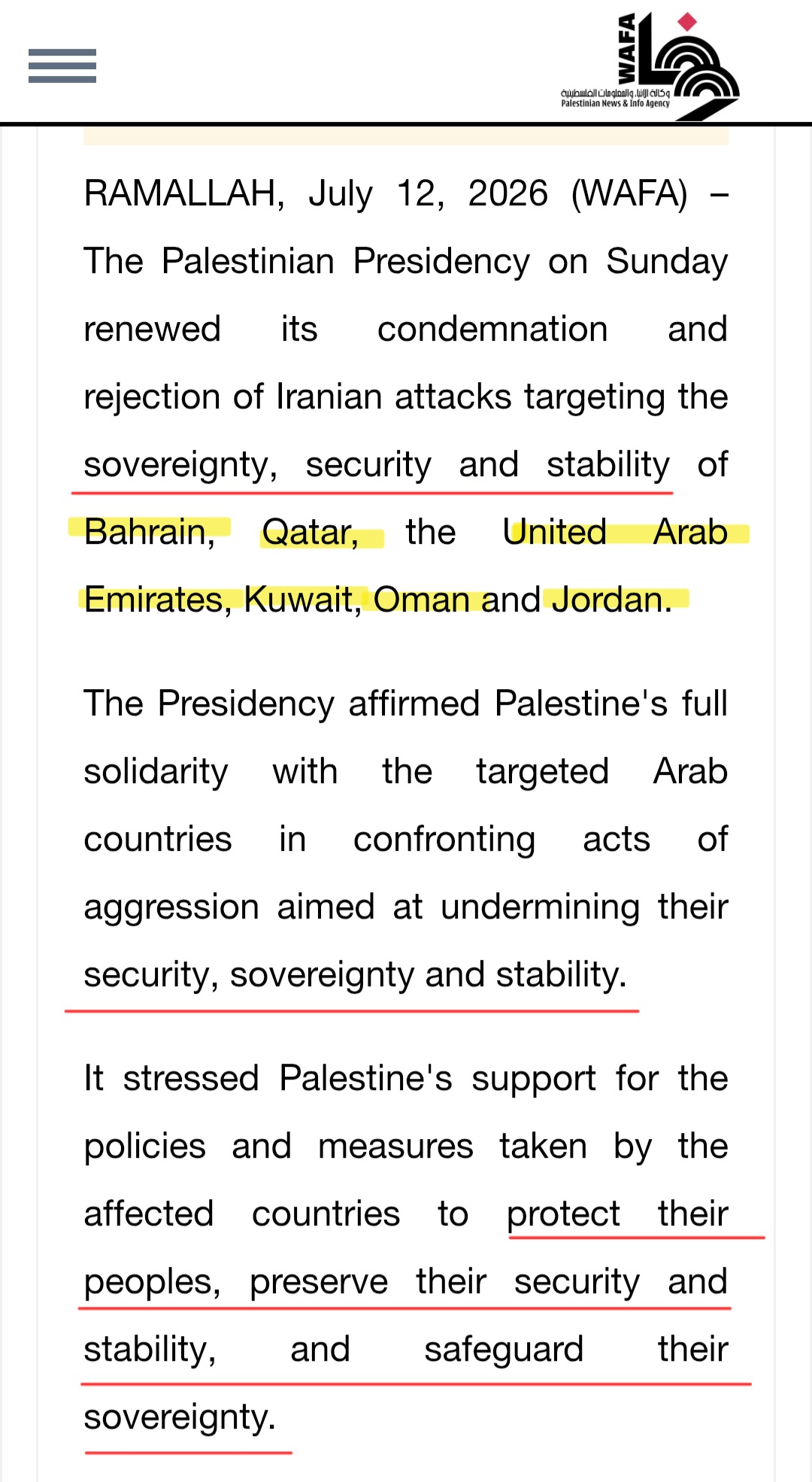
The Palestinian Authority had no trouble explaining what every nation deserves.
In a statement condemning Iran’s attacks on Bahrain, Qatar, the United Arab Emirates, Kuwait, Oman, and Jordan, the PA repeatedly invokes the same principles: sovereignty, security, stability, and protection of civilians.
Where were these principles when Israel was attacked?
When Iran launched missiles at Israel, did the Palestinian Authority defend Israel’s sovereignty?
When Hezbollah rained rockets on Israeli cities for months, did it affirm Israel’s right to security and stability?
states “refrain… from the threat or use of force against the territorial integrity or political independence of any state.” UN Charter (Article 2(4))
When the Houthis fired missiles toward Israel, did it support Israel’s right to protect its people?
And most pointedly, when Hamas – fellow local Arabs of the Palestinian parliament – crossed an international border on October 7, murdered civilians, kidnapped hostages, and occupied Israeli communities, did the PA condemn it as an assault on Israel’s sovereignty?
“the inherent right of individual or collective self-defence if an armed attack occurs against a Member of the United Nations.” UN Charter (Article 51)
A principle that applies only to friends is not a principle. It is a preference.
The Palestinian Authority’s own statement demonstrates that it understands exactly what every nation deserves. Its silence when those same principles are violated openly and repeatedly against Israel says just as much as its words.
Social scientists have long observed that ideas do not need majority support to transform a community. Research on social norms has repeatedly found that once a committed minority reaches roughly 25 to 30 percent of a group, opinions once considered beyond the pale can become normalized. The Overton window shifts. People become more willing to voice views they once kept private because they no longer fear social disapproval.
That is what makes Pew Research Center’s July 2026 findings so alarming.
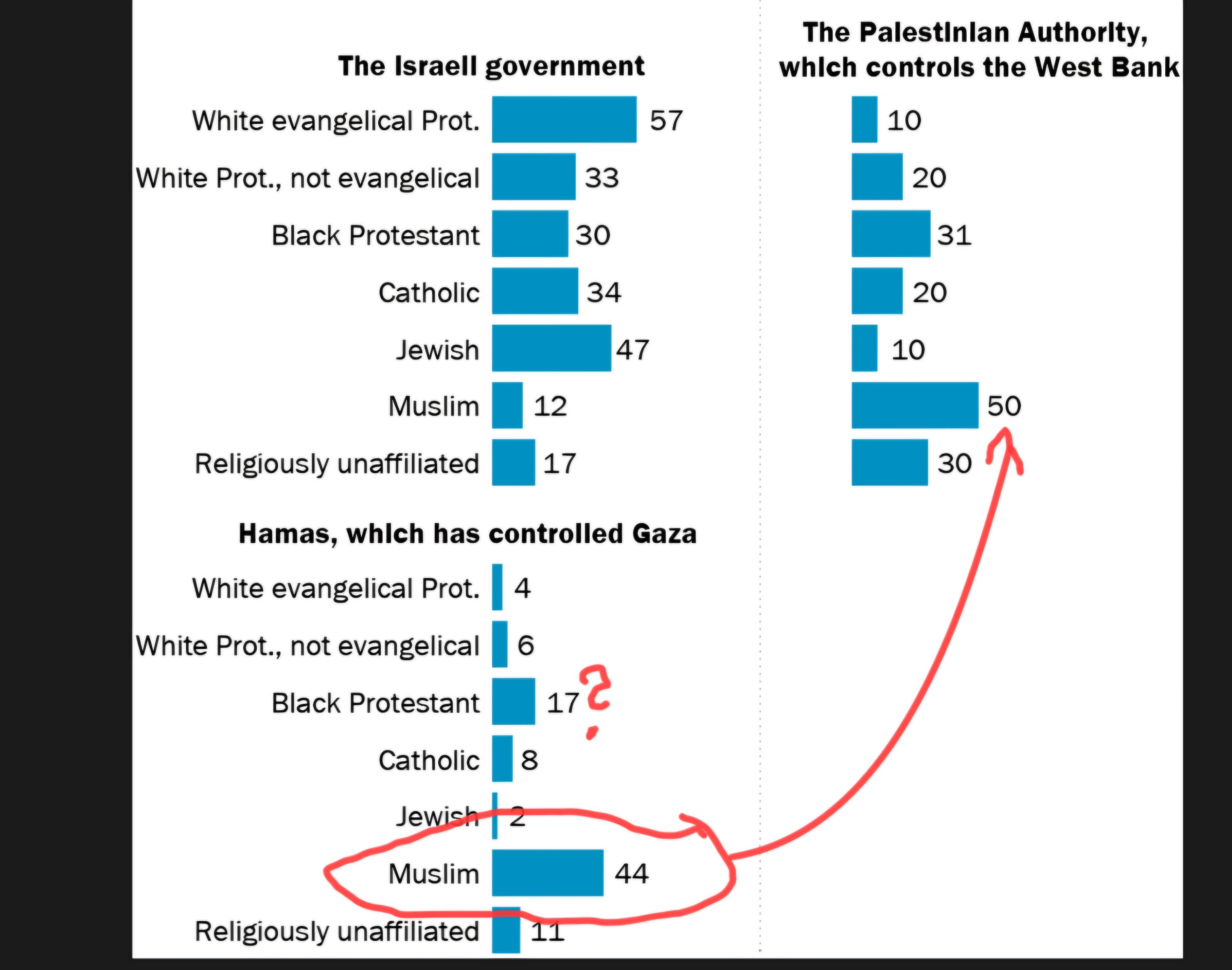
In 2024, Pew found that 37% of American Muslims viewed Hamas favorably. Two years later, that figure has risen to 44%.
July 2026 Pew Poll showing 44% of American Muslims support Hamas, almost the same as the Palestinian Authority. This is a gross outlier relative to all other Americans.
Vile extremism has not only been mainstreamed in the American Muslim community, it is accelerating.
Hamas is not merely another Palestinian political movement. It is a U.S.-designated terrorist organization that carried out the October 7 massacre. Its members murdered civilians, took hostages, committed widespread sexual violence, and burned families alive. Hamas has long promoted antisemitic ideology, seeks Israel’s destruction, refuses to disarm or allow civilians to use its protective shelters, and has repeatedly embedded military operations among civilians, leaving Gaza’s population to be destroyed.
Forty-four percent is not a fringe. It is well above the level social scientists associate with changing social norms. It IS the norm.
Viewed through that lens, the chants heard on American streets become easier to understand. “Globalize the Intifada” is no longer merely the slogan of isolated radicals. Celebrating the killing of Jews no longer needs to be hidden but can be posted on social media.
For American Jews, this is not an abstract polling result. Hamas and “Globalize the Intifada” mean antisemitic violent jihad. It is the embrace of a death cult. A poll showing growing favorability of Hamas inevitably deepens fear that the moral barrier has been broken and violence is near.
But this is not only a Jewish concern.
No society should become comfortable with growing support for a terrorist organization whose defining acts include the deliberate murder of civilians, hostage-taking, and an explicitly antisemitic ideology. When favorable views of such an organization increase rather than decline after its atrocities, the implications extend beyond the community it targets. They speak to the moral health of the the American Muslim community.
Every community contains extremists. The defining question is whether they remain isolated or become influential enough to reshape what is considered acceptable. Pew’s findings suggest that sympathy for Hamas is no longer confined to the margins of American Muslim opinion. It has become substantial enough to influence public discourse and to shape the boundaries of acceptable speech, and likely action.
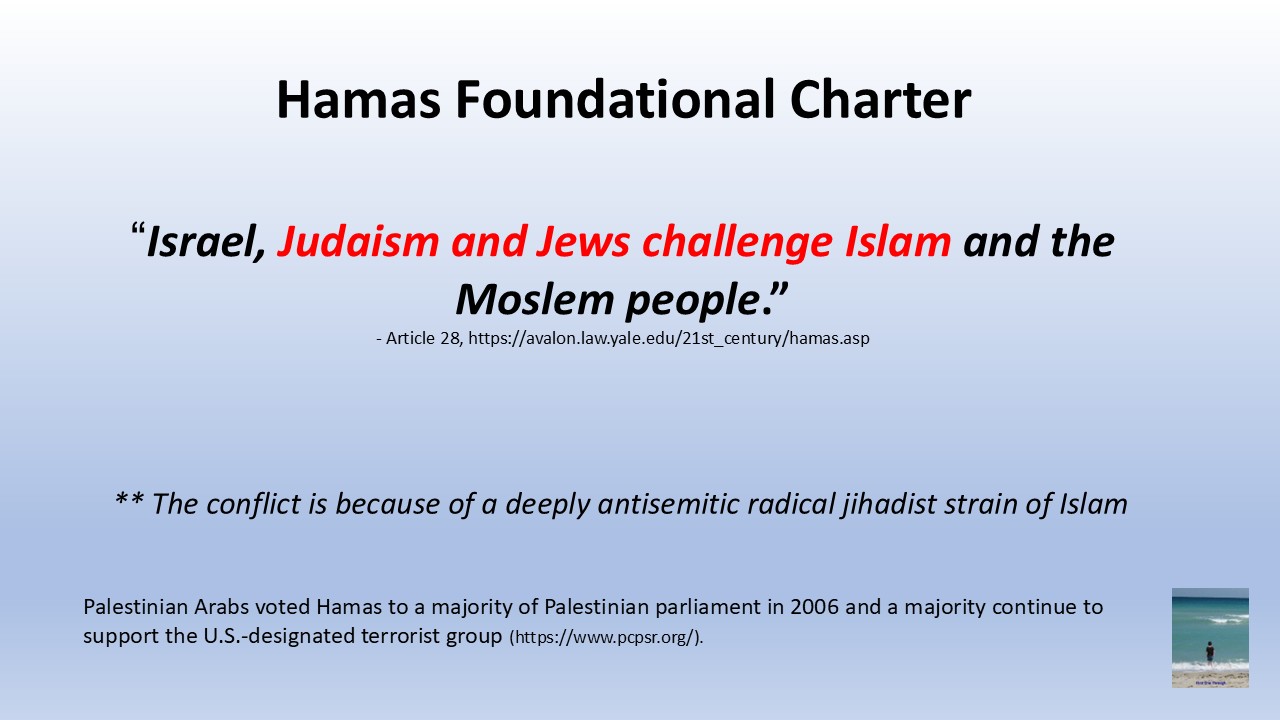
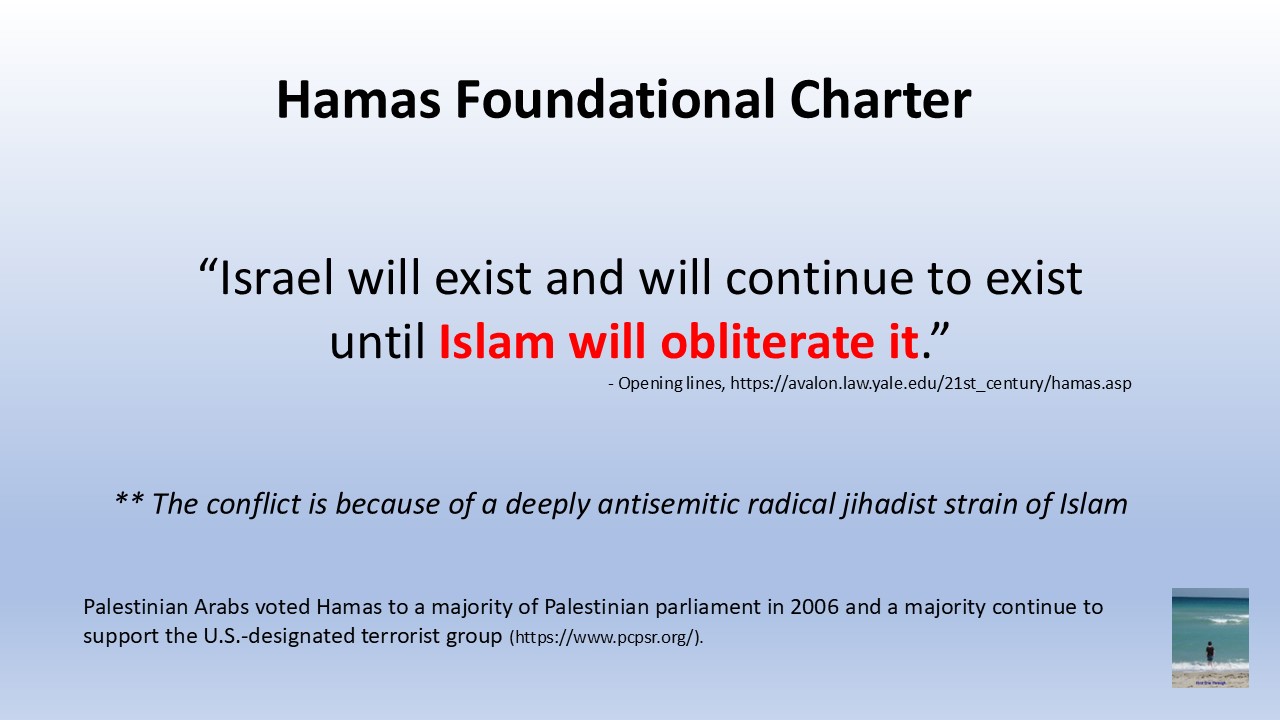
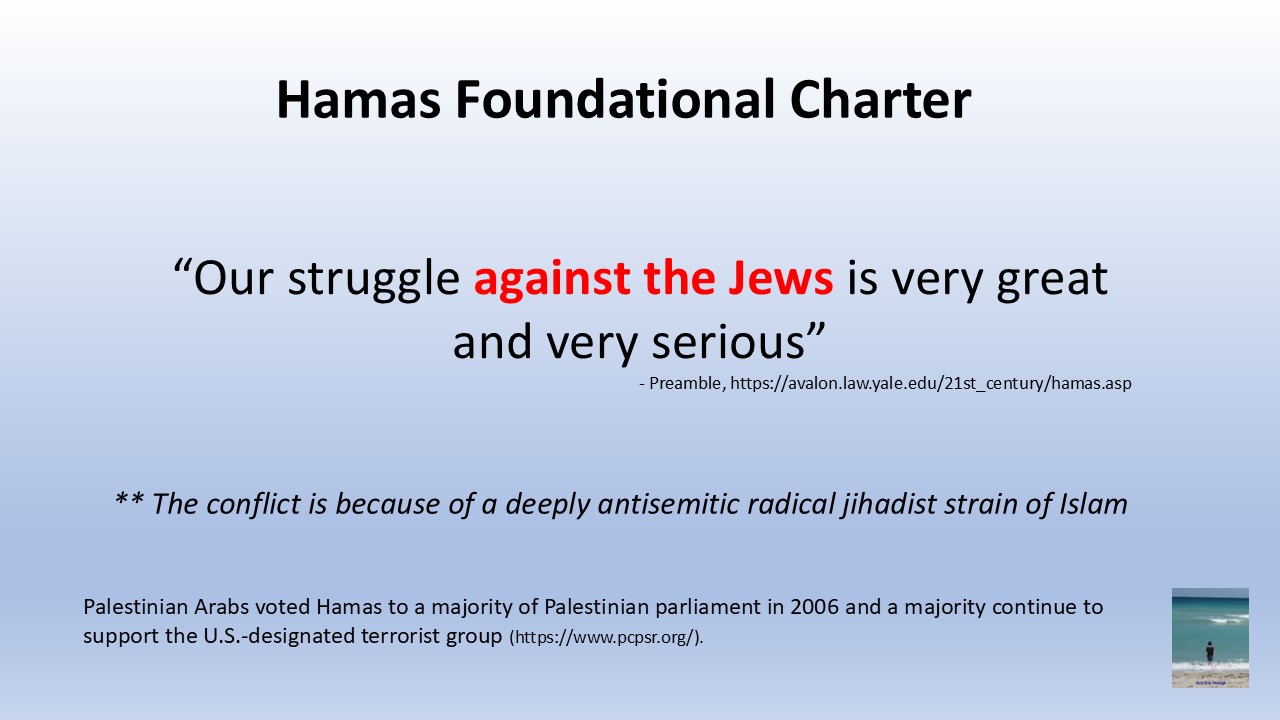
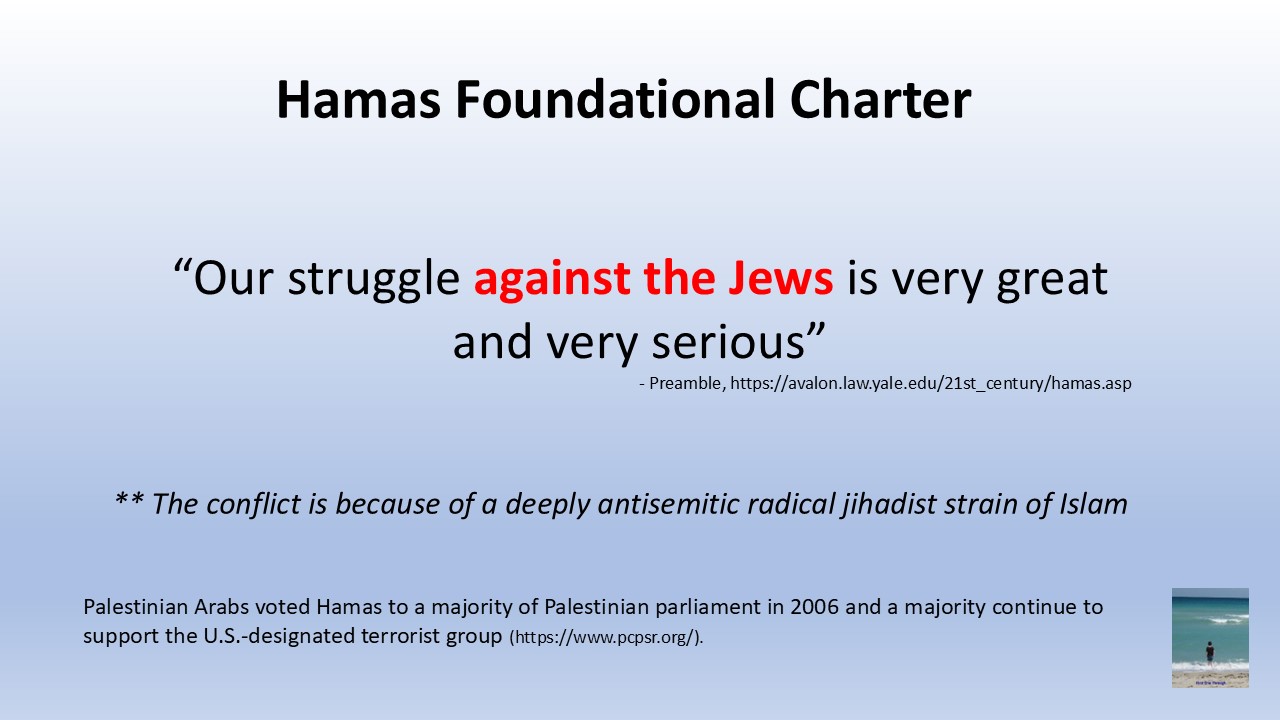
The Hamas Charter is the most antisemitic governmental charter ever produced
The issue has grown beyond Hamas in Gaza. It is American Hamas – the normalization of support for a terrorist organization within American society. If support for Hamas among American Muslims has risen from 37% to 44% in just two years, Americans should ask not only what this means for Jews, but what it says about the values we are willing to tolerate in America.
The greatest danger is not merely that extremists exist. It is that extremism ceases to be recognized as extreme.
The debate over American support for Ukraine and Israel has largely focused on the cost. Politicians argue over billions of dollars appropriated, weapons transferred, and whether American taxpayers are carrying too much of the burden. Far less attention has been paid to the return on that investment.
Since 2022, the United States has authorized roughly $195 billion related to Ukraine and approximately $16–22 billion in supplemental wartime assistance for Israel. Critics see enormous expenditures. Strategically, however, those dollars have enabled two allies to inflict historic damage on two of America’s principal adversaries – Russia and Iran – without the United States deploying large combat formations or suffering the thousands of battlefield casualties that defined Vietnam, Iraq, and Afghanistan.
That comparison matters.
The wars in Iraq and Afghanistan cost the United States more than $5 trillion in direct and related costs, with broader post-9/11 war obligations rising above $8 trillion when future veteran care, interest, and long-term commitments are included. Nearly 7,000 American service members were killed. More than 52,000 were wounded.
And what was the lasting strategic benefit?
Afghanistan ended with the Taliban back in power. Iraq removed Saddam Hussein, but the aftermath empowered Iran, fractured the region, drained American credibility, and produced years of instability. The United States paid in terrible blood and treasure, and the final balance sheet is hard to defend.
Ukraine and Israel present a very different model.
Consider Russia.
More than four years after launching its invasion of Ukraine, Russia has suffered an estimated1.4 million military casualties, including approximately 450,000 dead. Its armored forces have been severely depleted. The Black Sea Fleet has largely been driven from its historic operating areas. Ukraine has repeatedly demonstrated the ability to strike deep inside Russian territory. The military once regarded as NATO’s greatest conventional threat has been dramatically weakened.
“The number of Russian casualties and fatalities are astonishing. Since World War II, no major power has suffered anywhere near these numbers of casualties or fatalities in any war…. Russia’s economy is in distress, and Russia’s wartime spending may be increasingly untenable.” – Center for Strategic and International Studies July 2026
Now consider Iran.
For four decades the leading state sponsor of terrorism invested billions of dollars constructing what it proudly called the “Axis of Resistance” – a network stretching from Iran through Iraq and Syria to Lebanon and Gaza. Hamas, Hezbollah, Shiite militias, the Houthis, and the Assad regime were components of a single strategy designed to project Iranian power, surround Israel and challenge American influence in the region and threaten much of the global oil supply.
That strategy has suffered a tremendous setback.
Hamas has lost much of its military and infrastructure. Hezbollah has absorbed devastating blows to its command structure and missile capabilities. The Assad regime in Syria – Tehran’s indispensable Arab ally and the geographic bridge connecting Iran to Hezbollah – has fallen, shattering the land corridor that Iran spent decades building. The regional network that once appeared to surround Israel and terrorize America’s Arab allies now is dramatically weakened.
Iran’s nuclear ambitions have suffered major setbacks as well. Israeli and American strikes severely damaged key nuclear facilities, disrupted important elements of Iran’s enrichment infrastructure, and forced Tehran to devote enormous resources simply to rebuilding capabilities it once assumed were secure. Intelligence agencies continue to debate precisely how long the program has been delayed, but there is broad agreement that it suffered one of the most significant setbacks in its history.
None of this diminishes the immense human suffering. Ukraine has endured staggering casualties and destruction. Israel suffered the deadliest attack in its history on October 7 and has paid a heavy military, economic, and emotional price ever since.
But viewed through an American lens of grand strategy, another reality emerges.
Rather than sending hundreds of thousands of American troops to fight Russia or Iran directly as was done in Afghanistan and Iraq, the United States enabled allies already under attack to defend themselves. Those allies have imposed extraordinary military and strategic costs on governments that have spent decades challenging American interests.
This is what is so often missing from the public debate.
The wars are typically discussed separately. Ukraine is presented as a European conflict while Israel is portrayed as a Middle Eastern conflict. Yet both Russia and Iran were strategic partners, cooperating militarily, economically, and diplomatically while sharing an interest in weakening the United States and the Western alliance. Seen together, Ukraine and Israel have not merely been fighting for their own survival, they have been successfully degrading two pillars of a powerful anti-Western axis.
The long-term upside could be enormous. A surviving, Western-aligned Ukraine would become one of Europe’s most battle-tested militaries, a major reconstruction market, an energy and agricultural partner, and a permanent barrier to Russian expansion. A stronger Israel, with Iran weakened and Syria and Lebanon no longer functioning as Tehran’s strategic bridge, could help reshape the Middle East around technology, defense cooperation, energy corridors, trade, and normalization with Arab states that increasingly fear Iran more than they resent Israel.
That is the opportunity Iraq and Afghanistan never produced. Those wars consumed American power and America left no assets behind. These wars, fought by allies, may extend American power with powerful allies at the vanguard.
History may conclude that this period represents one of the most effective uses of American alliance power in generations. For roughly $215 billion – less than one-twentieth of the direct and related cost of Iraq and Afghanistan – the United States helped enable allies to severely weaken Russia’s conventional military, fracture Iran’s regional proxy empire, remove Syria and Lebanon from Tehran’s sphere of influence, and significantly set back Iran’s nuclear program, all without committing large American ground forces or sustaining the massive battlefield casualties that characterized previous generations of U.S. warfare.
America’s greatest military victory in the past 75 years may ultimately be its most subtle.
Long before the current war began, prominent advocates for the Palestinian cause were describing Gaza as “hell on earth.”
In January 2009, Palestinian Queen Rania of Jordan released a video for UNRWA titled “Hell on Earth.” Eight months later, speaking at UNRWA’s 60th anniversary, she recalled that video and lamented that Gaza was still “Hell on Earth.”
Palestinian Queen of Jordan Rania called Gaza “Hell on Earth” in 2009
In May 2021, UN Secretary-General António Guterres declared, “If there is a hell on earth, it is the lives of children in Gaza today.”
When Israel began to respond to the war waged by Gazans in 2023, UNRWA Commissioner-General Philippe Lazzarini said Gaza had become “a living hell.” In January 2024, UN humanitarian coordinator Sigrid Kaag told the Security Council, “Gaza is hell on earth.”
The description has been remarkably consistent. What has often been missing is the question: Why?
Hell is not merely a place of suffering. It is a place where evil reigns.
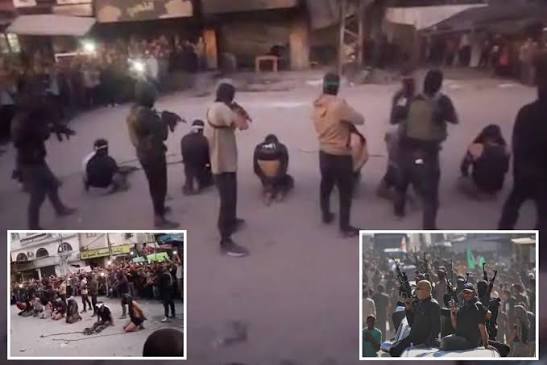
Hamas violently seized Gaza in 2007 after defeating Fatah in a brief but brutal civil war. Fighters executed political rivals, threw some from rooftops, publicly brutalized opponents, and dragged the bodies of alleged collaborators through the streets. Those who challenged Hamas risked imprisonment, torture, or death. Independent political life disappeared, and an entire generation grew up under the rule of an armed Islamist movement that prioritized rockets, tunnels, and perpetual conflict over building a prosperous society.
Hamas drags a disloyal Gazan through the streets to his death
And Hamas was a known entity, a political party which won 56% of Palestinian parliament in elections with the most antisemitic political charter ever written. It remains the most popular political group to this day, expected to win Palestinian elections in every poll.
Calling Gaza “hell on earth” without acknowledging who built that system leaves the story unfinished. Should people want to transform the region, they must work to end the evil rule and worldview that turned part of the holy land into such a place in the first place.
For more than fifteen years, Boko Haram has waged one of the world’s deadliest terrorist insurgencies. Since 2009, the group has been responsible for the deaths of more than 35,000 people, with some estimates placing the toll significantly higher when indirect deaths from the conflict are included. It has massacred civilians in villages, churches, mosques, schools, and marketplaces. It has bombed public places, murdered those who refused to submit to its rule, and driven millions from their homes across Nigeria and neighboring countries.
Kidnapping has been one of its defining tactics. The 2014 abduction of 276 schoolgirls from Chibok drew worldwide attention, but it was only one of thousands of kidnappings. Women and girls have been forced into marriage and been raped. Boys have been recruited as child soldiers. Entire communities have lived for years under the constant threat of murder, abduction, and terror.
Boko Haram rejects the legitimacy of Nigeria, a United Nations-member state. It seeks to replace it with its own extremist Islamist regime.
Yet almost no one argues that Boko Haram deserves its own country. No demonstrations demand that its leaders be rewarded with sovereignty. No governments argue that decades of massacres, hostage-taking, and terrorism should culminate in international legitimacy.
There are now 157 countries that recognize Palestine. That look at the war between Israel and Palestine as one between two sovereign states, one which invaded another, raped and burned people alive, and took 251 hostages. These nations didn’t pause to question whether Palestine has a right to exist, but got three more countries to join in their sadistic effort.
Perhaps it is time for the 36 countries which do not recognize Palestine to put a resolution before the UN to recognize Boko Haram as the legitimate government of Nigeria, or at least a breakaway state in the northeastern corner which they control.
For more than sixteen centuries, the Catholic Church has wrestled with one of humanity’s most difficult questions: When, if ever, is war morally justified?
St. Augustine laid the foundation by teaching that, “The purpose of all wars is peace.” War was never to be pursued for conquest, revenge, or hatred, but only to restore a just peace.
St. Thomas Aquinas refined that principle, writing that, “In order for a war to be just, three things are necessary. First, the authority of the sovereign… Secondly, a just cause… Thirdly… the belligerents should have a rightful intention, so that they intend the advancement of good, or the avoidance of evil.”
The Catechism of the Catholic Church later added that “The strict conditions for legitimate defense by military force require rigorous consideration.” It identifies four additional requirements: the aggressor must inflict lasting, grave and certain damage; peaceful alternatives must have been exhausted; there must be a serious prospect of success; and the use of force must not create evils greater than those it seeks to eliminate.
These principles have recently been invoked by Catholics questioning Israel’s wars against Hamas, Hezbollah, and Iran.
The first question is legitimate authority.
Israel is a sovereign state with an elected government entrusted with protecting its citizens. Hamas is a terrorist organization that seized control of Gaza by force. Hezbollah is an Iranian-backed militia that operates independently of the Lebanese government while maintaining its own army. Iran finances, arms, trains, and directs proxy organizations across the region while repeatedly calling for Israel’s destruction.
The Catholic tradition recognizes a government’s duty to defend those under its care. That responsibility belongs to Israel’s government. It does not belong to terrorist organizations.
The second question is just cause.
Israel did not manufacture this conflict. On October 7, Hamas crossed into Israel and deliberately massacred civilians, raped women, tortured families, burned people alive in their homes, and kidnapped more than 250 men, women, children, and elderly people. Hezbollah opened a northern front with sustained rocket attacks, while Iran’s regional proxy network joined the conflict.
Catholic teaching has long recognized that governments possess both the right and the obligation to defend innocent life against grave aggression.
The third question is right intention.
Israel has repeatedly stated that its objective is the dismantling of Hamas’s military capability, the removal of Hezbollah’s threat along its northern border, and the degradation of Iran’s ability to wage war through proxies. Those are military objectives directed toward restoring security.
Its enemies have declared something fundamentally different: that the Jewish state should be destroyed. One side seeks to eliminate a military threat. The other seeks to eliminate a nation.
The Catechism next asks whether war is truly the last resort.
Israel withdrew every soldier and civilian from Gaza in 2005. Instead of peace, Hamas transformed Gaza into an armed fortress, investing billions in rockets, tunnels, command centers, and military infrastructure embedded beneath civilian neighborhoods. Ceasefires repeatedly collapsed. Diplomatic initiatives failed to end the attacks. Every pause became an opportunity for Hamas and Hezbollah to rearm.
Hamas tunnels
Catholic teaching does not require a nation to absorb repeated massacres while endlessly hoping the next ceasefire will succeed where every previous one failed.
There must also be a reasonable chance of success.
Israel’s objectives have been difficult but attainable: dismantling terrorist command structures, destroying military infrastructure, rescuing hostages, degrading missile capabilities, and reducing Iran’s capacity to project violence through its proxies. Success doesn’t mean perfect peace. It means substantially reducing a continuing threat to innocent life.
Finally comes proportionality and discrimination.
These principles are often reduced to comparing casualty figures. That is not how Catholic teaching understands proportionality. The question is whether the military response is proportionate to removing the evil being confronted and whether civilians are intentionally protected.
Hamas deliberately embeds military assets beneath hospitals, schools, mosques, and residential neighborhoods. It stores weapons among civilians, fires rockets from civilian areas, steals humanitarian aid, and has long been accused of using civilians as shields. It refuses to let civilians enter the tunnels for shelter. Hezbollah has similarly embedded military infrastructure within Lebanese civilian communities.
Those realities fundamentally shape how Israel’s responsibilities must be judged.
The Catholic just war tradition was never intended to evaluate only one participant in a conflict. Every criterion applies equally to every combatant. A moral framework that scrutinizes Israel while ignoring Hamas, Hezbollah, or Iran is no longer applying Catholic teaching consistently.
When the Church’s own criteria are applied carefully – legitimate authority, just cause, right intention, last resort, reasonable hope of success, proportionality, and discrimination – Israel’s campaign against Hamas and Iran’s proxy network presents a strong case for satisfying the classical requirements of a just war.
Every sports fan understands the pressure of an elimination game. One team takes the field knowing that a loss ends its season. There are no adjustments, no second chances. Everything rests on one contest.
The opposing team may desperately want to win, but the consequences of defeat are entirely different. It can return for another attempt with a new strategy, a new line up.
The scoreboard is the same. The stakes are not.
Now imagine a tournament where one team disappears forever if it loses, while its opponent simply waits for the next season. We would never describe that as an even contest. Yet that is remarkably close to the strategic reality Israel has faced throughout its history.
For Israel’s enemies, wars are not elimination games.
Egypt fought Israel repeatedly and lost. Egypt survived and eventually chose peace.
Syria launched major wars in 1948, 1967 and 1973. Each ended in defeat. Syria remained Syria.
Jordan lost territory but continued as a kingdom.
The pattern extends beyond states. Hamas has suffered repeated military defeats, lost senior leaders, and watched much of its military infrastructure destroyed. Yet after every conflict it has sought to rebuild. Hezbollah has absorbed devastating blows over decades while remaining a powerful force in Lebanon. Military defeat has never meant the end of either organization. They regroup, recruit, rearm and wait for another opportunity.
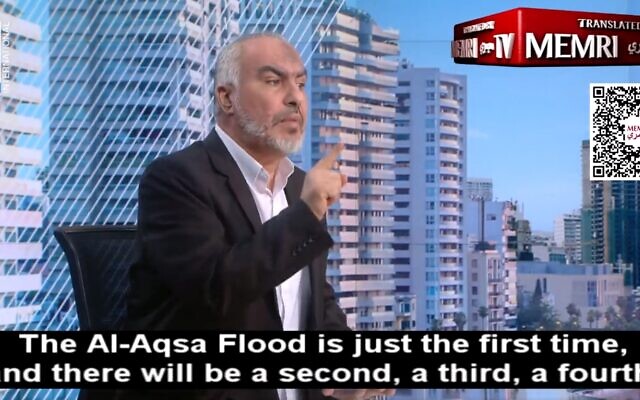
Hamas official stating that it will repeat the massacres of October 7 again and again
Israel has fought many opponents. Repeatedly.
That is because Israel’s war aims have been limited. Israel seeks to remove the military threat confronting its citizens. It has not sought the disappearance of Egypt, Syria, Lebanon or Iran. Even against terrorist organizations, its objective has been to dismantle military capabilities, not to eradicate an entire population.
Conversely, Israel’s adversaries have declared that the Jewish state should be destroyed. The objective was not merely to reverse a battlefield defeat or gain negotiating leverage. It was to eliminate Israel altogether.
That changes the meaning of every war.
Israel believes it cannot afford to lose an existential conflict because defeat would not simply mean surrendering territory, replacing a government, or rebuilding an army. Defeat would mean the destruction of the Jewish state.
Its adversaries have confronted a different calculation. If they fail, they survive. Their governments continue. Their organizations recruit new members. Their ideology remains intact. History gives them another chance.
Israel never assumes it will receive that luxury.
This asymmetry is one of the least understood aspects of the Arab-Israeli conflict. Outside observers often judge each round of fighting as though both sides enter the contest with identical risks and identical objectives.
They do not.
One side has repeatedly demonstrated that it can lose wars and return years later to fight again. The other has long believed that losing an existential war would leave no opportunity for a comeback.
Israel has lived for nearly eight decades in what often feels like a permanent one-sided elimination game. Its opponents have repeatedly lost wars and returned for another season. Israel has never believed it would be granted that same privilege.
That is why Israelis often see war differently than much of the world. The debate is rarely about this season’s standings. It is about whether there will be another season at all.