Normalized Violence

This was the third assassination attempt against Donald Trump. He survived but the deeper story lies elsewhere. By the third attempt, the country barely pauses. The first attack should have shaken a nation to its core; the second should have deepened the sense of alarm. By the third, something more dangerous has taken hold: familiarity. Political violence begins to feel woven into the atmosphere, another storm system passing through.

That is the shift in American life. Political violence has moved from rupture to expectation. The country has grown accustomed to the possibility that power will be contested through force.

The evidence stretches across the last several years. There was the attempted kidnapping of Gretchen Whitmer, where executive authority itself became the target. There was the hammer attack on Paul Pelosi, where proximity to political authority was enough to invite violence. There was the arson attack on the home of Governor Josh Shapiro. There was the assassination of Charlie Kirk.

Each attack carried its own political coloration. Different grievances, different ideologies, different enemies.

Yet they share the same underlying grammar. The human being is transformed into an idea.

The governor becomes the state. The executive becomes capital. The politician becomes the regime.

That transformation is the hinge upon which violence swings. A person who stands as an abstraction for a hated system becomes easier to strike. Violence acquires moral clothing. The blow feels righteous because the target has already been converted into a symbol.

That is why the public reaction to United Healthcare CEO Brian Thompson’s killing mattered so much. The killing itself was one event. The social response revealed the deeper current. The alleged killer, Luigi Mangione, became a hero in corners of the internet. Memes spread. Fundraisers appeared. Admiration followed. A killer became an instrument of vengeance against a hated system.

It felt like the movie Joker come to life. In Joker, an unstable man carries the plot forward, but the real engine is the crowd waiting to celebrate him. The mob grants moral legitimacy to the violence. The killer becomes a vessel for collective resentment.

That is the deeper American drift. Violence increasingly invites sympathy, reinterpretation, and applause. The act becomes secondary to the story society tells itself about why the victim represented something worth destroying.

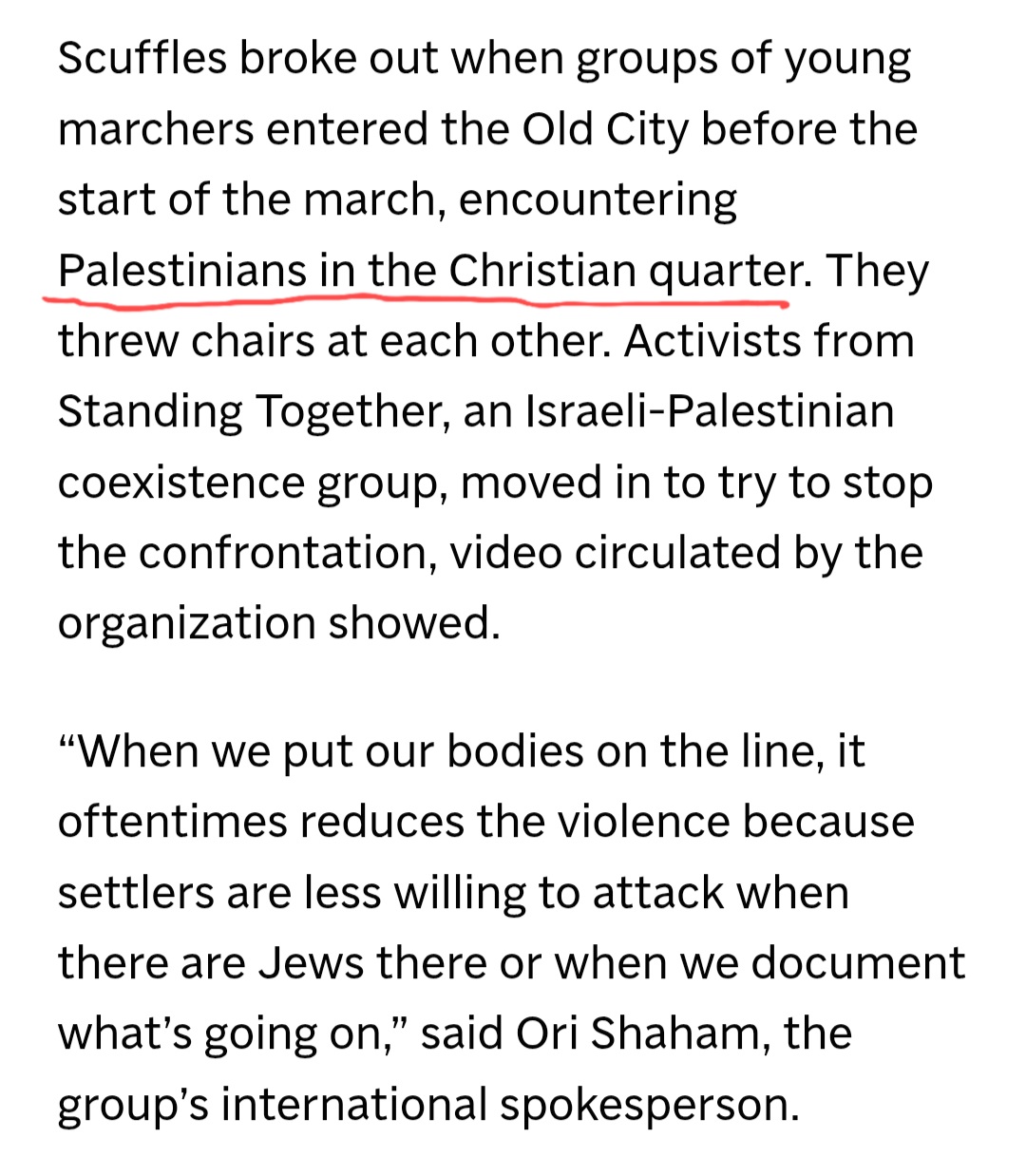
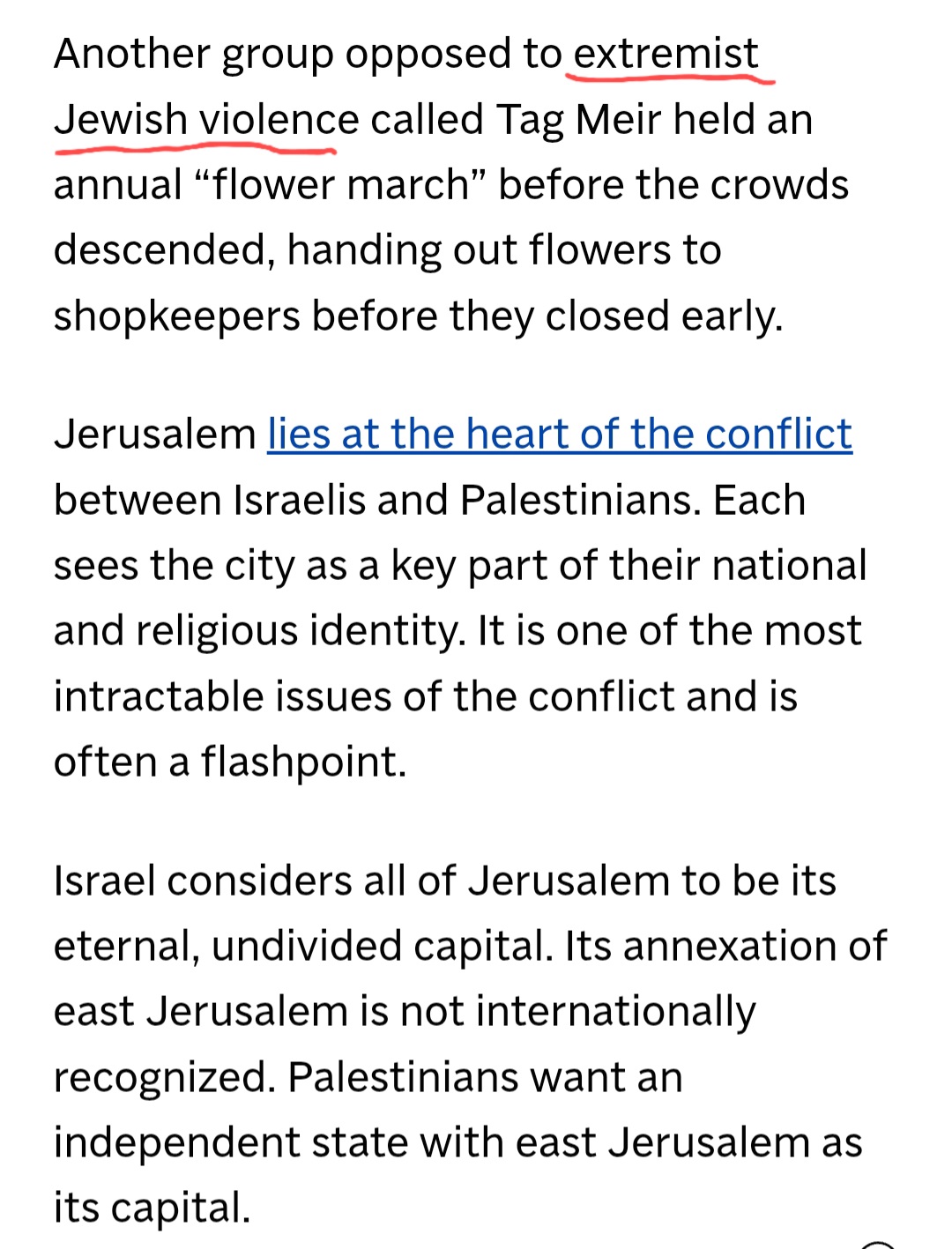
This can be seen in the Middle East as well.

Palestinian political culture offers a longer and starker example of how this process unfolds. For roughly twenty-five years, polling by the Palestinian Center for Policy and Survey Research has repeatedly shown majority support for violence against Jewish civilians inside Israel. This stretches back before the Gaza blockade and before the present war. The permission structure came first.

PCPSR poll from October 2003 asking whether Palestinian Arabs supported armed attacks against civilians in Israel

Then politics followed.

In 2006, Palestinians elected Hamas to a parliamentary majority, fully aware of its openly antisemitic and eliminationist charter. October 7 emerged from that political soil. The massacre fit within a culture that had long accepted the killing of Jewish civilians as part of political struggle.

That is why it was celebrated.

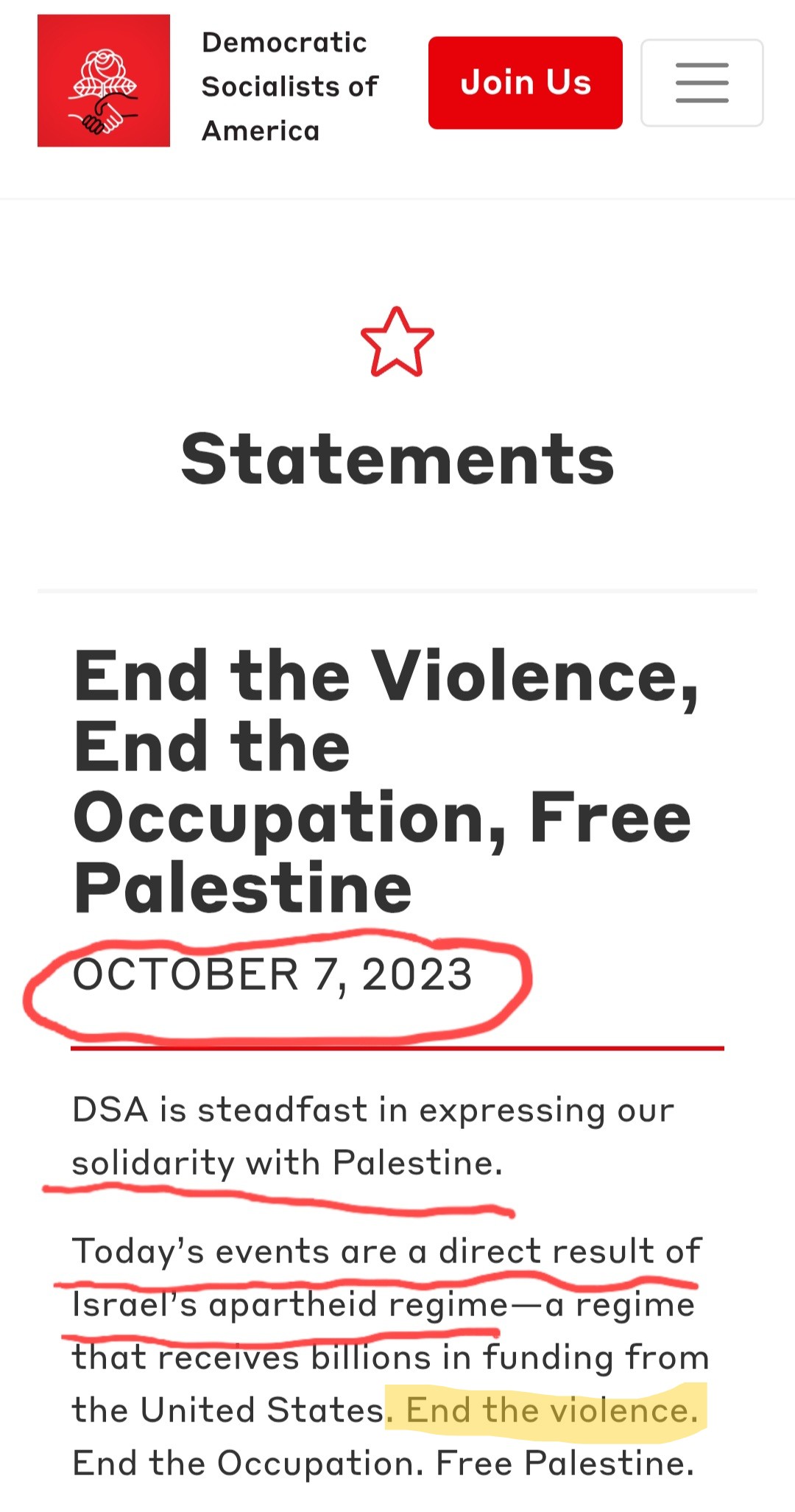
And the celebration reached far beyond Gaza. American campuses, Western cities, and activist spaces erupted with demonstrations that folded the massacre into broader narratives of liberation. The same reduction had already taken place. Jews had been recast as symbols of systems: colonialism, finance, whiteness, Western power, institutional dominance.

Rep. Rashida Tlaib (D-MI) goes on antisemitic rant at Democratic Socialists of America conference, invoking Nazi imagery of Jews “operating behind the curtain… to make money off of racism.”

This is the ancient machinery of antisemitism. Jews become the human face of structural resentment.

The FBI hate-crime statistics show the physical consequences of that social logic. Americans often picture hate crime through property damage: a swastika painted on a synagogue, a church defaced, a mosque vandalized. Yet for more than a decade, the majority of hate crimes in America have been crimes against persons.

In 2019, 62.6 percent of hate-crime offenses targeted people. In 2020, the FBI recorded 7,750 crimes against persons, with nearly half involving direct physical assault. The figures jumped to over 11,000 in 2023 and 2024, with Jewish accounting for the vast majority of hate crimes by religion.

The reason sits in plain sight. Jews occupy a permanent place in political imagination as concentrated power: finance, media, institutions, influence. Even when stated softly, the accusation remains the same: too much influence, too much reach, too much control.

Once power itself is treated as morally suspect, violence against those imagined to embody it starts to feel cleansing. Society begins teaching itself that rage against elites is a form of justice. Institutions become enemies. Authority becomes corruption. Violence becomes political purification.

That moral structure echoes the French Revolution. The crowd gathers. The elite are marched into the square. Their status dissolves. Their destruction becomes public theater.

That is the destination of normalized violence.

The warning sign is larger than the incident. The warning lies in the crowd, in the cultural ecosystem that grants permission, supplies applause, and tells itself that the target stood for something hateful enough to justify blood.

Society has normalized violence as the media and school systems falsely rebranded America as a deeply unfair caste system. In the masses attempt for a complete redistribution of power and wealth, those with or with perceived power – politicians and Jews – will be open game for the angry mob.

Related:

The Broke-n Generation (December 2024)

Trauma in Present Tense

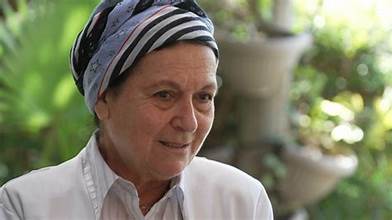
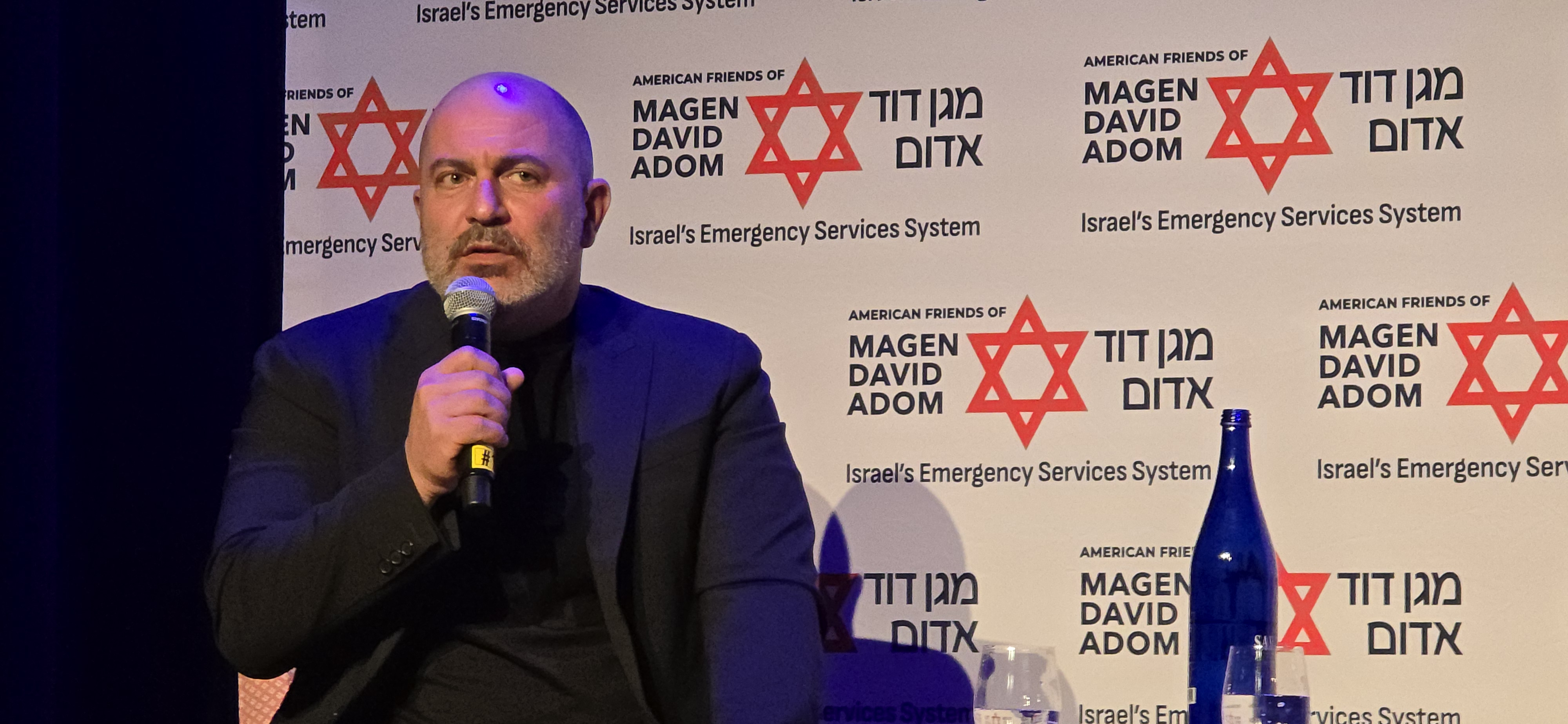
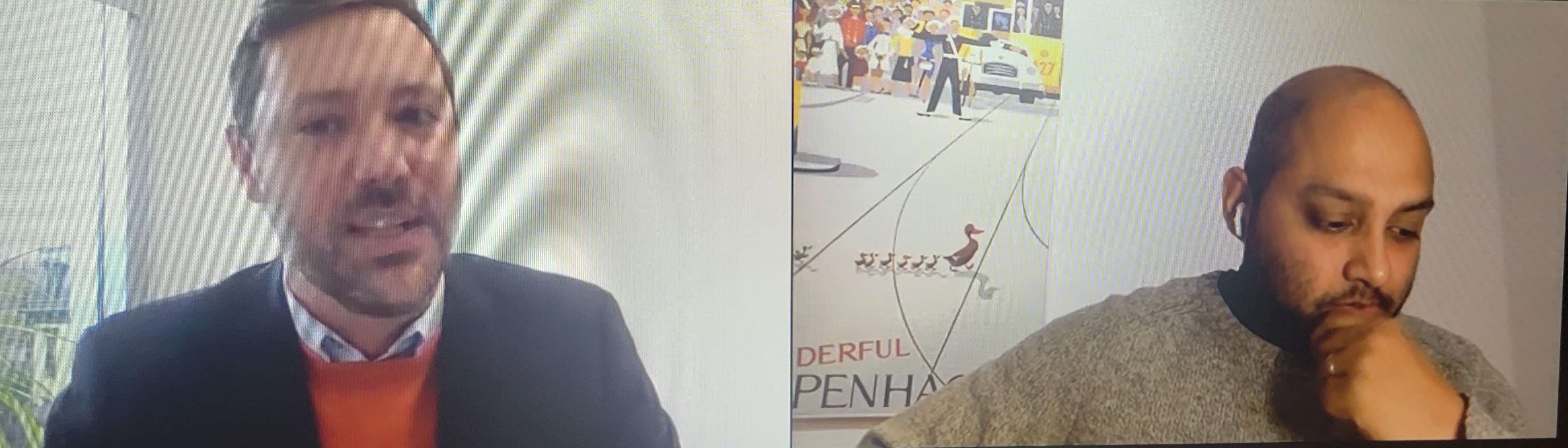
There was something fitting about Lior Raz standing in Chappaqua, New York last night raising money for Magen David Adom. Raz built his career dramatizing the hunt for terrorists. Magen David Adom exists for the moments after the hunt fails.

Lior Raz being interviewed at a fundraiser for Magen David Adom in Chappaqua, NY April 29, 2026 (photo: First One Through)

For those unfamiliar with Raz, he is more than an actor. Before becoming one of Israel’s most recognizable cultural figures, he served in an undercover Israeli military unit operating inside Arab communities, gathering intelligence and carrying out operations in hostile environments. He grew up with Iraqi and Algerian parents speaking Arabic, making him deeply bi-cultural in Jewish and Arab worlds. That experience and background became the foundation for Fauda, the global hit he co-created and stars in, a drama centered on Israeli undercover units hunting terrorists in the West Bank and Gaza.

What made Fauda different was never simply its action but its realism. Israelis and Palestinian Arabs were not rendered as symbols, but as human beings moving through an intimate, brutal conflict where ideology, family, fear, and violence occupy the same space. For international audiences it was compelling fiction. For Israelis and Stateless Arabs from Palestine (SAPs) it often felt closer to lived reality.

Then October 7 collapsed whatever distance remained between fiction and reality.

At the fundraiser, Raz put words to what that rupture did to Israel.

Israel, he said, is living in trauma, not PTSD. It was not an echo of horror but the continuation of it.

It was the most important thing said all night because it captured something essential about the country after October 7. PTSD belongs to memory. Trauma belongs to the present. PTSD is what remains after danger has passed. Trauma is what happens when danger tears through your assumptions and reorganizes how you live.

That is Israel now.

Lior Raz being interviewed at a fundraiser for Magen David Adom in Chappaqua, NY April 29, 2026 (photo: First One Through)

The hostages are home or accounted for. The war has shifted phases. But the rupture remains embedded in Israeli life. The confidence that catastrophe could be anticipated and contained has been broken. Every family understands more intimately how quickly ordinary life can split into irreversible loss. The danger may have changed form, but the nervous system of the country remains altered.

That is where Magen David Adom enters the story.

If Fauda is about the front edge of violence—the raid, the chase, the interception—Magen David Adom lives on the back edge: the ambulance, the paramedic, the trauma room, the blood bank, the race to preserve life after violence has already landed. Security exists to stop attacks. Emergency medicine exists for when stopping fails.

Raz spoke with particular pride about what Magen David Adom represents: Jews, Christians, Druze, and Muslims working side by side to save lives. In a region where identity so often organizes conflict, MDA operates at the level beneath identity, at the essence of humanity. No politics, no theology, no tribal sorting. Just the oldest civilizational imperative there is: preserve life.

It is one of Israel’s deepest strengths that even under permanent security pressure, its emergency institutions remain organized around life itself.

Raz also looked forward. The next season of Fauda which will come out in a few months, he said, will directly reflect October 7 and the years after, with half of it set in Marseille, France. That choice is revealing. Marseille is one of Europe’s great pressure-point cities, where migration, communal fragmentation, criminality, radicalization, and fractured civic identity collide. It is a city where many of the tensions Israel has lived with for decades are becoming visible in European form.

The movement of Fauda into Europe suggests something larger. The Israeli condition is no longer entirely Israeli. The fractures Israel has lived with for decades—terror, divided loyalties, imported ideological battles, fear in public life—are increasingly visible across Western democracies. Israel was simply earlier, home to 45% of global Jewry. The anti-Jewish attacks and growing anti-Western attacks are everywhere.

When Raz was pressed on American politics, he declined to engage. He understood the trap of America’s partisan machinery and would have no part of it. He was there to fight violence from wherever it came from, not from a single ideology.

At an event raising money for ambulances, blood banks, and emergency responders, it became clear that this too belongs to the same mission.

Raz is known for Fauda, for portraying the hunt for terrorists, the intelligence work, the raids, the violence used to stop violence. But that is only the outer layer. Beneath it lies something older and deeper.

The mission is to save lives.

To save lives in Israel when violence breaks through. To protect Jewish life abroad when antisemitism rises. To defend the perimeter and preserve the people. These are not separate missions. They are one.

For most of Jewish history, Jews endured violence dependent on the mercy or restraint of others. Now there is a Jewish state with power, intelligence capabilities, and institutions of rescue, carrying with it not only sovereignty but obligation. That obligation no longer ends at Israel’s borders. A Jew threatened in Paris, attacked in New York, harassed in London, or targeted in Melbourne enters the same moral universe.

The perimeter has widened.

Fauda may be about counterterrorism and Magen David Adom may be about emergency medicine. Together, they represent the fight against antisemitism which lies in the same ancient Jewish imperative: protect life, preserve the people, continue.

That may define the ever-present trauma among Jewry today: the need to constantly think about personal and communal safety, without the calm to simply sit at a cafe or send one’s kids to school and purely enjoy life’s moments.

Children’s Book Authors Etch Antisemitism

The new play Giant has revived the scandal of Roald Dahl, the beloved children’s author whose antisemitism became inseparable from his legacy. Dahl’s hatred had its roots in an obsession with Israel, especially after the 1982 Lebanon War, which hardened into something older and darker: Jews as a collective object of blame. Political fury dissolved the line between a state and a people.

Matt Chun shows where that road now leads.

Chun is an Australian children’s book illustrator, part of a profession entrusted with shaping how children understand innocence, cruelty, and empathy. But when Jews were murdered at a Jewish Hanukkah celebration in Bondi, his response in an article title “Never mourn a fascist,” exposed something far beyond political critique: raw antisemitism. The victims were neither Israelis nor soldiers. They were Australian Jews gathered in communal celebration, among them a ten-year-old girl. Chun denied their innocence and treated their deaths as politically qualified, as though Jewish identity itself diminished the claim to grief.

People stand near flowers laid as a tribute at Bondi Beach to honour the victims of a mass shooting that targeted a Hanukkah celebration at Bondi Beach on Sunday, in Sydney, Australia, December 16, 2025. (credit: REUTERS/Flavio Brancaleone)

That marks the evolution. Dahl saw war and blamed Jews. Chun sees Jews and explains away their murder.

That is why the cancellation of Chun’s forthcoming children’s book Bila by University of Queensland Press was fitting. Children’s books are an act of trust. Parents place them in their children’s hands believing that the people behind them understand something fundamental about innocence and human worth. A creator who cannot recognize the innocence of a murdered Jewish child at a Hanukkah celebration has forfeited any claim to shape the moral imagination of children.

Dahl’s antisemitism traveled through Israel before landing on Jews. Chun begins with Jews.

Chun wrote that “lands have been pillaged, poisoned, desecrated, and set ablaze by colonisers,” as he celebrates the slaughter of people at a holiday party. Alas, he is only the latest author instilling venom in the ink of books being marketed to children.

Inheritance and Indictment

When rabbis portray Israel as a moral problem instead of a Jewish inheritance

Two progressive rabbis – Sharon Brous and David Ingber – sat before a packed Jewish audience in San Diego for a taping of the podcast Being Jewish with Jonah Platt, to wrestle with a distinctly modern Jewish dilemma: how does a tradition forged in exile process the return of Jewish power?

The subject was the rabbinate and Israel, but the deeper argument was Judaism itself.

The language was familiar: fear, shame, democracy, moral crisis. The question underneath it was older than the state and older than Zionism itself. What exactly is Judaism when Jews are sovereign again – and what does that mean for diaspora Jews?

That question is increasingly dividing Jewish life.

For years the pattern has been visible in polling, synagogue life, philanthropy, and communal politics. The further left a Jew moves politically, the more likely that Jew is to become publicly critical of Israel. The less traditional the Jewish framework, the more likely that criticism expands beyond policy into discomfort with Jewish statehood itself. Orthodox Jews criticize Israeli governments all the time, often fiercely, but they rarely place Jewish national existence itself in the dock.

That difference is not merely political. It is theological. It is civilizational.

Because traditional Judaism has always answered the question of Jewish identity in integrated terms: God, Torah, peoplehood, and land. These are particular to the Jewish people. They embody one structure. Remove one and the architecture strains. Remove the land and Judaism survives, but in suspension.

Diaspora Judaism became one of history’s great civilizational achievements, but it was always an adaptation to rupture. The prayerbook points toward Jerusalem. The festivals move according to the agricultural rhythms of the Land of Israel. The fast days mourn national destruction. The closing line of the seder and of Yom Kippur pushes in one direction only: next year in Jerusalem.

That was never metaphor. It was memory preserved as architecture.

For traditional Jews, Jewish self-rule is not simply politics. It is Jewish history restored. Such belief does not make every Israeli government wise or righteous. Jews argue bitterly over borders, settlements, courts, wars, and coalitions. But beneath those arguments lies a premise that remains fixed: Jewish political agency is indispensable.

Progressive – and especially non-Orthodox – Judaism increasingly begins somewhere else.

Its center of gravity is ethical universalism. Its first question is increasingly not what preserves Jewish continuity, but what satisfies universal justice. That instinct has deep Jewish roots. The prophets placed moral obligation at the center of covenantal life. But prophets do not run borders.

States do.

States defend territory, absorb casualties, deter enemies, and make violent decisions under imperfect conditions. Sovereignty stains the hands. Once universal ethics become the supreme framework, the Jewish state itself becomes vulnerable to indictment.

That is what the Brous–Ingber exchange revealed with unusual clarity.

And it was revealing precisely because it did not end in one room.

Their first conversation exposed a tension neither side could settle. Sharon Brous spoke from the prophetic register of progressive Judaism, where Judaism is primarily moral witness, conscience, and justice. David Ingber, while sharing much of that moral vocabulary, kept returning to something older and deeper: peoplehood, continuity, solidarity, historical necessity.

The disagreement lingered.

Brous later acknowledged discomfort with how the exchange unfolded, and the conversation resumed in a second round on Jonah Platt’s podcast. That itself was revealing. One debate became two because the argument underneath it could not be resolved by clarifying policy or refining moral critique. The disagreement was structural.

And in that second conversation, the divide remained.

Brous continued pressing the prophetic burden, insisting that Jewish moral credibility depends on confronting Jewish power when it acts unjustly. Ingber continued defending something prior to critique itself: the necessity of Jewish collective power in a world that has repeatedly shown its appetite for Jewish vulnerability, especially in light of the widespread antisemitism today.

One critiques Israel primarily as a moral actor, the other defends Israel first as a historical necessity and only then wrestles with its conduct.

It is the difference between inheritance and indictment.

And this internal Jewish struggle is increasingly being exported into the wider world, where it is eagerly consumed.

This week in the United Kingdom, leading progressive rabbis warned that Israel’s political direction poses an existential threat to Judaism itself, tied to the publication of their new book. The phrase was startling.

Israel as an existential threat to Judaism.

For two thousand years, existential threats to Judaism had names: the Roman destruction of Jerusalem, the Crusades, the Inquisition, pogroms, the Holocaust, Soviet repression, the expulsions from Arab lands.

Statelessness itself was the existential condition.

Now, for growing sectors of progressive non-Orthodox Jewish leadership, the Jewish state itself is increasingly being cast as the danger.

That is more than criticism. That is inversion.

And notice who was eager to amplify it.

The Guardian, a British publication whose editorial posture toward Israel has long been sharply critical, gave the book and its thesis prominent space. That matters because internal Jewish dissent carries unique public utility in anti-Israel discourse. Criticism from outside can be dismissed as hostility. Criticism from inside acquires the authority of confession.

Progressive Jewish critique often assumes its audience shares its covenantal investment in Jewish survival. The wider world often hears something simpler: if even rabbis are indicting the Jewish state, the case against it must already be proven.

That is one of anti-Zionism’s most valuable currencies: Jewish testimony against Jewish power.

Not because Jewish dissent is illegitimate. Jewish argument is one of Judaism’s oldest arts. But once internal critique detaches from internal solidarity, it stops functioning as family argument and starts functioning as prosecutorial evidence.

The family dispute becomes public exhibit.

And this is where traditional Jewish memory diverges sharply from progressive Jewish moral instinct.

Traditional Jews remember something progressive Jewish politics often struggles to metabolize: the central danger of Jewish history was never Jewish power: It was Jewish powerlessness.

The Holocaust was not a lesson in the abuse of Jewish power. It was a lesson in the consequences of Jewish defenselessness.

Then came 1948 and Jewish agency returned.

And within years, the map of Jewish history changed. Ancient Jewish communities across Iraq, Yemen, Egypt, and Morocco collapsed into expulsion, flight, and dispossession. Hundreds of thousands found refuge in Israel.

That memory disciplines judgment. It teaches realism.

Progressive Jewish consciousness inherited a different lesson from modernity: nationalism corrupts, power must be constrained, minorities must maintain moral vigilance.

There is wisdom in that inheritance – as a modifier, not as a ruling ethos. A beleaguered minority does not have the luxury of abandoning all rights and power to satisfy the mob.

That is what Zionism answered, not abstractly but operationally.

German Jews once believed they had solved history. They were cultured, integrated, patriotic, indispensable.

History did not care.

American Jews should similarly be cautious with assumptions of permanence.

Because beneath every synagogue fight, every anguished podcast, every progressive Jewish book tour, lies the same civilizational argument: is Judaism an inheritance to preserve, or a moral vocabulary to deploy?

These have become competing theories of Jewish survival.

For two thousand years Jews prayed toward Zion because history taught them exile was fragile. Progressive Judaism increasingly asks whether Israel deserves that loyalty, while traditional Judaism believes the land is central to Judaism and disagreements are best managed internally.

Whether in public or private discussions, the policies of Israel are becoming an exhibit in the philosophical rift between progressive and traditional Judaism.

Related articles:

Performative Moral Kashrut (August 2025)

Today, Only Orthodox Jews Yearn For Prayers On The Temple Mount (December 2022)

Reclaiming Zionism From Antisemites Will Not Occur With Tikkun Olam (September 2022)

The Tikkun Olam Brigade and the Taped Banana (December 2019)

A Basic Lesson of How to be Supportive (August 2018)

The Non-Orthodox Jewish Denominations Fight Israel (January 2018)

When Jews Come Home from India and Are Called Colonizers

There is something almost miraculous about Operation Wings of Dawn.

This week, Israel began bringing the first members of the Bnei Menashe community from northeast India to Israel, the latest chapter in one of the most improbable stories in Jewish history. These are Jews who have long understood themselves as descendants of the Tribe of Manasseh, one of the Ten Lost Tribes of Israel, exiled by the Assyrian Empire nearly 2,700 years ago. Across centuries, empires, languages, and continents, they preserved fragments of ritual, memory, and identity tied to ancient Israel. In modern times, after study, rabbinic engagement, and formal recognition, thousands have made aliyah. Hundreds more are now on their way. For the Jewish world, it is an extraordinary scene: a people scattered to the farthest reaches of the earth still finding their way home.

That is the Jewish story in miniature.

Exile was never meant to be permanent. The Jewish calendar, Jewish prayer, and Jewish memory are saturated with return. From The Hebrew Bible to the modern Zionist movement, the idea of ingathering has been the central thread of Jewish continuity. Operation Wings of Dawn is not an immigration program in the ordinary sense. It is the continuation of that ancient civilizational arc.

It is also a reminder that Jewish peoplehood never fit modern racial categories. Jews came back to Israel from Ethiopia, from Iraq, from Yemen, from Russia, from France, and now again from India. Different languages. Different appearances. Different histories of exile. One people.

That should be a remarkable human story.

And yet, in some corners of the media world, it became something else.

Quds News Network ran a story framing the arrival as a “settlement push” of “new colonizers” in northern “Occupied Palestine”, reducing the Bnei Menashe to instruments of a political project rather than recognizing them as Jews returning to join the Jewish people in the Jewish state. The framing is familiar: Jewish return is recoded as colonial expansion.

This is not an isolated habit of language. Across anti-Israel activist media and parts of the NGO ecosystem, Jewish presence in Israel is increasingly interpreted through a “settler-colonial” framework in “Occupied Palestine,” meaning anywhere in Israel. Amnesty International’s apartheid framework leans heavily on this vocabulary, turning Jewish sovereignty itself into a structural offense rather than a legitimate act of national self-determination. That language then migrates outward, shaping how journalists, activists, and political movements speak about Jews in Israel. The result is a moral inversion in which Jewish return becomes aggression by definition.

And this is where the word colonizer collapses under its own weight.

Colonialism has an actual meaning. It is when an imperial center sends its people outward to dominate foreign land for extraction and rule. Britain in India. Spain in the Americas. France in Algeria.

Operation Wings of Dawn is the reverse movement: A dispersed people carrying an ancient memory of Israel, choosing to gather into the one Jewish homeland.

Calling that colonialism empties the word of meaning.

And the asymmetry is impossible to ignore.

When Palestinian Arabs preserve the memory of villages lost 77 years ago, the world treats it as sacred inheritance, a claim passed from generation to generation. Even when those same Arabs live just a few miles away from their grandparents’ homes, in the same land, with the same people, language and culture, people advocate for their relocation.

Yet when Jews preserve the memory of exile in distant lands and act on it, the same world increasingly calls it colonization.

That difference tells you everything.

The issue has never been whether Jews are European or Middle Eastern, white or brown, indigenous or diasporic. The Bnei Menashe expose how flimsy those categories always were. Indian Jews arriving in Israel should shatter the lazy caricature of Zionism as European implantation.

Instead, the caricature simply repeats the mantra:

A Jew from Poland returns as a colonizer.
A Jew from Iraq returns as a colonizer.
A Jew from Ethiopia returns as a colonizer.
A Jew from India returns as a colonizer.

For those committed to denying Jewish belonging, even a homecoming from India must be rewritten as invasion.

NYC, Now It’s at Your Front Door

It looked like a technical vote. In New York City, a proposed buffer zone around houses of worship. A few feet of space so people could enter synagogues, churches, and mosques without confrontation.

And the Democratic Socialists of America bloc on the City Council voted no.

Shahana Hanif (District 39), Alexa Avilés (District 38), Tiffany Cabán (District 22), Chi Ossé (District 36), and Kayla Santosuosso (District 47) held the same line. Protect protest at all costs. Treat any restriction as a threat to speech. Keep the sidewalks open, no matter what is happening on them.

Shahana Hanif (District 39)

On paper, that sounds principled. In practice, it lands somewhere else entirely.

Because in this city, right now, protests are not showing up randomly. They are showing up outside synagogues in growing numbers. The line between Israel and the Jew has been erased, and the synagogue has become a stand-in.

This is where ideology stops being abstract.

For years, the DSA has defined itself through opposition to Israel. That posture has moved from foreign policy into local reality. When Zionism is framed as uniquely illegitimate, and most Jews see it as part of who they are, the translation is inevitable. The target shifts.

No manifesto is needed. The pattern speaks for itself.

Vote against a resolution recognizing hatred against Jews. Argue about the sponsors instead of the substance. Reject a minimal buffer around houses of worship at a moment when Jewish institutions in New York are under visible pressure.

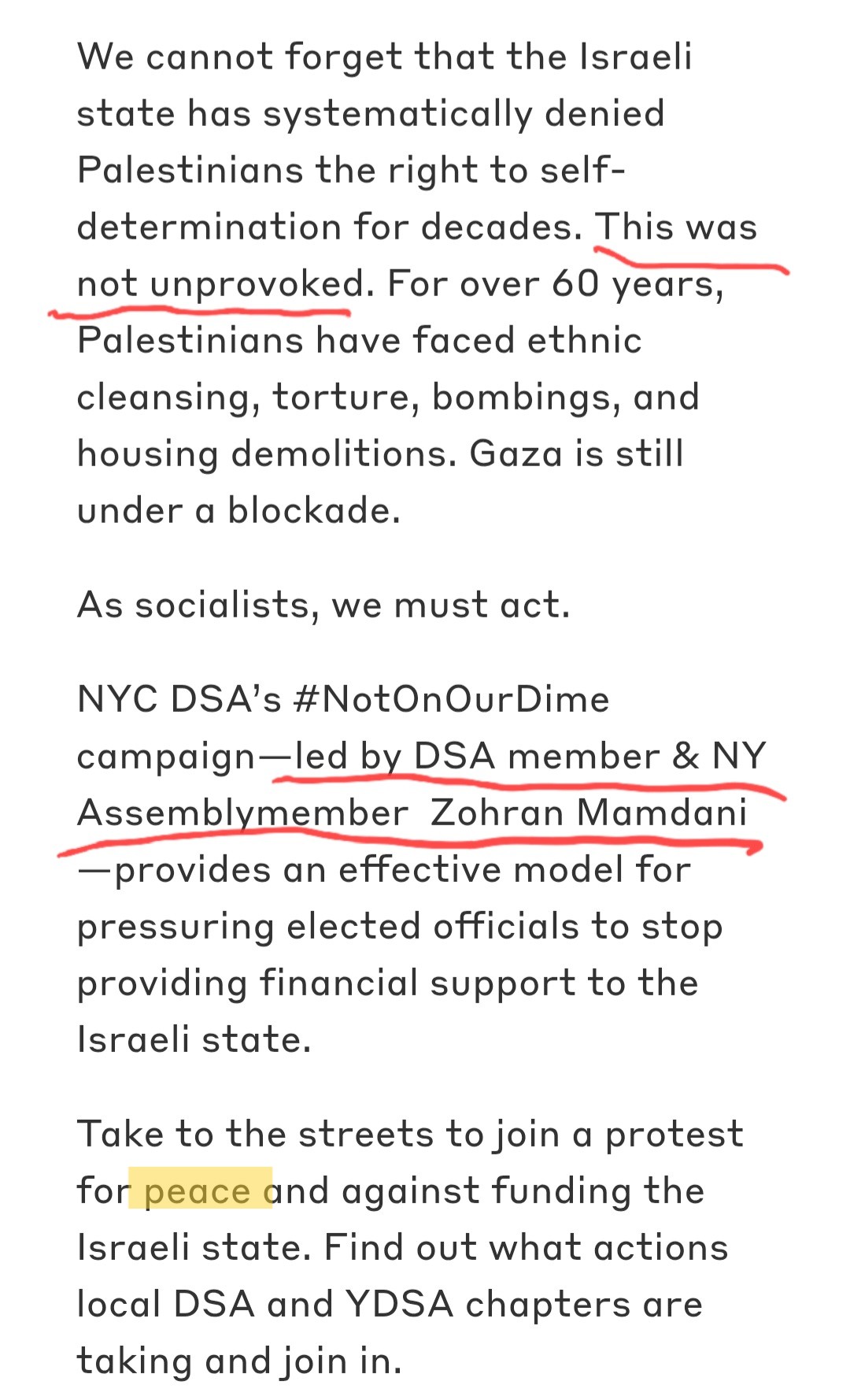
That movement is no longer adjacent to power in New York City; it has the power. With Zohran Mamdani as the city’s new mayor, the worldview is moving from activist circles into the city’s governing core.

New York City Mayor Zohran Mamdani is a member of the DSA

And the expansion is already underway.

On Tuesday April 28’s special primary day, Mamdani has backed Lindsey Boylan, a member of the DSA to take another seat on the City Council. Jewish City Council Speaker Julie Menin has endorsed Carl Wilson in an effort to stop the radical left gaining even more power in New York.

In the June primaries, NYC-DSA is backing a coordinated slate:

  • Darializa Avila Chevalier (Upper Manhattan/Bronx)
  • Claire Valdez (Brooklyn/Queens)
  • David Orkin (Queens)
  • Diana Moreno

—alongside a broader Assembly slate backed by the same network.

Endorsements from figures like Jamaal Bowman and Mamdani for radical anti-capitalists, anti-west, anti-Israel DSA members like Aber Kawas reinforce the same ideological through-line—where opposition to Israel is no longer one issue among many, but a defining filter.

Aber Kawas has long supported the dismantling of the Jewish State, now running as part of the DSA to gain a seat in the New York State Senate. She is backed by Zohran Mamdani and Jamaal Bowman

This is how local elections stop being local.

When protests move from slogans to synagogue doors in Brooklyn, Queens, and Manhattan, who holds the line?

Will NYPD treat intimidation outside Jewish institutions as a line to be enforced—or a situation to be managed?

Power shapes behavior. When activists see their worldview reflected in City Hall and Albany, boundaries loosen. What once felt marginal begins to feel sanctioned. The distance between protest and confrontation narrows.

The question is no longer what DSA believes about Israel where they believe every man, woman and child is a fair target for violence. The question for New York voters is what they are comfortable normalizing here.

On sidewalks outside synagogues. At the doors of people trying to pray. In the space between protest and intimidation.

The City Council vote on buffer zones answered part of that question.

The rest will be answered this coming Tuesday and in June—at the ballot box, and on the sidewalks outside your door.

ACTION ITEM

Support Carl Wilson in the primary on April 28.

Support opponents to the DSA candidates in the June elections.

Related:

Three Multinational Antisemitic Arcs, And World Jewry

Over the past century, pressure on Jews has scaled, shifting from borders to regions to institutions, changing form while carrying a familiar direction.

The story begins in Europe 1938 with the Anschluss. Persecution inside Germany extends outward as Austria is absorbed and its Jewish population is pulled into the same system. Expansion of antisemitic forces follows conquest. Poland, France, Hungary, the Netherlands become extensions of a single design as control spreads across the continent.

An den Fenstern j¸discher Geschfte werden von Nationalsozialisten Plakate mit der Aufforderung “Deutsche, wehrt euch, kauft nicht bei Juden” angebracht.

Policy matures into infrastructure. Collaboration, coercion, and indifference form a landscape in which Jewish survival is unlikely. At the Wannsee Conference, extermination is organized across borders, ministries, and railways. The Holocaust becomes a continental system aligned toward a single end: the genocide of Jews.

That system collapses with the war’s end but the pattern carries forward, reshaped and redirected.

After 1948, pressure reappears across the Middle East and North Africa (MENA). Jewish communities rooted for centuries in Iraq, Egypt, Yemen, Morocco and elsewhere begin to unravel with striking speed.

Baghdad Iraq’s 1941 slaughter of Jews

Each country follows its own path. Laws restrict, property is seized, pressure builds, departures accelerate. In Iraq, the Farhud foreshadows a collapse that soon becomes mass departure. In Yemen, Operation Magic Carpet lifts an entire community into exile. In Egypt, the Suez Crisis accelerates expulsions. Across North Africa, uncertainty and nationalism press communities toward exit. By the 1970s, nearly one million Jews leave and a regional Jewish presence that endured for centuries nearly vanishes completely.

By the 1970s, the arena shifts again. The contest moves from territory into legitimacy itself.

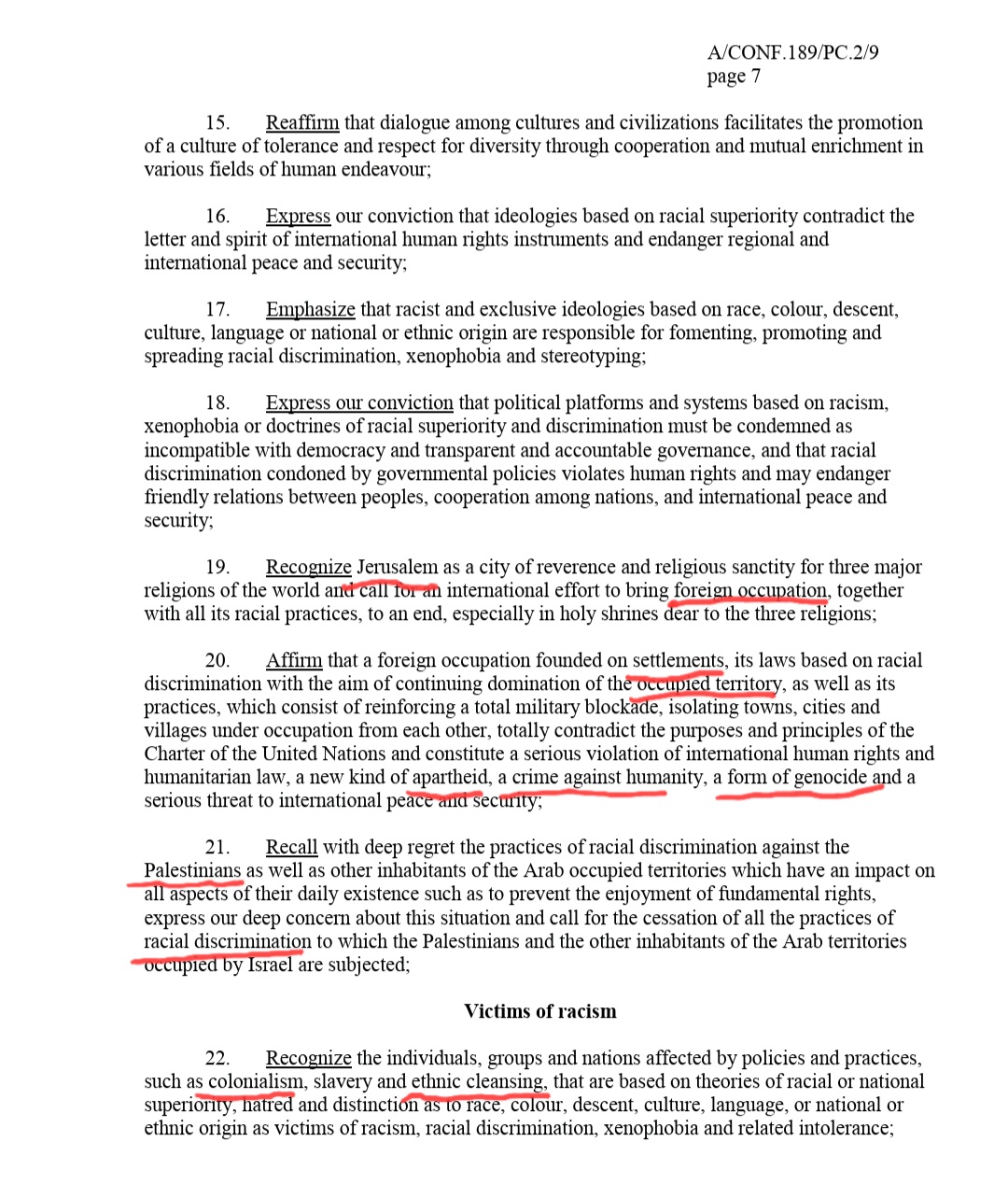
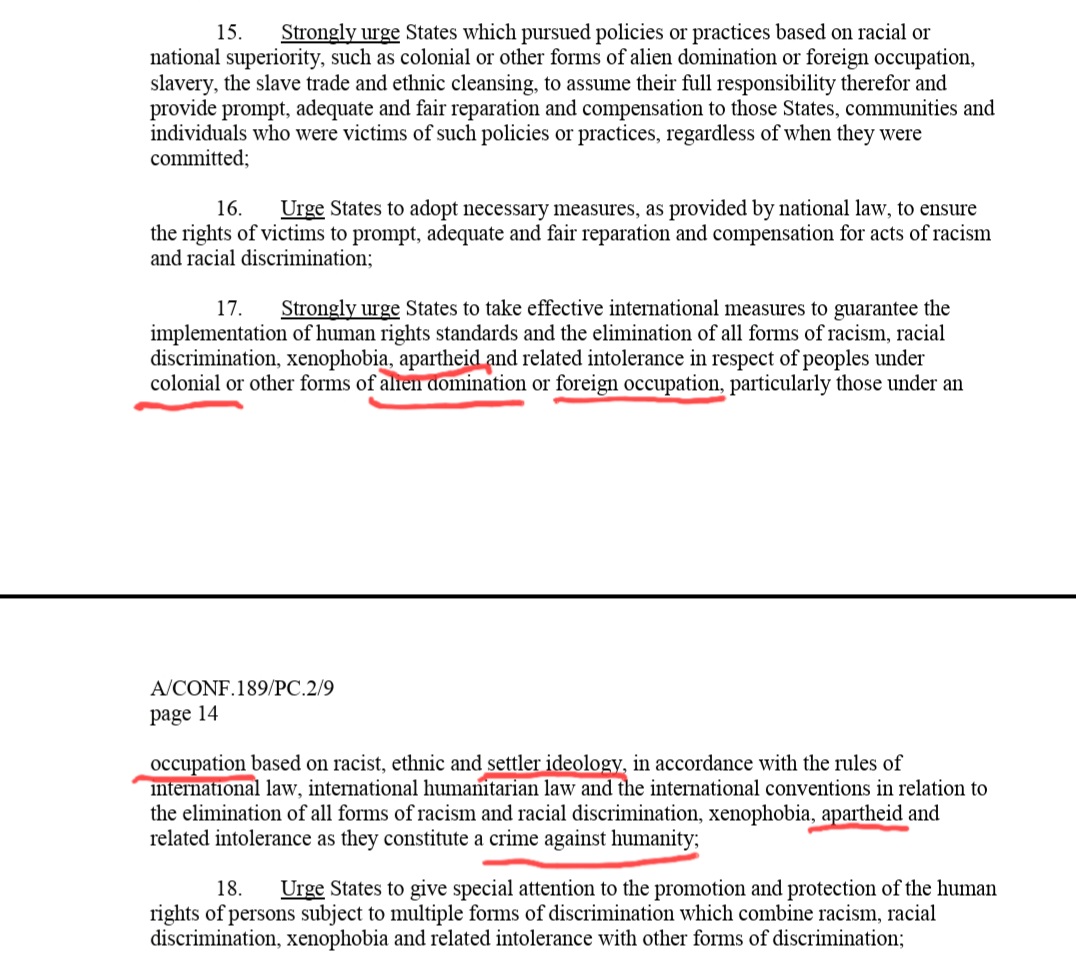
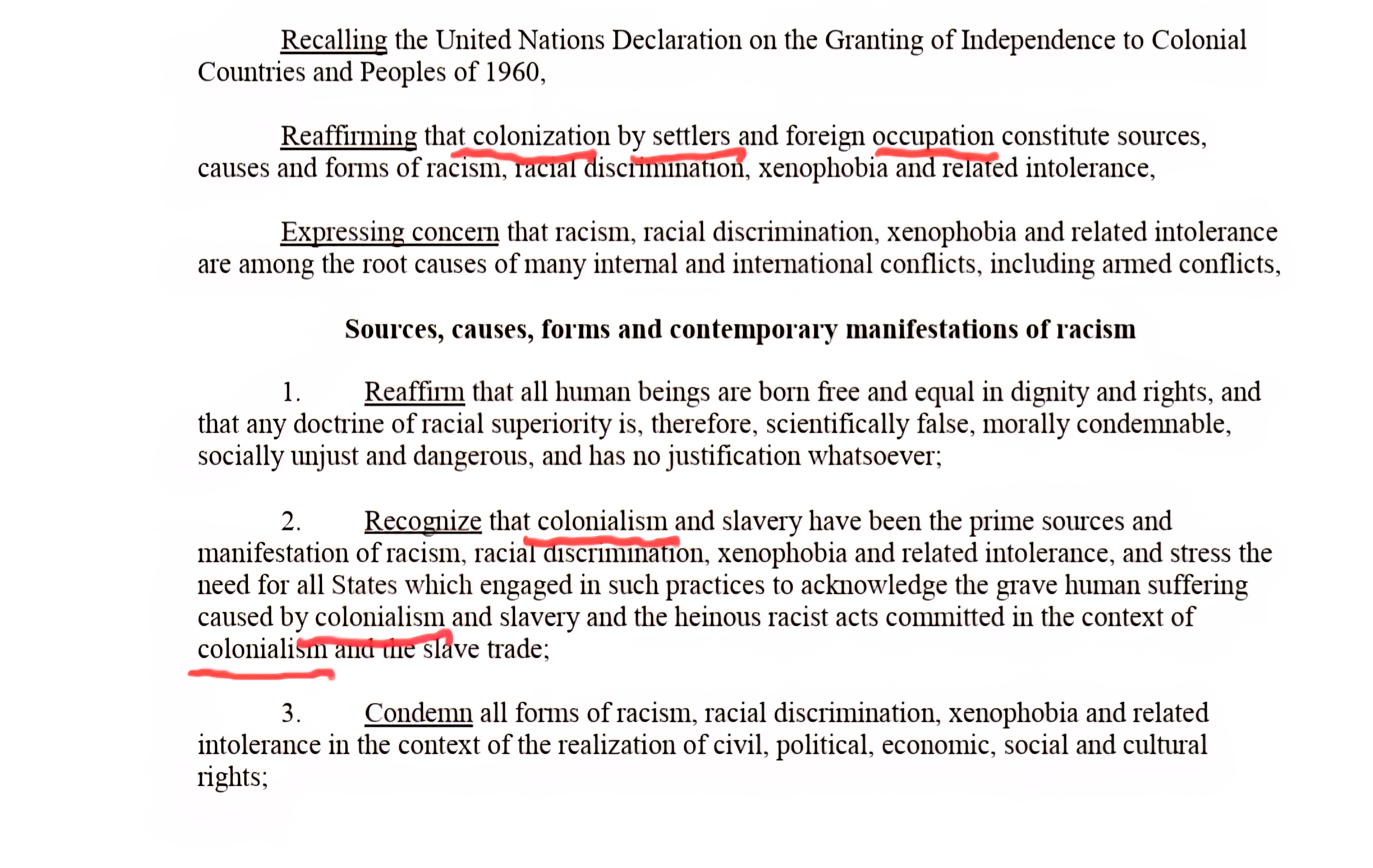
In 1975, the United Nations adopts United Nations General Assembly Resolution 3379, recasting Jewish self-determination as a moral offense within the central forum of international diplomacy.

US Ambassador to the United Nations, Daniel Patrick Moynihan reversing the Zionism is Racism resolution

The repeal arrives in 1991 through United Nations General Assembly Resolution 46/86, yet the framing travels beyond formal votes. It resurfaces at the World Conference Against Racism in Durban in 2001 and diffuses through NGOs, campuses, and international forums, where evolving language carries forward an enduring challenge to Jewish sovereignty.

From there, the argument migrates into the civic fabric of Western democracies. In the United States, United Kingdom, Canada, and Australia, vile ideas become chants in universities, media, and politics.

The mechanisms differ from earlier eras, yet the effects shape daily life. Jewish institutions increase security. Synagogues that once stood open now operate behind layers of protection. Public expressions of Jewish identity carry new calculations. Debates about Israel expand into broader judgments about Jews, blurring lines that once held more clearly.

Across these shifts, the effect becomes visible in the map of Jewish life.

President Joe Biden’s Jewish liaison person suggests that Jews should hide their religious symbols in 2021

A century ago, Jewish communities spanned continents, anchored in Europe and present across the Middle East, North Africa, and the Americas. The destruction of European Jewry removed the largest center. The unraveling of communities across the Middle East and North Africa compressed what remained. Many moved to Israel. Others built new lives in the United States.

Today, roughly 85 percent of the world’s Jews live in those two countries. There are only seventeen countries with more than 25,000 Jews when there used to be dozens just a century ago.

That concentration follows a century in which environments that sustained Jewish life across dozens of countries collapsed, expelled, or eroded. Dispersion gave way to consolidation. Geography followed pressure.

The forces shaping that consolidation continue to evolve. As legitimacy is contested in broader arenas, communities orient toward places able to sustain security, identity, and continuity. The gravitational pull toward Israel strengthens under those conditions, even as the United States remains a central pillar of Jewish life.

While Yom Ha’atzmaut marks Israel’s independence, it also marks the emergence of a center of gravity forged through history rather than theory. Across a century, shifting forms of pressure reshaped where Jews could live, how they gathered, and where they anchored their future.

Three arcs across a century redrew the Jewish map. As the narrative arc is still underway, Israel’s percentage of world Jewry will likely become a majority from a plurality, in just a few years.

Centuries of Kashrut, Now in Question

The laws in Parshat Shemini do something unusual. They take holiness out of the abstract and force it into the body. This is permitted; that is not. Eat this; reject that. The categories are exact, and they carry consequences.

Kashrut is not belief. It is execution.

It depends on classification, preparation, and one decisive act: a method of slaughter. Remove any part of that sequence and the system collapses into theory.

For centuries, it did not collapse. It moved intact into daily life, into kitchens and markets, into habits that required no defense because they were simply practiced. By the 19th century, that system was functioning inside modern Europe. Jews in Frankfurt, Vienna, and Budapest were citizens, participants, integrated—and still able to keep kosher.

The paintings of Moritz Daniel Oppenheim and Isidor Kaufmann quietly confirm that reality. They show a world where nothing needs to be argued. The system works. The meal appears. The law reaches the plate.

That is the baseline: not tolerance of identity, but permission of practice.

The modern shift begins where the system is most exposed—at the knife.

Kosher meat depends on shechita, a method of slaughter that prohibits pre-stunning. Increasingly, that is where democratic states have drawn a line. Across Europe, bans or effective prohibitions have taken hold:

  • Belgium
  • Denmark
  • Sweden
  • Norway
  • Iceland
  • Switzerland
  • New Zealand

Others—Germany, France, Netherlands—permit it only through narrowing exemptions.

The language used is procedural. They argue that animal welfare requires stunning the animal before slaughter. It sounds neutral but it ends kashrut.

That pressure has forced a new response. Not abandonment, but adaptation. Across Europe and Israel, efforts are underway to reconcile halachic requirements with regulatory demands:

  • Post-cut stunning, applied immediately after the kosher slaughter
  • Reversible stunning technologies, designed to preserve the animal’s halachic status at the moment of the cut
  • Greater integration of veterinary oversight with rabbinic supervision

None of this is settled. Many rabbinic authorities resist any modification that risks invalidating the historic process. Regulators resist exceptions that fragment uniform standards. The space for compromise is narrow and technical.

But the direction is unmistakable. The debate has moved from theology to engineering.

Liberal democracies pride themselves on protecting religious freedom. Yet during ritual slaughter for kosher meat, they are testing a boundary: whether they will protect belief while constraining the mechanisms required to live it.

Storming Words, Not Mosques

The jihadi war begins in the headline: “Israeli colonists storm Al-Aqsa Mosque under police protection.” Before a single fact appears, the verdict is already written—by the Palestinian Authority’s media outlet—in words designed to inflame.

  • Colonists erases history, recasting Jews as foreign intruders with no connection to the Temple Mount. 
  • Storm supplies violence whether any occurred or not. 
  • Al-Aqsa Mosque collapses the entire compound into the most sensitive Islamic structure to heighten the sense of desecration. 
  • Under police protection reframes standard security by the Israel Police, coordinated with the Jerusalem Islamic Waqf, as state-backed aggression.

Then the language tightens. “Talmudic and provocative rituals.” “Frequent Israeli provocations, including repeated raids.” These aren’t descriptions. They’re verdicts. Quiet presence becomes intent. Routine visits become raids. Silent prayer becomes something suspect.

And then the omission that completes the frame. The site is only described as Islam’s third holiest. It is never described as Judaism’s holiest. The reader is left with a single conclusion: sanctity on one side, violation on the other.

This is narrative design. Islamic Supremacy.

Strip legitimacy. Recast presence as desecration. Elevate exclusive holiness. Repeat it daily through a state-backed outlet overseen by the Palestinian Authority.

That is how a holy war is narrated into existence. By the “moderate” Palestinian Authority.

Make Hamantaschen

Make hamentaschen.

Yes, Purim is over. Make them anyway.

Because hamentaschen were never just for a holiday. They are a response to something permanent. Every generation produces its own Haman. Today it comes dressed as an Iranian proxy war, spread across governments and militias that still build their purpose around destroying the Jewish people and the Jewish state.

The language changes. The intent does not.

So make hamentaschen.

Out of season. On purpose. As a refusal to let Jewish life run only on the calendar of threats. The lesson of Purim does not expire in Adar. It lives in every moment when enemies of the Jews believe time is on their side.

Knead the dough. Fill it. Fold it. Bake it.

There is something defiant in that simplicity. Jewish survival has never rested only on armies, though they matter. It lives in continuity. In ritual. In memory. In the quiet insistence on remaining who we are while others plan our disappearance.

That is what they never understand.

So make hamentaschen. Feed your family. Share them with friends. Mark the fact that Jewish life continues on its own terms, not theirs.

And pray.

Pray that those who seek Jewish destruction are defeated. Pray that their power breaks. Pray that the story ends the way it did before.

Purim is over. The story is not.

Make hamentaschen.