Pain Wrapped in Love, A Wound That Does Not Close

There’s a fundamental difference between Yom HaZikaron and how most countries remember their fallen. In many places—think of Memorial Day in the U.S.—remembrance exists alongside distance. Time has passed, wars feel historical, and public life has moved on. The rituals are real, but they share space with long weekends, travel, sales, and barbecues.

In Israel, there is no distance.

Israel is small. Military service is near universal. Loss is not abstract or inherited from history books—it is current, personal, and interconnected. The name read on television is rarely just a name. It is a classmate. A neighbor’s child. A cousin of a colleague. And beyond the battlefield, the victims of terrorism—on buses, in cafés, in homes—collapse any illusion that war lives somewhere else.

There is no clean line between soldier and civilian. The same people who argue politics, build companies, and raise families are the ones who serve, and sometimes die, in uniform. The same streets that carry ordinary life have carried violence. So when the siren sounds, it is not symbolic; it is recognition. The cost of survival has been paid by people just like you—often people you actually knew.

Other countries observe remembrance days. Israel mourns.


In a synagogue on the Upper East Side of Manhattan, far from the sirens of Israel, that truth took human form.

At Temple Emanu-El in New York City, before an audience of more than a thousand people, Rachel Goldberg-Polin sat in conversation with Dan Senor. The setting was the diaspora. The subject was the same wound.

Temple Emanu-El in NYC for talk with Dan Senor and Rachel Goldberg-Polin on April 20, 2026 (photo: FirstOneThrough)

Her son, Hersh Goldberg-Polin, had been injured during the October 7 Palestinian Arab attacks, taken hostage into Gaza, and held for more than a year before being killed in the tunnels. She had come to speak about a book she wrote in response to a question people kept asking her: how are you doing?

The answer was not linear. It was not hopeful in the way people expect hope to sound. It was precise.

Pain wrapped in love. Love wrapped in pain.

She described her life now in three periods: before October 7, the time of her son’s captivity, and the period after his death. Not stages of healing. Not steps toward closure. Distinct worlds, separated by something irreversible.

And then she said something that lands differently once you understand Yom HaZikaron.

She does not believe things should get better with time. She does not understand why much of the world holds that as aspiration. The wound is there. Permanent. The task is not to erase it, or soften it, or move beyond it. The task is to carry it—together with the love that created it—in full.

Forever.

That is not just a mother speaking. It is the emotional grammar of a country.

Yom HaZikaron is not designed to heal. It is designed to remember without dilution. To hold loss and love in the same space and refuse to let either fade. To insist that what was lost remains present, not as history, but as part of the living fabric.

In other places, remembrance days ask for reflection. In Israel, and for those bound to it, the day asks for something harder: to accept that some wounds are not meant to close.

A siren sounds. A country stops. And what fills the silence is not only memory.

It is love that refuses to let go, and pain that refuses to fade.

Bring Israel Into NATO’s Orbit

Wars do not simply end; they force institutions to confront whether they still address the world they are meant to secure.

As the regional war against Israel recedes from its most intense phase, one conclusion is increasingly difficult to ignore: Israel has been operating inside the West’s security perimeter while remaining formally outside the principal institution designed to defend it.

That institution is the North Atlantic Treaty Organization, NATO.

This gap is structural—and increasingly consequential.

When Iran shut down the Strait of Hormuz, crippling access to one-fifth of the global oil supply, the countries inside of NATO barely budged. Spain went so far as to send the United States a big middle finger.

Only Israel worked together with the U.S. in managing this global threat.

Israel already maintains deep bilateral ties with key NATO members, particularly the United States. Intelligence sharing, joint exercises, and technological collaboration are well established. The problem is that this cooperation remains fragmented, dependent on individual relationships rather than embedded within NATO’s institutional framework. In an era defined by interconnected threats, fragmentation is a liability.

Those threats no longer arrive neatly organized by geography. For more than two decades, Europe has experienced the effects of Islamist extremism within its own borders. Attacks tied to networks such as ISIS in Paris, Brussels, and Berlin were not isolated events. They reflected a broader system—ideological, financial, and operational—that crosses borders with ease. That same ecosystem includes actors such as Hamas, whose attacks triggered the current war.

These are not separate challenges. They are different manifestations of two networks confronting the western world: the jihadi axis of Iran, Hezbollah, Hamas and Houthis, as well as the national threats from Russia, China and Iran.

Israel has been confronting the jihadi network as a whole—mapping it, disrupting it, and adapting to it in real time. Europe, by contrast, has often encountered it in fragments.

Memorial for people killed from jihadi bombing at Ariana Grande concert

The two confrontational axis are linked by Iran. A NATO established to be a defense against Russia and communism must adapt to the new reality that the Russia-China-Iran alliance is buttressing jihadi regimes and terrorist groups to destabilize the west.

NATO, as currently structured, is positioned to respond to effects—naval patrols, sanctions, diplomatic signaling—but lacks a formal mechanism to integrate with the actor most deeply engaged in countering the source.

Israel is not a peripheral partner. It is a central node of capability.

Its missile defense systems operate under continuous pressure. Its counter-drone technologies are refined in live environments. Its intelligence capabilities integrate multiple theaters into a single operational picture. Its cyber operations are embedded directly into conflict environments that NATO is still working to fully integrate.

This is a partner NATO needs.

Geography reinforces the argument. NATO’s traditional focus on its eastern flank remains essential, particularly in relation to Russia. But the critical infrastructure of modern security—energy routes, maritime corridors, and digital networks—runs through the Eastern Mediterranean, the Red Sea, and the Gulf. Stability in these regions is now directly tied to European and transatlantic security.

Israel sits at that intersection with capability, proximity, and alignment.

At the same time, pressures within the alliance itself are becoming more visible. U.S. political leaders—most notably Donald Trump—have underscored a structural imbalance: the United States continues to underwrite a disproportionate share of European defense while facing expanding global demands. That pressure reflects a broader need for NATO to adapt—both in burden sharing and in how it structures partnerships to address evolving threats.

Parallel to this, U.S. policy has begun to shift in the Middle East. Efforts to draw regional actors, including emerging leadership in Syria, away from Russian influence and toward Western engagement signal a changing geopolitical landscape. The region is no longer peripheral to transatlantic security. It is central to it.

Against that backdrop, integrating Israel into NATO’s partnership structure is not an isolated step. It is part of a broader realignment responding to the growing influence of Russia and Iran across multiple theaters.

This does not mean that Israel should join NATO as a full member with Article 5 protections. This proposal refers to formal integration within NATO’s Enhanced Opportunities Partner framework. It does not create automatic military obligations, nor does it commit NATO forces to regional conflicts.

It creates structure where there is currently fragmentation.

NATO should take three immediate steps.

  • First, designate Israel as an Enhanced Opportunities Partner, formalizing its integration into NATO planning, intelligence, and interoperability frameworks.
  • Second, establish a standing NATO–Israel coordination mechanism focused on counter-drone warfare, missile defense, cyber operations, and maritime security.
  • Third, integrate Israel into NATO’s southern and maritime operational planning, particularly in relation to the Eastern Mediterranean, Red Sea, and Gulf energy corridors.

These steps would not expand NATO’s defense obligations. They would enhance its operational effectiveness.

Wars clarify.

This one has clarified that European security is shaped by forces operating far beyond its borders and that the countries are not up to the task of dealing with their own security needs. That terrorism, energy coercion, and hybrid warfare now form a single continuum. That regional boundaries no longer define strategic risk.

And that Israel is already operating at the center of that reality.

NATO was built to defend the system. It now needs to include those already defending it.

Storming Words, Not Mosques

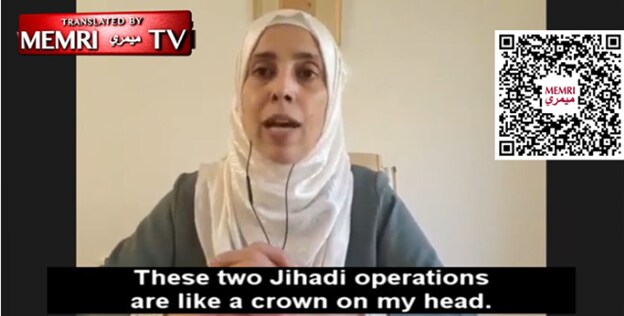
The jihadi war begins in the headline: “Israeli colonists storm Al-Aqsa Mosque under police protection.” Before a single fact appears, the verdict is already written—by the Palestinian Authority’s media outlet—in words designed to inflame.

  • Colonists erases history, recasting Jews as foreign intruders with no connection to the Temple Mount. 
  • Storm supplies violence whether any occurred or not. 
  • Al-Aqsa Mosque collapses the entire compound into the most sensitive Islamic structure to heighten the sense of desecration. 
  • Under police protection reframes standard security by the Israel Police, coordinated with the Jerusalem Islamic Waqf, as state-backed aggression.

Then the language tightens. “Talmudic and provocative rituals.” “Frequent Israeli provocations, including repeated raids.” These aren’t descriptions. They’re verdicts. Quiet presence becomes intent. Routine visits become raids. Silent prayer becomes something suspect.

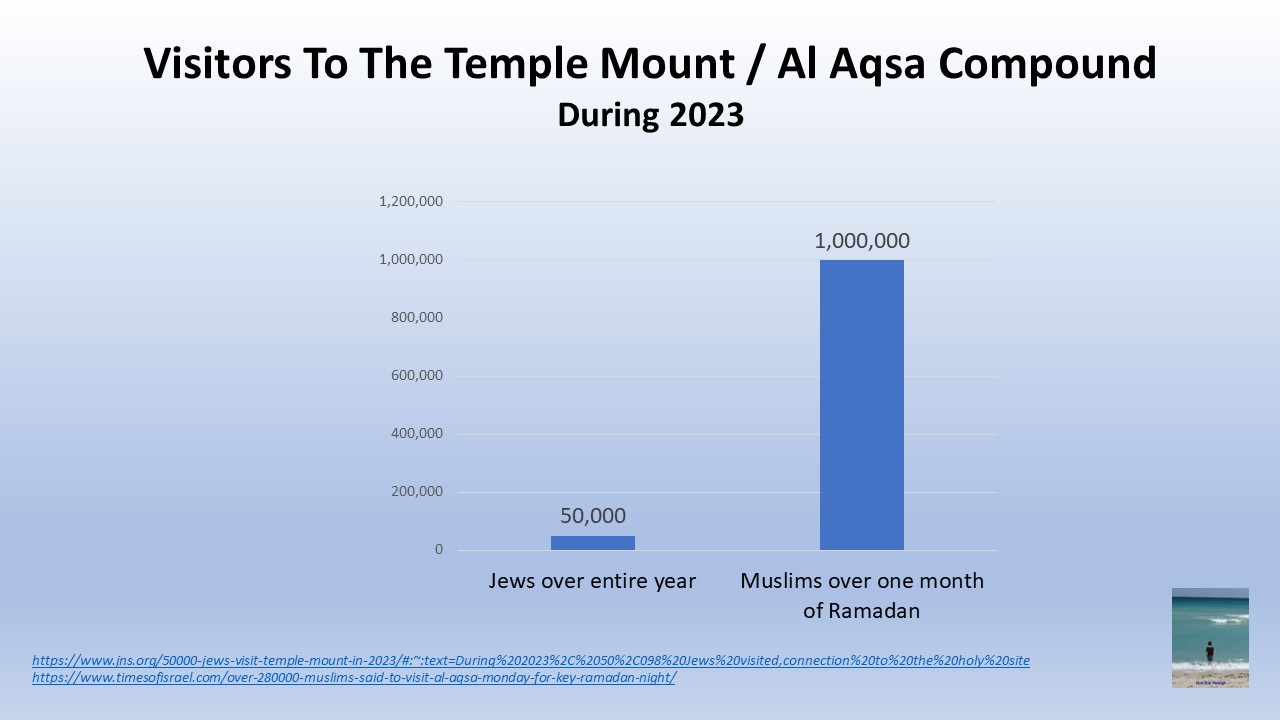
And then the omission that completes the frame. The site is only described as Islam’s third holiest. It is never described as Judaism’s holiest. The reader is left with a single conclusion: sanctity on one side, violation on the other.

This is narrative design. Islamic Supremacy.

Strip legitimacy. Recast presence as desecration. Elevate exclusive holiness. Repeat it daily through a state-backed outlet overseen by the Palestinian Authority.

That is how a holy war is narrated into existence. By the “moderate” Palestinian Authority.

The Pressure Carrot

The talks in Gaza are stuck on a single question: when does Hamas disarm? Hamas wants Israeli withdrawal first. Israel wants the dismantling of Hamas’s military capacity. Gazans want Hamas to retain weapons. Every side is waiting and pointing.

So the sequence matters.

In Washington, the argument has hardened around pressure on Israel. Democratic senators like Bernie Sanders, Chris Murphy, Tim Kaine, and Chris Van Hollen have pushed versions of the same idea: use U.S. leverage to change Israeli behavior now. The assumption is clear. The U.S. can influence Israel. It cannot influence Hamas.

It is backed by far-left pro-Palestinian groups like J Street. It is juvenile, dangerous and devoid of critical strategic thinking.

J Street, once again, on the wrong side of history

If all the pressure is on Israel, Hamas learns the simplest lesson in negotiation: wait. Let outside actors squeeze your opponent. Hold your position. Time becomes leverage.

That is where the current approach sits and breaks. And everyone suffers.

A negotiation like this needs a visible incentive on both sides. Hamas has faced pressure only from Israel – military and economic – but almost no credible pathway that links its own actions to a reduction in the conflict.

That is the missing piece.

Set a clear rule: as Hamas verifiably disarms, Israel correspondingly reduces its military posture and need for resupply. Less threat, less armament.

Now the logic runs forward, and resets the debate in Washington. The current fight among Democrats—arm Israel or restrain it—misses the hinge. If Hamas is disarmed, Israel needs fewer arms. That is mechanics, not politics.

Using a pressure stick as the far-left senators are attempting, rewards the antisemitic genocidal terrorist group, ensuring the fighting never ends. Using a pressure carrot entices Hamas to give up its weapons, allowing the US to pull weaponry from Israel.

The world has long only thought of pressure as a stick with the only variable being to whom to apply it. It is time to imagine a pressure carrot, especially when the party with the greatest power believes it has no influence on the entity that blocks every path forward.

Israel May Fix What Iran Broke

Iran did not remake the Middle East by conquering it. It reshaped sovereignty from within.

Through the Islamic Revolutionary Guard Corps and its expeditionary arm, the Quds Force, Tehran spent decades cultivating armed movements inside other countries. Groups like Hezbollah, Hamas, and the Houthis operate locally while drawing training, funding, and strategic direction from Iran.

The method repeated. Build armed actors inside weak systems. Arm them. Fund them. Legitimize them. Let them grow until they rival the state itself.

The outcome depends on how far that process runs.

Start with Yemen.

The Houthis moved from insurgency to control, seizing the capital and displacing the recognized government. Authority fractured across multiple centers while regional powers deepened the conflict. The country unraveled into competing zones of control, each backed by different patrons.

Yemen reflects the far end of the spectrum. Sovereignty has fractured, authority is dispersed, and the state exists largely in name while power is contested on the ground.

Lebanon presents a more intricate equilibrium.

The government still operates. Ministries function. The army deploys. Daily life continues within the framework of a state.

Power, however, runs on a parallel track.

Hezbollah has evolved from militia to dominant armed and political actor. It maintains a military force outside state control, exerts significant influence within the political system, and operates along the southern frontier with Israel.

In a system where power sits outside the state, accountability thins out.

The Beirut port explosion laid that reality bare. The blast- largely attributable to Hezbollah stockpiling of weapons – devastated the capital and accelerated economic collapse.

Lebanon endures as a state whose authority is constrained and divided. Institutions remain, while decisive power is shared, contested, and at times displaced.

Gaza and the West Bank reflect an earlier phase of the same pattern.

Here, no single authority controls territory, force, and governance at once. Hamas governs Gaza, while the Palestinian Authority administers parts of the West Bank. Armed groups operate alongside political structures, and internal divisions prevent the emergence of a unified system.

Under these conditions, sovereignty never fully coheres.

Iran’s role reinforces these fractures. Support to armed factions strengthens one side of divided systems and complicates any path toward unified governance.

Three arenas. Three outcomes.

Yemen: the state fractures.
Lebanon: the state is captured from within.
Gaza and the West Bank: the state never coheres.

Systems that weaken the state at home rarely stay contained. They travel.

In Yemen, fragmentation has produced a prolonged humanitarian crisis. In Lebanon, economic collapse and institutional weakness have eroded daily life and public trust. In Gaza, civilians live within a structure where governance and armed control are tightly fused, with recurring cycles of conflict.

Members of Hamas bring back body of young Israeli woman into Gaza after killing her on October 7, 2023

These same structures project force outward. Hamas, Hezbollah and the Houthis have all attacked Israel over the past few years. As has Iran.

And these forces are now all degraded, perhaps on their way to being defeated. The regional implication extends beyond Israel’s immediate security.

Weakening these groups can shift the balance inside the countries they inhabit. Space can reopen for state authority—unevenly, imperfectly, and with no guarantee—but space nonetheless.

Israel is acting out of its own security needs. It is very possible that the entire region will benefit once the Iranian proxies are removed.

The Bomb Shelters Gazans Were Never Allowed to Use

The images out of Gaza arrive stripped of their foundation. Open the The New York Times opinion pages this week and the story feels preassembled: civilians suffer, Israel strikes, outrage follows. It reads cleanly because something essential has been left out. This war does not begin and end on the surface.

It runs underground.

Beneath Gaza sits one of the most extensive underground military networks in the modern world, built by Hamas over years with money, materials, and time that could have gone elsewhere. The elaborate system of reinforced corridors, command centers, weapons depots, communications lines was designed to survive bombardment and keep a war going no matter what happens above.

Call it what it is: a vast network of bomb shelters.

Now say the part that rarely gets said clearly: Those shelters were never meant for civilians. They were never opened to families. They were never opened to children. They were never opened to the elderly. They were reserved—by design—for fighters, for leadership, for the preservation of the war machine itself.

In any other place, that would be unthinkable. Governments build shelters to protect their populations. When sirens sound, people go underground. Here, the system was inverted. Protection went below ground for those prosecuting the war. Exposure remained above ground for those living in it.

So when the bombs fall, the images follow. Families in rubble. Crowded rooms. Children pulled from collapsed buildings. The world reacts to an outcome shaped long before the first strike in this round of fighting. The protection existed. It was built. And Gazans were never allowed to use it.

That is the story that flips the frame.

This is not only a story of what Israel is doing. It is a story of what Hamas chose to build, and who it chose to protect with it. The tunnels are not just military infrastructure. They are a hierarchy set in concrete. Survival below ground for the regime. Exposure above ground for everyone else.

Once you see that, it becomes impossible to unsee. The destruction remains devastating but it has critical context. It sits alongside a governing strategy that hardened one layer of Gaza while leaving the other to absorb the war.

And that strategy is not finished. It points directly to what comes next. If Hamas remains, Gaza does not rebuild in the way people hope. It continues in the direction it has already taken. More tunnels. More infrastructure embedded beneath dense civilian areas. More resources pulled downward into war instead of upward into life.

The future of Gaza is not being debated. It has already been built.

It just was never built for the people living above it.

And the socialist-jihadi media like The New York Times, will paint a picture of pure fiction, one in which Gazans are the victims of rubble, not tunnels; victims of the Jewish State, not Hamas; victims of “genocide,” not perpetrators of genocide.

And for good measure, it will add a cartoon of a Jewish Holocaust survivor protesting about Israel committing a genocide in Gaza, to completely embalm its inversion of genocide.

Hamas built bomb shelters for the exclusive use of its terrorist army while it let women and children get attacked overhead. We are similarly witnessing the socialist-jihadi media build narrative shelters for those same jihadi terrorists, leaving Jews to take the brunt of the antisemitic tidal wave.

Jenin Terror Theater in New York

Jenin did not drift into the headlines after 2022. It started producing them.

What emerged in Jenin was a terrorist factory. Fighters from Hamas, Palestinian Islamic Jihad, and Al-Aqsa Martyrs’ Brigades fused into a loose network called the Jenin Brigades that did not need a central command to be effective. Decentralized cells, shared infrastructure, constant regeneration.

The output showed up quickly. Bnei Brak shootings killed five. Tel Aviv shootings killed three. Elad stabbings and hacking with axes killed four. Different attackers, same origin point: Jenin.

Israeli investigations kept circling back to the same networks that planned, armed, and launched the murders. The response followed the pattern. Raids intensified through 2023 and 2024. Weapons labs were targeted and IED networks were dismantled. Yet the factory kept running, because the underlying condition never changed.

Governance had receded.

Palestinian terrorist from Jenin shot and killed three on Dizengoff Street in Tel Aviv, 2022

By 2024, the Palestinian Authority was largely absent inside the camp. Armed groups operated openly. Weapons moved with little friction. Jenin functioned less as a governed space and more as an incubator.

When the Palestinian Authority finally moved in, it revealed the reality it had long avoided. Arrests. Clashes. Fighters targeted in the same streets that had projected violence outward. An internal confrontation that made clear what Jenin had become.

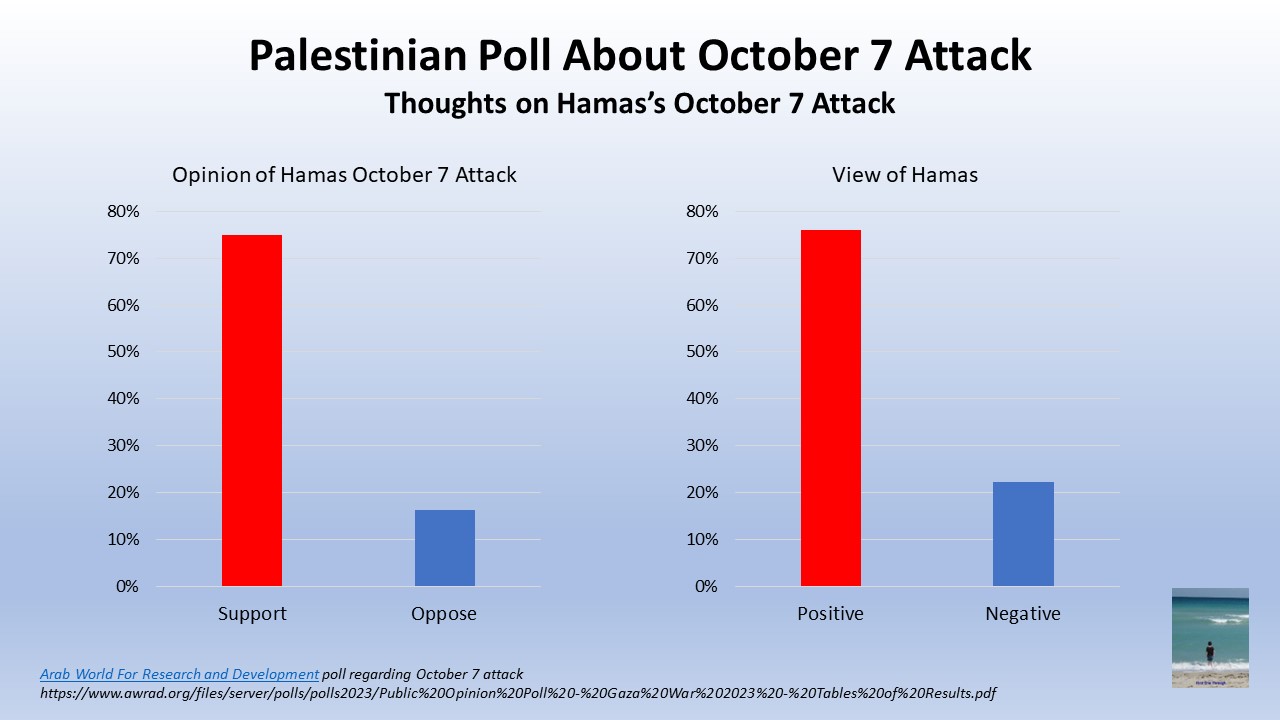
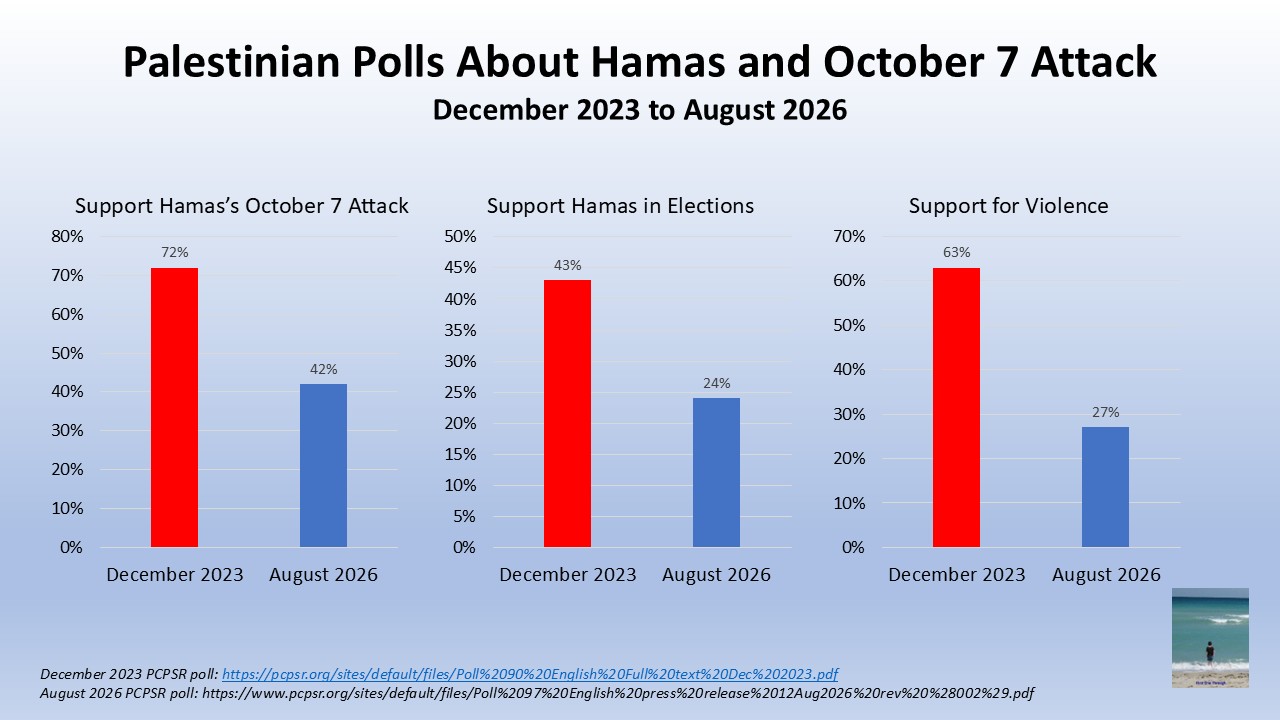
That move came under pressure. As the transition toward Donald Trump in January 2025 approached, the Authority needed to show it could control territory. It signaled to Washington that it could confront militias, that it could govern, that it still mattered. At the same time, it faced a harder truth: those militias had the street. Polling from the Palestinian Center for Policy and Survey Research showed strong support for armed groups, especially in places like Jenin where the Brigades carried both weapons and legitimacy. The Authority moved against forces that many Palestinians saw as their representatives.

68% support the formation of armed groups, such as the “Lions’ Den,” and 87% believe the PA does not have the right to arrest members of these groupsPCPSR poll, March 2023

And then the story is exported for western audiences.

“The Freedom Theatre,” founded in 2006 inside the same camp, showcases a different version of Jenin. Its language is culture, resistance, narrative. On April 12, 2026, that version appears in Kingston, NY with a screening and discussion at the Old Dutch Church.

What arrives there is a story stripped of origin. No Bnei Brak attack. No Dizengoff murders. No Elad hacking. No accounting for the networks that produced them or the infrastructure that sustained them. The factory disappears. The output is reframed.

Groups like Jewish Voice for Peace and Democratic Socialists of America amplify that version—one that travels without the genocidal bloodlust, speaks the language of “grievance” and “resistance”, and leaves out the mechanics of violence that made Jenin central in the first place.

Two things now move out of Jenin. One is violence, forcing constant military response. The other is narrative, reshaping how that violence is understood far from its source. They are not separate tracks. One conditions the other.

Jenin is no longer just a location. It is a generator—of attacks, of responses, of competing realities.

Erasing a Country with a Date

Some arguments don’t come as arguments. They come as word choices.

In a recent dispatch, the Palestinian Authority’s official news agency, WAFA, made a choice that says everything. Israel appears as an adjective when attached to institutions. Its actions carry familiar condemnations. And the land itself is recast as “the 1948 territories.”

That is not reporting. That is positioning.

1948 is a year of war and statehood. It marks the moment Israel came into being and survived an attempt to erase it at birth. Turning that year into a place rewrites the present. It drags today back into a permanent opening chapter, where the outcome still hangs in the balance.

A country becomes a placeholder. Sovereignty becomes provisional. Everything sits on ground that the language refuses to make firm.

This is how maximal claims stay alive.

If a state only exists as “1948,” then its future remains permanently negotiable.

The contradiction is visible in plain sight. Daily coordination with a functioning state on one hand. A refusal to grant that state permanence on the other. Even more, that the very land of that state is illegal, stolen. The phrase allows engagement without acceptance.

That approach carries consequences.

Conflicts move when both sides deal with what is actually there. Language that recasts reality into a provisional state keeps the dispute locked at its most basic level. Every negotiation floats above a refusal that pulls it back down.

This pattern extends well beyond a single outlet. It echoes across official statements, classrooms, and international stages. Words are chosen with care because they preserve a claim that facts have long since settled.

Israel is a state with institutions, borders, citizens, allies, and critics. It participates in the global system, fights wars, signs agreements, and argues with itself in open courts. None of that fits inside a date.

Calling it “the 1948 territories” keeps the founding war alive in the present tense.
And as long as that language holds, the conflict never leaves its opening scene.

Peacekeeping Without Peace

The international community keeps reaching for the same tool and calling it a solution.

It wasn’t in southern Lebanon. It won’t be in Gaza.

After the 2006 Lebanon War, the United Nations Security Council passed Resolution 1701 with clarity: no armed groups south of the Litani River except the Lebanese state and United Nations Interim Force in Lebanon. Hezbollah would withdraw. The area would be demilitarized.

It never happened.

Hezbollah didn’t disarm. It adapted. Fighters disappeared into civilian life. Weapons moved into homes and tunnels. Infrastructure embedded deeper. Over time, Hezbollah became stronger in the very zone it was supposed to vacate.

UNIFIL patrolled. It reported. It de-escalated when it could.

It did not enforce.

It could not.

That is not a tactical failure. It is the model.

A peacekeeping force without the authority or backing to impose outcomes becomes a bystander to violations it is tasked to prevent.

UNIFIL soldiers

Now the same model is being proposed for Gaza.

Disarm Hamas. Install a new authority. Deploy a multinational force to secure the peace.

It sounds familiar because it is.

Hamas, like Hezbollah, is not just a militia. It is a political and social organism backed by the Islamic Republic of Iran that is embedded in the population, sustained by ideology, and built to survive pressure. It will not voluntarily disarm into irrelevance.

And no external force—operating with limited mandate, constrained rules, and no appetite for sustained combat—will disarm it for them.

This is where the illusion breaks.

Peacekeeping works when peace already exists. It locks in outcomes. It does not create them. When deployed in the absence of resolution, it manages conflict. It does not end it.

That is what happened under 1701.

The “demilitarized zone” became a monitored one. Violations became routine. The temporary became permanent.

Hezbollah didn’t defy the system. It learned how to live inside it.

There is every reason to expect Hamas would do the same.

The problem is not execution. It is the belief that presence equals control. Blue helmets, patrols, liaison offices—they project order. They do not establish it.

Without a force willing and able to dismantle armed infrastructure and impose monopoly on violence, disarmament is not policy. It is aspiration.

Lebanon already ran this experiment. It didn’t produce peace.

It produced a battlefield with spectators.

Campus Jewish Life Needs a Mainstream Voice

On elite campuses, something more consequential than protest is unfolding. Jewish life is being redefined by extremists.

Groups like Jewish Voice for Peace and “Jews for Liberation” present themselves as the authentic moral voice of Jewish students. They speak in the language of justice, liberation, and equality that resonates with their peers. But strip away the branding and the position is blunt: the Jewish state is illegitimate and cast as a project of racial supremacy, apartheid, even genocide.

That is not critique. That is an argument for erasure.

The danger is not only that these claims are false. It is that they are being laundered into the mainstream through the fig leaf of Jewish identity. When anti-Israel activism is voiced by non-Jews, it is political. When it is voiced by Jews, it is marketed as moral truth. Then the fringe becomes credible and slogans become scholarship. Eliminationist ideas acquire the authority of internal dissent.

That shift matters.

Once Israel is no longer seen as a flawed state – much like others – but as an illegitimate one, every boundary collapses. If the state itself is the crime, dismantling it becomes justice, and whatever follows can be rationalized as liberation.

This is how language is turned into a weapon.

Mainstream Jewish campus institutions have not met this moment with equal clarity. Groups like Hillel are focused, rightly, on building Jewish life: community, ritual, continuity. They create space. They avoid litmus tests. They keep doors open. But when the central attack is not on Jewish practice but on Jewish legitimacy, generality reads as hesitation.

When others define Zionism as racism, it is not enough to respond with programming and belonging. The argument has moved to first principles. It demands an answer at that level.

And so a vacuum has opened.

Into that vacuum have stepped the loudest voices, not the most representative ones. The result is a distorted picture of Jewish opinion, one in which the extremes are visible and the center is absent.

That center needs a voice of its own.

Not a mirror image of the anti-Zionist fringe. Not a reaction that turns legitimate security concerns into collective hostility toward all Arabs. But a clear, unapologetic articulation of what most Jews actually believe, and what a sustainable future requires.

That position is not complicated.

The Jewish people have a right to sovereignty in their historic homeland. Israel must remain secure and capable of defending itself against those who seek its destruction. Terrorism and the glorification of violence are disqualifying, not contextual. No serious political future can be built on a culture that celebrates October 7 or teaches that murder is resistance.

The “two-state solution” is treated as moral doctrine, as if repeating it resolves the conflict. It does not. Self-determination is not a slogan tied to a single map. It can take different forms across different political arrangements. Millions of Palestinian Arabs have held Jordanian citizenship. Others live under varying structures of autonomy. The real question is not whether self-determination exists in theory, but whether any proposed structure can produce stability rather than violence.

A future Palestinian state, if it is ever to emerge, must come after a profound transformation: demilitarization, institutional reform, and an educational shift away from incitement and toward coexistence. Statehood is not an entitlement. It is a responsibility.

This is baseline reality, yet it is rarely stated plainly on campus.

A new kind of Jewish student group is needed, one that is explicit where others are cautious and disciplined where others are reckless. A group that centers Israel not as an abstraction but as a living, embattled state. One that can say, without hedging, that Jewish self-determination is legitimate, that its delegitimization is dangerous, and that moral seriousness requires both strength and restraint.

Such a group would do three things differently.

  • It would reject the language trap. Words like apartheid and genocide would be treated not as serious analysis but as distortions that inflame rather than illuminate.
  • It would refuse the false binary. Supporting Israel does not require abandoning moral judgment. Rejecting terror does not require rejecting an entire people.
  • It would re-anchor the conversation in reality. Israel exists. Threats are real. Peace requires conditions, not just intentions.

The goal is not to win an argument in a seminar room. It is to prevent a generation from being taught that the existence of the world’s only Jewish state is a moral error to be undone.

Campus Jewish life needs a mainstream voice that is willing to speak clearly – and be heard.