
Every year, the United States spends tens of billions of dollars protecting foreign countries. Not during wars. Not during emergencies. Every single year.
American taxpayers fund enormous military infrastructures across the globe: bases in Japan, Germany, South Korea, Qatar, Italy, and dozens of other nations. The United States maintains air bases, naval facilities, missile defenses, hospitals, schools, intelligence hubs, fuel depots, and entire support systems overseas. Hundreds of thousands of American personnel have rotated through these countries over decades.
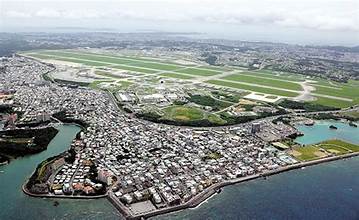

Those expenditures serve American interests too. America protects trade routes, deters adversaries, stabilizes key regions, and projects power abroad. The postwar security architecture benefited both the United States and its allies.
But it is still true that Americans spend staggering sums every year defending allies and preserving peace abroad.
And nobody protests it.
There are no mass encampments demanding America close bases in Germany. No demonstrations condemning the billions spent protecting Japan. No chants against the enormous costs of deterring North Korea. Few activists march through campuses denouncing America’s sprawling military infrastructure across Europe, Asia, and the Persian Gulf.
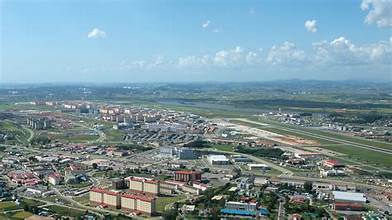
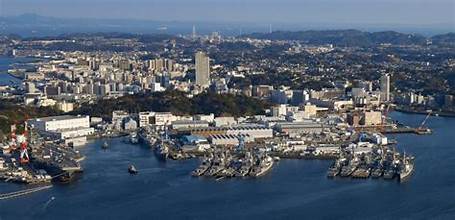
Which is precisely the point. Peace is expensive. Deterrence is expensive. Preventing large wars is expensive.
Estimated Annual U.S. Military Presence Costs By Country (2025)
| Country | Estimated Annual Cost | Nature of Presence |
|---|---|---|
| Japan | $12B–$15B | Massive naval, air and Marine presence |
| Germany | $10B–$13B | NATO logistics and command hub |
| South Korea | $6B–$8B | Constant deterrence against North Korea |
| Qatar | $4B–$7B | CENTCOM and Middle East air operations |
| Italy | $3B–$5B | Mediterranean and Africa operations |
| United Kingdom | $2B–$4B | NATO, intelligence and airpower support |
| Estimated Overseas Total | $60B–$80B+ annually | Hundreds of global installations |
When wars erupt, the spending surges even further. The United States has already committed over $188 billion to Ukraine following Russia’s invasion because Washington understands that instability among major powers carries enormous strategic consequences, weakening Russia among them.
Yet when the discussion turns to Israel, the framework suddenly changes. Protesters and politicians often speak as though Israel represents the centerpiece of American military spending abroad – the singular foreign country siphoning money away from struggling Americans.
Representative Alexandria Ocasio-Cortez has argued that America should be investing in housing, healthcare, education, and climate action — not “endless war.” Representative Rashida Tlaib has asked “Why is it that our government always has enough money for bombs, to bomb people, to kill people, but never seems to have money to provide people with healthcare, with housing, enough food for their families?”

On its face, this sounds like a broad critique of American military spending but that is not how the rhetoric is actually deployed.
The slogans are overwhelmingly attached to Israel. Protest signs do not read “Housing Not Germany.” Student encampments are not organized around shutting down bases in Japan. Activists do not chant about the billions spent maintaining troops in Korea, Qatar, or Europe. The largest permanent American military expenditures abroad are treated as background noise – accepted features of the international system.
Only Israel is singled out as the foreign country supposedly taking food, housing, healthcare, and education away from Americans.
The actual numbers tell a very different story.
The United States does not maintain giant permanent bases in Israel. There are no sprawling American military cities resembling Germany, Japan, or Korea. No 50,000-troop deployments. No vast permanent occupation-sized infrastructure funded by U.S. taxpayers.
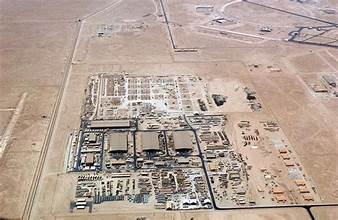
Israel largely fights its own wars with its own soldiers. Unlike many American allies, it maintains a large, technologically advanced military capable of defending itself rather than depending on permanent U.S. troop deployments for day-to-day security.
American assistance to Israel instead surges during major conflicts, particularly after attacks from Iranian-backed jihadist organizations openly committed to Israel’s destruction.
After the October 7 Hamas massacre – which included mass murder, kidnappings, sexual violence, and the burning alive of civilians – the United States accelerated weapons shipments and missile defense support to Israel as it simultaneously faced threats from Hamas, Hezbollah, the Houthis, Shiite militias, and Iran itself. American funding has helped defang the largest state sponsor of terror in the world which has also threaten the United States.
Even including the wartime surge, total U.S. military support for Israel in the two years following the October 7 massacre was just over $20 billion, including traditional military aid, missile defense replenishment, emergency weapons transfers, naval deployments tied to regional deterrence, and supplemental wartime appropriations.
That is a large figure but it pales beside the recurring long-term costs of America’s military architecture elsewhere. The United States spends more every two years defending Japan and Germany – EACH – than it spent supporting Israel during one of the largest Middle East wars in decades.
And unlike Europe or East Asia, Israel exists in an environment where multiple armed movements and regimes openly call for its elimination.
American forces remain in Germany because Europe once descended into catastrophic war. American bases in Japan exist because Washington concluded lasting peace in Asia required permanent deterrence. Korea remains heavily militarized because North Korea still threatens annihilation.
Nobody claims those alliances make Germany, Japan, or South Korea illegitimate states. Nobody demands those countries lose American protection. Only Israel is treated as uniquely immoral for receiving defensive support while fighting organizations openly committed to genocide.
If the protests were truly about opposing American military expenditures abroad, the largest demonstrations in America would target Germany, Japan, Korea, and the vast global network of permanent U.S. bases that cost taxpayers tens of billions every year.
They do not.
Instead, the outrage fixates on the one major American ally fighting for survival without large U.S. troop deployments, without permanent American bases, and while carrying the overwhelming burden of war itself.
That contradiction reveals something important: for many activists, the issue was never primarily military spending. It was Israel.


