Spain Breaks With Israel, Not Washington

In a sharp escalation of transatlantic tension, Donald Trump threatened to cut off trade with Spain, accusing Madrid of refusing to support operations against Iran and failing to meet its defense obligations within NATO.

Spain rejected the criticism, citing sovereignty and international law and refusing to allow U.S. forces to use Spanish bases in operations tied to the Iran conflict.

Yet at the same time Madrid made a different diplomatic move. Spain permanently withdrew its ambassador from Israel, citing the widening regional war.

The contrast is striking.

The military campaign against Iran has been led by the United States, with Israel acting alongside it. If participation in that conflict justified downgrading diplomatic relations, the same logic would apply first to Washington, yet Spain withdrew no ambassador from the United States.

Even after Trump threatened sweeping trade retaliation, Madrid left its diplomatic posture toward Washington unchanged.

Instead, the rupture fell on Israel alone.

The reason is not difficult to see. Confronting the United States carries consequences. The American economy dwarfs Spain’s, and Washington anchors the NATO security system protecting Europe. Spain benefits from that umbrella while contributing among the lowest shares of national income to defense within the alliance.

Angering Washington carries risk. Angering Israel carries almost none.

Spain frames its decision as moral protest. But if war with Iran is the offense, the United States leads it. If regional escalation is the concern, Spain still maintains diplomatic relations with Iran itself, the leading state sponsor of terrorism.

If Spain were to look in the mirror, what would it see? A principled stand against war? That is the language Madrid uses.

But the reflection suggests something else. Spain keeps its ambassador in Washington, maintains relations with Tehran, and breaks with Jerusalem — the smallest actor in the conflict.

Spain is a nation of nearly fifty million compared to Israel, a country of ten million, a small state surrounded by hundreds of millions of Muslims where hostility toward Israel goes back to the Jewish State’s reestablishment.

That asymmetry will not go unnoticed in Washington or among Israel’s allies. Spain already faces pressure to increase its NATO defense spending. If Madrid is willing to rupture relations with Israel over the Iran war while maintaining relations with Iran itself, the contradiction may soon move from rhetoric to diplomacy.

The question could become blunt:
restore normal relations with Israel, end trade with Iran, and meet NATO defense commitments — or risk losing the security umbrella Spain depends on.

A nation looking honestly in the mirror might call that geopolitics. Or antisemitism.

Perhaps It Is Time to Ask Israel What Two States Look Like

For decades the international community has insisted it already knew what a two-state solution should look like. The United Nations drew the parameters. Diplomats repeated the formula. Conferences were held. Resolutions were passed.

And tens of thousands of people died.

The problem may not be the idea of two states. The problem may be that the plan was written without the participation of the country expected to live beside that second state, after countless wars waged to eliminate it.

Israel accepted the concept of two states repeatedly. The Arab world rejected it outright in 1947 and chose war instead. For decades the objective was not coexistence but the elimination of the Jewish state “in any part of Palestine.

Only much later did some Palestinian leaders begin to speak about accepting two states. Even then the proposal contained a remarkable asymmetry: Arabs could potentially live in both Israel and a future Palestinian state while Jews would be barred from living in Palestine. Even under these terms, acceptance amongst the stateless Arabs from Palestine (SAPs) remained partial and fragile. Large segments of Palestinian society continued to reject the legitimacy of Israel itself.

War therefore continued.

The deeper flaw lay in the diplomatic architecture. The UN framework repeatedly demanded territorial concessions from Israel while simultaneously challenging the basic elements of Israeli sovereignty. The proposed Palestinian state would claim rights that no other neighboring state claims over another country, including constraints on Israel’s control over borders and immigration.

The Oslo Accords attempted to move the process forward through gradual autonomy. Palestinians gained control of Gaza, Area A of the West Bank, and some control in Area B. These territories were meant to become the early foundations of Palestinian self-governance and peaceful coexistence.

Instead they became platforms for continued war. Rockets came from Gaza. Terror networks operated openly in areas under Palestinian control. October 7 was simply the most brutal expression of a reality that had been building for years.

After October 7 it is difficult to imagine any Israeli government accepting the same international blueprint that guided diplomacy for the past thirty years.

Which raises a simple question that has never been asked: What would a two state solution designed by Israel actually look like?

For decades the world has demanded that Israel accept a state designed by others. When Israel raised concerns about security, sovereignty, or enforcement, those concerns were treated as obstacles to peace rather than as conditions necessary to achieve it.

Perhaps the time has come to reverse the process.

Instead of repeating a diplomatic formula that has failed repeatedly, the international community could ask Israel to define the conditions under which it could realistically accept a Palestinian state. Security arrangements, borders, governance standards, demilitarization, and phased recognition could all become part of a framework designed around coexistence rather than wishful thinking.

Whether the SAPs are willing to accept such conditions is a separate matter. Neither side ever fully accepted the UN blueprint. But continuing to impose a model that both parties reject has already produced decades of bloodshed.

Hashmonaim and separation barrier

The first fruits of Oslo were rotten. Continuing to plant the same tree will not produce a different harvest.

If the world truly wants two states living in peace, it may finally be time to ask the state expected to survive beside that new second state what peace actually requires.

What $3 Billion a Year Buys

Every year, critics ask the same question about the roughly $3 billion in American military assistance to Israel. What does the United States get for it?

This week provided a reminder.

For decades that funding has supported joint missile defense systems, intelligence sharing, aircraft integration, cyber capabilities, and deep operational coordination between the two countries. American and Israeli militaries train together, build systems together, and prepare for the same threats.

The result is something unique in the Middle East.

The United States maintains major bases across the Gulf. American ships patrol the region. American aircraft fly from Qatar, Bahrain, and Kuwait. But the United States has no bases in Israel.

It does not need them.

Israel itself functions as one of America’s most capable strategic partners in the region. Its fighters, intelligence networks, cyber units, and missile defenses are deeply integrated with American systems and strategy.

When Washington faces a threat like Iran, Israel is already positioned on the front line. Already armed. Already aligned.

That alignment was built over decades. American assistance helped develop some of the most advanced missile defense systems in the world. Israeli intelligence cooperation has repeatedly protected American lives and interests. Joint technology programs have shaped modern air defense, battlefield awareness, and cyber security.

There are many countries that receive American aid. None return value like this.

Israel is the only country in the Middle East whose military doctrine, intelligence culture, and technological infrastructure are so closely integrated with that of the United States that they can effectively act as a unit to dismantle the military capabilities of the leading state sponsor of terrorism which has sworn to destroy both countries.

It is one of the most effective strategic investments the United States has ever made.

Names and Narrative: Administered There. Occupied Here.

The choice of words reveals more than the facts.

In a recent article about Iranian influence among Shiite communities, The New York Times described Kashmir this way:

“Many Shiites live in Indian-administered Kashmir, a Muslim-majority Himalayan region with cultural ties to Iran that go back centuries.”

Pause for a moment and consider what is happening in that sentence.

The New York Times wrote about Kashmir in a manner totally different than how it writes about the West Bank

Kashmir is not a settled territory. It is one of the longest running territorial disputes in the world. Since 1947, the region has been fought over by India and Pakistan, with both claiming sovereignty and both controlling different portions of the territory.

Yet the phrasing chosen by the Times is calm and almost pastoral. Kashmir is “administered.” The Shiite population is described as having “cultural ties to Iran that go back centuries.” The wording conveys history, continuity, and legitimacy. It sounds organic, even inevitable.

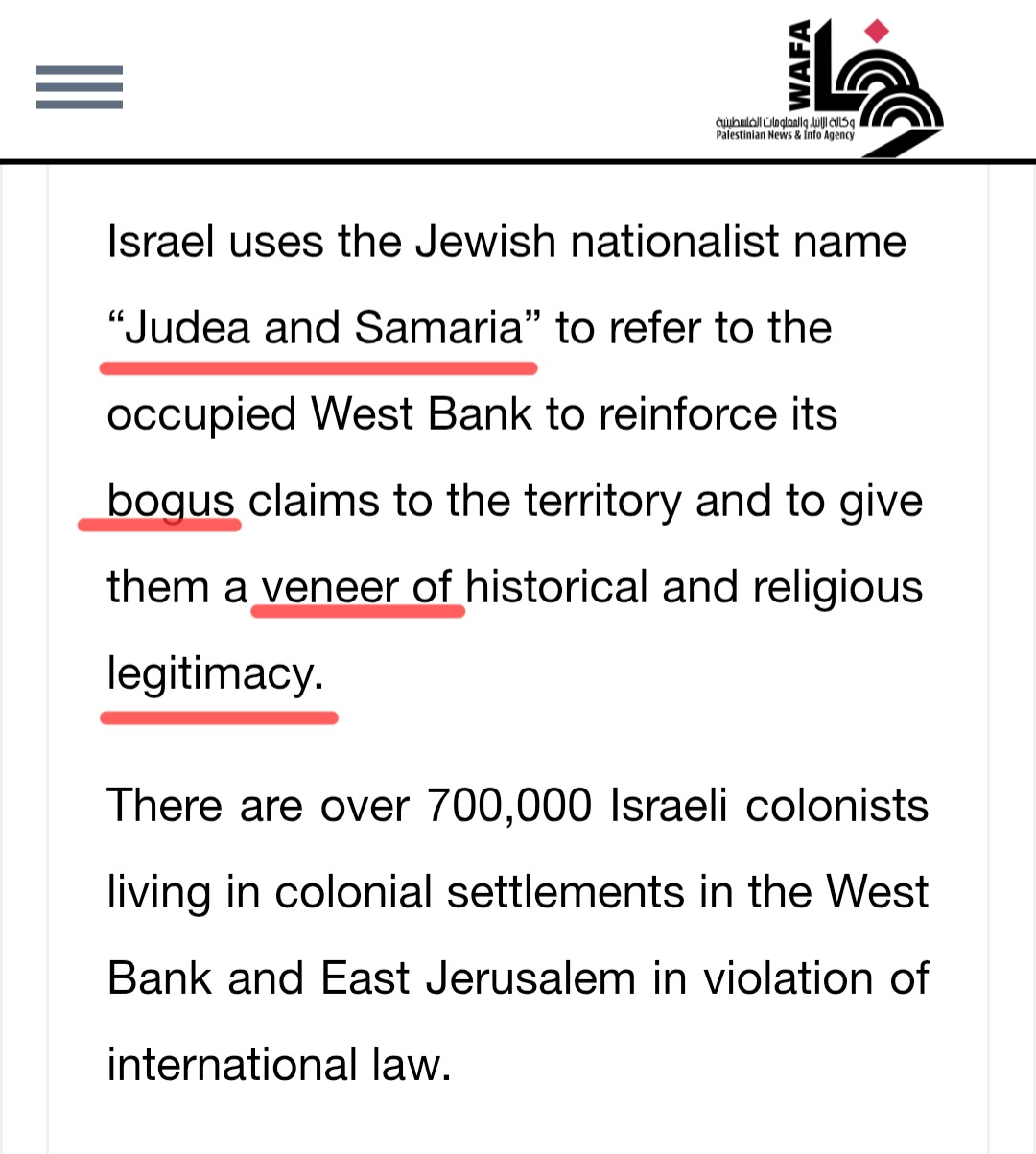
Now compare that language with how the same newspaper routinely describes the territory known historically as Judea and Samaria, today commonly referred to as the West Bank.

There the language changes dramatically.

Israel does not “administer.” Israel “occupies.”

Jewish communities are rarely described as having ancient ties. Instead readers are told that settlements are new and “considered illegal by most countries.”

Notice what disappears in that framing. The region called the “West Bank” only since 1967, contains places that formed the very center of Jewish civilization for more than a millennium. Hebron, Bethlehem, and Shiloh appear throughout the Hebrew Bible and in continuous Jewish historical memory. The kingdoms of ancient Israel and Judah rose and fell in these hills long before modern states existed.

Before Islam existed.

In other words, if the standard applied to Kashmir were applied consistently, readers might encounter sentences like this:

“Many Jews live in Israeli-administered Area C in Judea and Samaria, a region with cultural and historical ties to the Jewish people that go back more than three thousand years.”

But that sentence never appears.

Instead, the history is compressed into the language of illegality and occupation, as if the Jewish connection to the land began in 1967 rather than in antiquity.

This is not merely semantic. Language frames legitimacy. When one disputed territory is described through the lens of administration and centuries-old cultural ties, while another is defined primarily through the vocabulary of occupation and illegality, readers absorb very different impressions of the conflict.

The facts on the ground may be complicated in both cases. Kashmir is disputed. So is the West Bank.

But journalism that claims neutrality should apply the same descriptive standards to both.

Otherwise the language itself becomes the argument.

Passport Hyperbole

The outrage over the U.S. offering passport services in Efrat, in Area C east of the 1949 Armistice Lines (E49AL) as “normalizing annexation” is manufactured.

For many decades, the United States operated a consular office in the western part of Jerusalem on 18 Agron Street, providing passport and visa services to Palestinian Arabs. It was situated in the area that Israel assumed control of in 1949, not 1967 when the “West Bank”/E49AL came under Israeli authority in the country’s defensive war against Transjordan. Still, some countries considered western Jerusalem “disputed” and subject to future negotiations.

Yet when the U.S. ran consular services there, it was treated as routine diplomacy.

Former U.S. office for Palestinian Arabs located in “Western Jerusalem” which has been part of Israel since the end of the 1948-9 War

Now the U.S. offers passport services in Efrat and suddenly it’s a diplomatic crisis.

Why? Because the issue is not passports. It is Jews living beyond the 1967 lines.

The U.S. action is “a dangerous precedent and a blatant alignment with the enemy’s Judaization plans… a practical recognition of the legitimacy of settlements and the enemy’s control over the West Bank.” – HAMAS, a U.S. designated foreign terrorist organization regarding the passport office in Efrat

Disputed means disputed. It cannot mean “routine” when Palestinians receive services in western Jerusalem but “provocation” when Jews receive services in Area C.

Efrat sits in Area C under the Oslo Accords, territory left for final-status negotiations. It was not designated sovereign Palestinian land, and was a Jewish community before the regional Arabs launched a war to destroy Israel at its founding in 1948. In multiple Israeli peace offers, the Gush Etzion bloc – including Efrat – was to be incorporated fully into Israel through land swaps.

Passport services mean nothing about recognizing sovereignty. The hysteria reveals a double standard: Jewish civilian life in contested areas must remain politically radioactive, even when identical administrative acts for Arabs elsewhere pass without comment.

The U.S. decision is “a clear violation of international law” and “participation in the crime of silent annexation.” – Palestinian Islamic Jihad, a U.S. designated foreign terrorist organization

The controversy is not about diplomacy. It is about delegitimizing the presence of Jews.

And demanding that Jews be barred from living somewhere – anywhere, let alone in their holy land – is plainly antisemitic.

Outrage at History, Silence at Doctrine

The U.S Ambassador to Israel, Mike Huckabee, referenced ancient Jewish kingdoms. History. Memory. Geography.

And the world went nuts.

US Ambassador to Israel Mike Huckabee interviewed by Tucker Carlson

He cannot redraw borders. He has no authority to even set U.S. policy, let alone Israel’s.

Yet the reaction was immediate: he was condemned and vilified through the Muslim world.

At the same time, doctrines that openly reject Israel’s existence are treated as mere rhetoric.

Israel’s record makes the contrast unavoidable. After military victory, it returned the Sinai Peninsula to Egypt. It withdrew from Gaza, dismantling settlements and military presence. Few states concede territory after defeating enemies committed to their destruction.

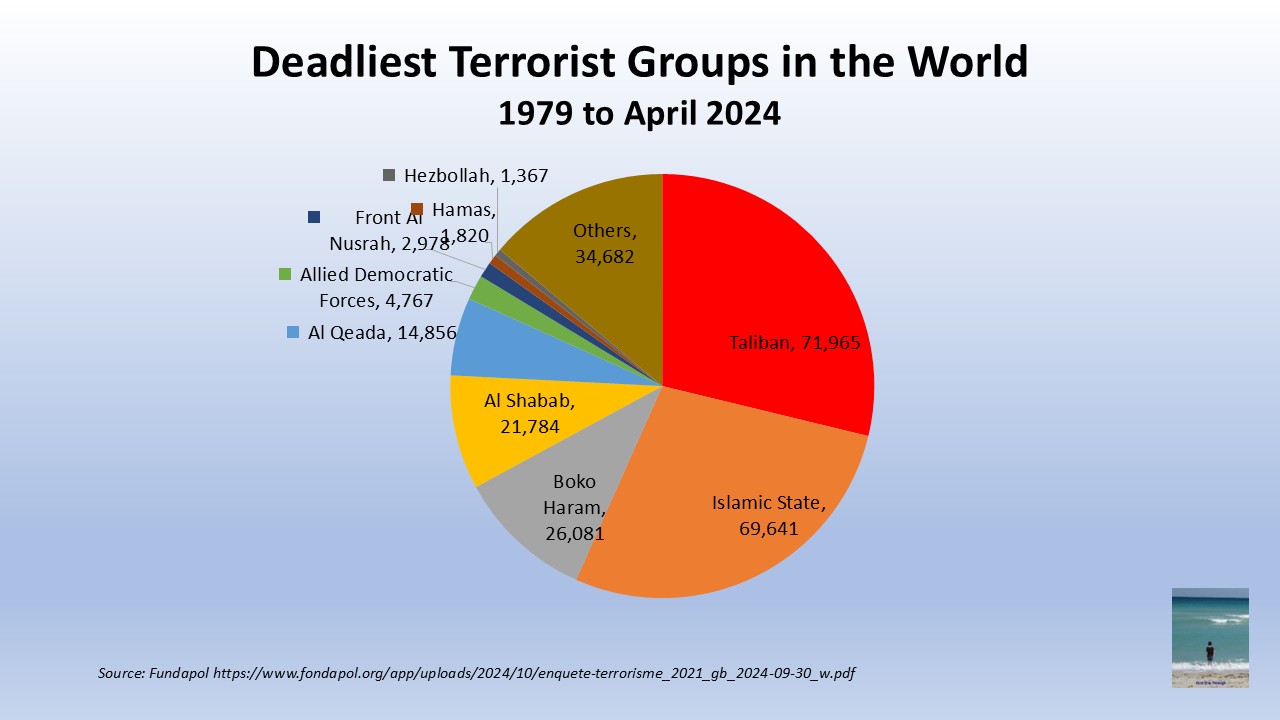
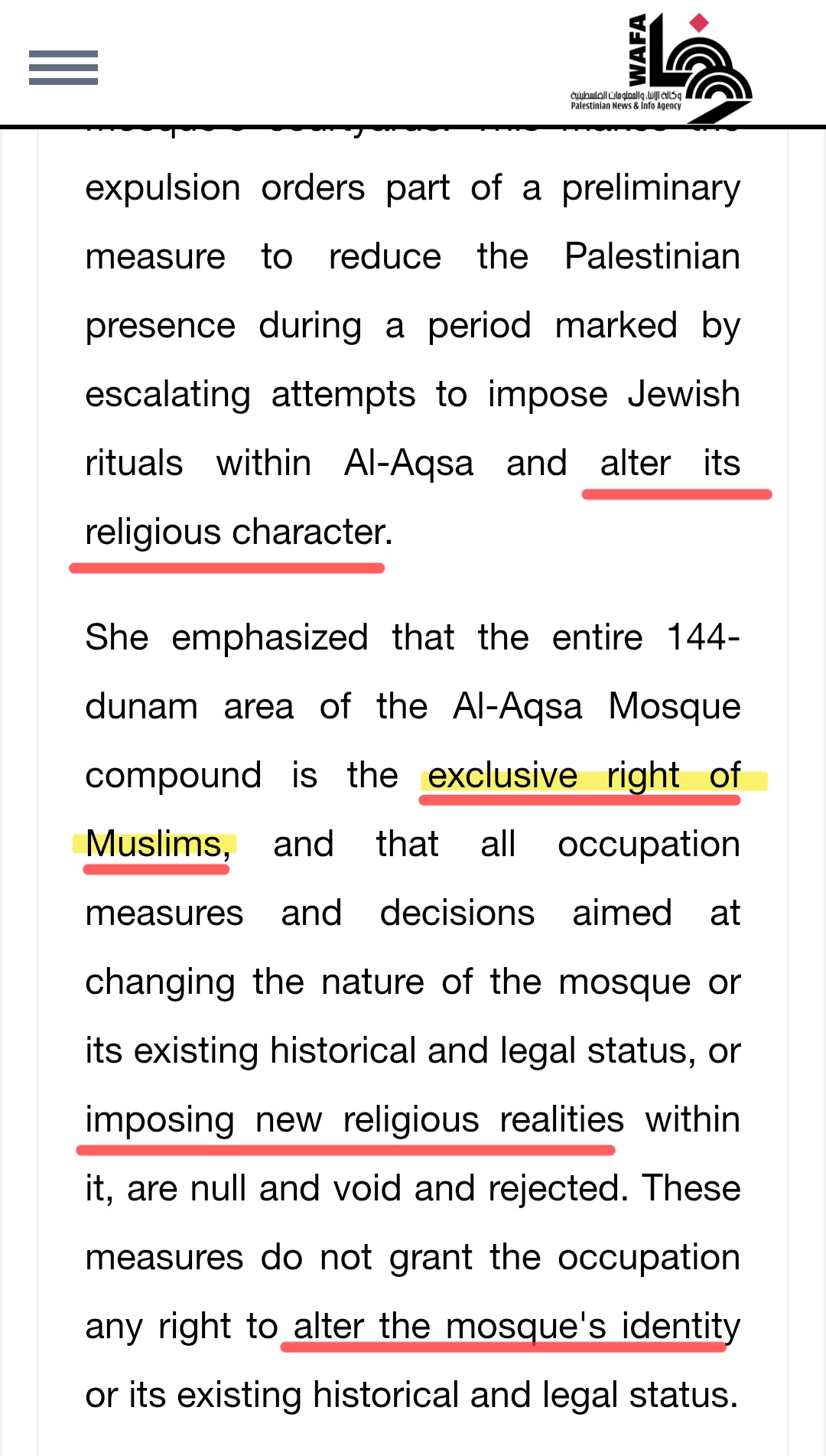
The popular political-terrorist group Hamas begins from the opposite premise. Its doctrine frames the land as “waqf,” a permanent religious trust, and within the logic of Dar al-Islam, territory that can never be relinquished because it was once ruled by Muslims. This is not metaphor but structure. The conflict is defined as unfinished until sovereignty changes.

And this doctrine is not isolated to a particular politician.

Qatar and Turkey – on a sanctioned national level as a matter of policy – host and politically enable Hamas leadership. They provide access, legitimacy, and endurance for a movement whose framework rejects Israel’s permanence as a foundational principle.

The asymmetry is stark.

A Western figure referencing ancient Jewish kingdoms triggers global outrage. A movement invoking waqf and Dar al-Islam to destroy the Jewish State draws no scrutiny.

This is dangerous narrative selection.

Speculative Jewish expansion is treated as imminent risk, while explicit ideological rejection of Jewish sovereignty is normalized.

In this world view, Jewish history is reframed as provocation and therefore the basic fabric of Jewish peoplehood is positioned as dangerous to be erased. At the same time, maximalist jihadi philosophy is normalized into diplomatic background.

And the press keeps feeding you this antisemitic bile, and no one pauses to call it out.

The core issue in the Middle East is the attempted obliteration of Jewish history and the presence of Jews in the name of Islamic supremacy. We are seeing it daily but failing to identify it plainly.

The Impossible Conditionals

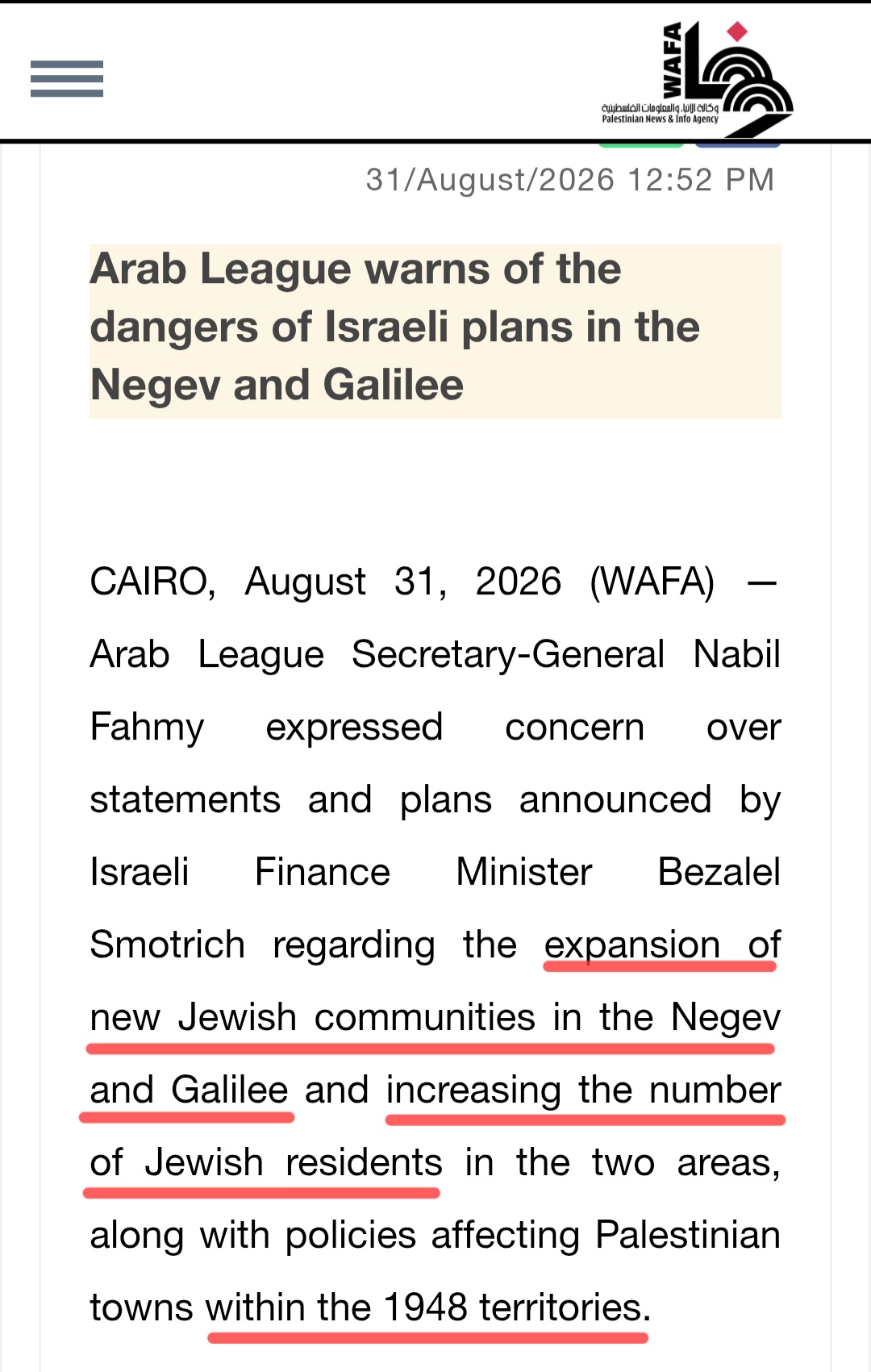
The Jewish state is offered acceptance on two terms: 1) become less Jewish, and 2) take in those who want to end the Jewish State permanently.

The first demand asks the Jewish state to thin the very idea that created it. The national home is treated as temporary, acceptable only if its defining character softens and disappears.

People learning and praying at the Western Wall (Photo: First One Through)

The second demand asks the state to normalize existential risk. The perpetual state of war and support for killing Jewish civilians is ignored is rationalized under the rubric of Arab “frustration.”

Each demand strains reality. Together they form a toxic contradiction.

A country cannot weaken the basis of its existence while expanding exposure to those who challenge that existence, and still promise a degree of safety to its citizens. The condition for global approval erodes the basic condition for survival.

This is the impossible conditional embedded in international language, highlighted in UN resolutions. Acceptance in the Middle East and the community of nations is framed as the reward for steps that make recognition unnecessary because the conflict’s central object -the Jewish state – is expected to disappear into a new secular bi-national entity at best, and from the face of the Earth at worst.

Unsurprisingly, Israel cannot accept such terms. So the UN blesses the violence against it.

Remarkably, the world cannot understand why Israelis will not embrace the offer of acceptance coupled with the demand for self-immolation.

Three Interesting and Unique Things About Israel’s National Anthem

The Olympics are a unique time when the national anthems of many countries get played in succession. It is a time to consider how unique Israel’s anthem is.

Hope versus Superiority and Sacrifice

Most of the national anthems in the world were written to rally a nation. They evoke war themes and superiority over a nation’s foes. Consider the United States anthem about “the rockets red glare, the bombs bursting in air,” or Germany’s original “Germany, Germany over all. Over everything in the world!”

In the Muslim Middle East, most countries have anthems that describe sacrifice:

But the State of Israel’s national anthem “Hatikvah” is about hope. Not superiority. Not vendetta, sacrifice or struggle. HOPE.

Its Capital City

While most countries’ anthems surround themes of victory and struggle, Israel uniquely focuses its anthem on its capital city, Jerusalem. In fact, no other country even mentions its capital, while Israel does so in an anthem just a few lines long.

One of the Oldest in the Middle East

The world changed dramatically after the end of World War I, with the collapse of the Austria-Hungarian and Ottoman empires, the end of the USSR, and end of decolonization. The number of countries multiplied over the last century, to nearly 200 today.

Israel’s national anthem is the oldest of the new nations, especially in the Middle East.

  • Israel written in 1878
  • Turkey 1921
  • Syria 1938
  • Jordan 1946
  • Libya 1951
  • Oman 1970
  • Kuwait 1978
  • Tunisia 1987
  • Iran 1990
  • Yemen 1990
  • Palestinian Authority 1996
  • Iraq 2004

While Jews are falsely accused of being recent interlopers and invaders, with no right to live in Jerusalem, and the Jewish State is smeared as a racist country built on superiority and imperialism, its national anthem is the oldest in the region, only speaks of hope and freedom, and is uniquely about its capital city of Jerusalem.

Israel national anthem:

As long as in the heart within,
The Jewish soul yearns,
And toward the eastern edges, onward,
An eye gazes toward Zion.

Our hope is not yet lost,
The hope that is two-thousand years old,
To be a free nation in our land,
The Land of Zion, Jerusalem.

A Capital Crime for Jews—and a Paper and World That Look Away

One fact should dominate any serious discussion of land and power in the West Bank: under Palestinian Authority law, a Palestinian who sells land to a Jew can face the death penalty.

That is not rumor or polemic. It is statute.

In areas governed by the Palestinian Authority in the West Bank and by Hamas in Gaza, selling land to Israeli Jews is prosecuted as treason. The charge is brought under Jordanian Penal Code No. 16 of 1960 — particularly Articles 113–118 and Article 114 on aiding the enemy — still in force in the West Bank, along with the PLO Revolutionary Penal Code of 1979. A 2014 decree by Mahmoud Abbas reaffirmed that such land sales constitute “collaboration with the enemy.” Courts have issued death sentences under these provisions.

The defining element is the identity of the buyer. A private real-estate transaction becomes a capital crime because the purchaser is Jewish and therefore legally framed as part of the “enemy.” Most countries reserve treason for espionage, armed rebellion, or wartime assistance to a hostile state. The Palestinian framework instead applies classic treason law to a civilian property sale — explicitly treating Jews, as a national collective, as the enemy for purposes of capital punishment.

Yet when the New York Times recently acknowledged this, it did so quietly, almost apologetically, inside an article whose primary concern was Israeli policy. The focus was not the law itself, but the risk that Israeli transparency might expose Palestinian Arabs to danger because the law exists.

That framing reverses cause and effect.

Israel was portrayed as aggressive and ideological, while the Palestinian Authority’s capital punishment for a racially defined transaction was treated as background context. Israeli officials were labeled “right-wing” and scrutinized by name. The PA, which enforces a law rooted in religious antisemitism, was spared comparable description. Its ideology went largely uninterrogated.

The article even suggested that sealed land records once served as a form of protection for Palestinians. That sentence alone concedes the nature of the regime. A governing authority from which citizens must be shielded because it may kill them for selling property to Jews is not a peace partner. It is a theocratic system enforcing ethnic taboos with lethal force.

If a Jewish state executed Jews for selling land to Arabs, that law would dominate media coverage. Instead, when Jews are the forbidden buyers, the death penalty becomes an inconvenience and the exposure of it becomes the problem.

UN Secretary-General Antonio Guterres “warns that the current trajectory on the ground, including this decision [to unseal the names of the owners of land making private real estate transactions easier], is eroding the prospect for the two-State solution. He reiterates that all Israeli settlements [the physical presence of Jews east of the 1949 Armistice Lines between Israel and the Kingdom of Transjordan, which specifically stated were not to be considered borders] in the occupied West Bank, including East Jerusalem, and their associated regime and infrastructure, have no legal validity and are in flagrant violation of international law, including relevant United Nations resolutions.”

This is how extremist antisemitism is normalized: by treating it as an immutable local condition, while directing moral outrage at those who reveal it. When selling land to a Jew carries a death sentence, that fact is not incidental. It is the moral center of the conflict.

The Only Place Jewish Murder In a Synagogue Isn’t Antisemitism

When Jews are murdered in synagogues in Europe, the United Nations speaks plainly. The attacks are labeled antisemitic. The violence is called terrorism. Solidarity with the Jewish community is explicit, and justice is demanded.

UN Secretary-General calls killing of Jews in Germany “demonstration of antisemitism” in 2019
UN Secretary-General calls killing of Jews in United Kingdom in 2025 “antisemitism” and “stresses the urgent need to confront hatred and intolerance in all their forms.”

When Jews are murdered in synagogues in Jerusalem, that clarity vanishes.

The same act—killing Jews at prayer—suddenly requires “context.” Terrorism is softened into “violence.” Antisemitism dissolves into “tensions.” Victims are anonymized, motives left unexplored, ideology carefully avoided. Language that flows easily in Europe locks up entirely in Israel’s capital.

UN Secretary-General never calls killing of Jews in Jerusalem rooted in “antisemitism.”

This is not rhetorical drift. It is doctrine.

The UN has formally adopted the Palestinian demand that Jews should not live in Jerusalem. Through measures such as UN Security Council Resolution 2334, it asserts that Jews may not alter the city’s “demographic composition.” That position freezes Jerusalem at a moment immediately following the Jordanian army’s ethnic cleansing of all Jews from the eastern half of the city between 1948 and 1967. Jewish expulsion is accepted as a legitimate baseline. Jewish return is treated as a violation of international law.

This is not neutrality. It is the institutionalization of an antisemitic premise: that Jews, uniquely among peoples, have no right to live in their holiest city.

UN Secretary-General calls killing of Jews in United States “antisemitism” THREE TIMES.

Once that premise is accepted, Jewish life in Jerusalem becomes conditional. Jewish neighborhoods are labeled illegal. Jewish prayer is framed as provocation. Jewish presence itself is cast as destabilizing. Violence against Jews no longer reads as antisemitism but as political reaction to an allegedly illegitimate reality.

Under those conditions, motive cannot be named. Calling synagogue murders in Jerusalem “antisemitic terrorism” would require acknowledging that Jews are being targeted for who they are, in a city where the UN has already ruled they should not be. It would expose the connection between UN doctrine and the moral evasions that follow.

So the motive is omitted.

Aftermath of Jews slaughtered in synagogue

The UN does not merely tolerate the idea of Jews being removed from Jerusalem; it has encoded it. The language is bureaucratic—demographics, international law, peace—but the result is stark: a city where Jewish existence is treated as unlawful, and Jewish murder as a political complication.

The contrast with the rest of the world makes the pattern undeniable. The UN knows exactly how to speak about antisemitism. That moral vocabulary disappears only in Judaism’s holiest city, in the Jewish State’s capital, because the United Nations has endorsed the antisemitic wishes of radical jihadists.