There are signs on the streets of London that read “LOOK RIGHT.” They are painted boldly on the pavement to protect visitors—especially Americans—who are used to glancing left before stepping into the street. In the U.K., traffic comes from the opposite direction, and those who rely on old instincts can find themselves in sudden danger.
So it is now with American Jews.
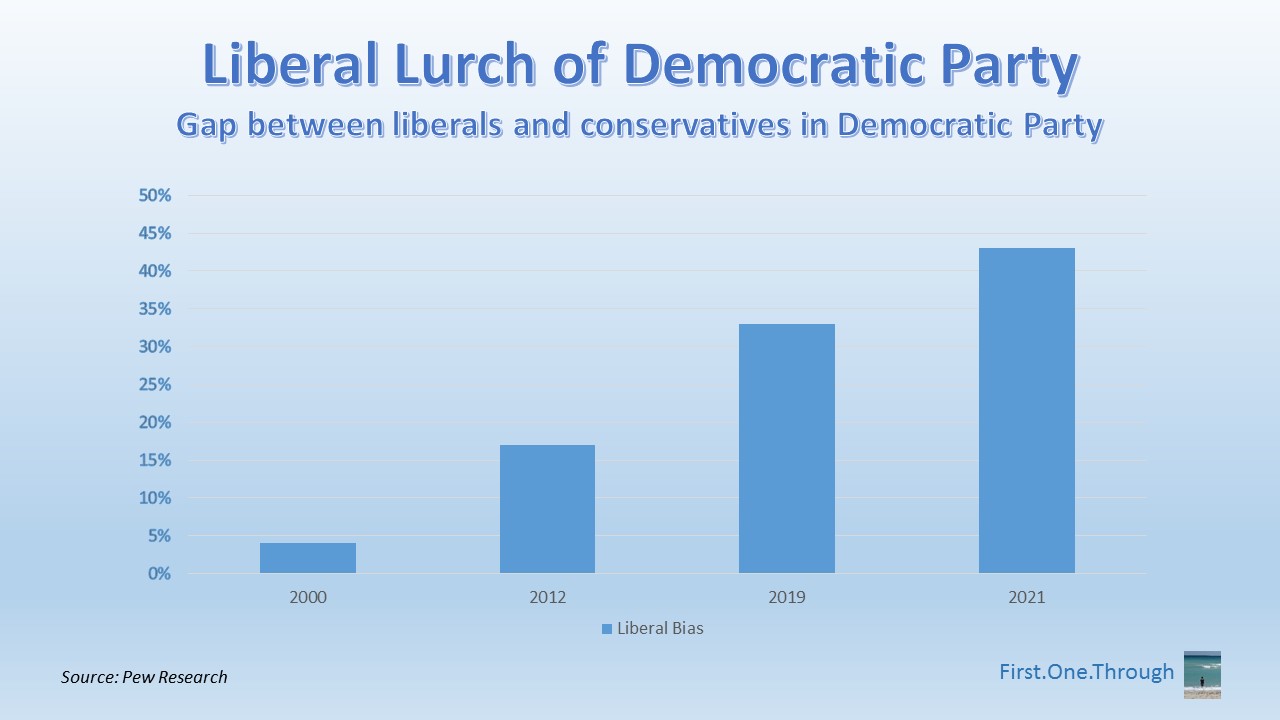
For generations, they have turned instinctively to the Democratic Party—to the left—out of habit, heritage, and a deep belief that liberal ideals best protected minorities. But the political landscape has shifted beneath their feet. The party that once championed freedom, tolerance, and support for Israel has been co-opted by radicals: anti-Israel voices, socialists, and anarchists who now wield growing influence in its ranks.
These are not the Democrats of old. They are activists who view capitalism as oppression, who denounce Israel as colonial, and who see Jews not as a vulnerable minority but as part of a power structure to be dismantled. They are coming for capitalism—and for the Jews who helped build and sustain it.
This election, American Jews must recognize that the public square is not what it used to be. The political traffic now comes from the right direction—but the danger comes from the left.
When Government Champions Some, and Leaves Jews to Defend Themselves
Westchester County, NY, like much of America, has learned the vocabulary of inclusion. It now boasts a tapestry of advisory boards, task forces, and community liaisons — each designed to protect and empower those who have known prejudice.
There is a Westchester County Asian American Advisory Board, formed after a surge of anti-Asian hate crimes during COVID. It partners with the District Attorney’s office on the #SpeakUpWestchester campaign, translating safety materials into Korean, Mandarin, and Japanese so that no one’s fear goes unheard.
There is also an LGBTQ+ Advisory Board, formally empowered to advise the County Executive, coordinate events, and oversee inclusivity training. The county even facilitated an LGBTQ+-affirming senior housing complex in downtown White Plains with The LOFT Community Center at its core — an unprecedented public-private partnership to create safe spaces for queer residents.
But there is one group that still has to do it all on its own: Jews.
There is no County Jewish Advisory Board. No county liaison for antisemitism. No government program translating “Never Again” into action.
While Asian and LGBTQ+ residents have been given official seats inside government, Jews have been told — quietly, politely — to use their own.
Even the collection of antisemitic incident data — which rose 22 percent in Westchester in 2024 — is largely managed by private watchdogs, not public offices.
The disparity is not just institutional; it is measurable.
Westchester County has 1 million residents, including about 137,000 Jews (14% of the population) and about 65,000 Asian Americans (7%).
According to state hate-crime data and ADL monitoring, there were about 40 antisemitic incidents and 8 anti-Asian incidents reported in Westchester in 2024. That translates to an estimated 29 antisemitic incidents per 100,000 Jewish residents versus roughly 12 per 100,000 Asian residents — a per-capita rate more than twice as high.
Rather than address the antisemitism squarely, Westchester District Attorney Susan Cacace made an inclusive Hate Crimes Advisory Board which had its inaugural meeting on September 29. Cacace was proud of the giant tent and said “the communities represented on this board are broad and diverse, and board members will be able to provide me with direct input from their constituents so that my office may more readily address their concerns.”
The Westchester County District Attorney’s Office’s new Hate Crimes Advisory Board
The all-Democratic Westchester establishment seemed to echo the Democratically-led House of Representatives which refused to condemn antisemitism without adding language about Islamophobia in 2019. Jew protection cannot exist in isolation for some reason for the Blue Team. It seemingly repulses them so much, that when Republicans target antisemitism, they argue that President Trump is “weaponizing antisemitism” and not really concerned about Jews at all.
No one begrudges others their protection. Jews, more than anyone, know the cost of silence. But the imbalance is glaring.
When the Asian community faced hate during COVID, Westchester created a formal board within months. When LGBTQ+ residents sought recognition, government became a partner in building physical spaces of affirmation. But when antisemitic assaults, harassment, and vandalism spiked across campuses, streets, and synagogues, the government offered sympathy — not structure.
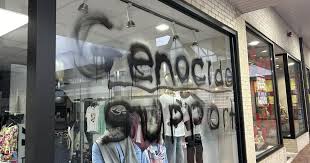
Graffiti on Jewish stores in Scarsdale, NY, January 2024
The Jewish paradox
Jews are trapped in a paradox. Their success is cited as proof they don’t need help; their vulnerability dismissed as self-inflicted. They are “white” enough to be privileged, but “Jewish” enough to be blamed.
And so, when antisemitism surges, the reflex of government is not to protect but to delegate — to community partners, to philanthropists, to the victims themselves. Or to give the general feeling of blanket protection alongside others, masking the fact that they are persecuted more frequently than every other minority group.
For centuries, Jews have thrived where societies upheld justice and faltered where governments outsourced their duty.
Antisemites have no issue singling out Jews for attack, yet government officials are loathe to single out Jews for protection which they do so for every other group. It begs the question as to why: are current government leaders antisemitic, or are Jewish leaders telling the government that Jews don’t want special treatment, just to be like everybody else.
If so, what does that mean when “everybody else” gets special treatment?
Why can California, with its Democratic super-majority, advance a mandatory ethnic studies curriculum which empowers Black, Brown, Latin, Asian and Native American communities but disparages Jews?
While Democrats are correct, that Jews would rather be treated the same as everyone else, they cannot sit on the side when special privileges and protections are afforded to every group except Jews, especially while they are under attack. To exclude Jews in favor of victims of preference – or just constituents of preference – is deeply antisemitic.
Jews Must Rise Above America’s Political Polarization
For Jews, the political spectrum no longer runs right or left — it runs above and below the line.
America once resembled a bell curve, a society centered in moderation. But over the last decade, that middle has collapsed into a barbell nation, with weight piling up at the extremes. And history has shown: whenever societies polarize, Jews suffer at both ends.
On the left, antisemitism festers in universities and coastal enclaves, driven by a socialist–jihadi alliance that paints Jews as colonial thieves and privileged elites. On the right, particularly across America’s heartland, antisemitism takes the form of nationalist resentment, depicting Jews as cunning manipulators steering the country toward decay.
The Jewish community now faces hostility from Justice Democrats and the Democratic Socialists on one side, and Christian nationalists and conspiratorial populists on the other. As America sorts itself into partisan tribes, Jews are politically homeless — stranded in what might be called Team White, surrounded by Red and Blue armies locked in mortal combat.
It is a moment that demands clarity: Jews must not follow the crowd, nor celebrate the likes of Zohran Mamdani or Marjorie Taylor Greene simply because they shout loudest. Safety will not be found at the edges.
NYC mayoral front-runner Zohran Mamdani with the extremist group Democratic Socialists of America
Instead, Jews must think on the Y-axis and rise above the line — where decency, truth, and moral courage define political identity, not the toxic binaries of today’s discourse. The task is to build bridges among the decent left, right, and center, and to undermine the machinery of polarization itself.
Be counter-algorithm. Social media algorithms are built on inflaming passions and feeding extremism. Get kids away from social media including banning phones in schools. Encourage people to spend less time on the platforms or to promote moderate posts.
Invest in institutions that elevate, not inflame. Support schools, media, and synagogues that model dialogue over division.
Be models of decency. Civility is countercultural today — make it contagious. Argue without anger, engage without hatred, and remind others that moral clarity does not require moral superiority.
Rebuild community and trust. Host conversations, bridge gaps, and welcome allies who differ politically but share ethical ground. Strength grows in connection, not isolation.
Be proudly above the line. Celebrate being moderate, balanced, and reasonable. The middle is not weakness — it is wisdom earned through restraint.
Expose extremists, even within. Call out the Jewish radicals who justify Hamas and the October 7 pogrom, as well as those who echo conspiratorial nationalism. Moral consistency demands internal accountability.
Teach Jewish ethics loudly. The Torah’s call to pursue justice and peace should echo in civic spaces — as a guide for repairing the world, not tearing it further apart.
A polarized society is a society on edge — brittle, unstable, and eager for scapegoats. Extremists will portray Jews as symbols of what’s wrong, a convenient vessel for resentment. As a minority-minority, Jews become easy targets when the center collapses.
The survival of the Jewish people in America depends not on joining the mobs below the line, but on lifting others above it — where truth, civility, and unity still have a fighting chance.
In the Garden of Eden, God brought every creature before Adam to find him a mate. Yet “for Adam, no fitting helper was found.” Only then did God cast him into a deep sleep and create Eve from his side — not from the dust like the animals, but from within him. The relationship itself became sacred, a reflection of divine unity.
Ten generations later, when the world sank into corruption, Noah was told to gather the animals in pairs into the ark. Humanity, which had once never contemplated the holiness of distinctive companionship, was now preserved precisely through those who respected it. Adam searched for love among the animals; Noah safeguarded them. The story of creation evolved from seeking connection to sustaining it.
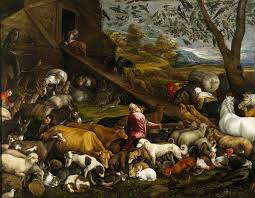
The Animals entering Noah’s Ark, Jacopo Bassano (1510–1592)
Our sages teach that “Hakadosh Baruch Hu moshiv yehidim baita” — the Holy One, blessed be He, makes returns single people to their homes [finds them a match] (Sotah 2a). The Talmud even imagines a heavenly voice proclaiming forty days before a child’s birth, “The daughter of so-and-so is destined for so-and-so.” God, as eternal matchmaker, continues the work He began in Eden — binding souls and sustaining worlds.
But if God is busy creating couples, perhaps mankind should be busy preserving them. Jewish life places enormous focus on shidduchim — helping singles find their match. Entire communities dedicate themselves to it, often lamenting the so-called “shidduch crisis.” Yet where is the equal effort for those already joined?
If marriages were more visibly nurtured — their holiness cherished, their struggles handled with care, their perseverance admired — perhaps the next generation would see marriage not as a fragile structure to fear, but as a sacred vessel worth building.
Maybe the remedy to the shidduch crisis is not exclusively with matchmaking, but with modeling. When society sees sanctification in marriage — not perfection, but devotion — it rekindles faith in the possibility of love itself. The story of Adam reminds us of the importance of a mate; the story of Noah teaches us to protect the bond once found. From creation to covenant, God builds the world through couples — and invites us to do the same.
May our generation learn to honor both halves of the divine equation — to help the lonely find their other, and to help the found remain together.
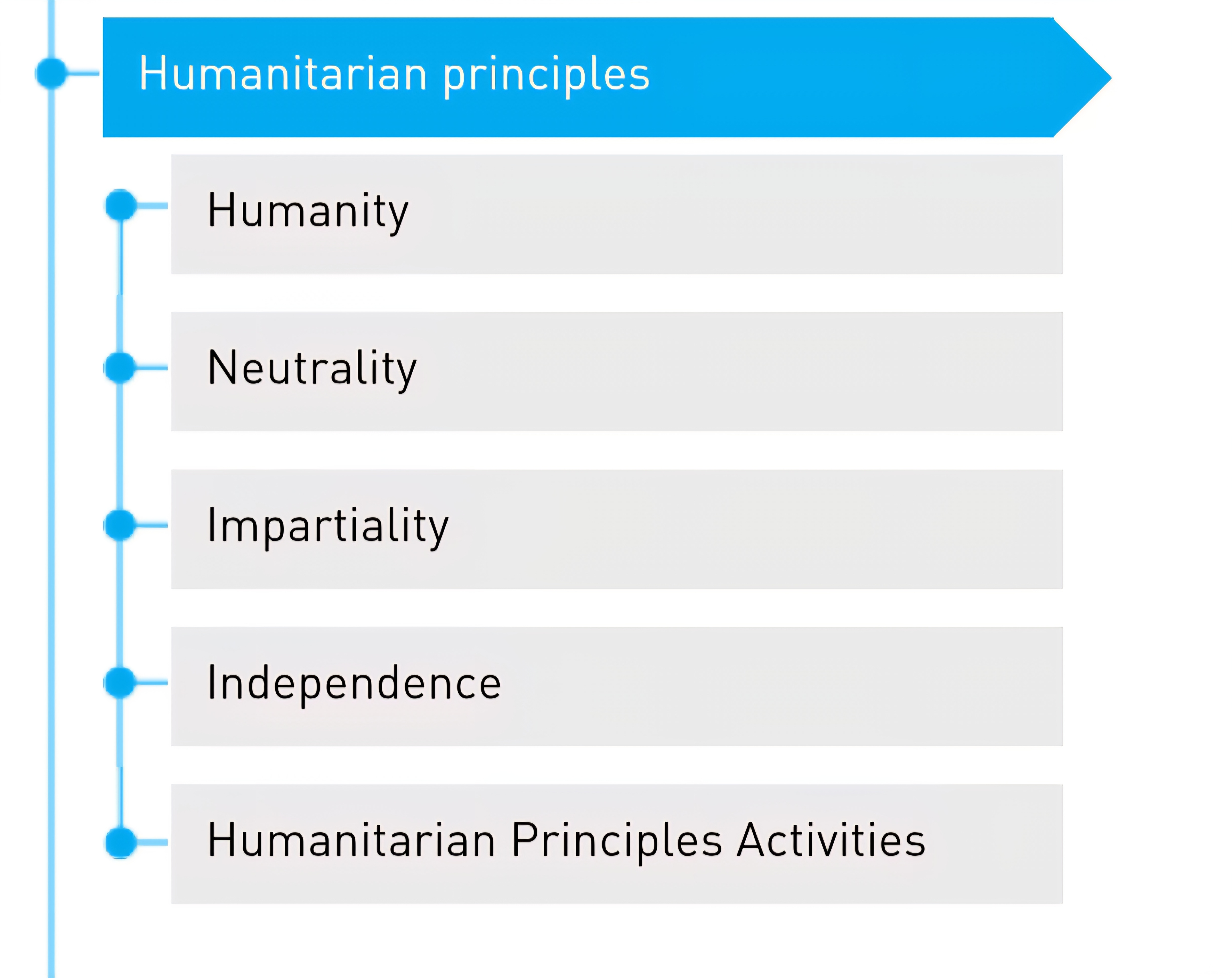
The United Nations Relief and Works Agency, UNRWA, declares that it operates on four humanitarian principles — humanity, neutrality, impartiality, and independence. It is none of those things.
UNRWA is unlike any other UN agency. It is not the UNHCR, which manages refugees from every nation and conflict on earth. UNRWA is a creature of exception — created for a particular people, in a particular region, in a particular war.
The agency claims it was established to address the plight of refugees from Palestine following the 1948–49 Arab-Israeli War. But was that truly its purpose? When the fighting ended, thousands of Jews were also expelled from their homes east of the 1949 Armistice Lines (E49AL) — from Jerusalem’s Old City, from Hebron, and across Transjordan’s illegally occupied territory. They, too, were refugees from Palestine. Did UNRWA help any of them? No.
Jews expelled from the Old City of Jerusalem via the Zion Gate by the army of Transjordan
From its inception, UNRWA was built to serve Arabs alone. Even when those same Arabs became full Jordanian citizens, the agency continued to provide them with housing, food, education, and medical care — benefits that by any logical standard should have ended once citizenship was granted. Instead, UNRWA preserved refugeehood as an inheritance, not a temporary condition.
Over time, UNRWA’s mission has morphed from relief to perpetuation. It has shown itself highly partisan, politically entangled, and morally compromised. Its schools and clinics may operate under the UN flag, but the agency’s allegiance is often indistinguishable from the politics of rejectionism that dominate its host territories.
During the 2023 Gaza war, UNRWA boasted that only it had the infrastructure to provide food, education, and healthcare to the Gazan population. Yet when 250 Israelis were dragged into Gaza as hostages, where was this agency of “humanity”? Did it deliver a single bandage or calorie to the kidnapped Israelis held underground? Did it condemn their abduction, or even acknowledge their suffering? It did not. UNRWA’s humanity proved selective, its independence nonexistent.
Its operations in Gaza function only through integration with Hamas, the political-terrorist organization that rules the territory. Schools double as weapons depots; employees have been implicated in massacres; aid is distributed by political loyalty, not human need. Leaders at the OCHA, another UN “humanitarian” group, are not shy to say they view Hamas a legitimate political representatives of Palestinians, not as a terrorist group.
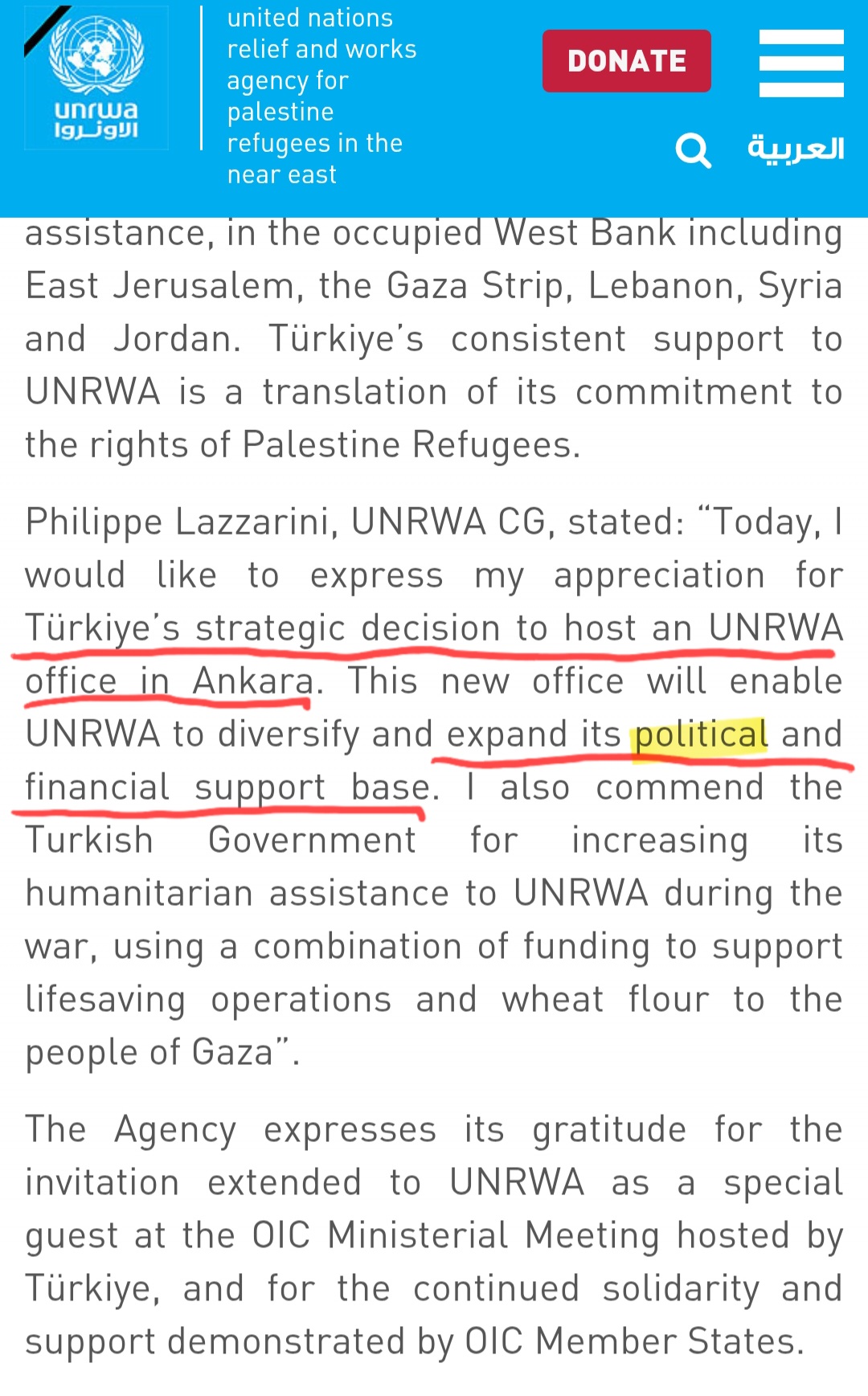
UNRWA now has additional offices outside of its field operations. It opened an office in Turkey to “expand its political and financial support base,” backed by the Organization of Islamic Cooperation (OIC), a political group. Very political. Neither independent nor neutral.
UNRWA is not a neutral humanitarian actor. It is a political instrument masquerading as one. It fails every principle it proclaims.
So long as UNRWA exists, it will preserve resentment, dependency and hatred. That agency founded in the shadow of war is the leading obstacle to peace.
To visit Poland is to walk among ghosts. The thriving Jewish civilization that once filled its towns and marketplaces was almost completely erased. Three million Jews were targeted for extermination — a number too vast to grasp by walking through silent cemeteries. The absence alone cannot speak the full horror.
To stand where synagogues were razed, where schools once taught Torah and arithmetic, where playgrounds once rang with Yiddish laughter, is to feel the emptiness press against your chest. It forces the imagination to repopulate the void — to summon the Jewish ghosts who linger, waiting for conscience to remember them.
It is easier to look at the living. Many Poles today are the grandchildren of those who watched as their Jewish neighbors were rounded up — and sometimes finished the work themselves when survivors returned seeking their homes. They became stand-ins for the killers of yesteryear, heirs to silence, envy, and complicity.
Now another people walks amid ruins. In Gaza, millions return to their shattered neighborhoods under a ceasefire, and we are told they have survived a “genocide” at the hands of Jews. Yet the number of Palestinian Arabs has grown, not diminished — a population larger than before the war they themselves began. They tread among the skeletons of broken buildings built atop their army’s tunnels, while ghosts — Israeli civilians burned alive in their kibbutzim and those taken hostage and murdered in Gaza — cry out from the ashes.
I ponder the ghosts of genocide: the murdered and the murderers; the societies that spawned the slaughter; the peaceful towns that became infernos.
Infrastructure shelters ghosts. Societies are haunted by the ones they create, both killer and killed. The unseen dead can no longer showcase their dancing on the one hand, or lust to murder, on the other.
There are scarcely any Jews left in Poland; their ghosts appear only to those who seek them. In Gaza, the ghosts are not gone. They walk the streets, armed and unrepentant — not spirits of victims, but kinsmen of murderers, now turning on one another.
Poland’s haunting is one of silence — an absence so total it chills the air. The ghosts there do not cry out; they wait to be remembered. Gaza’s haunting is the opposite: a cacophony of rage that refuses reflection. Its ghosts are not silent but screaming — not victims unburied, but hatreds unrepented.
Poland’s soil holds the murdered; Gaza’s streets still host the spirit of the murderers. One ghost asks to be mourned; the other demands to be judged.
The haunting does not end with time. It lingers wherever truth is buried, and it deepens each time the living deny the past that shaped them.
Only when a people can face its ghosts — naming both the murdered and the murderers — can it begin to live freely again.
For decades, Arab and Muslim leaders have fed their people a poisonous myth — that Israel dreams of ruling the Middle East, that it seeks to drive out Arabs and Muslims, that its goal is a genocidal “Greater Israel.” They have said it from Cairo pulpits and Riyadh conferences, shouted it at the United Nations, and woven it into the political DNA of generations.
Yet reality told a different story — 230 straight days of restraint.
From October 26, 2024, when Israel obliterated Iran’s air-defense network, until June 13, 2025, when it finally struck Iran’s nuclear weapons sites, Israel had total air supremacy over the Islamic Republic. For more than seven months, Israel could have flattened Tehran, crippled the oil fields of Khuzestan, or plunged the country into darkness by bombing power plants and airports. Instead, it waited.
The Iranian regime — the self-declared spearhead of the “Axis of Resistance” — had launched a multi-front war: Hezbollah in the north, the Houthis from the south, militias in Iraq, drones from Syria. Yet Israel responded surgically, destroying Iran’s air defenses and exposing the regime’s weakness. Then it stopped. No mass civilian targets, no vengeance against cities — only vigilance.
When Israel finally acted again, its aim was limited and precise: the nuclear enrichment facilities that Tehran had openly threatened to use to annihilate the Jewish state. The operation was not about conquest; it was about survival.
Had the situation been reversed — had Iran dismantled Israel’s air defenses — the results would have been catastrophic. Iran’s own rhetoric, and its record of missile and drone attacks on Israeli cities, show exactly what it would have done: unleashed devastation on civilian population centers. Annihilating the “Zionist regime” as an excuse for eliminating the the threat of a “Greater Israel.”
For 230 days, Israel had the power to destroy Iran and chose not to, just as it could have obliterated Gaza from the first day of the war. Those months are the clearest refutation of the propaganda long sold across the Muslim world about “Greater Israel” and “genocide.” Israel does not seek domination or extermination — it seeks to live.
Two hundred thirty days of restraint. Two hundred thirty days of truth.
There is a growing movement around the world to label the Muslim Brotherhood as a terrorist organization. It is a cause whose time has come — and whose passage is long overdue.
The Muslim Brotherhood is not merely a political or religious movement. It is the ideological parent of countless extremist groups, from al-Qaeda to Hamas. The Brotherhood’s goal has always been clear: the creation of an Islamist world order governed by sharia law and fueled by perpetual jihad. It is the intellectual engine behind modern Islamic terrorism.
Hamas — officially designated by the United States and European Union as a Foreign Terrorist Organization — is the Palestinian branch of the Muslim Brotherhood. Its 1988 charter cites the Brotherhood as its ideological and organizational source. The brutal October 7 massacre, the ongoing rocket attacks, and the indoctrination of Gazan youth into genocidal hatred all stem from this same poisonous root.
Several nations – Muslim Arab nations – understand the threat. Egypt, Saudi Arabia, the United Arab Emirates, and Bahrain have all formally banned the Muslim Brotherhood as a terrorist entity. So have other responsible actors in the global north, including Austria and Russia. Yet the group still finds safe haven in Qatar and Turkey — two countries that finance, arm, and politically shield Hamas.
These sponsors of Islamist militancy must not be allowed any role in Gaza’s future. To invite them into post-war planning is to guarantee the next war. As Khaled Abu Toameh says “Inviting Qatar and Turkey to play a role in the Gaza Strip means again bringing Iran in through the back door.” To empower these countries diplomatically is to ensure that peace will never take hold. The Brotherhood’s network thrives on chaos, martyrdom, and perpetual victimhood; its ideology is incompatible with coexistence or modernization.
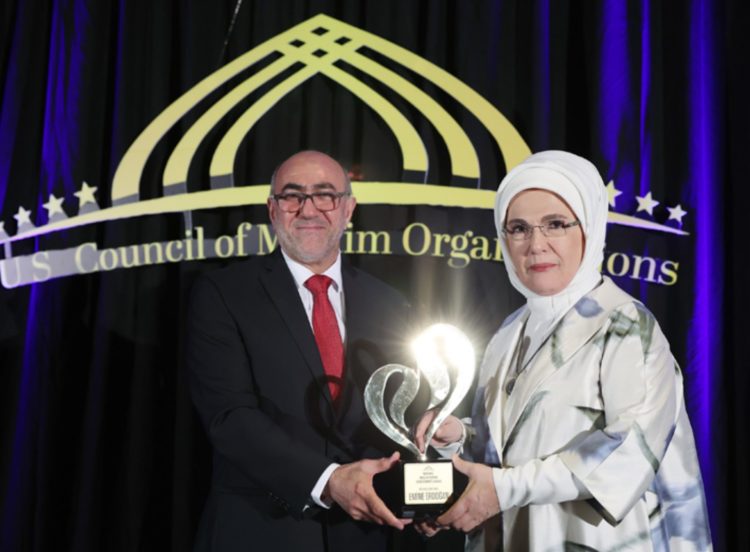
Turkey’s first lady, Emine Erdogan, was recognized with an award by the US Council of Muslim Organizations (USCMO) in New York in 2022. The award was personally delivered by Ousama Jammal, a key Muslim Brotherhood figure in the US. USCMO has been accused of ties to the Muslim Brotherhood.
If the international community truly seeks an enduring peace in the Middle East, it must begin with moral clarity. The Muslim Brotherhood and its affiliates must be banned — everywhere. Those who fund or defend them must be excluded from the table. Only when the root of jihadist ideology is removed can the region finally begin to heal.
U.S. President Donald Trump and Turkish President Tayyip Erdogan shake hands. Turkey’s involvement in Gaza with Trump’s blessing guarantees future bloodshed with Israel; and the next US president may not care.
If one were to build a museum chronicling how a people educated generations toward hatred and eradication, the Palestinian Arabs would tragically merit their own institution. The Museum of Genocidal Intent would not showcase armies, the tools of genocide. It would display ideas, laws, sermons, and schoolbooks that made destruction a virtue and coexistence a sin.
Entrance Hall – The Charter of Death
Visitors first encounter the founding documents: the Hamas Charter (1988) and early Fatah Constitution passages promising Israel’s annihilation. There are ballots underneath from the 2006 parliamentary elections with articles alongside showing the Stateless Arabs from Palestine (SAPs) electing Hamas to 58% of parliament as a first action of breathing self-determination. As one leaves the room, leaders—from Arafat to Abbas to Haniyeh—chant “From the River to the Sea” and “We love death more than you love life.“
Gallery I – Educating for Erasure
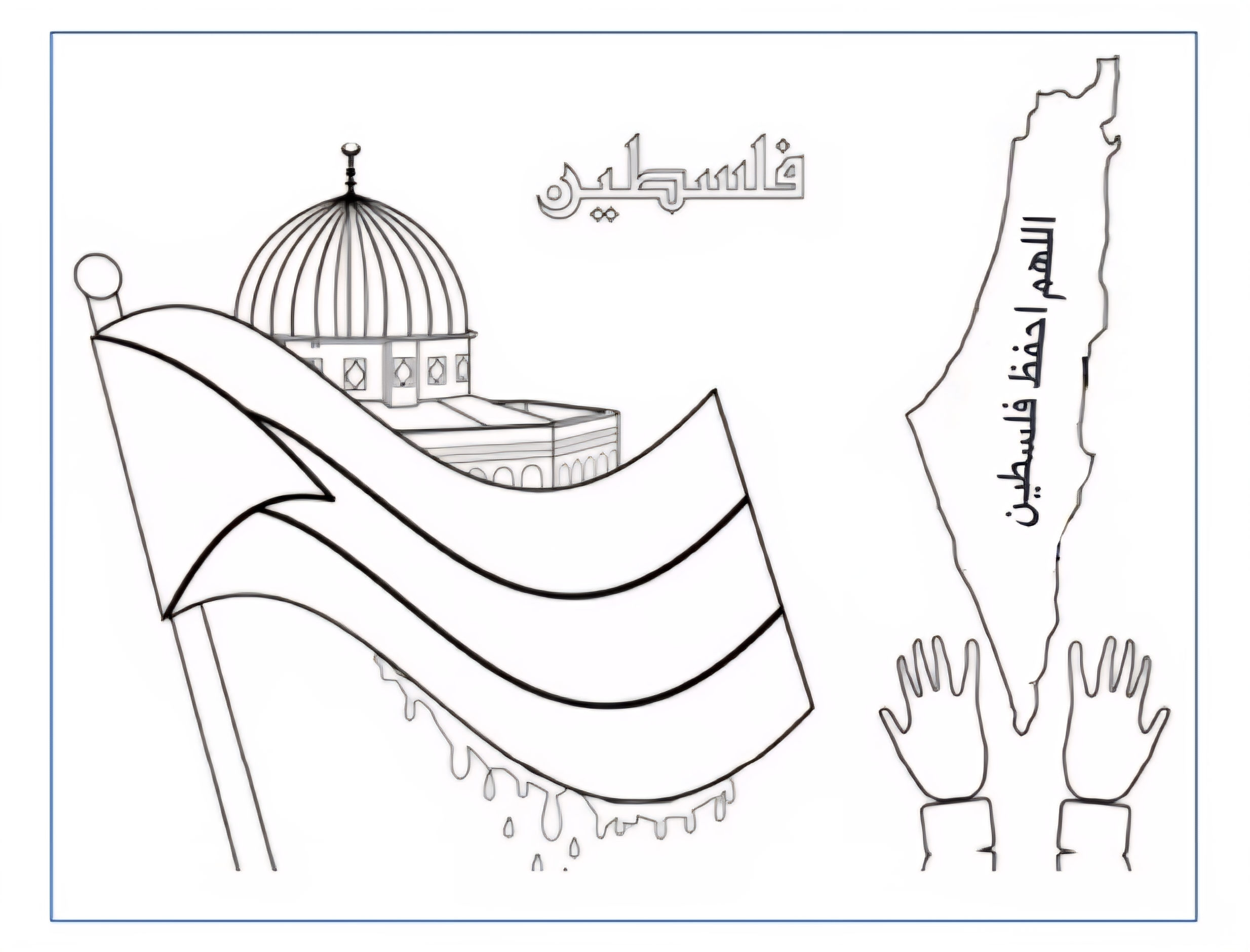
School desks and children’s cartoons line the room. In cases, textbooks from the Palestinian Authority show lessons which erase Israel from maps. UNRWA teachers like Afaf Talab have Facebook posts featuring wishes that God kills the Jews. A 9th grade lesson calls the firebombing of an Israeli bus a “barbeque party.” There is a coloring book hanging on the wall used in a fifth grade class in an UNRWA school which has a flag dripping in blood in front of the al Aqsa Mosque in Jerusalem, with a map of Israel alongside, erased into “Palestine.”
Coloring book from an UNRWA fifth grade class tying religion, prayer, death and destruction of the Jewish State
A television plays cartoons from Hamas TV shows, showing ultra-Orthodox Jews and Israeli soldiers digging under al Aqsa mocking Arabs and Muslims who are “asleep” as the crooked nosed-Jews threaten the mosque.
Interactive displays allow visitors to click on various videos from summer camps in Gaza and east of the 1949 Armistice Lines (E49AL/ “West Bank”). Young girls sing about “igniting an intifada,” encouraged “to shoot all the Jews” and taught if the Jews don’t leave Palestine, all of them should be “slaughtered.”
And the music. Popular Arabic songs play throughout the museum. They call for Jews to leave the land or be killed or kidnapped.
Gallery II – Icons of Murder
Here hang portraits of those celebrated for killing Jews: Dalal Mughrabi, Yahya Ayyash, and others. Under each image scroll the names of their victims—families, schoolchildren, passengers. Nearby, official “martyrs’ fund” ledgers show stipends paid to convicted attackers from the Palestinian government. In the center of the room are mock ups of the various schools, public squares and soccer tournaments named for the “martyrs.”
Gallery III – International Complicity
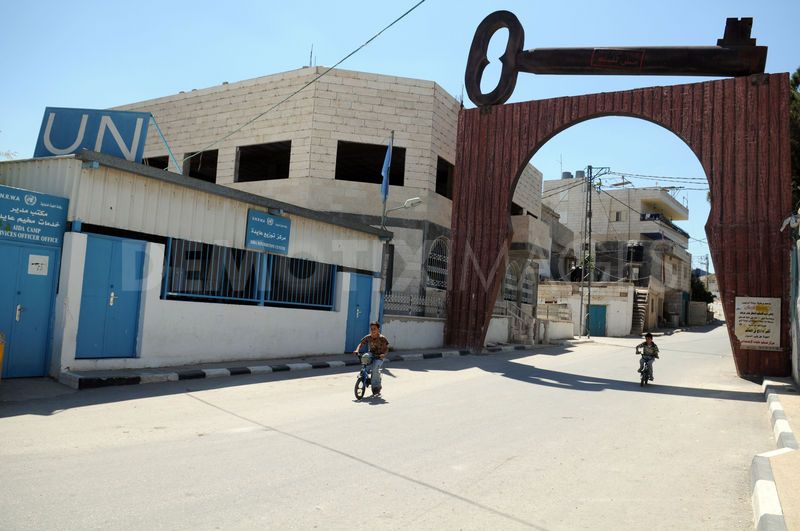
Painted UN blue, this hall traces how global institutions enabled indoctrination. Pictures of leaders of various European countries including Belgium and Norway that fund the schools and squares named after terrorists. Copies of numerous United Nations resolutions cover the walls, which condemn Israel but not Hamas, which make it illegal for Jews to live in the Old City of Jerusalem, and illegal to pray at their holiest site on the Temple Mount.
A large picture of the entrance to the UN-run “refugee” camp in Bethlehem with a key on top of a keyhole portal emphasizes that the international community is the vehicle for Arabs to eradicate the Jewish State.
Gallery IV – Blood Narratives
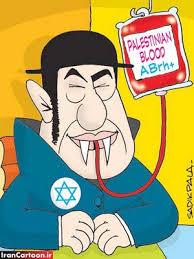
Walls of newspapers and posters accuse Jews of medieval crimes: poisoning wells, harvesting organs. Animated panels compare Nazi caricatures to modern Palestinian cartoons—the imagery identical. Loudspeakers replay sermons calling Jews “descendants of apes and pigs.”
Interactive charts present PCPSR and other surveys over time:
December 2023 – about three-quarters of Palestinians called the October 7 attack “correct.”
Majorities favored continued “armed struggle.”
Roughly two-thirds support killing Jewish civilians in Israel in every poll since 2000
Gallery VI – Jerusalem: The Theater of Denial
A model of the Al-Aqsa plaza plays footage of Murabitat women harassing Jewish visitors to the Temple Mount.
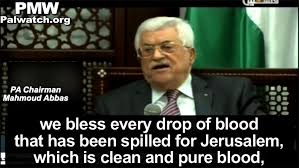
PA President Mahmoud Abbas and other PA officials can be seen on videos claiming “Jews have no history in Jerusalem.” Audio of chants—“With blood and soul we will redeem you O Aqsa”—fills the room. Hamas leaders promise to repeat the October 7 “al Aqsa flood” massacre “again and again.”
PA president Mahmoud Abbas glorifying death on behalf of Jerusalem
Gallery VII – The Forgotten Ethnic Cleansing of Jews
Artifacts from before 1967 tell the story before the story:
The massacre and expulsion of Jews from Hebron in 1929
Synagogues Destroyed: photos of Jerusalem’s Old City after Jordan’s takeover—58 synagogues razed.
Expulsion: maps marking every Jewish family removed from the Old City.
Jordan’s illegal annexation of part of Israel in 1950.
Gallery VIII – Lynching: Public Violence as Spectacle
The public spectacle of the killing for the crowds is highlighted in the last room of the permanent collection.
Hebron 1929 – photos and testimonies of the massacre where 67 Jews were murdered
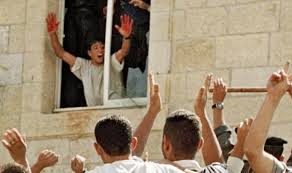
Ramallah 2000 – two Israeli reservists beaten to death by a mob; a photograph of a man showing blood-stained hands became an icon of the Second Intifada. The crowd cheers.
Gaza, 2023 – pictures of Gazans cheering as dead Israeli women are paraded through the streets.
The bloody hands of a Palestinian man after lynching an Israeli in Ramallah has become a symbol of the genocidal intent
Special Exhibit – The Sbarro Massacre: Innocence Targeted
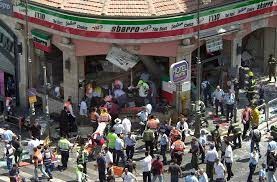
At the museum’s center stands a quiet, glass-walled room marking August 9, 2001, the bombing of the Sbarro pizzeria in Jerusalem.
Bombing at Sbarro restaurant in the Palestinian terrorist war on Israeli Jews
Artifacts include: fragments of the restaurant sign and surviving menu board; the broken guitar of 15-year-old victim Malki Roth; children’s shoes and schoolbooks retrieved from the site.
Chronology Panel: maps trace the attacker’s route and later trials of the planners.
Testimony Wall: written reflections from victims’ families—the Roths, Greenbaums, Schijveschuurders—describe loss and their ongoing quest for justice.
Media Archive: displays neutral summaries of press interviews and court transcripts noting the convicted organizer’s open lack of remorse, contrasted with international outrage and U.S. extradition efforts.
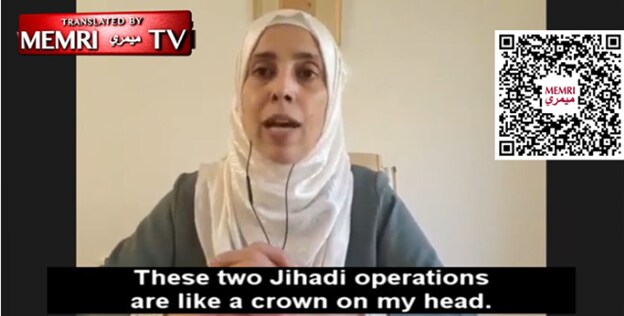
A video concludes with the terrorist Ahlam al-Tamimi stating how proud she was to have killed “religious Jews” and eight children.
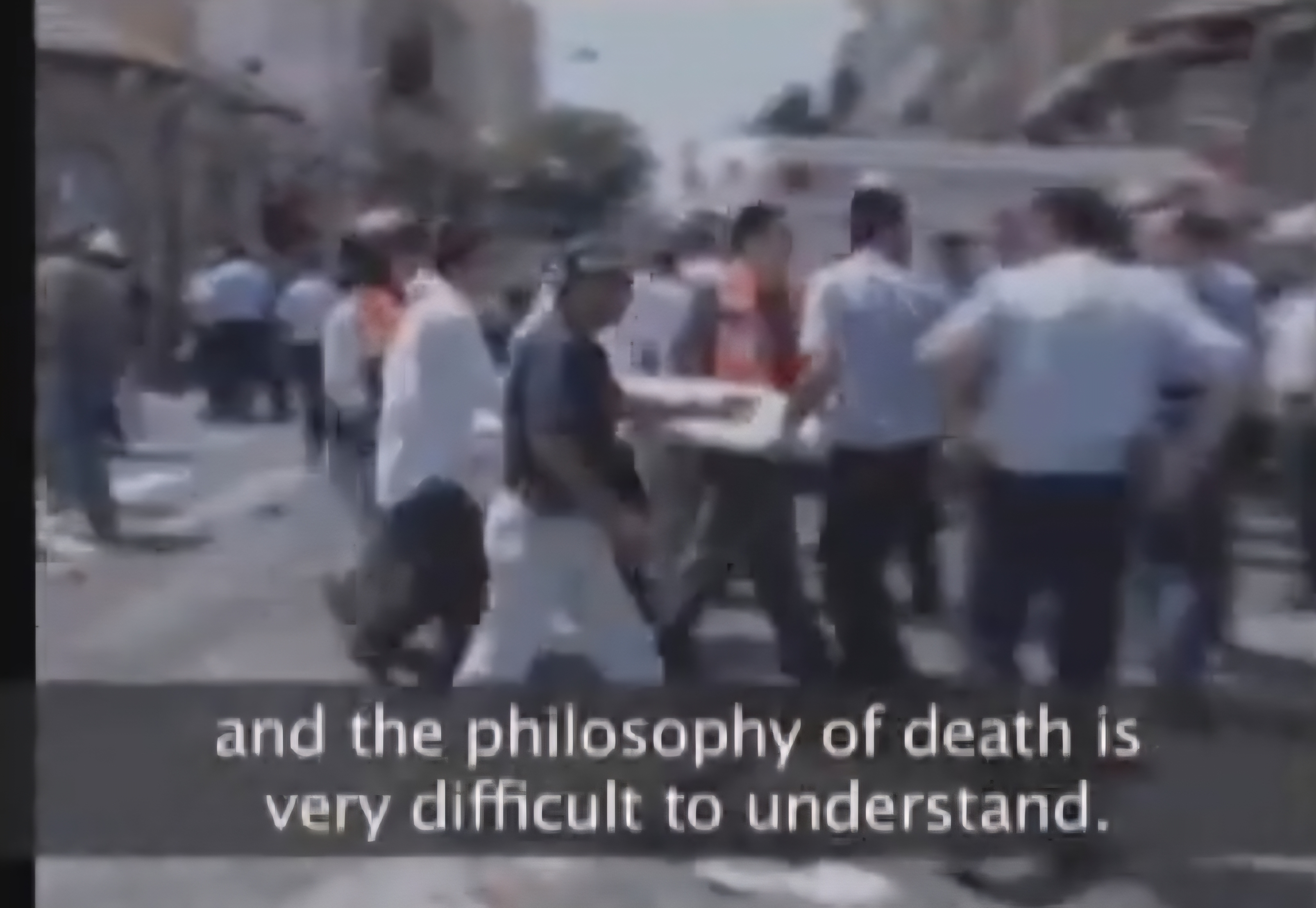
Her words hang over the door as one leaves the building: “the philosophy of death is very difficult to understand.” She lives as a free woman walking the streets of Jordan today, a hero to millions.
Interview with terrorist Ahlam al Tamimi who has no regrets for killing women and children at a pizzeria
Epilogue
The Museum of Genocidal Intent does not exist, yet its exhibits do—scattered through classrooms, speeches, and monuments. Each artifact documents a choice: to teach vengeance or to teach life. Only when the real-world versions of these exhibits are dismantled will the possibility of peace move from behind glass into the open air.
In Lebanon and Syria, senior terror leaders keep disappearing. Israel’s intelligence services have shown that even far from home, their reach is absolute. Hezbollah commanders vanish without warning. Iranian coordinators meet “accidents” in Damascus. Israel’s eyes are everywhere — east of the 1949 Armistice Lines (E49AL / “West Bank”) and far beyond.
Inside Israel and the territories under its vigilance, that network of informants has kept the Stateless Arabs from Palestine (SAPs) from unleashing the kind of barbarism seen under Hamas. The true security barrier is not made of concrete or wire — it is people: HUMINT, human intelligence, the whispers that prevent slaughter.
But Gaza became a black hole the moment Israel withdrew in 2005. Every soldier, every Jew, every Israeli presence was uprooted — and with them went the eyes and ears that had kept the region stable. Hamas seized power through blood, executing its rivals and every suspected collaborator. What followed since 2007 was not liberation but suffocation. Gaza became a fortress of fanaticism, sealed off and armed to the teeth.
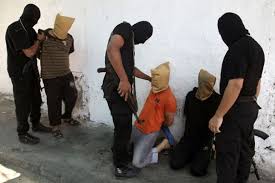
Hamas interrogates suspected informants in 2014
The legal Israeli blockade was not enough. While Israel and Egypt controlled the borders, Hamas tunneled beneath them — smuggling Iranian rockets, explosives, and even the raw materials to build new weapons. Gaza transformed from a strip of land into a terrorist enclave. By 2023, it was not just armed — it was indoctrinated, radicalized, and ready for mass murder.
Israel will not make that mistake again.
Among the newly released SAP prisoners, there are almost certainly Israeli plants — men and women turned during interrogations or cultivated long before. They will slip back into Gaza’s shattered neighborhoods, listening, watching, feeding intelligence. Every conversation, every weapons cache, every hint of reorganization could be the thread that prevents the next October 7.
Hamas knows this. Its paranoia will turn inward. Accusations will fly, confessions will be forced, and public executions will become commonplace to the shouts of “Allahu Akhbar.” The group will again devour its own, because it cannot rule without fear.
Hamas executes suspected informants in front of crowd of children
Any new ruling authority that replaces Hamas will need to coordinate with Israel. There can be no “independent Gaza” left to rot in secrecy. Deradicalization cannot be trusted to glossy NGOs or “neutral” foreign agencies alone. It must be verified — by intelligence, by informants, by those who know the difference between reform and camouflage.
[As for the Arab propaganda outlets, none of the public executions are discussed on Qatari-owned Al Jazeera. It is busy selling Gaza and Hamas as peace-loving.]
The intelligence war has already begun. The question is not whether Israel has plants among the returnees — it is how many will live long enough to stop Gaza from sinking back into the darkness it dug for itself.
















 First One Through
