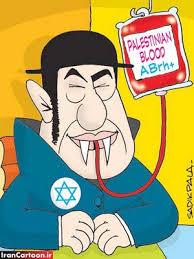
Over twenty years ago, Jewish Russian-Israeli Natan Sharansky coined the “3D Test of Anti-Semitism: Demonization, Double Standards, Delegitimization.” Each one comes for Jews in their own unique way: demonization actively incites hatred; delegitimization undermines support structures over time; and double standards drips slowly into society, barely noticed and acknowledged.
Consider the assassination of noted terrorist Osama Bin Laden by the United States. World leaders applauded the American attack, thousands of miles from its shores, as justice served. Yet when Israel eliminated the terrorist Sheik Ahmed Yassin, the founder of Hamas, the world lined up to condemn Israel.Hypocrisy masked by time, place and protagonists concealed the rank Jew-hatred.
It happens to Israel frequently.
Reporters Without Borders (RSF) is a non-governmental organization (NGO) based in France which attempts to get information out to the world regardless of frontiers, and to protect journalists. Its tagline does not clarify that it does this selectively, such as toeing the line with the French government, and persistently coming for Israel.
For years, RSF pushed to get Russia Today (RT) off the air and internet in France. RSF claimed RT was “Russia’s war propaganda machine,” and successfully got Channel One Russia off the air which it labeled “an important part of the state’s disinformation arsenal in Russia, where TV continues to be a very influential medium.”
RSF worked to ban media outlet RT because it claimed it is a disinformation outlet
Yet when Israel banned Qatar-owned Al Jazeera from Israel in May 2024, which had long served as an open propaganda outlet for the political-terrorist group Hamas, RSF went nuts. The group’s Middle East leader said “The Israeli parliament’s vote to censor Al Jazeera, and Benjamin Netanyahu’s defamatory remarks about its journalists are unacceptable. RSF demands that the Israeli authorities end their aggressive harassment of Al Jazeera. Such censorship legislation, under the guise of democratic regulation, implicitly targeting a specific media outlet, creates a precedent fraught with dangers for journalism in Israel.”
RSF didn’t only object to Israel’s ban of Hamas’s propaganda arm of Al Jazeera but accused Israel of “persecution”
RSF did not only defend the Hamas mouthpiece headquartered in Qatar, its entire framework of the Gaza war completely sides with Hamas. Examples of Hamas simply being annoying while Israel is the source of violence include: “Journalists suspected of collaborating with Israel are hampered in their work by Hamas and the Islamic Jihad, while also enduring the violence of the Israeli blockade on the territory,” and blaming Israel for starting the latest war with “Press freedom, media plurality and editorial independence have been increasingly restricted in Israel since the start of the war in Gaza, launched by Israel on 7 October 2023 following the deadly Hamas attack,” which would be like blaming the U.S.A. for starting a war with Japan after the Pearl Harbor attack.
In January 2025, the Palestinian Authority also shut down Al Jazeera in the parts of the West Bank it controls, stating the company’s websites have “inciting material and reports that were deceiving and stirring strife.” Israel went further and accused several Al Jazeera journalists of participating in the October 7 massacre. Whether causing “strife” or participating in lynchings, the media outlet has been blamed by both sides in fueling the war.
The double standards of Reporters Without Borders attempting to protect the Hamas propaganda outlet of Al Jazeera during the terrorist group’s horrific war but pushing to ban Russian media in Europe is appalling. It also raises questions about the NGO’s biases.
This isn’t a defense of censorship but a demand for consistency. If Al Jazeera’s ability to operate is sacred, then so is Russia Today’s. If RT can be banned for spreading propaganda and fueling war, then so can Al Jazeera. RSF’s double standard is damning.
The reality of today is there is no neutral and completely fact-based press. Government-owned media like Russia Today and Al Jazeera should fall under a single bucket of treatment. Ban them or air them with wrappers that identify them as foreign propaganda outlets so viewers understand the nature of the content.
Freedom of the press is not a weapon to be wielded selectively. But for groups like Reporters Without Borders, it increasingly is. And that should concern everyone who actually believes in a free and honest media.
The world sees Gaza through the lens of curated sympathy – smoke trails from missile strikes, wounded children, crumbled buildings – rendered by the media and United Nations. The headlines scream “siege” and “occupation,” and the images are carefully framed to elicit tears, not questions. For them, Gaza is a tragedy.
But Israelis? They see something very different.
They see a terrorist enclave. A society ruled by Hamas – not just tolerated but elected – with a charter calling for genocide against Jews. They see neighbors who have fired over 30,000 rockets at them since Israel left Gaza in 2005, and who used humanitarian aid to dig terror tunnels and stockpile weapons.
Israelis are haunted by October 7, 2023 – the day when 1,200 of their people were butchered. Burned alive. Shot in their homes. Raped in front of their families. And they remember what came next: polls showing 75% of Gazans supported the massacre. The popularity of other Palestinian Arab terrorist groups skyrocketed as well, including Islamic Jihad, al Aqsa Brigade and al Qassam. This wasn’t some fringe radical cell that commited the vile pogrom – this was public approval for mass murder. It was the fulfillment of their long-standing desire to attack Jewish civilians inside of Israel since 2000.
They also see something deeper: three-quarters of Gazans consider themselves “refugees” living in temporary homes. Not because of displacement from this war but because they believe they’re entitled to homes inside Israel. They don’t see Gaza as their future – they see Tel Aviv.
To the United Nations, Gaza is a moral play where Israel is always cast as the villain. They see Gaza not as a failure of Palestinian leadership, not as a society hijacked by jihad, but as a tragedy authored entirely by Israel. Why? Because Israel won’t allow these “refugees” to move into the homes of Israeli Jews – the very homes where grandparents fled in 1948 after five Arab armies attacked the new Jewish state.
The world has condemned Israel for responding “disproportionately” to the October 7 massacre. The UN saw Israeli counterstrikes as war crimes, not defense. They ignored the slaughter of Israeli children and focused on fuel shortages in Gaza. They accused Israel of starvation, ignoring the trucks of aid Israel itself let in, even while its soldiers were under fire. They paid scant lip service to Israeli hostages kept in tunnels by Hamas, viewing them as collateral to Israel’s ongoing “Nakba”.
The Arab and Muslim world is not fooled but is not helping. They don’t see Gazans as brothers and sisters in need of refuge. They see them as Palestinians – a distinct, useful political weapon. If Gazans were Syrians, they would’ve been taken in by now. But they’re not. They’re left to fester – a long-term tool to weaken and delegitimize the Jewish state.
Even in America, Gaza has become a kind of geopolitical Rorschach test. Leaders like Donald Trump and Jared Kushner see opportunity: beachfront real estate with the potential to be the Singapore of the Middle East. A future riviera. But that future depends on changing a mentality – one that for decades has been more obsessed with destroying Israel than building Gaza.
Because this is the reality: Gaza could have been Dubai. It had the backing of the international community, billions in aid, and a chance to chart its own path. Instead, it chose jihad. It chose hate. It chose martyrdom over medicine, tunnels over technology, indoctrination over innovation.
The world sees rubble. Death. Tragedy. Not on both sides; for Palestinians.
They can’t see the Israeli hostages through their clouded moral lenses. They don’t see the Jewish parents still waiting for their children. They don’t see the decades of restraint Israel exercised before finally saying “enough”. They are caught in an empathy swamp and have mentally baptised Gazans as martyrs instead of genocidal jihadists.
The Global South sees Gaza not just as another flashpoint – but as a pawn in a bigger game. The narrative is not just about “liberation” but “redistribution.” From peace talks to class war. Israel, to them, is just the first domino in toppling the Western-led world order.
Gaza isn’t just a local issue anymore. It’s global. It’s ideological. And for Israelis, the stakes couldn’t be higher.
In this backdrop of viewpoints, an international conference at the U.N. headquarters in New York will take place from June 17 to 20 co-chaired by France and Saudi Arabia. The Global North will join the Global South in trying to find near-term and longer-term solutions to the 100-year Arab-Israeli conflict.
In this Coliseum, the General Assembly serves as the unruly crowd seeking the torture of the Jewish State, while the Security Council acts as caesar empowered with the pen to draft international law. Will the United States protect Israel in such forum on the heels of Trump’s visit to the Gulf? Will Trump seek to trade an unwinding of U.N. Security Council Resolution 2334 to get Israel to agree to short-term and longer term movements towards a permanent divorce between local Jews and Arabs?
Israel was blind to the October 7 attack. Does it see what the world sees in Gaza now and the positions being orchestrated for the June U.N. conference? Will the modern blind Samson bring down the house if it only hears calls for its demise and cannot see a path to live in peace?
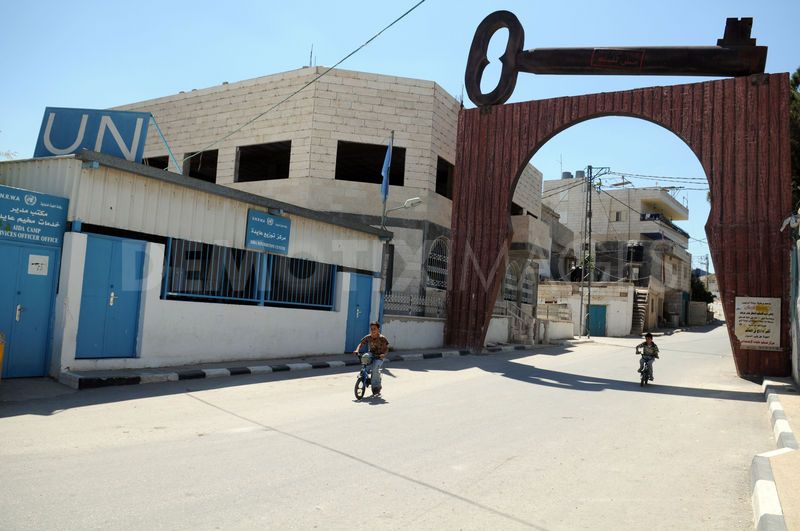
Across Western cities, “Nakba” protests fill the streets in May, marking what Stateless Arabs from Palestine (SAPs) call the “catastrophe” of Israel’s founding. Protesters chant slogans of “liberation,” wave Palestinian flags, and brandish large symbolic keys—representing homes lost in the Arab-Israeli 1948 War, and a longed-for return.
In London, British actor Khalid Abdalla holds a key symbolising the supposed Palestinian “right of return” (photo: Middle East Eye)
To the casual observer, these demonstrations appear to be non-violent expressions of secular nationalism: a displaced people demanding justice and return. The rhetoric is packaged in the language of “anti-colonialism,” a phrase from the Global South marketed at western universities.
The terminology is secular and political but the facts on the ground tell a different story.
The actual war against Israel is not being led by nationalists. It is driven by radical Islamist groups including Hamas and Islamic Jihad. The attack launched on October 7, 2023, was not called the “Nakba Response” or “Operation Liberation.” It was named “Al-Aqsa Flood”—a title soaked in religious meaning, not national aspiration. It invoked Islam’s third-holiest site which sits atop Judaism’s holiest site.
The strategic use of “Nakba” language in western cities is a deliberate effort to mask a religious war in secular terms. It is designed to resonate with Western leftists who are comfortable championing national self-determination but uneasy with theocratic zeal. It reframes an Islamic holy war as a freedom struggle, making it seem modern, rational, and even “progressive.”
But the religious reality will not remain buried forever.
Because just as SAPs speak of return, so do Jews. If Jews are forced to lose their sovereignty, perhaps diluted in a binational state, it will likely not lead to secular coexistence—it may unleash something far older and deeper: the demand for rebuilding the Third Jewish Temple.
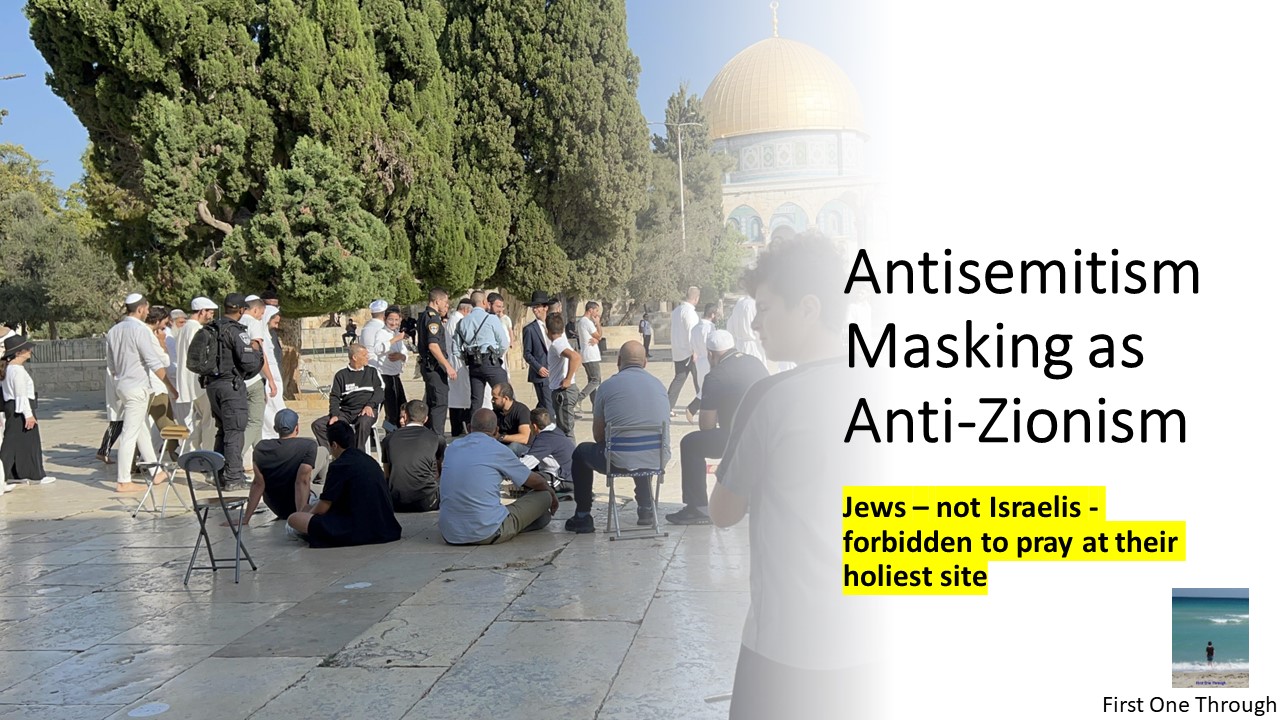
Today, the Temple Mount is controlled administratively by the Jordanian Waqf, which bans Jewish prayer. Since the Second Temple was destroyed in 70AD, Jews have dreamed of rebuilding it, and while that has remained marginal in the modern secular Jewish state, it may surge forward in a post-Zionist situation in which Jews are compelled to relinquish so much.
If Israel is converted to a binational state in which everyone has equal rights, Jews would obviously insist on the same rights as Muslims enjoy today, to pray openly by the thousands on the Temple Mount. The demand to rebuild the Jewish Temple could move from the fringe to the center. The so-called “liberation” of Palestine would be matched by calls to liberate the Mount—from Islamic control.
In that light, the pro-Palestinian protest chants of “liberation” are a double-edged sword. They echo with reciprocal cries: not just the return of SAPs to Jaffa but the return of Jews to the Temple Mount. The religious war launched by Gazans wrapped in secular “Nakba” terminology in the west would be laid bare for what it is.
Muslims and Jews hold keys for places that don’t exist in the holy land anymore – for homes and a Temple. Should one side pursue a “right of return” to create a future-past, the mirrored key will do no less.
Let’s state something openly and clearly: “Anti-Zionism” deserves to be in quotation marks. Israel exists. It is not a theory. Being “anti-Zionism” is anti-Israel, so be clear.
Under this framework of anti-Israel feelings and behavior, “anti-Zionists” claim they are just against the government of Israel or policies of the government of Israel. That’s fine. Many people dislike their own government and some policies. However, it is a curious thing to be consumed by hatred of government policies far away from your own shores, flagging something deeper like a potential hatred of Jews, but let’s just put a pin in that observation for now.
The ongoing deliberate mislabelling of Jews as something other than Jews – say “colonists” or “settlers” – is part of a vilification campaign and clearly antisemitic.
It is true on college campuses, in the media, at the United Nations and of course, from the Palestinian Authority itself.
When Jews – whether from Israel, east of the 1949 Armistice Lines (E49AL), or around the world – visit the Jewish Temple Mount during regular visiting hours, it should not be news. Yet it is for the supposedly moderate Palestinian Authority.
Wafa, the official media of the PA, repeatedly stated that a handful of Jews were “colonists” because they dared to step over the 1949 Armistice Lines. Walking around the Temple Mount was called “storming Al- Aqsa compound.” Their presence disturbed “Palestinian worshippers,” a.k.a. Muslims.
The blatant antisemitism was marketed under a political struggle. Jews were transformed into a combative illegal horde under a political monicker. The PA is not antisemitic, just anti-colonists. It is a mere coincidence that all Jews are considered colonists (Israeli Arabs are called Palestinian citizens of Israel to shed them of potentially being called “settlers.”)
Concealing the word “Jew” does not hide the antisemitism. They are not illegal people and they are not doing anything nefarious. The veneer of United Nations-sanctioned political obfuscation does not wash the religious animus nor absolve the antisemitic hatred.
The “al aqsa flood” being waged by the popular jihadi extremists of Hamas is being vanquished by the Israeli army. It is time to terminate the political and libelous “al aqsa storm” fought by Fatah and the PA, by all people of good conscience.
The United Nations has 193 countries in the General Assembly, and 134, roughly 70%, are located in what is generally called the “Global South”, a term that has emerged to replace “third world” and “developing economies.” The region accounts for about 80% of the global population, with the difference in figures mostly due to the two largest populations – India and China – being located in the region.
The UN has many committees and agencies. Of all of them, the UN Security Council is the most significant, being the sole entity that can pass international laws. It has five permanent members – China, France, Russia, the United Kingdom and the USA – and ten non-permanent members which serve two year terms. More than 50 members of the UN have never served on the UNSC, including Israel.
The current UN Secretary General, Antonio Guterres, thinks that the current UNSC needs to be refashioned for the modern world. He bemoans the fact that no African country has a permanent seat on the council, and the ability for the five permanent members to veto resolutions has allowed some wars – like in Ukraine and Gaza – to continue for too long. He also believes that capitalism as dictated by the Global North has kept the Global South in poverty by charging higher rates of interest and not forgiving debt.
US President Joe Biden favored allowing two African countries to become permanent members of the UNSC but objected to their obtaining veto powers. He thought that the current system of veto rights already made the committee unproductive and adding more members with such rights would impede it further. Others countered that it was time to remove all veto rights. Still others like India, the world’s most populous country, demanded a seat on the committee as well. Arab countries took the opportunity to demand the same.
Negotiations will play out over 2025, with a new US administration under Donald Trump who is much more weary of multilateralism and the United Nations generally. The discussions will mainly focus on Africa, where most of the global growth in population is occurring.
China has invested heavily in Africa, accounting for roughly one-third of the infrastructure projects, and now has global trade of $282 billion with the continent. Its actions helped it surpass the United States in terms of popularity (58% to 56%). The US must consider how it interacts with the African continent directly and what steps it takes at the UN as it fights its shadow war with China.
Those who spend their lives focused on the UN and global politics have been debating which two countries should join the UNSC. If the seats go to the countries with the largest economies, it would favor South Africa ($373 billion) and Egypt ($347 billion). If it is awarded based on population, it would go to Nigeria (232 million) and Ethiopia (132 million). Others consider the Democratic Republic of Congo (109 million and one of the fastest growing population at +3.3% in 2024) which has been decimated by ongoing violence. Including a country which has longed for peace might make sense at the Security Council.
For people who focus on another country which has dreamed of calm – the Jewish State of Israel – the changes to the UNSC are extremely important.
Overall, the Global South is much more anti-Israel than the Global North. All 28 countries that refuse to recognize the State of Israel are located there. Almost every country in the Global South recognizes Palestine while a minority of the Global North recognizes such entity.
Since the Iranian Proxies War on Israel, South Africa has led the charge against Israel at the International Court of Justice, claiming Israel’s defensive war was a “genocide.” Those joining South Africa were almost all from the Global South, with the exceptions of Belgium, Ireland and Spain from Europe.
The dynamic of a change at the UNSC will not only impact Israel but possibly Jews around the world as witnessed by the spike of global antisemitic attacks since the October 7 massacre. In the United States, the majority of international students at universities come from the Global South, and an empowerment of their voices at the Security Council may exacerbate Jew hatred everywhere.
While people are focused on the genocidal jihad that brought violence against Jews in Israel and the United States watching movies like October 8, attention must include the impending harm that may come to Jews everywhere with changes at the United Nations Security Council.
ACTION ITEM
Write the White House to share your concerns of changes to the United Nations Security Council
Fewer people are going to college and graduate schools. Some of the drop-off relates to people having fewer children so the absolute number of people going to school has been declining. But the percentage of students going from high school to advanced degrees has also fallen considerably. Even in the years before the pandemic, the decline in high schoolers going to college dropped from 70% in 2016 to 63% in 2020. The figure dropped to 61.4% in 2023, with men being the most likely to skip college with only 57.6% opting for that education. The rates for Whites and Blacks were roughly the same at 59.9% and 59.6%, respectively, with Hispanics being lower at 51.8% and Asians surpassing every group at 84.7%. The overall impact can be seen in 2010 college enrollment of 10.2 million women and 7.8 million men, dropping to 8.9 million (-12.7%) and 6.5 million (-16.7%), respectively in 2021.
The reasons that most Americans are skipping college include a strong job market paying good wages, the desire to avoid college debt, people pursuing jobs that don’t require advanced degrees, and the ability to learn many skills online.
To address the declining enrollment, universities are taking many more international students. In the 2023/24 academic year, U.S. universities had over 1.1 million foreign students, a record. These students mostly came from the “Global South,” the emerging, principally non-White economies. The majority of students came from southeast Asia including India (331k), China (277k), Nepal, Vietnam, Bangladesh and Taiwan. No European country was in the top ten. The only countries in the top ten which are part of the Global North were South Korea and Canada. The countries with the largest spike in students over the past year were all from the Global South including Ghana (+45%), Bangladesh (+26%), India (+23%), Iran (+15%) and Nigeria (+13%).
Global North in blue and Global South in red
The student exchange is not reciprocal. Only 280,000 Americans studied abroad and the majority (64%) went to Europe, with Italy, the United Kingdom, Spain, and France dominating the destinations. Two-thirds of those students identified as White.
The Americans abroad tended to go during their undergraduate years, spending just a few months away (only 2.4% went for a year). They tended to be women (67%), and studied business and management (20%) and social sciences (18%). This is in sharp contrast to international students coming to the United States who were typically graduate students pursuing a degree in STEM (science, technology, engineering and mathematics) at 56%.
The international students are older and come for longer periods of time. They often marry and have kids while pursuing their degrees, establishing a foothold in America, while Americans-in-Europe simply have a quick experience away from home.
The universities are very happy to have these paying students fill their classrooms which are being abandoned by Americans. In 2019 and 2020, 49% of all STEM master’s degrees and 57% of all STEM doctorate degrees were conferred to international students. The economics of running courses and an institution without half the students would have required eliminating courses and teachers, and perhaps shutting whole departments.
Technology companies want and need these skilled students as future employees. Google, Apple and Microsoft count on new STEM graduates to fill their ranks each year and lobby the government accordingly. Open Doors estimates that these international students contribute roughly $50 billion to the U.S. economy, or about $5,000 per student.
The U.S. government plays a heavy hand in all of this, not only seeking to salvage American university programs and building feeders to the American technology landscape, but on a political level as well.
Two situations highlight U.S. politics driving international students to these shores: Saudi Arabia and Israel.
As the United States ramped up pressure on the Islamic Republic of Iran regarding its nuclear program from 2007 to 2015, the U.S. sought to reassure its ally, the Kingdom of Saudi Arabia which is a foe of Iran. During those years, the number of Saudi students in American universities climbed from just a few thousand to over 61,000. The Saudi students learned courses like petroleum engineering to better extract and process oil, as well as nuclear physics to be able to build nuclear power on their own. Just after the nuclear agreement was signed, the number of Saudi students dropped significantly, down to under 15,000 in the 2023/24 academic year.
American politics playing out for international students from Israel is more explicit, and targets high school students, as long as they are Arabs.
On September 12, 2023, the U.S. embassy in Israel posted an advertisement that the U.S. State Department “is seeking a group of Arab citizens of Israel secondary school students to participate in a Study- in-the-USA initiative for high school students during the 2024-2025 school year.” (bold in original) It is backed by the YES Program Scholarship which gives “many countries with significant Muslim population an opportunity to study at American high schools and live with American host families for one academic year,” funding “all expenses in connection with the study tour including airfare, room and board, pocket money and most other costs.” It is part of the broad U.S. policy to make amends for the “War on Terror,” and selected only non-Jews from the Jewish State to learn in America.
The cherry-picking of certain types of international students demands a deeper exploration of the segments of the Global South that are in American schools.
The Global South has two principal regions as it relates to American immigrants: Latin America and everywhere else.
The United States was primarily populated by European migration from 1840 to 1920. World War I, the Great Depression and World War II stemmed immigration for several decades before it picked up with the 1965 Immigration and Nationality Act. Since that time, 49% of immigrants have come from Latin America and 27% from Asia. These groups are very different. The typical immigrant from Latin America had little formalized education (only 9% of Mexicans in the US in 2022 had a college degree). That compared to those from South Asia where 72% had a college degree, 55% from Central Asia and 49% from East and Southeast Asia.
Those coming from Latin America typically came for jobs not requiring a college degree while those coming from Asia came with degrees or obtained them at American universities.
The demographics between Latin America and Asia are also very different regarding religion.
About 50 million Muslims live in the Global North which has a population of roughly 1.6 billion, or about 3% of the population. It is even lower in Latin America which has roughly 4 million Muslims out of a population of 665 million, or about 0.6%. That is is sharp contrast to roughly 1.8 billion Muslims living in the Global South with a population of 6.4 billion, or roughly 28%, or 31% x-Latin America. If one were to exclude China as well which has around 25 million Muslims, the Global South is over 41% Muslim (x-China and x-Latin America).
While China does not resemble much of the Global South in both religious demographics and not having a history of European countries on its soil, it is now in an aggressive competitive battle against the Global North for power. As such, China is leveraging its regional position alongside the Global South to wage a cultural and economic war against the West.
China and the Global South have advanced efforts to promote anarchy in the United States alongside far-left non-White movements like Justice Democrats. The calls to Defund the Police and Abolish ICE were designed to tear down walls of protection and flood the United States with people from the Global South. The chants to “Globalize the Intifada” on American campuses and streets are calls to dismantle Western civilization’s capitalism and support for the Jewish State, with a broad redistribution of wealth and power to the preferred people in the Global South.
“Intifada” protest at Columbia University streets
When people in the Global North hear the chants of “Intifada,” they recognize the vile terrorism of Palestinian Arabs blowing up buses and pizza stores in the Second Intifada. However, the Global South considers it an Arabic term meaning “shaking off” the colonialism and imperialism of the West. The South’s overriding desire of taking on western civilization overwhelms the facts that Jews are indigenous to the land of Israel and that the Intifada is a premeditated violent attack on civilians. The Islamist Global South rallies to its coreligionists.
Banner with “Intifada” hung outside Columbia University
The population on America’s campuses does not resemble the rest of America. The disproportionate number of Asians and Muslims enrolled at America’s universities come from regions which are in active competition with the West, and embrace the Stateless Arabs from Palestine’s (SAPs) jihadi war against the Jews. The universities which enroll the international students of the Global South, attempt to tie them with American minority groups whose ancestors originated from those regions. Remarkably, a cause like Black Lives Matter which has nothing to do with the Global South, becomes hitched to the Israeli Defense Forces.
Sen. Josh Hawley (R-MO) on hearing about antisemitism at universities showcasing “Intifada”
The declining enrollment at American universities has led to them being taken over by international students from Asia and Africa. This has led directly to antisemitism on campuses and in the streets. It was true before the October 7 massacre and has only accelerated since then.
New York City march to “Globalize the Intifada” in September 2021, two years before the October 7 massacre by Gazans
Americans and the Global North are watching the initial battles of the Global South on the beachheads of American universities and are dumbstruck. The West would be well served to reevaluate those international students admitted to study here, and use this time to prepare for the battles to come.
ACTION ITEM
Contact the White House to vet international students coming to study at American universities, trimming the numbers coming from the Global South and making their visas conditional to peaceful behavior.
The Global South in downtown New York City taunting Jews and Israelis attending an exhibition about music lovers slaughtered by Gazans on October 7, 2023
International humanitarian law (IHL) has been established for decades, and many are principally designed to protect civilians during armed conflict. In the case of the Gaza war against Israel, it is questionable whether the laws can be applied to Israel’s actions in the war, not whether Israel is abusing such laws.
Principle of Distinction
The driving themes of IHL surrounds mitigating the harm to non-combatants during hostilities. The first driver is, therefore, to distinguish between combatants and non-combatants. In most battles, this is easy to accomplish: during a clash on a battlefield, the only participants are soldiers. In urban warfare, this is much more difficult.
In the dense Gaza strip, this is virtually impossible.
The various military groups in Gaza are embedded and underneath almost every building and road. Hamas, the popular political-terrorist group that rules Gaza, built an entire infrastructure underneath the city with a maze of 500 kilometers of tunnels and storerooms. The hundreds of exit shafts for much of this infrastructure is located in houses and schools.
Hamas soldiers in Gaza tunnels
Additionally, Gazan combatants dress in civilian clothing and are members of groups which are touted to be neutral including the United Nations, the press and hospital staff.
UNRWA employees and Hamas militants
If civilians and related infrastructure are enmeshed by premeditated design with an active military, then the civilians have become integrated into the war effort and renounced protections of distinction.
Principles of Proportionality and Precaution
IHL’s Principle of Proportionality is designed to minimize collateral damage to civilians when attacking legitimate military targets. It calls for a review of the situation and reducing armaments to make any incidental civilian harm be aligned to the relative military gain achieved. The related Precaution principle is one step further, to try to prevent any military action, if possible.
Israel has taken many actions to limit the harm to civilians – which have been harshly criticized, nevertheless.
Withholding electricity and other aid. Israel has attempted to pressure Hamas and other militant groups – which seize all goods into Gaza – by withholding basic items like electricity so Israel would not have to use military force in the region. For those efforts, Israel is accused of causing a humanitarian catastrophe, rather than adhering to the Principles of Precaution
Move civilians out of the field of battle. Israel has moved and continues to urge civilians to leave “hot” areas, only to be accused of “ethnic cleansing”
Using ground forces. Israel could minimize its own casualties by only using air power against the terrorist enclave. Instead, it seeks a more targeted effort to eliminate combatants and protect civilians, for which it is criticized.
While Gazan authorities threaten to commit the October 7 barbarity over and again, Israel attempts to adhere to international law yet is criticized for it. Even though Israel left Gaza in 2005, and put in place a blockade only when Hamas took full control of the strip in 2007 to follow the Principle of Precaution, it is laughingly accused by international “human rights” groups of a “belligerent occupation.”
The terrorist enclave of Gaza has removed distinctions between civilians and militants, aid workers and terrorists, state and non-state actors, locals and international operators, and civilian infrastructure and military bases in a toxic brew. It defecates on all humanitarian norms while pointing both armaments and accusing fingers at Israel.
As the United Nations and Gazans have themselves destroyed all distinctions between combatants and non-combatants, and declared that Israel can never meet the standards of international humanitarian law, there is no basis to criticize Israel’s handling of its defensive war on such basis.
The United Nations created a temporary agency in 1949 to care for Palestinian Arabs who left Israel during Israel’s founding. It’s called UNRWA, the United Nations Work and Relief Agency. The staff of over 30,000 people are almost all descendants of those Palestinian Arab “refugees” with a few White Europeans sprinkled on the leadership to make the organization appear as an international aid group, rather than an employment agency.
UNRWA has long abused its mandate, extending services to hundreds of thousands of people who are not descendants of “refugees”, essentially becoming a bank in distributing loans to local Arabs, and teaching millions of its Arab wards to hate Israeli Jews and that they will get to move into Israel with UNRWA’s help.
After years of perpetuating the conflict, Israel decided to ban UNRWA from operating in Israel as of January 30, 2025, as many of its members took part in the October 7 massacre and others worked for terrorist groups outside of Gaza, including in Lebanon. As UNRWA only operates in conjunction with the host country of operations, keeping operations in Jerusalem open after Israel declared it illegal would not just make it operating against Israeli law but its own principles.
So UNRWA acts defiantly, even though in knows full well that it is doing so illegally.
It is reminiscent of UN Security Council Resolution 2334 which made it illegal for Israeli Jews to live east of the 1949 Armistice Lines with Jordan (E49AL), including the Old City of Jerusalem. It is a patently antisemitic law, enshrined after nearly three-quarters of a million Jews already live in the area, so Israel ignores it and allows Jews to continue to buy and build homes in the area.
The press often labels Jews who live in E49AL as “settlers,” whether they live in new settlements or large cities. The term “settlement” is a wandering noun which travels with antisemites who label Jews as illegal trespassers. Media compounds the narrative, often appending language “which most of the world considers illegal” whenever discussing a “settlement.”
Will that same media now label UNRWA’s operations in Gaza and the “West Bank” as illegal? Or will it prefer to mock Israeli law, quite the opposite of its christening antisemitic UNSC Res. 2334.
Will members of the UN Security Council consider trading Israel’s ban of UNRWA with rescinding the antisemitic UNSC Resolution 2334 to facilitate aid to Gaza and promote coexistence? It has never been the modus operandi of the United Nations, but the times, they are a changin’.
President-elect Donald Trump issued a warning to the U.S.-designated terrorist group Hamas to release the 101 hostages it stole from Israel on October 7, 2023, or “all hell will break out” for them and the region. He would not comment further on what that meant for Hamas or its allies but reiterated that it would be severe.
Below are some thoughts on what actions the Trump administration might take, which fall into two principal categories: military and non-military.
Military
Trump’s first term in office did not see much activity in the way of American forces and action. While he did increase spending for the military over the Obama administration, his actual use of force was targeted and limited to particular strikes, such as the assassination of Iranian general Qasem Soleimani and missile strikes on Syria for using chemical weapons. It is possible that Trump would order targeted attacks on Hamas operatives as well.
The general argument against this is that Israel has already pulverized Hamas in Gaza and there is little else that the U.S. could do. That is not true.
The United States has several things that Israel doesn’t have: massive bombs; incremental intelligence; and global influence.
At various points of the Hamas-initiated war, the Biden administration withheld some armaments to Israel, fearing it would harm civilians. Those bombs and other tools of warfare could be used against Hamas and its allies. Hezbollah tunnels in Lebanon and Iran’s nuclear program could be eviscerated with advanced weaponry, whether given to and launched by Israel or used by American forces directly.
U.S. intelligence and reach spans beyond the immediate actors. One of Hamas’s leaders, Khaled Mashal lives openly in Qatar, where the US has its largest military base in the Middle East. The Trump administration may give Qatar the option of green-lighting the elimination of Mashal and his associates or watch the US move its over 10,000-person force to the Kingdom of Saudi Arabia as the administration advances the Abraham Accords with a normalization agreement between Israel and KSA.
Non-military
The United States power can bring the world to pressure Hamas through political, economic and judicial actions. This is the opposite approach of the Biden administration and the world which put pressure on Israel to the detriment of the hostages. US Secretary of State Antony Blinken admitted as much that “every time we put pressure on Israel, Hamas backed off from the hostage deal.”
The initiatives start with a simple order: label every government, agency, business or person associated with Hamas a terrorist entity.
The Palestinian Authority‘s parliament, the Palestinian Legislative Council, is led by Hamas. The PA would immediately become a designated terrorist group unless it fires every member of Hamas. All members of the PA would be subject to arrest and no organization would be permitted to send material support to the PA. Every US charity that sends money to the PA would lose tax-exempt status and/or be shut down.
The United Nations considers Hamas a legitimate political Palestinian party and its main agency in the region, UNRWA, closely coordinates with Hamas. UNRWA offices in the United States would be closed and the US would push allies to similarly halt funding to UNRWA and close its offices. UNRWA would not only lose all US funding and standing, but possibly the United Nations as well, if the organization continues to legitimize Hamas.
In addition to the “axis of resistance” of the Iranian proxies already on the terrorist list, Qatar and Turkey would be forced to chose between the United States and Hamas. Each would see its economies and regional aspirations quickly collapse should they side with terrorists. Ramifications could include not only moving all US assets out of Qatar to Saudi Arabia, but also supporting Israel and Cyprus to all energy claims in the Mediterranean Sea which Turkey covets.
In the United States, people who provide material support to not just Hamas, but the Palestinian Authority and UNRWA would be committing a criminal act. People would go to jail for up to 20 years or be deported. Entire groups, or perhaps just senior leadership of organizations like the Democratic Socialists of America, Students for Justice in Palestine and others could be impacted, depending on their level of support.
In April 2024, Congress enacted the Hamas and Other Palestinian Terrorist Groups International Financing Prevention Act which requires the executive branch to impose sanctions on foreign states or persons that provide certain types of support to Hamas, and other Palestinian terrorist groups. Trump’s version of “hell” for Hamas supporters will be to not only enforce the will of Congress but to expand its targets by capturing the Palestinian Authority and UNRWA as Hamas affiliates.
Henri Dunant (1828-1910) was a humanitarian who created the International Red Cross in 1863 which helped lead to his selection as the first winner of the Nobel Peace Prize in 1901. He is also known (although such mention has been stripped from Wikipedia) for being a strong Christian Zionist, as far back as 1866 when he advocated for “the re-settlement of Palestine by the Jewish people.” His advocacy led Theodore Herzl to invite him to the first Zionist Congress in Basel, Switzerland in 1897.
The dream of Jews returning to their homeland gathered momentum in the second half of the 19th century, despite the Ottomans making it hard for Jews to move to Palestine. In 1800, Jews made up about 3% of the region of Palestine, growing to 8% by 1882 and nearly 14% by the close of the Ottoman period in 1914.
Jews have moved to the land of Israel in far greater percentages than either Christians or Muslims since 1800
This predated the Balfour Declaration of 1917, when the British government appreciated the Zionist Federation’s appeal to reestablish their national home in Palestine.
“His Majesty’s Government view with favour the establishment in Palestine of a national home for the Jewish people, and will use their best endeavors to facilitate the achievement of this object, it being clearly understood that nothing shall be done which may prejudice the civil and religious rights of existing non-Jewish communities in Palestine or the rights and political status enjoyed by Jews in any other country.”
Despite Zionism being about the GOAL of creating a Jewish national home in Jews’ historic homeland, the term continues to be used decades after the modern State of Israel was established in 1948.
Gil Troy, a historian and author of “The Zionist Ideas,” explained that Zionism has three principle components: that Jews are a nation; that Jews have ties to their particular homeland in the land of Israel; and that Jews have a right to establish a state in that homeland, much like other people have rights to their own country. The first two principles are simple facts while the third is a matter of rights, not aspirations. Such definition makes Zionism an ongoing principle rather than that a mission which was accomplished in 1948.
Pro-Israel books using “Zionist”
The view of Zionism as a relevant reality or historical ideology arises in the national anthem, “Hatikvah”, written in 1877 as the Zionist movement gathered initial momentum.
“As long as within our hearts / The Jewish soul sings, / As long as forward to the East / To Zion, looks the eye / Our hope is not yet lost, / It is two thousand years old, / To be a free people in our land / The land of Zion and Jerusalem”
Today, some object to the lyrics speaking of Israel from a purely Jewish perspective when 25% of the population is not Jewish. Others do not like the fact that it has no religious foundation and only speaks of being “free” in the land. I would add that the text is inherently dated with words like “our HOPE” and “TO BE a free people” when Israel has long been a reality.
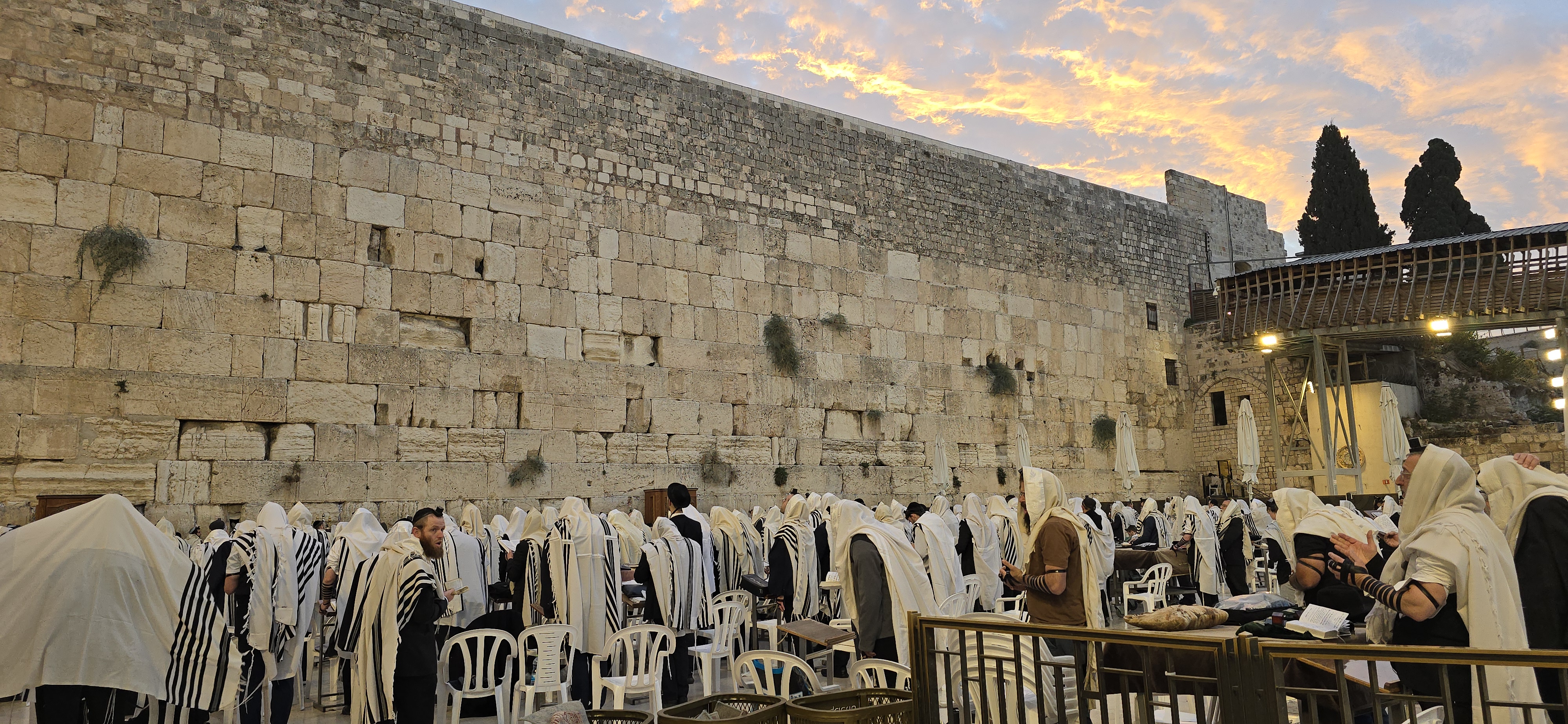
Israeli flag at the Western Wall in the Old City of Jerusalem (photo: First One Through)
Significantly, discussions around “Zionism” have continued in political fora as if the world is still debating the FORMATION of Israel.
In November 1975, the United Nations General Assembly passed Res. 3379 which stated “zionism is a form of racism and racial discrimination,” by lumping it into a category of trespasses including “colonialism and neo-colonialism, foreign occupation, apartheid and racial discrimination.” The resolution was rescinded in 1991 through the efforts of the United States.
Keith Ellison, Minnesota’s attorney general and one-time member of Congress once said “Zionism, the ideological undergirding of Israel, is a debatable political philosophy,” making the foundation of the Jewish State a questionable endeavor.
Linda Sarsour, a member of the anti-Israel Democratic Socialists of America said that “nothing is creepier than Zionism,” invoking the old UN resolution that Zionism is a form of racism.
Steve Erlander wrote in The New York Times that “Zionism was never the gentlest of ideologies. The return of the Jewish people to their biblical homeland and the resumption of Jewish sovereignty there have always carried within them the displacement of those already living in the land,” repeating the stale U.N. slander.
Israel’s enemies continue to call it a “Zionist entity”, refusing to mention the name of the country, as if to do so recognizes its existence or right to exist.
The continued use of the word “Zionism” today by anti-Israel agitators is not a theoretical review of Jewish aspirations to return to their homeland in the 19th century and early 20th century, but a concerted effort to demonize and/or destroy Israel today.
For starters, by attempting to define Zionism as a form of racism, people mark Israel as a racist and apartheid state regardless of its actions. While it is the most liberal country in the entire Middle East, if Israel’s underpinning ideology was built on “colonialism” and “racial discrimination,” then its existence is a continuation of the racist ideology, permeated by original sin.
Secondly, if Israel is not viewed as a functioning liberal and democratic reality but merely a vehicle of “Zionism,” its existence entails the continued “displacement of those [Arabs] already living in the land.” When Rep. Rashida Tlaib introduced a resolution in Congress about the “Ongoing Nakba,” she was not discussing 1948 history but a belief in the “ongoing ethnic cleansing of Palestinians for illegal settlements.” She imagines the entire history and ongoing reality of the reestablished Jewish State as a “catastrophe.”
Further, anti-Israel people believe that when JEWS use of the word “Zionism,” it means that the goals of the Jewish State are far from completed. Not only does Israel seek the land east of the 1949 Armistice Lines (E49AL/ “West Bank”) and Gaza, but it seeks “Greater Israel” encompassing “the area from the Nile to the Euphrates,” as speakers at the United Nations contend. It means Jews want to see a third Temple built on the Temple Mount in place of the Dome of the Rock.
In short, when anti-Israel people use the term “Zionism,” they are discussing more than a philosophy but an evolving reality. Anti-Israel activists seek a future which resembles 1947 or 1917, when there was no Israel and no international support for a Jewish State. When those same people hear Jews use “Zionism,” they believe that Jews want a future which looks like 2,000-plus years ago, with a Jewish Temple and sprawling Jewish kingdom.
In other words, Zionism is not just a highly charged word for some, but conjures up the perception of ongoing goals as opposed to actual present facts.
The facts are that Israel is the most pluralistic society in the Middle East where Arabs have more rights and a higher standard of living than in neighboring Arab countries. Israel has shown its willingness to SHRINK its borders for peace. Israel has proven that it can create a viable, functioning economy and society, despite regional actors refusing to accept its existence.
The plain truth is that Israel is a model state to be replicated, while cast as a Zionist ideology to be terminated.
Zionism was a dream and Israel exists. The transition was marked in the last line in Israel’s Declaration of Independence, “the realization of the age-old dream – the redemption of Israel.” Israel supporters should acknowledge Israel’s declaration and stop calling themselves “Zionists” as it enables anti-Israel fanatics to whitewash their desire to destroy the Jewish State.
A proud “Zionist” woman at the Celebrate Israel parade in New York City in 2019 (photo: First One Through)
People are pro-Israel, anti-Israel or Israel-ambivalent today. Do not let those who seek the destruction of Israel to hide behind a “debate” about the “political philosophy” of Zionism.