Tel Aviv Between War and Ordinary Life

The train rolled quietly toward Tel Aviv, its rhythm broken only by the soft buzz of conversations and the glow of phone screens. Across from me sat two young soldiers. Their rifles rested casually against their legs while their attention was fixed on their cellphones – one scrolling through messages, the other smiling at a photo someone had sent. It was a striking image of modern Israel: a generation carrying both the tools of war and the ordinary routines of youth.

Israeli soldier with cellphone and gun (created by First One Through)

After two years of war, the sight no longer seemed unusual. Uniforms had become part of daily life. The soldiers were not isolated behind military bases; they were students, siblings and neighbors riding the same commuter trains as everyone else.

Stepping off at Tel Aviv’s HaShalom – “the Peace” – station, another reminder of the country’s debate awaited. Stickers were plastered on walls and signposts declaring, “גיוס שווה לכולם”“The draft should be equal for everyone.” The slogan was impossible to miss. It reflected the growing frustration of many Israelis who believe military service should be shared by all citizens, particularly as the controversy over exemptions for many ultra-Orthodox men has intensified during a prolonged war.

Sticker on train station in Tel Aviv about the draft (created by First One Through)

From the station I walked up the street toward Sarona.

The mood shifted almost instantly. The urgency of the train gave way to quiet streets lined with restored nineteenth-century stone buildings, their green shutters and warm walls carefully preserved. Families strolled through the park, office workers carried coffee between meetings, and children played on the lawns.

Sarona, with its mix of old buildings and new skyscrapers (created by First One Through)

Rising above this tranquil scene were gleaming glass towers – headquarters of technology companies, investment firms and startups reaching into the Mediterranean sky. The contrast was remarkable. The old Templar colony had not been erased by progress; it had been woven into it. History remained at street level while the future climbed overhead.

From Sarona I continued west beneath long rows of jacaranda trees. The sidewalks were broad and shaded despite the afternoon heat. Cyclists glided silently along dedicated bike paths while dog walkers stopped to exchange greetings in Hebrew, English, French and Russian. The city moved at an easy rhythm, confident and unhurried.

Tel Aviv street winding its way from the train station to the beach (created by First One Through)

By the time I reached the Mediterranean, the sky had begun to soften into cooler shades of blue. A young woman played a steel drum near the promenade, the Caribbean melody drifting above the soft crash of the waves. Just up the gentle hill, an ultra-Orthodox man sat quietly, listening. His eyes wandered beyond the music toward the sailboats slowly crossing the horizon, their sails turning black against the fading sun.

As darkness approached, I turned back toward my hotel. Along the route, fresh rails stretched down the center of the boulevard. Fences, construction equipment and unfinished stations marked the slow progress of Tel Aviv’s expanding light rail. The war had left its mark here, as many Israeli construction workers had been called into reserve duty, while restrictions on Palestinian Arab workers entering Israel had reduced another important source of labor. Even in a city racing toward the future, history and security continued to shape the speed of ordinary life.

Tel Aviv’s light rail under construction (created by First One Through)

Night settled over the White City. Above the Bauhaus facades and surprisingly green parks, a deep red crescent moon hung low before slipping toward the Mediterranean. It seemed a fitting end to the day. Tel Aviv is often celebrated for its beaches, cafés and nightlife, yet what lingered most was something less obvious: a city where soldiers and software engineers share commuter trains, where old stone houses stand beside glass towers, where debates over duty appear on stickers at the station, and where, despite the burdens of war, people still ride bicycles beneath leafy boulevards toward the sea as both sun and moon set over Israel.

Red crescent moon sets over Tel Aviv (created by First One Through)

The next morning I woke before dawn, courtesy of jet lag. It was barely five o’clock, and rather than fight the early hour, I headed outside and walked toward the beach, turning south in the direction of Jaffa.

The city was just beginning to stir.

On a grassy stretch above the promenade, a group of women had gathered for morning exercise. Jews and Arabs stretched side by side as the first rays of sunlight crept across the lawn. No one seemed interested in the differences that so often dominate headlines. At that hour, they were simply neighbors greeting another day.

Jewish and Arab women stretching above Tel Aviv’s beach at daybreak (created by First One Through)

The rising sun appeared between the towers, casting long golden reflections across the sea. As I continued south, I crossed the invisible boundary where Tel Aviv gradually becomes Jaffa. There is no wall, no gate, no sign announcing the transition. Modern boulevards slowly yield to older stone buildings until, ahead, the ancient hill of Jaffa emerged from the morning haze.

Sunrise over Tel Aviv-Jaffa (created by First One Through)

The old city looked timeless. Its limestone walls glowed honey-gold beneath the rising sun, church towers rising above clusters of palms that have watched merchants, pilgrims and conquerors arrive for centuries. Behind me stretched one of the world’s youngest major cities; before me stood one of its oldest. Few places compress four thousand years into a morning walk.

Old City of Jaffa (created by First One Through)

Yet the promenade is also a walk through painful memory.

Every few hundred yards another monument interrupts the rhythm of the sea. A simple memorial recalls the Altalena, the tragic 1948 confrontation in which the fledgling Jewish state nearly fractured before it had fully been born. Farther along stands the memorial to the Dolphinarium bombing, where a Palestinian Arab suicide attack murdered young people waiting to enter a beachfront nightclub, freezing forever what should have been an ordinary summer evening.

The newest memorials are not carved in stone. They are printed on paper.

Walls, bus stops and utility boxes are covered with hundreds of stickers bearing the faces of young men and women killed since the October 7 massacre and the war that followed. Some are soldiers, others are civilians. Each bears a photograph, a name and often a brief message from family or friends. Individually they are easy to pass without notice. Together they form an unofficial memorial stretching across the city, reminding everyone that the smiling faces should still be walking these same streets.

Stickers of young people who were killed in the Iranian proxy war against Israel (created by First One Through)

Turning back toward my hotel, I watched the city awaken.

At first there were only a handful of runners. Then another dozen. Within minutes the promenade had become a river of joggers moving north and south along the shoreline. Cyclists moved passed them in dedicated lanes while the Mediterranean rolled steadily against the seawall. The volleyball courts still stood empty, their nets waiting for the first matches of the day.

Despite the hundreds of people already enjoying the morning, security remained almost invisible. The only uniformed officers I encountered were two young policewomen sitting beside their patrol car, laughing as they leaned together to take a selfie. It was another reminder that life here is lived in layers. A country still at war. A city that had known rockets and sirens. Yet on this morning, two officers paused, like young people anywhere else, to capture a moment with a cellphone.

Policewomen taking a selfie in Tel Aviv (created by First One Through)

As I approached my hotel, another juxtaposition caught my eye. Apartment balconies facing the street served as tiny windows into the lives of their occupants. On one balcony hung a rainbow Pride flag. Just a window away fluttered a yellow Chabad Moshiach flag, proclaiming hope for the coming of the Messiah. In many places, those symbols might be seem irreconcilable. The flags did not suggest agreement but coexistence. The residents likely disagreed about politics, religion and the future of Israeli society. Yet neither had torn down the other’s banner. The building itself had become a quiet lesson in democratic life.

Pride flag and Moshiach flag hang together facing the Tel Aviv beach (created by First One Through)

Back at the hotel, breakfast was every bit as impressive as the Mediterranean outside the windows. Fresh salads, nuts, cheeses, shakshuka, breads still warm from the oven, amazing fruit, squares of halva and strong Israeli coffee made lingering far too tempting.

Eventually, I pushed away from the table and traded dawn’s leisurely pace for another walk, this time inland.

In barely forty minutes, the sea breeze gave way to glass towers, venture capital offices and the headquarters of companies whose software, artificial intelligence, cybersecurity and communications products are used around the world. The transformation was remarkable. One moment I was watching paddleboarders on the Mediterranean; the next I was surrounded by one of the world’s great technology hubs. Tel Aviv’s reputation as the “Startup Nation” is not an abstract slogan. It is a city where people can begin the morning watching the sunrise by the sea and arrive at meetings shaping the future before most cities have finished their commute.

Part of the Tel Aviv skyline near the train station (created by First One Through)

After the day’s meetings, I made the walk back toward the coast. The beach had transformed once again.

The jogging dawn promenade had given way to the rhythm of a summer afternoon. The surf clubs were busy, rows of brightly colored boards stacked outside while paddleboards waited for the next calm outing. A sign pointing toward the nearest bomb shelter hung beside the entrance, blending almost unnoticed into the scene.

Paddleboards for rent at Tel Aviv beach (created by First One Through)

The unmistakable crack of matkot echoed across the sand – the sharp wooden sound of paddle meeting ball, as much a part of an Israeli beach as the waves themselves. Surfers searched for the best breaks while others stood atop paddleboards gliding across the calm Mediterranean. Families spread towels across the sand. Friends settled into circles, talking for hours, absentmindedly cracking open sunflower seeds and dropping the shells into cups which had been drained of beer, as the afternoon slowly slipped toward evening.

After showering off the salt, I headed back into the city for dinner.

Tel Aviv has quietly become one of the world’s great food cities.

Its chefs draw inspiration from every corner of Jewish history and the Mediterranean – Galilean vegetables, Persian spices, North African traditions, Yemenite breads and European techniques – all combined with remarkable creativity. Restaurants that would command attention in New York, London or Paris line streets that only a generation ago were known more for falafel than fine dining.

One change particularly fascinated me.

Not long ago, many ambitious chefs viewed kosher certification as a limitation. Today, more and more of the city’s finest restaurants proudly operate under kosher supervision. The change has been driven as much by economics as religion. As Israel’s high-tech economy expanded, so too did a generation of young Modern Orthodox professionals – engineers, entrepreneurs, venture capitalists and lawyers – who wanted exceptional dining without compromising Jewish dietary law. Restaurants discovered that serving remarkable food and remaining kosher were no longer competing ideas. In many neighborhoods, they had become a winning combination.

Dvora Restaurant on Ben Yehuda St. in Tel Aviv (created by First One Through)

Leaving Tel Aviv, I found myself thinking less about any single building or beach than about the extraordinary coexistence of opposites. Here, memory lives beside innovation. Faith shares walls with secular life. War intrudes, but never fully defines the city. Every morning begins with people running toward the sea rather than away from fear.

Perhaps that is Tel Aviv’s greatest contradiction. It has not escaped history’s burdens. It simply refuses to allow them to define the city. Despite carrying them every day, Tel Aviv has become one of the world’s most vibrant, creative and optimistic places to live.

Gaza Was Called “Hell on Earth” Long Before This War

Long before the current war began, prominent advocates for the Palestinian cause were describing Gaza as “hell on earth.”

In January 2009, Palestinian Queen Rania of Jordan released a video for UNRWA titled “Hell on Earth.” Eight months later, speaking at UNRWA’s 60th anniversary, she recalled that video and lamented that Gaza was still “Hell on Earth.”

Palestinian Queen of Jordan Rania called Gaza “Hell on Earth” in 2009

In May 2021, UN Secretary-General António Guterres declared, “If there is a hell on earth, it is the lives of children in Gaza today.”

When Israel began to respond to the war waged by Gazans in 2023, UNRWA Commissioner-General Philippe Lazzarini said Gaza had become “a living hell.” In January 2024, UN humanitarian coordinator Sigrid Kaag told the Security Council, “Gaza is hell on earth.”

The description has been remarkably consistent. What has often been missing is the question: Why?

Hell is not merely a place of suffering. It is a place where evil reigns.

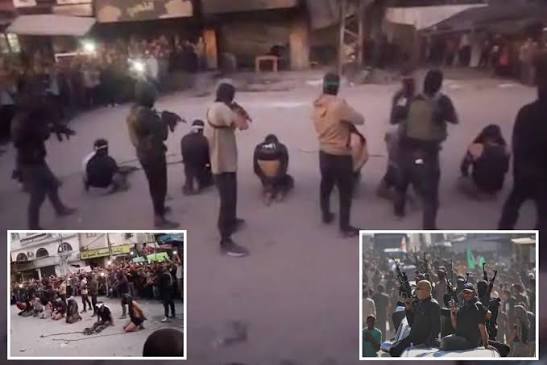
Hamas violently seized Gaza in 2007 after defeating Fatah in a brief but brutal civil war. Fighters executed political rivals, threw some from rooftops, publicly brutalized opponents, and dragged the bodies of alleged collaborators through the streets. Those who challenged Hamas risked imprisonment, torture, or death. Independent political life disappeared, and an entire generation grew up under the rule of an armed Islamist movement that prioritized rockets, tunnels, and perpetual conflict over building a prosperous society.

Hamas drags a disloyal Gazan through the streets to his death

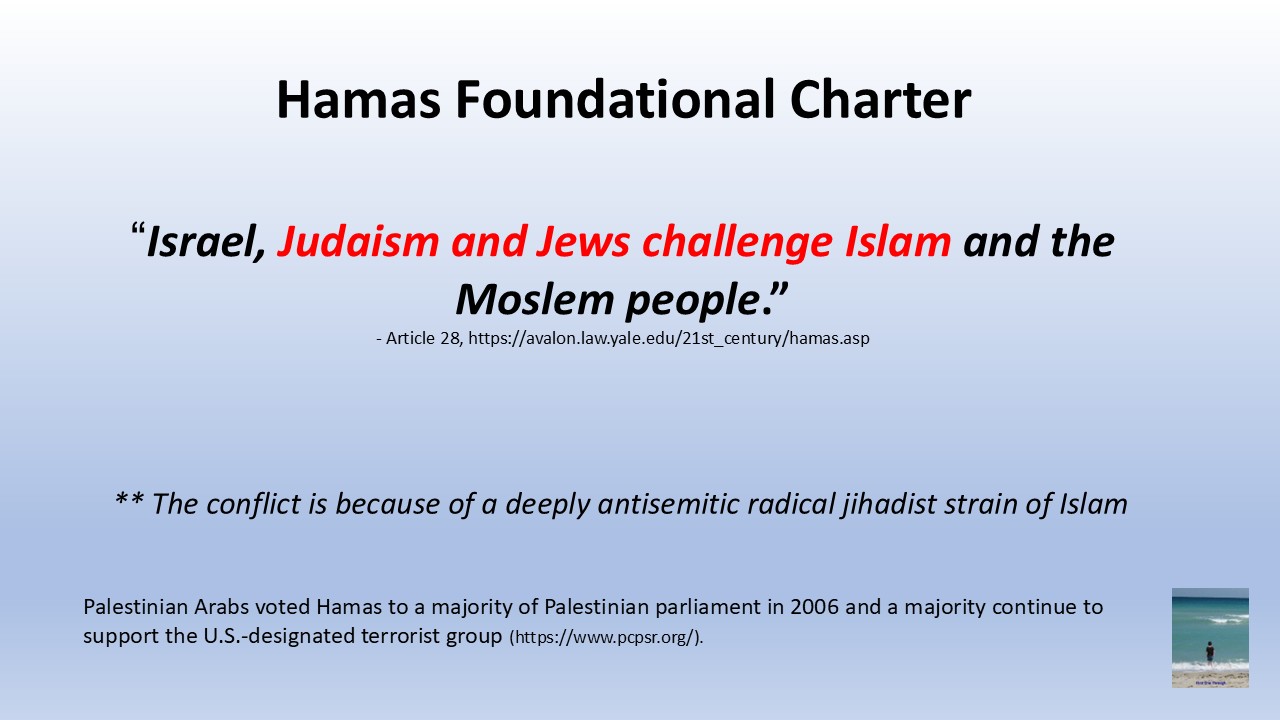
And Hamas was a known entity, a political party which won 56% of Palestinian parliament in elections with the most antisemitic political charter ever written. It remains the most popular political group to this day, expected to win Palestinian elections in every poll.

Calling Gaza “hell on earth” without acknowledging who built that system leaves the story unfinished. Should people want to transform the region, they must work to end the evil rule and worldview that turned part of the holy land into such a place in the first place.

Why Doesn’t Anyone Call for a State of Boko Haram?

For more than fifteen years, Boko Haram has waged one of the world’s deadliest terrorist insurgencies. Since 2009, the group has been responsible for the deaths of more than 35,000 people, with some estimates placing the toll significantly higher when indirect deaths from the conflict are included. It has massacred civilians in villages, churches, mosques, schools, and marketplaces. It has bombed public places, murdered those who refused to submit to its rule, and driven millions from their homes across Nigeria and neighboring countries.

Kidnapping has been one of its defining tactics. The 2014 abduction of 276 schoolgirls from Chibok drew worldwide attention, but it was only one of thousands of kidnappings. Women and girls have been forced into marriage and been raped. Boys have been recruited as child soldiers. Entire communities have lived for years under the constant threat of murder, abduction, and terror.

Boko Haram rejects the legitimacy of Nigeria, a United Nations-member state. It seeks to replace it with its own extremist Islamist regime.

Yet almost no one argues that Boko Haram deserves its own country. No demonstrations demand that its leaders be rewarded with sovereignty. No governments argue that decades of massacres, hostage-taking, and terrorism should culminate in international legitimacy.

And then there is Hamas. The Palestinian Islamic Jihad. Dozens of other Palestinian terrorist groups. And the Palestinian Authority that pays for terrorist acts they commit.

The Bibas family taken hostages and murdered by Hamas on October 7, 2023

As Israelis buried over 1,000 people brutally killed by Hamas, anti-Israel activists took to Times Square and college campuses to express their glee. As Hamas supporters in Iran, Lebanon and Yemen joined the fight against Israel, the United Kingdom, Canada and Australia recognized the State of Palestine.

There are now 157 countries that recognize Palestine. That look at the war between Israel and Palestine as one between two sovereign states, one which invaded another, raped and burned people alive, and took 251 hostages. These nations didn’t pause to question whether Palestine has a right to exist, but got three more countries to join in their sadistic effort.

Perhaps it is time for the 36 countries which do not recognize Palestine to put a resolution before the UN to recognize Boko Haram as the legitimate government of Nigeria, or at least a breakaway state in the northeastern corner which they control.

Boko Haram in Nigeria

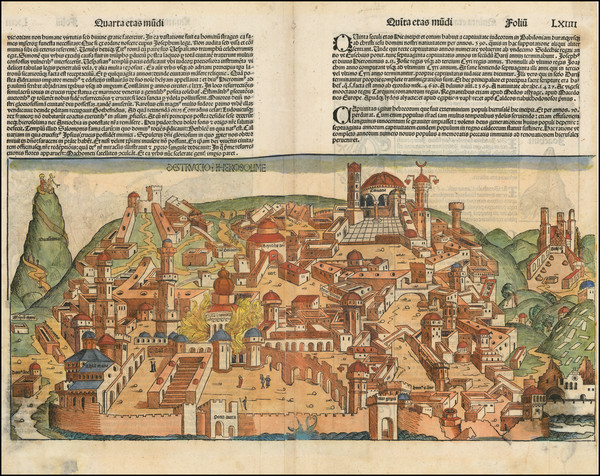
A Story At The Jaffa Gate

An AI Amalgam Story.

Outside the Jaffa Gate in Jerusalem, the day unfolds with layers of complexity. The stone walls, ancient and storied, bear witness to the lives that pass through.

On this morning, an Arab man stands near the portal entrance, his posture slumped, eyes lowered. His expression speaks of a quiet sorrow—perhaps personal, perhaps born of circumstances beyond his control.

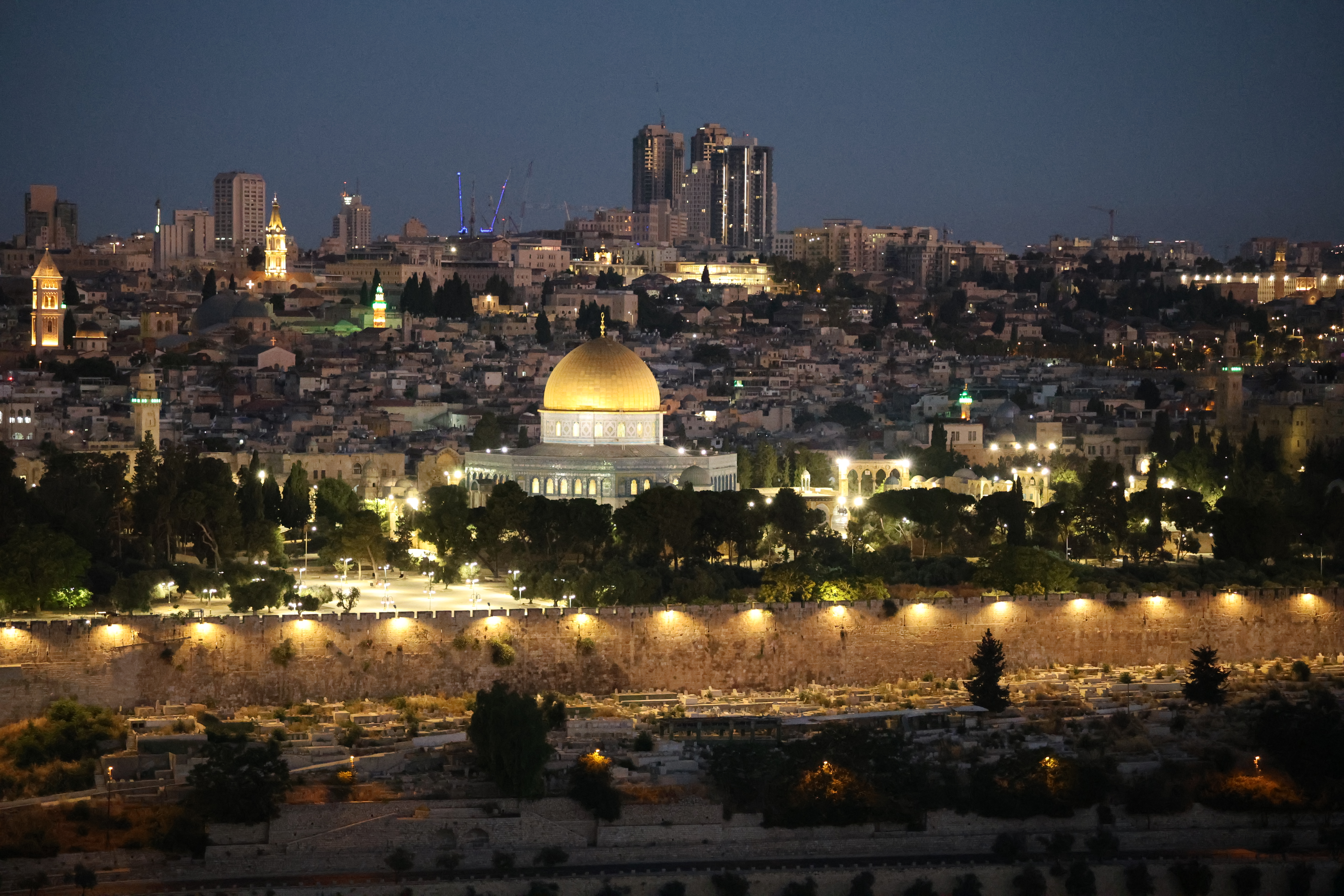
Picture amalgam of four different scenes, presenting a view of the entry portal of the Jaffa Gate in Jerusalem, Israel (by First One Through)

Meanwhile, just feet away, an Orthodox Jewish man, dressed in traditional black attire, moves with purpose. He hurries toward his daily prayers at the Kotel, following a routine as old as the stones beneath his feet. The rhythm of Jerusalem’s life, with its sacred moments, continues without pause.

Standing between them is a medic from Magen David Adom. His presence is a testament to the tension that often simmers beneath the surface of the city. He watches both men—attentive, calm, ready to act if needed. His role is not in the realm of politics or faith but in the safeguarding of human life.

This moment encapsulates the juxtaposition of daily routines—spiritual devotion, personal struggle, and the ever-present readiness to heal. In Jerusalem, where layers of history meet contemporary reality, even the quietest scene can tell a deeper story.

The Seasons And Ourselves

Every July, as heat waves grip North America, Europe, and much of Asia, Earth reaches one of the least intuitive moments of its annual journey.

It is at its greatest distance from the Sun.

Around July 3-5, Earth reaches aphelion, approximately 94.5 million miles (152.1 million kilometers) from the Sun. Six months earlier, around January 3-5, Earth passes through perihelion, just 91.4 million miles (147.1 million kilometers) away.

The difference is roughly 3.1 million miles – about a 3.3% change in distance. Earth actually receives about 7% more solar energy in early January than it does in early July.

Yet July is the hottest time of year across most of the Northern Hemisphere.

The explanation reveals something profound about our planet and it is not that we have internalized the Global North’s view of seasons.

Distance matters far less than direction.

Orientation. Earth is tilted approximately 23.4 degrees on its axis. During the Northern Hemisphere’s summer, that tilt turns us toward the Sun. The midday Sun climbs much higher into the sky, allowing its rays to strike the ground more directly instead of spreading over a larger area. At the same time, daylight stretches for hours longer, giving the land far more time to absorb heat.

A tilt of just 23.4 degrees overwhelms a separation of more than three million miles.

The proof is visible every day.

When New York swelters in July, Buenos Aires shivers through winter. Both cities are essentially the same distance from the Sun. Only their orientation has changed.

Tilt, not distance, governs the seasons.

One might assume the Northern Hemisphere, basking in these long summer days, must also be the warmer half of the planet. Yet the opposite is closer to the truth.

Makeup. The Southern Hemisphere is covered by approximately 81 percent ocean, while the Northern Hemisphere is only about 61 percent ocean. Water absorbs enormous amounts of heat, releases it slowly, and moderates temperature throughout the year. Land behaves very differently. It heats rapidly under summer sunshine and cools just as quickly during winter.

The Northern Hemisphere is a hemisphere of continents. The Southern Hemisphere is a hemisphere of oceans.

That is why the Northern Hemisphere experiences the world’s greatest seasonal extremes, from scorching deserts to bitter continental winters. The Southern Hemisphere, despite receiving slightly more solar energy during its summer because Earth is closest to the Sun in January, enjoys a far more moderate climate because its vast oceans absorb and redistribute that energy.

There is another layer to the story.

Movement. The 23.4-degree tilt that shapes our seasons is not fixed. Over approximately 41,000 years, Earth’s axis naturally oscillates between about 22.1 degrees and 24.5 degrees. Today the planet sits near 23.4 degrees and is slowly moving toward its minimum tilt, a journey that will take roughly another 10,000 years.

As the tilt decreases, summers become slightly cooler and winters somewhat milder, particularly in the higher latitudes. These subtle changes alter where sunlight falls on Earth and have helped drive the slow rhythm of glacial and interglacial periods over millions of years. Left to these natural orbital cycles alone, Earth is presently in a phase that favors an extremely gradual cooling over many thousands of years.

Yet perhaps the most remarkable character in this story is neither the Sun nor the Earth.

It is the Moon.

Background. Earth’s relatively large Moon acts as a gravitational stabilizer, quietly holding our planet’s axial tilt within a remarkably narrow range. Without the Moon, simulations suggest Earth’s axis could have wandered chaotically by tens of degrees over geological time, perhaps swinging from nearly upright to more than 60 degrees. The resulting climate would have been far less stable, with vastly more extreme and unpredictable seasons.

Instead, our planet gently rocks back and forth by only a couple of degrees over tens of thousands of years. That stability has allowed climates to remain sufficiently consistent for forests to mature, civilizations to emerge, agriculture to flourish, and complex life to evolve under recognizable seasons.

The hottest days of July, arriving when Earth is farthest from the Sun, remind us how often nature overturns our assumptions. Climate is not governed by a single variable but by an intricate interplay of orbital distance, axial tilt, oceans, continents, and the quiet gravitational influence of a companion world orbiting nearly a quarter of a million miles away.


Perhaps there is a lesson beyond astronomy.

We often assume influence is primarily a matter of proximity. The closer something is, the more powerful it must be.

Nature suggests otherwise.

Those who shape us most are not always the ones nearest to us. They are the ones toward whom we are oriented – the people whose character we admire, whose ideas we embrace, and whose example we choose to follow.

Then there is the Moon. Nearly 240,000 miles away, it quietly stabilizes Earth’s axis, preserving the rhythm of the seasons over millions of years. So too, the most enduring influences in our lives are often the quietest: timeless principles, faithful mentors, strong families, and lasting institutions that keep us steady without demanding attention.

Relative to the Earth’s oceans and continents, is our personal makeup – how each of us absorbs ideas and the actions we are inclined to take. While our consistency drives us towards or away particular personalities and concepts, it also impacts the way we consider such variables that are subtly different than the people around us.

The deepest influences are not always the closest. They are the ones that orient us and keep us pointed in the right direction.

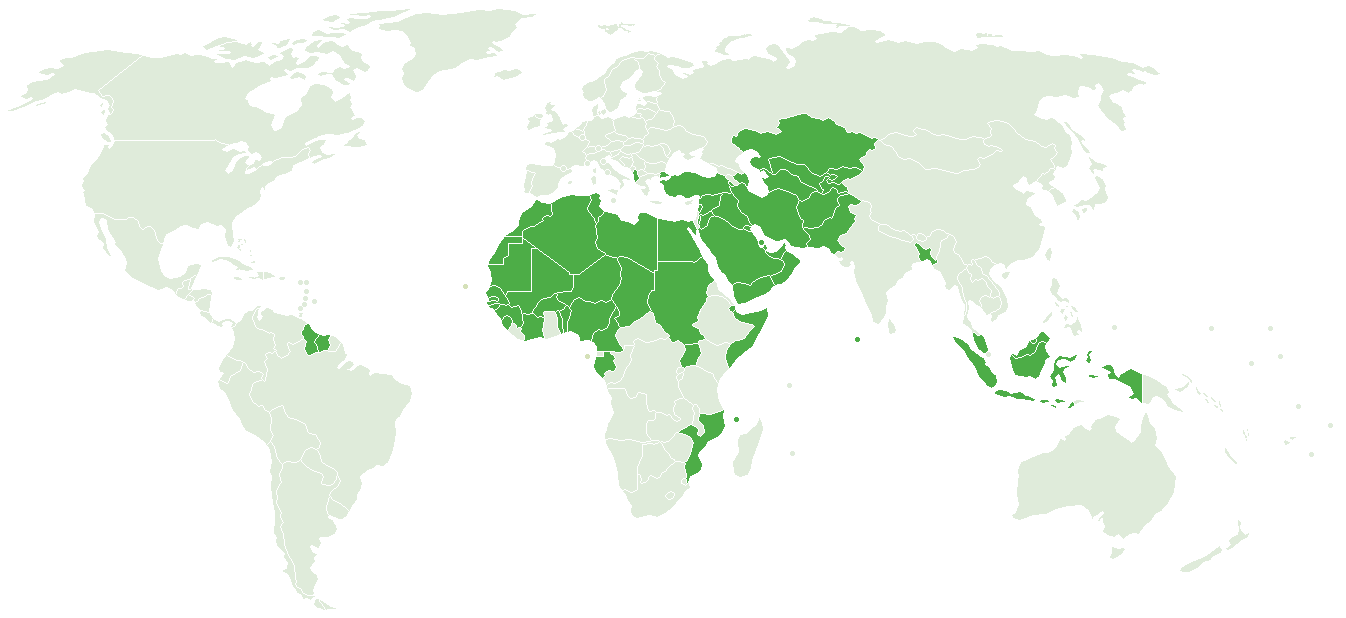
Israel Is Surrounded by Failed States – and Failed States in Waiting

Much of the discussion about Israel’s security focuses on borders, settlements, or ceasefires. Less attention is paid to a more fundamental reality: Israel is surrounded by governments that have failed – or have yet to demonstrate they can function as sovereign states.

To Israel’s north lies Lebanon, a country where the government spent years unable to enforce a monopoly on force within its own territory. While the Lebanese Army wore the national uniform, Hezbollah built an independent army, amassed an enormous missile arsenal, dug tunnels, launched drones, and ultimately dragged the country into war. A sovereign state that cannot control its own territory has surrendered one of the defining responsibilities of statehood.

Lebanese pound to Israeli shekel exchange rate, defaulting on debt in March 2020, enormous explosion in Beirut for stored Hezbollah weapons in August 2020. The bank devalued currency by 90% in February 2023 and again in February 2024

Next to Lebanon is Syria. More than a decade of civil war shattered the country’s institutions, fractured its territory among competing armed groups and foreign militaries, and left millions displaced. Syria has long stood as one of the clearest examples of state failure in the modern Middle East.

Syrian civil war killed nearly 600,000 and dispersed 13 million. It is now ruled by Abu Mohammad al-Jolani who headed ISIS in the region

To Israel’s south lies Gaza. Hamas spent years and billions of dollars to build an underground military fortress instead of a functional society. The result was war after war after war. Destruction and death.

Hamas on October 7, 2023 slaughtered 1,200 people in Israel and brought over 250 people as hostages into Gaza to cheering crowds.

In the West Bank, the picture is different but equally troubling. The Palestinian Authority maintains civil institutions in parts of the territory, yet it has never established a monopoly on force or unified governance. Rival armed factions continue to operate, political legitimacy remains deeply contested, and governance has been divided from Gaza for nearly two decades.

recent poll shows a majority of Palestinians rejecting moderate leadership, despairing of peaceful change and now favouring armed struggle? That tragic deformity in Palestinian political culture is the result of the continued brutality of the occupation.” – James Zogby, President of the Arab American Institute at the United Nations Security Council on June 27, 2023

The collapse of governance in the states surrounding Israel has turned the region into one of the world’s greatest concentrations of terrorist groups. This is the strategic reality Israel faces every day.

Its neighbors are not peaceful democracies with settled borders and accountable institutions. They are governments weakened by civil war, dominated by militias, or unable to establish unified authority. Israel is repeatedly asked to take security risks on the assumption that these entities will prevent terrorism and enforce agreements, even though their recent history demonstrates the opposite.

The tragedy is not only Israel’s. The greatest victims of failed governance are the Lebanese, Syrians, and Stateless Arabs from Palestine (SAPs) themselves. They deserve governments that build economies instead of militias, schools instead of tunnels, courts instead of armed factions, and national institutions instead of perpetual conflict.

Peace agreements are negotiated between states because states can make commitments and enforce them. Militias cannot. Failed governments cannot. A failed state in waiting cannot.

Until the governments surrounding Israel control their territory, uphold the rule of law, and prioritize their people over perpetual conflict, Israel’s security challenges will remain the consequence of failed governance, not simply hostile neighbors.

When Hezbollah’s Media Cheers Your Human Rights Report

Human rights organizations earn credibility by applying the same principles to everyone. The moment they tell only half the story, they cease to document conflict and begin shaping a narrative.

That has been the history of Amnesty International‘s sole focus on Israel as it fights a multifront war. It showed why it deserves no support again this week as it took aim on Israel’s fight against Hezbollah, the Iranian proxy terrorist group inside Lebanon.

The report argues that a proposed ceasefire agreement could deny Lebanese victims an avenue to pursue justice for alleged Israeli war crimes. Astonishingly absent from Amnesty’s presentation is the war that made the agreement necessary in the first place and justice for Israeli victims.

There is virtually no discussion of Hezbollah’s decision to begin attacking Israel on October 8, 2023, opening a second front one day after the Hamas massacre. There is no meaningful discussion of the years Hezbollah spent building an armed state within a state in southern Lebanon despite international commitments to disarm. There is no recognition that Israeli towns endured months of rockets, missiles and drones, forcing tens of thousands of civilians from their homes. Instead, 98 percent of the focus is on alleged Israeli violations and on preserving legal avenues to prosecute Israel.

Perspective matters.

Imagine writing about the Second World War while barely mentioning who invaded whom. Or discussing a peace agreement without explaining why civilians had to flee their homes on both sides of the border. A report that omits the conflict’s central facts cannot claim to provide a complete moral picture.

Even when Hezbollah is mentioned, it is a single sentence in passing. The sustained campaign against Israeli communities, the human cost borne by Israeli civilians, and Hezbollah’s own violations of the laws of war receive scant attention compared with the extensive treatment of allegations against Israel.

Perhaps the clearest indication of how this report is perceived came not from Israel, but from Hezbollah’s own media ecosystem.

Al-Manar, Hezbollah’s media network, prominently highlighted the report’s conclusions.

Hezbollah media, Al Manar, highlighting Amnesty report

When the propaganda outlet of a terrorist group that initiated the northern front eagerly amplifies your work, it is time to confront the reality that your organization no longer serves the cause of universal human rights.

The Deception Before the Surrender

Parshat Pinchas is remembered for an act of zeal. It should also be remembered for an act of deception.

After the crisis at Baal Peor, God commands Moses to strike Midian. The reason is revealing:

“For they harassed you through their deception…” (Numbers 25:18)

The Torah could have focused on the immorality or the idolatry. Instead, it draws attention to the strategy that made both possible: deception.

Every nation prepares for open threats. Armies train for invasion. Citizens recognize rebellion. A visible enemy can be confronted.

Deception follows a different path.

It works quietly. It conceals its destination. It persuades people to take one reasonable step after another until they arrive somewhere they never intended to go.

That was Midian’s strategy.

The process began with attraction. Attraction became relationships. Relationships became shared experiences. Shared experiences became participation. Participation became belonging. By the time many Israelites bowed before Baal Peor, their loyalties had already been reshaped.

The decisive battle had taken place long before anyone recognized it as a battle.

That is why the Torah emphasizes deception. Sexual seduction was the instrument. The objective was the covenant itself.

Samson and Delilah by Peter Paul Rubens (1577-1640)

Every generation encounters this challenge.

Ideas, values, and habits rarely replace one another overnight. They gain influence gradually. Each accommodation feels insignificant on its own. Only over time does the cumulative effect become clear.

For Jews living in free societies, the challenge often comes through competing identities. Career, politics, entertainment, consumer culture, and the endless demands of the digital world all seek our time, attention, and allegiance. None requires abandoning Jewish life. Each simply asks that it occupy a little less space than it did yesterday.

The Torah’s answer is equally deliberate.

After the crisis ends, Parshat Pinchas turns immediately to building the future: counting the next generation, dividing the land, appointing Joshua, and establishing the rhythm of communal worship. The response to deception is not withdrawal from society. It is strengthening the institutions, practices, and commitments that preserve a people’s identity.

Military threats test a nation’s strength. Deception tests its memory.

One attacks from without. The other reshapes from within.

Parshat Pinchas reminds us that a people must guard against both with equal vigilance.

Palestinians and Their Supporters in the Global South Hunt Jews

On June 27, 1976, Palestinian terrorists hijacked Air France Flight 139, a civilian airliner traveling from Tel Aviv to Paris. The operation by the Popular Front for the Liberation of Palestine‘s external operations network diverted the aircraft to Entebbe, Uganda, where the hijackers, aided by Idi Amin’s regime, held more than one hundred civilians hostage while demanding the release of imprisoned terrorists.

Then came the moment that revealed the deeper nature of the conflict.

The hijackers separated Israeli and non-Israeli Jewish passengers from the rest of those on board. Many other passengers were eventually released. The Israelis and Jews remained in captivity.

Had nationality been the only issue, non-Israeli Jews would have been released alongside the other foreign passengers. Instead, Jewish identity itself became grounds for continued imprisonment. The selection demonstrated that the target extended beyond the State of Israel to the Jewish people themselves. Decades after the Holocaust, Jewish civilians once again found themselves sorted from their fellow passengers because they were Jews.

The crimes committed during the hijacking were numerous. Palestinian terrorists seized a civilian aircraft, held innocent men, women and children hostage, threatened mass murder to secure political concessions, and singled out Jews for continued captivity. Three hostages died during the Israeli rescue operation, and Dora Bloch, an elderly Jewish hostage who had been taken to a hospital in Kampala, was later murdered by Ugandan authorities.

Hostages saved from Palestinian terrorists in Entebbe Airport, Uganda, July 4, 1976

Palestinian terrorists and their sympathizers have often come for non-Israeli Jews. Synagogues and Jewish community centers were attacked in cities far removed from the Middle East battlefield. Rome. Athens. Istanbul. Hezbollah and Iran often acted in support of Palestinian Arabs, just as they have since October 7, 2023.

Palestinian Arab opened fire in the Great Synagogue in Rome, Italy October, 1982, killing a 2-year old and wounding 37

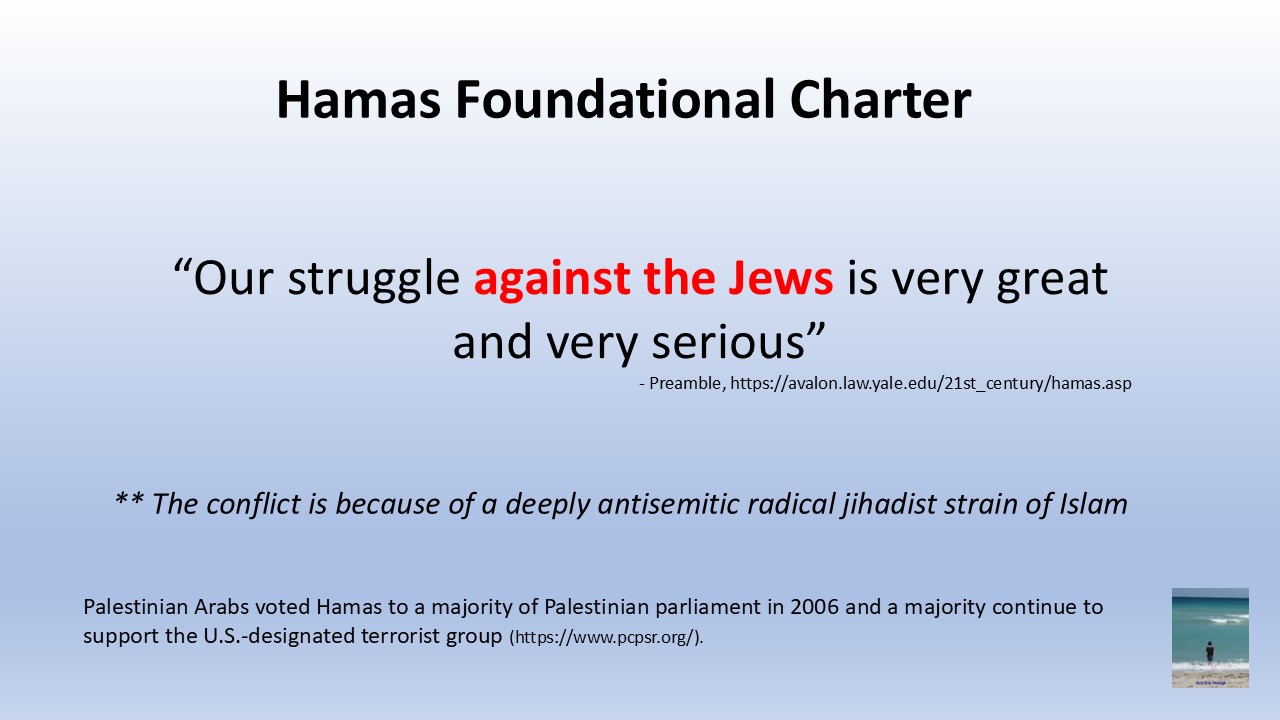
And the Palestinian Arabs don’t hide it. The 1988 Hamas Charter is not simply a terrorist manifesto, but a deeply antisemitic one. Palestinians voted Hamas to 56% of parliament with such screed and continue to vote for the group over Fatah in every poll.

Fifty years ago, on July 4, 1976, the Israeli Defense Forces saved over 100 Israeli and non-Israeli Jews who were held hostage by terrorists. The rescue operation only killed Ugandan soldiers and the terrorists themselves – no Ugandan nor Gazan civilian was harmed.

Yet countries still rebuked Israel in the week that followed:

  • Libya: “Israel’s wanton aggression is a serious and grave crime against international law.”
  • Benin: “act of aggression committed by Israel against Uganda.”
  • Somalia: “Israel’s flagrant aggression against the sovereignty and territorial integrity of Uganda.”
  • Cuba: “The action of Israel… unquestionably constitutes a flagrant violation of the basic provisions of the United Nations Charter.”
  • Mauritius: “act of aggression.”
  • Pakistan: “the Council should demand that compensation for the great loss of life and property caused by the Israeli action be paid to Uganda.”
  • Mauritania, sponsored the complaint on behalf of the African Group.

“the Western Powers have manifested a racist and fanatic solidarity with the white minority settlement in Palestine. For them, the Israeli aggression merely demonstrated a highly successful operation performed by the white man against the blacks of Africa and against the browns of the Arab lands -against the blacks and the browns of another and hostile world, that of the Arab-African community.” – Libya regarding Israeli rescue of 100+ hostages held by Palestinian Arabs in Uganda

The total populations of Uganda and the countries above is roughly 373 million. The Jewish population in all of these countries combined is under 5,000, 0.001%. They are unwelcome and unwanted.

Wheelchair-bound, 69-year old American Leon Klinghoffer, killed by Palestinian terrorists October 8, 1985

Palestinian Arabs and their supporters in the Global South are ingrained with a deeply hostile view of Jews and the Global North. The latest manifestation has been seen since the barbaric attacks of October 7, 2023, but can be seen just as clearly fifty years ago, when Israel rescued other Jewish hostages.

Names and Narrative: “Right to Exist”

Words do more than describe reality. They shape it.

Few phrases demonstrate this better than questioning or supporting “Israel’s right to exist.”

At first glance, it sounds like a reasonable principle. Until one pauses to think about it. It is a question asked of no other nation. Countries are criticized for their policies or leaders. Their continued existence is not routinely presented as a subject for debate.

Only Israel is.

Because the question isn’t about particular policy. No country has an inherent right to exist. Not Spain, not South Sudan, not Somaliland.

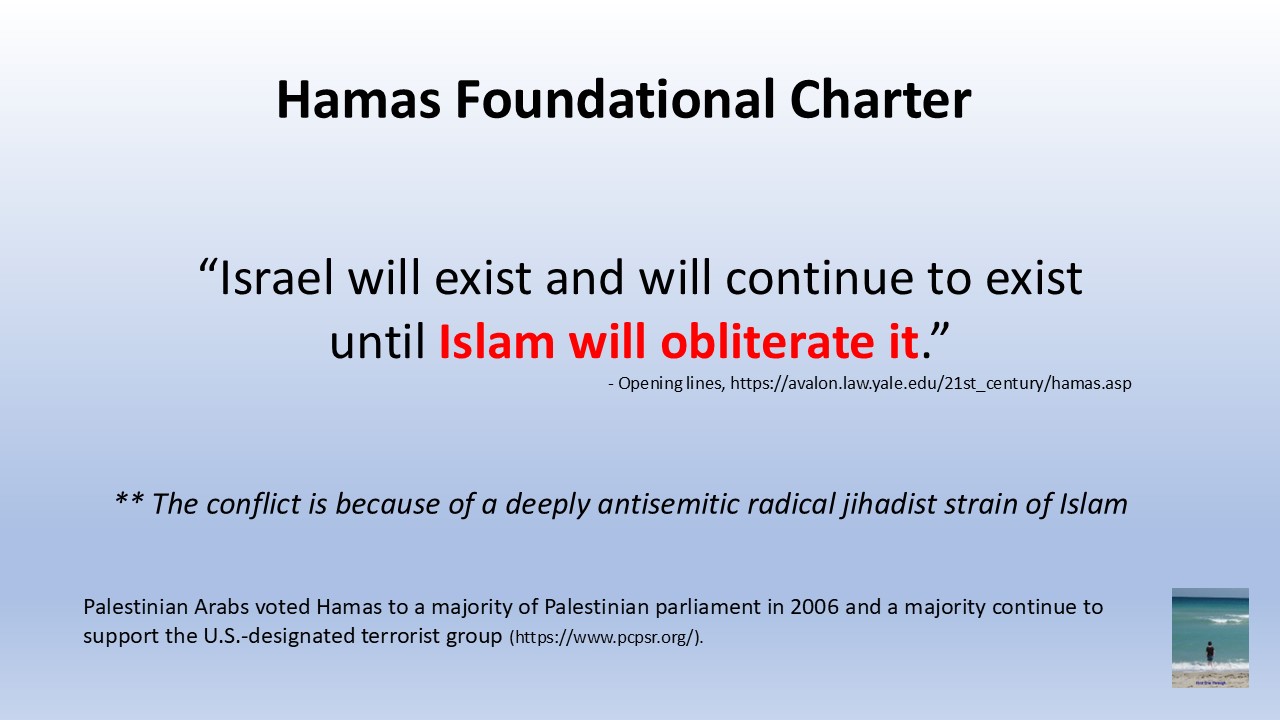
The issue is not whether Israel has a right to exist. The issue is whether people support destroying an existing country, specifically, destroying the only Jewish State.

While Holocaust Survivors are still alive to recount the horror of the genocide of one-third of world Jewry, people discuss the destruction of Jews in their homeland where nearly half of world Jewry resides.

It is an abomination.

And the irony is that the unresolved question of statehood is not Israel’s; it is Palestine’s.

Israel declared independence in 1948 and has been a member of the United Nations ever since. The Palestinians declared the State of Palestine in 1988, and while many countries have recognized that declaration, neither the United States nor Israel has done so. Further, Palestine is not a full member state of the United Nations. Palestine still fails to meet many of the basic criteria for statehood.

If there is a legitimate debate about a state’s existence, it concerns whether a Palestinian state should be established. After the October 7 massacre, the abduction of civilians, and the persistence of violent extremism and antisemitism within Palestinian society, many people argue that recognition of Palestinian statehood should depend on profound political and cultural change.

Instead, the narrative has been inverted. And weaponized. Rather than asking whether yet another Arab and Muslim state should be created under present circumstances, the debate is reframed as whether the one existing Jewish state has a “right to exist.”

The “right to exist” narrative should be placed squarely on Palestine, not Israel. And the current verdict is not positive.