
Charts regularly circulate showing the countries with the most “unicorns” — private companies that achieve valuations of at least $1 billion. Divide the totals by population and tiny Israel suddenly jumps toward the top of the world.
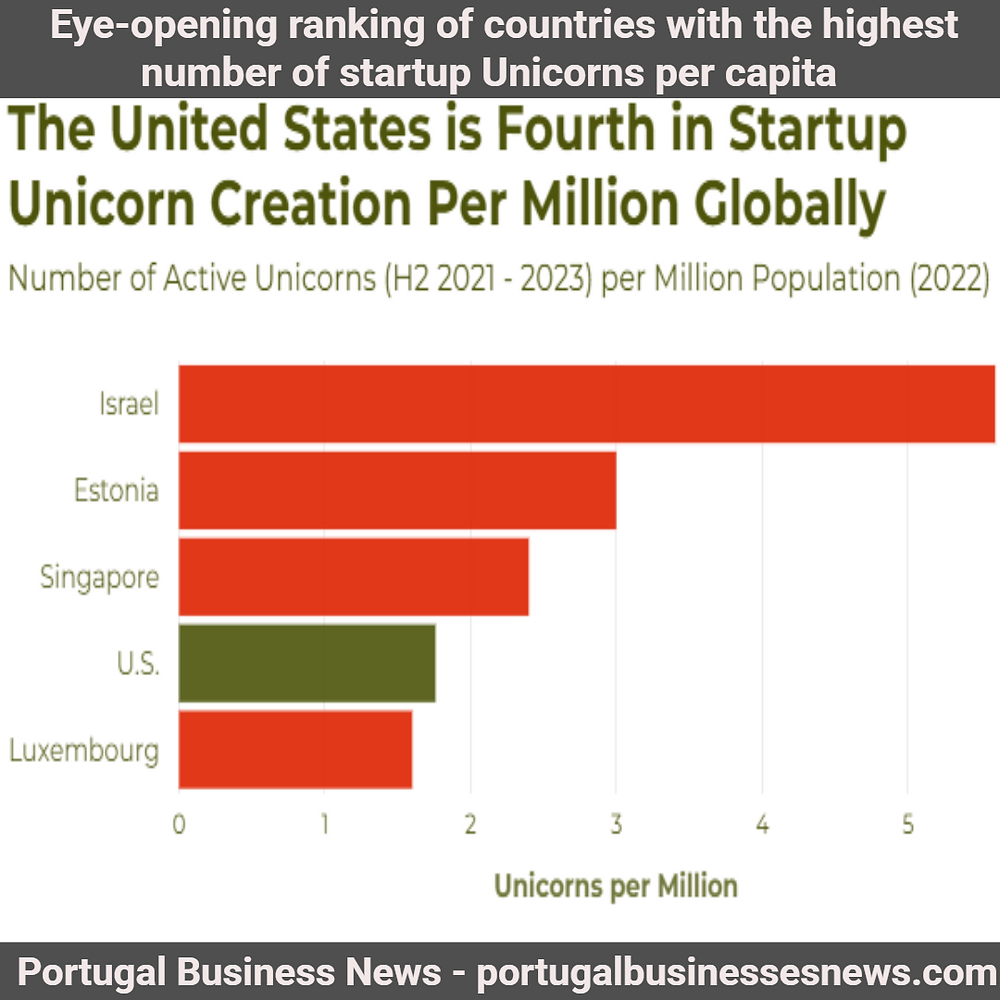
But the headline number obscures a three more interesting stories.
Israel did not spend 75 years steadily accumulating unicorns. Most of its unicorn phenomenon is remarkably recent. And many of the companies created by Israelis aren’t headquartered in Israel at all.
Then there is what these companies actually do.
Put those three pieces together — when they emerged, where they are headquartered and what they sell — and Israel’s unicorn story looks like a specialized company-production machine for today’s world.
The Unicorn Explosion
In 2011, only 16 new unicorns were created in the entire world. Israel was hardly overflowing with them either. TechAviv data show Israel produced just four new unicorns in 2015 and nine in 2019.
Then the curve turned sharply upward.
Israel produced 19 new unicorns in 2020 and 42 in 2021. By December 2021, TechAviv counted 79 Israeli-founded unicorns. By December 2022, there were 98.
That means the Israeli unicorn story people now take for granted is largely a phenomenon of the last several years.
“Israel ranked first globally in terms of its number of technology unicorns per capita. As of 2025, the country’s startup scene contained 90 active tech unicorns, and raised billions of dollars in investments annually. These are indicators of an exceptionally well performing startup ecosystem, which forms the basis of the country’s robust technology industry.” – Statista.com
The cheap-money technology boom certainly helped. Valuations soared everywhere in 2020 and 2021. But Israel’s performance was exceptional even within that global frenzy.
Israeli Unicorn Doesn’t Necessarily Mean in Israel
Of the 79 Israeli-founded unicorns counted at the end of 2021, only 33 — 42% — were headquartered in Israel.
The rest were spread around the world:
- 19 in New York.
- 15 in Silicon Valley.
- 5 in Boston.
- 3 in London.
- 2 in Los Angeles.
- 1 in Singapore.
- 1 in Chicago.
A year later, the ratio was almost identical. Of 98 Israeli-founded unicorns in December 2022, 40 were headquartered in Israel and 58 abroad. Silicon Valley had 24 and New York had 19.
So roughly three out of every five Israeli-founded unicorns were headquartered outside Israel.
That matters when looking at those viral country rankings. A ranking based strictly on corporate headquarters can count an Israeli-founded company as American. A ranking based upon where the entrepreneurs came from can count the same company as Israeli.
Israel is creating companies for a market vastly larger than Israel.
What Israel Is Creating
Israeli unicorns aren’t distributed evenly across the economy. The country’s technology ecosystem has become increasingly concentrated around enterprise software, fintech and cybersecurity.
The Israel Innovation Authority found that these three categories represented 29.4% of companies founded in 2013 but 42% by 2021. By 2022 they were attracting 53.4% of all investment in Israeli startups.
Cybersecurity is particularly extraordinary.
Dealroom currently counts 26 cybersecurity unicorns headquartered in Israel. It calculates that Israel is 9.15 times more represented in cybersecurity unicorns than its overall share of the world’s unicorn population would predict. Tel Aviv alone ranks behind only the Bay Area in Dealroom’s global cyber-unicorn count.
And that is based on headquarters. It therefore doesn’t fully capture Israeli-founded cyber companies headquartered in places such as New York and Boston.
Israel also over-indexes in semiconductors, health technology and medtech, although nowhere close to its extraordinary concentration in cyber.
Meanwhile, the composition of Israeli technology has been changing.
Communications — historically one of Israel’s great technology strengths, including hardware infrastructure and chips — represented about 8% of newly established Israeli technology companies in 2013. By 2022 it was just 1.7%.
” In H1 2025, High-Tech accounted for 57% of all Israeli exports, the highest share ever recorded. The export mix points to a clear trend: 72% software services versus 28% High-Tech industry. This means Israel is increasingly reliant on software services exports, while the High-Tech industry, including the defense industry, has been relatively stagnant. Israel increasingly went from building the pipes to building the software running through them.” – Israel Innovation Authority
Israel Invents. America Scales.
That industry mix helps explain the geography.
A cybersecurity company potential customers are banks, governments and Fortune 500 corporations around the planet. An enterprise-software company can develop its technology in Tel Aviv while putting executives and salespeople close to customers in New York. A fintech company can maintain Israeli engineering operations while establishing its corporate headquarters in the world’s largest financial market.
And those American headquarters aren’t simply mailing addresses.
In 2023, the United States–Israel Business Alliance identified 88 Israeli-founded unicorns with global or regional headquarters in the United States. Together, those companies employed nearly 62,000 people worldwide.
The available data do not establish how many of those employees were specifically in America, so the 62,000 should not be described as American jobs. But broader state studies show that Israeli-founded companies have become meaningful American employers. In California alone, Israeli-founded companies directly employed more than 14,000 people, with their broader economic activity supporting more than 22,000 jobs.
That economic relationship runs in both directions.
American venture-capital and private-equity firms finance Israeli entrepreneurs. Israeli founders establish U.S. headquarters and hire American salespeople, executives and other employees. American corporations then acquire some of the most successful companies, bringing Israeli-developed technology inside American businesses.
Google’s acquisition of Israeli-founded Wiz for $32 billion provides an extraordinary recent example. Cisco agreed to buy Israeli-founded CyberArk for approximately $25 billion in 2025. Intel’s earlier $15.3 billion acquisition of Mobileye demonstrated the same model on a massive scale. Three Israeli technology companies. More than $70 billion of announced acquisition value. Three American buyers.
The relationship is particularly important because Israel’s strongest sectors overlap with technologies the United States increasingly considers strategic: cybersecurity, artificial intelligence, semiconductors and advanced computing.
The Israeli and American ecosystems therefore aren’t competing with one another for unicorns. They are often parts of the same machine.
Israel supplies entrepreneurs, engineers, military-trained cyber expertise and dense technical networks. The United States supplies enormous customers, deep pools of capital, experienced executives and the world’s largest technology exit market.
The result is a peculiar multinational organism: Israeli-created, frequently American-headquartered, American-financed and globally sold.
A Very Young Herd
Israel’s unicorn phenomenon is not simply impressive because a country of roughly ten million people has produced so many billion-dollar technology companies. It is impressive because the herd appeared so quickly.
It is unusual because most of the herd established headquarters outside the country that produced its founders.
And it is revealing because the herd increasingly congregated in a few industries where Israel developed extraordinary comparative advantages — particularly cybersecurity, enterprise software and fintech.
For Americans, there is another reason to care.
Israel’s technology success isn’t occurring on the other side of the world in isolation from the American economy. Some of the value Israel creates lands in New York, California, Massachusetts and elsewhere in the United States — as headquarters, jobs, investment opportunities, technology and acquisitions.
The familiar unicorn-per-capita chart therefore captures only the surface. The deeper story isn’t that Israel has a lot of unicorns.
Over the last decade, Israel became very good at manufacturing global technology companies — together with American capital and talent.


