Names and Narrative: “Two State Solution” Versus “Question of SAPs”

For decades, diplomats, academics, and international institutions have spoken in rote terms about a “two-state solution” to the Israeli-Palestinian Arab conflict. The problem is that such framing is intellectually dishonest and dangerously outdated.

There already is a state—Israel. It is not a hypothetical solution; it is a living reality. A sovereign nation with a vibrant democracy, a powerful military, a thriving economy, and a diverse citizenry, including over two million Arab citizens. Israel has fought for its survival, defended its borders, absorbed Jewish refugees from around the world, and became the most advanced and liberal society in the Middle East.

It is not a concept to be debated—it is a geopolitical fact.

Framing Israel as one part of a “two-state solution,” as if it were an idea or obstacle fundamentally misrepresents the situation. It inherently delegitimizes the struggle of millions of Israelis who sacrificed to build their nation since 1948 and casts their future into uncertainty.

We are not in 1947.

So let’s reframe the question. The only real debate is about the SAPs—the stateless Arab from Palestine. What is the just, secure, and realistic political future for them?

That opens multiple options—not a binary choice between creating “Palestine” or “occupation,” but a nuanced discussion based on facts on the ground and historical behavior. It reorients the discussion to the SAPs who seek an answer and thereby considers THEIR statements, sentiments, and actions rather than placing the scrutiny and opprobrium on Israel, which inherently strips SAPs of agency and responsibility.

Should the SAPs get a full sovereign state even after the dominant political party engaged in genocidal acts? Can SAPs be trusted with statehood and a military while state media glorifies terrorism and denies both Jewish history and Israel’s right to exist, and tramples on human rights?

Now, under the misguided focus on Israel as part of the “two-state solution,” the United Nations Human Rights Council has a standing item (Agenda 7) focused only on Israel. Similarly, UN Security Council passed Resolution 2334, which only reviews the actions of Israel. Nowhere does the UN focus on the actions and statements of SAPs and their leadership to consider the best course for their future. It’s a fatal flaw, one of many self-inflicted tragedies that the UN has instilled into the region.

The UN fails to comment and address:

  • The Palestinian Authority (PA) priority on paying salaries to the families of terrorists.
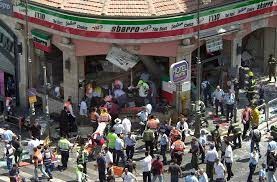
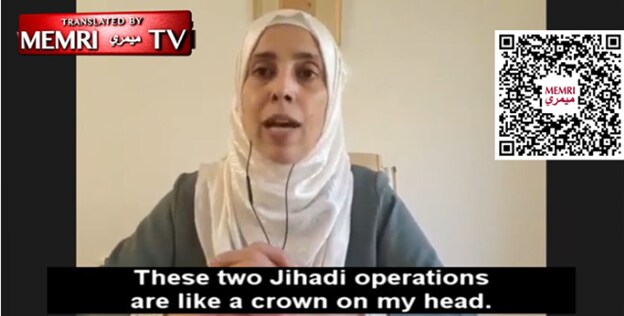
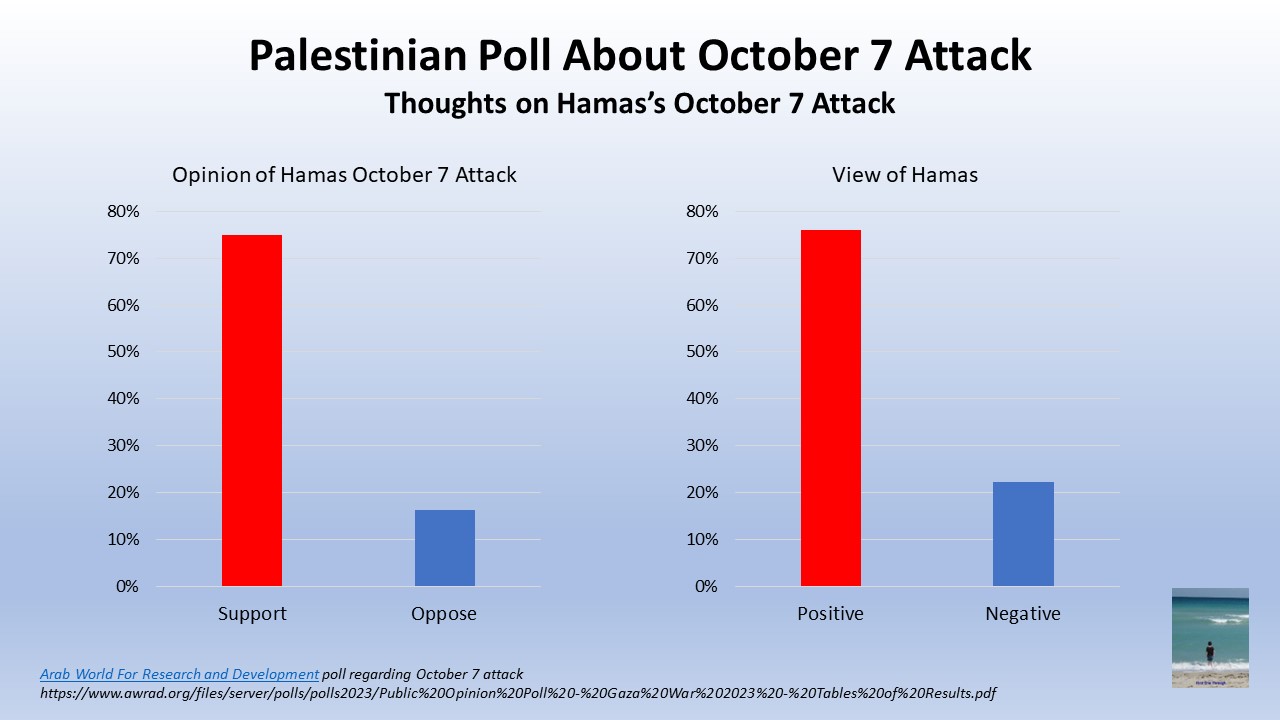
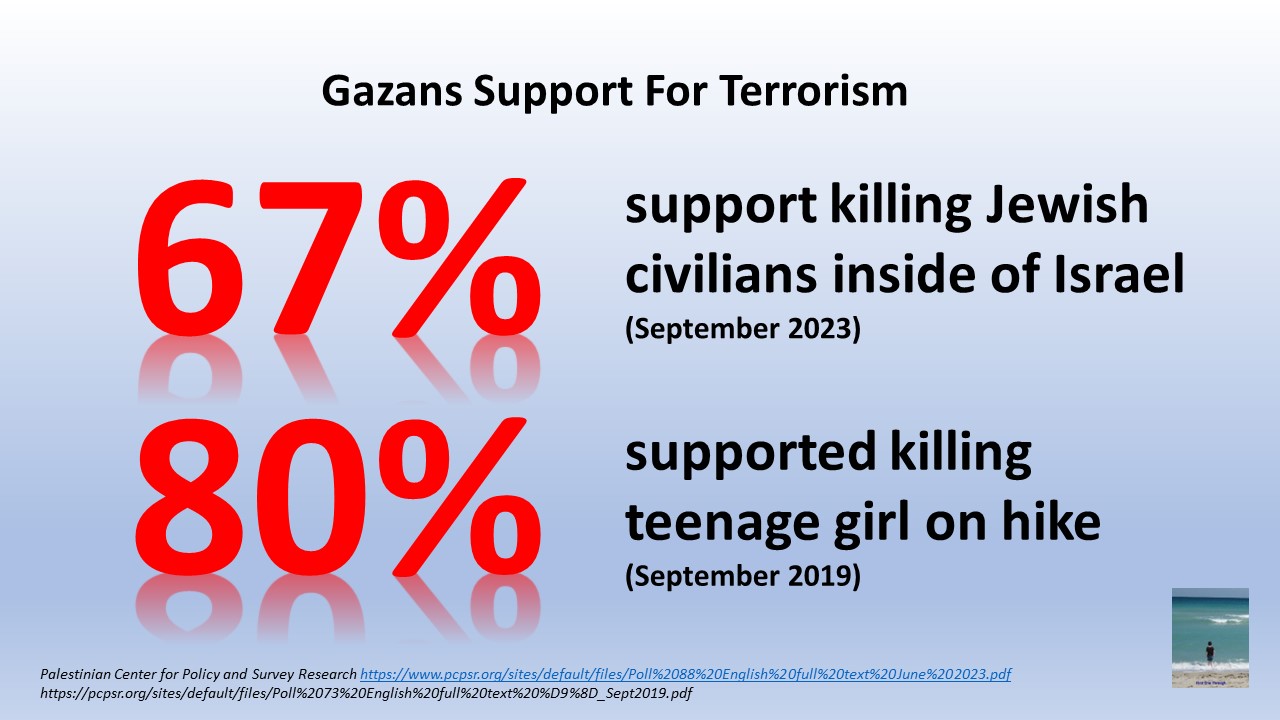
  • The barbaric attack of Hamas and Palestinian Islamic Jihad on October 7, 2023, and overwhelming support it had amongst SAPs.
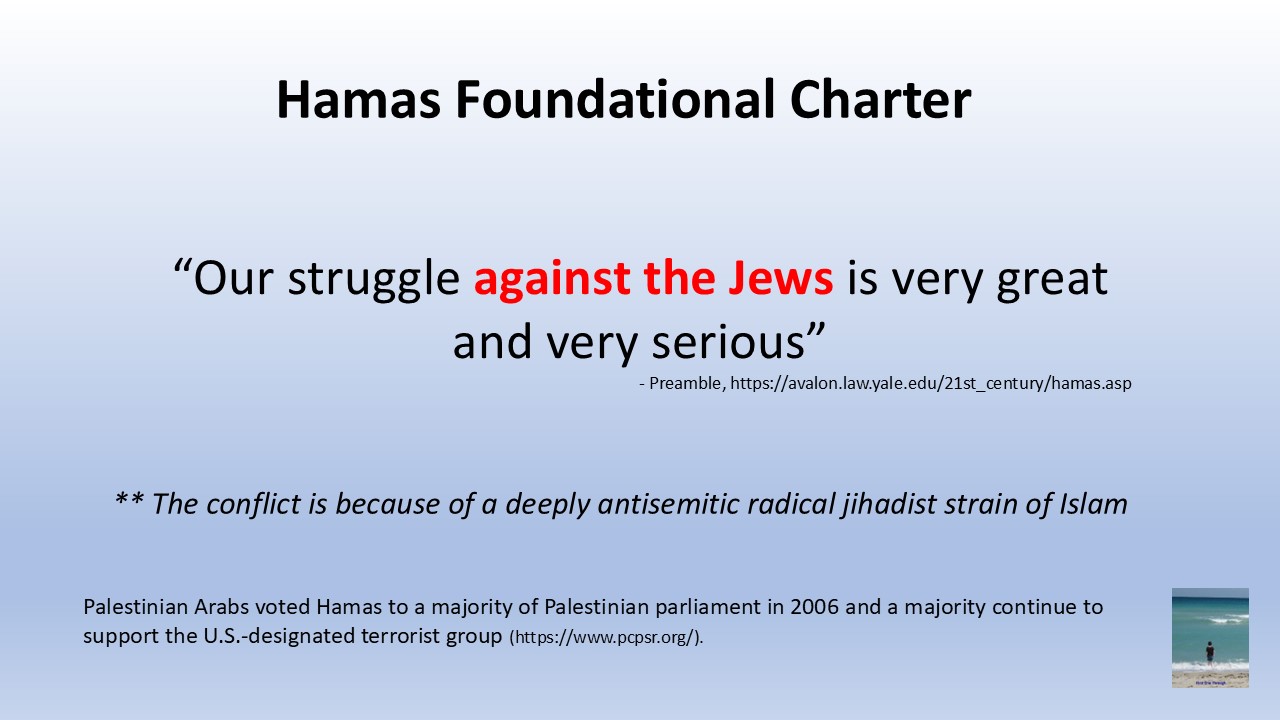
  • The vile antisemitic Hamas foundational charter which brought the party to 58% of parliament.
  • The ongoing failure of Palestinian parties to reconcile under a single governing entity.
  • The deeply corrupt and unpopular PA.
  • A deformity in local culture in which the majority of SAPs have always wanted to kill Jewish Israeli civilians.
  • A PA media and school system that promotes antisemitism and incites hatred.
  • A society with various armed groups which refuse to disarm that are more popular than the PA.

Instead, the UN focuses on misdirection towards Israel and masquerades the reality of SAPs. It gives the PA seats at UN panels and committees even though it has no power, support or authority, parading a fake caricature of the situation. This does nothing to help SAPs address the failure of its society nor hold it accountable for its actions.

For the UN, the answer to the question of SAPs is the creation of a new state for local Arabs which should be Jew-free. Remarkably, the global body cannot ponder that such goal is deeply antisemitic. Equally as pathetic, the failure to consider any other solution to statehood grants SAPs a free hand to commit any sort of atrocity.

The Question of SAPs must not have a forgone conclusion. That approach has failed for years at the price of thousands of lives.

Maybe SAPs can have a state-minus—something akin to post-WWII Japan: self-governance, civil services, education, cultural autonomy—but demilitarized, with security handled by an external guarantor to prevent further war and terror.

Or perhaps certain areas of the West Bank could be confederated with Jordan, whose population is majority SAPs already. Maybe Jordan itself should be divided whereby a section would be part of a Palestinian State together with parts of the West Bank.

The area east of the 1949 Armistice Lines (E49AL) might remain under Israeli sovereignty with SAPs having semi-autonomous status—akin to Native American reservations in the U.S., which have self-rule in many areas but rely on the larger state for defense, currency, and diplomacy. Or the areas get annexed and the residents get Israeli citizenship.

These are serious, legitimate proposals worthy of debate.

Buildings on both sides of Security barrier in Jerusalem (photo: First One Through)

But let’s be clear: any outcome is about solving the question of what to do with the SAPs. It is not about creating two states. Israel is already there.

The time has come to retire the “two-state solution” slogan. Not because peace is impossible—but because clarity and focus are essential.

Related:

The Distant Fantasy Of Two States Living Side By Side In Today’s Reality (August 2024)

The Three “Two-State Solution”s (December 2023)

“Two States For Two People” And An Arab “Right Of Return” Are Mutually Exclusive (September 2023)

Abbas Pivots from Insults to Flattery in a Bid for Trump’s Favor

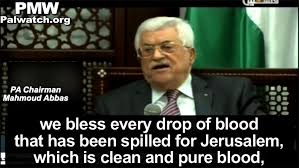
For years, Palestinian Authority President Mahmoud Abbas spared no insult for U.S. President Donald Trump and his administration. He called Trump’s peace plan the “slap of the century.” He labeled U.S. Ambassador to Israel David Friedman a “son of a dog.” Abbas publicly refused to meet with any Trump envoy after the U.S. recognized Jerusalem as Israel’s capital in 2017, cutting off nearly all formal ties with Washington. He refused to stop paying salaries to the families of terrorists despite Trump’s demand that he do so.

PA President Abbas issues prayer that President Trump’s “house be destroyed” in 2018

But now, in a stunning reversal, Abbas is praising Trump following America’s attacks on Iran’s nuclear facilities, hoping to reengage with the man he once vilified. The about-face reveals not only Abbas’s desperation but also a familiar tactic in Middle Eastern politics: appealing to the ego of strongmen to gain leverage in diplomacy.

June 25, 2025 article in official Palestinian Authority media, Wafa, relaying Abbas’s appreciation for Trump reaching a ceasefire between Israel and Iran

Attempted Falsification of Division From Enemies

Just two weeks ago, Abbas condemned Hamas’s October 7 attack on Israel, in a letter to French President Emmanuel Macron and Saudi Crown Prince Mohammed bin Salman. Abbas had never done so before. He is seemingly attempting to distance himself from the dominant Palestinian political party which is struggling to stay alive.

Somehow, Abbas wants to bury reality and history. Just one year before the October 7, 2023 massacre, Palestinian factions agreed to a reconciliation in Algiers, Tunisia. Hamas, Fatah (Abbas’s political party), the Popular Front for the Liberation of Palestine and eleven other movements signed an agreement to “get rid of this [political] split and cancer that has entered the Palestinian body.” This move was an attempt to unify the Palestinian people under new elections with a single unified government representing all groups. The United Nations celebrated the integration of Hamas and PFLP – which the U.S. designates as terrorist groups – into a unity government.

A total of 14 Palestinian factions signed reconciliation agreement in Algiers to end their 15-year-long division. (photo: Xinhua)

But Abbas now recognizes the endgame of the current battle: Iran, Hezbollah, Houthis and Hamas have failed in their attempt to destroy the Jewish State. Abbas would have welcomed such outcome, so stayed quiet for over 600 days. Now, while his decimated fellow Muslims sort through the rubble, Abbas is attempting to distance himself from the losing side, of which he was a silently cheering member.

Appealing to Trump’s Vanity

As he throws Hamas under the bus, the nearly-90 year old unpopular Abbas is looking for a lifeboat. Imagine his dismay to realize that even after Hamas led Gaza to a war of destruction, Palestinian polls still show Hamas to be more popular than his Fatah party, and over 80% of Palestinians want Abbas to resign.

In Abbas’s worldview, perhaps aligning himself with a winner will salvage some dignity and allow a few more years of relevancy. Despite spitting on Trump’s Abraham Accords and vilifying Trump & Co., Abbas is replacing his vitriol with flattery.

This is not just a change in tone; it’s a strategic pivot. Abbas’s flattery is designed to appeal directly to Trump’s vanity. Trump craves recognition and praise, particularly when it comes from those who previously doubted him. Abbas is betting that Trump, flattered by the turnabout, might seek to craft a renewed deal between Israel and the Palestinians, this one closer to the Arab Initiative crafted by Saudi Arabia in 2002, rather than Trump’s “deal of the century.”

The logic is simple: Trump, the dealmaker, might relish the chance to win the Nobel Peace Prize by securing an Israeli-Palestinian Peace Agreement, alongside a broad opening of the Abraham Accords with Saudi Arabia and other nations whom would likely follow.

There is little indication that Abbas has changed his position on any of the core issues — recognition of Israel as a Jewish state and the so-called “right of return” principal among them. His newfound praise for Trump is not based on ideological alignment or shared values but on the simple belief that stroking Trump’s ego might yield results.

Israel’s View

From Israel’s perspective, Abbas’s pivot will likely be met with skepticism. Israeli officials have long regarded the Palestinian Authority as duplicitous — speaking the language of peace in English while praising and funding terrorists in Arabic. Abbas’s credibility is further diminished by years of internal repression, a stagnant economy, and a populace which despises him.

Still, Israeli leaders will watch closely. If Trump signals willingness to broker another deal — one perhaps based on regional normalization and security guarantees rather than the moribund Oslo framework — Abbas’s outreach could become a diplomatic variable worth tracking.

Conclusion: Desperation Dressed as Diplomacy

Mahmoud Abbas’s pivot from name-calling to praise is more than political theater. It’s a sign of deep weakness — a recognition that time, allies, and leverage are all slipping away. By appealing to Trump’s vanity, Abbas is hoping for a personal reprieve and a political lifeline.

But Trump will likely recall the years of insults and rejection. Whether he’s willing to forgive and forget — and whether Abbas is willing to concede more than just compliments — remains to be seen.

What is clear is that Abbas, who once derided Trump as a destroyer of peace, now sees him as his best hope to remain relevant.

Related:

Abbas Pays Tribute To Murderers Of Jews Before The United Nations General Assembly, To Applause (September 2023)

Abbas Declares All of Israel is a “Painful Settlement” (June 2021)

Abbas Failed To Capitalize on Trump’s Gift (December 2020)

Abbas’s Speech and the Window into Antisemitism and Anti-Zionism (May 2018)

There Is No Place For Jews At Columbia University

On June 18, 2025, Columbia University announced that it had produced its third report on antisemitism. One would imagine that it would give people hope that the administration was seriously tackling Jew hatred on campus.

Alas.

The “Task Force On Antisemitism” did not focus on Jew hatred at Columbia; it did a poll of ALL students about how they felt about the anti-Israel encampments on campus during the 2023-2024 school year. The “antisemitism” task force wanted to understand everyone’s feelings. It was as though the Black Lives Matter movement put out a research paper that ALL Lives Matter. Not incorrect, just deaf, dumb and blind to the mission.

The report was called “Student Belonging and Exclusion Survey Report,” and polled 9,000 undergraduate and graduate students at the university in the summer of 2024. The responses were broken down between Jewish, Muslim, Christian, None and Other religious groups.

Jews fared the worst on each question.

Whether the question was about “a sense of belonging at Columbia” where only 34% of Jewish students felt welcome (compared to 41%, 54%, 51% and 49% for each of the other religious categories), or don’t feel accepted because of one’s religion where 62% of Jews felt unwelcome (compared to 53%, 13%, 3% and 11%), Jews were outliers, with Muslims trailing.

Jews were the most likely to have felt discrimination (53% versus 43%, 6%, 1% and 7%) and were uncomfortable sharing their beliefs (87% versus 82%, 64%, 58% and 58%). The fact that the majority of Columbia students were uncomfortable expressing their beliefs – including atheists – is a damning finding about university culture, beyond antisemitism.

Jews lost the most friends because of the encampments and campus environment (29% versus 16%, 7%, 6% and 9%) and had strained relationships (53% versus 30%, 27%, 22% and 20%). That is a sad state that extends to the personal student level, passed the administration and faculty.

And while Jews felt the most stress over the period, they are learning the least. The campus protest barely taught them anything about the regional dynamic. But Christian and other faiths learned a lot – of pro-Palestinian narrative.

How does one know that students have only been absorbing a pro-Palestinian narrative from a year of encampments? While half of the student body participated or supported the protests, virtually none supported Israel. The pro-Israel protests were almost exclusively Jewish. While 21% of Jews sided with the Stateless Arabs from Palestine (SAPs), a mere 1% of Christians, atheists and other faiths supported Israel. No Muslims supported the Jewish State.

Israel is a pariah at Columbia University. It is only supported by a number of Jews.

How can an institution that claims to champion an open exchange of ideas have a majority of students afraid to express their beliefs? How is it that only Jews support Israel on campus?

It is obvious why nearly two-thirds of Jews at Columbia feel unwelcome on campus. It is unclear why any Jew continues to attend.

Banner hung at Columbia University’s Hamilton Hall supporting “intifada,” violence against Jewish civilians

Related:

Columbia University Sets New Standards For Free Speech (December 2024)

Ignoring Columbia’s – And The Education Industry’s – Systemic Antisemitism (July 2024)

Columbia University Completely Fails Mission. And Jews (October 2023)

Is Columbia University Promoting Violence Against Israel and Jews? (December 2019)

Rashida Tlaib Moves From Hitler To Beinart

Rep. Rashida Tlaib (D-MI) has made her career out of demonizing Jews. Sometimes she paraphrases demonic antisemites like Adolf Hitler, and sometimes she comes up with her own invective.

When she stood in Congress on Israel’s May 14 Independence Day to introduce an “Ongoing Nakba” resolution because the State of Israel continues to exist, she decided to open by quoting Peter “AsAJew” Beinart.

Rep. Tlaib introducing the “Ongoing Nakba” resolution on May 14, 2025

Beinart is not a famous diplomat or philosopher. He’s not a celebrity or TikTok star. He’s not a Palestinian or Muslim. Most of the people in Congress never heard of him.

Yet Tlaib chose to quote him as a comrade in the effort to destroy the modern Jewish State.

Most left-wing Jews left their socialist-jihadi colleagues in the wake of the October 7, 2023 massacre, like rats fleeing a sinking ship. They were appalled at the moral depravity of people shouting to “Globalize the Intifada” and “Glory to the martyrs” after the savage killing of 1,200 people in Israel. Only the most radical fringe of the fringe remained; those who could bury their being a Jew and a human being far below the thrill of being beatified as a living saint by jihadists.

Those seeking the destruction of Israel have migrated from quoting the forgery Protocols of the Elders of Zion to Amnesty International to “AsAJew”s. The anti-Israel antisemitism has transmogrified from niche raw Jew hatred to generally accepted at the United Nations to Jewish-endorsed with a kosher seal of approval.

The crucification of the Jewish State may not have started with Jews, but the jihadi gospels being written now are putting AsAJews front-and-center nailing it to the cross.

Marc Chagall’s “White Crucifixion” (1938)

Related articles:

Shai Davidai And Peter Beinart Circus And Views (May 2025)

The Zone Of Jew Hatred Interest (March 2024)

An Open Letter To Progressive Diaspora Jews (October 2023)

Jewish Anti-Zionists’ Confession, Absolution And Fratricide (April 2023)

Anti-Semites Don’t Ride In Cattle Cars (September 2022)

Tlaib Shields Anti-Semitic Murderers, If Not White (June 2021)

Peter Beinart is an Apologist for Anti-Semites (December 2020)

The Calming Feeling of Palestinian Refugees: Rashida Tlaib in Her Own Words (May 2019)

UN’s Guterres Only Hates Israeli Jews, Not Diplomats

United Nations Secretary General Antonio Guterres is first and foremost a politician, not a human being. What else can be the reasons behind his ignoring the slaughter of 1,200 people in Israel, burning entire towns, raping women and kidnapping 250 people, other than serving his constituents of the Global South whom he has learned are rabid antisemites?

When a radical socialist-jihadi gunned down two young Israeli diplomats outside a Jewish event in Washington, D.C. in May 2025, Guterres immediately issued a statement condemning the murders. It was something he did not do after the massacre in Israel on October 7, 2023. Or October 8. Or October 9. Or October 10.

But he rose to the occasion in May 2025 after the targeted killing of the Israeli couple by a lunatic yelling “Free, free Palestine,” as if he were surrounded by fantom college campus agitators. Perhaps anticipating blowback from the anti-Israel horde he leads (read serves), Guterres explained this statement “reiterat[ing] his consistent condemnation of attacks against diplomatic officials.”

THIS particular antisemitic murderer should be “brought to justice” because he killed diplomats, a Bozo no-no. In this circumstance, the UN “extends sympathies to the Government of Israel,” because members of the sacred circle of high brow governmental officials were gunned down, not Jews having breakfast with their kids in their kitchens.

The thousands of butchered and injured people in Israel by over 3,000 Gazans in October 2023 were just Jews and therefore deserved no sympathy from the United Nations. Guterres could not offer any words of condemnation or consolation to the Jewish State for such barbarity; he has been so trained by the Global South. His office would not demand that thousands of Gazans “be brought to justice”; they are the UN’s protected wards.

When the head of the United Nations explained to the world that he decided to quickly condemn the murder of two Israelis when he ignored the butchering of 1,200, because of unity among diplomats, he further exposed the profound inhumanity of the cancerous global institution.

Related:

Killing 26 Hindus in Kashmir Is Much Worse Than Butchering 1,200 Jews In Israel. For The UN. (April 2025)

The Global South Is Coming For The UN Security Council (March 2025)

Fire United Nations Secretary General Antonio Guterres (January 2024)

UN Secretary General Guterres is Losing the Confidence of Decent People (September 2017)

What Will France’s “Concrete” Steps Be To Advance A “Two State Solution”?

On May 23, 2025, France said it is “determined to advance the implementation of the two state solution.” The June conference in New York that it will chair with Saudi Arabia titled “the International Conference for the Peaceful Settlement of the Palestinian Question and the Implementation of the Two-State Solution” is designed to focus on IMPLEMENTATION. France made clear that it expects “Irreversible steps and concrete measures for its implementation” to make the future a reality.

The combined effort of a western country and the dominant force in the Arab world to spearhead the effort, might lead to a balanced consensus that can help the parties forward. To be successful, the team must be realistic about the goals and constraints of both Israel and Palestinian society, and move on a realistic timeframe. Most importantly, it must work on an ENDURING peace that will last, not simply getting to an agreement.

Here are seven constructive steps that could lead to a stable two-state solution:


1. Disarm All Palestinian Militias

Peace starts with law and order. The Palestinian Authority has no monopoly on violence in the territories it claims to govern. Hamas and Islamic Jihad still run Gaza. In the West Bank, terrorist groups like Lion’s Den and the Jenin Brigades run wild with guns and explosives.

France needs to lead an international push to fully disarm all terrorist militias, not just generic phrases of “condemning violence.” All arms must be placed under the control of the Palestinian Authority (PA), or there’s no point in talking about sovereignty. No state — and certainly not Israel — can accept a terror enclave as its neighbor, as has existed in Gaza since 2007.


2. Elections With Rules

The last Palestinian elections were held when Justin Beiber became legally allowed to drink alcohol. Mahmoud Abbas was elected in 2005… for a 4-year term. He’s now on year 20.

New elections must be held, but not every group gets to play. Hamas — a terrorist organization by U.S., EU, and Israeli designations — should not be allowed to run, just like Nazis weren’t allowed to run in post-war Germany. The party should be outlawed.

France and Saudi Arabia should insist on clear criteria: no party that promotes violence, antisemitism, or the destruction of Israel gets a seat at the table. There is no pathway to an enduring peace if there is an underlying state of war.


3. Reform Education — Stop Teaching Hate

An Enduring Peace isn’t signed on paper; it’s taught in classrooms and instilled in society.

As part of de-Hamasification of Palestinian society, schools — especially and including those run by UNRWA — a complete overhaul of Palestinian education, with international oversight to remove antisemitic and violent content. IMPACT-SE has written about this problem for years, and concrete steps must be taken to allow a future of coexistence.


4. Stop Treating Jews Like Foreigners in Their Homeland

Palestinian schools aren’t the only problem. The United Nations is rank with Jew-hatred and one cannot expect Palestinians to be less anti-Israeli Jews than the global body.

UN Security Council Resolution 2334 outrageously declared that Jews living in eastern Jerusalem and east of the 1949 Armistice Lines with Jordan (E49AL) are somehow illegal — a modern form of antisemitism dressed up in legalese. UNSC 2334 should be renounced and rescinded as part of the steps towards an enduring peace.

France must reject the idea that Jews should be banned from parts of their ancestral homeland. At the same time, to facilitate compromise, a cap on Jewish residents east of the 1949 lines — say 15% of the overall population — could be introduced to avoid major demographic shifts in a future Palestinian state.


5. End the So-Called “Right of Return”

The Palestinian demand that millions of descendants of refugees be allowed into Israel is not about peace — it’s about destroying Israel demographically. It’s a fantasy rooted in grievance, not reality.

France must take the lead in declaring the Palestinian “right of return” over. In its place, a compensation fund should be set up — funded by Israel, Arab countries that started the 1948 war, and international donors. A similar fund should be set up for the descendants of Jews from Arab countries which were expelled in the decades after 1948. Work should begin now to compile a list of the properties which were lost and the related descendants who will collect associated reparations.


6. tighten the border framework, including jerusalem

The Saudi Peace Plan of 2002 suggested that Israel retreat to the 1949 Armistice Lines — a temporary ceasefire line, not a border. That’s not a starting point. That’s a non-starter.

France and its partners should endorse a realistic territorial framework: borders will fall somewhere between the current Israeli security barrier and the 1949 lines, through mutual negotiations. Land swaps are fine — as long as they reflect demographic realities and security needs.

In regards to Jerusalem, no country divides its capital city and no country places its capital on a border. Jerusalem should remain the capital of Israel, as it has uniquely afforded freedoms for all religions. Saudi Arabia should take over the administration of the Temple Mount from the Jordanian Waqf as part of advancing peace in the Middle East.


7. Shut Down UNRWA — Gradually, Responsibly

UNRWA, the UN agency that was supposed to help refugees, has become a sprawling, corrupt bureaucracy that perpetuates dependency and fuels incitement. Its existence undermines the Palestinian Authority and entrenches the myth of perpetual refugee status.

France and Saudi Arabia should lead the call for a phased shutdown of UNRWA, starting in Gaza and the West Bank. Services should be handed over to the PA — and resettlement should begin for Palestinians in Lebanon, Syria, and Jordan, with annual caps to avoid regional overload.

UNRWA offices in Jerusalem (photo: First One Through)

Bottom Line

France says it wants permanent changes on the ground. Good. The Middle East has had enough of circular negotiations, terrorism-as-usual, and international hypocrisy.

If France is ready to be honest, clear-eyed, and courageous, it can help move the region toward peace. But if it sticks to the same old script — blaming Israel, indulging Palestinian rejectionism, and hiding behind the UN — then we’ll just keep getting the same instability, bloodshed, and failure.

Peace will not be achieved overnight and “concrete” steps must be phased with reality. France and Germany gradually became allies after World War II with the benefit of the deNazification of Germany. Germany even made peace with the Jewish State over time once it was committed to avoid the hatred of its past. An overhaul of the Palestinian mindset and rejection of radical jihadism and goal of eliminating the Jewish State, under the sheepherding of Saudi Arabia can help map a better course for the region.

France must internalize the needed overhaul of the “deformity in Palestinian culture,” to quote James Zogby, President of the Arab American Institute who spoke to the UN in June 2023. Saudi Arabia must overlay the Abraham Accords on top of its 2002 Peace Plan to refine it to account for the reality of the last several years.

The emphasis of the France-Saudi chaired conference must be on the direction, not on the permanence of “concrete” and “irreversible” steps, to find a less violent and just future for the region.

Related articles:

There Is No Basis For A Palestinian “Right of Return” (July 2024)

The Three “Two-State Solution”s (December 2023)

Jerusalem Population Facts (May 2021)

When You Understand Israel’s May 1948 Borders, You Understand There is No “Occupation” (July 2019)

Ending Apartheid in Jerusalem (June 2018)

Arabs in Jerusalem (January 2016)

The Israeli Peace Process versus the Palestinian Divorce Proceedings (June 2015)

The Arguments over Jerusalem (May 2015)

Every Year a Refugee

How many generations should someone be called a “refugee?” Two? Ten? My parents were refugees and I consider myself the son of refugees. But not a refugee. To do so would be a mockery of millions of people fleeing homes to faraway lands where they have no family, infrastructure or knowledge of the local language.

Alas, while every year the world adds and removes refugees from the global tally, there is a permanent exception.

There are roughly 122 million displaced people worldwide (68 million internally displaced, 38 million refugees and millions of others seeking protection), and the United Nations High Commissioner for Refugees (UNHCR) is tasked with helping them. Its mission is clear: assist people fleeing conflict or persecution to either return home when it’s safe, or resettle in a new country where they can rebuild their lives and become citizens. Refugee status, according to UNHCR, is meant to be temporary. A tragic but manageable step toward normalcy.

But for one group of people, the rules were rewritten.

In 1949, the United Nations created a separate agency: the United Nations Relief and Works Agency (UNRWA). Its job was not to help all refugees, but a specific set—Arabs who left or were displaced from what became the State of Israel during the 1948 war.

Unlike the UNHCR, UNRWA never intended to help these refugees resettle or gain citizenship elsewhere. In fact, when Jordan annexed the to be named “West Bank” in 1950 and granted full Jordanian citizenship to the Arabs living there in 1954 (Jews were specifically excluded from Jordanian citizenship) —including the so-called refugees—UNRWA still kept them on its refugee rolls. Why? They were no longer stateless, no longer displaced from their community, and in most cases, were living just miles from where they or their families once resided.

No other refugee population in the world is treated this way.

The Palestinians under UNRWA are not counted based on where they live or whether they’ve rebuilt their lives. They’re counted based on ancestry—any descendant of someone who lived in Mandatory Palestine in 1946 and left during the war is considered a “refugee.” That includes people who are now citizens of Jordan who have never set foot in Israel, and those who live under Palestinian rule in the West Bank and Gaza.

This isn’t about resettlement. It isn’t about a “two-state solution.” It’s about return. Not return to a country they fled—but to homes where their grandparents once lived, in a country that has since fought multiple wars for its survival and established itself as a sovereign nation.

This has locked the Middle East into a perpetual state of conflict. UNRWA doesn’t just preserve the status of Palestinian refugees—it amplifies it, funds it, and builds an international bureaucracy around it. It has denied Israel’s right to control its own immigration, and basic principle of sovereignty.

Worse, the UN’s actions have turned a situation normally considered a humanitarian issue into a real estate dispute. By insisting that people return to a house—not a country, as outlined in international human rights law—the global political body has exceeded its own mandate. This isn’t a question of national self-determination, but one of personal property claims. UNRWA isn’t so much a champion of the creation of a state beside Israel; it champions individual return to specific homes, decades abandoned or destroyed, now occupied by others in a sovereign country.

Meanwhile, the descendants of every other refugee group in the world—from Sudan to Ukraine—are helped by the UN to find a path forward. Only the Palestinians are encouraged to walk backward, into the houses of their grandparents.

UNHCR helps refugees stop being refugees. UNRWA helps them stay that way.

Every year, new wars create new displaced people. But only one group stays on the list year after year, generation after generation.

For Palestinian Arabs, the 1948 war is still being fought. Generations of people haven’t been birthed into refugee status as much as the region is in a 100 years war. While the world may use political terminology of an UNRWA ward who has never been to Israel as a descendant of a “refugee,” Palestinians simply see a permanent property right which will never be forfeited. The UN simply provides cover under the “refugee” monicker.

Every year, a refugee. By design. In partnership.

Related articles:

Palestinian Authority Demands That UN Come Clean On UNRWA (November 2024)

‘Right Of Return’ Must Be Integral To Negotiations (September 2024)

There Is No Basis For A Palestinian “Right of Return” (July 2024)

After UNRWA (February 2024)

“Two States For Two People” And An Arab “Right Of Return” Are Mutually Exclusive (September 2023)

There Is No Backing For A Palestinian “Right Of Return” (December 2022)

When the Democrats Opposed the Palestinian “Right of Return” (August 2018)

What The World Sees In Gaza

The world sees Gaza through the lens of curated sympathy – smoke trails from missile strikes, wounded children, crumbled buildings – rendered by the media and United Nations. The headlines scream “siege” and “occupation,” and the images are carefully framed to elicit tears, not questions. For them, Gaza is a tragedy.

But Israelis? They see something very different.

They see a terrorist enclave. A society ruled by Hamas – not just tolerated but elected – with a charter calling for genocide against Jews. They see neighbors who have fired over 30,000 rockets at them since Israel left Gaza in 2005, and who used humanitarian aid to dig terror tunnels and stockpile weapons.

Israelis are haunted by October 7, 2023 – the day when 1,200 of their people were butchered. Burned alive. Shot in their homes. Raped in front of their families. And they remember what came next: polls showing 75% of Gazans supported the massacre. The popularity of other Palestinian Arab terrorist groups skyrocketed as well, including Islamic Jihad, al Aqsa Brigade and al Qassam. This wasn’t some fringe radical cell that commited the vile pogrom – this was public approval for mass murder. It was the fulfillment of their long-standing desire to attack Jewish civilians inside of Israel since 2000.

They also see something deeper: three-quarters of Gazans consider themselves “refugees” living in temporary homes. Not because of displacement from this war but because they believe they’re entitled to homes inside Israel. They don’t see Gaza as their future – they see Tel Aviv.

To the United Nations, Gaza is a moral play where Israel is always cast as the villain. They see Gaza not as a failure of Palestinian leadership, not as a society hijacked by jihad, but as a tragedy authored entirely by Israel. Why? Because Israel won’t allow these “refugees” to move into the homes of Israeli Jews – the very homes where grandparents fled in 1948 after five Arab armies attacked the new Jewish state.

The world has condemned Israel for responding “disproportionately” to the October 7 massacre. The UN saw Israeli counterstrikes as war crimes, not defense. They ignored the slaughter of Israeli children and focused on fuel shortages in Gaza. They accused Israel of starvation, ignoring the trucks of aid Israel itself let in, even while its soldiers were under fire. They paid scant lip service to Israeli hostages kept in tunnels by Hamas, viewing them as collateral to Israel’s ongoing “Nakba”.

The Arab and Muslim world is not fooled but is not helping. They don’t see Gazans as brothers and sisters in need of refuge. They see them as Palestinians – a distinct, useful political weapon. If Gazans were Syrians, they would’ve been taken in by now. But they’re not. They’re left to fester – a long-term tool to weaken and delegitimize the Jewish state.

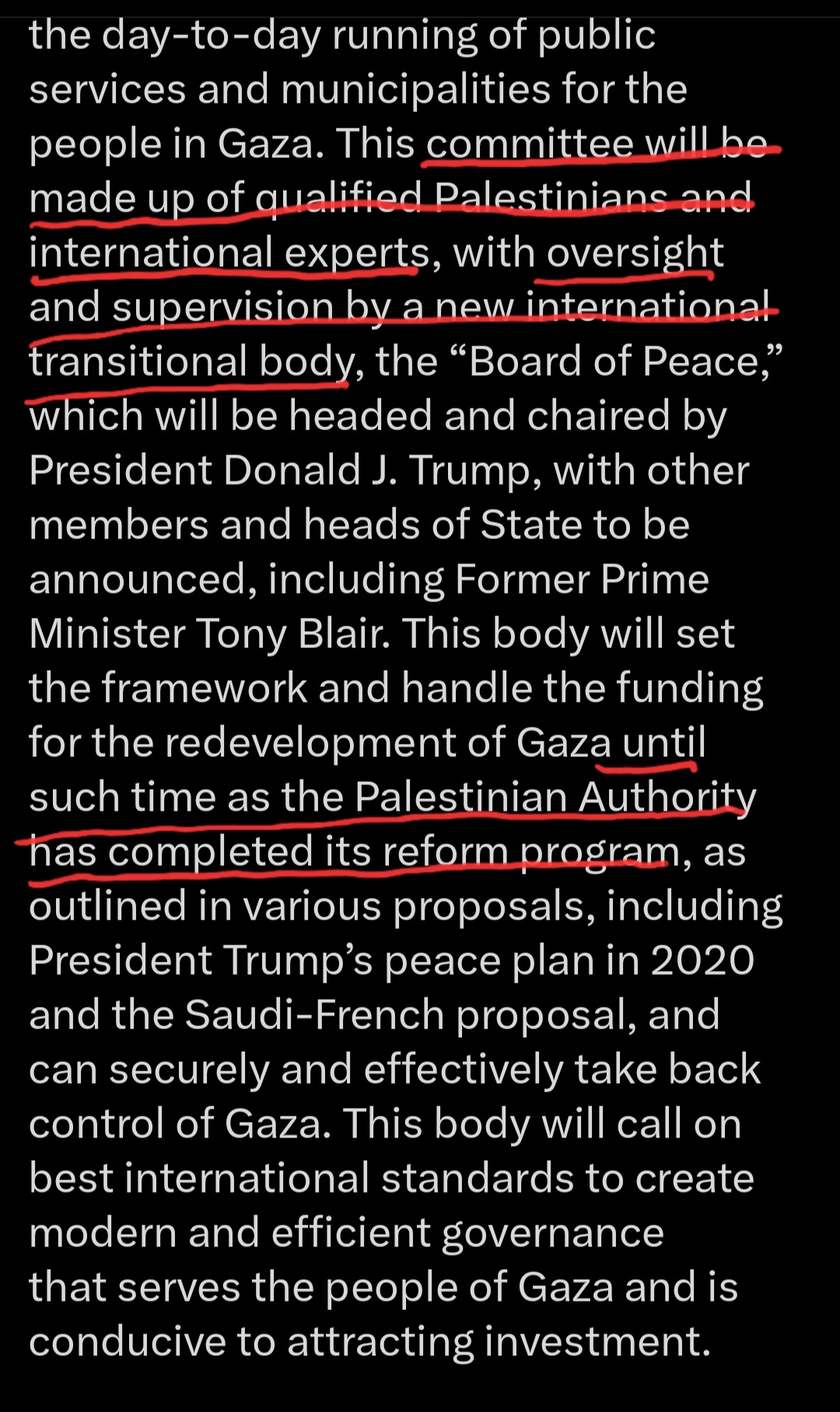
Even in America, Gaza has become a kind of geopolitical Rorschach test. Leaders like Donald Trump and Jared Kushner see opportunity: beachfront real estate with the potential to be the Singapore of the Middle East. A future riviera. But that future depends on changing a mentality – one that for decades has been more obsessed with destroying Israel than building Gaza.

Because this is the reality: Gaza could have been Dubai. It had the backing of the international community, billions in aid, and a chance to chart its own path. Instead, it chose jihad. It chose hate. It chose martyrdom over medicine, tunnels over technology, indoctrination over innovation.

The world sees rubble. Death. Tragedy. Not on both sides; for Palestinians.

They can’t see the Israeli hostages through their clouded moral lenses. They don’t see the Jewish parents still waiting for their children. They don’t see the decades of restraint Israel exercised before finally saying “enough”. They are caught in an empathy swamp and have mentally baptised Gazans as martyrs instead of genocidal jihadists.

The Global South sees Gaza not just as another flashpoint – but as a pawn in a bigger game. The narrative is not just about “liberation” but “redistribution.” From peace talks to class war. Israel, to them, is just the first domino in toppling the Western-led world order.

Gaza isn’t just a local issue anymore. It’s global. It’s ideological. And for Israelis, the stakes couldn’t be higher.

In this backdrop of viewpoints, an international conference at the U.N. headquarters in New York will take place from June 17 to 20 co-chaired by France and Saudi Arabia. The Global North will join the Global South in trying to find near-term and longer-term solutions to the 100-year Arab-Israeli conflict.

In this Coliseum, the General Assembly serves as the unruly crowd seeking the torture of the Jewish State, while the Security Council acts as caesar empowered with the pen to draft international law. Will the United States protect Israel in such forum on the heels of Trump’s visit to the Gulf? Will Trump seek to trade an unwinding of U.N. Security Council Resolution 2334 to get Israel to agree to short-term and longer term movements towards a permanent divorce between local Jews and Arabs?

Israel was blind to the October 7 attack. Does it see what the world sees in Gaza now and the positions being orchestrated for the June U.N. conference? Will the modern blind Samson bring down the house if it only hears calls for its demise and cannot see a path to live in peace?

Related articles:

The Distant Fantasy Of Two States Living Side By Side In Today’s Reality (August 2024)

The Three “Two-State Solution”s (December 2023)

The Asynchronous Audience At Jihadists’ Auto-da-Fe (November 2023)

Palestinians Utterly Fail Two Tests: Oslo Accords And Gaza Disengagement (August 2023)

The Mirrored Key Of The Jewish Temple

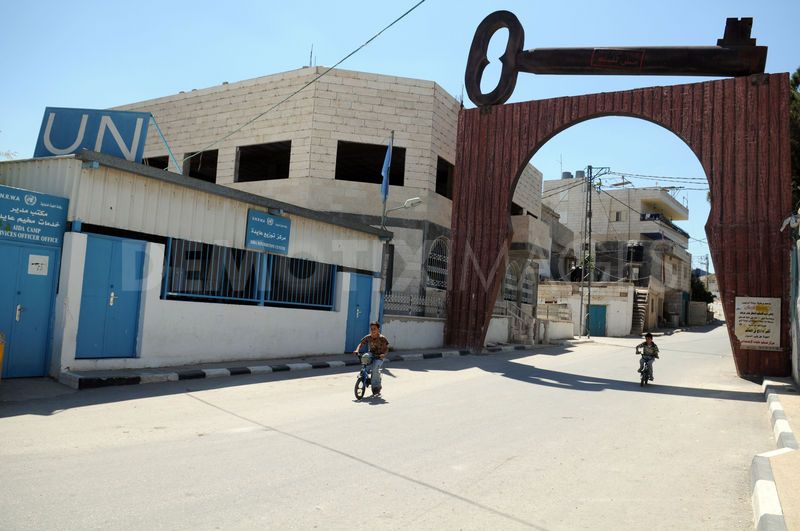
Across Western cities, Nakba” protests fill the streets in May, marking what Stateless Arabs from Palestine (SAPs) call the “catastrophe” of Israel’s founding. Protesters chant slogans of “liberation,” wave Palestinian flags, and brandish large symbolic keys—representing homes lost in the Arab-Israeli 1948 War, and a longed-for return.

In London, British actor Khalid Abdalla holds a key symbolising the supposed Palestinian “right of return” (photo: Middle East Eye)

To the casual observer, these demonstrations appear to be non-violent expressions of secular nationalism: a displaced people demanding justice and return. The rhetoric is packaged in the language of “anti-colonialism,” a phrase from the Global South marketed at western universities.

The terminology is secular and political but the facts on the ground tell a different story.

The actual war against Israel is not being led by nationalists. It is driven by radical Islamist groups including Hamas and Islamic Jihad. The attack launched on October 7, 2023, was not called the “Nakba Response” or “Operation Liberation.” It was named “Al-Aqsa Flood”—a title soaked in religious meaning, not national aspiration. It invoked Islam’s third-holiest site which sits atop Judaism’s holiest site.

The strategic use of “Nakba” language in western cities is a deliberate effort to mask a religious war in secular terms. It is designed to resonate with Western leftists who are comfortable championing national self-determination but uneasy with theocratic zeal. It reframes an Islamic holy war as a freedom struggle, making it seem modern, rational, and even “progressive.”

But the religious reality will not remain buried forever.

Because just as SAPs speak of return, so do Jews. If Jews are forced to lose their sovereignty, perhaps diluted in a binational state, it will likely not lead to secular coexistence—it may unleash something far older and deeper: the demand for rebuilding the Third Jewish Temple.

Today, the Temple Mount is controlled administratively by the Jordanian Waqf, which bans Jewish prayer. Since the Second Temple was destroyed in 70AD, Jews have dreamed of rebuilding it, and while that has remained marginal in the modern secular Jewish state, it may surge forward in a post-Zionist situation in which Jews are compelled to relinquish so much.

If Israel is converted to a binational state in which everyone has equal rights, Jews would obviously insist on the same rights as Muslims enjoy today, to pray openly by the thousands on the Temple Mount. The demand to rebuild the Jewish Temple could move from the fringe to the center. The so-called “liberation” of Palestine would be matched by calls to liberate the Mount—from Islamic control.

In that light, the pro-Palestinian protest chants of “liberation” are a double-edged sword. They echo with reciprocal cries: not just the return of SAPs to Jaffa but the return of Jews to the Temple Mount. The religious war launched by Gazans wrapped in secular “Nakba” terminology in the west would be laid bare for what it is.

Muslims and Jews hold keys for places that don’t exist in the holy land anymore – for homes and a Temple. Should one side pursue a “right of return” to create a future-past, the mirrored key will do no less.

Related articles:

More Muslims Visit The Jewish Temple Mount / Al Aqsa Mosque On Single Day Than All Jews Over The Past Year (March 2025)

There Is No Basis For A Palestinian “Right of Return” (July 2024)

Holocaust Survivors At The 2024 Israeli Day Parade In New York City (June 2024)

Israel, Ceuta and Melilla: Third World Escape Hatches (November 2023)

Delivery of the Fictional Palestinian Keys (May 2015)

Nine American Socialists And The UN Mock Israel’s Independence Day

On Friday, May 14, 1948, Israel declared its independence—one day before the British ended their Palestine Mandate and left the region. The timing wasn’t accidental. Israel’s founding leaders wanted the moment to be marked with reverence, not paperwork, so the declaration was made in advance of the Jewish Sabbath, allowing the entire Jewish people to enter its rebirth with dignity and joy.

The joy wasn’t shared. Within hours, neighboring Arab armies invaded the nascent state, launching a war to crush Jews in the shadow of the European Holocaust. That contempt hasn’t faded. It echoes today in the halls of foreign governments, NGOs, and the mouths of extremist politicians thousands of miles from the region.

To “commemorate” Israel’s 77th birthday, the United Nations hosted a session dedicated not to peace or coexistence—but to “the Inalienable Rights of the Palestinian People.” One speaker after another vilified Israel, slandering its conduct in defending itself in a war it never wanted. Accusations of “racism,” “genocide” and “ethnic cleansing” flowed freely—from China, South Africa, Guyana, and others eager to hijack human rights rhetoric for anti-Israel theater.

Not to be outdone, U.S. Congresswoman Rashida Tlaib (D-MI) introduced a resolution to formally mark Israel’s independence as Nakba Day—”the catastrophe.” The language mirrored the UN’s smear campaign, ignoring context, facts, and Israel’s right to exist as a sovereign nation. The resolution outrageously called on Israel to accept seven million Arab descendants of refugees and internally displaced people—almost all of whom have never set foot in Israel—negating a fundamental right of statehood by erasing Israel’s right to control its own borders. It called for the United States to withhold all diplomatic and military support from Israel as it defends itself in the midst of a multi-front war, to facilitate a genocide of Jews.

As Israel marked its 75th year in 2023, Jewish civilians were massacred by genocidal jihadi Arab terror groups on the Sabbath and Simchat Torah, a holiday celebrating the Jewish Bible. Rockets, kidnappings, and slaughter were launched from Gaza, with terrorists using Palestinians as human shields and Jewish hostages as bargaining chips—while cheering voices thousands of miles away offered rhetorical cover.

Today’s political war against Israel is led by the unholy alliance of far-left ideologues and Islamist extremists. They’ve inherited the mantle of the Arab armies defeated in 1948—and continue their campaign, not for coexistence, but for the erasure of the Jewish homeland. This is a Global Intifada dressed in human rights language but aimed at ethnic cleansing. In 1948, the horde successfully removed all Jews from eastern Jerusalem, the “West Bank” and Gaza. They strive to finish the job.

For them, Jewish sovereignty in the ancestral Jewish homeland remains a “catastrophe,” and Israel’s Independence Day is a day for revolutionaries to perpetuate the war. Not just for the 30 countries which continue to refuse to recognize Israel—but for shrill voices in the U.S. Congress who speak as if the past 77 years never happened.

After Arab armies failed to destroy Israel in 1967, the Arab League produced its “Three No’s“: no peace with Israel; no negotiations with Israel; and no recognition of Israel. It has an underlying three principles which continue to drive Jew haters: Jews have too much; Jews enjoying fundamental human rights is a provocation; and Jewish joy is triggering.

The trifecta of Israel’s Independence Day is too rich for global antisemites to ignore.

Related articles:

The Toxicity of The Latest “Nakba” Resolution (May 2023)

The Disgraceful Promotion of Refugee-Washing ‘Nakba’ In The U.S. Congress (May 2022)

Does the UN Only Grant Inalienable Rights to Palestinians? (May 2021)

Time to Dissolve Key Principles of the “Inalienable Rights of Palestinians” (December 2017)

The Original Nakba: The Division of “TransJordan” (August 2017)