The cameras panned across the crowd at Zohran Mamdani’s victory celebration — the newly elected mayor of New York City, surrounded by socialist activists, digital influencers, and the self-congratulating left. It was meant to be a night of triumph for the “movement.” But what stood out for those watching was not unity, or even politics. It was who was cheering.
Standing shoulder to shoulder, laughing and hugging, were Jamaal Bowman, Hasan Piker, and Zeteo’s Mehdi Hasan — three men whose names have become synonymous with the moral collapse that followed the Hamas atrocities of October 7.
Zeteo’s Mehdi Hasan at the Mamdani victory party with Hasan Piker and Jamaal Bowman. (start at 52:00)
Bowman, the disgraced former congressman, made his name shouting on New York’s streets that Israeli women were not raped on October 7 — that the accounts of mass sexual violence by Hamas terrorists were fabricated. He wasn’t a lone crank in an internet comment section; he was a member of Congress using his platform to publicly deny the humanity of Jewish victims in the streets of his district.
Hasan Piker, meanwhile, mocked the entire subject on his Twitch stream, telling his millions of followers that he didn’t care if the women on October 7 were raped. That flippant cruelty — that casual dismissal of atrocity — has become a feature, not a bug, of a corrupted culture that cloaks moral degeneracy in “anti-imperialist” rhetoric. His anti-American and anti-Israel rhetoric had become so toxic, that Rep. Ritchie Torres, a Latin-Black gay Congressman, wrote a letter on October 29, 2024 to the CEO of Twitch to have Piker removed.
And then there was Mehdi Hasan, who publicly argued that early reports of “mass rape” on October 7 were overstated and politicized, arguing that the allegations had been “weaponized by supporters of Israel.” At Mamdani’s party, he stood smiling with Bowman and hugging Piker as the pain of Jews was being amplified and normalized.
And celebrated.
The spectacle was a black mirror of a broken city — a city that once prided itself on tolerance and moral clarity now relishing Jewish trauma.
New Yorkers didn’t just elect a socialist. They elected a symbol of moral inversion — a man whose supporters include those who laughed at, ignored, or explained away the rape and murder of innocents.
When the applause dies down and the speeches fade, one question will remain for the city that crowned Mamdani: What kind of people celebrate with rape deniers and those that revel in the pain of the most persecuted minority-minority?
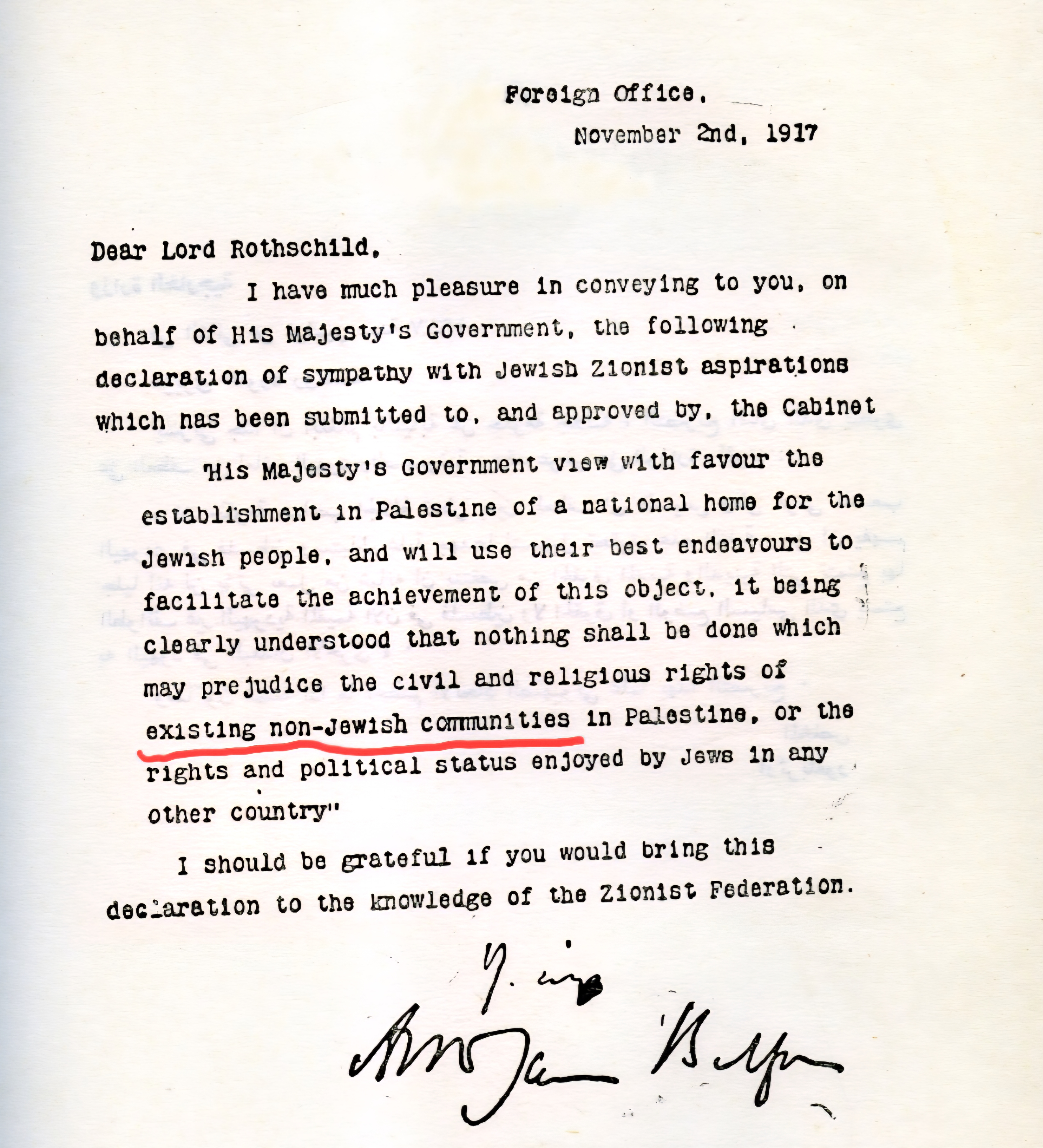
Much of the attention on the Balfour Declaration—issued on November 2, 1917—focuses on the United Kingdom’s pledge to “facilitate” “the establishment in Palestine of a national home for the Jewish people.” Israel-haters rage at this clause, claiming that Jews had no historical connection to their ancestral homeland and that Britain had no right to “hand over” immigration rights from local Arabs to Jews.
Balfour Declaration
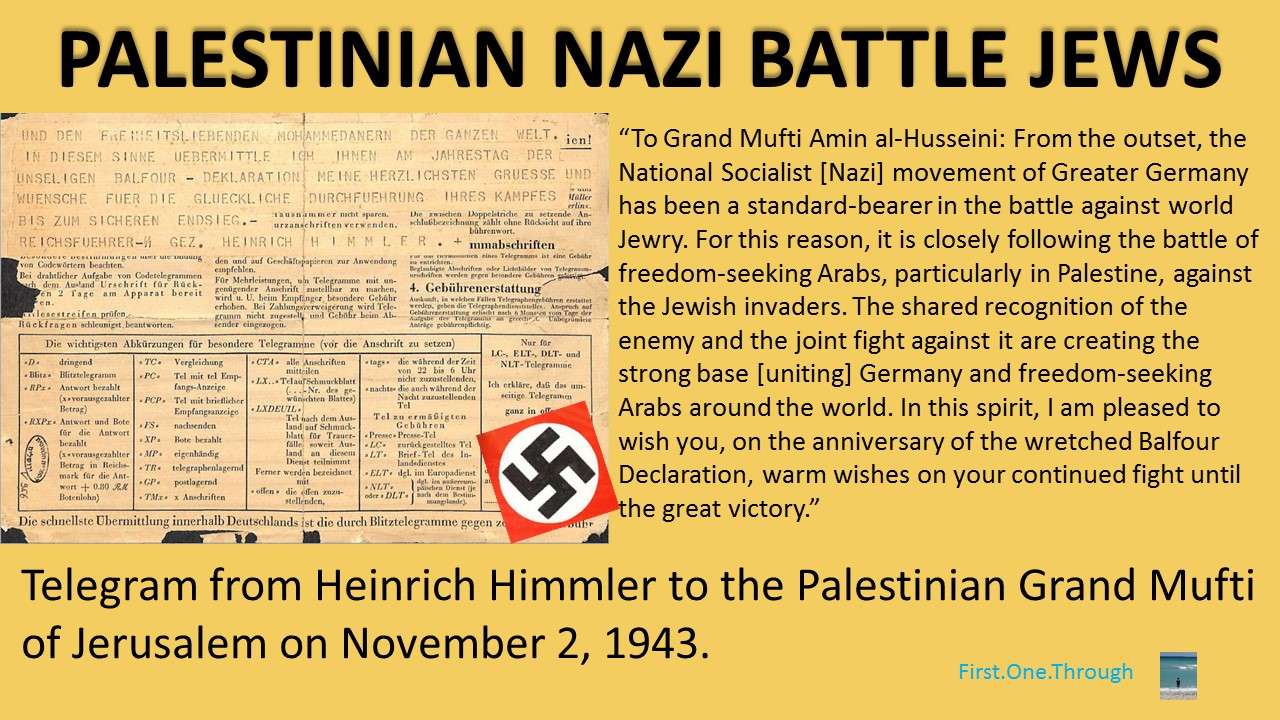
On the anniversary of the Declaration in 1943, Heinrich Himmler of Nazi Germany sent a telegram to the “Grand Mufti” of Jerusalem that Nazis and Arabs had the same enemies – Jewish invaders. In 2016, the President of the Palestinian Authority, Mahmoud Abbas demanded an apology and reparations from Britain for issuing the Balfour Declaration, having repeatedly failed to destroy the Jewish State.
Telegram from Heinrich Himmler to Amin al-Husseini on November 2, 1943
But there’s another part of that same document that antisemites also detest. The closing line reads:
“…nothing shall be done which may prejudice the civil and religious rights of existing non-Jewish communities in Palestine, or the rights and political status enjoyed by Jews in any other country.”
That final clause—protecting Jews’ rights around the world—is precisely what modern antisemitic movements are trying to undermine. Groups like Within Our Lifetime, CAIR, and the Democratic Socialists of America openly campaign to dismantle what they deride as “Jewish power” in America.
They smear Jews as self-serving “capitalists,” accuse them of exploiting “Black and Brown bodies” for profit (as Rep. Rashida Tlaib has said), and seek to push Jews to the margins of public life—all because Jews affirm that the land of Israel is their homeland.
A century after the Balfour Declaration, its promise remains under attack—not only in the Jewish homeland but wherever Jews dare to live proud and free.
There are signs on the streets of London that read “LOOK RIGHT.” They are painted boldly on the pavement to protect visitors—especially Americans—who are used to glancing left before stepping into the street. In the U.K., traffic comes from the opposite direction, and those who rely on old instincts can find themselves in sudden danger.
So it is now with American Jews.
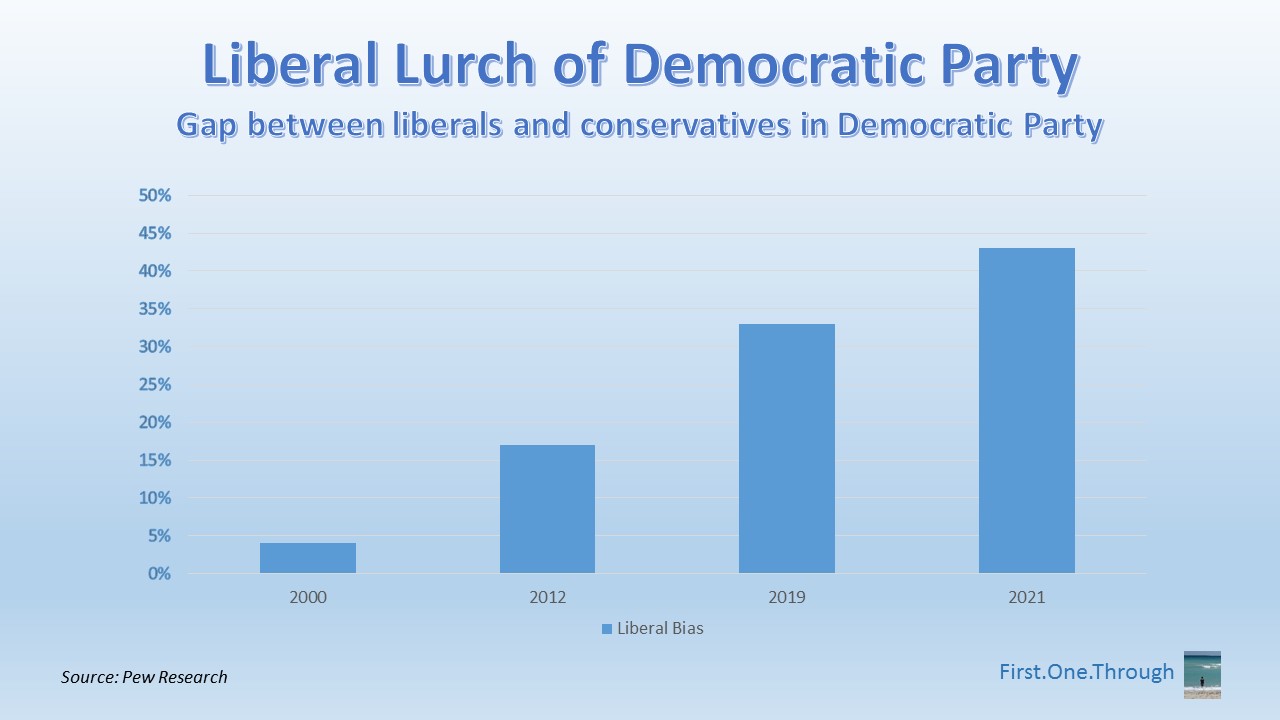
For generations, they have turned instinctively to the Democratic Party—to the left—out of habit, heritage, and a deep belief that liberal ideals best protected minorities. But the political landscape has shifted beneath their feet. The party that once championed freedom, tolerance, and support for Israel has been co-opted by radicals: anti-Israel voices, socialists, and anarchists who now wield growing influence in its ranks.
These are not the Democrats of old. They are activists who view capitalism as oppression, who denounce Israel as colonial, and who see Jews not as a vulnerable minority but as part of a power structure to be dismantled. They are coming for capitalism—and for the Jews who helped build and sustain it.
This election, American Jews must recognize that the public square is not what it used to be. The political traffic now comes from the right direction—but the danger comes from the left.
When Government Champions Some, and Leaves Jews to Defend Themselves
Westchester County, NY, like much of America, has learned the vocabulary of inclusion. It now boasts a tapestry of advisory boards, task forces, and community liaisons — each designed to protect and empower those who have known prejudice.
There is a Westchester County Asian American Advisory Board, formed after a surge of anti-Asian hate crimes during COVID. It partners with the District Attorney’s office on the #SpeakUpWestchester campaign, translating safety materials into Korean, Mandarin, and Japanese so that no one’s fear goes unheard.
There is also an LGBTQ+ Advisory Board, formally empowered to advise the County Executive, coordinate events, and oversee inclusivity training. The county even facilitated an LGBTQ+-affirming senior housing complex in downtown White Plains with The LOFT Community Center at its core — an unprecedented public-private partnership to create safe spaces for queer residents.
But there is one group that still has to do it all on its own: Jews.
There is no County Jewish Advisory Board. No county liaison for antisemitism. No government program translating “Never Again” into action.
While Asian and LGBTQ+ residents have been given official seats inside government, Jews have been told — quietly, politely — to use their own.
Even the collection of antisemitic incident data — which rose 22 percent in Westchester in 2024 — is largely managed by private watchdogs, not public offices.
The disparity is not just institutional; it is measurable.
Westchester County has 1 million residents, including about 137,000 Jews (14% of the population) and about 65,000 Asian Americans (7%).
According to state hate-crime data and ADL monitoring, there were about 40 antisemitic incidents and 8 anti-Asian incidents reported in Westchester in 2024. That translates to an estimated 29 antisemitic incidents per 100,000 Jewish residents versus roughly 12 per 100,000 Asian residents — a per-capita rate more than twice as high.
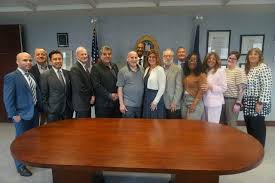
Rather than address the antisemitism squarely, Westchester District Attorney Susan Cacace made an inclusive Hate Crimes Advisory Board which had its inaugural meeting on September 29. Cacace was proud of the giant tent and said “the communities represented on this board are broad and diverse, and board members will be able to provide me with direct input from their constituents so that my office may more readily address their concerns.”
The Westchester County District Attorney’s Office’s new Hate Crimes Advisory Board
The all-Democratic Westchester establishment seemed to echo the Democratically-led House of Representatives which refused to condemn antisemitism without adding language about Islamophobia in 2019. Jew protection cannot exist in isolation for some reason for the Blue Team. It seemingly repulses them so much, that when Republicans target antisemitism, they argue that President Trump is “weaponizing antisemitism” and not really concerned about Jews at all.
No one begrudges others their protection. Jews, more than anyone, know the cost of silence. But the imbalance is glaring.
When the Asian community faced hate during COVID, Westchester created a formal board within months. When LGBTQ+ residents sought recognition, government became a partner in building physical spaces of affirmation. But when antisemitic assaults, harassment, and vandalism spiked across campuses, streets, and synagogues, the government offered sympathy — not structure.
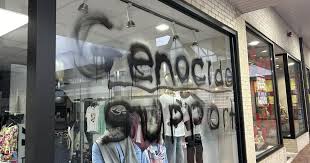
Graffiti on Jewish stores in Scarsdale, NY, January 2024
The Jewish paradox
Jews are trapped in a paradox. Their success is cited as proof they don’t need help; their vulnerability dismissed as self-inflicted. They are “white” enough to be privileged, but “Jewish” enough to be blamed.
And so, when antisemitism surges, the reflex of government is not to protect but to delegate — to community partners, to philanthropists, to the victims themselves. Or to give the general feeling of blanket protection alongside others, masking the fact that they are persecuted more frequently than every other minority group.
For centuries, Jews have thrived where societies upheld justice and faltered where governments outsourced their duty.
Antisemites have no issue singling out Jews for attack, yet government officials are loathe to single out Jews for protection which they do so for every other group. It begs the question as to why: are current government leaders antisemitic, or are Jewish leaders telling the government that Jews don’t want special treatment, just to be like everybody else.
If so, what does that mean when “everybody else” gets special treatment?
Why can California, with its Democratic super-majority, advance a mandatory ethnic studies curriculum which empowers Black, Brown, Latin, Asian and Native American communities but disparages Jews?
While Democrats are correct, that Jews would rather be treated the same as everyone else, they cannot sit on the side when special privileges and protections are afforded to every group except Jews, especially while they are under attack. To exclude Jews in favor of victims of preference – or just constituents of preference – is deeply antisemitic.
Jews Must Rise Above America’s Political Polarization
For Jews, the political spectrum no longer runs right or left — it runs above and below the line.
America once resembled a bell curve, a society centered in moderation. But over the last decade, that middle has collapsed into a barbell nation, with weight piling up at the extremes. And history has shown: whenever societies polarize, Jews suffer at both ends.
On the left, antisemitism festers in universities and coastal enclaves, driven by a socialist–jihadi alliance that paints Jews as colonial thieves and privileged elites. On the right, particularly across America’s heartland, antisemitism takes the form of nationalist resentment, depicting Jews as cunning manipulators steering the country toward decay.
The Jewish community now faces hostility from Justice Democrats and the Democratic Socialists on one side, and Christian nationalists and conspiratorial populists on the other. As America sorts itself into partisan tribes, Jews are politically homeless — stranded in what might be called Team White, surrounded by Red and Blue armies locked in mortal combat.
It is a moment that demands clarity: Jews must not follow the crowd, nor celebrate the likes of Zohran Mamdani or Marjorie Taylor Greene simply because they shout loudest. Safety will not be found at the edges.
NYC mayoral front-runner Zohran Mamdani with the extremist group Democratic Socialists of America
Instead, Jews must think on the Y-axis and rise above the line — where decency, truth, and moral courage define political identity, not the toxic binaries of today’s discourse. The task is to build bridges among the decent left, right, and center, and to undermine the machinery of polarization itself.
Be counter-algorithm. Social media algorithms are built on inflaming passions and feeding extremism. Get kids away from social media including banning phones in schools. Encourage people to spend less time on the platforms or to promote moderate posts.
Invest in institutions that elevate, not inflame. Support schools, media, and synagogues that model dialogue over division.
Be models of decency. Civility is countercultural today — make it contagious. Argue without anger, engage without hatred, and remind others that moral clarity does not require moral superiority.
Rebuild community and trust. Host conversations, bridge gaps, and welcome allies who differ politically but share ethical ground. Strength grows in connection, not isolation.
Be proudly above the line. Celebrate being moderate, balanced, and reasonable. The middle is not weakness — it is wisdom earned through restraint.
Expose extremists, even within. Call out the Jewish radicals who justify Hamas and the October 7 pogrom, as well as those who echo conspiratorial nationalism. Moral consistency demands internal accountability.
Teach Jewish ethics loudly. The Torah’s call to pursue justice and peace should echo in civic spaces — as a guide for repairing the world, not tearing it further apart.
A polarized society is a society on edge — brittle, unstable, and eager for scapegoats. Extremists will portray Jews as symbols of what’s wrong, a convenient vessel for resentment. As a minority-minority, Jews become easy targets when the center collapses.
The survival of the Jewish people in America depends not on joining the mobs below the line, but on lifting others above it — where truth, civility, and unity still have a fighting chance.
If one were to build a museum chronicling how a people educated generations toward hatred and eradication, the Palestinian Arabs would tragically merit their own institution. The Museum of Genocidal Intent would not showcase armies, the tools of genocide. It would display ideas, laws, sermons, and schoolbooks that made destruction a virtue and coexistence a sin.
Entrance Hall – The Charter of Death
Visitors first encounter the founding documents: the Hamas Charter (1988) and early Fatah Constitution passages promising Israel’s annihilation. There are ballots underneath from the 2006 parliamentary elections with articles alongside showing the Stateless Arabs from Palestine (SAPs) electing Hamas to 58% of parliament as a first action of breathing self-determination. As one leaves the room, leaders—from Arafat to Abbas to Haniyeh—chant “From the River to the Sea” and “We love death more than you love life.“
Gallery I – Educating for Erasure
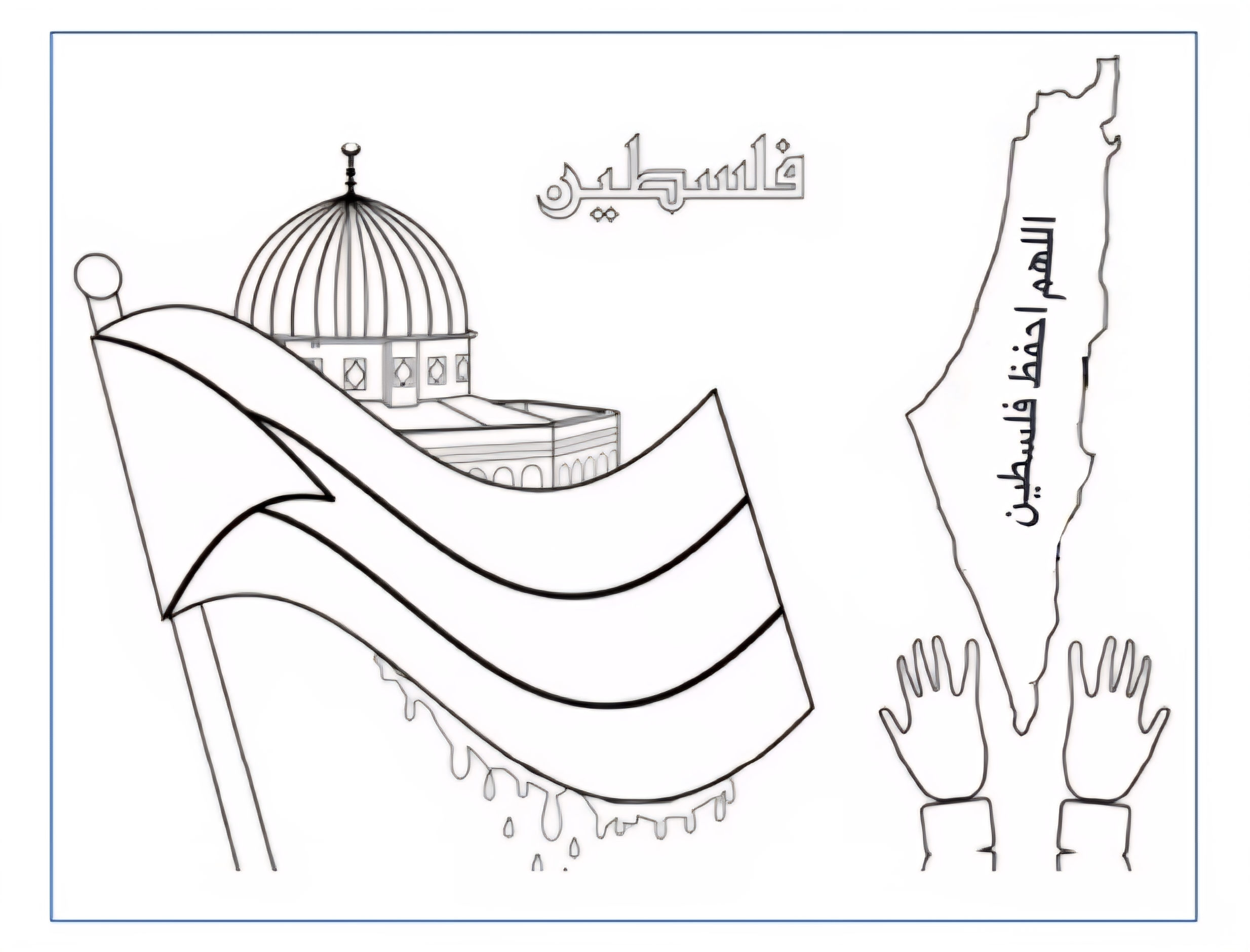
School desks and children’s cartoons line the room. In cases, textbooks from the Palestinian Authority show lessons which erase Israel from maps. UNRWA teachers like Afaf Talab have Facebook posts featuring wishes that God kills the Jews. A 9th grade lesson calls the firebombing of an Israeli bus a “barbeque party.” There is a coloring book hanging on the wall used in a fifth grade class in an UNRWA school which has a flag dripping in blood in front of the al Aqsa Mosque in Jerusalem, with a map of Israel alongside, erased into “Palestine.”
Coloring book from an UNRWA fifth grade class tying religion, prayer, death and destruction of the Jewish State
A television plays cartoons from Hamas TV shows, showing ultra-Orthodox Jews and Israeli soldiers digging under al Aqsa mocking Arabs and Muslims who are “asleep” as the crooked nosed-Jews threaten the mosque.
Interactive displays allow visitors to click on various videos from summer camps in Gaza and east of the 1949 Armistice Lines (E49AL/ “West Bank”). Young girls sing about “igniting an intifada,” encouraged “to shoot all the Jews” and taught if the Jews don’t leave Palestine, all of them should be “slaughtered.”
And the music. Popular Arabic songs play throughout the museum. They call for Jews to leave the land or be killed or kidnapped.
Gallery II – Icons of Murder
Here hang portraits of those celebrated for killing Jews: Dalal Mughrabi, Yahya Ayyash, and others. Under each image scroll the names of their victims—families, schoolchildren, passengers. Nearby, official “martyrs’ fund” ledgers show stipends paid to convicted attackers from the Palestinian government. In the center of the room are mock ups of the various schools, public squares and soccer tournaments named for the “martyrs.”
Gallery III – International Complicity
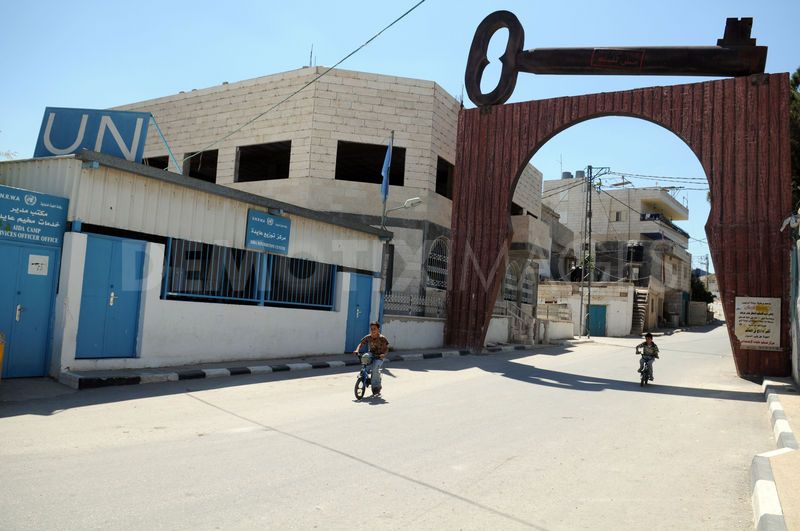
Painted UN blue, this hall traces how global institutions enabled indoctrination. Pictures of leaders of various European countries including Belgium and Norway that fund the schools and squares named after terrorists. Copies of numerous United Nations resolutions cover the walls, which condemn Israel but not Hamas, which make it illegal for Jews to live in the Old City of Jerusalem, and illegal to pray at their holiest site on the Temple Mount.
A large picture of the entrance to the UN-run “refugee” camp in Bethlehem with a key on top of a keyhole portal emphasizes that the international community is the vehicle for Arabs to eradicate the Jewish State.
Gallery IV – Blood Narratives
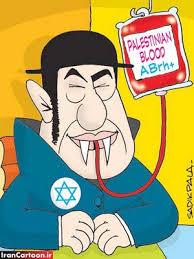
Walls of newspapers and posters accuse Jews of medieval crimes: poisoning wells, harvesting organs. Animated panels compare Nazi caricatures to modern Palestinian cartoons—the imagery identical. Loudspeakers replay sermons calling Jews “descendants of apes and pigs.”
Interactive charts present PCPSR and other surveys over time:
December 2023 – about three-quarters of Palestinians called the October 7 attack “correct.”
Majorities favored continued “armed struggle.”
Roughly two-thirds support killing Jewish civilians in Israel in every poll since 2000
Gallery VI – Jerusalem: The Theater of Denial
A model of the Al-Aqsa plaza plays footage of Murabitat women harassing Jewish visitors to the Temple Mount.
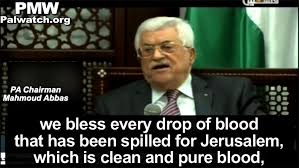
PA President Mahmoud Abbas and other PA officials can be seen on videos claiming “Jews have no history in Jerusalem.” Audio of chants—“With blood and soul we will redeem you O Aqsa”—fills the room. Hamas leaders promise to repeat the October 7 “al Aqsa flood” massacre “again and again.”
PA president Mahmoud Abbas glorifying death on behalf of Jerusalem
Gallery VII – The Forgotten Ethnic Cleansing of Jews
Artifacts from before 1967 tell the story before the story:
The massacre and expulsion of Jews from Hebron in 1929
Synagogues Destroyed: photos of Jerusalem’s Old City after Jordan’s takeover—58 synagogues razed.
Expulsion: maps marking every Jewish family removed from the Old City.
Jordan’s illegal annexation of part of Israel in 1950.
Gallery VIII – Lynching: Public Violence as Spectacle
The public spectacle of the killing for the crowds is highlighted in the last room of the permanent collection.
Hebron 1929 – photos and testimonies of the massacre where 67 Jews were murdered
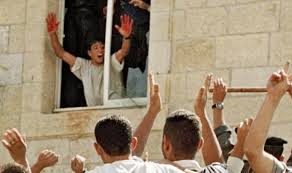
Ramallah 2000 – two Israeli reservists beaten to death by a mob; a photograph of a man showing blood-stained hands became an icon of the Second Intifada. The crowd cheers.
Gaza, 2023 – pictures of Gazans cheering as dead Israeli women are paraded through the streets.
The bloody hands of a Palestinian man after lynching an Israeli in Ramallah has become a symbol of the genocidal intent
Special Exhibit – The Sbarro Massacre: Innocence Targeted
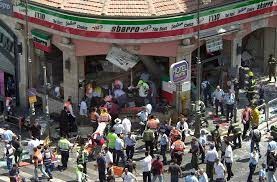
At the museum’s center stands a quiet, glass-walled room marking August 9, 2001, the bombing of the Sbarro pizzeria in Jerusalem.
Bombing at Sbarro restaurant in the Palestinian terrorist war on Israeli Jews
Artifacts include: fragments of the restaurant sign and surviving menu board; the broken guitar of 15-year-old victim Malki Roth; children’s shoes and schoolbooks retrieved from the site.
Chronology Panel: maps trace the attacker’s route and later trials of the planners.
Testimony Wall: written reflections from victims’ families—the Roths, Greenbaums, Schijveschuurders—describe loss and their ongoing quest for justice.
Media Archive: displays neutral summaries of press interviews and court transcripts noting the convicted organizer’s open lack of remorse, contrasted with international outrage and U.S. extradition efforts.
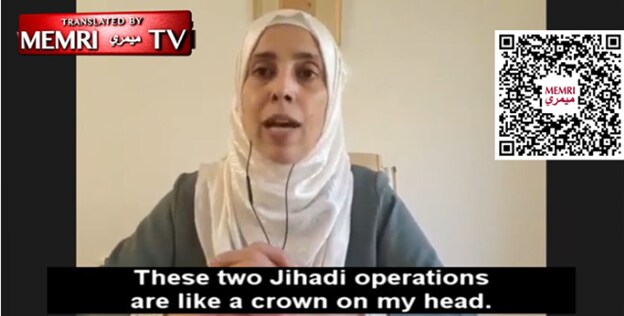
A video concludes with the terrorist Ahlam al-Tamimi stating how proud she was to have killed “religious Jews” and eight children.
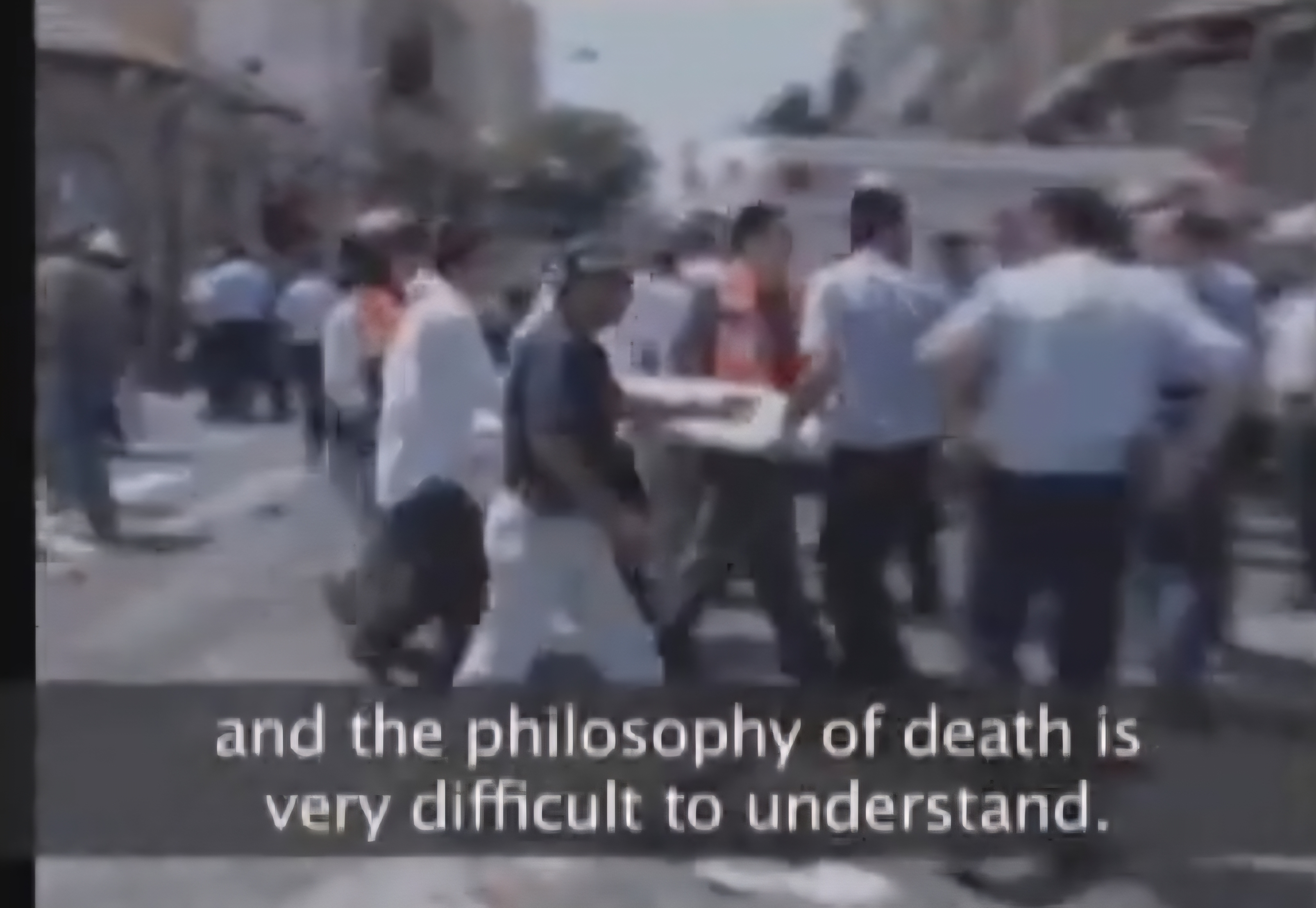
Her words hang over the door as one leaves the building: “the philosophy of death is very difficult to understand.” She lives as a free woman walking the streets of Jordan today, a hero to millions.
Interview with terrorist Ahlam al Tamimi who has no regrets for killing women and children at a pizzeria
Epilogue
The Museum of Genocidal Intent does not exist, yet its exhibits do—scattered through classrooms, speeches, and monuments. Each artifact documents a choice: to teach vengeance or to teach life. Only when the real-world versions of these exhibits are dismantled will the possibility of peace move from behind glass into the open air.
To read The New York Times or watch Saturday Night Live today is to be told that Zohran Mamdani’s critics — not Mamdani himself — are the problem. Those who dare question his rhetoric or friends are branded “Islamophobes.” The journalists and comedians who once prided themselves on “speaking truth to power” now serve as antisemitism’s defense attorneys.
The New York Times calls political criticism of Mamdani “Islamophobia”
Nowhere in The Times’ coverage will you find an honest accounting of Mamdani’s behavior: his use and defense of the slogan “globalize the intifada” — a phrase that calls for expanding anti-Israel violence worldwide. No mention that he’s proudly endorsed by, and a member of, the Democratic Socialists of America, a group whose members have declared “there are no innocent Israelis” and whose leaders celebrated “the war of liberation” even as the ceasefire was announced. No mention that Congressman Jamaal Bowman, the man who said that Israeli women’s rape claims should not be believed, stands firmly behind him — or that Bowman is now rumored for the post of Schools Chancellor, a moral disaster waiting to happen.
DSA claims that every Israeli is a legitimate target for violence
Worse than silence: spin.
The paper of record tells us that those who raise these issues are targeting a Muslim lawmaker. SNL cast members – who actively lobby for Mamdani – mock Jewish fear and turn it into a punchline. The city’s progressive (read regressive) media elite has turned the word “Islamophobia” into a political disinfectant — scrubbing away scrutiny, shielding radicals, and shaming Jews for daring to be afraid.
Even liberal rabbis like Rabbis Ammiel Hirsch and Elliot Cosgrove have said openly that Mamdani’s words instill fear in the hearts of Jews. But when Jews speak that truth, the same media that weeps for “marginalized voices” sneers at theirs. The new journalism of compassion has only contempt for Jews.
This is not journalism. It is collaboration — a moral betrayal dressed up as sensitivity. The press once prided itself on exposing extremism; now it launders it. The Times and SNL are not neutral observers. They are Hamas’ willing editors, dressing hate in hashtags and calling it progress.
A civilization that excuses incitement, whitewashes vitriol and ridicules genuine fear is not enlightened. It is suicidal.
For decades, Palestinians have believed there were three paths to statehood—and they pursued them simultaneously.
1. Violence. Hamas, Islamic Jihad, Fatah’s militias and several Palestinian Arab terrorist groups waged terror wars, convinced that bloodshed brought gains: the First Intifada led to the Oslo Accords; the Second Intifada drove Israel from Gaza and parts of the West Bank; the 2021 riots were hailed for halting evictions in Sheikh Jarrah. The October 7 massacre, backed by roughly 75% of Palestinians, was the latest in that grim pattern.
2. International Pressure. Even as rockets fell, Palestinian allies abroad pressed boycotts, divestment, sanctions, and United Nations resolutions, seeking to isolate Israel diplomatically and economically until it yielded territory.
3. Negotiations. The Palestinian Authority claimed to prefer talks to gain legitimacy and foreign aid—but insisted on maximalist demands: all the West Bank, all of eastern Jerusalem, a Jew-free Palestine, and a mass “right of return.” Yasser Arafat walked away from a state in 2000 and launched the Second Intifada instead. His successor, Mahmoud Abbas, also spoke of peace while undermining it—keeping the notorious “pay-to-slay” stipends for terrorists’ families and, in a January 2018 speech, blessing those who chose violence even as he professed support for diplomacy.
Polling has consistently shown the order of Palestinian preference: violence first, global pressure second, negotiations last.
The Cost of Failed Strategies
Both violence and sanctions have brought suffering to Palestinians themselves. Suicide bombings and rocket wars prompted Israel to build the security fence, which restricted movement and economic activity. The October 7 attack provoked a massive war in which Gaza was devastated and Hamas decimated. Attempts to use international pressure backfired as well, leading Israel to withhold funds from the PA and tighten restrictions.
Israel fights like a cornered raccoon—fiercely, without backing down when attacked. Every round of violence has left Palestinians weaker and poorer.
In the recent war, Israel scored a double victory: It destroyed Hamas’s military capability, killing an estimated 25,000 fighters, and it refused to bow to global pressure, pressing on despite UN condemnations, ICC threats, and warnings of diplomatic isolation.
This shattered the long-held belief that if terror failed, the world could still coerce Israel into retreat.
A New Reality — and a Call to the Arab World
The old strategies of terror and economic warfare have failed and only deepened Palestinian misery. The third path—real negotiations—remains the only way forward.
Israel and the United States now hope the Arab world will engage Israel constructively, encouraging Palestinian leaders to abandon impossible UN demands and accept the reality of Israel’s permanence. Clinging to maximalist positions will only bring more rounds of bloodshed and despair.
And an Alternative Reality — Coming for Diaspora Jews
While Israel feels that it may have finally fought a war that could lead to long-term peace, there are those who still cling to eradicating the Jewish State. The international “Free Palestine” fighters do not want to see Israel holding onto the Old City of Jerusalem nor limiting the entry of millions of Arabs who claim UN’s mantle of “refugees.” The light at the end of the tunnel for them is not coexistence but a continued “Nakba,” a disaster.
So they are revamping the second front of international pressure, from targeting Israel to the soft targets of diaspora Jews.
They are chanting to “globalize the Intifada” to bring the war to every Jew and pro-Israel person and organization. The incineration of the kibbutzim in Israel on the Jewish holiday of Simchat Torah was echoed in the burning of the Jewish governor of Pennsylvania’s home on the holiday of Passover. Burning Jews alive in Kibbutz Be’eri was mirrored in burning Jews in Boulder, Colorado.
Burned kibbutzGov. Shapiro burned home
While Israel sees that it is in a strongest position in the region since its reestablishment which may finally enable an enduring peace, the anti-Israel horde has opened a new front on the global diaspora.
The international pressure of the BDS camp has not been defeated but inflamed. They are ratcheting up their smears of “apartheid” to “genocide,” and marking local Jews as co-conspirators.
While Israel won the Iranian proxies war, the Free Palestine camp is taking millions of new hostages – diaspora Jewry. Who will fight for them?
When the heckler’s veto becomes public policy, liberty dies by degrees.
The world rallied in Paris when jihadi radicals murdered staff at Charlie Hebdo in 2015. Leaders raised banners for free speech and spoke of defending the liberties that make liberal democracies possible. The same chorus rose after other political murders like Charlie Kirk in 2025: condemnations, eulogies, brief outrage.
Yet the Global North has a quieter, more corrosive surrender under way — a surrender not to a foreign army but to the heckler’s veto. When threats of violence can shape who is allowed to speak, to march, to play, or to pray, freedom has already been bargained away.
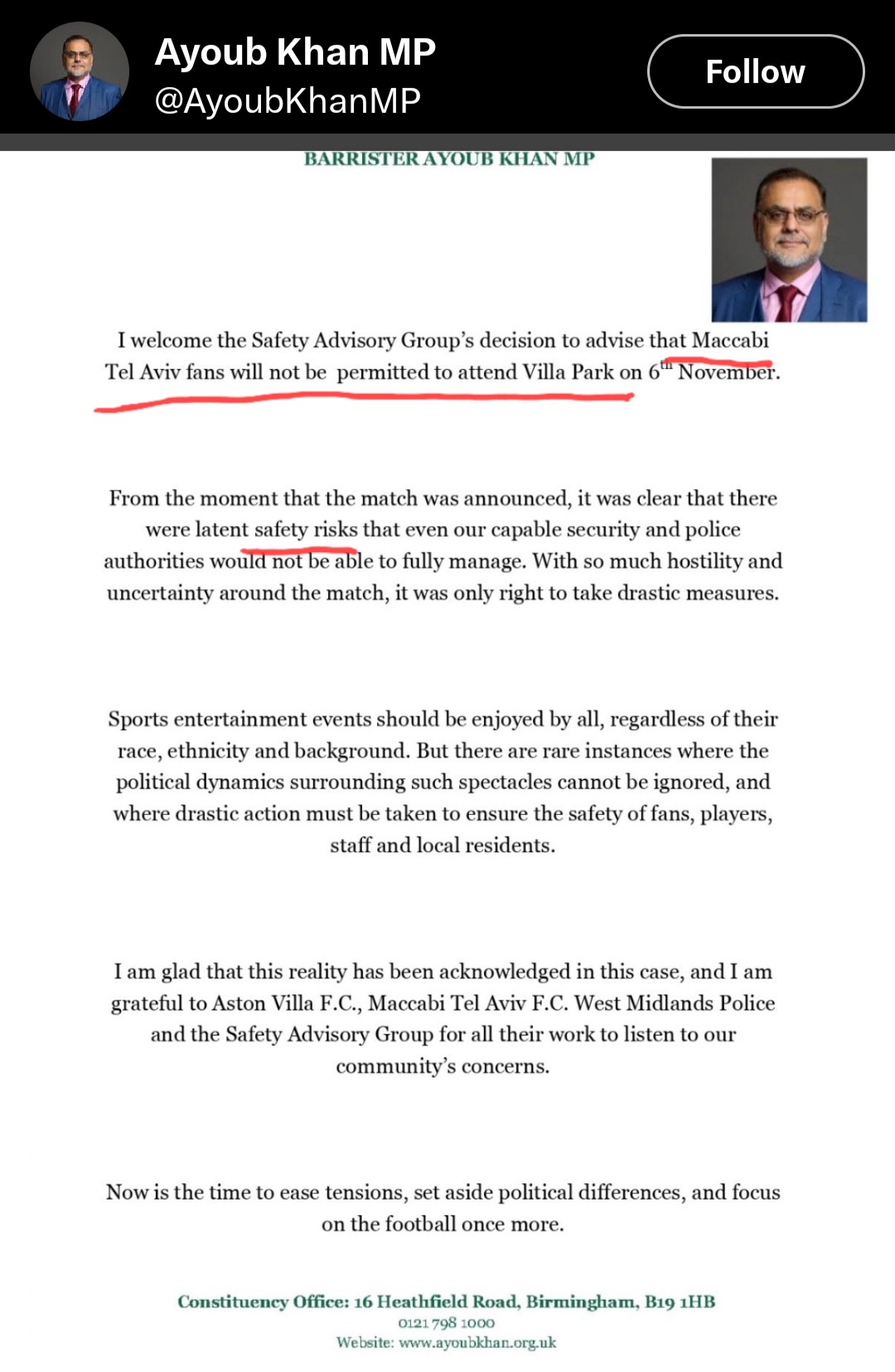
UK’s MP Ayoub Khan celebrating the banning of Tel Aviv fans from a game because their presence might bring out protestors. Other fans were welcomed to attend in October 2025.
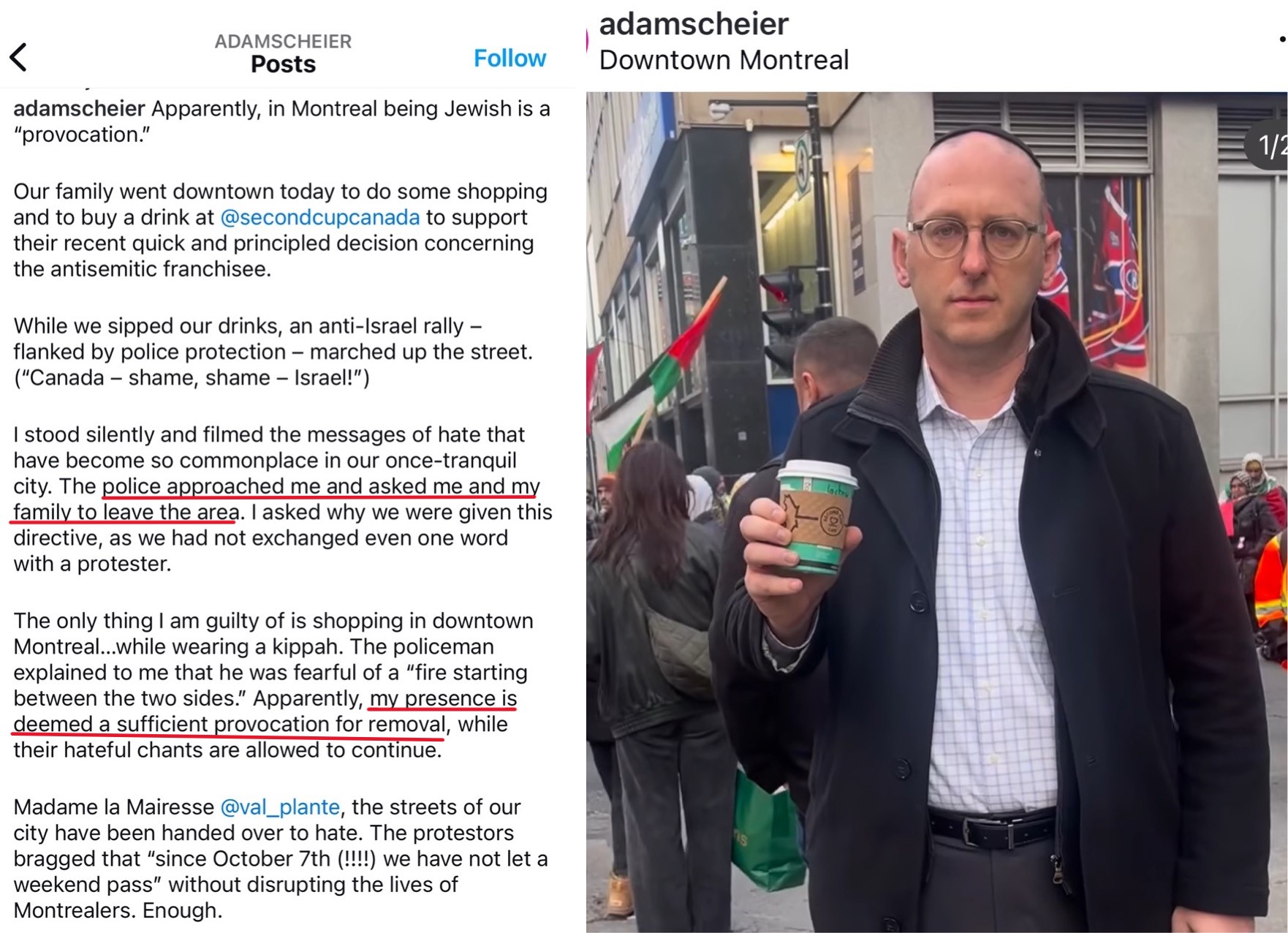
Too often now the mere presence of Jews is treated as a provocation that must be managed by erasure. In Britain, politicians warn that protests will make events “unsafe” and ask organizers to exclude Israeli athletes and fans, Jewish speakers, or symbols rather than arrest the thugs who threaten violence. In 1929, after brutal attacks in Hebron, British authorities removed all Jews from their homes to suppress further bloodshed — an act that punished the innocent to placate the violent. That precedent echoes when modern officials choose exclusion over enforcement.
Call it what it is: when a state lets intimidation determine who may appear in public, it substitutes coercion for law. When politicians cave to the loudest violent faction to avoid a headline, they have abandoned the first duty of government — to protect the rights of every citizen, not to negotiate them away.
Canadian police ask Jewish family to leave the street since their “presence is deemed a sufficient provocation for removal,” in November 2024.
This is not a critique of a religion; it is an indictment of extremism and of political cowardice. The problem is not Muslim faith but those within it who preach and practice violence — and the leaders who, for fear or for votes, let those violent actors set the rules.
A democracy that permits the heckler’s veto on principle is no longer democratic; it is ruled by fear. If we are to remain free, the test is simple: do we defend rights when it is inconvenient, or only when it is safe? If the answer is the latter, then we are well on the way to living under a very different law — one written by radical mobs and enforced by silence.
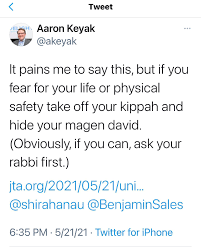
US President Obama advisor Aaron Keyak tells Jews to “take off your kippah and hide your magen david” to avoid being targeted in May 2021.
President Biden set this in motion in the U.S. in May 2021 when his own Jewish advisor, Aaron Keyak, told Jews to hide their Jewishness, presumably because they should not assume that the government would protect them showing their faith publicly. In September 2024, school officials at New York’s Baruch College said it explicitly, telling Jews that they could not “guarantee their security” if they held a celebration for Rosh Hashana.
We have set the stage for Democratic-Socialist Zohran Mamdani to become mayor of the city with the largest Jewish diaspora community in the world. Where police will not only suggest that Jews stay off the streets but may be directed by the mayor to arrest Jews because their very presence is deemed a provocation.
The Hamas massacre of October 7, 2023 — a day when thousands of Gazans crossed the border to slaughter Israeli civilians, rape women, burn children alive, and drag 250 people into captivity — is a date that should be remembered with grief and solemnity.
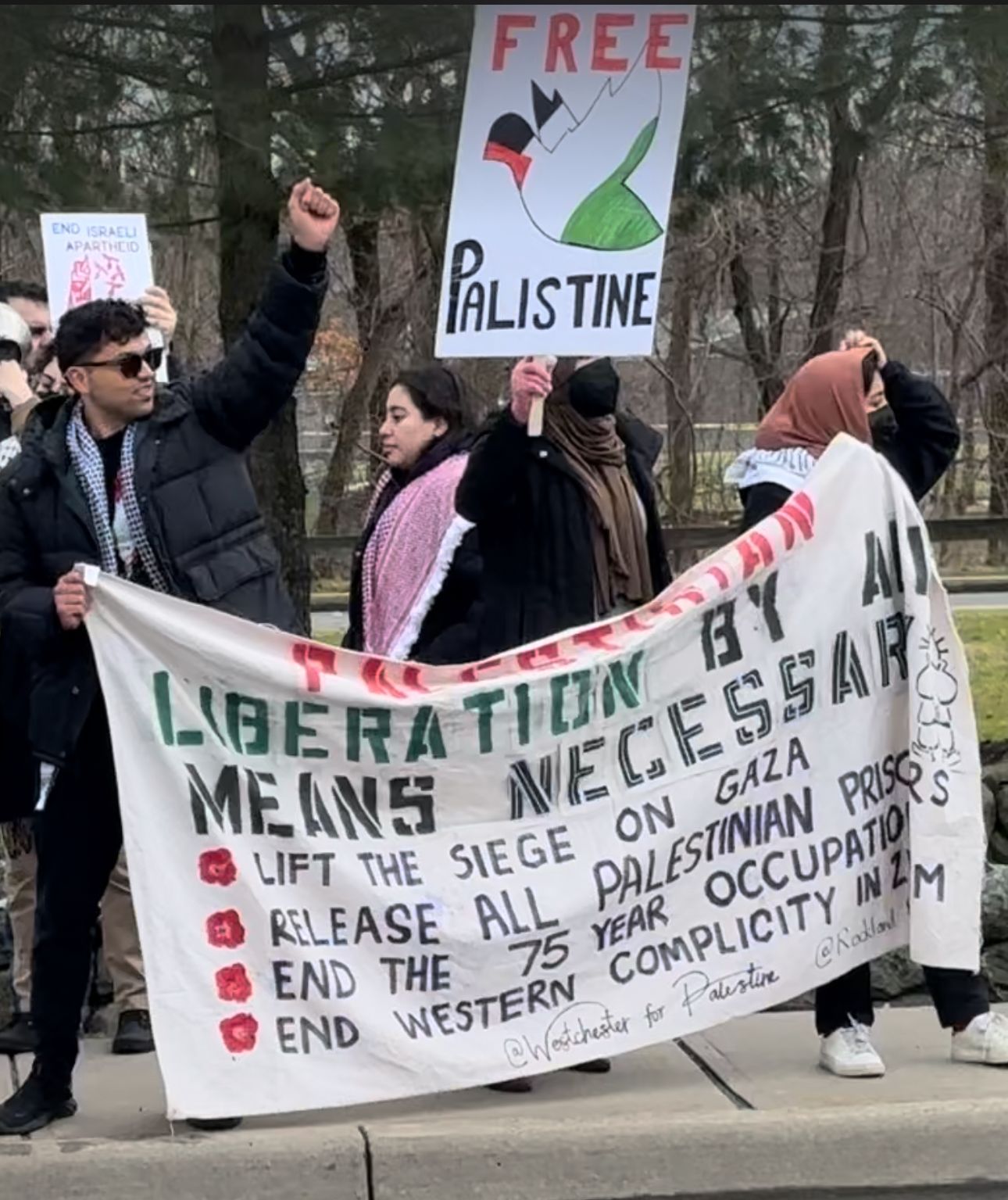
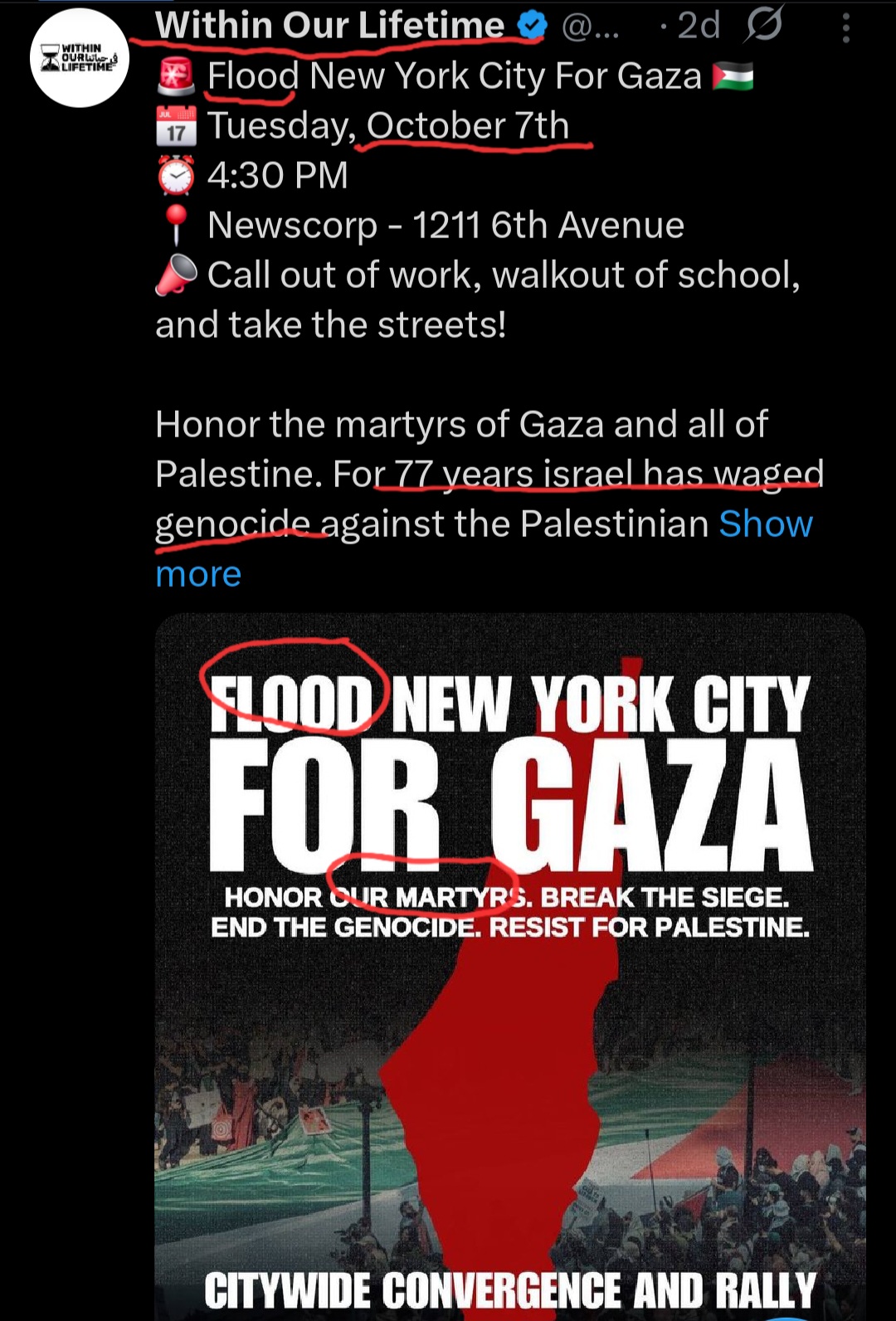
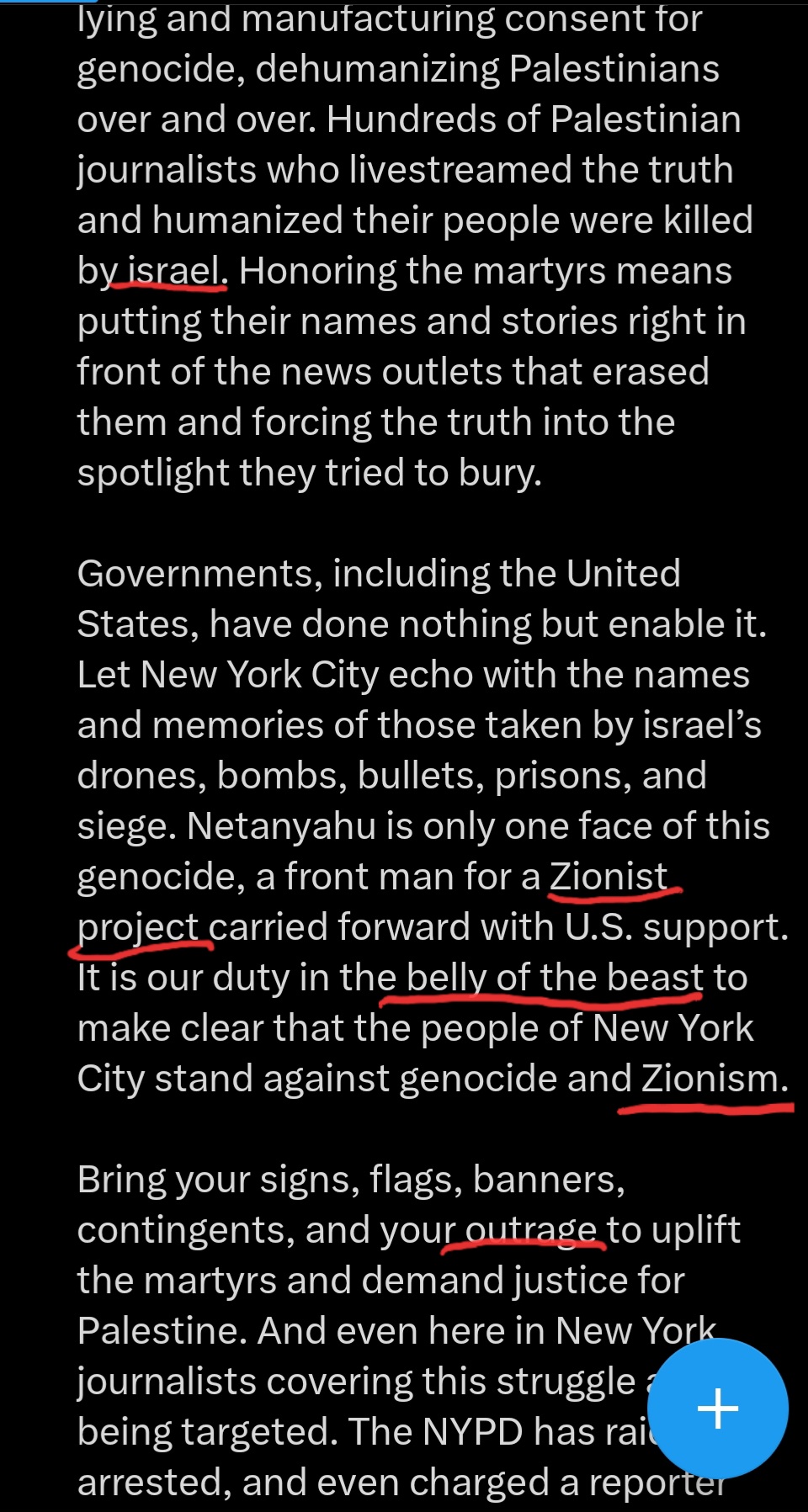
Yet in New York City, extremist groups such as Within Our Lifetime, Students for Justice in Palestine and Samidoun plan rallies on that anniversary to glorify the killers and call for an end to “Zionism” in what they call the “belly of the beast,” meaning America itself.
The “rally” was called a “Flood”, echoing Hamas’s term for the October 7 massacre, the “Al Aqsa Flood.” It includes a map of all of Israel claiming Israel’s 77 years of existence has been a “genocide” against Palestinians. It writes Israel with a lower case ‘i” meant as an insult to not recognize it, preferring to call it a “Zionist project.” The rally is a call to stand against “Zionism” and “honor the martyrs” who slaughtered people in Israel two years ago.
We make a clear and urgent appeal to governments and peoples committed to the liberation of the Palestinian people to adopt unequivocal and militant support for the cause of decolonisation. – Samidoun, October 2, 2025
This is not policy debate. It is a celebration of barbarity and a call to dismantle the Jewish homeland and undermine the United States. The chants and slogans echo the hate that fueled the October 7 pogrom.
Free Speech vs. Incitement to Violence
The United States protects free expression, even ugly and unpopular opinions. But it does not protect incitement to violence or material support for terrorist organizations. When demonstrations cross the line into praising terrorist acts or calling for attacks on Jews or Americans, the full weight of the law — from local police to federal agencies — must be ready to respond.
This year the anniversary falls during the Jewish festival of Sukkot, a holiday marked by public celebrations, outdoor meals, and large gatherings near synagogues and community centers. Those festivities will unfold in the shadow of these extremist rallies. That reality makes it all the more important for law-enforcement agencies to be highly visible and vigilant in keeping worshippers safe.
Standing Up for the Rule of Law
Calling to “globalize the Intifada” and praise the depraved Hamas “martyrs” feeds the chaos that violent extremists crave. What is needed is lawful, decisive enforcement:
Robust policing to protect Jewish neighborhoods, synagogues, sukkot gatherings, and counter-protesters.
Monitoring and prosecution of anyone who crosses into incitement or provides support to terrorist organizations.
Clear public messaging that celebrating mass murder is not political expression but moral depravity.
Bringing ICE (Immigration and Custom Enforcement) agents to arrest and deport non- citizens engaging in harassment and intimidation.
People can be denied a visa if they intimidate, harass or are considered security risks. These October 7 rallies will likely be causes for revoking visas.
A Moment of Moral Clarity
October 7 should be remembered as a day of horror, not a banner for hate. Those who glorify the massacre expose themselves as the heirs of past totalitarian movements — whether Nazi or jihadist — that brought suffering not only to Jews but to all who cherish freedom.
“Terrorism” is a colonial term that we refuse to accept in reference to the heroic Resistance. – Samidoun, October 2, 2025
The response to them must be unflinching: protect the vulnerable, prosecute the lawbreakers, and reaffirm that the United States will never be a haven for the celebration of terrorism.
Video on Samidoun before rallies on October 7, 2024













 First One Through
