New York Times’ Lost Pictures and Morality for the Year 2015

On December 27, 2015, the New York Times shared its thoughts for a “Year in Pictures.” The Sunday Review was dominated by the waves of refugees and migrants from the MENA region (Middle East and North Africa) as well as pictures of terrorism that touched much of the world. For the Times, this excluded Israel.

The Times led its discussion with an opening paragraph: “This was the year of the great unravelling, with international orders and borders challenged or broken, with thousands of deaths, vast flows of migrants and terrorist attacks on some of the most cherished symbols of civilization, both Western and Muslim.”

It continued with some reviews of terrorism: “Palmyra and Paris (twice), Aleppo, Homs, Kobani and even San Bernadino, Calif…. The outrages of Boko Haram and the Shabab in Africa. The abuse of the Rohingya minority in Myanmar. The war in Ukraine and the resurgence of the Taliban in Afghanistan. New tensions in the skies over the Baltics and a Russian plane shot down by a NATO country for the first time in decades.

The ruins still in Gaza, a year after a brutal and inconclusive war, and Israel hunkering down in a region losing its compass. Even the energetic secretary of State, John Kerry, has given up on serious negotiations for Mideast peace.”

In a year where Palestinian Arabs repeatedly attacked Israel civilians killing dozens, the Times decided to highlight the Gaza war of a year ago and dismissed the shift of the Arabs’ battlefront to Judea and Samaria from Gaza. It was not an oversight, as relayed in the Times’ actual pictures.

The chronology of pictures of the year included a number of pictures related to terrorist attacks:

  • A large picture of politicians holding hands in Paris after the January attacks (no attribution given to the killers);
  • A large picture in Kenya after students slaughtered in April (attribution to “Shabab militants”)
  • A small picture in South Carolina in July where “A Confederate flag was removed from the state house after the massacre of black churchgoers in Charelston.”
  • A large picture from Gaza in August with a caption “Concrete salvagers in a building destroyed by the 2014 war between Israel and Palestinian militants in Gaza.”
  • A large picture of a victim from the Paris attacks in November (no attribution of who were the terrorists)
  • A medium sized picture of mourners in Paris honoring the victims of the November murders (no attribution)
  • A large picture of mourners in Lebanon from terrorist bombings in November (no attribution)
  • A small picture of people in California after a December attack with a caption “A candlelight vigil commemorated the victims of a mass shooting by a radicalized Muslim couple.”

DSC_0041
New York Times’ large picture of ruined building in Gaza

What message could a person extract from the New York Times review of the significant events of the year? Much of the same message that the Times imparted throughout the year:

  • Terrorist attacks in the United States were not as significant as attacks elsewhere in the world
  • The Islamic State/ISIS was not labelled as responsible for any of the terrorist attacks in the world
  • The dozens of Israelis killed in the fall of 2015 were not mentioned in text nor portrayed in pictures, as the Times did not view Israelis as terrorist victims
  • Gazans were portrayed as victims, a year after their elected terrorist leaders launched their latest battle to destroy Israel and kill Israeli civilians.

The New York Times became more deliberate in separating radical Islam from global terrorism, just as President Obama did and while Republican Presidential candidate Donald Trump drew attention to the issue. The only mention of Islam in the picture captions was in the very final picture of the year.

The Times has always been deliberate about Israel. Israelis who were shot, stabbed and run over were not victims of terrorism. Israelis did not suffer. Israelis did not mourn.

However, Palestinian Arabs who have continued to fight for the destruction of Israel were featured among pictures of the sufferers and mourners.

If the trends continue, the New York Times’ 2016 Year in Pictures” will likely feature the western world as the radical terrorists.


Related First.One.Through articles:

Every Picture Tells A Story: Only Palestinians are Victims

Every Picture Tells a Story: The Invisible Murdered Israelis

Framing the Israeli-Palestinian Arab Conflict: WSJ and NY Times

Every Picture Tells a Story: Arab Injuries over Jewish Deaths

Every Picture Tells a Story: Versions of Reality

The New York Times Picture of the Year, 2014

Subscribe YouTube channel: FirstOneThrough

Join Facebook group: FirstOne Through  Israel Analysis


New York Times’ Tales of Israeli Messianic War-Mongering

Summary:  One year after acknowledging that Palestinians were to blame for the failed Israeli-Palestinian Authority peace process, left-wing NY Times contributor Roger Cohen cast Israelis as fanatical nationalists and Palestinians as passive, despondent victims. The Times’ cure for Jews’ violent adherence to their religious texts is punishing settlers with BDS, while the paper distanced Muslims from their religion and called for greater compassion towards these innocents.


Just in time for Christmas, Roger Cohen decided to write about the Israeli-Palestinian Arab conflict. Again.

In an article called “The Assassination in Israel that Worked,” Cohen portrayed an Israeli society overrun with religious fanatical murderers. He described the killer of Israeli Prime Minister Yitzhak Rabin, Yigal Amir, as “a religious-nationalist follower of Baruch Goldstein, the American-born killer of 29 Palestinian worshipers in Hebron in 1994.” He wrote about Jews living east of the Green Line (EGL) as obsessed with “Messianic Zionism,” at odds with the concept of democracy. Because Palestinians are desperate for their own state, Jews living in EGL make “violence inevitable” according to Cohen. He argued that the UN’s creation of Israel “was territorial compromise, as envisaged in Resolution 181 of 1947, calling for two states, one Jewish and one Arab, in the Holy Land. This was humankind’s decision, not God’s.” In short, according to Cohen, the vast Messianic cult of violence in Israel seeks all of the Holy Land, but the rights of Jews are limited to just half of the land as dictated by man’s laws.

Lastly, Cohen argued, the only way to push back against the right-wing Israelis and their government was to employ different angles of the BDS movement (Boycott, Divestment and Sanctions) in which Obama should “close American loopholes that benefit Israeli settlers.”

Here is a bit of education for Roger Cohen (maybe the byline was wrong and this was written by Roger Waters of Pink Floyd, the loud advocate of BDS?):

A smaller percentage of Jewish “settlers” are murderers, than are terrorists which are Muslim.  The Cohen opinion piece would lead a person to believe that every Jewish “settler” takes up arms against Arabs, while the reality is that almost every Jew living in the land seeks to live in peace with their Arab neighbors. Baruch Goldstein was an anomaly, not the rule.

Why would the Times print such an inflammatory piece against Jews when it is in the midst of a blitz about the dangers of “Islamophobia”?  The Times wrote over-and-again that most Muslims are peaceful and that Muslim terrorist abuse the interpretation of Islamic holy texts.  Yet the Times was eager to describe Jewish killers as motivated by the plain reading of the Jewish holy texts, and suggested that any Jew living in Judea and Samaria is either a potential killer, or instigates Palestinian violence.

It is untrue, unfair and reeks of hypocrisy to portray Jews in such a manner.  There are almost no Jews in Judea and Samaria that committed murders, but the Times labelled all “settlers” as devout killers.  Meanwhile, the global jihadist movement enlisted thousands and slaughtered thousands, and the Times rallied to the defense of Muslims.

IMG_3677IMG_3674
“Islamophobia” Op-Eds from Paul Krugman on December 11, 2015, and
Nicholas Kristof on December 13, 2015

IMG_3670IMG_3671
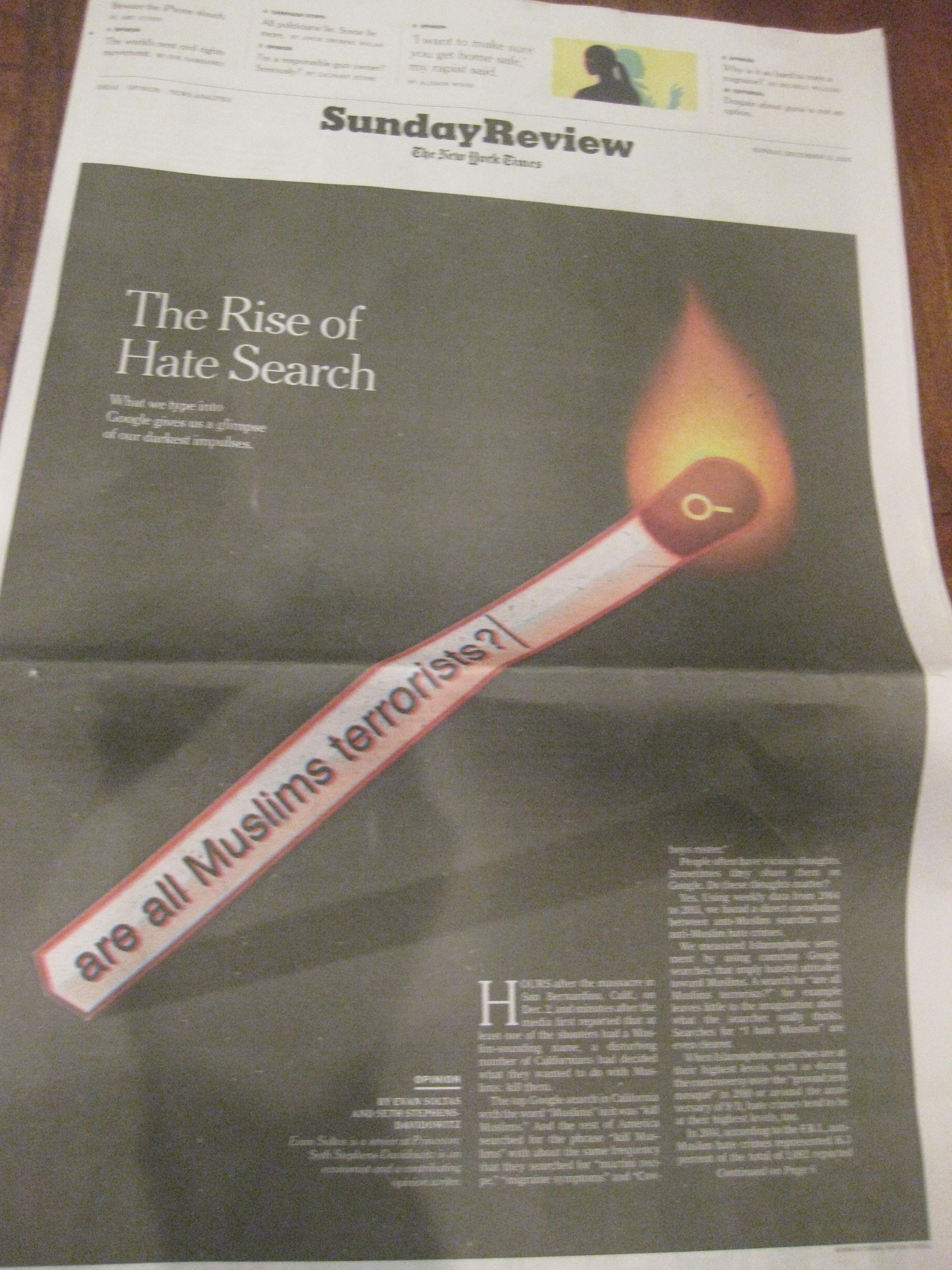
Front Page of NY Times Sunday Review on “Islamophobia”
on December 13, 2015

IMG_3662IMG_3667
Front Page New York Times story on December 15, 2015 about
Young Muslims suffering from “Islamophobia”

Jews are entitled to live in EGL/ Judea and Samaria according to international law. The 1922 Mandate of Palestine by the League of Nations clearly and specifically encouraged Jews to live throughout the Holy Land, including areas now known as the “West Bank.” The Mandate included language that specified that no one should be prevented from living anywhere because of their religion.

“Messianic Zionism” may be a driving force motivating some Jewish families to move to the region, just as they might move to Haifa or Be’er Sheva. Some people are motivated by Zionism without a Messianic component, while others go for good jobs in the only liberal democracy in the Middle East.  The motivation for living there is irrelevant; the right of Jews to live anywhere in the Holy Land was established in international law.

“Violence is inevitable” because Arab don’t want Jews as neighbors, not because Arabs want a state.  Arabs have been killing Jews in the Holy Land for 100 years.  In several episodes in the 1920s, including the brutal Hebron massacre in 1929, Arabs called for ridding the land of Jews.  On the eve of the Holocaust, they launched multi-year riots (1936-9) slaughtering dozens of Palestinian Jews and convinced the British to limit Jewish immigration, causing the death of hundreds of thousands of European Jews.

Whites in the 1950s also did not want to live with black neighbors. Racism and anti-Semitism are to be condemned, not rationalized.  Shame on the New York Times for defending Arab attacks on Jews.

The establishment of Israel as a Jewish State has been rejected by the Arabs for 100 years, and counting.  Cohen pointed to the United Nations Partition Plan which called for creating a Jewish State in 1947.  He failed to say that the Arabs REJECTED that plan.  They opted to launch a war against Israel instead.

Israel has continued to seek peace with its neighboring Arab countries: Jews approved the partition plan in 1947; the country uprooted Jews living in Sinai in 1982; it handed various cities to the Palestinian Authority in 1995; it uprooted Jews from Gaza in 2005. Israel made various peace offers to the Palestinians, including in 2000 and 2008. The Palestinians reacted to each offer with wars, and continue to reject Israel as the Jewish State to this day.

Conclusion

One year ago, Cohen wrote “Why Israeli-Palestinian Peace Failed. “ In the article, he acknowledged various Israeli peace efforts including settlement freezes and prisoner releases.  In exchange for the Israeli gestures, the Palestinian Authority created a reconciliation government with the terrorist group Hamas, and joined international bodies counter to the agreed upon peace framework.  The peace talks collapsed.

Cohen has now concluded that while the Palestinians suffer from ineptitude and corruption, at the end of the day, their cause is just.  The Palestinians are not only despondent, but desperate for an external force to advance their vision of a state.  Cohen believes that Obama should begin to advance various iterations of BDS on Jews living east of the Green Line to assure the Palestinians goal of a Jew-free state (Obama has indicated in the past that he approves of a Judenfrei Palestine). Cohen had no suggestions – or concerns – of how to make Palestinians approve of the Jewish State living in security.

The radical left-wing call for BDS of the Israeli territories is easier to make when one ignores the 99% of peaceful families living in Judea and Samaria.  So Cohen, and other Israel-bashers paint all of these Jews as “Messianic Zionists” who are out of touch with reality.  They are either murderers of Arabs like Baruch Goldstein, or of the peace process with Arabs like Yigal Amir.

Cohen fails two of Natan Sharansky “Three Ds” test for anti-Semitism: demonization and double standards.  To rephrase the great ballad-rocker Meatloaf, Two of the Three IS Bad.

When will the Times and the left-wing fringe look at the Jewish families with an iota of the compassion they shower upon peaceful Muslims?


Related First.One.Through articles:

Palestinians are “Desperate” for…

Nicholas Kristof’s “Arab Land”

Framing the Israeli-Palestinian Arab Conflict: WSJ and NY Times

Names and Narrative: The West Bank / Judea and Samaria

Israel was never a British Colony; Judea and Samaria are not Israeli Colonies

Every Picture Tells A Story: Only Palestinians are Victims

The Narrative that Prevents Peace in the Arab-Israeli Conflict

Israel and Wars

Subscribe YouTube channel: FirstOneThrough

Join Facebook group: FirstOne Through  Israel Analysis

The New York Times on the History of Gush Etzion

The New York Times actually tried to give its readers some history of Gush Etzion for a change. Unfortunately, it still missed the critical points.
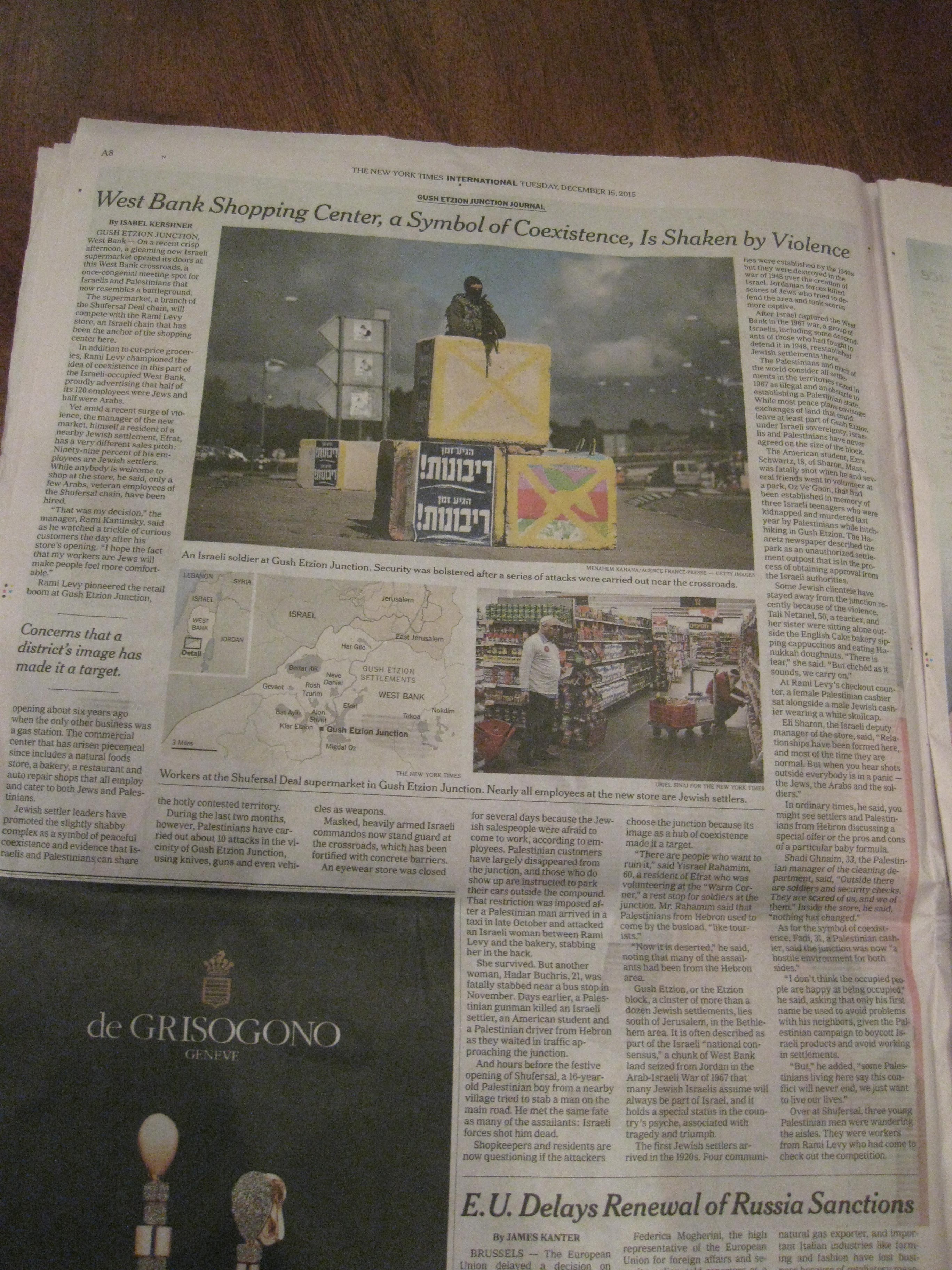
IMG_3663
New York Times article from December 15, 2015
In an article entitled “West Bank Shopping Center, a Symbol of Coexistence, is Shaken by Violence,” the Times gave more detailed history than typical when it provided background on the Gush Etzion “settlements” in Judea and Samaria/ West Bank of the Jordan River.  While the paper would typically state that “the world considers all settlements seized by Israel in 1967 as illegal,” it opted to give more historical context on December 15th.  It wrote:
“Gush Etzion, or the Etzion block, a cluster of more than a dozen Jewish settlements, lies south of Jerusalem, in the Bethlehem area. It is often described as part of the Israeli “national consensus,” a chunk of West Bank land seized from Jordan in the Arab-Israeli War of 1967 that many Jewish Israelis assume will always be part of Israel, and it holds a special status in the country’s psyche, associated with tragedy and triumph.

The first Jewish settlers arrived in the 1920s. Four communities were established by the 1940s but they were destroyed in the war of 1948 over the creation of Israel. Jordanian forces killed scores of Jews who tried to defend the area and took scores more captive.

After Israel captured the West Bank in the 1967 war, a group of Israelis, including some descendants of those who had fought to defend it in 1948, reestablished Jewish settlements there.

The Palestinians and much of the world consider all settlements in the territories seized in 1967 as illegal and an obstacle to establishing a Palestinian state. While most peace plans envisage exchanges of land that could leave at least part of Gush Etzion under Israeli sovereignty, Israelis and Palestinians have never agreed on the size of the block.”

The Times opted to repeat its often used language – twice – but it did give much more history than it normally does.  However, while it described Jews moving to area in the 1920s, and some of the new residents as descendants of those original settlers, the reader was still left with the wrong impression that Jews are living there illegally.
Key points that were omitted from the article:
  • The 1922 League of Nations Mandate specifically gave Jews the right to live and establish themselves THROUGHOUT the Holy Land. This was a matter of international law and the Jews availed themselves of this legal right.  In 1922, there was no concept of a “West Bank.”  It was all just “Palestine” and Jews legally purchased land and built homes in Gush Etzion.  As stated in Article 6, the Mandate “shall facilitate Jewish immigration under suitable conditions and shall encourage, in co-operation with the Jewish agency referred to in Article 4, close settlement by Jews on the land, including State lands and waste lands not required for public purposes.”  Further, Article 15 of the Mandate specifically stated that no part of Palestine should be off-limits to people based on their religion: “No discrimination of any kind shall be made between the inhabitants of Palestine on the ground of race, religion or language. No person shall be excluded from Palestine on the sole ground of his religious belief.”
  • When Jordan illegally attacked Israel in 1949 and killed the Jews in Gush Etzion, it did not undermine the legal rights Jews had for living in their homes.
  • Jordan’s illegal expulsion of all of the Jews from the region in 1949 counter to the fourth Geneva Convention was not mentioned by the Times.
  • The fact that Jordan illegally annexed the region in 1950 in an action that was never recognized by any country was also omitted.
  • Jordan (and Palestinians who had been granted Jordanian citizenship) attacked Israel in 1967, counter the Israel-Jordan Armistice agreement, and Israel was legally justified in responding in self-defense.
  • Jordan gave up all claim to the region in 1988.
It was nice to see the Times take steps to educate readers a bit more about Gush Etzion.  However, the details provided still left a reader with the impression that Jews live in Gush Etzion illegally, and it is only a matter of “national consensus” that leads Israelis to believe that the bloc will be formally part of Israel.  The many illegal activities of Jordan also continue to be ignored.
Perhaps the full facts disturb the Times’ narrative too profoundly to detail.

Related First.One.Through articles:

Subscribe YouTube channel: FirstOneThrough

Join Facebook group: FirstOne Through  Israel Analysis

“Peace” According to Palestinian “Moderates”

Liberals, including the left-wing paper The New York Times, often suggest that there are many leading Palestinian Arab and Israeli Arab moderates who genuinely want peace with Israel. US Secretary of State John Kerry warned Jews and Israelis about failing to fully engage “the moderate Palestinian leadership,” which could lead to “extremism.”

Over the past six weeks, one has to wonder what kind of “peace” these “moderates” have in mind.

Mahmoud Abbas

On October 28, 2015, the acting-President of the Palestinian Authority addressed the United Nations Human Rights Council in Geneva, Switzerland. In his prepared remarks he said that Israeli occupation of Palestine has been in place since Israel’s founding in 1948. He viewed all of Israel as illegitimate, and Palestinian land.

Abbas is a proud Holocaust denier as well as denier of Jewish history in the holy land. His anti-Semitic call for a Jew-free country has been endorsed by the Obama administration, and his basic refusal to recognize Israel as the Jewish State make the goal of achieving peace with this straw man a laughable fantasy.

Ayman Odeh

The NY Times was very quick to promote the prospects for Israeli-Arab peace as one of the leaders of the Joint Arab List, Ayman Odeh, was coming to New York to address groups of Jews.  On December 10, the Times ran an article “Arab-Israeli Parliament Member sees Prospect for Peace,” which described a hopeful Ayman Odeh’s thoughts about peace because “many parts of the Jewish population were able for the first time to hear us.”  Somehow, the deafness on the part of Arabs to recognize the Jewish State doesn’t seem to bother him.

IMG_3659
New York Times article on December 10, 2015

On December 10, Ayman’s vision of Israel was brought to the open (except for readers of the NY Times since it opted not to print the follow-up story).

Ayman was due to speak to the Conference of Presidents of Major American Jewish Organizations.  However, when Ayman noticed that the meeting was taking place on the same floor in the building as the Jewish Agency (a group that facilitates Jews moving to Israel) and other Zionist organizations, he refused to go up the elevator.  He insisted that the meeting location be moved so he would not have to be on the same floor as “organizations whose work displaces Arab citizens.“  The organization’s leader, Malcolm Hoenlein refused to change the meeting location and the meeting was cancelled.

Saeb Erekat

On December 13, 2015, perennial spokesperson for the Palestinians, Saeb Erekat came to speak at a conference run by the left-wing Israeli newspaper Haaretz and left-wing foundation, the New Israel Fund. Before taking the stage, he demanded that the Israeli flag be removed from the room.  The event organizers quickly complied.

“Moderates” seek a new State of Palestine,
not Peace with Israel

Many progressives have opened up various venues for engagement with Arabs to move a peace process forward.  As part of those efforts, they have chosen to label various Arab leaders as “moderates” and partners for peace.

However, these Arab “moderates” repeatedly make clear – in public, and in front of them – that they view the Jewish State of Israel as illegitimate.  The only rightful rights in the holy land belong to Arabs; if Jews are to remain in the land, it will only be subject to Arab review and approval.

Consider what these “moderates” say in private to their own constituents.

For Palestinian Arabs, there is one goal in the “peace process” and it is not peace with the Jewish State, but the establishment of a new State of Palestine.  The only difference between Arab moderates and extremists, is that extremists want to remove Israel in its entirety immediately, while moderates want to start with a Palestine in half of the holy land, before they assume complete control of the land.

John Kerry, Haaretz, the New York Times and other liberals loudly proclaim that the Palestinian Arab leadership are moderates who seek peace with Israel, but refuse to describe and detail all of the Arab comments and actions which clearly spell out their permanent hostility towards the Jewish State.

The fact that these “moderates” do not represent the general Palestinian public is yet all the more frightening, as 67% of Palestinian support the “stabbing intifada” according to the latest Palestinian poll.

The New York Times may highlight Ayman Odeh’s call that peace is possible since the “Jewish population can hear us.” But the world has news sources and blogs like First.One.Through that are read broadly around the world, that listen to more than just the sound-bites that dreamy liberals promote.

Peace partners are still not present.


Related First.One.Through articles:

The Israeli Peace Process versus the Palestinian Divorce Proceedings

The Narrative that Prevents Peace in the Arab-Israeli Conflict

Israel was never a British Colony; Judea and Samaria are not Israeli Colonies

What do you Recognize in the Palestinians?

Subscribe YouTube channel: FirstOneThrough

Join Facebook group: FirstOne Through  Israel Analysis
A Flower in Terra Barbarus

Summary: The “Western World” rallies within its own borders when terrorism strikes, but ignores Jihadist radicals operating in the “Old World.” As it does so, it risks forgetting that neither values nor barbarism has borders.

Terra Incognita

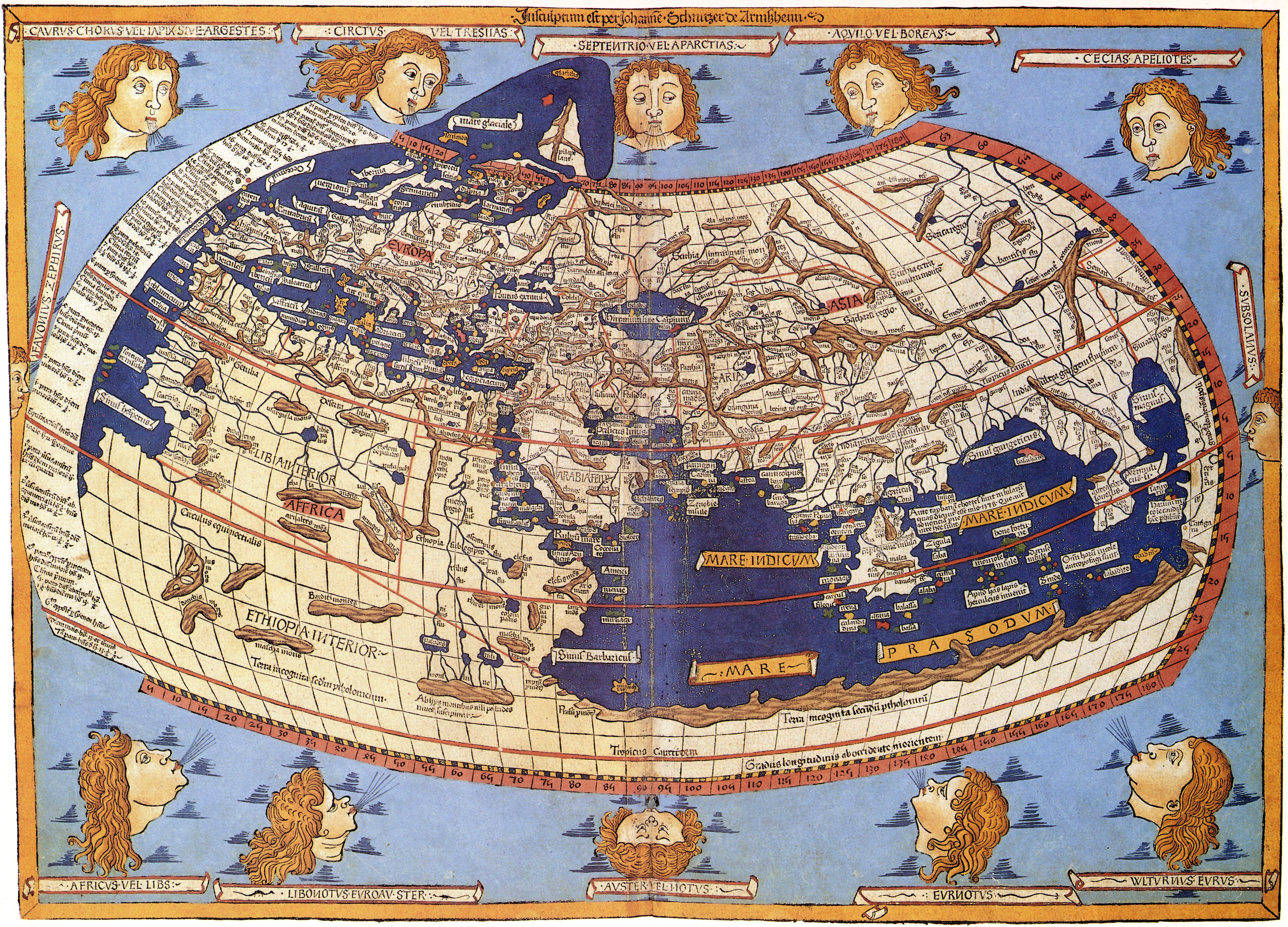
The “cradle of civilization” is generally described as the location from where human beings emerged. Archeological evidence pins earliest humanoids in the region around Ethiopia, while biblical scholars point to modern day Iraq. The crescent between those regions is viewed as the birthplace of humankind.

Mankind slowly spread from its cradle to populate Europe, Asia and the rest of Africa. This held true (with few exceptions) until the late 1400s. Mapmakers of the 1470s and 1480s portrayed the known world in just those few continents, kept in check by various “winds.” It was the Columbus journey of 1492 that began the next expansion of civilization into North and South Americas, and then Australia in the early 1600s.

It took many decades to map out and settle these new lands as the voyagers from Western Europe slowly charted these new territories. Maps that initially referred to uncharted areas as “Terra Incognita,” eventually established the “New World.”

Claudius_Ptolemy-_The_World
Claudius Ptolemy’s view of the World
(Johannes Schnitzer, engraver, 1482)

Western Europe’s New World

The New Worlds of North America, South America and Australia still feel closely aligned with Western Europe hundreds of years after the explorers from Spain, Portugal, France, Italy, Netherlands and Great Britain established themselves on those shores.  US President Obama stated on November 24, 2015 “Americans have recalled their own visits to Paris — visiting the Eiffel Tower, or walking along the Seine.  We know these places.  They’re part of our memories, woven into the fabric of our lives and our culture.”

And so it is with much of the New World and Western Europe.  While the Europeans established the Americas and Australia/ New Zealand centuries ago, those new lands still feel a unique warmth and connection to the European continent separated by oceans and thousands of miles.

Over the centuries, the New World took in new immigrants from around the “Old World.”  Africans were shipped against their will as slaves for the former Western European colonies, while people from Eastern Europe and Asia came on their own more recently.

The New World still prefers the close connections to their old motherlands in Western Europe.

Terra Barbarus

Western Europe was hit with several terrorist attacks after the United States was attacked on September 11, 2001.  Those attacks included: Madrid (2004); London (2005); Belgium (2014); an two attacks in France in 2015.  The reactions to attacks in Europe were noticeably different than reactions to terrorism in the MENA (Middle East and North Africa) region over this time period.

Regarding the second attack on Paris in November 2015, as well as another Islamic extremist attack in Turkey just days before, US President Obama said: “it’s an attack not just of France, not just on Turkey, but it’s an attack on the civilized world…. This is an attack not just on Paris, it’s an attack not just on the people of France, but this is an attack on all of humanity and the universal values that we share.””

There were no such broad declarations about “an attack on all of humanity… and universal values” when it came to terrorism in MENA.

The leader of the New World looked back to the Old World and saw terrorism divided into two: attacks on the “civilized world” which held “universal values that we share,” and other attacks from beyond the civilized world, in what can best be characterized by various American politicians as “Terra Barbarus.”

Politicians were not alone in this world view.

The world uniquely lit up Facebook with the flag of France after terrorist attacks.  The terrorist slaughters in Nigeria, Kenya and Israel by jihadists over the same weeks barely passed people’s minds or hurt their hearts. The New World looked back on the Old with disgust and disdain: those are uncivilized barbaric lands.  Terrorism emerges from there.  Terrorism is expected there.

So Obama, himself the son of a man from Kenya, drew borders around the civilized world.  It’s physical limit seemed to take him to Turkey, a member of NATO that sits on the edge of wars in Syria and Iraq.  The edge of “civilization” touched the cradle of civilization.

Borders or Values

There is a country that sits in that Terra Barbarus that shares western values, and calls out to be recognized as part of “civilization.”

Israeli Prime Minister Benjamin Netanyahu repeatedly stated that the various jihadist forces that continue to kill in the Middle East, whether Islamic State, Hamas or Al Qaeda, are all “branches of the same poisonous tree.”  While his country sat in a dangerous neighborhood, the values of Israeli society were the same as western values.  He sought to remind western leaders of that point right after the Paris attacks in November 2015:

“Terrorism is the deliberate and systematic targeting of civilians. It can never be justified. Terrorism must always be condemned. It must always be fought. Innocent people in Paris, like those in London, Madrid, Mumbai, Buenos Aires and Jerusalem, are the victims of militant Islamic terrorism, not its cause. As I’ve said for many years, militant Islamic terrorism attacks our societies because it wants to destroy our civilization and our values.

“All terrorism must be condemned and fought equally with unwavering determination. It’s only with this moral clarity that the forces of civilization will defeat the savagery of terrorism.“

Indeed, Israel is the most liberal country in the entire Middle East and Africa.  It’s values are closely aligned with Western Values.  Yet despite Obama’s address on values, the West could not look beyond its contours of civilization.  Unwilling to reframe its own narrative, the western world has opted to ignore the Israeli liberal society, and cast it as part of that dark side of humanity.

The Future

Should the West continue to ignore the liberal society in the Middle East, it can never expect to realize a different future for the entire region.  The warring parties in Terra Barbarus will continue to battle each other, and occasionally reach out and damage the New World like a solar flare.  So far, the New World reacts by alternatively bombing and ignoring the barbarians.

To realize a future world with universal values, the world must recognize the blue-and-white flower that has re-emerged in the arid soil in the cradle of civilization.  Just as the West promises to fight barbarism that appears on its shores, it  must nurture the “humanity” that exists everywhere.

Condemning terrorism was just part of Obama’s speech. Elevating those people that share western values must be part of the battle.

DSC_0210
Flower in the hills around Jerusalem
(photo: First.One.Through)


Related First.One.Through articles:

Obama’s “Values” Red Herring

Obama’s Friendly Pass to Turkey’s Erdogan

International-Domestic Abuse: Obama and Netanyahu

Double Standards: Assassinations

Israel and Wars

Subscribe YouTube channel: FirstOneThrough

Join Facebook group: FirstOne Through  Israel Analysis

Today’s Inverted Chanukah: The Holiday of Rights in Jerusalem and Judea and Samaria

In the year 164BCE, the Jews in the land of Israel successfully evicted the Selucid Greeks from Jerusalem and rededicated the Jewish Temple which had been defiled. Roughly 2200 years later, history has been inverted.

The Selucid Greeks Come to the Holy Land

The Selucid Greeks (from Syria) and the Egyptians were the major powers in the Middle East 2200 years ago. Israel acted as a buffer region between the two powers, and often fell under the authority of one or the other.

The Selucid King Antiochus III (241BCE-187BCE) expanded his kingdom into Asia and took control of Israel from the Egyptians. Generally, he treated the Jews well and they continued their autonomy and Temple worship in Jerusalem.  When he died, his son Antiochus IV became king, who sought to unify the various parts of the expanded Selucid kingdom via a common religion and culture. He removed the Jewish High Priest Yochanan from the Temple in Jerusalem and installed Yochanan’s brother Jason who was willing to permit more Hellenistic and pagan worship. Jason was later replaced by Menalus who promised even more pagan rituals.

Before long, Antiochus IV came to the holy land and began to ban important parts of Judaism such as circumcision and observing the Sabbath. He enforced his vision via the sword.

As the Selucid Greeks rampaged through Israel, they descended on an important city in the heart of Judea, 19km northwest of Jerusalem.

The Priestly City of Modi’in

Modi’in had grown into a large city full of priests to help manage Temple worship in Jerusalem. As thousands of Jews from northern Israel went to Jerusalem for sacrifices, the city was often overwhelmed both in terms of places for pilgrims to stay and in processing animals and offerings. Modi’in became the main city for Jews of northern Israel to stop into before continuing to the Temple in Jerusalem.  The priests in Modi’in acted as partners to Jerusalem’s priests in managing an orderly Temple service.

The priests of Modi’in were already alarmed by the defilement of the Temple when Antiochus came to their city to install pagan altars. The priests, led by Mattityahu, rebelled against Antiochus and over the next years, turned back the Selucid’s evil decrees and rededicated the Jewish Temple in Jerusalem. The holiday of Chanukah is a celebration of the re-establishment of Jewish autonomy throughout the holy land and purification of the holy Jewish Temple.

The Inverted Chanukah Today

The modern city of Modi’in was established in 1993 as a central hub halfway between the major Israeli urban centers of Tel Aviv and Jerusalem. As the city grew to nearly 100,000 people, it incorporated the neighboring villages of Maccabim (named after the Maccabees who fought the Selucid Greeks) and Re’ut. Nearby towns also carry the names of the Jewish heroes of 2200 years ago, such as Chashmona’im, named after the Hasmonean Dynasty.

In August 2012, the European Union declared that Modi’in was not part of the Jewish State.  The EU followed that ruling in November 2015, when it began to label any products from the city and the rest of Judea and Samaria as distinct from Israel.

While the EU was declaring that the heart of Judea and Samaria were not part of Israel, the Palestinian Arabs were complaining that Jews were defiling their holy places on the Temple Mount.

In September 2015, acting-President of the Palestinian Authority Mahmoud Abbas called for Arabs to rebel against Jews who were defiling Jerusalem: “We bless you, we bless the Murabitin (those carrying out Ribat, religious conflict/war to protect land claimed to be Islamic), we bless every drop of blood that has been spilled for Jerusalem, which is clean and pure blood, blood spilled for Allah, Allah willing. Every Martyr (Shahid) will reach Paradise, and everyone wounded will be rewarded by Allah. The Al-Aqsa [Mosque] is ours, the Church of the Holy Sepulchre is ours, and they have no right to defile them with their filthy feet. We will not allow them to, and we will do everything in our power to protect Jerusalem.”

Arabs took the streets with knives stabbing Jews throughout the holy land.  The United Nations, the United States and the EU did not condemn Abbas’s calls of incitement.  Instead, they spoke about the “legitimate grievances” of Muslims and Arabs.  In response, Israeli Prime Minister Benjamin Netanyahu decided to limit access for Jews to the Temple Mount.


This Chanukah, the world bears witness to evil in the Middle East once again, as Palestinian Arabs stab Israeli civilians and the Islamic State beheads infidels.  The desire to establish a homogeneous religion and culture still simmers in the Arab world.

But some history is now inverted:

  • Modi’in, the large ancient city where the Jewish revolt was launched, which now houses nearly 100,000 Jews, is now not considered part of the Jewish State by the global community.
  • The Jews complained and fought to remove pagan practices from their Temple long ago, and now Muslims seek to remove Jews from the Temple Mount (even though the Jews have done nothing to block Muslim worship).

On the first Chanukah 2200 years ago, Jews purged the pagan presence from Judea and Jerusalem.  Today, the world works to purge those cities of Jews.

This year, Jews should not just celebrate the holiday of lights, but commemorate the holiday of rights.  The meaning of the holiday is about Jewish autonomy and rights of worship from Judea to Jerusalem.  Put your menorah in the window and your voice on the web.

Moddin menora
Chanukah in Modi’in 2015
(photo: Elliot Bache)


Related First.One.Through articles

The UN’s Disinterest in Jewish Rights at Jewish Holy Places

Visitor Rights on the Temple Mount

The Journeys of Abraham and Ownership of the Holy Land

The United Nations and Holy Sites in the Holy Land

Losing the Temples, Knowledge and Caring

Subscribe YouTube channel: FirstOneThrough

Join Facebook group: FirstOne Through  Israel Analysis


Trump Fails to Understand that Jews Want Peace, not a Deal

On December 3, 2015, the fourteen Republican presidential candidates lined up to speak to the Republican Jewish Coalition in Washington, DC.  Almost all of them offered “red meat” to the crowd, denouncing the terrible foreign policies of current President Barack Obama with the assistance of his Secretaries of State, Hillary Clinton and John Kerry.

One of the foreign policy points that they discussed was the status of Jerusalem.

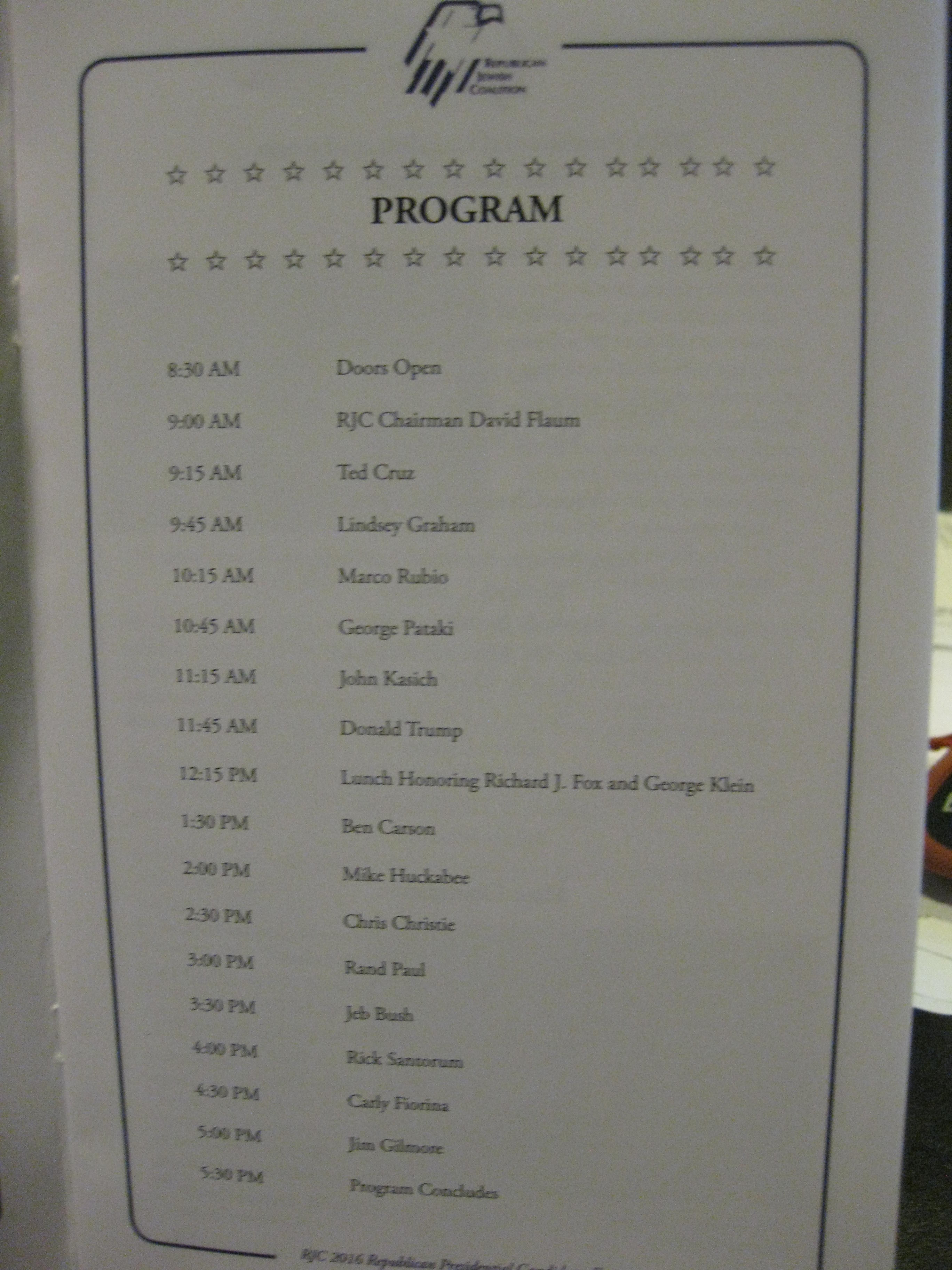
IMG_3657
Program line-up of speakers at the RJC 2016 Republican Presidential Candidates Forum in Washington, D.C. December 3, 2015
(photo: FirstOneThrough)

Jerusalem is often mentioned during campaign season by both Democrats and Republicans. The two main talking points are:

  1. Jerusalem is the united capital of Israel (no recognition of a divided city)
  2. As president, the candidate will move the US embassy to Jerusalem

As a presidential candidate, Senator Obama made these same comments in front of a crowd at an AIPAC conference in 2008, only to reverse his comments the next day.  By the time he ran for re-election in 2012, he gutted the entire pro-Israel agenda from the Democratic platform.  In seven years in office, his two comments proved meaningless.

At the 2015 RJC event, almost all of the Republican candidates mentioned Jerusalem in prepared remarks, while some repeated the two policy points above when responding to questions from RJC Executive Director Matt Brooks.  Except for Donald Trump.

IMG_3640
Senator Marco Rubio addressing foreign policy issues to the RJC
(photo: FirstOneThrough)

Trump, seemingly ever-desirous of inflaming passions, refused to give the crowd the same responses that all of the other candidates proffered. For that he was booed by the crowd, which, not surprisingly (based on his campaign to-date), did not seem to bother the candidate that much.

IMG_3655
Donald Trump addressing his deal bona fides to the RJC
(photo: FirstOneThrough)

Campaign Promises versus Delivery of Actions

Presidential candidates always throw out promises to potential voters and donors.  The fact that candidates from both parties state positions popular with an audience is as natural to the political process as lying is to politicians.

So reporters take note of the arrogant presidential front-runner who prides himself in “telling it like it is.”

As no president ever moved the US embassy to Jerusalem despite promises to pro-Israel groups during campaign season, is Trump just “telling it like it is?”  Or is it simply his abrasive personality that cannot help upsetting audiences, whether they be black, Hispanic or Jewish?

There is more than that to extract from Trump’s comments.  At the RJC, he quipped to the Jewish crowd “I’m a negotiator like you folks…Is there anyone in this room who doesn’t negotiate deals? Probably more than any room I’ve ever spoken.”

Putting aside Trump’s anti-Semitic stereotypes in a room that included many doctors and people outside of the business world, it underscored the entire Trump campaign: vote for me, since I’m a successful negotiator.  Being the president of the United States is really just about negotiating deals – whether with Iran or Congress.  As such, I like to leave my options open, and be unpredictable. That’s what makes me a great negotiator.  Don’t pin me down in advance about what I will do, as it hurts the ultimate outcome.

Trump has approached every campaign opportunity with a simple tagline: Trust Me. I’m a Billionaire. I do Great Deals.

However, Trump failed to internalize in his address to “fellow negotiators,” that Israel just doesn’t want a peace deal, it wants actual long-term peace.

A Peace Deal versus Long-Term Peace

A deal comes about when two sides agree on terms.  Typically, each side gives a little to arrive at a compromise.  In a situation where the two parties do not have the same power or requirement to consummate a deal, the exchange will not be a 50-50 compromise.  The party with greater leverage typically uses that leverage to extract better terms.  The party that is more desperate for a deal, usually caves on key items.

In Trump’s world of deals, he sees a more powerful Israel and a more desperate Palestinian population.  As such, he is confident that he can deliver a “good deal” to the Israelis, even while he won’t promise any particular move in advance regarding Jerusalem.

The crowd at the RJC does know some things about negotiating deals.  One of the key requirements is having a real negotiating partner.  Not just a counter-party, who, as Senator Rubio stated, “acknowledges Israel’s right to exist,” but can actually deliver a deal.  Part of the crowd’s disappointment with the Obama administration is its continued hypocrisy of forcing Israel to negotiate with a straw man with no authority or power in acting PA President Mahmoud Abbas.

Further, as analyzed in detail, in The Arguments for Jerusalem, there is virtually no argument to support Palestinians’ claim for part of Jerusalem, other than sheer desire.  Part of securing long-term peace means securing Jerusalem.

Lastly, Israel feels alone and vulnerable.  The various anti-Israel United Nations resolutions and BDS (boycott, divestment and sanctions) proposals around the world feed the feeling of Israel’s isolation.  The Iranian deal produced by the Obama administration instilled tremendous fear of an existential threat to both the Jewish state and the Jewish people.  The terror attacks by Palestinian Arabs and anti-Semitic vitriol from the Palestinian leadership make Israel feel that there will never be peace.

Trump understood that the RJC reflects a powerful group that is strongly supportive an increasingly powerful Jewish State.  But he failed to understand that the Jews in that room included Holocaust survivors and people who walked away from the Twin Towers on 9/11.  Those people are not just looking for a “good deal.”  They want support and true long-term peace.

It was not only Trump’s refusal to mention the Jerusalem points above that got him booed.  Trump’s focus on the “Art of the Deal” instead of understanding that a peace deal is not the same things as true long-term peace will make him an increasingly difficult choice for Israel supporters.


Related First.One.Through articles:

The Israeli Peace Process versus the Palestinian Divorce Proceedings

Seeing Security through a Screen

Palestinians are “Desperate” for…

Israel was never a British Colony; Judea and Samaria are not Israeli Colonies

Subscribe YouTube channel: FirstOneThrough

Join Facebook group: FirstOne Through  Israel Analysis


The Long History of Dictating Where Jews Can Live Continues

The world has a long established track record of telling Jews where they can and cannot live. It is a phenomenon that uniquely relates to Jews which continues to this day in the holy land.

Pluralistic World, Narrowly Defined

The “Western World” likes to think of itself as modern and “progressive.” Its leaders believe they have largely overcome rampant bigotry in their societies. For example, western leaders would never suggest that black people be only allowed to live in certain cities, or declare that gays be confined to ghettos. Even during this wave of radical Islamic terrorism, no leader would ever say that all Muslims should be expelled from the country. Modern civilized society would never tolerate such positions.

The “Western” pluralistic approach is not confined to opinions within its own borders. Wherever there is ethnic strife, western officials promote parties getting along.  In northern Cyprus, Christians and Muslims are urged to reconcile.  In Myanmar, the US calls for Muslims and Buddhists to try to live together in peace.

However, the attitudes change when it comes to Jews in the Middle East. Pluralism is passé east of the Green Line.

Jews are Treated Differently

Today, it has become all too common for Europeans to protest in the streets chanting “Free Palestine” in calls for the destruction of the Jewish State of Israel. University professors give legitimacy to Hamas, a terrorist group, which openly calls for killing Jews and destroying Israel. The leaders of the European Union call for Jews to be expelled from Judea and Samaria. And the President of the United States, Barack Obama, condemned Jews living in apartments they legally purchased in eastern Jerusalem.

While pluralism is an embraced ideal, the open tent does not cover Israel.  The western world that prides itself on fraternity, believes that Jews should be banned from living in predominantly Arab neighborhoods.  The modern culture that seeks a global community, wants to deny Jews the right to live in their homes. The progressive left which advocates for human rights, condemns Jews rather than Palestinian Arabs who fight for a Jew-free state.

Ideally, everyone should be able live anywhere.  Except for Jews who should be banned from living east of the invisible Green Line.

It should not surprise people that the Jewish State is treated differently. These same “progressive” countries have a long history of forcing Jews into ghettos and expelling them from their homes.  Dictating where Jews are allowed to live is second nature. It’s the Jewish “Pen Policy.”

Here is a list of the Pen Policy in action, after the Crusades. This list ignores the brutal slaughter of millions of Jews over that time.  There is no comparable treatment of any other ethnic or religious minority.

History of Expelling Jews

Many governments expelled all of their Jewish inhabitants, both on the local city level and on the national level.

Austria: Jews expelled from Vienna in 1670.

Brazil: Jews expelled from Recife in 1654.

Czech Republic: Jews expelled from Prague in 1745.

England: Expelled all of the Jews in 1290. Jews could not live in England for another 360 years.

Egypt: Jews expelled in 1956.
Israel removes Jews from Sinai in peace deal with Egypt in 1982.

France: 100,000 Jews expelled in 1306 and then again in 1322.
Charles VI expelled the Jews in 1394.
In 1420, the Jews were expelled from Lyons.

Germany: Jews expelled from Brandenburg in 1510.
In 1593, Jews expelled from Bavaria.
In 1614, Jews expelled from Frankfurt.

Hungary: Marie Theresa (still an all-time favorite leader among Hungarians) expelled all Jews from Hungary and Bohemia in 1744.

Italy: Jews expelled from Southern Italy in 1288.
In 1491, Jews expelled from Ravenna.
In 1492, Jews expelled from Sicily and Sardinia.
In 1494, Jews expelled from Florence and Tuscany.
In 1510, Jews expelled from southern Rome.
In 1541, last Jews evicted from Naples.
In 1550, Jews expelled from Genoa.
In 1558, Jews expelled from Recanati.
In 1569, all Jews forced out of Papal states by decree of Pope Pius V.
In 1571, Venice decides to evict all remaining Jews, but does not carry it out.
In 1593, Pope Clement VIII evicts Jews from all papal states, except Rome.
In 1597, almost all of the Jews of Milan are expelled.

Lithuania: Jews expelled in 1495.

Martinique: King Louis XIV ordered all Jews expelled from French colonies in the New World in 1683.

Netherlands: Jews banned from Utrecht in 1444.

Palestinian Authority: After massacre of 69 Jews by local Arabs, British forces remove remaining Jewish community of Hebron in 1929.
In 1949, after attacking Israel when it declared independence, Jordanians expel all Jews from Judea and Samaria and the eastern half of Jerusalem which they illegally annex.
In 2005, Israel removes all Jews from Gaza Strip.

Poland: Jews expelled from Warsaw in 1483.

Portugal: Some Jews expelled in 1483.
In 1497, choice of conversion or expulsion of all Jews.

Spain: Jews expelled from Seville in 1483.
All 200,000 Jews expelled from country in 1492.

Switzerland: Jews expelled from Basel in 1349.

Tunisia: Jews expelled or massacred in 1535.

Ghettos

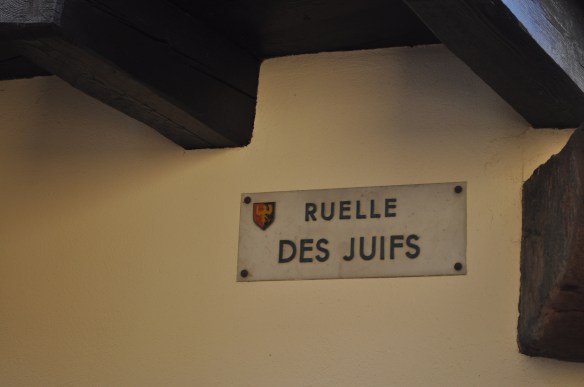
Some governments did not expel their Jews, but forced them to live in concentrated areas. Street signs can still be found in European cities named “Street of the Jews.”

Austria: Vienna’s Leopoldstadt goes back hundreds of years.

Czech Republic: Prague has one of the most famous Jewish Quarters, which was created as a restrictive ghetto.

Italy: Venice instituted the first ghetto by papal decree in Europe in 1516.  Others were developed in Ferrara (1624) and Rome (1555).

Germany: Created over 1000 in Germany and Poland during World War II, including the infamous Warsaw Ghetto.

Russia: Jews were confined to the “Pale of Settlements” in 1791.  Jews were forbidden to live in 75% of Russia.

DSC_0121
“Jew Street” in Obernai, France
(photo: FirstOneThrough)

The world has grown very comfortable dictating where Jews may live. It is well past time for Europeans to condemn the racist Jew-free attitudes of Jordanians (1949-1967) and Palestinian Arabs today, and adopt a pluralistic and welcoming approach towards Jews in Judea and Samaria.

In November 2015, in a speech about attitudes towards Muslims, US President Barack Obama said, “we don’t have religious tests for our compassion… We don’t discriminate against people because of their faith.” If only he and others held such feelings about Jews as well.


Related First.One.Through articles and videos:

Names and Narrative: The West Bank / Judea and Samaria

Names and Narrative: Palestinian Territories/ Israeli Territories

Video: Judea and Samaria (Foo Fighters)

Video: The “1967 Borders” (The Kinks)

Subscribe YouTube channel: FirstOneThrough

Join Facebook group: FirstOne Through  Israel Analysis

Israel was never a British Colony; Judea and Samaria are not Israeli Colonies

Many uniformed critics of Israel criticize the creation of Israel and claim that Israel was established as a colonial outpost of Great Britain. The statement is absurd and easily disproven.

International Law, Not British Law

Various international laws approved the immigration of Jews to Palestine and international bodies approved the creation of the Jewish State of Israel.

May 1949: International Approval: The United Nations voted to admit the State of Israel  as a member state, at the end of Israel’s war with Arab countries.

May 1948: International Approval: The United States, the Soviet Union and several other countries recognized Israel soon after Israel declared Independence.

May 1948: Israel Declares Independence, but not from Great Britain: Israel waited to declare its statehood until after Great Britain left the holy land and completed its mandate. The Israeli Declaration of Independence never mentioned Great Britain, as GB never viewed the land as a colony (compare that to the language in US Declaration of Independence which mentioned severing ties with GB.)

November 1947 UN Partition Vote: The United Nations voted to create a Jewish State in Palestine with 33 votes in favor, 13 against and 10 abstentions (Great Britain abstained).

July 1922 League of Nations Established Jewish Homeland: The League of Nations (precursor to the United Nations) voted to break apart the old Ottoman Empire and placed the area of Palestine under British oversight. That area of Palestine included areas of Jordan and Israel which were to include a “national home for the Jewish people.”

April 1920 San Remo Conference. The Allies of World War I (Britain, France, Japan and Italy) voted for the “establishment in Palestine of a national home for the Jewish people, it being clearly understood that nothing shall be done which may prejudice the civil and religious rights of existing non-Jewish communities in Palestine, or the rights and political status enjoyed by Jews in any other country.”

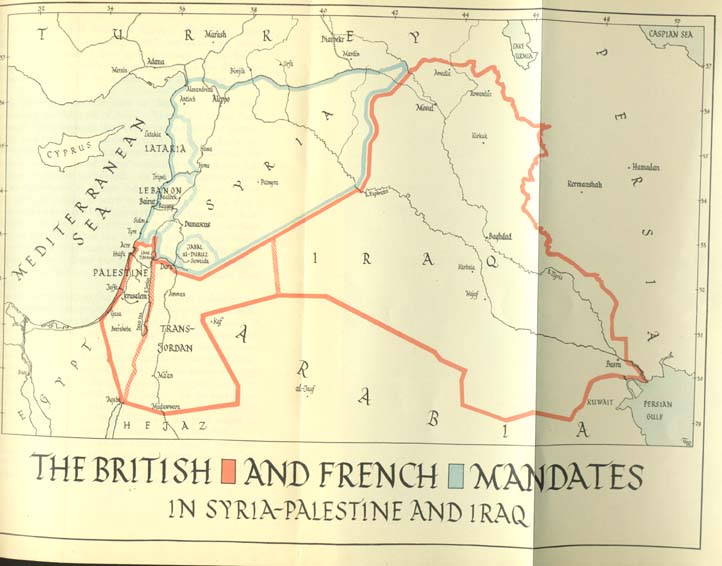
The term “British Mandate” has become confused for many people with Israel being a “British Colony.” It is simply untrue. The world powers broke apart huge sections of the Middle East with areas under both British and French administration, including countries today known as Lebanon and Syria. No one refers to any of those countries as a “colony.”

british and french mandates
British and French Mandates covering much of the Middle East

British did not favor Jews in Palestine

Despite language in the 1922 Mandate that the British should “facilitate Jewish immigration” to Palestine, the British sided with local Palestinians that sought to curtail an influx of Jews. On the eve of the Holocaust in Europe, when Jews were desperate for a place to flee, the British issued the 1939 “White Paper” which limited the number of Jews that could enter Palestine.  That edict likely cost hundreds of thousands of European Jews their lives.

The British decree created tremendous tensions between Palestinian Jews and the British. There were many battles between the groups, the most famous being the destruction of the King David Hotel in 1946.

No Transfer of British People

As described above, the British were merely administrators of Palestine for a period of time. They did not seek a permanent presence of soldiers or civilians. Virtually no British Jews (or non-Jews) relocated to Palestine on a permanent basis over the course of the Mandate period through 1948.  The Jews that came to Palestine under the Mandate period principally came from elsewhere in Europe and Russia:

  • Third Aliyah (1919-1923): 40,000 from Russia and Poland
  • Fourth Aliyah (1924-1929): 82,000 (many subsequently left) from Poland; Russia; Romania; Lithuania; Yemen and Iraq
  • Fifth Aliyah (1929-1939): 250,000 from Europe fleeing German Nazis
  • Aliyah Bet (1939-1948): 110,000, mostly illegally, smuggled from Europe fleeing Holocaust

Rights of the Indigenous Jewish People

The world powers voted to enable a national home for the Jewish people for a few reasons:

  • Jews were indigenous to Israel, as stated in the Mandate, the world recognized “the historical connection of the Jewish people with Palestine and to the grounds for reconstituting their national home in that country”
  • Jews had been forcibly evicted from their national home
  • The Ottomans and others made it difficult for Jews to move back and acquire land for hundreds of years

The Jews had political kingdoms and religious Temples in the holy land for over 1000 years, but were expelled against their will. The new international laws were meant to remove the modern roadblocks that were placed before Jews from moving to Palestine and owning land.

Even though it was difficult for Jews to move to Palestine and acquire homes and land under the Ottomans, the Jews were the fastest growing religious group from 1800 to 1914. Jews have also been the largest religious group in Jerusalem since 1870.

Language

The official languages in Israel today are Hebrew and Arabic. While English is widely spoken, it is not an official language, further underscoring that the country never was established as a British colony.

ISRAEL:
RE-ESTABLISHED under International Law

In short, there is no basis whatsoever for calling Israel a British colony. The global community approved facilitating the free movement of Jews back to their holy land, where Jews already lived. The global community ultimately approved RE-ESTABLISHING a Jewish State. This was not Great Britain arbitrarily creating a colony for its own purposes.

It should also be underscored that Zionism was not only a modern idea conceived by Jews as a reaction to anti-Semitism in Europe and Russia.  Henry Dunant (1828-1910), the winner of the first Nobel Peace Prize was an ardent Christian Zionist who strongly advocated for the rights of Jews to live in Palestine in the 1860s.

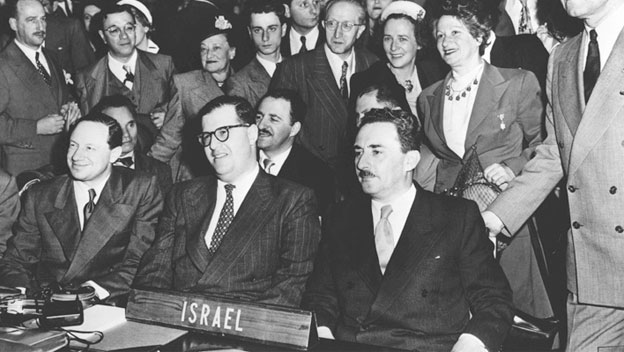
Israel 1974 bote at UN
Vote for Israel at United Nations, 1947

The “West Bank” is not an Israeli Colony

As detailed above, the global community approved the rights of Jews to move to their ancient homeland in the holy land.  That right was given to the entire region, including Judea and Samaria.  While the UN voted to recognize a Jewish State within a section of Palestine, the right to move throughout the region was approved in repeated resolutions many decades ago.

While the UN does not recognize Judea and Samaria to be part of Israel, they also do not recognize it as part of Jordan that illegally annexed it in 1950 (Jordan gave up all claim to the region in 1988).  The UN would like to see that region be part of a new Arab State of Palestine through negotiations with Israel.

The desire to see a new Palestinian State does not mean that international law protecting the rights of Jews to live in the region are null and void.  The 1922 British Mandate Article 15 specifically stated that “no person shall be excluded from Palestine on the sole ground of his religious belief.”  “No person” included Jews, and “Palestine” covered the entire mandate area of 1922.

The Oslo Accords of 1993 and 1995 which were negotiated between the Palestinian Authority and Israel, specifically stated that Israel controls and administers most of the “West Bank.”  As such, Israel approves housing and roads and infrastructure for everyone.  So the Palestinians agree that Israel is in charge of housing and international law approves Jews living in the region.  Israel acts as the administrator, much in the same way that Great Britain acted as the administrator for Palestine from 1922 to 1948.

Lastly, the “settlements” are principally located next to greater metropolitan areas within Israel.  Unlike European colonies which were across oceans and thousands of miles from the country, these Jewish homes are just suburban communities of major Israeli cities like Jerusalem and Tel Aviv.  They happen to be on the other side of an invisible “green line” that was the Armistice Lines of 1949.  Those Armistice Agreements specifically stated that those lines were not to be considered borders.

Conclusion

Jews have lived throughout the holy land for thousands of years, including all over Judea and Samaria/ the “West Bank”.  International laws facilitated the ability of Jews to move back to, and throughout, their homeland.

Jews were self-governing for over a thousand years in the holy land.  International laws reconstituted the national Jewish home.

While Jordan illegally attacked Israel and expelled all of the Jews from Judea and Samaria counter to the Fourth Geneva Convention in 1949, those illegal actions cannot make it illegal for Jews to once again live in homes they legally purchase throughout the land.

When you hear acting-President of the Palestinian Authority chant “colonial occupier” or uninformed people claim that Israel is a colonialist tool, send them this article.


Related First.One.Through articles and video:

The United Nations’ Remorse for “Creating” Israel

The Legal Israeli Settlements

Recognition of Acquiring Disputed Land in a Defensive War

Palestinians agree that Israel rules all of Jerusalem, but the World Treats the City as Divided

The Arguments over Jerusalem

Video: Judea and Samaria (Foo Fighters)

Video: The “1967 Borders” (The Kinks)

Subscribe YouTube channel: FirstOneThrough

Join Facebook group: FirstOne Through  Israel Analysis
The United Nations’ Remorse for “Creating” Israel

Some political analysts have suggested that Europeans tend to be more negative in their attitudes towards Israel than Americans, due to the former’s rejection of their colonialist past. The retreating by the British, French, Dutch, Portuguese and Belgians from the colonies that they had established hundred-plus years prior in India, Algeria, Tunisia, Congo, Morocco and other countries, was part of a repositioning of the world back to local sovereignty. The colonialist era has been cast in a racist light and rejected by today’s more “pluralistic” societies.

Palestinians have taken note of the change in attitudes, and have adopted new vocabulary to instigate the Europeans against Israel whereby the charges of “colonialist” has accompanied the accusation of being racist.

From “Zionism is Racism”
to “Colonial Occupier”

In the 1970s, the head of the Palestinian Liberation Organization, Yasser Arafat, led the world on a venomous attack against “Zionism.” In 1975, Arafat succeeded in getting the United Nations to pass Resolution 3379 condemning “Zionism is Racism.” Somehow, the world became convinced that the national aspirations of Jews to be self-governing was uniquely racist compared to every other nationalistic aspirations.

It took sixteen years for the United Nations to erase the charge, but the venom remained in the UN bloodstream.

At the UN, the “Question of Palestine” ceased to be a territorial dispute, and became an ethical question for the United Nations: should the global body have created and voted for the Jewish State?  Did it do so, solely because of the guilt from the Holocaust?

The current acting-President of the Palestinian Authority, Mahmoud Abbas, stokes that question to the mini-inferno that sits in the United Nations today. He constantly uses the term “colonial” to describe the emergence of Israeli “settlements,” and characterizes Israel as a recent foreign transplant on Arab soil. For some of his listeners, the malicious appearance of Israeli Jews began in the “West Bank” in 1967. For others, the Jewish colony overran the entirety of Palestine when the United Nations voted to partition the land into a Jewish State and Arab State in 1947.

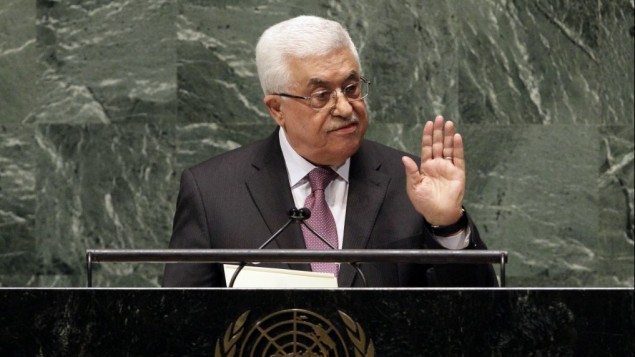
UN-Palestinians-Statu_Horo-1-635x357
Acting President of the Palestinian Authority, Mahmoud Abbas
Addressing the United Nations, November 29, 2012
(photo: Richard Drew/AP)

As Abbas said in his address to the UN on November 29, 2012: “Israeli occupation is becoming synonymous with an apartheid system of colonial occupation, which institutionalizes the plague of racism and entrenches hatred and incitement.”

The Palestinian’s pivot was subtle but significant.  Self-determination (like Zionism) in itself was not a crime.  Indeed, the Palestinian Arabs seek the same right for themselves.  However, the Israelis’ “colonial occupation” was unique and the root cause of the problem.  It was not necessarily the Jews’ goal of self-determination, but the act of colonialization that created “racism” and “incitement.”

Somehow, the Europeans and a growing number of countries, have embraced these narratives, particularly that Israel in its entirety was a UN mistake.

International Remorse for Partitioning Palestine
November 29, not June 4

The clarity of the global adoption of these positions can be found in the annual commemoration of the day of the partition vote on November 29, 1947.

In 1977, while the “Zionism is Racism” edict was still fresh, the United Nations passed another resolution to annually commemorate the UN Partition vote, as the “International Day of Solidarity with the Palestinian People.”

The decision to partition Palestine was approved by Jews and rejected by Arabs in 1947, yet the UN specifically chose that date to stand in “solidarity with the Palestinian People.”  On its face, it would seem like a cruel decision to create a holiday for a people on the very day that those people despised.

However, taken together with the “Zionism is Racism” resolution of 1975, the picture becomes more clear: the UN believed that the decision to partition the land was a mistake.  The global body concluded that the Palestinians were correct in the assertion that the UN created a racist, anti-Arab entity in Palestine.  The Palestinians were correct to reject the partition plan in 1947.  The fault belonged to the United Nations, not the Palestinians, right at creation.

The United Nations did not choose June 4 or June 10 as the date to stand together with Palestinians.  Those dates in 1967 were the beginning and end of the Six Day War when the Jordanians (together with Palestinians who were then citizens of Jordan) launched an attack on Israel and consequently lost the “West Bank” which they had illegally annexed.  If the root cause of the plight of Palestinians was “Israeli settlements” in the West Bank, then those dates would have been more appropriate to anchor the anniversary.

But the United Nations wanted to mark its own poor decision.  While the Palestinians rejected partition in 1947 and launched wars in 1948 and again in 1967, those bad decisions and actions were not deemed relevant.  The UN chose to tell the Palestinians that it was not their fault.  Their situation stemmed from decisions that the UN itself made.

Today, while the UN may no longer outwardly state that “Zionism is Racism,” the global body has adopted Abbas’s narrative that the UN planted a colonialist flag in Palestine.  The Europeans and liberal press now echo Abbas and the Iranian Supreme Leader Ali Khamenei who claim that Israel is a foreign and dangerous entity that was unnaturally inserted into the Middle East, and that the Arabs are the sole indigenous people and the land itself is inherently “Arab.”


It is well passed time for Israel to actively combat this claim of colonialization, the way activists overturned the “Zionism is Racism” UN edict in 1991.  It is time to clearly educate the world that RE-ESTABLISHING the Jewish State and not banning where Jews can and cannot live is neither colonialist nor racist, but the essence of freedom and justice.


Related First.One.Through articles and video:

Israel was never a British Colony; Judea and Samaria are not Israeli Colonies

The United Nations Applauds Abbas’ Narrative

The Holocaust and the Nakba

The Legal Israeli Settlements

UNRWA’s Ongoing War against Israel and Jews

Nicholas Kristof’s “Arab Land”

Video: I hate Israel – Zionism

Subscribe YouTube channel: FirstOneThrough

Join Facebook group: FirstOne Through  Israel Analysis